Philosophy
Freedom and Restlessness
Modern man desires freedom, yet is more restless than ever; for the quest for certainty in fixed beliefs and judgments robs him of peace. The way out is to seek truth rather than defend sacred convictions, and to tolerate different ways of life.

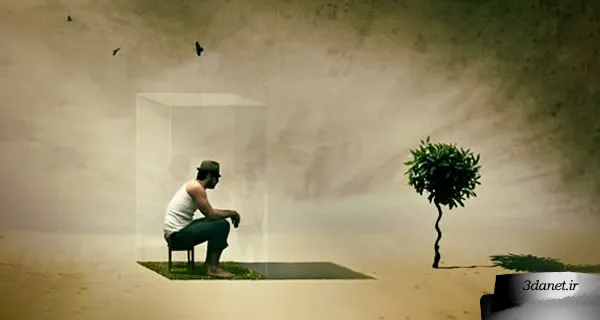
Humanity, standing today, here and now, at the pinnacle of history, is more preoccupied with freedom than ever before, even if it does not take proportionate practical actions in line with its desire! It desires freedom of speech, even if it has little to say, and desires social freedoms, even if its lifestyle predates the accepted norms of its society. Today, it is clear to everyone that freedom is a value in itself, but modern humanity is more restless than ever:
1- Theoretical Settlement: It has surely happened that when someone questions your beliefs, even though you know you have nothing to say against their reasons, or in other words, their argument seems honest and justified to you, you reject their reasons; or rather, instead of reasoning, you resort to reason-making! Why? Because having an opinion means having an identity in itself, having a possession that gives us the illusion of knowledge and sophistication, and settlement.
2- Practical Settlement: I wouldn't be surprised if you have once walked down the street and been agitated by the appearance of a boy or a girl; or have pried into the private relationships of others, or at least encouraged your close friend to reveal someone else's secret! This means that some people, in their practical lives, also sometimes seek settlement. This settlement, in practical life, means the reduction or disappearance of the gap between our desires and the practical manifestation of our beliefs, and the reality of the world around us.
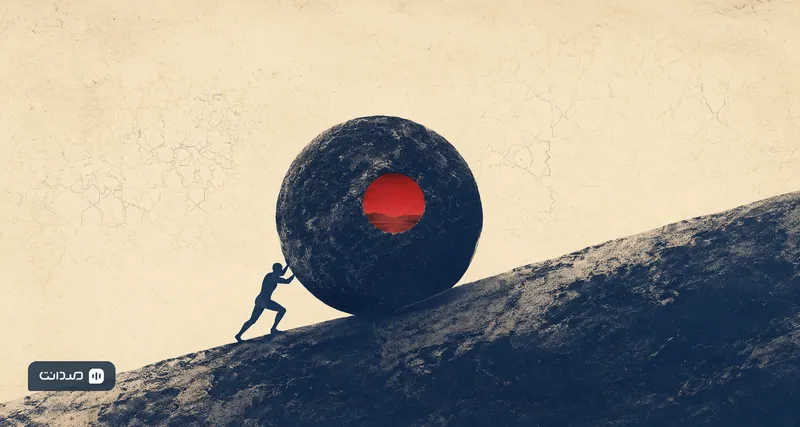
But if we seek either of these two types of established settlement, do we also feel the peace resulting from this settlement in our lives? The author strongly believes not! The world around us today, more than any other period in history, faces a clash of civilizations, cultures, and different ideas. In this world, which is rightly like a village, it is enough to want to look out from the window of your safe home to observe the insecurity resulting from the people of this village being familiar with your secrets and mysteries. It is as if the words of the wise mystic, who years ago said out of compassion: "If a thorn pierces someone's foot from Balkh to Bukhara, I too feel their pain," have been interpreted in today's world; this world is a restless world, an unsettled entity, confronting humanity that seeks settlement! This quest for settlement in this world makes us increasingly restless and endangers our mental health! We seek a natural state where everything rolls along on the orderly gears of existence and propels time forward; and this is the tragedy facing contemporary humanity:
Humanity seeks settlement, and freedom is the origin of restlessness.
So it is somewhat understandable if the theoretical settlement and practical settlement of modern humanity can only be realized through the negation of or indifference towards its freedoms.
Erich Fromm, the contemporary American psychoanalyst and social philosopher, in his famous book, Escape from Freedom, addresses the reasons for the emergence and rise of fascism and Nazism in Europe. He asks why, in a Europe that was a pioneer in the field of freedoms, democracy, and universal human rights, the freedom-destroying phenomenon of Nazi and fascist regimes reared its head. From his perspective, in the Victorian era and the period of the Church's rule in Europe, all human beings were situated in a "predetermined" state. Broadly speaking, their lives were in the service of the king and the Church. A Church that granted a guaranteed meaning and spirituality to their lives, and a king and royal institution that imposed a thoroughly class-based and hierarchical system upon its subjects. In some cases, even an individual's profession took on an identity aspect and was inherited from father to son. But gradually, the Copernican revolution in science and the consequences it had for the philosophical and practical lives of the European people were so great that it caused everything that was a source of stability, in a predetermined state, to be questioned, and everything, especially the political and legal systems of countries, to be viewed with skepticism and doubt. Humanity, having tasted enlightenment, now demanded freedom in all its psychological spheres, especially freedom of speech and action. But freedom means having the courage to take responsibility for your own life and be the autonomous agent of your own happiness, and let no one determine your destiny in advance! Fromm says this latter point, that is, the transition from a natural and predetermined hierarchical state to an unexperienced state full of the ambiguity of self-reliance, was something beyond the capacity of the modern European people. It was for this reason that fascism and Nazism, with the promise that what matters is a powerful and unified nation under an integrated and unshakeable rule, seized power over all of Germany and Italy. The promise of stability, to a restless people.
Now we return to the initial question. Can the desire for stability have any meaning in today's world? Based on the reasons stated, no! So what is the solution? Rumi says:
All this restlessness of yours, arises from your quest for stability Become a restless seeker, so that stability may come to you
The root of the idea that one can live beautifully through prudence and change; and that one can be light-footed, like a leaf upon the roaring river of life, reaches back to Buddha. In fact, if you are not prejudiced towards your untested opinion, and are only a seeker of truth, and the path in which truth manifests, that is, dialogue, then no matter how much criticism falls upon your beliefs like a sledgehammer, you will never feel restless, because you are only a seeker of reason and truth itself, not beliefs you consider sacred and eternal. Also, if you do not hold an absolute view of your lifestyle and the ethics to which you adhere, and however much you believe in the sanctity of your opinions and the consecration of your behaviors, know that you yourself are not a sacred human being, and there is always a possibility that a percentage of ignorance, error, and ill intent is present in the realm of your beliefs and behaviors. This matter, that is, tolerance towards others, brings a person to stability and does not make their psyche predestined by the way others live, and places the center of gravity of the individual's existence within their own self, not in others.
1- Being a seeker of truth without claim brings a person to peace and stability, and a society filled with statements like: "I don't know, it seems, it is probably like this, and I have no knowledge in this area," is a moderate and calm society.
2- Having tolerance for the lifestyle of others removes a person from the cycle of suffering and restlessness, and a society whose people say: "It's your own business, what's it to me?!, everyone is responsible for their own actions, a person only lives once, do not cause unnecessary suffering to anyone," is a happy and free society.
==========================
When the expression of an opinion is forcibly suppressed, those who oppose it suffer far more than those who hold it, for if the opinion silenced by force is true, then those who opposed it have been deprived of the invaluable opportunity to exchange error for truth. But if the opinion is false, its suppressors have still lost in any case, because had they allowed the free collision of opinions, the visage of truth would have appeared more vivid and luminous from the clash of right and wrong.
John Stuart Mill, On Liberty
Today's good is yesterday's evil.
............


Discussion0 comments
No comments yet; let yours be the first voice.