Philosophy
Just War Theory
War is inherently evil, yet at times a necessary one—a theory that, from Rome to Michael Walzer, examines the moral criteria for intervention and defense. The distinction between just war as justification and as enforcement marks the boundary between legitimacy and aggression.
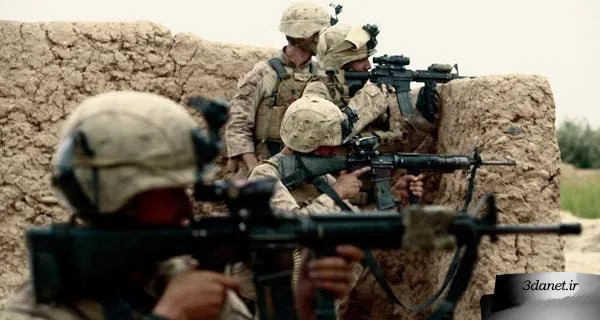
War is the slaughterhouse of those who do not know each other, for the benefit of those who know each other but do not kill each other.
--------------------------------------------------------------------
Throughout human history, war has been the most extensive means by which groups of people with lofty ideals have imposed "what is desirable" upon other people. There is no corner of the soil of this vast globe that has not been stained with the blood of flesh-and-blood humans; whether this bloodshed was just or unjust matters little, for history has been written by the victors. What matters is that the hostile group, during war, always strives to make its antagonistic behavior appear ethical. Therefore, even if we pay not a shred of attention to the morality of human wars, we are inevitably compelled to take a critical look at the ethical justifications of hostile groups and countries. This category will obviously give rise to the ethics of war ethics.
Benjamin Franklin says: "Mankind has never seen a good war or a bad peace, but even a bad peace is better than a good war." What Franklin speaks of is the idea oriented toward pacifism; that is, "in all circumstances, maintain peace." Certainly, pacifism and the advocacy of peace is one of the human ideals in societies that prefer the absolute principle of reconciliation and peace over strife and conflict. The famous saying "In war, they don't hand out halva" actually refers to the non-ethical nature of human relations in wartime conditions; for in wartime conditions, all the ethical principles that have shaped the collective human conscience over the years are condemned to destruction at the first whiff of a threat greater than we expected. Realism and a realistic approach to the history of human civilization set aside Franklin's optimistic words and whisper Nietzsche's words into the ears of times to come: "Peace is merely the rest period between two wars." So it is not far-fetched if the absolute and self-evident foundations of "in all circumstances, maintain peace" are transformed, under certain conditions, into the reality of "in all circumstances, maintain peace, but first, kill that bastard . . . !"
Behind the ethical justifications and lofty ideals of war, that often-silenced critical sidelong glance, which has no guarantee of enforcement and no power of composition, is the very inquiry that is the subject of discussion in this article. No war is good, and no war has ultimately been constructive. However, the fact that all wars are not good does not mean that all of them are not necessary! Ultimately, we all agree on the right of a country to defend itself against the aggression of another country. What complicates matters is when "we" are the aggressor and the country under attack is "them." So, while you mock the ethical possibility of the above statement according to the absolute rule of pacifism, try to think about the resistance of the men and women of Kobani, Syria, against the forces of the Islamic State of Iraq and Syria (ISIS) and the necessity of intervention and war against this terrorist group.
Just War Theory (Just war)
Just war or legitimate war is a medieval European doctrine; although its roots can be traced back to ancient times and in the Hindu book Mahabharata. The invention of this concept dates back to the era of the Roman Republic. The Romans, who were renowned for their martial prowess, called a war just when they themselves had initiated it and had taken the gods as witnesses to their deeds and valor. However, as mentioned, the elaboration of this concept goes back to the European Middle Ages and especially to the views of Saints Augustine and Aquinas. In Augustine's view, war was legitimate only in two cases:
First, when the initiator had the right to wage war, meaning they were repelling an invasion, seeking to reclaim stolen property, or pursuing punishment for a breach of treaty between two states; and second, when war was waged at the command of God. Since, in the second case, God did not directly and specifically command a war, the discretion of God's vicegerents on earth or the Church authorities was considered. It was through this reasoning that Christians of that era called the Crusades between themselves and the Muslims a legitimate war.
From Islam's perspective, a legitimate war is one waged to liberate the lives and property of Muslims from oppression and aggression.
Another theorist of just war, named Grotius, writes: "If the wrongdoing is manifest, and a ruler treats the subjects under his dominion in such a way that no one can change him or at least his behavior, the right of human society to remove him cannot be rejected."
In his view, this intervention is the restoration of the right to self-determination to human beings who lack the power to change their own destiny. Also, Montesquieu, the Enlightenment philosopher, believed that a war could be called just in two cases: first, in self-defense after an enemy's aggression, and second, in defense of a friend, after an enemy's aggression!
The American Michael Walzer, born in 1935, is perhaps the person who has put forward the most research and discussions around the theory of just war. His book "Just and Unjust Wars" is the result of reflections on the Vietnam War and an attempt to renovate the old medieval views on just wars, especially with a new approach to the issue of limiting the use of force between states, which is known as the theory of legitimate war. In its most general concept, the theory of just war proclaims no more than one sentence:
War is an evil, but some wars are necessary evils; some wars are permissible and legitimate under certain conditions, and countries can resort to war according to certain principles.
But what are these principles? And ultimately, what institution should adjudicate the necessity of implementing a just war in a country, and if the intervening country deviates from those principles, what recourse is there for compensation? Fundamentally, which country or countries should assume the responsibility for intervention, and what oversight mechanism governs the good faith and proper execution of wars that have a just cause?
It is necessary to distinguish between two types of approaches to the theory of just war:
1- Just war in the context of proof 2- Just war in the context of realization
In the first part, we examine just war in the context of proof; that is, before any practical outbreak of war, we discuss the possibility of whether a war can fundamentally be just or not. Regarding the second case, we analyze just war in the context of realization; that is, we assume the possibility of a just war occurring exists. Now that such a war can take place, we discuss which oversight bodies and with what arrangements it should be carried out, and after the war occurs, we discuss fighting justly and the limits of the legitimacy of fighting. In fact, in the context of realization, we first discuss the existence of just institutions to issue moral permission for war, and then we discuss the ethics of war based on justice during wartime.
Just War in the Context of Proof
Justice is the opposite of oppression. Thus, a just war is a way to end an oppressive practice. But on the other hand, justice is one of the most ambiguous and complex concepts in human history; a positive and universally accepted concept, with a very vague definition! If we want to divide a cake justly, we must not know which piece goes to whom; only then can we accept the promise that the division of the cake is just. From this perspective, a war can be called just if it is impartial regarding profit, wealth, consolidation of power, race, religion, creed, and other aspects that can distinguish "us" from the "other." In this case, the main cause for intervention is the human being and their liberation from the suffering they endure.
As mentioned, we all accept as self-evident that every country has the right to self-defense in the event of aggression, and such defense is just, as long as it is intended to repel the attack.
However, the controversy is over those wars whose instigators often speak of the morality of the war they have launched. In this case, one must ask: on what foundations can the justness of a self-initiated war be based?
The first factor, as the name "just war" implies, is having a just cause for fighting. That is, the crime that, for example, government A perpetrates against its people must be so severe that it offends the conscience of the international community. Only then can and must government B very clearly declare its cause and goal for the war to be the systematic violation of the people's rights by government A, and call the war legitimate and necessary only until the danger to the people of that country is removed.
On the other hand, the principle of respect for the right to self-determination is a just principle and one of the fundamental rights of every nation. In this case, a just war should only take place in countries whose people lack the ability to determine their own destiny. According to this rule, a government that aspires to wage a just war against a country must be able to show that in a hypothetical situation, if the people of country A had the power and ability to confront their government, they could change their government themselves or at least reform its practices. Thus, another condition for a just war against a country is the inability of a people, aware of the oppressive nature of their government, to change their own destiny. In this case, the intervention of a third country to liberate these people from oppression is the very manifestation of their will to change their government, carried out by the third country.
Furthermore, the intervening country must not derive any benefit outside the framework of its just cause from its intervention. It is natural that if a country removes a government through military intervention, its decision-making power and influence over the transitional government and the conditions of transition will be greater than that of any other country. Therefore, if we accept the promise of a war being just from the belligerent forces, a supervisory mechanism must oversee the justness of the war. One of the simplest manifestations of the belligerent country's respect for the political and territorial independence of the attacked country can be the swift withdrawal from a country where oppressive practices have been significantly and relatively reduced.
Also, since war is an unpredictable matter within the scope of relations between countries and the most perilous way to pursue demands, it must be the last rapid and possible option for implementing justice in a country. That is, if the scope of the systematic violation of human rights is so great that any delay in using force to reform practices imposes irreparable catastrophes on humanity; in this case, the use of force will be the most rational way to expedite aid to the oppressed human beings.
Just War in the Position of Adjudication
Now that we have examined the possibility of a war being just, the discussion of examining a global and just mechanism for preventing human crimes, and on the other hand, the discussion of fighting justly, comes to the fore.
If a war is to be just, all or most countries and international bodies must be able to confirm its justness and its being in the interest of the belligerent country. It is therefore better that a large assembly of the world's nations, with a fair and equal electoral mechanism—where conflicts of interest are often unavoidable—sit in judgment on the necessity of war against an anti-human state. The conflicts of interest among countries can, with a good approximation, confirm the possibility of the justness of the outcome of that assembly's vote. Moreover, that assembly must place a clear, transparent, and distinct program regarding the intensity and scope of intervention upon the belligerent country or countries, so that it can exercise full oversight over the course of the war and, if necessary, hold the belligerent country or countries to account.
Furthermore, the belligerent country must continue the war only until the humanitarian danger and crisis are resolved. Also, the amount of damage inflicted during the intervention must be such that anyone can attest to its necessity, yet not so great that it causes the people of that country to view the belligerent country's just cause with pessimism and indifference.
On the other hand, if a war takes place, the belligerent party claiming a just war must have a significant hope of success in the war against the illegitimate government. Otherwise, the conditions for the suffering people will only become more grievous; in addition to enduring the systematic violation of their rights, they must also taste the bitter scourge of war, and after their illegitimate government's success in the war, an even more extraordinary security situation will likely emerge for the suppression and violation of their rights by a regime emboldened by victory.
Also, the belligerent country must correctly understand its aim in the war: the overthrow of an anti-human and illegitimate government; in this regard, the belligerent country must fully respect the principle of non-combatant immunity, including prisoners, the wounded, and civilian citizens. The latter can be achieved through the advancement of precision weaponry and meticulous planning before attacks on specific strategic points, and another part is subject to the ethical management of the war and the oversight of international bodies on the proper conduct of a war we call just.
Just War in Today's World: The Principle of Non-Intervention and Humanitarian Intervention
After the end of World War II and the establishment of the United Nations, a charter called the United Nations Charter was adopted by the overwhelming majority of member states, which in many of its articles stipulates the prohibition of the use of force against member states of the organization:
((We the peoples of the United Nations determined to save succeeding generations from the scourge of war, which twice in our lifetime has brought untold sorrow to mankind.))
There are two exceptions in this charter:
1- In exercising the right of self-defense under Article 51 2- A favorable vote of the Security Council based on the powers delegated to this council in Articles 24 and 25 regarding intervention if the conditions necessitating intervention are met
What is a matter of dispute is the second case, namely the delegation of decision-making regarding intervention or non-intervention in the internal affairs of countries to the vote of this council. At first glance, the conflict of interests among the 5 permanent members of this council—namely America, England, France, Russia, and China—suggests the possibility that unvetoed decisions may be somewhat just. But on the other hand, we know that these five countries are five influential and impactful countries on the future of the world, and because their scope of influence is vast, they can easily, by forgoing and negotiating over their own areas of dispute and conflict, overshadow a country's right by vetoing any humanitarian intervention or by casting their favorable vote for an attack. Although this council has, in some instances, ignored the principles of just wars through politicking and behind-the-scenes deals, there have also been cases in history indicating this council's positive and humanitarian resolve to prevent the occurrence of human catastrophes, among which one can mention the intervention in Kosovo, Ivory Coast, Sierra Leone, and so on.




Discussion3 comments
سلام اگه میشه مفهوم جنگ عادلانه رو نقد کنید به صورت مختصر؟
سلام، بسیار عالی است، فقط لطفا امکان دریافت این گفتکوها را بصورت pdf فراهم کنید، با تشکر، یاعلی
بنده هم موافقم. Pdf به "ذخیره سازی و پرینت" نوشتارها کمک میکند.. سپاسگزار....