Sociology
Hadi Khaniki; A Society on the Verge of Collapse
Hadi Khaniki warns that Iranian society is suffering from “anomie” and a decline in responsibility. The rise of individualism and materialism has fueled a sense of decay, and to escape this crisis, we must engage in dialogue to build social trust.
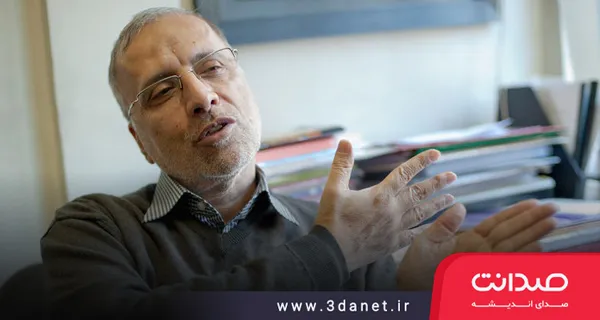
Khaniki: Our social capital is exposed to great risks
Today, sociologists believe that Iranian society has experienced a decline in social responsibility. The reduction of social responsibility among citizens has led society into social anomie. For this reason, sociologists believe that if no thought is given to Iran's social situation, we will witness increasingly serious harms every day. In sociological terms, "anomie" refers to a "state" in which "social rules" are not "binding" for actors and "following" them holds no "desirability" for individuals. In other words, anomie is a situation in which the restraining force of rules is unable to curb human desires and passions, and the "lust for excess" breaks all boundaries. But when rules prevail, individuals experience a kind of suffering and sorrow in the face of their own greed and excess, and according to Durkheim, this is a "price" that must be paid for living in society. Causes of Anomie
In explaining anomie, Durkheim, in addition to rapid industrialization and the structural transformation of society, emphasizes the "insatiability" of humans and their unlimited desires. He considered anomie to be the "inability to exercise restraint" and believes that "moral" rules, not "economic" ones, can limit chaos and disorder and curb the insatiable passions of human beings.
"Robert Merton" is another theorist who has thought about anomie and considered it the result of a situation in which society emphasizes its goals (values), but the means (methods) of achieving those goals are not efficient. By distinguishing between technical norms (i.e., methods that are efficient from the individuals' perspective but culturally illegitimate) and institutional norms (i.e., culturally legitimate methods that are not necessarily efficient from the individuals' perspective), Merton identified the origin of anomie in the inefficiency of social norms*. (Perhaps "white marriage" in Iran is one of the perfect examples to explain technical norms and institutional norms.)
To escape social anomie, one must engage in dialogue so that social trust can be formed
With precise root cause analysis, it becomes clear that wherever a catastrophe or corruption has occurred, a law has been violated. At the micro level, if we were rule-abiding, our driving and commuting situation on streets, highways, and roads would not be so astonishing, and for example, some drivers would not speed up upon seeing the markings of a pedestrian crossing! If, at the macro level, rules were binding, we would not have "systemic corruption"; the "Phenomenon" would not have emerged; Plasco would not have collapsed; the creation of financial and credit institutions without the principled approval of the Central Bank would not have been possible; banks would not have given loans without regulations and collateral; tax evasion would not exist; we would not have rent-seeking and monopolies; organized smuggling would be meaningless. With these interpretations, as sociologists say, to escape social anomie, one must engage in dialogue so that social trust can be formed; otherwise, we will face the crisis of rampant social anomie, and subsequently, society will be destroyed, and its smoke will get into the eyes of all citizens of the society.
These days, we are facing the problem of the decline of values in society; all human ideals and aspirations have fallen into disarray
In this regard, Dr. Hadi Khaniki, sociologist and assistant professor at Allameh Tabataba'i University, said: These days, we are facing the problem of the decline of values in society; all human ideals and aspirations have become disordered. In my view, the term social anomie, in the context of the absence of just law, moral weakness, etc., is addressed in the fields of psychology and sociology. Naturally, from the point where the literature on self-willed deaths increases and when a person tries to free themselves from life, the concept of anomie takes shape. Also, sociologists like Robert Merton state that when cultural structures collapse, society, in parallel, experiences differences and contradictions with values and ethics; in this state, society has fallen into anomie. There is a difference between the feeling of anomie and the situation of anomie. Because a society may not be in a situation of abnormality, but it is felt that things are bad—that is the feeling of anomie. Perhaps the situation of anomie can even be natural if a goal-oriented plan and advancement are considered for it and it redefines that situation, in which case there should be no worry. When humans enter the modern era, a conflict forms between traditional values and modern values; even conventional values are overshadowed.
When women's participation in a society increases, that society no longer turns back
Hadi Khaniki added: Four major factors overshadow the situation of values. One is the growth of urbanization, the second is the change in the level of education, the third is the expansion of access to new media, and the fourth is the level of participation. I personally asked two prominent global thinkers who had come to Iran—Mr. (Habermas and Mr. Castells)—what struck you most in Iran? Both said the presence of women. When women's participation in a society increases, that society no longer turns back. Of course, change should not be such that it pits contradictions like city and village, traditional and modernity, etc., against each other, because in that case, the society's situation becomes worrying. Regarding whether Iran is in a state of emotional or social anomie, this sociologist stated: I and other experts have been studying the change in the attitudes and values of Iranians since the year 2000. The first study was in 2000, in the National Survey of Iranian Values and Attitudes; the second wave was in 2003, and then unfortunately, it was suspended during Mr. Ahmadinejad's government, and the third wave was conducted again during Mr. Rouhani's government. Comparing these studies and the changes in people's use of Iranian or foreign goods, etc., their sum indicates that a wide-ranging social and generational change has occurred in Iran. The generational relationship has changed so much that some sociologists speak of hazardous generational relations. Generational changes are natural, but when they become hazardous, it is dangerous. As Alain Touraine, who also wrote an introduction to this situation, says, the number of prohibitions and restrictions on Iranian youth is so great that they hesitate to do the right thing. That is, there are so many
Conditions must be created for dialogue among the different segments of society that have grown apart, half of which distance is due to gender discrimination
The university professor continued: Unfortunately, from the past until now, there has been no shared understanding in society. For example, if we review history, we encounter several different types of attitudes. Thus, the shared perception of Iranian society has been problematic from the past until now. Our current mood and spirit are not based on shared action or feelings, and the future is also ambiguous; as a result, a general feeling has been reinforced. This very issue has led to the displacement of social forces and social bases. Dr. Khaniki, regarding the expression of a solution for managing the anomic crisis of society, said: In my opinion, the main problem in managing the crisis of anomie is the weakness in dialogue. Conditions must be created for dialogue among the different segments of society that have grown apart, half of which distance is due to gender discrimination. Another part of it is structural adjustments, and another part is corrective justice—how we can reduce these distances—and another part is agency. One must consider the other person as a citizen and a part of society in order to engage in dialogue with them. Therefore, in such circumstances, we must return to the four factors I mentioned earlier. I think we must reduce the fear of the future in different generations, which is not resolved by explanation and advice but by attracting participation, where everyone becomes present and committed to building the future. Consequently, solving society's problems lies in reducing social and political pressures. Thus, lack of freedom and injustice are the most important factors exacerbating social anomie.
We only want to force citizens into paradise by force
He added: Currently, the problem is the pumping of life pressures, and these pieces of advice, especially those broadcast in domestic media, are also mentioned in our religious literature; for this reason, I think this approach is not practical! One must recognize the other party, because God addresses human beings, meaning He gives them repeated chances so that they can engage in dialogue, but we only want to force citizens into paradise by force and instill in them that they do not understand what is what and what they want from life. While we have instilled in everyone that only we understand, whether that person is a woman, man, young, old, etc. Therefore, my point can be summed up in two words: first, recognizing and implementing dialogue. Second, empowering institutions and social networks so that individuals feel they are partners with the rulers in building their future and trust others in this path. Because ethics is an institutional matter, not an individual one. In general, norms can be advanced in ethics, law, and custom.
.
.
Hadi Khaniki: Society is on the verge of collapse
Source: «Jahan-e Sanat» newspaper, in an interview with Dr. Khaniki
.
.

Discussion1 comments
خیلی دیر شده ملت دوتکه شده یک قسمت بزرگی مظلوم و بدبخت شده یک قسمت کوچکی زالووار ویژه خواری نموده از خون بقیه ارتزاق میکند