Philosophy
Hegel Is the Horizon of Our Thought: An Essay by Morad Farhadpour
Morad Farhadpour considers Hegel the horizon of thought, yet challenges the relationship of the Iranian 'we' with him. He critiques the use of Hegel to construct a unified history, calling it a legitimation of monarchy and a disregard for ruptures.
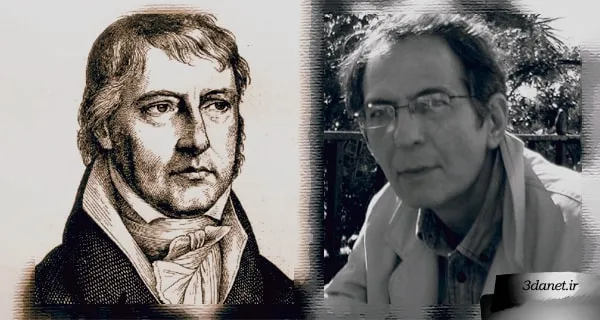
This article is the result of a conversation between the specialized scientific monthly Ettela'at-e Hekmat va Ma'refat and Morad Farhadpour.
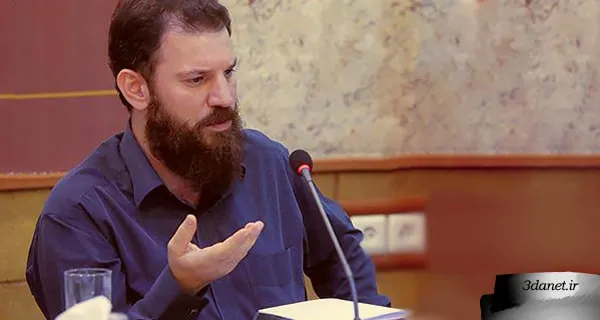
Morad Farhadpour can be considered one of the most prominent symbols of the New Left intellectual current. He began publishing his works in the 1980s; his name, which had gradually become linked with the Frankfurt School and especially Adorno in the late 1990s, gained widespread recognition with the book The Depressed Reason, and he became one of the most influential and active leftist intellectuals in Iran. Later, with the decline of the political atmosphere and the prevalence of political apathy in the late 2000s, Farhadpour—whose name no longer signified an individual but rather a title for a group of translators and writers (the Rakhdad Circle)—along with his friends, turned to new possibilities within the contemporary New Left tradition. It can be boldly stated that he played a significant role in introducing, translating, and explicating three important figures of this current: Slavoj Žižek, Giorgio Agamben, and, more recently, Alain Badiou. But regardless of Farhadpour's political or social approaches, the philosophical figure who has always been tied to Farhadpour's name throughout all these years is Hegel. Farhadpour has never translated or authored any book by or about Hegel, yet Hegelian ideas such as the dialectic of the whole and the part, the link between philosophy and politics, the simultaneous critique of positivism and mysticism, and, most importantly, the key connection between truth and history are evident throughout his writings. Hegel, in Farhadpour's own words, is the horizon of thought. For this reason, in this conversation, we sat down with him as the central figure of the New Left Hegelian current to speak about "our relation to Hegel." A connection that Farhadpour, from the very beginning, challenges both the "we" and its relation to "Hegel." This conversation has also provided an opportunity for Farhadpour to speak about himself, his ideas, his experiences, and his intellectual connection with Hegel.
Mohammad Mehdi Ardebili
***
Mr. Farhadpour, the discussion concerns our relation to Hegel, so our question is composed of three concepts, and consequently, answering it, or at least providing an analysis of the question itself, requires clarifying these three concepts: namely, "Hegel," "we," and the meaning of "having a relation."
In general, one must see what is meant by this "we." Does the question refer to our current situation and the existing structure, or does "we" mean we Iranians, or does it generally refer to the East? I think to understand this "we," we must look at the other side of the equation, which is Hegel. It seems that Hegel relates to us by virtue of his position in modernism, and therefore, the nature of our relationship with Hegel goes back to our integration into the modern world and our stepping into the historical era of modernity. So, if we want to see what role Hegel himself plays in this, perhaps he can be viewed as a famous Western philosopher, and consequently, he can be reinterpreted in relation to our confrontation with the issue of rationality and modern reason. Here again, the discussion takes on various dimensions; for example, if we mean the social aspect of the issue, the discussion of Weberian rationalization arises and leads us down one path, or, for instance, the philosophical dimension of the matter finds another direction.
اما به نظرم بحث را برگردانیم به آنچه مشخصا میتوان در مورد خود شخص هگل و نوع نسبت احتمالی عجیب و غریبی که با هویتی به نام «ما» قرار است برقرار کند. من از آنجا که به همین هویت «ما» به عنوان یک کل یکپارچه متعین مشکوک هستم و در واقع اصلا کلیتی نمیبینم، به نظرم بحث به نوع ادغام و حل شدن و رویارویی با تمدن مدرن بازمیگردد. اگر هم سخنی بتوان گفت بیشتر به سنتهای خاص، گفتارهای خاص و حتی تجربههای شخصی خاص بازمیگردد که هر فرد یا جریان چگونه با هگل درگیر شده است و این درگیری چگونه در عرصه عینی بروز و ظهور یافته است. بنابراین به نظرم اگر شما به دنبال پاسخ سوالتان برای یک «ما»ی کلی باشید، هرچقدر که این «ما» کلیتر شود، بیشتر از هممیپاشد و در نهایت اگر هم بخواهیم سخنی ایجابی بگوییم، شاید باید اتفاقا این «ما» را به قطعات مختلف بشکنیم تا بتوانیم از هرکدام از این ماهای متکثر حرف بزنیم. بنابراین من هم بیشتر میتوانم این ما را به حوزهها و گفتارهایی که خودم تا حدی با آنها درگیر بودم محدود کنم و «ما» را به سطح تجربه سطحی «من» فروبکاهم. و البته از آنجا که در دورههایی تلاش داشتم به دلیل فرار از گیرافتادن در دل نوعی روانشناسیگری شخصی که آفت پروژههای روشنفکری ایرانی است، این زندگی شخصی را از حالت فردی من خارج کنم و جنبه جمعی هم به آن بدهم و افراد دیگر را درگیر آن سازم و در نتیجه شاید بتوانم از نوعی «ما» هم صحبت بکنم که به هر حال هویتی نسبی و شکلی از تاریخچه را با خود به همراه دارد. اما اینکه این بحث چه ارتباطی با «ما»ی ایرانی به عنوان یک هویت مستقل فراگیر دارد، قادر به طرح آن نیستم و اتفاقا برای خود من هم جذاب است که ببینم خود تو که در این حوزهها فعالیتهایی داشتهای اصلاً میتوانی بین این دو، هگل و ما، آن هم در این سطح از انتراع، پیوند برقرار کنی. قطعا منظور تو انتشار چند کتاب یا ترجمه از آثار هگل به فارسی یا تدریس فلسفه هگل در ایران نیست و میخواهی به مبانی عمیقتر و بنیادیتر نسبت بین این دو وارد شوی.
به هر حال در همین پروژههای تاحدی شخصی و تاحدی سیاسی که در ایران به چشم میخورد، اسم هگل گاهی پرتاب میشود. اما تا آنجا که من اینگونه مباحث را میفهمم، استفاده شان از هگل خیلی محافظهکارانه و سنتی است. به هر حال به نظر من در اینجا نیز ما عمدتاً با نوعی سوءاستفاده از هگل مواجه هستیم، هم به عنوان نام بزرگی که مشروعیت بخش یک نظریه است و هم به عنوان متفکری که به یک فیلسوف تاریخ آن هم در معنای ابتداییاش فروکاسته شده و بنابراین میتوان از وی مثلا برای تحلیل تاریخی استفاده کرد. هدف چنین رویکردهایی نیز بیشتر سوءاستفاده از هگل به عنوان راه دست و پا کردن یک تاریخ ساختگی برای ایران است. گویی از پیش، از دوران هخامنشی تاکنون، همواره ایرانی وجود داشته است و انگار نه انگار که این هویتِ به ظاهر یکپارچه در تاریخ اتفاقا به شدت تکه پاره است. این قرائتها مجبورند کل تاریخ ایران را به تاریخ حکومتها فروبکاهند و در نتیجه حکومتهای مغول یا ترک را به اسم تاریخ ایران به ما قالب کنند تا مبادا این هویت یکپارچه جعلی خدشهدار شود. پس میتوان به کمک همین مثال، نمونهای از مواجهه ما با هگل را در پس تلاش برای استفاده یا سوءاستفاده مغلوط از برخی نظریات هگل در خصوص تاریخ با هدف جعل یک فرآیند کلی تاریخی برای ایران یافت که از حیث سیاسی نیز به واسطه قبضه کردن تاریخ توسط شاهان، نوعی راستگرایی سلطنتطلبانه از آن منتج میشود. به بیان دیگر، هر گونه تلاش برای کلیسازی، انسجامبخشی یا جوهری کردن این تاریخ به نتیجهای جز جوهری کردن سلطنت و تحولات آن در ایران نمیانجامد. چرا که در نهایت داستان کور و پراز سبعیت و تکرار پوچانگارانه تاریخ ما را با مقولاتی پیوند میزند که ربطی به این نقطه از جهان ندارند و تازه حدود یک قرن است که برخی از مفاهیم اصلی آن مانند دولت/ملت با ورود سرمایهداری به ایران مطرح شده و پیش از آن ما با استبداد آسیاییای سروکار داشتیم که هنوز حتی محتوای آن به درستی تبیین نشده است. این نمونه نیز مشتی است نمونه خروارهای استعمال هگل توسط ما.
},I am interested in returning to that discussion of “we.” On the one hand, when the talk is of “we,” this “we” can be interpreted as the Iranian “we,” the Persian “we,” the Islamic “we,” or even the Eastern “we.” I also accept that this “we” here does not possess a single, unified totality, but is rather a fragmented “we” possessing a kind of imaginary and hypothetical totality. But can one even speak of a “we” that, despite this plurality, somehow encompasses all these multiplicities? In any case, regardless of the personal or identitarian “we” that was mentioned, is there a “we” that can somehow contain all these existing groups and currents within it? For example, the “we” within our situation, or perhaps a kind of cultural “we”?
Well yes, in any case, one can speak of Iranian intellectualism and talk of a kind of general “we” of the intellectual current or the entire world and its differences. I have also spoken before about these very intellectual currents, and especially religious intellectualism, under the title “The Pathology of Intellectualism in Iran” or similar titles, and have mostly discussed their relationship with power, which, like a black hole with a strange gravitational force, crushes everyone and pulls them into itself. But this discussion will be an independent and lengthy one that again goes back to Iran’s experience of modernization from, say, the Safavid era or even from the Qajar era and the debates surrounding the Constitutional Revolution, in the analysis of which, incidentally, a crude Hegelian idealist conception is also evident, one that reduces history to individuals and claims, for example, that if such-and-such political or religious figure had properly understood such-and-such a discussion on such-and-such a date, or had, for instance, read John Locke, our situation would now be fine; or some, on the other hand, emphasize that it was precisely the intellectuals who misunderstood the matter and that whatever we suffer is from these very intellectuals. And in all these claims, Hegel is again invoked as the backing for a kind of primitive idealism and is misused as the justifier of a certain politico-legal reading of the Constitution. And of course, this idealism is entirely distant from idealism and its meaning for Hegel. Therefore, ultimately, one can observe Hegel’s trace in such misreadings, misinterpretations, or historicizations, which itself stems from the stereotypical image of Hegel drawn in realist readings like The History of Philosophy in Europe and the like, which introduces Hegel as a philosopher of history, and incidentally, Iranians are also very sensitive about what Hegel, for instance, said about Iran in his philosophy of history. Even in later periods, when texts became slightly more numerous and texts like Mr. Enayat’s translation of Reason in History were published concretely and some misunderstandings were resolved, still, even figures like Enayat could not derive a deeper and newer conception from this stereotypical and superficial Hegel, whose Absolute Spirit ultimately turns into God and for whom the story of the history of Spirit becomes a mythology—a conception that, as far as I know, still prevails in our society. Although perhaps you or others have recently broken this reading in the academy or presented a novel reading, as far as I know and from what I see as the objective manifestation of the story, we are still afflicted by those same myths and primitive, stereotypical readings of Hegel, which are mostly based on the interests of individuals or groups who seek legitimacy for their own theories in Hegel.
You constantly emphasize the negation of a substance called Iran. Personally, since I am theoretically sympathetic to you, I understand your point and do not believe in a unified totality for a substance called Iran, but well, would the conclusion of your argument be that there is no Iranian at all, and it is as if there is no longer any difference between Iran and non-Iran?
No, I also do not approach this issue from the angle of a kind of complete negation. It is also completely clear to me that Iran is entirely different from a country like Kuwait, the Emirates, or even Iraq, all of which emerged from the First World War. But the issue is that this difference cannot at all be explained with the help of words like nation or the movement of Spirit in history, which, without any concern for plurality, its internal flaw, and its fragmented nature, naively takes refuge in this pre-given, comprehensive, and all-encompassing “we” that is supposedly meant to become self-conscious and gain value.
Let us step back from the analysis of this “we” for a moment and take a look at Hegel. In the very readings of Iranian history that you mentioned, there is in fact always a discernible oscillation between succumbing to a kind of determinism and making everything appear necessary within a kind of developmental historical process, and falling into a kind of occasionalism and reducing everything to a single person, a single book, a single law, or a single historical event. Hegelian dialectics itself is, in fact, an attempt at the dialectical sublation of this duality of necessity and contingency; but in domestic examples, we witness a failure to achieve this dialectical sublation and a lapse into one or the other side of the argument. On the other hand, throughout our history there have been various junctures and currents, sometimes unrelated, and in all of them we have seen Hegel appear on the scene. For instance, from Marxists turning to Hegel and the misinterpretations and superficialities of leftist currents regarding Hegel, to even the linking of certain currents of Islamic philosophy, such as the Neo-Sadrians, with Hegel. It is even interesting that just as Marxists presented Hegel as a prelude and a factor for proving and propounding Marx, someone like Mr. Motahhari, in his book Lessons on Marxism, repeatedly uses Hegel as a weapon against Marx and establishes a relationship between himself and Hegel. These approaches are also linked with a kind of mystical reading of Hegel, and this is despite the fact that, precisely during Hegel’s lifetime, the most severe attacks were launched by him against Romantic mysticism, and one of the points of his divergence from Schelling was precisely these criticisms. But now, a question that may seem personal at first glance, yet is in fact relevant to the entirety of the discussion and the determination of this “we” and its relationship with Hegel, is your own relationship with Hegel, which differs from all the relationships I have mentioned, and this was precisely my motivation for coming to you in the first place. Firstly, you have no book or translation specifically and independently by or about Hegel. Of course, in some writings, such as Depressed Reason, Western Winds, or especially the chapter on the dialectic of the whole and the part in Fragments of Thought, you have made numerous references to Hegel. But it seems to me that what makes you a Hegelian, and perhaps, in my interpretation, has turned you into a representative of one of our contemporary Neo-Hegelian currents, is the strong presence of the Hegelian spirit or a kind of Hegelian mode of analysis in all of your works. On the other hand, it is true that leftist roots exist in your works and thoughts, but the Hegelian tradition that appears in your writings does not seem to have been extracted from the heart of the Iranian Marxist tradition. What does Hegel mean to you, and how do you view such frequent references to Hegel in your works?
I also said that if we were to enter into a discussion, we would ultimately end up with a personal experience or a clique-group experience. I did, of course, criticize the monarchists' readings of Hegel, but in any case, within those same Marxist currents, both after the revolution and before it, we encounter a kind of childishness or a ridiculous caricature of Hegel, which is essentially no different from other caricatures present, for example, in these very monarchist discourses. The very fact that for decades the main books themselves were not translated into Persian, and even those translations were not read, is itself a testament to the weakness of philosophical theorizing in Iran, and part of the blame for this lies with the various spectrums of Iranian Hegelians, and part of it is related to the weakness in the academy. In my opinion, if we want to compare these levels with one another, one cannot extract a kind of Hegelian current from the signs you mentioned. We have no serious text that involves a conceptual encounter and engagement with Hegel. Of course, some work has been done in these areas, for example, the very work you yourself authored on the Phenomenology of Spirit, which is in fact an initial step towards possibly creating a language for translating and even commenting on Hegel in Persian. So I do not consider these currents as a very deep philosophical engagement with Hegel. We are only faced with certain signs and concepts and their possible influences on certain individuals, for instance, in this specific case, on myself. It seems to me, then, that here we must separate the presence of Hegel from the presence of Hegel-studies currents, the latter of which, of course, we lack not only for Hegel but even for Kant, Spinoza, and other thinkers. But to the extent that it can be said that in the course of encountering modernity and Western discourses, individuals become acquainted with various figures, and alongside that, occasional passing fads may also arise. But regarding Hegel, one can claim that Hegel is influential at a higher and more general level, and perhaps for this reason, he can have a presence, independent of the presence of his works, even when his works are not translated, through the mediation of various discourses, a presence that is mostly vague and sometimes specific. This presence, as you yourself pointed out, manifests itself, for example, for me in the form of my allusions and references here and there to Hegel, or ultimately shows itself as a personal problematic, like the problem of the whole and the part, which was also very important to me. I initially grappled with this problem (the dialectic of the whole and the part) through the mediation of Hegel, which later expanded greatly in scope and became linked with other terminologies, and although I have made references to this discussion here and there or outlined its general contours (such as the combination of Hegel with Lacanian psychoanalysis), even now, in my own view, I have not been able to advance it as a project, and the most I have done in this regard is to create enthusiasm and encouragement for individuals who must later equip themselves to continue this project.
If I now wish to express this same ambiguous presence of Hegel in my works at the most general and perhaps somewhat abstract level, I can speak of the “nexus between truth and history” in Hegel. In my view, Hegel’s central idea is, in one respect, the linking of these two domains, whether in the form of his philosophical system or in his other interventions that directly address history—the most important of which is precisely the idea of the phenomenology of spirit, which is in practice a kind of history of consciousness, or at least the history of a kind of Western philosophical consciousness, or in a word, the “history of truth in the West.” On this basis, Hegel also acquires a universal dimension. Here again we witness the same dual problematic that manifests itself, for example, in the dialectic of the whole and the part. That is, on the one hand, access to a kind of historicist conception of truth, and on the other, an emphasis on the holistic and necessary horizon of truth that must transcend these particular limitations of truth or even of the subject that has constructed truth. Ultimately, I believe Hegelian discourse has the capacity to extricate itself from its Eurocentric or even statist and German nationalist limitations. In my view, it is Hegel who, for the first time, immanently subsumes the two aforementioned domains, namely truth and history, into one another. Of course, it is true that before him we had the history of philosophy, philosophical history, the philosophy of history, and various similar intersections between historiography and diverse strands of philosophy or theology. But nowhere before Hegel do we see these two immanently interpenetrate one another. Now, this very interpenetration of history and philosophy in this manner constitutes a kind of space or horizon, such that if I were to speak in the manner of Sartre, who once said “Marxism is the horizon of thought,” in a more general and abstract sense, by virtue of the immanent nexus between truth and history, for me Hegel is the horizon of thought.
And consequently, it can be shown that Hegel’s philosophy, both conceptually and in terms of its content, form, and various conscious and unconscious influences, underpins two major currents of modern thought. One is the Marxist currents that present Hegel in the form of a general critique of capitalist society, and the other, on this side, is observable in the discussions that have taken shape around the social sciences or the humanities. In fact, it can be claimed that the very condition of possibility for the totality of what is today presented as the social sciences is Hegel’s philosophy. From thinking about the relationship between the state and society to the relationship of ethnic identities with formal international laws, democracy, liberalism, and so on. In my view, Hegel’s philosophy, firstly, makes it possible to discuss and analyze all of these, and secondly, in many instances, Hegel’s own theories substantively constitute or influence these discourses. Amidst all this, perhaps the only current that can be said to have, in a way, situated itself outside this space or, to put it more precisely, added certain possibilities to it, is psychoanalysis. In my view, among all the existing human sciences, only psychoanalysis has truly created another possibility for the nexus of history and truth, which, although historically still reliant on Hegel, is at least the sole instance that has added something to this structure and, in places, stepped outside this horizon, and consequently, has sometimes altered the horizon itself. And well, the figure who was, in this context, both considered a Hegelian and situated within leftist discourse, while also being a critic of the dominant leftist discourses and striving to introduce Freudian psychoanalysis into the space of Marxist discourse, was Adorno.
This problem of the relationship between truth and history is, in my view, precisely the key rift in the history of Western metaphysics, and it can connect Hegel to Adorno. This rift manifests itself at one point as the distinction between the Platonic true idea and the historicized, largely worthless Platonic doxa, and even in the modern world it appears as the dualism of the two substances of thought and extension. We witness this dualism to the highest degree and perhaps in its most radical form in Kant himself, who arrives at a kind of two-world doctrine, linking practical reason with the ahistorical truth of the absolute law and connecting the world of theoretical reason with time as the necessary a priori forms of the intuition of this world. But in Hegel, with the penetration of historicity into the essence of substance and, consequently, into the essence of truth, we witness, perhaps for the first time, the metaphysical basis of this connection in an immanent manner. And now, in this very sense, I want to say that Adorno, in fact, touches upon this very link between history and truth here, and precisely where Hegel retreats from his own dialectic, Adorno appears more Hegelian than Hegel, resisting any false or wishful rigidity. As it happens, one of our main problems and a cause of the emergence of bizarre readings of Hegel is Hegel himself, who somewhere spoke of monarchy, or took a position in defense of bourgeois morality, or argued in defense of the Germanic race, or in some way introduced an absolutely affirmative absolute spirit, or paid similar tributes in various instances. So Adorno's negative dialectic is, in a sense, still Hegelian. We will return to Adorno later, but my task here is to draw you back to this central question of the discussion: what, then, is the relationship of this Hegel to In these very dualisms you mentioned, where a kind of irreducible substantial distinction is always evident, the distinction between history and truth ultimately manifests itself—given the Greek and Scholastic roots of the discussion—in the substantial distinction between heaven and earth. In fact, the Hegelian link between truth and history means, in a sense, allowing both heaven and earth to be subjected to critique. And it is here that another aspect of "Hegel's relation to us" returns to our relationship with mysticism and Hegel's serious criticisms of mysticism-oriented thought. Especially since mysticism, as a discourse or a tradition that has always been present here, has, in my view, received little analysis regarding its relation to and effects on the very construction of this Oriental despotism. Here too we face a kind of dualism that leads, on the one hand, to a sort of extreme, anti-philosophical positivism, and on the other, lapses into a kind of anti-rational mysticism. In our contemporary experience, it is clearly observable that we have succumbed to this duality, and indeed its two seemingly contradictory sides coexist in a kind of hidden harmony, their false separation being merely a display for their mutual affirmation. But Hegel's critical rationalism, precisely by bringing the concept of truth into the mold of its conceptual determination and turning it into conceptual reasoning, can link its inner concepts with the dynamism of the negative. Of course, it is clear that I do not mean reducing truth to a realm called history, or to historicism, which itself emerged from the social sciences and is ultimately reductionist. So the link between history and truth means neither reducing truth to something historical nor sacrificing it to an external determinism. Hegel's philosophy, in this regard, actually resists strongly; on the one hand, it follows the inner movement of the concept, and on the other, it intrinsically links this very inner movement with the movement of history. These two movements are, of course, intertwined in a certain way. More precisely, overcoming the artificial and abstract boundaries of Kant's philosophy is the condition for a critical engagement with history in all its dimensions. Of course, this could perhaps be seen, as Žižek says, as a kind of radicalization of Kant, or perhaps even going beyond him. In fact, while remaining faithful to the conceptual order and not conceding to any form of irrationalism (from mystical readings to even Kant's unknowable noumenon), Hegel engages with historical content. And here, of course, you are partly right that this engagement of Hegel's is, in some places, accompanied by Hegel's own prejudices and limitations. But regardless of whether Hegel somewhere made a statement in defense of monarchy or rejected women's suffrage, what we have in Hegel is the drive to engage with history, which is far more important than those particular statements here and there. This is the main influential element in the Young Hegelians that later became prominent in Feuerbach and even Marx himself, and in my view, even Marx's going beyond Feuerbach can be seen as a return to Hegel. Ultimately, I need to summarize the discussion by saying that this interpenetration of history and truth must be understood within the framework of the cultivation of the concept and in connection with rational discipline and the relations of concepts—relations that are, of course, not necessarily logical in the classical sense and, in Hegel, largely depart from the "logic of identity" and are based on a kind of contradiction, though I myself do not hold contradiction to be a universal and omnipresent principle. But in any case, the point is that these concepts are realized outside of mythical narrative and outside the anti-rational space of mysticism, or as Hegel says in the preface to the Phenomenology, that night in which all cows are black, and it is precisely this that constitutes the sharp edge of negative dialectics and links thought with a kind of emancipation—which, although it may not appear close to Hegel, or even distances itself from Hegel in a figure like Benjamin or Adorno, nonetheless operates within the very horizon that Hegel created. For me personally, one of the benefits of Hegel in the Iranian context was precisely that, with its backing, one could dialecticize reason and extricate oneself from this dualism of scientism/mysticism-obsession, which is the most prominent feature of our own experience in confronting modernity. In fact, the salient point of Hegelian rationality is that it stands exactly in the middle of this dualism and critiques both. In light of these discussions, I would like to return to Adorno, whom you were once humorously introduced as his exclusive representative in Iran. It can be shown that the particular Hegelian current you represent was articulated through the mediation of Adorno himself and various critiques of the classical Marxists' reading of Hegel. For Adorno is also an interesting figure: on the one hand, he is a profoundly Hegelian thinker, and on the other, he is a strong critic of Hegel, particularly targeting Hegel's positivity and the romantic optimism of Hegel-critique. Not to mention, of course, that he himself approaches Hegel with a kind of romantic pessimism. In any case, before continuing the discussion, I would like you to speak a little about how you came to Adorno in the first place, and even briefly about some of your personal experiences in those years, so that this connection is clarified both theoretically and practically. Well, if I were to begin, I could go back to a time when, like many others in the intellectual milieu, I first turned to leftist and Marxist approaches. Then the revolution happened, and of course, even within the Confederation circles, I was close to the most advanced among them—the Trotskyists—whose level of theoretical production was far higher than that of the Tudeh Party and other leftist currents. Afterwards, I grew close to another circle that happened to be just as distant from the Trotskyists themselves, and from this point on, due to the political circumstances, there was no more collective activity; whatever remained consisted of individual activities, studies, and theorizing. We had arrived, in a sense, at a return to Marx freed from all Marxist currents. The closure of the universities and depoliticization isolated us further. In any case, what was most salient in my own personal experience, and which I shared with my friend Yousef Abazari, was that we were moving a few years ahead of the rest in our experiences, and in terms of our studies, there was always a gap between us and the leftist currents of that time. After the defeat of the leftist currents, the path that many followed, sooner or later, was precisely this turn inward and an aesthetic, artistic internalization. And while everyone else was caught up in everyday concerns and would traverse this same path a few years later, the two of us had already passed through this stage, which one might call the transition from politics to poetry. It was here that a figure like Baudelaire, for instance, became significant for us as isolated, defeated intellectuals, flâneurs in the street, forging a link between spleen and the ideal. Now, a coincidence relevant to our discussion here is that until that time, I had no familiarity with the Frankfurt School or Adorno. Yousef Abazari was studying for a master’s in sociology and had a friend named Massoud Yazdi, who had previously worked on his thesis in England on Marcuse and critical theory—though he never finished it. In any case, through these connections, we became acquainted with the Frankfurt School, and it can be said that what pulled us out of this introverted, reactive poeticism, as well as out of intellectual mysticism and the flight inward, was, in a sense, Adorno’s critique of art. Adorno helped us to read poetry, through his own internal philosophical critique, as a part of our own experience of ruin, to conceptualize it dialectically, and to emerge from blind emotional reaction and lamentation. Through the aesthetic and literary critiques of the Frankfurt School, we returned once again to the realm of philosophy and politics, and arrived once more at that same Hegelian horizon. In practice, the basis of a project like the quarterly Arghanun was precisely this effort of ours to confront the situation and the environment theoretically. Here, too, it was still Adorno and the Frankfurt School that offered us a site for the possibility of critical thought. From then on, I set about developing Adorno’s reading of Hegel, one of the notable results of which was the translation of Dialectic of Enlightenment, or the translation and publication of the essays in the book Against Idealism, which is among Adorno’s most difficult works. These issues later became intertwined with the era of neoliberalism and the arrival of postmodernism in Iran, during which Adorno served as a solid rock, leaning on which one could stand against these anti-rational, mystical, or relativist currents without succumbing to dogmatism or attaching oneself to the failed Soviet experience. We even tried, here and there, to bring that very idea of the dialectic of enlightenment into the Iranian context and to raise discussions about these relations. It was at this time that, with the translation of other works related to the Frankfurt School, such as those of Horkheimer, Benjamin, and Marcuse, we became known, as you put it, as the Frankfurtians of Iran and the exclusive representatives of Adorno & Co. The continuation of this project historically coincided with the end of the reform era, at which point our orientations also became more defined—though that discussion is far more extensive than the scope and limits of this conversation. Well, it would be good to mention Žižek in this context. It seems that from this point onward, especially at the beginning of the ninth administration and the current of depoliticization in society, you moved from Adorno toward a later Lacanian psychoanalytic connection, and this time, once again, you drew closer to Hegel himself—a link that is distinctly traceable in Žižek’s works. What led you to turn to Žižek? After all, Žižek always presented himself as a Hegelian-Lacanian and was apparently more Hegelian than Adorno. What possibilities did Žižek offer you that were not present in Adorno? Yes, in advancing the project of the dialectic of enlightenment itself from within, I encountered at certain junctures voids and dead ends that, as it happened, were precisely connected to this very issue of the relationship between history and truth and the problem of truth itself. And the question was raised: despite all of Adorno’s critiques of dogmatism, totality, and wholeness, do we ultimately need some kind of theory of truth or not? In fact, does this Adornian idea—which, contrary to Hegel, held that “the whole is the false” and that the whole is not the truth—not lead us to the impossibility of truth or the loss of truth altogether? At times Adorno attacks the positivists for lacking any sense of the “whole” and for resorting to abstract, singular data, yet elsewhere he attacks Hegel’s Phenomenology of Spirit for beginning with the “whole.” Given our own attachment to Adorno, and even though we added all the auxiliary aspects and interpretations to our project, it was ultimately still unsatisfactory and left the way open for a kind of reductionist determinism that can sometimes be traced in Adorno himself, with his focus on the foundational position of the economy. In short, it seemed to me that the project of the dialectic of enlightenment reaches a dead end, and we are faced here with the absence of a theory of truth and the question of from what position the subject can articulate the truth. It was at this point, in my engagement with this problem, that I turned for a period to the communitarians and even Taylor’s and MacIntyre’s conservative reading of Hegel, which on the whole also constituted a kind of regression. It was precisely during this time, as you mentioned, that I became acquainted with Žižek by chance and even met with him on a trip to England. And the issue was exactly what I set out in my introduction, quoting Žižek, which at least fully explained my intellectual life: Adorno’s project of the dialectic of enlightenment in fact has two answers. That is, it can be developed and its contradictions resolved in two ways. One is Habermas, with his return to sociology and his separation of instrumental reason from morality and later from politics; and the other path is Jacques Lacan, through whom, by way of the three main registers in his theory—namely the “Imaginary,” the “Symbolic,” and the “Real”—we witness a reformulation of the link between history and truth. It was at that time that we undertook projects in this regard, and that same Hegelian logic of immanence led us to reread the link between psychoanalysis and philosophy—which appeared in Adorno as the link between Hegel and Freud—through the link between Hegel and Lacan in Žižek, and we finally realized that very prominent thinkers had also followed this same path. What you said, and what might superficially appear to be a kind of autobiography, is in fact to some extent the autobiography of the collective current of Iran’s left Neo-Hegelians. Given your critique of the scientism/mysticism-obsession binary, I would like to return to the discussion of Hegelian reason. I think the roots of this discussion must also be sought in Kant himself. In Kant, too, the function of the critique of judgment is to bridge the first two critiques. But this aesthetic discussion takes on a far more catastrophic form in our society, and the subject, incapable of confronting the mysticism/science binary, falls into a kind of aestheticism. On the other hand, one can also point to the falseness of this binary. Although mystical approaches—which are in some way linked to religion or to an aesthetic, sensory, and personal sphere—and scientism—which in the last one or two decades has managed to cobble together a theoretical foundation for itself with the help of the Vienna Circle and analytic philosophy—are ostensibly opposed to one another, we witness that in their hatred of metaphysical reason, and specifically of Hegel, they join forces, such that one can sometimes even find both sides of the dispute in a single individual. For example, Dr. Soroush’s works can be divided into two irreconcilable parts. One consists of mystical works on Rumi and Hafez, aesthetics, and similar topics, and the other is a Popperian outlook linked to the twentieth-century analytic tradition. And it is interesting that Soroush, like Popper himself, has shown a sharp and sometimes polemical reaction against Hegel and modern dialectical reason wherever he could, and a text by him was even published in the early days of the revolution titled “The Hypocrites, Bani-Sadr, and Hegelian Thought.” One can trace other examples from the domestic analytic tradition back to their mystical and anti-rational roots, which have always explicitly or implicitly identified Hegel as their supreme enemy. But the question we must return to here, once again, is the meaning of this very Hegelian reason and its relation to us. For Hegel, everything is rational, and his famous statement in the preface to the Philosophy of Right that “what is actual is rational and what is rational is actual” is, in my view, linked to the very idea you mentioned—that both the heavens and the earth must be critiqued. On the other hand, however, we know that Hegel’s philosophy is Occidental, and for this reason, when we speak of reason, the problem of the distinction between Western reason and our reason arises, and then the question is posed: does Hegel have the capacity to become universal, and more importantly, can we even understand Hegel with our own reason? I think we must turn the discussion back to language. Can the Persian language, in the first place, internalize and conceptualize this level of abstraction? Of course, language is not a fixed, pre-given entity, and one can, in any case, undertake certain operations within it—and let us not forget that most of what we ourselves write is in Persian—but whether a serious philosophical engagement with Hegel can emerge from within this language is perhaps a question whose answer must be deferred to the future. What we see now is, politically, a space under the domination of power. If an opening can be created and we can emerge from under the pressure and domination of this space, perhaps in the future we might also have a language in which Hegel can be read and understood. In any case, we also have tools in our own history, and we have paid costs during the Qajar era and the first and second Pahlavi periods, which again brings us back to the discussion of our difference from Iraq, Kuwait, and even Egypt. Even now, we are probably the most progressive society in the Middle East, and I suspect that if we free ourselves from this repetitive cycle of centralization and dispersion, and this inhibiting element of external accident is removed and an opening is achieved, certain potentialities can also be actualized. But in the present repetitive conditions, which Khayyam has perhaps best described as “In the wheel’s grip, how many pure souls burn and turn to earth, and where is the smoke?”, the attrition of the situation is so high, and we are so confronted with false concerns and problems, that there is little hope for internalizing these concepts and finding a linguistic ground for posing them. By virtue of a repressed history, we are, in fact, like neurotics, repeating ourselves and our unresolved past. But this returns us to history and politics: if this past is resolved, do we have the capacity to draw thought out of ourselves or not? In any case, your name has been linked to the discussion of translation, and especially the idea of “translation as the sole path of thought”—though I know this idea was taken up here in a much more heated and radical way than you intended, stirring up debates, and your idea was suddenly turned into a lever for the negation, suppression, and mockery of any kind of authorship. On the other hand, your critics, instead of criticizing you, busied themselves with criticizing this distorted interpretation, and stories formed around it that I do not wish to go into now. But to conclude, I would like to return the discussion to the Persian language and the translation of Hegel’s works into Persian. As you know, after years of absence or scarcity of translations of Hegel’s works, in recent years we have suddenly witnessed individuals with no prior record of producing texts in Persian beginning to translate—or, more precisely, to destroy—Hegel’s greatest works. Meanwhile, even seasoned translators like Baqer Parham, despite all the meticulousness and subtleties they employed, could not get the translation right, and one can boldly claim that the Phenomenology of Spirit has yet to find a worthy translation in Persian. Of course, setting aside the translation of the Encyclopedia Logic by Hassan Mortazavi, which I consider a step forward, why, in your opinion, does Hegel deserve such a punishment? And the next question: do these events not ultimately lead us to the conclusion that we should abandon translation into Persian and steer students toward studying texts in the original language, and toward teaching in the original language altogether? The question of translation is highly complex and far-reaching, and the solution that occurs to me is the same one you mentioned, and that I have spoken of before: at the post-graduate level, a single language, such as English, should become the primary language of the discipline of philosophy. Now, if someone also learns German alongside it, so much the better. Regarding Hegel, I myself am skeptical about the growth of such translations, but do not forget that Kant's Critique of Pure Reason itself has, in a sense, vanished in Iran, and we do not, in fact, even have a translation of Kant's Critique of Pure Reason. Other translations rarely, and very haphazardly, turn out to be acceptable and useful, like Spinoza's Ethics. Therefore, I understand the aim of this new wave of translation, which has now become popular among the youth, as the act of translation itself, and the critique of them is more a pathology of the approach of young, mostly under-25 newcomers to the intellectual sphere. These translations are more a reading experience of the text that has become widespread. Regarding Hegel himself, I can attribute it to a kind of accident, and of course, Hegel's own particular status also causes him to become a prey for ambitions. But ultimately, I find no intrinsic or internal reason within Hegel himself to link him to the miserable fate of his Persian versions. In any case, given the volume of existing questions and the limited opportunity for discussion, while expressing my hope that, for whatever reason, an opportunity will arise to continue this discussion later, I would just like, at the end, to point out a contradiction that seems to me to appear in your words. On the one hand, you claim that ultimately there is no way but to go on and continue, and that one must act and strive within this very chaotic situation and this very inadequate language, and even to understand Hegel, we must conceptualize modern Hegelian concepts in our own language. But on the other hand, you suggest that, given the multitude of bad translations (bad both in the sense of erroneous translations, like that of Ziba Jebelli, and in the sense of a kind of imaginary sanctification of a pure Persian language that ultimately approaches a private language, like the Persian translation of Kant's First Critique), we in the university should move towards studying texts in English or the original language, and that major philosophical texts like Being and Time or Phenomenology must be read in the original language. In your view, are we not ultimately supposed to live with the Persian language? Are we not supposed to think in Persian? Does our socio-political commitment, our concrete ideals, not drive us to take philosophy to the streets, to take concepts into the heart of people's lives? In your view, is this proposal to study and teach philosophy in the original language not a kind of solving the problem by eliminating it and an escape from confronting the tensions and deficiencies within the Persian language? Of course, part of the discussion goes back to the academic sphere. If I may use Hegelian terms, despite all the tensions and chaos, the subject must here become engaged in confronting its situation and even its misunderstandings. One cannot say there is no movement. The very fact that you and I are here talking about Hegel itself indicates the existence of a movement and an effort. But my suggestion was more directed at that part which can be consciously planned for and is somewhat calculable and possesses a kind of bureaucracy, namely the academy. Before usable translations of the primary texts are found, I think that in the academy, teaching, studying, and correspondence in English is a way to break this isolation. But one must not forget that the process of translation itself extends far beyond the academy, and in any case, my intention was not to curb or limit it. It is clear that we ourselves, outside the academy, are also engaged in translating and grappling with the Persian language, conceptualization, and word-creation. It is true that there are pests and bizarre examples here, like Ziba Jebelli or 20-year-olds who, without the necessary literacy or even linguistic competence, by succumbing to the oscillation between hastiness and backwardness that governs our intellectual sphere, are engaged in the work of translation. But at the same time, we defend continuing on this path consistently. If we do not have a nationalistic understanding mixed with ancient Iranian and racial myths, I can even claim that this place differs from other societies in the region, and the difference is that, despite all the pests, there is at least a space here in which you and I sit and speak of "our relation to Hegel" and similar problematics. In the end, I think the discussion can be summed up as follows: despite all these problems and despite the existence of that fragmented, shattered “we,” and the erosion and inherent entropy of our situation, all of this is nonetheless part of the process of this “we” becoming self-conscious within modernity, and it distinguishes it from, say, the artificial modernity of “Dubai” with all its glitz, exhibitions, and festivals. I believe that in our case, “something” exists, although it should not be essentialized or have a history fabricated for it. At this moment, despite all the ongoing processes of self-destruction, we are confronted with a kind of “society” that has sometimes modern problems, and one might even say it is not essentially different from many modern societies and is part of this same 400-year post-Renaissance history. But how far the discussion goes here and what emerges from it depends, to some extent, on our own conduct based on action and efforts. I may have taken more pessimistic positions elsewhere, as you say, which largely stems from my own historical experience and this current, but this current itself is larger than you, me, and the rest, and it continues its movement at present. . . . . . .
Hekmat va Marefat Information
Download the article Hegel Is the Horizon of Our Thought

Discussion0 comments
No comments yet; let yours be the first voice.