Philosophy
How Are Mind and Body Related?
The mind–body problem and personal identity have their roots in the work of Descartes and Locke, philosophers whose concern was to secure religious belief and the immortality of the soul—an essay on the evolution of these questions from seventeenth-century theology to contemporary philosophy.
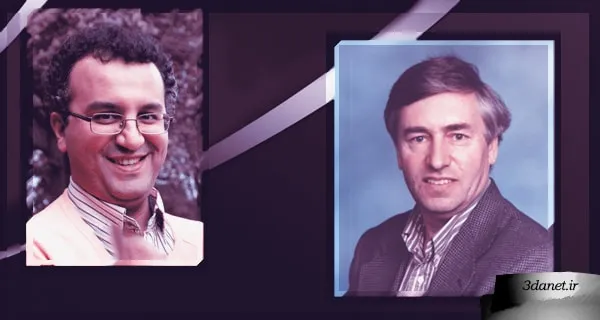
What you have before you is an effort by Seyed Zuhair Mirkarimi to translate a note from English into Persian on “the mind-body relation” and “personal identity,” written by Nicholas Jolley[1], professor of philosophy at the University of California. This translation was previously published on the DinOnline website as well.
How are mind and body related?
In one of the dialogues of the recently released film “The Imitation Game”[2], the detective investigating Alan Turing’s[3] case asks him: “Can machines think?” Although the conversation that follows this question in the film is not very illuminating from a philosophical perspective, it reminds us of an important issue: the revolution brought about by the invention of the computer, to which Alan Turing himself contributed, has provided tremendous impetus for attention to what we today call the “mind-body problem.” In other words, the question has arisen: how is the mind related to the body? And how does a moist, grayish matter like the brain give rise to such an astonishing phenomenon as “consciousness”[4]?
The mind-body problem is today one of the most controversial topics in philosophy, arousing great enthusiasm for debate among various spectra of philosophers (see, for example, the written exchanges between Galen Strawson[5] and several other philosophers, recently published in the letters column of the Times Literary Supplement). Some modern philosophers, such as Colin McGinn[6], are of the opinion that the mind-body problem is so intractable that we will never be able to solve it, because we do not even possess the concepts necessary to understand how “consciousness” arises from a material mechanism.
But when did the mind-body problem arise in philosophy? Although the revolution brought about by the computer provided a strong impetus for debate on this subject, it was certainly not the origin of the problem itself. The usual and customary answer to this question is the modern version of the problem posed by Descartes. Although some scholars have tried to show that Descartes was the last in a line of “Scholastic” philosophers, the conventional answer mentioned above is acceptable and valid. It seems that Descartes was the first to explicate “consciousness” within a modern conceptual framework and to raise the question of how this consciousness relates to the brain. Undoubtedly, Descartes’ theory of substance dualism sparked many debates in the century following the publication of his book, “Meditations on First Philosophy”[7], and although discussions surrounding this problem may have fallen into obscurity at times, they have continued in various forms up to the present day.
Although in many respects Descartes thought like one of us modern humans, reading his debates quickly reveals a major difference between his views and modern philosophical discussions. When Descartes and his followers address the mind-body problem, they always have one eye on theological matters. They were constantly watching to see what the Church’s reaction would be. In Descartes’ time, the mind-body problem was not posed as an independent, academic problem but was closely linked to the discussion of the immortality of the soul. Descartes thought that by showing that the mind-body problem could provide a solid foundation for Christian teachings on the immortality of the soul, he could “feed” his philosophical thoughts to the Catholic Church. These debates arose at a time when “materialism” had shaken the foundations of Church teachings.
The problem of “personal identity”[8] also has a history similar to the mind-body problem. Today, few topics are as fascinating to philosophy students as the question of what preserves a person’s personal identity over time. If we ask when this problem emerged in philosophy, the common answer still seems correct: the first modern formulation of this problem can be found in David Hume’s book “An Enquiry Concerning Human Understanding.”[9] But in this case too, one can see how the context of the problem has changed over time.
Today, the problem of personal identity is raised with an eye toward predictions arising from advances in medical technology. Philosophers openly ponder what can be said about personal identity in cases such as transplanting a living, healthy brain from one human into another’s body. Even if this particular example cannot be attributed to John Locke, he is a pioneer in using science-fictional scenarios to examine our human intuitions about “personal identity.” However, Locke’s primary motivation differed from the reason this topic is addressed in philosophy today. Locke wanted to explain that even if no immaterial substance exists, a person would not perish with the destruction of the body at death. Like Descartes, Locke was concerned about the Church’s stance on his philosophical theories, but this time it was the Anglican Church of England whose positions Locke had to worry about.
Therefore, the experience of studying the works of the great philosophers of the early modern period can be unfamiliar and even irrelevant to our current understanding of the same problems. On the one hand, they are considered modern philosophers because they articulated and formulated many of our present-day philosophical preoccupations. On the other hand, when reading their formulations, it is as if we are in an unfamiliar world where their main agenda is the philosophical explication of religious beliefs. We might better understand the circumstances of those philosophers if we know that the seventeenth century was a two-faced era. With one face, it looked toward the future and the modern world, and with another face, it gazed back at the past and the Middle Ages. This very two-facedness is precisely what makes that era fascinating for many of us.
The author of this article, Nicholas Jolley, is Professor Emeritus of Philosophy at the University of California, Irvine. He is a graduate of the King’s School, Canterbury, and was an undergraduate and research fellow at Clare College, Cambridge. He also collaborated as a research fellow with Christ’s College, Cambridge, between 1974 and 1978. He has taught at the University of California, San Diego (1978 to 1999), Syracuse University (1999 to 2000), and the University of California, Irvine, where he chaired the Department of Philosophy from 2004 to 2007. Nicholas Jolley is also the author of the book “Locke’s Touchy Subjects: Materialism and Immortality,” published by Oxford University Press in 2015.
.
.
[۱] Nicholas Jolley
[۲] Imitation Game
[۳] Alan Turing
[۴] Consciousness
[۵] Galen Strawson
[۶] Colin McGinn
[۷] Meditations in First Philosophy
[۸] Personal Identity
[۹] Essay Concerning Human Understanding
.
.




Discussion0 comments
No comments yet; let yours be the first voice.