Philosophy
Introducing and Reviewing James Rachels's The Elements of Moral Philosophy
James Rachels's The Elements of Moral Philosophy is an introduction to how one should live and to the most important ideas in the field for beginners. Ahmad-Ali Heydari considers its lucid exposition of a 'non-religious ethics' to be among its merits and deems the book suitable for university students.
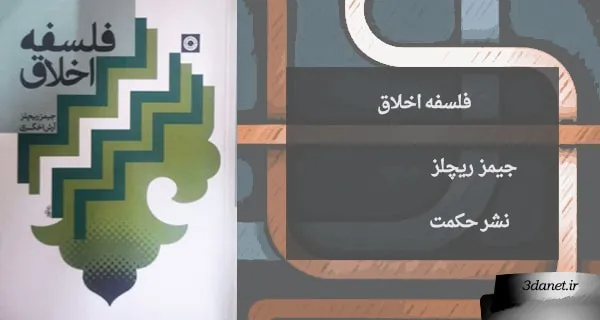
Socrates, one of the first and best moral philosophers, said that this field deals not with a “trivial matter” but with “how we ought to live.” This book is an introduction to moral philosophy in this broad sense. Of course, the subject is too vast to be contained in a small book: so one must decide which issues to keep and which to omit. My guiding thought has been this: imagine a person who knows nothing about the subject but wants to spend some time learning about it. What are the first and most important topics he needs to know? This book is my answer to that question. I have not tried to cover every topic raised in the field. Rather, I have tried to address the most important ideas that every beginner should encounter.
.
Chapters of The Elements of Moral Philosophy:
1. What Is Morality? 2. The Challenge of Cultural Relativism 3. Ethical Subjectivism 4. Does Morality Depend on Religion? 5. Psychological Egoism 6. Ethical Egoism 7. The Utilitarian Approach 8. The Debate over Utilitarianism 9. Are There Absolute Moral Rules? 10. Kant and Respect for Persons 11. The Idea of a Social Contract 12. Virtue Ethics 13. What Would a Satisfactory Moral Theory Be Like?
Ahmad Ali Heydari's Review of The Elements of Moral Philosophy
One cannot expect a book on moral philosophy comprising roughly 300 pages to address every conceivable issue in the field. But what Rachels's book does engage with is well chosen and sufficiently elaborated, such that the book admirably meets some of the academic needs for teaching important topics in the realm of moral philosophy. The book contains 13 chapters, and this collection, selected from among the countless issues in the field of moral philosophy, is based on a design whose components the author has, with considerable awareness, compiled and arranged in such a way as to fulfill the end he has in view in the final chapter of the book, which concerns his own preferred theory in the domain of ethics. With this in mind, one can readily understand why certain views in moral philosophy are highlighted in this book while others are not given attention. If the views of existentialist philosophers and thinkers and their writings are not attended to in this book, it stems from the fact that they could not have had a place in the author's design. Indeed, this should be counted as a merit: the book is not a hodgepodge introducing ethical systems, moral theorists, and the diverse issues of this domain; rather, it begins based on an idea, elaborates upon it, and leads to a conclusion. This aspect of the book itself shows why Rachels, in determining the structures of this book, has mainly focused on utilitarian theory and Kant's views on ethics. Another distinguished characteristic of this book is its distancing itself from abstract issues pertaining to the domain of "ethics" or moral philosophy in a very specific sense. In other words, this attentiveness is within the author himself. Whenever the discussions take on a highly theoretical hue, he tries, by presenting examples related to these discussions, to somewhat lessen their abstractness and provide an opportunity for the reader to follow along. We see an instance of this method on p. 198 of the book, where the author is poised to express Kant's idea regarding human dignity and finds it difficult from the standpoint of theorizing, and then attempts to examine "one of its most important applications." These shifts in direction from purely speculative discussions to applications and examples are among the reasons for this book's appeal. Another noteworthy point in this book is the author's commitment and adherence to an ethics that he himself apparently calls "the science of non-religious ethics," and hence, in arranging the book's discussions, this point is kept in mind so that the materials for explicating this conception are provided by the end of the book. In other words, suitable preliminaries have been furnished so that the book, on p. 271, is ready to express this view. With this consideration, the book falls among the collections that can be the addressee of this question: Is it possible to establish an ethical system without basing it on religious beliefs? The author's effort in this regard is clearly visible throughout the book. Another merit of this book, which was written in 1993, is that, as required by the explanation of ethical systems, it utilizes examples that pertain to the current lives of people in Western countries, and thus it is well attentive to the ethical challenges in the contemporary society of the human beings of our time, although in some instances, cultural differences and the type of religious beliefs make it difficult for the Iranian reader to go along with the author's conception. For example, the material that the author was to elaborate on regarding same-sex marriage on p. 69, the translator was compelled, due to observing the ethical proprieties and cultural beliefs of the book's publication space, to refrain from translating and publishing it. We see this point in another context on p. 272 of the book, where the author, based on an evolutionary conception of life and secular theories of biological development, provides preliminaries for setting forth his own preferred ethical system. Among the other undeniable virtues of Rachels's book is the fluency and smoothness of its expression, which is well reflected in Mr. Akhgari's translation of this book. Hence, the book can serve as one of the research references for undergraduate students, and of course, some of its horizons can also well be within the sight and view of graduate students.
In this regard, the fourth chapter of the book, "Does Morality Depend on Religion?", in which the two theories of "Divine Command" and "Natural Law" are considered as two authorities of religious morality, is a worthwhile read and provides suitable material for philosophical discussions about the sources of moral judgments, presenting a number of challenging issues to religious scholars in the field of moral philosophy. From this perspective, the book can provide grounds for dialogue and the sharpening of knowledge among religiously oriented ethical groups. Of course, the arguments presented by the author on these issues are not of equal strength everywhere; for example, on p. 83, in rejecting morality's reliance on natural law, it is argued that "the theory of natural law is out of fashion." On the other hand, the author's presentation of a theory at the end of the book, which he calls "Morality without Hubris" or, in short, MWH (an abbreviation for Morality without hubris), also provides an opportunity for researchers in this field to critique and comment on it. Among other noteworthy points in this book is the appendices section, specifically "Suggestions for Further Reading." In this part of the book, the author has noted that this book has examined the most important general theories in moral philosophy; at the same time, he considers this method to be one approach among other methods of examination and introduction, and interestingly, he himself points to other approaches for examining the issues of this field by introducing many other articles and books, thus turning his book into an engaging text for researchers who wish to refer to other works and sources in these areas. It seems that providing the literature intended by the author on each of these topics can supply suitable resources for further inquiries, and with this consideration, collecting and introducing them in detail would be a useful aid for readers. Mentioning some of the shortcomings of this work is also not without benefit: Some typographical errors: "لحافظ" on p. 20 instead of لحاظ; "کالدقی" on p. 41 instead of کالاتی; "منظومه شمس" on p. 73 instead of منظومهی شمسی; "تعقل" on p. 191 instead of متعقل; on p. 199, in the phrase "According to the theory of utilitarianism, our duty is to do whatever increases the amount and quantity of happiness in the world," instead of "do" it should apparently be "not do"; on p. 92, one line from the bottom, the word "بهعنوان" is missing in "a churchgoer will hear as an example." Or on p. 187, in the phrases "because in some cases we think the consequences of honesty will be bad and the consequences of lying will be good," two commas are missing after the words honesty and lying; on p. 200, توانبخشی needs quotation marks: "توانبخشی"; کالیفورنیا on p. 202 instead of کالیفرنیا (its current and common form), and other instances, but overall, the book is a refined and clean work in this respect. Providing the Latin equivalent for many proper names is necessary, for example: Edmund Burke on p. 97 without mentioning the Latin name, which apparently is Berg; or Karl Menninger on p. 201, where the lack of a Latin equivalent makes it difficult to read. This point is also necessary regarding some terms, including on p. 202, "the serpentine dance of utilitarianism," an expression Kant used in criticizing utilitarians. Perhaps at least mentioning its equivalent in a footnote could have helped the reader grasp Kant's intended meaning. Or "تمایل" on p. 274. In some instances, the author of the book has not cited the sources of his quotations. The esteemed translator would have done a great service if they had found the cited sources and assisted readers by noting their own work in a footnote. Examples of this include: a quotation from Kant on p. 203; or on p. 80, where a statement is attributed to Thomas Aquinas, or p. 86. Some translated expressions do not meet the necessary literary and scholarly standard: "Kant twists this last point in a particular way," the intended meaning is the expression twisting. On p. 85, material from Aquinas's Summa Theologica is quoted, but right at the beginning of the quotation, two pronouns appear that have no clear referent, which is contrary to the principles of quotation. "its moral nature through the reference of its object to the principles of moral activity, that is, that pattern of life ...". The referent of the two instances of "its" in this phrase is unclear. I wish the esteemed translator had taken the trouble to find the referents of these two pronouns in the book Summa Theologica, which is not out of reach. Some of the expressions in the translation are obscure and unclear, including on p. 86 "God has created the universe unearthly" or "post-event attachment" on p. 87 or the way "کلیسا رو" is written on p. 92, which should have been written "کلیسارو", that is, with a half-space between "کلیسا" and "رو"..
.
Book Details for The Elements of Moral Philosophy:
The Elements of Moral Philosophy
Author: James Rachels
Translator: Arash Akhgari
Publisher: Tehran, Hekmat Publications, 1388 [2009/2010], 305 pages.
Author: James Rachels
Publication: McGraw-Hill, 1993, 232 pages.
.
.
Related Content:
A Critique of the Book The Elements of Moral Philosophy by James Rachels, Seyed Alireza Salehi
.
.





Discussion0 comments
No comments yet; let yours be the first voice.