Philosophy
A Review of Persian Translations of James Rachels' The Elements of Moral Philosophy, by Seyed Alireza Salehi
James Rachels's The Elements of Moral Philosophy is a standard ethics textbook in the English-speaking world. This article introduces the book, then critiques and compares two Persian translations, detailing their shortcomings and strengths.

Seyed Alireza Salehi: The first part of this article introduces the late James Rachels and his book, The Elements of Moral Philosophy. This work holds a distinguished place among educational texts on moral philosophy in the English-speaking world and has long been the best-selling book in the field of ethics and philosophy. Compared to other common textbooks in Iran, Rachels' book can be one of the best options for courses in ethics and moral philosophy. The logical order of topics, the use of concrete examples and discussions, the avoidance of abstractions as much as possible, and the rational approach are among the advantages of this book. This part concludes with an overview of the book's chapters and the issues discussed within them. In the second part, we will take a critical look at the Persian translations of this work.
You can download this article from here or here.
.
Introducing and Critiquing a Book and Two of Its Translations
The Elements of Moral Philosophy by James Rachels
Introduction
The first part of this article introduces the late James Rachels and his book, The Elements of Moral Philosophy. This work holds a distinguished place among educational texts on moral philosophy in the English-speaking world and has long been the best-selling book in the field of ethics and philosophy. Compared to other common textbooks in Iran, Rachels' book can be one of the best options for courses in ethics and moral philosophy. The logical order of topics, the use of concrete examples and discussions, the avoidance of abstractions as much as possible, and the rational approach are among the advantages of this book. This part concludes with an overview of the book's chapters and the issues discussed within them. In the second part, we will take a critical look at the Persian translations of this work. The two existing translations, one based on the second edition and the other on the fourth edition of the original text, have managed to present a relatively accurate and readable text; however, shortcomings can also be observed in them. In both translations, parts of the book have been omitted: the "Author's Note on the Second Edition" and the "Sources and References" section in the first translation, and the author's "Introduction" and the "Suggested Resources for Further Reading" section in the second translation. Mistranslations, inadequate or incorrect equivalents, and inconsistency in equivalents are rarely seen in both translations; overall, the first translation is more accurate and elegant than the second, but the second translation is more up-to-date. The details of the two translations reviewed are as follows:
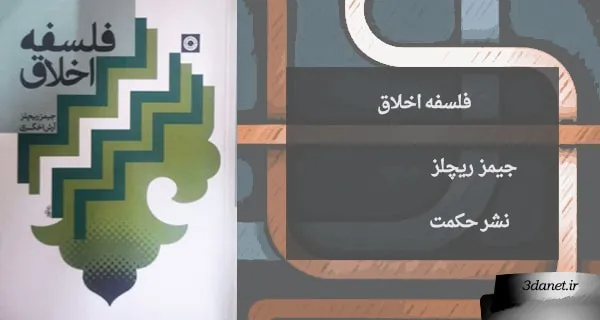
First translation: James Rachels, Philosophy of Ethics, translated by Arash Akhgari, Tehran: Hekmat Publishing Institute, second edition, 2010. 306 pp.
Second translation: James Rachels, The Elements of Moral Philosophy, translated by Mahmoud Fathali and Alireza Alebouyeh, Islamic Sciences and Culture Academy, first edition, 2013. 360 pp.
Opening Remarks[i]
The book The Elements of Moral Philosophy by James Rachels[1] (1941-2003), an American moral philosopher, is one of the prominent books in the teaching of moral philosophy. On the Amazon website, the book is introduced as a standard textbook for undergraduate courses; furthermore, the sale of half a million copies over 20 years (first published in 1986) also made this work, at least for a period, the best-selling philosophy textbook. The author revised the book several times, and the fourth edition was published in the year of his death (2003); thereafter, his son, Stuart Rachels[ii], continued to produce new editions, and the fifth (2007), sixth (2009), and seventh (2012) editions have been published under the joint names of Rachels father and son. The eighth edition will also be published by the end of this year (2014).
About the Author
James Rachels was a professor of philosophy at the University of Alabama in the city of Birmingham[2], Alabama. His other books in the field of ethics include: Moral Problems (1971);[3] The End of Life: Euthanasia and Morality (1986);[4] Created from Animals: The Moral Implications of Darwinism (1990);[5] Can Ethics Provide Answers? (1997);[6] The Legacy of Socrates (2007).[7] The latter two works are collections of the author's essays.
One reason for Rachels' renown is the transformation he brought about in the teaching of ethical subjects. With the publication of Moral Problems (1971), he demonstrated that moral philosophy could be taught by focusing on real issues needed by society, rather than relying on abstract meta-ethical discussions. The flourishing of applied ethics in recent decades is partly indebted to this very work by Rachels. The first three editions of Moral Problems sold one hundred thousand copies and led many American universities to shift from teaching meta-ethics to teaching practical moral issues[iii].
Structure and Method
In the present book, Rachels adopts the same engaging approach as his previous work. The book's chapters are primarily organized around common ethical theories in normative ethics, but concrete issues drawn from real life are introduced under these theories as appropriate, allowing the reader to understand the application of ethical theories in practice. The reader interested in applied ethics can find these concrete issues in various chapters of the book: 1. Decision-making about the life and death of severely disabled individuals in Chapter One; 2. Female circumcision in Chapter Two; 3. Homosexuality in Chapter Three; 4. Abortion in Chapter Four; 5. Altruism[8] and poverty and wealth in Chapter Five; 6. Euthanasia[9] and 7. The moral status of animals in Chapter Seven; 8. The theory of punishment in Chapter Ten; and 9. Civil disobedience in Chapter Eleven.
The book had 12 chapters in its first edition (1986) and 14 chapters in its fourth edition (2003). Due to the rapid developments in the field of moral philosophy in recent decades, the author added the chapter "Virtue Ethics" in the second edition (1993), and the chapter "Feminism and the Ethics of Care" in the third edition (1999). The fourth through seventh editions were revised and presented by the author's son; however, he added no new chapters to the book in these editions, and also removed the chapter on psychological egoism from the fifth edition onward. The wording and examples have also undergone numerous changes and revisions in the newer editions, a list of which can be seen on the author's website or in the preface to each edition.
A logical order is also evident in the sequence of chapters. In a general overview, the author's strategy in presenting the topics is as follows: Chapter One introduces the nature of morality, and the reader's mind is prepared to engage with various ethical theories through the examination of several real examples. Chapters Two through Six present theories that are mostly to be rejected and, in a sense, conflict with a minimal conception of morality (giving importance to reasons and rationality, and impartially considering everyone's interests); accordingly, relativism, subjectivism, egoism, the Divine Command theory (or religious good and evil), and natural law theory are set aside due to having serious flaws. The discussions in these four chapters are mostly negative rather than positive; but Chapters Seven through Thirteen address the more significant theories in normative ethics (utilitarianism,[iv] Kantian ethics, social contract theory, the ethics of care, and virtue ethics), from each of which the author learns and takes something in his introduction and critical examination. Finally, the author's own defended theory, a kind of utilitarianism combined with the strengths of other theories, is presented in Chapter Fourteen.
Advantages of the Book and Its Comparison with Other Textbooks on Moral Philosophy
The merits of this book can be listed as follows: 1. presenting the formulation of arguments; 2. a relatively fair presentation of theories and attention to the strengths and weaknesses of all of them; 3. judging all theories and offering the author's own view; 4. using examples drawn from the real world to explain moral theories and the timely introduction of applied ethics under the theories; 6. minimal engagement with meta-ethical issues and avoidance of its abstract discussions; 7. keeping the book's discussions and examples up-to-date in its new editions; 8. a rational-argumentative approach to ethics.
Considering the points mentioned, in the author's view, among the books on moral philosophy translated into Persian, Rachels' book is one of the most suitable options for teaching in ethics and moral philosophy courses. Today in Iran, books by Frankena, Palmer, Gensler, McNaughton, Holmes, or Zagal-Galindo are usually used as textbooks in higher education institutions[v]; however, apart from the author's credibility and the widespread acceptance of the original English book as a textbook, none of the other books translated into Persian possess all these merits together.
Frankena's book, despite the author's credibility, has three major flaws: 1. The last edition of the book was published in 1973, and the Persian translation is based on this edition; therefore, it does not include many new discussions; 2. The truth of the statement that Frankena's book is "the most fortunate and most renowned book published in the field of moral philosophy" (see: Mostafa Malekian's introduction to Frankena, 1376: 9) has now, for many years, been superseded by the publication of newer and more bestselling works; 3. There is little trace of applied ethics and concrete examples in it. This book is still credible and referenced, but it is not suitable for teaching.
Of the books mentioned, only Palmer's Moral Problems and Zagal-Galindo's Moral Judgment have dedicated sections to applied issues. The translation of Palmer's book was done from the first edition of this book (1995) and does not have the merits of its newer edition (2005). The original book itself was a textbook for high schools and pre-university colleges and is not very suitable for university teaching, except for disciplines other than philosophy.
Moral Judgment (with the original title Ethics for Young People) is exemplary among Persian books in terms of introducing ethical concepts, presenting ethical teachings centered on renowned philosophers, and also addressing applied ethical issues, but the fame and credibility of the book and its authors do not match that of Rachels' book. The author's Aristotelian approach in confronting issues may also not fully satisfy the reader; however, in any case, this book is a very suitable one for starting study in the field of ethics and is recommended to be read before Rachels' book.
Holmes' Basic Moral Philosophy covers all moral theories and four editions of it have been published so far (the existing Persian translation is based on the third edition), but firstly, it lacks discussions of applied ethics, and secondly, the volume and style of its content are such that it makes understanding the material burdensome for students.
Both Persian translations of Gensler's book are based on the first edition (1998) and do not include the two chapters on virtue ethics and natural law added in the second edition (2011). The original book has only been revised once in 12 years. In terms of content, the reader may also not be able to go along with the author's overly rule-oriented and formal approach to ethics, and the author's great emphasis on the Golden Rule. Overall, it seems that Rachels' book is stronger from a rational-argumentative aspect and in terms of scientific structure, and it is also superior to Gensler's book regarding the introduction of applied ethics discussions; although Gensler's book is simpler and more pedagogical, and easier for students.
McNaughton's book, with two Persian translations (one titled The Moral View and the other Moral Insight), although an introductory, textbook, and credible book, is not suitable for teaching at introductory levels and moral philosophy units in Iran due to its focus on meta-ethics and the abstract nature of its discussions, and is only useful for teaching in meta-ethics units.
The bottom line is that it is a mistake to issue a blanket judgment when choosing a textbook for moral philosophy and to prefer one book absolutely over others; for one must take into account the discipline and level of study, the intellectual and cultural background of the students, and their prior knowledge, and then make a choice from among the available books. However, in the author's opinion, Rachels' book is probably the best option, at least for students in various branches of philosophy and for serious enthusiasts of ethical discussions.
A Review of the Fourth Edition[vi]
After the introduction, in a note on the fourth edition, the author enumerates the differences between this edition and the previous one. Then, in the first chapter (What is Morality?), by examining several real and controversial moral issues, he acquaints the reader with some common ways of moral thinking and judgment, and then concludes that at least two things are necessary for issuing moral judgments: 1. providing reasons for moral stances; 2. impartially considering the interests of all individuals. The author's intended minimal conception of morality becomes clear right here: the effort to guide human conduct by reason and to do what there are the best reasons for doing, while giving equal weight to the interests of each individual affected by one's action (J. Rachels 2003: 14).
The second chapter (The Challenge of Cultural Relativism) is tasked with presenting and criticizing the claims and arguments of moral relativists. The author first analyzes and critiques the argument drawn from cultural differences; then, by enumerating the implausible consequences that cultural relativism entails, he puts relativists in a tight spot. He then argues, through a discussion of values shared among cultures, that value disagreements are far fewer than they initially appear; of course, all these criticisms do not prevent the acceptance of some instructive points of cultural relativism.
The third chapter (Subjectivism in Ethics) begins by examining simple forms of subjectivism and, by tracing the developments of this theory, arrives at emotivism. Having rejected the arguments for subjectivism and its advanced form, namely emotivism, the author brings up the discussion of the existence of moral facts and the role of reason and rationality in ethics. At the end of the chapter, by examining the arguments of proponents and opponents of the morality of homosexuality, Rachels shows that, contrary to the claims of subjectivists and emotivists, one can arrive at relatively objective conclusions in ethics (in this case, that homosexuality is not immoral) by presenting and examining reasons.
Rachels' book was published in the religious environment of America, and Christian religious audiences have been of particular concern to the author. The fourth chapter (Does Morality Depend on Religion?) first critiques the common American notion that only priests and churchmen can opine on moral issues; then, two famous religious theories, namely the Divine Command Theory and the Theory of Natural Law, are discussed. The end of the chapter is dedicated to examining the religious objections of American Christians to abortion. In the author's view, appealing to the Bible and church tradition cannot justifiably and logically result in the prohibition of abortion, and contemporary Christians do not even have a sound intra-religious reason in favor of their own position.
The fifth chapter (Psychological Egoism) examines the arguments and claims of those who say that altruism, as one of the requirements of living morally, is fundamentally impossible and that humans ultimately pursue their own interests; then, in the sixth chapter, it is the turn to examine ethical egoism, which says that even if altruism is possible, it is not desirable, and morally, everyone should pursue their own interests. The author considers neither of the two theories successful.
The seventh and eighth chapters discuss utilitarianism. Although the author himself clearly inclines toward this theory and accepts some of its pillars, he does not fail to do justice and carefully presents, and sometimes accepts, the serious criticisms leveled against utilitarian theories.
The shortcomings of utilitarianism draw the author toward Kantian ethics, so that in chapters nine and ten we witness a discussion of absolute moral rules and human dignity. The author rejects Kantian absolutism, but finds the theory of “treating human beings as rational and responsible” and “punishment proportionate to what individuals deserve” admirable, and supplements his own utilitarian view with it; similarly, the social contract, the subject of chapter eleven, although it has advantages in the author’s view, its significant shortcomings ultimately lead the author to judge this theory as unsound.
The next two chapters address the newest ethical theories, namely feminist ethics, the ethics of care, and virtue ethics. In chapter twelve, the author welcomes the articulation of woman-centered concerns and insights in the field of ethics; nevertheless, he considers feminist ethics and the ethics of care as annexed to virtue ethics and defers judgment on it to the next chapter. In chapter thirteen, he says that virtue ethics, due to its advantages, can be part of a more general ethical theory, but because it lacks comprehensiveness, it is not in itself a complete ethical theory.
In the author’s view, integrating the merits of other ethical theories into a general utilitarian framework is closer to what is right; therefore, in the final chapter, he presents the criteria for a satisfactory ethical theory as follows:
- Conformity with scientific facts and avoidance of undue arrogance about human nature and place;
- Giving importance to human reason and the power of reasoning in ethical situations;
- Avoiding contradiction by impartially considering everyone’s interests;
- Treating others in proportion to what they deserve (Kantian retributivism);
- Making room for motives, virtues and vices, and character (virtue ethics and the ethics of care).
In the theory endorsed by Rachels, which he himself calls “multiple-strategies utilitarianism[10],” all these components are present, but they are based on a utilitarian criterion. The main criterion, in his view, is the greatest possible welfare and happiness of human beings (and even all sentient beings, including animals). Any other ethical theory that can have an effect on this welfare and happiness can be absorbed as a strategy into Rachels’s theory and enrich it. The ultimate goal is to increase the happiness and welfare of all, although the ways to achieve it can be various.
On the other hand, any theory that violates the impartial consideration of everyone’s interests is invalidated. A theory that limits the scope of morality to the individual self, a particular race, the male or female sex, a particular nation, a particular generation, or even restricts it to a particular biological species has violated ethical impartiality; therefore, egoism[11], racism[12], sexism[13], unjust discrimination based on disability, forms of nationalism[14], generational discrimination[15], and speciesism[16] have no place in the author’s chosen ethical theory.
There are also two important and useful sections at the end of the book, especially for those who wish to study the book’s topics further:
- “Resources for Further Reading”: Here, the author has introduced further study resources for each and every chapter of the book, along with useful explanations and guidance.
- “Notes on Sources”: This is the book’s references section, and the sources of quotations and materials used by the author can be found in this section.
Two Persian Translations of the Book
Persian-speaking readers now have at their disposal two separate translations of different editions of this work: the first translation (Arash Akhgari, Tehran, Hekmat Publications) is based on the second English edition (1993), and the second translation (Mahmoud Fathali and Alireza Alebouyeh, Qom, Islamic Sciences and Culture Academy) is based on the fourth English edition (2003). In the present article, wherever “first translation” and “second translation” are mentioned, these are the two translations referred to. In reviewing and critiquing the two existing translations, it is necessary to note that some of the problems may stem from the book’s publication process (typesetting, editing, the publisher’s decisions, etc.), not necessarily from the translator’s error. With this point in mind, we begin our examination of these two translations.
Translation of the Book’s Title
In this article, I have rendered the book’s title (The Elements of Moral Philosophy) as Kolliyāt-e Falsafeh-ye Akhlāq (The Elements of Moral Philosophy). Elements in the plural and in this context has a specific meaning, and the elements of something means the fundamentals or basics of a subject or science[vii]. This title clarifies the level of the book and its audience: we are dealing with an introductory book.
But why should the introductory nature of the book be conveyed to readers? So that they have reasonable expectations of the book, and also so that advanced students do not fall under the illusion that they are dealing with a fundamental source.
However, both translations have, in a way, removed the introductory nature from the title of this book. The first translation has simply settled for the general title “Falsafeh-ye Akhlāq” (Moral Philosophy). The second translation has chosen the title “Anāsor-e Falsafeh-ye Akhlāq” (Elements of Moral Philosophy), but translating elements as “Anāsor” (Elements) does not seem very appropriate here. Nowhere in the book does the author speak of any “element” in moral philosophy. The term “Anāsor” has made the book’s title somewhat ponderous, which does not accord with the book’s introductory nature.
Structural Omissions in Both Translations
In a general overview, we see that part of the book’s structure has been omitted or overlooked in the translations:
- In the second translation, the author’s two-page preface[17] is missing, and readers are compelled to read this preface in the first translation.
- The author’s note on the second edition of the book[18] does not appear in the first translation. The least benefit of including this note would have been to learn that significant developments in ethical discussions occurred between the publication of the two editions, and that the new edition contains a fresh chapter on virtue ethics. The second translation does not have this flaw and includes the author’s note on the fourth edition.
- The “References and Sources[19]” section has been omitted or overlooked in the first translation. The author had gathered all his references and sources together in this section. The omission of this section not only deprives the reader of familiarity with the sources used by the author and the ability to trace his intellectual origins, but furthermore, it can lead to the suspicion of why an academic author, despite numerous quotations from philosophers and various works, has not provided even a single reference to any source. The result is that the reader of the first translation accuses the author of an “ethics” book of failing to observe the basics of “research ethics.” The second translation has acted correctly in this regard and has included this section in its entirety.
- The “Suggestions for Further Reading[20]” section has been omitted without any explanation in the second translation. Persian readers can see this section in the first translation.
Overall, these two translations have acted in exactly opposite ways in omitting parts of the book, and the reader is compelled to have both translations at hand to benefit from the book’s complete structure.
Alteration and Omission of Some Examples
The translators and/or publishers of these two translations have made changes to the third chapter of the book and have deleted certain phrases. In the English text, the author begins the discussions of the third chapter by quoting an American pastor named Jerry Falwell[21] regarding the immorality of homosexuality[viii]. After brief references to common views on homosexuality in some countries, the rest of the chapter's discussions largely focus on presenting and criticizing subjectivist theories; however, references to Falwell's statements and views occasionally appear throughout the discussions. Finally, this chapter concludes with an independent section (Section 6 of Chapter 3) titled "The Example of Homosexuality," examining the arguments of proponents and opponents of its morality. This chapter and this example have met with different fates in the two existing translations. Let us first examine the first translation.
This translation has not altered the opening example, and the chapter begins with Falwell's statements about the immorality of homosexuality. Throughout the chapter, when Falwell's statements are referred to again, they are conveyed in the translation. The reader follows the author's discussion and his example precisely until reaching the end of the chapter, that is, Section 3.6, which specifically examines homosexuality. Here, the publisher has included the title of Section 3.6 (The Example of Homosexuality) and its first paragraph, but in a footnote, informs the reader that "in the continuation of this matter, the author has addressed the reasons presented for or against homosexuality, which have been omitted due to certain considerations" (Rachels, 1389: 69, footnote). Overall, in studying this chapter, the reader does not encounter an omission that destroys the chapter's coherence, and where an omission has been made, the reader is informed explicitly and with mention of the omitted content.
But the merit of the first translation is not solely in preserving the internal coherence of this chapter of the book; when the author refers back to the content of Section 3.6 in the next chapter (Rachels, 1389: 82), the translator, with admirable precision, provides the necessary material from the omitted section in a footnote so that following and understanding the author's arguments is not hindered by the omission of Section 3.6 (Rachels, 1389: 82–83).
Nevertheless, a change has been made to the text in the first translation of which the Persian reader remains unaware. In the second edition of the English version, after mentioning Falwell's view, as a representative of "a large number of Americans" who consider homosexuality immoral, the author brings up a statement about Iran, which the translator has omitted. The English text and its Persian translation are as follows:
In other societies, of course, people have other views. The rulers of present-day Iran agree with Falwell and take his view to an extreme: there, homosexuals may be castrated or killed or both.
"Of course, in other societies, people have other views. The rulers of present-day Iran agree with Falwell and take his view to its ultimate extreme: in Iran, homosexuals may be castrated or killed or both castrated and killed" (Rachels, 1993: 30).
This sentence appears in the first translation as follows: "Of course, in other societies, people have other views, and in some of these societies, this view of Falwell reaches its utmost extreme: homosexuals there may be castrated or executed." (Rachels, 1389: 54) In the author's view, the omission of Iran's name[ix] has no justification. The author has put forward three claims about Iran here:
- The rulers of Iran agree with Falwell on the immorality of homosexuality;
- In Iran, homosexuality may lead to severe punishments[x];
- These punishments consist of killing, castration, or both.
Of these three claims, part of the third is incorrect. In Islamic jurisprudence and Iranian law, there is no punishment for sterilization, and the author's information was incomplete[xi]; but even this mistake by the author cannot be a reason for deleting the name of Iran. Fidelity in translation requires that the author's phrase be conveyed in Persian without alteration, and that his mistake be noted in a footnote[xii]. This is precisely what happened in the first translation; but the second translation.
The approach of the second translation in this case is different: in this translation, Chapter 3 does not begin with the example of homosexuality and Falwell's statements against homosexuals; because, without the reader's knowledge, the first few paragraphs of the chapter have been deleted. A few sentences later, where the text again speaks of people's disagreement over homosexuality and heterosexuality, it has been transformed in the Persian text into a disagreement about "pacifism" and "militarism" (Rachels, 1392: 65-66).
If the deletion of the homosexuality example had been applied uniformly throughout this translation, the Persian reader would not notice the alterations made in the translation, but a few pages later we come across sentences like this: "Consider Falwell again, who said that homosexuality is immoral." (Rachels, 1392: 68-69 and 73) The astonished reader asks themselves, who is Falwell and where did he say that "homosexuality" is immoral?
At the end of Chapter 3, the entire section examining homosexuality (Section 7.3) has also been deleted, without any explanation to the reader; yet right in the next chapter (The Relation of Religion to Morality), we encounter this reference: "For a critical discussion of this argument concerning sexual matters, see Section 7.3 of this book." (Rachels, 1392: 98) And the uninformed reader, no matter how much they search, will not find Section 7.3 in the book! Overall, the second translation has not handled the deletion and alteration of the discussion of homosexuality correctly. The deletions and changes made have not been applied consistently, and the reader has been left unaware of these changes.
Regarding the considerations that led to the deletion of this section, neither of the two translations has said anything, so a precise judgment about it is not possible, but recalling these points is useful:
- Both translations have included, elsewhere in the book, a relativistic defense of the permissibility of homosexuality based on cultural conditioning; an example from the second translation: "There is nothing bad about homosexuality, and homosexuals are like other people who happen, involuntarily, to be attracted to the same sex." (Rachels, 1392: 63–64; also see: Rachels, Philosophy of Ethics 1389: 51–52).
- The author has a rational-argumentative approach to ethics. Let us think for a moment about what the deletion of his arguments implies? One) his arguments were correct, and it was impossible to answer them; in that case, the problem is not with the author's arguments; two) the author's arguments were weak and flawed. In that case, would it not have been better to present the arguments and for the translators to provide an appropriate response?
- In the second translation, we read that "ethical inquiry is religiously 'neutral.' In this way, the religious and the non-religious, although they disagree about religion itself, both inhabit a single ethical world." (Rachels, 1392: 100) The realm of rational arguments is common to the religious and the non-religious, and there they can discuss and dialogue with one another. Our own theological and philosophical tradition also emphasizes this point.
- If it is said, "This issue is not our issue," one can say: then why are there discussions about this in our jurisprudential rulings and argumentative jurisprudence? Why are there laws on this matter in contemporary Iranian law? Why have parts of these issues been addressed in our literary[xiii] and even philosophical tradition? (Ibn Sina 1400: 383–389; Shirazi 1981: 7/171–179)[xiv]
Examining the First Translation
On the whole, and despite some shortcomings, the translator has managed to provide readers with a readable and fluent text while maintaining accuracy. The Persian prose of the book is polished and smooth. The only significant issue occurs in a few places where the verbs "میکند" and "میکرد" should be read as "مینماید" and "مینمود" for the sentence to make sense; consider these examples: "هنگامیکه تبعات احتمالی آن اصل روشن میشود غیر قابل قبول میکند." (Rachels, 1389: 23); "این نظریه در نگاه نخست کاملاً موجه میکند." (ibid., 38); "تکلیف عبارت است از ... انطباق رفتار خود با طرحی که از همه عقلانیتر میکند." (ibid., 86); "... خودگرایی روانشناختی ... آشکارا غیر قابل قبول میکند" (ibid., 111); "چون برایشان ابطالناپذیر میکرد" (ibid., 112); "این برهان در نگاه نخست متقاعدکننده میکند." (133); "نظریهای که در ابتدا آنقدر مترقی و مطابق با عقل سلیم میکرد ..." (168).
Like many works published in Iran, the text demands the reader's vigilance regarding typographical errors; examples: الگوهای فرهنگی/ الگوهای فرهنگ (33); کالدقیها/کالاتیها (41); آپاراتاید/آپارتاید (42); تلفی/تلقی (49); اخلاقی(1)/اخلاقی (52); رذیلت/رذیلت(1) (52); فرانیس/فرانسیس (72); شمس/شمسی (73); قائل بر/قائل به (85); قلمدد/قلمداد (87); بسیار/و بسیار (87); بهترین/بهتری (122); تلاشی/تلاش (135); در پیام/در پی (140); به قاتل میرساند/به قتل میرساند (187); تعقل/متعقل (191); مادی/عادی (243); دور کنیم/ دوری کنیم(244); ابزار/ابراز (246)[xv].
Where necessary, English equivalents are provided in footnotes, but it would have been better if the English equivalents for some unfamiliar or translator-coined terms had also been given so that understanding the text would not be difficult; for instance, "پیشآگهی" for prognosis[xvi] (Rachels, 1389: 18) is not a common term and requires explanation or the provision of an equivalent; the same applies to "واپسنگری" for hindsight, "خودپیرو" for autonomous, "غیرخوددارانه" for undisciplined, "کمبهاساز" for deflationary (Rachels, 1389: 23, 86, 87, 110, and 112).
The correctness and accuracy of the translated text are admirable; nevertheless, when reading the Persian text, we encounter ambiguities that necessitate consulting the original. The observations that follow are the result of a selective comparison of the Persian text with the English text. Some of these observations do not harm the main point, but readers nonetheless expect the text to be precise.
- «حتی دکتر کوپ نیز اعتقاد خواهد داشت که چنین نوزادی را باید زنده نگاه داشت.» (Rachels, 1389: 20)
Not even Dr. Koop believes that such a baby should be kept alive. (p.6)
«حتی دکتر کوپ نیز اعتقاد نداشت که چنین نوزادی را باید زنده نگاه داشت.» Even by reading the Persian text, one can discern that there is a flaw in the translation, because this sentence does not align with the preceding and following material. Moreover, Dr. Koop (Reagan's conservative Surgeon General) was a proponent of the right to life, and his belief in keeping the said baby alive should not be so surprising as to be introduced with "even."
- «رئیسجمهور آفریقای جنوبی» (Rachels, 1389: 42) was in the original text "a resident of South Africa," where "resident" was mistakenly read as "president." It should have been translated as «یک فرد مقیم آفریقای جنوبی». Another error of the same type: «بیوشیمیایی». (Rachels, 1389: 72) In the original text: biomedical, which is زیستپزشکی; biomedical was mistaken for biochemical.
- «قانوناساسی انگلستان» (Rachels, 1389: 94); in the original text: the English common law, which should be translated as «کامن لا» or «حقوق عرفی». "Common law" is the prevailing legal system in England, based on precedents and judicial decisions, and stands in contrast to Romano-Germanic legal systems that have codified statutes. Due to the existence of this very legal system, England fundamentally does not have a codified constitution either.
- «این نظریه جالبی است» (Rachels, 1389: 120) in the translation of "It is a challenging theory," which should have been: «این نظریه چالشبرانگیزی است.»
- “Unfortunately, this argument has not been argued for as much as it has been asserted.” (Rachels, 1389: 121) There is an ambiguity in this sentence. In the English text, it speaks of a theory, not an argument:
Unfortunately, the theory is asserted more often than it is argued for.
- “It is difficult to explain the acceptance of the general principle of ‘utility’ as an ultimate standard.” (Rachels, 1389: 283) In the original text, we read:
… taking the Principle of Utility as our ultimate standard, it is hard to explain why this is so. (Rachels 1993: 188)
“why this is so” refers to the example raised in the author’s previous sentence: why is it unjust to frame an innocent person, even though it promotes the welfare of the majority? Therefore, the translation would be rendered as follows: “Taking the ‘Principle of Utility’ as our ultimate standard, it will be difficult to explain why this act is unjust.”
- The translation of self-regard as “حرمت نفس” (self-respect/honor of the self) (Rachels, 1389: 109-115) is not without problems. “حرمت نفس” in Persian brings two meanings to mind: 1. the sanctity and value of human life; 2. the dignity and respect a person holds for their own character. As it happens, “حرمت نفس” in this very second sense is used for self-respect in this same translation (Rachels, 1389: 122); but neither of the two Persian meanings of “حرمت نفس” is what the author intends by self-regard in this chapter. self-regard means: consideration for oneself or one's own interests[xvii]; the author’s meaning is attention to oneself and consideration of personal interests (self-interest); something close to the concept of “حب ذات” (self-love) in the Islamic theological and philosophical tradition[xviii]; therefore, if “حرمت نفس” is changed to “حب ذات” or “خودنگری” (self-regard), the text will become more comprehensible; for example:
Sometimes we are able to promote the welfare of others when our own interests are not at all at stake. In these cases, even the strongest حرمت نفس does not prevent us from considering others. ... Many behaviors are motivated by حرمت نفس... . (Rachels, 1389: 111)
- It would have been correct to translate anti-Semitism as “یهودستیزی” (anti-Judaism) and not “مسلک ضدسامی” (anti-Semite doctrine) (Rachels, 1389: 41, 43, 135). In the English language, this word, despite its appearance, solely means hatred of Jews, not opposition to all Semitic peoples.
- “The twentieth surah of the Book of Leviticus” (Rachels, 1389: 54) contains both a redundancy, because “Book” and “سِفر” have the same meaning; and the term “surah” is not common for the parts of the Judeo-Christian holy books, where “باب” (chapter) is used (see the repetition of this same expression on pp. 76 and 92). On p. 91, “the first surah of Jeremiah” also appears, where “the first chapter of Jeremiah” is correct.
- In the English text, the author has used italics to emphasize many words and phrases, but many of these emphases have not been conveyed in the translation (See for example J. Rachels 2003: 11, 34, 38, 41, 77 …).
- Consistency in the use of equivalents is largely observed, but a few instances of duality are also occasionally seen; for example, theological is sometimes translated as «کلامی» (kalami) and sometimes as «الاهیاتی» (elahiyati), and theologian is sometimes «الاهیدان» (elahidan) and sometimes «متکلم» (motekalem) (Rachels, 1389: 78–79 and 145 and 149). happiness, a key term for utilitarians, has been translated in various places as «خوشبختی و خوشحالی» (khoshbakhti va khoshhali), «خوشبختی» (khoshbakhti), «خشنودی و خوشبختی» (khoshnudi va khoshbakhti), «خشنودی» (khoshnudi), and even «سعادت» (sa'adat) (Rachels, 1389: 141 and 145 and 147 and 159 and 175); even if the translator deems it necessary not to observe consistency, they should draw the reader's attention to this point. common sense appears once as «عقل سلیم» (aql-e salim) and another time on the same page as «حس مشترک» (hes-e moshtarak). (173) Here, the second equivalent is also incorrect. In finding equivalents for deserve and desert, we see «استحقاق و سزاواری» (estehqaq va sazavari) and «شایستگی و شایستهبودن» (shayestegi va shayeste budan) (Rachels, 1389: 176-178 and 276-278). Kant's book Groundwork of the Metaphysics of Morals has been translated both as «زمینه مابعدالطبیعی ”اخلاقیات“» (zamine-ye ma ba'd al-tabi'i-ye
- In several places, minister has been translated as “راهب” (monk) (Rachels, 1392: 86, 105), but we know that monk is “راهب.” A minister is another type of priest in some churches. Perhaps the similarity between monastery (صومعه, دیر: the residence of monks) and minister caused this mistake. One could translate priests and ministers together as “کشیشان” (priests), as the first translation did.
- neither better nor worse has been rendered in the translation as “نه برتر و نه بهتر” (neither superior nor better), the correct form of which is “نه بهتر و نه بدتر” (neither better nor worse) (Rachels, 1392: 87); though this appears to be a typographical error here.
- The title of the book The Morality of Self-Interest is given as: «اخلاق مبتنی بر نفع شخصی» (Ethics Based on Self-Interest); it would have been better translated as: «اخلاقیبودن منفعتطلبی شخصی» (The Morality of Personal Self-Interest). Its explanation was given in the review of the first translation.
- In this translation, homosexuality is everywhere translated as “همجنسبازی” (homosexual acts), but in one place gay sex has also been translated as “همجنسبازی” (Rachels, 1392: 98); this second one should have been translated as “رابطه جنسی بین دو همجنسباز” (sexual relations between two homosexuals), because homosexuality does not necessarily involve sexual relations.
- «اگر باران برای گیاهان مفید است، تنها به این دلیل است که قوانین انتخاب طبیعی [حیات] در هوای بارانی بر آنها حاکم است.» (Rachels, 1392: 99).
If the rain benefits the plants، it is only because the plants have evolved by the laws of natural selection in a rainy climate. (J. Rachels 2003: 56)
The author's suggested translation is: «اگر باران برای گیاهان مفید است، تنها به این دلیل است که گیاهان در محیطی بارانی بر اثر قوانین انتخاب طبیعی تطور و تکامل یافتهاند».
- In the discussion of the relationship between religion and ethics, to express the importance of Socrates' famous question, “Is conduct right because the gods command it, or do the gods command it because it is right?”, the author cites a remark by Antony Flew, who says: «یک آزمون خوب برای سنجش استعداد فلسفی انسان این است که کشف کنیم آیا شخصی میتواند توانایی و ارزش فلسفه را درک کند.» (Rachels, 1392: 89-90); but Antony Flew's sentence has been mistranslated. What does “grasping the ability and value of philosophy” have to do with Socrates' saying and the relationship between ethics and religion?! Flew's original sentence is:
"one good test of a person's aptitude for philosophy is to discover whether he can grasp its force and point." (J. Rachels 2003: 51)
The possessive pronoun its has been referred back to philosophy instead of to the Socratic question. Flew is speaking of the importance of the Socratic question. In his view, if someone can grasp the significance and point of this question, they have a good aptitude for philosophy.
- «اما توجه به این مطلب شایسته است که کلیسا چنین موضعی [ممنوعیت سقطجنین][xxii] را هیچوقت اتخاذ نکرده است.» (Rachels, 1392: 105). This does not accord with a few lines earlier, which says: «موضع کلیسای معاصر بهشدت بر ضد سقطجنین است» (The contemporary church's position is strongly against abortion). The original text is as follows:
But it is worth noting that the church has not always taken this view.
The correct translation is: «اما شایان ذکر است که کلیسا همیشه این موضع را نداشته است.» That is, it has not always held this current strict position and previously thought differently.
- In discussing whether the fetus has a soul, the author once uses the Aristotelian term substantial form, which is “صورت جوهری”; but in the translation we read: «آکویینی این نظر ارسطو را پذیرفته بود که روح «شکل اصلی» انسان است. لزومی ندارد ما به این مفهوم نسبتاً فنی بپردازیم، فقط یکی از نتایج این نظر این است که مادامکه موجودی دارای شکل مشخص انسان نباشد نمیتواند دارای روح انسانی باشد.» (Rachels, 1392: 105).
Aquinas accepted Aristotle's view that the soul is the "substantial form" of man. We need not go into this somewhat technical notion، except to note that one implication is that one cannot have a human soul until one's body has a recognizably human shape.
We know that, according to Aristotle's terminology—which is also common in our philosophical tradition—the soul is a substance, not an accident, and among substances it is the form for the body, which is the matter. Although the author himself has indicated that he is using a technical concept, there is no trace of this technical concept in the translation, and the non-technical and incorrect expression "main shape" has been used; of course, the author himself, in order not to involve the reader with that technical term, uses the less technical word "shape" later in the text, but this is no reason not to mention that technical term correctly in its proper place; similarly, "human form" would also have been better translated as "human form" (surat-e ensān), not "human shape" (Rachels, 1392: 107).
- common law has been translated as "public law" (hoquq-e omumi), which is a mistake. Public law, as a branch of legal science, is the equivalent of public law. Further explanation about common law was given in the critique of the first translation.
- "Self-love" (hobb-e zāt) is given as the equivalent of self-regard in one place (Rachels, 1392: 122), but on the following pages "self-regard" (khod-negari) replaces "self-love" (Rachels, 1392: 124–125 and 128). This duality in the use of a key term confuses the reader.
- affluent countries is rendered in the translation as "Western countries" (Rachels, 1392: 131); of course, many Western countries are affluent, but why should the author's expression be changed?
- The sentence "The United States Supreme Court ... did not find the absolute prohibition of abortion unconstitutional..." has been translated in reverse, and "did not find" should be changed to "found" (Rachels, 1392: 107); see the original text:
the U.S. Supreme Court declared the absolute prohibition of abortion to be unconstitutional …
- In two places in the translation, the numbers and figures for the Nazi massacres or the saving of Jewish lives in World War II are less than in the original text; "For example, it is a fact that the Nazis destroyed innocent human beings..." (Rachels, 1392: 66). The original text speaks of millions of innocent human beings[22]. "It is said that he saved 12,000 people [Jews]" (Rachels, 1392: 110). In the original text, it is 120,000 people.
- In the example of the competition between two presidential candidates, the author uses the verb liquidate, and the translators have rendered it as "eliminate" (hazf kardan) (Rachels, The Elements of Moral Philosophy 1392: 146-149). Reading the Persian text, the reader imagines the discussion is about eliminating a rival in an election; however, the evidence shows the two rivals are trying to "kill" each other, and the example only makes sense if an extreme situation like murder is involved, not merely elimination in an election. The author also explicitly refers to killing once (Rachels, 1392: 148). In the first translation, the equivalent "liquidate" (sar-be-nist kardan) is used, which adequately conveys the meaning.
- There is an error in the translation of this sentence:
"If the end does not justify the means، what does?" The answer is، obviously، "Nothing!"
First, see the correct rendering in the first translation: "If the end does not justify the means, then what does justify it? The answer, of course, is 'Nothing!'" (Rachels, Falsafe-ye Akhlāq: 1389: 139). Now read the second translation: "If the end does not justify the means, then what does it do? The answer is clear, nothing!" (Rachels, 1392: 155). "what does?" means "what justify the means?" and therefore the first translation is correct.
- happiness، واژه کلیدی فایدهگرایان در فصل هفتم و هشتم، اغلب به «سعادت» ترجمه شده است و مترجمان در توضیح گفتهاند: «Happiness را در اینجا سعادت ترجمه کردهایم، ولی با توجه به مباحث سودگرایانه میل و بنتام در جاهای متفاوت میتوان این واژه را به خوشی، لذت و شادکامی ترجمه کرد؛ چنانکه در برخی موارد این کار را کردهایم.» (ریچلز، 1392: 173/پانویس)[xxiii]؛ اما براساس همین توضیح آیا بهتر نبود از واژگان دیگر استفاده کنند، نه از سعادت؟ مثلاً این جمله نیچه در نقد فایدهگرایان را در این ترجمه ببینید: «همه انسانها در پی سعادت نیستند، تنها انگلیسیها چنیناند.» (ریچلز، 1392: 173)؛ خواننده متن فارسی با خود میگوید: دستکم ارسطوئیان و بسیاری از حکما و اخلاقیون مسلمان هم دنبال «سعادت» بودهاند، پس سخن نیچه غلط است؛ درحالیکه سخن نیچه درباره happiness صادق است، آنهم با مدلولی که نزد فایدهگرایان دارد. آن مدلول از جنس «خوشی و لذت و شادکامی» است؛ بنابراین، «سعادت» با بار معناییای که در سنت اخلاقیـفلسفی زبان فارسی دارد معادل خوبی برای happiness در مفهوم فایدهگرایانه آن نیست. در ترجمه اول، این نکته رعایت شده و happiness در بیشتر موارد به «خوشبختی و خوشحالی»، «خوشبختی»، «خشنودی و خوشبختی»، و «خشنودی» ترجمه شده است (ریچلز، 1389: 141 و 145 و 147 و 159 و 175) که گرچه یکدست نیست، بهتر از سعادت است.
- «پس استدلال از طریق نادرستبودن قتل مطرح است.» (ریچلز، 1392: 22) اصل جمله این است:
The Argument from the Wrongness of Killing would then be moot (J. Rachels 2003، 5)
که باید ترجمه شود: «پس استدلال از طریق نادرستبودن قتل قابل تردید خواهد بود.»
- هم sophistical به «عاقلانه» ترجمه شده است (ریچلز، 1392: 26) و هم wise (همان، 24). درست آن بود که اولی به سفسطهآمیز یا مغلطهآمیز ترجمه میشد که با ماجرای آمده در متن کتاب نیز همخوانی بیشتری دارد.
- cultural conditioning اصطلاحی در روانشناسی و جامعهشناسی است که به «شرایط فرهنگی» ترجمه شده است (ریچلز، 1392: 33) و باید «شرطیشدگی فرهنگی» میآمد.
- «اخلاق پیش از هر چیز، موضوع دلیل توصیهگر است.» (ریچلز، 1392: 33):
Morality is، first and foremost، a matter of consulting reason.
consulting صفت reason گرفته شده، اما ظاهراً reason مفعول آن است و باید ترجمه میشد: «موضوع اخلاق، بیش و پیش از هر چیز، راهنماییگرفتن از عقل/دلیل عقلی است».
- تیتر 5ـ1 (reason and impartiality) به «عقل و انصاف» ترجمه شده (ریچلز، 1392: 32)، اما reason در ادامه متن به «استدلال» یا «دلیل» و impartiality به «بیطرفی» هم ترجمه شده است. میدانیم که انسجام ترجمه با تغییر تعابیر کلیدی از دست میرود. اگر رعایت یکدستی معادلگذاری در همهجای متن ممکن نباشد، دستکم باید خواننده را متوجه این امر کرد. این نبود یکدستی نمونههای دیگری هم دارد؛ مثلاً ترجمه taking slaves به «اسیرگرفتن» و در همان صفحه به «بردهداری» (ریچلز، 1392: 48) که تعبیر نخست باید به «بردهگرفتن» اصلاح شود. particular moral issue «موضوعات اخلاقی خاص» آمده است و در ادامه «مقولات اخلاقی خاص» (ریچلز، 1392: 100).
- بیتوجهی به معنای اصطلاحی واژه murder (قتل عمد) باعث شده است ترجمه در جاهایی دچار مشکل شود؛ مثلاً «محافظهکاران متدین معتقدند که جنین از همان لحظه باروری انسان است، بههمین دلیل میگویند که کشتن آن واقعاً نوعی آدمکشی است.» (ریچلز، 1392: 102):
Religious conservatives hold that the fetus is a human being from the moment of conception، and so they say killing it is really a form of murder. (J. Rachels 2003: 59)
در جمله آخر باید گفت: «...کشتن آن واقعاً نوعی از قتل عمد است». آنها سعی دارند ثابت کنند هر نوع سقطجنینی قتل عمد است تا بتوانند از جهت حقوقی جلوی آن را بگیرند. باز میخوانیم: «در این بخش [از کتاب مقدس] گفته شده، مجازات آدمکشی مرگ است. ... آدمکشی مقولهای نیست که شامل جنین شود.» در اینجا نیز دقت مطلب در این است که murder قتل عمد ترجمه شود، نه آدمکشی.
- In two places, “Book of Genesis” is given as the equivalent for Exodus, whereas the correct term is the Book of Exodus (Rachels, 1392: 90 and 105).
Concluding Remarks
Those interested in intellectual discussions now have at their disposal two relatively accurate and readable translations of a reputable and best-selling book in the field of moral philosophy. This book, as mentioned, is one of the very good options for a textbook in moral philosophy and ethics courses at universities and seminaries, and it deserves the attention of professors and students.
Of the two existing translations, the second has the inherent advantage of being based on the fourth edition and is more up-to-date; however, after a complete reading of the first translation and a reading of the first half of the second, as well as through selective comparison with the English text, the author found the first translation to be better overall. Nevertheless, both translations have performed relatively well in conveying the content and are usable. The purpose in stating the shortcomings was also so that readers, by keeping these points in mind, could make better use of both translations.
In conclusion, it is suggested that both translations be revised in subsequent printings based on the latest edition of the book, the seventh edition (2012), so that Persian-speaking readers are not deprived of the benefits of the newest edition of the book.
.
.
Bibliography
Rachels, James. (1993) The Elements of Moral Philosophy. 2nd edition. New York: McGraw-Hill, Inc.
Rachels, James. (2003) The Elements of Moral Philosophy. 4th edition. New York: McGraw-Hill, Inc.
Ibn Sina (1400). Rasa'il. Edited by Mohsen Bidarfar, Qom: Bidar Publications.
Anvari, Hassan (1381). Farhang-e Bozorg-e Sokhan. Tehran: Sokhan Publications.
Palmer, Michael (1389). Moral Problems. Second. Translated by Alireza Alebouyeh. Qom: Islamic Sciences and Culture Academy — SAMT.
Rachels, James (1392). The Elements of Moral Philosophy. Translated by Mahmoud Fathali and Alireza Alebouyeh. Qom: Islamic Sciences and Culture Academy.
——— (1389). Moral Philosophy. Second. Translated by Arash Akhgari. Tehran: Hekmat Publications.
Shirazi, Sadr al-Din (1981). Al-Hikma al-Muta'aliya fi al-Asfar al-'Aqliyya al-Arba'a. Beirut: Dar Ihya al-Turath.
Frankena, William K. (1376). Ethics. First. Translated by Hadi Sadeghi. Qom: Taha Cultural Institute.
Galindo, José and Zagal, Héctor (1386). Moral Judgment. First. Translated by Ahmad Ali Heydari. Tehran: Hekmat Publications Institute.
Gensler, Harry J. (1385). A New Introduction to Moral Philosophy. First. Translated by Hamideh Bahraini. Tehran: Aseman-e Khial Publishing.
McNaughton, David (1383). Moral Vision: An Introduction to Ethics. First. Translated by Hassan Miandari. Tehran: SAMT Publications.
McNaughton, David (1386). Moral Insight. Second. Translated by Mahmoud Fathali. Qom: Imam Khomeini Educational and Research Institute Publications.
Holmes, Robert L. (1391). Basic Moral Philosophy. Third. Translated by Masoud Olya. Qoqnus.
[1]. The Elements of Moral Philosophy by James Rachels
[2]. University of Alabama at Birmingham
[3]. Moral Problems
[4]. The End of Life: Euthanasia and Morality
[5]. Created from Animals: Moral Implications of Darwinism
[6]. Can Ethics provide Answers?
[7]. The Legacy of Socrates
[8]. altruism
[9]. euthanasia
[10]. multiple-strategies utilitarianism
[11]. egoism
[12]. racism
[13]. sexism
[14]. nationalism
[15]. generationalism
[16]. speciesism
[17]. Preface
[18]. About the Second Edition
[19]. Notes on Sources
[20]. Suggestions for Further Reading
[21]. Jerry Falwell
[22]. millions of innocent people
[i]. I am grateful to everyone who read the initial draft of this article and offered suggestions for its improvement, especially Abolqasem Fanaei, Seyyed Hassan Eslami, Seyyed Mohammad Hossein Salehi, Fatemeh Tofighi, Seyyed Mohsen Eslami, and Kaveh Behbahani.
[ii]. Stuart Rachels is a professor of philosophy at the University of Alabama. He is responsible for providing new editions of his father's works.
[iii]. Information about the author and his works is taken from his official website at www.jamesrachels.org.
[iv]. In this article, in agreement with the first translation, we use the equivalent 'fayedeh-garayi' for utilitarianism, which is more precise; except in direct quotations from the second translation, which uses the equivalent 'sud-garayi'.
[v]. The bibliographic details of all these works are provided in the bibliography.
[vi]. The report on the book's content will be based on the fourth edition, which is the work of James Rachels himself and from which the second translation was made.
[vii]. elements [plural]: the simplest principles of a subject of study. (Merriam-Webster’s Collegiate Dictionary) elements [pl]: the basic principles of a subject being studied; the parts that must be learnt first. (Oxford Advanced Learner's Dictionary 1998) the elements of something: the most simple things that you have to learn first about a subject. (Longman Dictionary of Contemporary English 1995)
[viii]. In this article, in agreement with the first translation, we use the equivalent “hamjens-khahi” for homosexuality, except in direct quotations from the second translation, which uses the equivalent “hamjens-bazi.”
[ix]. Referring to other countries and cultures is common in books on moral philosophy, and among these, examples from Iran are sometimes seen. In another book on moral philosophy translated into Persian, there are points about Iran. See: (Holmes 1391, 144 and 194)
[x]. According to the author, the execution of homosexuals has also had its supporters in America. (Rachels, 1389: 54)
[xi]. In the fourth edition, the author removed the sentence concerning Iran, and there is no trace of it in the second Persian translation, which is based on the fourth edition.
[xii]. As elsewhere in the book, the author’s view on the absence of a divine plan in the process of biological evolution is presented, but the publisher has noted its incorrectness from a religious perspective in a footnote. (Rachels, 1389: 272)
[xiii]. The book Shahed-bazi in Persian Literature, written by Sirus Shamisa, has examined this subject in detail within our literary tradition.
[xiv]. Mulla Hadi Sabzevari, in his glosses on this very section of the Asfar, even reflects on the conflict of these matters with religious prohibitions (Shirazi, 1981: 7/173).
[xv]. In one place (p. 100, paragraph 4), the text is mistakenly left-aligned and is not part of the quotation.
[xvi]. Medical predictions regarding the future course of an individual’s illness.
[xvii]. Of course, self-regard also has a second meaning synonymous with self-respect (see: Random House Webster's Unabridged Dictionary).
[xviii]. Of course, the precise equivalent of hobb-e zat is self-love.
[xix]. Just as the expression “immorality of something” carries a negative value connotation and means the unethical nature of something.
[xx]. From the fourth edition onward, the author calls his theory “Multiple-Strategies Utilitarianism.”
[xxi]. Sabok-sar and sabok-sari have three meanings (Anvari 1381: 5/4020): 1. negligence and irresponsibility; 2. foolishness and stupidity; 3. disregard for customs and committing offensive and inappropriate actions and speech; but none of these are quite suitable for the author’s intended meaning of the word hubris.
[xxii]. The addition within brackets is from the author.
[xxiii]. It would be better if the translators’ footnote were moved to p. 156, because “happiness” appears there for the first time.
.
.
Download the article A Review of the Book The Elements of Moral Philosophy
Download from the first server | Download from the second server
.
.
Article Title: Introducing and Reviewing a Book and Its Two Translations (The Elements of Moral Philosophy by James Rachels)
Author: Seyed Alireza Salehi, PhD Candidate in Moral Philosophy, University of Qom
Source: Quarterly Journal of Book Review on Ethics, Educational Sciences and Psychology
.
.
Related Content:
Introduction and Review of the Book The Elements of Moral Philosophy by James Rachels
.
.





Discussion0 comments
No comments yet; let yours be the first voice.