Philosophy
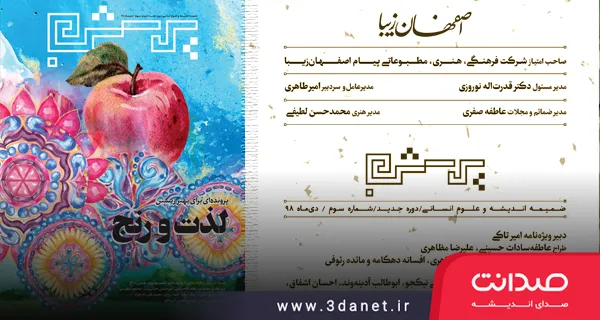
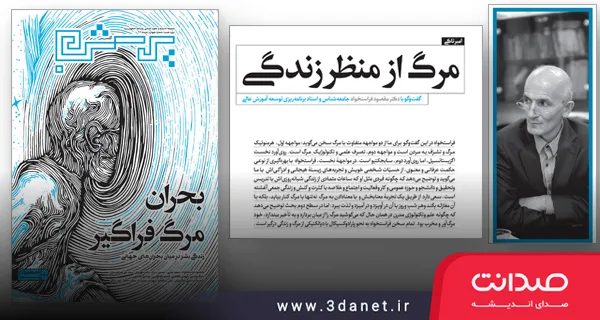
Isfahan-e Ziba Newspaper's Daily Question Special, Issue No. 4: The Crisis of Pervasive Death, Human Life Amid Global Crises
The crisis of pervasive death poses a fundamental question about the quality of life. Porsesh's special issue, linking meaning and knowledge, examines the human being caught in crisis from multiple angles in order to find a way to give meaning to a life accompanied by death and to move beyond absurdity.

What is life like amid a curtain of crisis, a crisis in which pervasive death seizes the hem of humanity? This is a very fundamental question that now, in light of the recent crisis, gains importance for improving the quality of life, for giving it a new breath.
Death is a word that for some people evokes deep fear and dread, and for others, a window to hope; but usually, humanity regards what it does not know from the angle of fear. Death, too, has always been an unknown realm for human beings, and awareness of it is nearly impossible. From the perspective of some, death is the end of human existence and life, and from the perspective of others, a transformation of the type of life and a profound change in traversing the course of the universe and stepping into a new stage. Now, what occurs after death has been one of the greatest unknowns of human life, for which there have been no special tools of discovery other than the tools of this world. Although various schools and religions have expressed diverse views regarding death, they have all indicated this state: that death is not the end of human existence. Hope and belief in a world beyond, or in continuation of this world, has been the foundation for many theorizations about the afterlife. When human beings imagined that a time would surely come when they would no longer exist, and the mental lamp that until yesterday thought and analyzed being might be no more, they despaired of the future and gradually stepped toward nihilism. The natural product of this despair is the nihilistic view of the entire path of life.
Tranquility is one of the highest human assets a person can possess, and it lies in the direction of resolving this very challenge of death; especially in a world where not everyone necessarily lives for decades, and various crises and incidents lie in wait to end life.
Escaping the reality of death is never possible, and however much a person tries to consign it to oblivion, the death of those around us and loved ones is a turbulence in this deep sea of the human soul. Now, what is to be done?
Now, hopefulness about awareness of death and what comes after has increased with the advances of human knowledge. New sciences may open a new window on death for humanity, so that they may reach conjecture or even certainty about the existence or non-existence of a world after it. Thus, science will become a means to clearly illuminate this path of human movement and shine like a spotlight on the truth of existence. As indeed, research has been and is being conducted in various fields about death and the afterlife, the discussion of which does not fit within this space for now; but to what extent science can advance this path is not a clear matter. Now, whatever the case, the human world flows and continues its movement with the meaning it offers of life. Finding the meaning of life has perhaps been the greatest concern of humanity to this day. What we are and how we should be is a question that has occupied many minds. In inquiries related to death, we certainly encounter many areas of psychology and sociology. There is no escape from enduring and accepting the reality of death; but human beings, individually or socially, flee from this reality. The psychological consequences of this issue, both in the individual and social dimensions, are among the harms that will likely lead to catastrophic breakdowns. That an individual collapses inwardly or a society encounters a high barrier of meaninglessness is a crisis whose remedy is the prescription of liberation from nihilism and nihilistic tendencies. Examining the causes and factors of such breakdowns requires an investigation of resilience and its extent in human behavior. To what extent a human being can endure the non-existence of themselves and their loved ones must be precisely analyzed; therefore, the reflection of death in the fields of psychology and sociology, alongside its philosophical concepts, will also be of great importance.
Today's world is a world of turning threats into opportunities. How many important and fateful transformations have come to fruition after the occurrence of a crisis, catastrophe, or incident and shaped a different world. The expectation of a fundamental transformation after every crisis, considering a historical approach, will be a reasonable and possible expectation. How many transformations have occurred for societies and human beings after immense sorrows and the endurance of adversities.
In a brief overview, if we wish to examine human life amidst crises, we cannot easily bypass the connection between the two categories of meaning and knowledge; meaning that may be derived from religion, philosophy, mysticism, and so on, and knowledge that arises from cognitive endeavors with worldly tools. The link between meaning and knowledge increases the coefficient of assurance for attaining a desirable mode of human life; in that knowledge separates superstition and anti-rational matters, while meaning displays a lofty horizon for the movement of knowledge.
In this issue of the special, we aim to examine the human being caught in the crisis of pervasive death from social, philosophical, mystical, governmental, economic, and other angles, and to see how death can be given meaning, how life can be viewed alongside death, and how a deep analysis in the social sphere regarding the crisis and its consequences and effects can be achieved; perhaps we may witness human living reaching its best possible state.
.
.
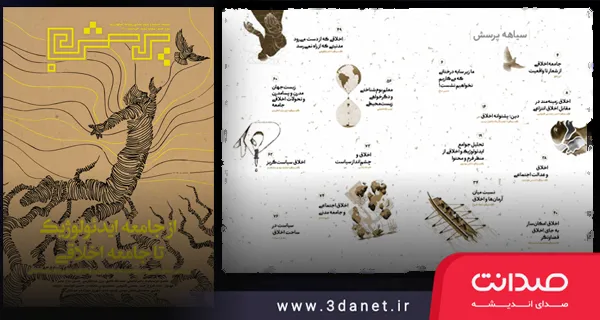
PDF file of the fourth issue of the Isfahan-e Ziba Newspaper's Question Special: The Crisis of Pervasive Death, Human Life Amid Global Crises
.
.
Source: The fourth issue of the Question Special of Isfahan-e Ziba Newspaper
On the topic of: "The Crisis of Pervasive Death" Human Life Amid Global Crises
Featuring writings and talks by:
Maghsoud Farasatkhah, Saeed Madani, Hossein Dabbagh, Nasser Mahdavi, Seyed Ali Mirmousavi, Babak Abbasi, Mehdi Kazemi Zemhrir, Ghasem Kakaei, Morteza Kazemi, Ali Nikjou, Marzieh Mortazi Langroudi, Shahriar Dabirzadeh, Saeed Khezr, Amir Taki
.
.

Discussion0 comments
No comments yet; let yours be the first voice.