Religion
Lectures on Islamic Anthropology by Hossein Soozanchi (11-14)
In his exposition of Islamic anthropology, Hossein Souzanchi sees human identity as dependent on a system of mental constructs (iʿtibāriyyāt) through which the free choice of subjective concepts determines the path to felicity or wretchedness. This path transcends natural instincts and requires the guidance of revealed law.
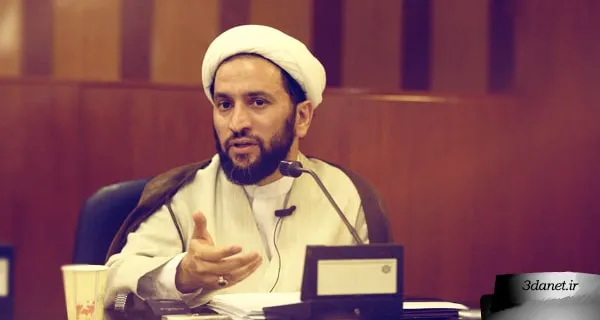
توضیح دکتر حسین سوزنچی پیرامون درسگفتار انسان شناسی اسلامی : امسال (سال تحصیلی ۹۴-۹۵) سومین سالی است که تدریس درسی با عنوان انسان شناسی اسلامی را در مقطع کارشناسی ارشد در دانشگاه باقرالعلوم (که اغلب دانشجویان دارای سابقه طلبگی می باشند) عهده دار شده ام. بحثهای آنتروپولوژی غربیها با اغلب بحثهایی که با عنوان انسان شناسی اسلامی نوشته شده بسیار تفاوت دارند و در این درسها می کوشم با پرهیز از گرته برداری و تقلید، نسبتی بین این دو حوزه برقرار کنم و از متنهای اسلامی، از کتاب هستی و هبوط (آقای پارسانیا) و رساله های انسان علامه طباطبایی بهره می برم.
خلاصه انسان قبل الدنیا: روح[1] با ظرفیتی اعظم از ملائکه(روح) که از جنس عالم امر است آفریده میشود و عوالمی را طی کرده است(از عالم خلق و تدریج و ماده) و به عالم دنیا نازل میشود، و در دو راهی سعادت و شقاوت قرار میگیرد.(و لذا با آفرینشش، شیطان از ملک جدا میشود)
خلاصه انسان فی الدنیا: حرکت انسان از طریق لحوق عوارض به ذات است و در خصوص انسان این لحوق بواسطه ادراکاتی به نام اعتباریات انجام میشود.
این واسطه اعتباری، منجر به حرکت واقعی انسان میشود ویکی از دو سرنوشت سعادت یا شقاوت[2] را خودش برای خود رقم میزند.
شرح و بسط انسان فیالدنیا با توجه به مقاله ادراکات اعتباری[3]
دیدیم انسان قرار است هویت خودش را رقم بزند با اختیار اعتبارات.
مقداری با وضعیت دنیوی سایر موجودات آشنا شویم:
نکته[4]: برای حرکت در نظام دنیا سه دستگاه داریم:
۱- دستگاه طبیعت: لحوق عوارض به ذات را تکوینا انجام میدهد(آثار طبیعی تکوینا مترتب میشود، تغذیه، رشد و تولید مثل(نمو)
۲- نفسانیات: حیوان چون الف) ساختمان وجودیش وسیعتر و نیازمندیهایش بیشتر است و ب)مایحتاج زندگیاش در دسترس او نیست، لذا نیازمند جابجایی[5](طی مسافت) برای تحصیل مایحتاج زندگی است که این حرکت با هدایت دستگاه شعور و میل انجام میشود.
به موازات هر احتیاج طبیعی که محتاج وساطت امور نفسانی است، در حیوان میل(غریزه)ای تعبیه شده که : ۱) وجود احتیاج را به او اعلام میکند. ۲) او را برای رفع احتیاج مذکور حرکت میدهد و هدایت می کند.
[شهید مطهری دو مورد مطرح شده را به چهار مورد تجزیه مینمایند: به اینکه فعل ارادی حیوان مسبوق است به برخی اندیشههای حقیقی (به عبارتی دیگر حرکتی که حیوان انجام میدهد چند گونه علم دارد) که عبارتند از:
۱- معرفت به افعال خود
۲- معرفت به غایت افعال خود
۳- معرفت به ماده متعلَّق به فعل خود
۴- معرفت به کیفیتهای دقیق افعال خود
شهید مطهری میفرمایند دو مورد اول که واضح است بر اساس علم حضوری است، به نظر میرسد که دو مورد سوم و چهارم هم بر اساس علم حضوری است، بعید است که حصولی باشند. در نتیجه اگر هر چهار مورد بر اساس علم حضوری باشد نیازی به ادراک اعتباری ندارد[6].]
این دو قسمت(طبیعت و نفسانیات) در خلقت مجزا از همدیگرند و هر یک غایت مختص دارند که البته نتیجهشان به نفع هم تمام میشود. یعنی اگرچه بین احتیاجات طبیعی حیوان و تمایلات و غرایزی که منجر به صدور فعل میشود هماهنگی هست، اما دستگاه شعور حیوان لزوما توجهی به غایتی که طبیعت طلب میکند ندارد.(غایت شعوری غیر از غایت طبیعی است)
در حیوان، در افق دستگاه طبیعیات یک نیازی هست به نام نیاز نیاز طبیعی بدن برای زنده ماندن که هدفی دارد به نام تامین بدل مایتحلل[7]؛ اما در همین حیوان در افق دستگاه نفسانیات یک نیازی هست به نام میل به گرسنگی که هدفش، سیری و لذت سیری است.
For example, a tree has a need for food, which is supplied by its roots from the earth, but an animal, besides having this need, also has a drive called hunger; and the body's need for metabolic replacement is not the same as being hungry (because often a person's hunger is due to physiological disorders, or the body truly needs sustenance but the person does not feel hungry). This hunger pursues pleasure and the feeling of satiety; the feeling of satiety belongs to the realm of human consciousness and perceptions, distinct from meeting the cells' need for metabolic replacement.
Shahid Motahhari says we have two completely separate systems with separate needs and goals, which the system of creation has arranged so that these two separate systems each pursue their own activity, yet collectively compensate for each other's needs. For instance, if an animal had no drive for hunger, it would not seek food, because eating involves effort and hardship. This drive for satiation, through the perceptual system, compels it to a movement that compensates for that natural need (metabolic replacement).
As another example, one of the issues and topics of the natural system concerning the living being is the survival of the species. Nature needs this species to endure; but this goal, in the animal and its perceptual system, has been placed as something called sexual drive and instinct; the sexual instinct, in itself, seeks sexual pleasure and gratification, not the survival of the species, but the existence of this instinct means that when its need is met, nature ultimately achieves the goal of species survival as well. In other words, no couple marries for the sake of human species survival, yet they do marry, and the species endures.
3. The System of Conventions (Iʿtibāriyyāt): This system in the human being rises above the horizon of drive and instinct, and this consciousness takes shape in the form of conventional mental concepts. Because of this mentality (the imaginative faculty), it becomes detached from connection with the external world (sensory perception: the union of the perceiver and the perceived / intellectual perception: the union of the knower and the known) and, after forming images, gains the capacity for manipulation and intervention.
The first stage of image-formation is true perceptions, but these perceptions do not have the capacity to serve as intermediaries for action; therefore, the human being constructs conventional perceptions from these true perceptions and becomes immersed in the world of conventions.
The important point is that since conventional perceptions are carried out by the imaginative (manipulative) faculty (meaning their basis is the manipulation of true perceptions, not their reflection), sometimes, due to the repeated mediation of conventions, it leads to perceptions and consequently desires in the human being that have no natural basis (that is, conventions and, following them, desires emerge that are solely the product of the incorrect process of our conventions' mediation). Our system of conventions sometimes goes astray (whether in the very nature of the need, or in the path to fulfilling the need), and it is here that the path of felicity and wretchedness is determined. What makes the difficulty of this path of felicity and wretchedness greater is that on the path of human felicity, there also exist real and authentic desires in the human being that have no natural basis (meaning they represent other existential needs besides—and beyond—natural needs). Therefore, the validity of conventions, regarding the two paths of felicity and wretchedness, should not be measured solely by the touchstone of the natural world and the requirements of nature; and it is here that the discussion of the relationship between conventions and realities, as well as the place of the Sharia in the arc of ascent and the conventions needed by the human being for this movement, becomes serious.
In other words, concerning the human being, there is a higher horizon besides the two previous perspectives, called the system of conventions; that is, in the human being, there is an acquired consciousness (mental examination) (not instinctual consciousness), and this mental examination is meant to solve the same two issues that instinct solved in animals and their psychic system: 1- What is my need? 2- What is the way to fulfill this need? And it does these two through that same mental examination, which is the product of a kind of intervention by the imaginative faculty.
Framework of the Discussion
According to the foundation we have adopted[8], acquired knowledge (ʿilm-i ḥuṣūlī) depends on the “faculty that transforms knowledge by presence into acquired knowledge” (the estimative faculty, or in other terms, the imaginative faculty); that is, acquired knowledge is indebted to the operations of the imaginative faculty. When confronting an external object, after knowledge by presence, this imaginative (estimative) faculty constructs a form for us, and this form is, by convention (iʿtibāran), the external object. Such conventions in acquired knowledge become veridical perceptions. This is the same important statement by ʿAllāmah in The Principles of Philosophy, where, in response to skepticism, he accepts that: “We constantly pursue the known, but we arrive at knowledge”—meaning that here, with our own mind and with the aid of this mental form, which is the product of an active and appropriative act of one of our faculties (and is thus, by convention, the external object, not identical to it), we refer to the external (objective) reality. These perceptions, insofar as they are the product of our estimative faculty and are other than the very fabric of objective reality, are conventional (iʿtibār bi-l-maʿnā al-aʿamm)—by convention they are the real object, not in truth—and from the angle that they directly refer to the external, objective thing and that, after this initial form-making—or better, this initial form-taking from the external object—no further appropriation has been applied to them, they are technically called veridical perceptions (in the domain of mental perceptions and acquired knowledge).
But conventional perceptions in the specific sense (iʿtibāriyyāt bi-l-maʿnā al-akhaṣṣ), which are the subject of our discussion, point to the fact that we have a series of veridical perceptions in this sense (mental form-making in the first sense); in this state, we then subject some of these form-makings to yet another appropriation, such that after this appropriation they no longer refer directly to an existing objective reality; rather, we superimpose another convention upon them, and with this second convention we carry out an action. For example, from the real relation that exists between cause and effect, we abstract the concept and mental form of necessity (this is the first form-making of the estimative faculty, which, in any case, is a form other than the fabric of reality). But the relation between me and being full, and likewise the relation between me and food, is not a relation of necessity; now, in the position of a new appropriation, I perform an appropriation and posit and postulate this relation of necessity, this time between myself and being full (I must become full), so that this relation of necessity becomes a motive for me to reach the state of being full. Then, following that, I posit and postulate the relation of necessity between myself and eating food and express it as: “I must eat food.” Why did I postulate this relation that had no direct counterpart in the external world? Because I had previously found a real causal relation between eating food and being full; and now I want to reach that state of fullness again; and for the realization of this matter in reality, I find myself in need of another convention, which is eating food, and which had a necessary relation with the object of my previous convention. These were two examples of a case where both the original need and the path to fulfilling the need were obtained through my conventions.
In summary: the inclination and consciousness that in animals is called instinct, and which was the animal’s instinctual drive toward eating food to become full, operates on the human plane through the system of acquired knowledge. This system of acquired knowledge, through the mind (the imaginative faculty), produces images from the external world in two stages: one image-making is the original, primary, and largely passive image-making, which constructs a form and picture of the fabric of reality in the mind solely on the basis of what reality gives to it (from knowledge by presence to acquired knowledge)—these we call veridical perceptions. There is also an image-making that involves the fully conscious intervention and appropriation of the soul, which performs an appropriation upon the images present in the mind (which had previously entered the mind as veridical perceptions) and, for instance, posits the relation of necessity between two things whose real relation was not one of necessity—these are precisely the conventions that ʿAllāmah discussed.
A point that is important from an epistemological perspective (and this is precisely the angle from which the discussion of mentally posited perceptions is broached in the book The Principles of Philosophy) is that the mind, although the primary materials it intends to work upon are all of the nature of real perceptions, nevertheless performs two kinds of operations on them: on one occasion, with those materials, it seeks to discover new information about the reality of the external world, in which case it must proceed and generate solely on the basis of logical and demonstrative criteria, the product of which becomes the real sciences—which, in one sense,[9] are themselves posited. But on another occasion, we construct mentally posited perceptions from real perceptions (in the second sense), meaning we perform an intervention, such that this step of moving from the real to the posited is not based on logical steps but on needs and requirements; and therefore, the most important criterion for mentally posited perceptions is their being futile or non-futile (being wise), not their correspondence to reality; that is, does such a positing fulfill a need of ours or not?
But an important matter that exists here, and the apparent wording of ʿAllāmah’s discourse is such that someone might derive relativism from it, is this: given that the movement from real perception to mentally posited perception is based on an intervention and fabrication, are all posited things arbitrary and without criteria, or does a logic also govern movement within the realm of posited things? It seems that, contrary to the apparent meaning of ʿAllāmah’s statement, after I have posited something in accordance with my need, a logic governs my subsequent movements, and this is precisely what distinguishes the important sciences of the posited from matters such as storytelling, tales and novels, fantasy, and poetry. That is, ʿAllāmah’s statement that likened positing to poetry holds true for the first step of posited things; this first step is entirely a poetic movement, but it is the continuation and the subsequent steps that determine whether these posited things are merely poetry or can also be science.
In the realm of our traditional sciences, there are two important domains of posited things:[10] 1- Ethics, 2- Jurisprudence. Now, when ʿAllāmah says that demonstration has no place in posited things, does he mean that ethics and jurisprudence are poetry? No, that is, what emerges from ʿAllāmah’s reasoning is that this first step is not a demonstrative movement; but it is unlikely that he would commit to the claim that within the internal progression of the posited things themselves, there exists no demonstrative or logical space. It must be said that demonstration also exists in posited things, but according to its own requirements. For instance, the impossibility of the conjunction of contradictories or the conjunction of contraries is clear in the domain of realities. But in the domain of posited things, one view is that these are not impossible (I can simultaneously issue two contradictory posits: say, ‘Tomorrow at 10 o’clock you must be here,’ and ‘Tomorrow at 10 o’clock no one should be here.’ Issuing such a posit is not impossible—witness the many rulings and laws enacted in the country!—but it is contrary to wisdom, and because it is contrary to wisdom, it entails futility, and for this reason, such a system of positing is not accepted. So, although logically one can posit the conjunction of contradictories, ultimately, after we present it to the rational, we realize that our posit was futile, and if we take the criterion of wisdom seriously (which is precisely what distinguishes the sciences of the posited from poetry), these very self-evident philosophical rules can, this time with a new identity, fulfill their logical functions in the domain of posited things.
Point 1: In the human domain, posited things themselves sometimes create new needs, in the sense that the rational and logical mechanism was that we would have a need for this posit to fulfill, but then, because of our positing, we realized that with this one posit our work does not proceed, so we created a second, a third, and so on. These posited things became so serious in the space of fulfilling our needs that we gradually began to treat these new posited things themselves as a real need, and it is precisely here that the issue of ‘the world’ and the crossroads of felicity and wretchedness becomes serious.
In the initial steps, it is very clear; for example, to satisfy the need for thirst, we know it is through drinking water[11]. But to drink water, I must first have water, and then the concept of ownership, then transaction, then money, and so on. When this chain progresses and those constructs in life are constantly linked with those needs, gradually desires are created within us for the construct itself. That is, the relationship between this construct and the prior object becomes so extensive that it gradually becomes ambiguous for the human being whether a necessary relationship exists between them, and indeed, whether this latter construct is fundamentally the one that truly runs everything. It is from here that false needs gradually arise, and the discussion of felicity and wretchedness is precisely this: that the human being distinguishes real needs from false ones.
It seems that the theory of the social construction of reality considers the entire mechanism of needs to be of the type of false needs in the very sense that was explained.
Point 2: In the world, there is a horizon of need and the fulfillment of need, which is a continuation of the same apparatus of appetites. However, the point here is that we have entered this world with the spirit and we want to reach the goal of the spirit. All the points that were mentioned were in the domain of analyzing the function of human constructs in relation to the function of instinct in animals. That is, the horizon of satisfying our instinctual needs, which, of course, because we are human, we fulfill not with instinct but with constructs; and we accepted that these very constructs, by becoming complex, may cast us into false desires. But if someone limits the discussion to this extent, their analysis of human good and evil becomes the analysis of Mr. Rousseau, who considered society to be the sole destructive factor for the human being and raised the cry of a return to nature.
However, in the discussion of the pre-worldly human being, it was proposed that the spirit enters the world with an immense capacity, and therefore the human horizon is not merely the horizon of the continuation of the animal (instincts). Rather, it has a much higher horizon, which, of course, it also wants to move towards using the mechanism of constructs. It is here that if we do not consider the truth of the human being to be merely Darwinian and take the arc of descent in the human being's entry into the world seriously, then in addition to the satisfaction of instincts, movement in the arc of ascent also becomes serious. And it is here that the necessity of divine law for the human being becomes very serious. The end of this movement for the spirit is that it was truly immersed in constructs and understands that He is the one who runs everything (servitude). Therefore, there is also a category of constructs that have a more fundamental status than constructs based on nature and are meant to return the human being to the horizon of the arc of ascent. And if the issue of the arc of ascent is taken seriously and the world is not confined to this world, the necessity of the Lawgiver's guidance towards constructs that connect us to the ultimate purpose will become much more serious.
And our final call is that all praise is due to Allah, Lord of the worlds.
[1] In this spirit, a potentiality for its perfections has been placed; at the same time, the human being's perfectional movement is accompanied by acquired knowledge and is carried out through constructs.
Because it has the two paths of wretchedness and felicity, and also the world has been adorned so that one might consider it their purpose and deem themselves material, two paths are thus proposed, one of which is a mirage and the other real.
[2] Felicity: Perceiving the constructed nature of constructs and taking the world as a provision [treating constructs as mere constructs (play) and a means for movement (provision), not as the fundamental movement and ultimate goal]. Wretchedness: Considering constructs as static realities and taking the world as the ultimate goal (considering constructs as truth and the ultimate goal).
[3] In this session, to further elaborate on Allameh Tabatabai's discussions in the domain of the human being in the world, the explanations that Martyr Motahhari provided in the footnotes of the sixth article of
In opposition to the Marxists, who claimed pluralism in the sense of relativism (that all beliefs and stances of individuals are dependent on their class position), after discussing true perceptions, Allameh and Shahid Motahhari seek to explain that the Marxists' statement contains a grain of truth, but their problem lies in confusing conventional perceptions with true perceptions. Therefore, their assertions are only correct in the realm of conventionalities.
On page 174 of the book The Principles of Philosophy and the Method of Realism, Allameh states that: at first glance, we divide the phenomena of the world into two different categories: living beings (possessing consciousness) and non-living beings. Subsequently, Shahid Motahhari, using this very point from Allameh, slightly changes the course of the discussion, as you will observe in the text. With the explanation that Professor Soozanchi accepts this point of Shahid Motahhari.
[4] In discussing the attachment of accidents to essence, Shahid Motahhari first describes the system of nature, then moves one level higher, explaining the system of the soul and the relationship between these two, and finally enters the discussion of conventionalities. This process aids us in better understanding Allameh's exposition.
[5] In the discussion of biology, the main locus of discussion and dispute regarding the boundary separating animal and plant is locomotion.
[6] Allameh says that an animal, in order to perform its action, engages in convention; Shahid Motahhari wants to say that I cannot accept this convention, because the principle in conventionalizing is the fulfillment of need and requirement, and in the case of need, the animal does not conventionalize; rather, it is entirely instinctual.
Instinct is the product of an unseen inspiration, or fundamentally, it is itself a purely presential action.
[7] That portion of food which is digested and replaces what has been lost is cellular nutrition.
[8] This kind of formulation of the issue is based on a specific depiction of the role and function of the imaginative faculty, which is apparently not discussed in this way in the general literature of philosophy. The explanation of the matter is as follows:
In general philosophical discussions, the matter is presented as if there are three types of presential perception and, corresponding to them, three types of mental conception (acquired perception): (1) sensory perception/sensory form, (2) imaginal perception/imaginal form, (3) intellectual perception/intellectual form. However, it seems that with a careful look, one can say that in general perceptions of reality (for now, I am not concerned with the separate imaginal world, as that discussion requires its own considerations), the objective reality whose essence is perceived in a presential manner is entirely either in the horizon of sensory and material reality, or in the horizon of immaterial and intellectual reality; and the task of the formative (imaginative) faculty is to convert these two perceptions into acquired perception and to posit a form as a counterpart for that reality which we have found presentially. That is, as long as the sensory organ performs its activity, as long as the eye sees something, it possesses sensory perception, and through the connection that this instrument establishes between the soul and the external object, the soul attains presential knowledge of the sensory perceived object, but immediately the formative (imaginative) faculty also enters into action and creates an acquired mental form and image from this presentially witnessed reality, which we call the imaginal form. In this humble view, in reality, what is presented as the sensory form is nothing but this very imaginal form, which only when the connection of the sensory organ is severed and, for example, one turns one's face away, since that presential sensory perception is no longer operative, everyone acknowledges that this mental form is an imaginal form; (my humble point being that the very moment the form was captured, the work of the imaginative faculty was done, and whether the sensory organ's connection remains or not has no effect on the essence of this captured form; yes, as long as the sensory organ's connection is established, any additional manipulation that the formative (imaginative) faculty might wish to perform is constantly corrected due to that presential connection, and it is as if the formative faculty's power of manipulation and activity is diminished).
In my humble opinion, the very same matter occurs on the horizon of intellectual perception. That is, initially, through the union of the intellect and the intelligible (which is an existential union, and therefore its direct product is the intellect’s knowledge-by-presence of the intelligible), a knowledge-by-presence is attained by the soul. But then the formative (imaginative) faculty intervenes once more and, from this object perceived through knowledge-by-presence, produces an image to be stored in the treasury of the mind. Thus, here too, what is called the intellectual form (as an acquired mental form) is itself the product of the imaginative faculty, which this time has carried out the task of image-making and transforming knowledge-by-presence into acquired knowledge concerning the object of intellectual perception.
The common atmosphere of Peripatetic philosophy was that we first construct the sensory form, then the imaginal form, and then the intellectual form is constructed. But in my humble opinion, considering certain principles of Mulla Sadra, this picture of acquired perception is indefensible; because
Firstly, Mulla Sadra considers the perception of the intelligible, and indeed the perception of the sensible, to be based on the union of the intellect and the intelligible. That is, the occurrence of any sensory or intellectual perception, in the first step, is only through the union between the perceiver and the perceived, and in the mode of a presential union. The soul, at the level of sensation (that is, with the aid of the sensory organ), becomes united with the objective sensible thing, and at the level of the intellect, becomes united with the objective reality of the intelligible. This discussion is clearer in the domain of the union of the intellect and the intelligible, because there the abstract reality itself is the intelligible; and hence he explicitly states that the subsistence of the intellectual form [where the word “form” seems to be expressed in the manner of the earlier philosophers] is an indwelling subsistence. In other words, we become united with the very reality of the intelligible matter; therefore, at this station, we do not have an intellectual mental form. Even if, regarding sensation, they sometimes describe its subsistence as emanative, this is entirely with regard to the sensory form, not the objective sensible reality; otherwise, for this form to appear in the mind, an objective existential union and connection with the sensible thing itself must first be achieved, and then we take a form from this sensible thing, such that when the sensory organ is severed, this very form remains. Thus, the implication of these two statements is that, both in the domain of the sensible and in the domain of the intelligible, there must first be a union, and then an act of form-taking, and this act of form-taking is precisely the work of the imaginative faculty in both the sensible and intelligible realms. (Of course, regarding the imaginal, there are two discussions. This much of the discussion is complete in Peripatetic philosophy, but after Illuminationist philosophy, the discontinuous imaginal world was also introduced, and it was presumably within this philosophical model that a distinction seems to have been made between the “imaginal faculty” and the “imaginative faculty”: as if the imaginal faculty, like the sensory faculty and the intellectual faculty (if the term “faculty” is even permissible in these two cases within the Sadrian context), is responsible for establishing a presential connection with the known, and is therefore purely passive in relation to reality, whereas the imaginative faculty is the same as the formative and active one, and of course, since the primary arena of its activity is the mind, and the mind is the world of acquired knowledge and mental forms, and mental forms are intensely of the nature of imaginal forms (continuous imagination), these two have been conflated. Therefore, on this basis, imaginal forms are not necessarily particular; rather, all forms in the mind are the product of the imaginative (formative) faculty.
Secondly, an important piece of evidence that can be adduced for this type of interpretation of perceptions is the expression used by Allameh Tabatabai and Martyr Motahhari in the book The Principles of Philosophy and the Method of Realism, where in the fifth article (whose subject is the emergence of multiplicity in true intellectual perceptions), the expression “the faculty that transforms knowledge-by-presence into acquired knowledge” is repeatedly used in the text, and Martyr Motahhari, in the footnotes, repeatedly identifies it as the imaginative faculty. Thus, form-making is the work of a single faculty. Yes, sometimes we take a particular form, that is, with the aid of sensation; sometimes, with the aid of the intellect, we take a universal form. But whatever we do, form-making is one thing, and sensation and intellect are another, which establish the union.
[9] Since acquired knowledge (ʿilm-i ḥuṣūlī) is fundamentally within the space of mental perception, its correspondence with reality itself is by virtue of our positing (the discussion of the positedness of knowledge in ʿAllāmah’s treatment of posited things [iʿtibāriyyāt] should apparently address this). However, in the sense that each of these sciences reports on reality itself, and where it is obtained through a logical process, since the starting point of this process relies on knowledge by presence, the product of this process also necessarily has a counterpart in reality itself (and therefore this very product can logically have a knowledge by presence corresponding to it, such that an individual could directly arrive at this acquired knowledge from that knowledge by presence). Now, if someone has perceived something by presence, they have knowledge by presence from the very beginning; and if a person, by logically juxtaposing self-evident truths—to whose objects they had knowledge by presence—arrives at a picture (acquired knowledge) of reality itself. It seems that the difference between philosophy and mysticism is precisely this.
[10] In the sense that is the subject of our discussion, the “ought” that we want to realize, the “ought” that we want to make the intermediary for action. In the previous session, it was raised that the “ought” that exists between me and my action, that “ought” is our first positing.
[11] One who is a monotheist understands here too that “the fact that water quenches thirst is a posited matter (and it is He who feeds me and gives me drink), but for the sake of ease of discussion, we will consider it as real for now.
.
.
Treatise on the Human Being After This World
This treatise has 16 chapters and it seems to have examined three axes:
Diagram

ʿAllāmah’s discussion is presented roughly according to the progression of the stations of the Resurrection, which we will rearrange according to our needs and present the discussion in three axes (the reality of the post-worldly situation, the worldly action of the human being in the post-worldly realm, and the reality of the human being’s worldly connections in the post-worldly realm). The discussion in this session progressed to the middle of the second axis, and the chapter on “Recompense” from this axis, along with the chapters: “Witnesses, Intercession, and the Heights” from the last axis, remained.
A) The Reality and Truth of the Post-Worldly Situation[1]
1- Death and the Appointed Term
- Every earthly and heavenly existent’s existence is limited to an appointed term [ajal],[2] “We did not create the heavens and the earth and what is between them except in truth and for a specified term. Yet those who disbelieve turn away from that of which they are warned.”
- The specified term of every existent is with its Lord (and a term specified is with Him), which is unalterable (thus it is of the nature of the World of Command), by means of which the worldly temporal term is realized.
- In the verse “and a term specified is with Him,” the meaning of “with Him” is with God; and since He has said: “Whatever is with you will perish, and whatever is with God will remain,” the station of “with God” means the World of Command, where there is no longer any change. Therefore, this specified term is the limitation of the thing in the World of Command, which is unalterable; hence the specified term has been considered the unalterable term, under which the ordinary worldly term falls.
- This term is the very return to God, and when the human being reaches this limit of the term, i.e., death, they attain the meeting with God: “Whoever hopes for the meeting with God, indeed the term of God is coming. And He is the All-Hearing, the All-Knowing.”
The Truth of Death
This term, which is the return and departure from the worldly abode and entry into the otherworldly abode, is “death.” [This death is not of the nature of non-existence, nullity, and annihilation; rather, the truth of death is a truth of proceeding and creation (He who created death and life to test you as to which of you is best in deed. And He is the Almighty, the Oft-Forgiving), but rather a transfer and manifestation of the truth at a higher level: “And the agony of death comes with the truth. That is what you used to flee from.”]
(Narration: The human being is created from two aspects: the world and the hereafter:
1) When these two aspects are joined together = their life on earth (the descent of the celestial aspect to the world)
2) When these two aspects separate from one another (the division between the two aspects) = death (the return of the celestial aspect to the celestial realm)[3]
Thus, when we speak of life and death in ordinary language, we consider life in terms of our earthly state (in which the two aspects are actually united) and death in terms of our celestial state (which has become separated from the earthly state)
- Death (mawt) is tawaffā (receiving in full), and this is a description of the spirit (rūḥ), which leaves the body behind and departs (اللَّهُ يَتَوَفَّى الْأَنْفُسَ حينَ مَوْتِها * وَ هُوَ الَّذي يَتَوَفَّاكُم)[4]; therefore, what remains of the human being in its entirety and enters the next stage of existence is his spirit and soul (nafs). This spirit is on the ascending arc; in other words, the moving element in the human being's perpetual journey toward God (يا أَيُّهَا الْإِنْسانُ إِنَّكَ كادِحٌ إِلى رَبِّكَ كَدْحاً فَمُلاقيهِ) is the spirit. = Hence, from this perspective, one can say that the entirety of human earthly life is a sojourn (labth)[5], قالَ كَمْ لَبِثْتُمْ فِي الْأَرْضِ عَدَدَ سِنينَ.
- God has attributed tawaffā to Himself, to the Angel of Death, and to the angels (تَوَفَّتْهُ رُسُلُنا): all are levels of a single reality, proportionate to the level of perception of the one whose soul is taken (mutawaffā).
- If tawaffā pertains to the spirit and not to the body, then it occurs from within the soul, not from outside or from the body, «وَ أُخِذُوا مِنْ مَكانٍ قَريبٍ» // «وَ نَحْنُ أَقْرَبُ إِلَيْهِ مِنْكُمْ وَ لكِنْ لا تُبْصِرُونَ» // «وَ نَحْنُ أَقْرَبُ إِلَيْهِ مِنْ حَبْلِ الْوَريد» (The reality of death is a stage of showing the human being to himself; we have mistaken ourselves for this body, this body was nothing more than an instrument. In death, they show me to myself, not that they take it from the body; therefore, tawaffā is from within my own self)
- If the reality of the human being is not nullified, but his body is abandoned and rendered utterly ineffective in his existence, then the first thing that becomes apparent with death is the nullity of worldly possessions and the mirage-like nature of its ends and actions, through the severance of means. «وَ لَوْ تَرى إِذِ الظَّالِمُونَ في غَمَراتِ الْمَوْتِ وَ الْمَلائِكَةُ باسِطُوا أَيْديهِمْ أَخْرِجُوا أَنْفُسَكُمُ الْيَوْمَ تُجْزَوْنَ عَذابَ الْهُون» The angels have opened their arms and say to the human being, «أَخْرِجُوا أَنْفُسَكُمُ» bring out your souls, bring yourselves out. (Further evidence that tawaffā is from within, not from without)
An Important Point: Leaving Worldly Possessions in the World
In light of this verse, «وَ لَقَدْ جِئْتُمُونا فُرادى كَما خَلَقْناكُمْ أَوَّلَ مَرَّةٍ وَ تَرَكْتُمْ ما خَوَّلْناكُمْ وَراءَ ظُهُورِكُمْ»: In the world, the human being is connected to two matters, the nullity and ineffectiveness of both of which become known in the Hereafter, and all the difficulties of the Hereafter lie in understanding precisely this:
1- What he considered his own property, regarded as his adornment, or deemed a means to attain his goals: «تَرَكْتُمْ ما خَوَّلْناكُمْ وَراءَ ظُهُورِكُمْ» he has abandoned all of them. Not just money, wife, children, etc., but even hands, feet, eyes, ears, and so on... all of these were entrusted to us. Seeing truly does not require eyes (just as before death, in sleep, we see things with our eyes closed), hearing does not require ears; these were temporary instruments, as the structure of the world was currently such that we work with these instruments, but not that the subsistence of these actions depends on these instruments. We become so intimate with them that we make this instrument a part of our own being, and when they want to take it, it is as if they are taking our very soul, and this is what makes death painful.
2- What he considered his intercessor (shafīʿ) (through partnership with which he attained his goals): «ما نَرى مَعَكُمْ شُفَعاءَكُمُ الَّذينَ زَعَمْتُمْ أَنَّهُمْ فيكُمْ شُرَكاءُ لَقَدْ تَقَطَّعَ بَيْنَكُمْ وَ ضَلَّ عَنْكُمْ ما كُنْتُمْ تَزْعُمُونَ» An intercessor (shafīʿ) means something with which the human being pairs up to reach his goal, and it is this goal that shapes our identity (whichever direction we go, our identity becomes that). And because he thinks that without it, the human being would not reach his goal (in reality: his ultimate reality), he has thus considered that intercessor a partner with God in the realization and actualization of his own existence. Hence, the verse says: Those intercessors whom you thought were partners in you have become lost.
Thus, in this world, to achieve our goals we rely on two things: first, the instruments that we imagine are entirely under our will and a part of our being; second, those whom we do not see as subordinate to ourselves, but rather as alongside and distinct from ourselves (a partner, not a subordinate) and necessary for reaching our goal, such that without their participation we cannot achieve our aims. God says that We will bring you forth alone and you will lose both of these; these belonged to the order of this world, and ma fi al-dunya (what is in the world) remains in the world, and the human being begins a life devoid of all ma fi al-dunya. Hence, we have a narration from the Commander of the Faithful (AS): Man mata faqad qamat qiyamatuh—death is the minor resurrection.
The Path Becoming Unidirectional
- Due to separation from the body (matter, prime matter, potentiality), the human being loses free will (taqawwi 'ala kilt al-tarafayn al-fi'l wa al-tark) → the subject of obligation is removed → the human being becomes fixed in one of the two paths of felicity or wretchedness. (...idh al-zalimuna fi ghamarat al-mawt ... al-yawma tujzawna 'adhab al-hun... ; ...alladhina tatawaffahum al-mala'ikatu tayyibina yaquluna salamun 'alaykum udkhulu al-jannah... (The apparent meaning of this verse is the fixing of the path in the sense of determining the final outcome regarding becoming heavenly or hellish, but it has a complementary point that will come in the discussion of the Barzakh.)
Of course, some had already carried out this fixing of themselves on the path of felicity before formal death. Pay close attention to the verse: "Indeed, those who have said, 'Our Lord is Allah,' and then remained steadfast—the angels will descend upon them, [saying], 'Do not fear and do not grieve, and receive good tidings (indicating before death and before entering Paradise) of Paradise which you were promised (indicating after this world).'" 'Allamah draws a conclusion from this verse, which is that a group has exited the world while still being in the world; that is, they have eliminated the "I" and completely surrendered their free will to God's will, and their will has become entirely subordinate to the will of the Divine Truth. This is the station of the sincere ones (mukhlasin): "For them are good tidings in the life of this world and in the Hereafter."
This group possesses faith without any trace of polytheism and has attained the blessing of Wilayah (God has become their guardian) because they have entrusted themselves to God: "And they said, 'Sufficient for us is Allah, and He is the best Disposer of affairs'...---...So they returned with a blessing from Allah and bounty..." This blessing that the verse mentions is the blessing of Wilayah. Since these individuals have made God their absolute guardian and set aside their own selves, they have come completely under God's Wilayah (fanqalabu bi ni'matin min Allah), and because their will has become annihilated in the Divine will, whoever obeys them has obeyed God. Therefore, just as God invites to obedience to Himself, He also invites to obedience to His guardian. The progression of the matter is as follows:
Wilayah → God has become their guardian → no trace of their own selves remains, and they are completely under God's Wilayah → they have no will other than the obeyed will (God: la nafsa lahu illa al-nafs al-muta') → they attain Wilayah over all (because their Wilayah is the very Wilayah of God, which has Wilayah over all).
Thus, those who obey God (those who obey God) are joined to them (the Awliya' / those upon whom God has bestowed favor): Wa man yuti'i Allaha wa al-rasula fa-ula'ika ma'a alladhina an'ama Allahu 'alayhim... Through their obedience, these attain togetherness with that group upon whom God had bestowed favor: "...ma'a alladhina an'ama Allahu 'alayhim min al-nabiyyina wa al-siddiqina wa al-shuhada'i wa al-salihina wa hasuna ula'ika rafiqa" (This is why we interpreted that "fanqalabu bi ni'matin min Allah" as this very Wilayah.)
[Important note: Attention to the reality of the appointed term (ajal), death, and taking in full (tawaffi) → a life devoid of ma fi al-dunya → the consolidation of felicity and wretchedness →
a) Groups that exited through compulsory death: the wrongdoers / the God-conscious
b) Groups that exited through voluntary death: the Friends of God (Awliya' Allah)
And since such a second group (the Awliya' Allah) is present in this very worldly life of ours, the path to felicity is pure obedience (following)[6] to them, and no opposition to them is justified: "If you love Allah, then follow me, and Allah will love you."
2- Barzakh[7]
‘Allāmah has presented rational and scriptural proofs for the existence of Barzakh, which we will pass over for the sake of brevity. It is useful to mention just one point: In explaining the meaning of the statement that Barzakh has no matter, that its pleasures are imaginal or that there is intellectual pleasure there, ‘Allāmah says: Do not think that it is imaginary, a mirage, or illusory, with nothing real to it. When we say matter, we mean hyle, not body. Hyle, meaning potentiality, which comes to an end with a person’s departure from the world; otherwise, the corporeal form and the like pose no problem in Barzakh. And by imagination, what is meant is the world of discontiguous imagination, which is a level of existence between the world of nature and the world of pure incorporeality, not those mental imaginings (contiguous imagination).
The Questioning in Barzakh Is Not for Everyone
- From the verse "On the day they see the angels—no good tidings that day for the guilty...", "The companions of Paradise, that day, are better in their abode and more excellent in their resting place," it emerges that the questioning is for the believers and the wrongdoers, and these verses are silent regarding the oppressed (mustaḍ‘afīn) and those in the middle.
- Point: In verses 100 to 102, the foremost predecessors are promised Paradise, the hypocrites are promised Hell, and "And others who have confessed their sins, who have mixed a righteous deed with another that is evil" are given the possibility of repentance. But in verse 105, He says: "And say, 'Work, for God will see your work, and His Messenger and the believers, and you will be returned to the Knower of the unseen and the witnessed, and He will inform you of what you used to do.'" Then He says: "And others are deferred to the command of God—either He will punish them or He will turn to them in mercy."
[If we refer "He will inform you" back to verses 100-101, it means that after death, God will inform you (the foremost and the hypocrites) of your state, but a group (those who mixed righteous and evil deeds) will remain waiting. But if we apply "He will inform you" to all three groups, it means that God will inform those three aforementioned groups (the foremost, the companions of the left, and the companions of the right) of their situation, and this last group, the 'others,' are deferred to God's command. That is, within the religious community, one group is "And the foremost, the first among the Emigrants and the Helpers, and those who followed them in goodness—God is pleased with them and they are pleased with Him..." These are the friends of God, for whom God has certainly prepared Paradise: "And He has prepared for them gardens beneath which rivers flow, wherein they will abide forever. That is the great attainment." The second group are the hypocrites, whom "We will punish twice; then they will be returned to a great punishment." The third group are those who have confessed their sins and mixed a righteous deed...; these are sinners who acknowledge their sin, and their good and bad deeds are mixed, and it is hoped that God will forgive them. But another group are "And others are deferred to the command of God—either He will punish them or He will turn to them in mercy." That is, God will inform you about the three previous groups, but there are others whose fate is not yet determined, and it is not known whether God will accept their repentance. (Regarding the previous group, He said, 'Perhaps God will turn to them,' but concerning these, He left the matter undecided between acceptance of repentance and punishment.) In any case, this verse indicates that the fate of a group of people is not determined after death and upon entering Barzakh, and they experience a period of waiting.]
In the narrations, we also have that only the purely faithful and the purely disbelieving undergo the questioning of the grave (Barzakh). It appears that it is the purely faithful and the purely disbelieving whose situation is settled (as was mentioned in the discussion of ajal), whereas there are others whose situation is not yet settled and who are in a state of suspension until they attain a definitive state, and they will undergo questioning and reckoning on the Day of Resurrection. It seems their state is contingent upon the deeds that others send forth for them and the punishments and calamities that befall them there, until they attain a definitive state, and ultimately these individuals will be questioned and called to account on the Day of Resurrection.
- The Denizens of Barzakh Have a Connection with the World:
a) "Rejoicing in what God has given them of His bounty, and they receive good tidings about those who have not yet joined them from behind them—that there will be no fear upon them, nor will they grieve." (Istibshār: receiving glad tidings and joy)
ب) Narration: مَا مِنْ مُؤْمِنٍ وَلَا كَافِرٍ إِلَّا وَ هُوَ يَأْتِي أَهْلَهُ عِنْدَ زَوَالِ الشَّمْسِ he goes to visit his family; the believer فَيَرَى مَا يُحِبُّ and the disbeliever فَيَرَى مَا يَكْرَهُ[8].
ج) When someone enters, they inquire about the news of others.
- A point regarding the narrations: one piece of evidence that the connection of the Barzakh realm with the worldly realm is still maintained is the narrations that introduce a kind of location for the good and the bad. Certain lands have been introduced as the location of the Barzakh paradise and hell / the dead come to visit their families = the material connection is not entirely severed; another piece of evidence for the preservation of this connection is the body of certain individuals that remains intact in the grave.
۳- The Blowing of the Trumpet:
On this subject, 'Allamah cites a narration and offers no explanation. In the narration, three blasts are mentioned: "نفخ فزع / نفخ صعقه / نفخ احیاء" but based on the general context of the narrations, 'Allamah ultimately proposes two: "نفخ اماته/ نفخ احیاء".
صعقه is different from death (because death is the departure of the soul from the body, but the souls of those in Barzakh had already been separated). Perhaps this is evidence that some experience one death: «لَا يَذُوقُونَ فِيهَا الْمَوْتَ إِلَّا الْمَوْتَةَ الْأُولَىٰ وَ وَقَاهُمْ عَذَابَ الْجَحِيمِ» although the disbelievers have two deaths: «قَالُوا رَبَّنَا أَمَتَّنَا اثْنَتَيْنِ وَ أَحْيَيْتَنَا اثْنَتَيْنِ فَاعْتَرَفْنَا بِذُنُوبِنَا فَهَلْ إِلَىٰ خُرُوجٍ مِنْ سَبِيلٍ» [One conjecture is that the first verse concerns the مُخلَصین (sincerely devoted), who have only one death, which is the voluntary death, and they do not even experience صعقه; but for the rest, since there is both compulsory death and صعقه, they have two deaths.]
With the Cry, both those in the earth and those in the heaven (angels and the souls of the blessed) are struck by صعقه (فزع), and the order of the world is rolled up.
All realities have a relation to God and a relation, in themselves, to other than God. Every existent, in terms of its existence, is pure relation. Its quiddity is its identity and is pure nullity. Thus, every existent, in terms of itself, is pure nullity. At the Blowing of the Trumpet, that aspect of being-in-itself, its nullity, becomes manifest, but in terms of its relation to God, it exists.
Apparently, the stage of the Blowing of the Trumpet is the stage of annihilation (فناء), and the stage of the Resurrection is the stage of subsistence after annihilation (بقاء بعد الفناء). The meaning of فناء is not destruction; rather, the pure nullity of the independent self becomes unveiled, and therefore, no perceiver independent of God has any meaning. But in the stage of بقاء بعد الفناء, there is a perceiver who understands this annihilation of his own self, whereas when we come to, we realize that everything is pure relation to God. In the stage of بقاء بعد الفناء, pure nullity has become manifest to the person.
Point: There is an exception in the verse «...فَصَعِقَ مَنْ فِي السَّمَاوَاتِ وَ مَنْ فِي الْأَرْضِ إِلَّا مَنْ شَاءَ اللَّهُ...» 'Allamah says that "إِلَّا مَنْ شَاءَ اللَّهُ" is the station of the مُخلَصین, because elsewhere He has said: «فَإِنَّهُمْ لَمُحْضَرُونَ * إِلَّا عِبَادَ اللَّهِ الْمُخْلَصِينَ». He explains this exception elsewhere as follows: «مَنْ جَاءَ بِالْحَسَنَةِ فَلَهُ خَيْرٌ مِنْهَا وَ هُمْ مِنْ فَزَعٍ يَوْمَئِذٍ آمِنُونَ» and whoever brings a good deed (حسنه) is safe from the terror (فزع). Because he has no independent identity for himself. Here, حسنه is in the absolute sense (absolute حسنه), not a specific good deed. The absolute حسنه is ولایت (guardianship). In the narrations, the matter is clear, but 'Allamah also proves this from the Qur'an: the verse that says «قُلْ لَا أَسْأَلُكُمْ عَلَيْهِ أَجْرًا إِلَّا الْمَوَدَّةَ فِي الْقُرْبَىٰ وَ مَنْ يَقْتَرِفْ حَسَنَةً نَزِدْ لَهُ فِيهَا حُسْنًا إِنَّ اللَّهَ غَفُورٌ شَكُورٌ», the absolute حسنه is placed here alongside مودة قربی (love for the near kin). These are the مُخلَصین, and the absolute حسنه, which is untainted by any سيئه (evil deed, polytheism, disbelief, hypocrisy), is precisely ولایت.
Considering that سيئه is the product of Satan's temptation, the absolute حسنه is where Satan has no access: «قَالَ فَبِعِزَّتِكَ لَأُغْوِيَنَّهُمْ أَجْمَعِينَ * إِلَّا عِبَادَكَ مِنْهُمُ الْمُخْلَصِينَ». Thus, this is the very station of the مُخلَصین, which is the station of ولایت: the مُخلَص is safe from Satan's temptation, so he has no سيئه; therefore, the مُخلَص is precisely the one who possesses the absolute حسنه.
According to the above verses, the mukhlisīn (sincerely devoted) experience neither the great terror (fazaʿ) nor the thunderous blast (ṣaʿqa), and they are not summoned (yuḥḍarūn). Thus, the mukhlisīn remain and do not perish; therefore, they are of the Face of God, since: "...Everything will perish except His Face" (Q. 28:88). (The Face of God is other than God Himself; the Face is that dimension of everything to which we turn when we wish to attend to it.)
This point can also be proven from another angle: these individuals are beyond the heavens and the earth. For the Qurʾān says: "On the Day when We shall roll up the heaven like the rolling of a scroll for writings; as We began the first creation, We shall repeat it—a promise binding upon Us; truly We shall be the doers" (Q. 21:104). We shall fold up the heavens and the earth, and all the inhabitants of the heavens shall be folded up. So if these individuals were in the heavens, they too would have to be folded up. [9] It is for this reason that they are in a dwelling place beyond the heavens and the earth. Since the heavens are folded up by His right hand, the station of the mukhlisīn is beyond the heavens and the earth, which remains; therefore, they are the very Face of God.
Two points concerning the mukhlisīn follow from this:
a) "Whithersoever you turn, there is the Face of God" (Q. 2:115). Wherever you turn, the Face of God is there, not God Himself. These individuals are beyond the heavens and the earth because they are present in every place; in other words, they encompass the entire cosmos.
b) They are not summoned (yuḥḍarūn); therefore, they are above Paradise and Hell and are the apportioners of them (the station of the Aʿrāf, which will be explained later).
The Encompassing Nature of the Resurrection and the Meaning of Its Posteriority to This World
Just as death is what justifies our considering the Barzakh (isthmus) to be after this world, even though the World of Similitudes (ʿālam al-mithāl) encompasses the world of this world, so too the verses concerning the Portents of the Hour and the Blowing of the Trumpet justify our considering the Hereafter to be after this world and the Barzakh, even though it encompasses both.
An important proof that it has no temporal identity: the expanse of the heavens and the earth will be folded up, and time derives its meaning within the space of spatial motion; thus, no temporal relation remains.
The Principal Transformation of the Resurrection: The Manifestation of Inward Realities
- The Qurʾānic verses concerning the occurrence of the Resurrection report transformations, many of which ʿAllāma has enumerated. Among them, however, one verse is different; it says: "and the mountains are set in motion (suyyirat), and become a mirage (fa-kānat sarāban)" (Q. 78:20). Motion does not lead to becoming a mirage! Moreover, it did not say "ṣārat" (became), but rather "kānat" (were). ʿAllāma places this verse alongside the verse: "And you see the mountains, thinking them solid, while they pass like the passing of clouds—the work of God, who has perfected everything. Indeed, He is Aware of what you do" (Q. 27:88). (This verse occurs among the verses of the Blowing and the Resurrection, so it presumably refers to that same station.) Firstly, according to this verse, the mountain, while retaining its majesty and stability (ṣunʿ mutqan—a perfected work), is in motion and unstable (tamurru marra al-saḥāb—passes like the passing of clouds). Thus, that "suyyirat" (are set in motion) is another expression for this very "tamurru marra al-saḥāb" (pass like the passing of clouds). Since, in the very state in which it is a perfected work, "tamurru" (passing) holds true, and we know that a perfected work is incompatible with the mountain's destruction, it follows that its being a mirage is identical with the perfection of the work and the preservation of its identity. That is, from the perspective of its own self, it is a mirage (hence the attribute of stability that we ascribe to it, the Qurʾān ascribes its opposite, saying: suyyirat, tamurru marra al-saḥāb). Yet at the same time, from the perspective of its being attributed to God, everything is a perfected work: "the work of God, who has perfected everything." Thus, the emergence of a thing's mirage-like nature (from the standpoint of the considerations and functions we had attributed to the thing itself) at the Resurrection in no way contradicts the perfection of the Divine work (the establishment of its relation to God and the thing's existence as pure relation-to-God).
[1] In 8 chapters
[2] Ajal (term): the time (vessel) at which a thing reaches its end and comes to rest in it; in other words, ajal is what determines the limit of a thing.[3] Thus it is an existential matter and therefore created (He created death and life)[4] The soul that has been taken in death (tuwuffiya) = the whole = the reality of the human being[5] Anyone who sees lingering as the ultimate end and the whole task has committed the fundamental error.[6] Their commands are the most important constructs (iʿtibārāt) that must become the basis for all constructs. Say: “If you love God, follow me, and God will love you and forgive you your sins; God is All-Forgiving, All-Merciful.”[7] After death, before the Resurrection[8] Muḥammad ibn Yaḥyā from Aḥmad ibn Muḥammad from ʿAlī ibn al-Ḥakam from ʿAlī ibn Abī Ḥamza from Abī Baṣīr from Abī ʿAbd Allāh (peace be upon him) who said: There is no believer nor disbeliever but that he comes to his family at the sun’s decline. When he sees his family performing righteous deeds, he praises God for that; and when the disbeliever sees his family performing righteous deeds, it becomes a source of regret for him.
ʿAlī ibn Ibrāhīm from his father from Ibn Abī ʿUmayr from Ḥafṣ ibn al-Bakhtarī from Abī ʿAbd Allāh (peace be upon him) who said: Indeed, the believer visits his family and sees what he loves, while what he dislikes is concealed from him; and indeed, the disbeliever visits his family and sees what he dislikes, while what he loves is concealed from him. He said: And among them are those who visit every Friday, and among them are those who visit according to the measure of their deeds. (al-Kāfī (Islamic Edition), vol. 3, p. 230)
[9] Here it must be said that the exception in the verse should be taken as disconnected (munqaṭiʿ) for ʿAllāma’s argument to be correct.
.
.
11. Requital (Jazāʾ)
- Just as the Wise One does not perform a vain act (without purpose), He does not treat the righteous and the wicked alike.
There is a relation between act and requital (union)___________________ the same discussion of the Reckoning
- Every act that has a form in this world has an inward reality in the Hereafter. These inward realities are ultimately either guidance (forgiveness) or misguidance (punishment).
- Reward and punishment, which are real matters, depend upon obedience and disobedience (conformity with and opposition to the command), which is itself a construct (iʿtibārī). The relation between the construct and the real does not exist except in a construct encompassed by realities, since with the subsistence of the human being, obedience and disobedience subsist, and with his cessation, they cease. Thus this real matter always accompanies the subsistence of the human being. Thus this real matter always accompanies the subsistence of the human being (since the body gradually changes while obedience and disobedience remain, they are therefore dependent on the spirit. Thus, accompanying the human being is a meaning from the characteristics of obedience and disobedience that validates the aforementioned relation).
- The deeds of the believer are light, and the deeds of the disbeliever are a mirage and illusion.
The Human Being After This World
C - The Reality of My Worldly Connections in the Afterlife
ʿAllāma here has only discussed connections that have a corresponding reality. We establish various kinds of connections in this world; now, which of these connections is a real connection that will have an effect on the Day of Resurrection?
9- The Witnesses of the Day of Resurrection
- Shahāda (bearing witness) is used for both bearing and recounting, and in both cases it requires presence and seeing.
- Bearing witness to an act is not merely to its outward form, but to the reality of its being an act of obedience or disobedience, and this is not possible unless the witness is aware of the origin of the acts within the inner consciences of individuals.
(Thus, bearing witness comes from one who has cognizance of the reality and origin of the act)
- Such witness-bearing is impossible with the outward faculties of a human being even regarding present acts, let alone absent ones.
- Such witness-bearing is bearing witness to the act itself, not to the outward appearance of the act (and every soul will be paid in full for what it did)_____ the prophets and the witnesses will be brought forth (the distinction of the prophets from the witnesses here is for the purpose of honoring and ennobling the prophets, otherwise elsewhere He mentions the prophets as being among the witnesses). He says that it receives all deeds, and the witnesses come. The role of the witnesses is in the receiving of the entirety of the act.
Categories of Witnesses
1. The prophets and the saints, and most importantly the Holy Prophet, may God's blessings be upon him and his family, who is a witness over the prophets and the Imams. (The "middle nation" refers to the Imams, not all Muslims, because firstly: the testimony of some is not accepted even regarding a *sāʿ* of dates. Secondly: addressing everyone while referring to some has precedents, such as: "Muhammad is the Messenger of God, and those with him are firm against the disbelievers, merciful among themselves.")
2. Angels: "Indeed, over you are keepers, noble and recording" – "Every soul will come, with it a driver and a witness."
3. Limbs and Organs: Regarding the sinners: "And you were not covering yourselves, lest your hearing testify against you or your sight or your skins, but you assumed that God does not know much of what you do. And that was your assumption which you assumed about your Lord; it has brought you to ruin, and you have become among the losers." (You were not concerned about testimony, not because you were hiding from it, but because you considered them independent and saw God as absent from them, and thought God does not know.)
Everything possesses knowledge and life. If they did not, bearing witness and then expressing it would not be possible for them.
The state of the criminals: first, the Book__(denial)___the testimony of the Angels______(denial)____the sealing of the tongue and the testimony of the limbs.
- Time and place (the earth, sacred sites, etc.) Time: "Those days We alternate them... that He may take witnesses from among you" (*min* indicating initiation) (Let the summoning of witnesses begin from you, the "days").
Proof for the testimony of witnesses: _Every relation and connection that is realized between actions and existents, that very relation and connection will come into existence between that thing and the Essence.
- Actions are among the descents of the Essence and subsist by It. With the subsistence of the Essence, its emanations, which have come into existence, also remain, and the relation of those emanations with other things and existents also remains. Thus, those actions, with all their relations to other things, will be present in the presence of God.
10- Intercession
We have two sets of verses: "No intercession will be accepted from it" – "No intercession will benefit it" – "Nor will they be helped," etc.
"Who is it that can intercede with Him except by His permission?" – "Intercession does not benefit with Him except for one whom He has permitted," etc.
The reconciliation of these two sets of verses lies in the non-acceptance of intercession that originates from a self, by a self. That is, it cannot issue from a particular self, but issues by God's permission. Therefore, one who can intercede is someone whose action has become annihilated in God and possesses no self. Thus, even the Prophet, if acting from his own self, cannot intercede; but in terms of the station of manifestation he attains, where his action is the manifestation of God's action and he has reached the station of *wilāya*, from this perspective he can intercede.
1- There is no intercession unless it is by permission____Permission is for a pleasing word and is accompanied by satisfaction ("except for one whom the Most Merciful has permitted and with whose word He is pleased") ___ _____A pleasing word is a correct word ("except for one whom the Most Merciful has permitted and who speaks what is right")_________A correct word belongs to a witness in whom no trace of egoity remains, and the actions of the doers are joined to him.
2- The station of intercession is, in reality, a pairing to resolve the incapacity that the one being interceded for possesses.
The witness (who intercedes) has no error in their speech because they are in a state of essential purity and their knowledge is God's knowledge. Thus, the intercessors are pleasing in essence and in action. ("They do not intercede except for one with whom He is pleased") Therefore, intercession pertains to the essence of the one being interceded for, while his action may not be pleasing.
How do we know whether an essence is pleasing or not? The essence is bound to faith and disbelief, and these two define the essence. ("He does not approve disbelief for His servants") That is, if someone has faith, they can be included in intercession because they have placed themselves on the path. Therefore, intercession occurs where the person himself lacks the ability to proceed, and the intercessor, who is aligned with him (due to faith), assists and helps him in traversing this path and compensates for the deficiency of his action. (Like a patient whose temperament has become afflicted; the physician prescribes a medicine whose function is to strengthen his temperament so that it can confront and repel the illness.)
Conclusion: God grants permission to an intercessor who has the possibility of interceding ("Those they invoke besides Him do not possess intercession, except for those who bear witness to the truth, and they know.")
2- Those who are interceded for must also be inherently pleasing [to God]: "They do not intercede except for one with whom He is pleased" (This does not pertain to deeds, because deeds are meant to be covered by intercession and forgiven.)
- An inherently pleasing essence means faith as opposed to disbelief: "He does not approve of disbelief for His servants; and if you are grateful, He approves it for you" (Faith must exist so that it becomes a means of connecting the lower to the higher and being covered by his intercession.)
However, the deeds subject to intercession are major sins, because forgiveness has been promised for minor faults and non-major misdeeds: "Those who avoid the major sins and immoralities, except for minor faults" – "If you avoid the major things you are forbidden from, We will expiate your misdeeds for you."
Intercession makes a righteous deed effective. (Analogy: a strong constitution repels illness on its own, but a weak constitution repels illness with the help of medicine.)
- The expression of the need for permission: "They do not help anyone except those upon whom their Lord has mercy"________Intercession is sustained by mercy ("My mercy encompasses all things"). The Prophet is a mercy to the worlds ____The Prophet holds the station of permission in intercession; therefore, he is the intercessor of intercessors (just as he is the witness of witnesses). The Praiseworthy Station (Maqam Mahmud) (Absolute praise belongs to God; he is the absolute intermediary. "And your Lord will soon give you, and you will be pleased" – not "until you are pleased," but rather a sudden, not gradual, state of being pleased.)
{Objection: Martyr Motahhari calls intercession that is not dependent on deeds "intercession of forgiveness." With this explanation, Allamah's argument for restricting it to major sins encounters a problem, because minor faults and misdeeds would also be covered by forgiveness.}
The remaining intercessors: Angels, the Quran, kinship ties (rahm)
Kinship ties (rahm)______ Evidence: The narration of Abu Hurairah, the opposite implication from the verse "He has no intimate friend here" (Hamim: a close relative, one of kinship ties)
{Objection: It is incompatible with Islamic teachings; deriving an opposite implication is unjustified and stems from his own arbitrary worldly analogy.}
Chapter 13- Al-A'raf
It is a station between Paradise and Hell where the Imams, as witnesses over every people, stand and guide the people of Hell to Hell and the people of Paradise to Paradise.
The weak of the community also stand there (at the base of Al-A'raf, not upon it, meaning on the margins, hopeful towards them) "They have not entered it, but they are hopeful," so that they may enter Paradise through their intercession.
Overall Summary: A human being has a specific and limited capacity (ajal musamma) that is inscribed in the realm of Command (Amr) and also had a reflection in this world, which becomes the worldly term (ajal), causing their presence in the world to also be limited (term, death).
Presence in the world is the accompaniment of the aspect of the spirit (the human reality) with the aspect of the body and worldly life; it is the time when these two aspects are together, and the performance of actions through intermediaries and the choice of the path of felicity or wretchedness is made by the individual themselves. The path of felicity is the perception of the reality of the universe (the contingent nature of all intermediaries and the subsistence of all realities by God). If someone voluntarily pursues this, their path of felicity becomes definitive in this very world, and they come under the guardianship (wilayah) of God and pass through all subsequent stations (indeed, they have already passed through), because they have dissolved their limitation in God and become the Face of God. Therefore, they transcend earth and time; obedience to them is obedience to God, and love for them becomes love for God.
But those who did not reach that station: 1- Either they have enough righteous deeds (taqwa) that with death, their felicity becomes definitive and they join the friends of God (awliya).
2 – Or they have so much wrongdoing (in belief, such as disbelief, polytheism, and hypocrisy, or in action) that with death, their wretchedness becomes definitive and their Hell is confirmed.
- These two groups undergo the questioning and answer of the grave.
3 – Or they are in an intermediate state and are suspended until the Resurrection (of course, the deferred actions of others are effective for them).
- All three of these groups enter the arena of the Resurrection with the blowing of the Trumpet, which is subsistence after annihilation (perhaps because it is subsistence after annihilation, its corporeal nature is emphasized; in the world of death, one has not yet reached annihilation, so the body is still being taken from them and dismemberment occurs), meaning everyone finds the non-independence of all things.
- Thus, both our imaginary tools and intercessors become void, and in their place, my deeds and the witnessing intercessors play a role.
My deeds have been discussed in the contexts of the Path (Sirat), the Scales (Mizan), the Records (Kutub), the Reckoning (Hisab), and the Requital (Jaza').
Those who can play a role in my formation have been discussed under the martyrs, the intercessors, and the people of the Heights.
My action, too, is the product of my iʿtibār (constructs/considerations); if these constructs are grounded in truth, they become a means of salvation, and if we realize that all of them are merely constructs, we have already completed the path at this very point (discussion of prophethood, imamate: “then they turned away from it”).
Likewise, taking someone as an intercessor (my relationships) has two types: imaginary and real; we must make the real one the axis____ The discussion of the imamate of the oppressors, friendships, and family relationships could also have been mentioned by ʿAllāmah under the topic of relationships.
Supplementary point: - One who believes that “The life of this world is nothing but play and diversion, and the abode of the Hereafter is better for those who are Godwary” — that is, that this world is play and diversion — then the Hereafter becomes the principle for him. At that point, concerning the misguided, He says: “Leave alone those who take their religion as play and diversion and whom the life of this world has deceived” — meaning they took the world seriously, and then their religion became diversion and play. (This is the perspective of the believers on the world.)
But those who did not believe it: “Indeed, those who do not expect to encounter Us and are pleased with the life of this world and feel secure in it, and those who are oblivious of Our signs.” Regarding the religious among them, He analyzes thus: “When the hypocrites and those in whose hearts is a sickness said, ‘Their religion has deceived these people,’” or “Allah and His Messenger did not promise us anything but delusion.” (This is the perspective of the hypocrites on the world.)
Summary of the discussions from the year 1394 (2015–2016)
We said that Western anthropological discussions essentially took shape around three axes: origin, end, and the manner of the plurality of societies (the path).
The first school was evolutionism, whose position was as follows:
- Origin: Darwinian evolution (the background of the human being is purely materialistic)
- End: The progress of civilization in the sense of technological advancement (reason replaced instinct in the human being, so the process of evolution is toward human freedom from the compulsion of nature. Thus, the end of the human being: “freedom + domination over the surroundings”)
- The manner of the plurality of societies (the path): Everyone must place themselves on the path of the civilized Western society, and the differences among societies are according to their degree of proximity to or distance from it.
The above view has been and remains the foundation of modernity. (Even Popper’s liberal democracy says that if people do not want liberalism and democracy, they must be suppressed. Fukuyama’s end of history is also this same conception.)
In response to these thoughts, other thoughts also emerged, whose three axes are based on the following:
Origin: The precedence of existence over essence (existentialism)
- End: Nihilism / the social construction of reality (there is truly no end at work, so it is absurd, or we fabricate it ourselves (in the words of the martyr Muṭahharī, it is modern idolatry: “Do you worship what you carve?”))
- Path: Cultural pluralism (denial of a single linear trajectory) based on various factors such as: environment, structure, and agency (critical)
What are the Islamic positions regarding these three issues?
- Origin: Regarding Darwinian evolution, firstly: even if it is correct, it is only the material background of the human being, whereas the human being possesses a spirit and is equipped for the station of divine vicegerency, a station that demands a capacity surpassing that of the angels. That is, the human being’s origin enters the world with this capacity. Secondly: even in Darwinian evolution, the domain of the human being (who possesses culture, in distinction from the animal) has been taken to be much broader, which is an error; the human being is tied to “language,” and the human-like animals that lacked language are not human.
- End: Attaining pure truth (nearness to God), which is practically realized in the Hereafter.
Therefore, society is divided into four groups (why do societies become plural? Due to the existence of two main elements: human actions (deed) and human relationships (intercession)):
1 – The friends of God (awliyāʾ Allāh): those whose Hereafter was also completed in this world, and felicity and subsistence after annihilation were attained.
- Those whose fate is sealed with death, comprising two groups: 2- the Pious (Muttaqīn) 3- the Wrongdoers (Ẓālimīn) (doctrinal wrongdoing – practical wrongdoing)
4- the Oppressed (Mustaḍʿafīn) and those of mixed condition (Murjawn li-Amr Allāh): they ultimately go to Paradise, but after enduring certain stages after death
The path to the multiplicity of societies goes back to two matters:
1 – Human Action (my deed)_____contingent constructs (iʿtibāriyyāt) that become the means of my movement_______a serious need for Prophethood (otherwise two categories of constructs become futile: tools and wealth—imaginary intercessors)
2 – Human Relations (my Imam) __________real connection____________Imamate
On this basis, the division of societies from an anthropological perspective is as follows:
Based on action: 1 –Society of Disbelief (Kufr): denies Prophethood (the divine program for human action and contingent constructs)_____entirely hell-bound _______ethical work in this society is of no use; only doctrinal work: Lā ilāha illā Allāh tufliḥū (There is no god but God, that you may prosper)
2 – Religious Societies: acceptance of the principle of Prophethood (including the People of the Book – Muslims)
Therefore, based on action, our division is tied to the acceptance or non-acceptance of the Sharīʿa
Based on relations:
1- Believer (Imam of Truth) 2- Hypocrite and Disbeliever (Imam of Falsehood) 3- Oppressed, misguided one (without an Imam)
Therefore, based on relations, our division is tied to the issue of Imamate.
So a believer is one who, in the realm of actions, submits to contingent constructs and the Sharīʿa, and in the realm of relations, also submits to the Imamate. The misguided and astray (ḍāllīn) is one who has not submitted to the Imamate of a wrongful Imam, but has also not yet accepted the Imamate of the Imam of Truth.
.
.
Lectures on Islamic Anthropology:
.
Session Eleven of the Lectures on Islamic Anthropology
2015/12/21 | (Continuation of the discussion on Contingent Constructs)
Audio file of Session Eleven Part One | Part Two
.
Sessions Twelve and Thirteen of the Lectures on Islamic Anthropology
2015/12/29 | (Commentary on the Treatise Lectures on Islamic Anthropology by Dr. Hossein Soozanchi (1-5)
Lectures on Islamic Anthropology by Dr. Hossein Soozanchi (6-10)
Lectures on Islamic Anthropology by Dr. Hossein Soozanchi (11-14)
.
.


Discussion0 comments
No comments yet; let yours be the first voice.