Philosophy
Living as an Individual
Søren Kierkegaard, by revolutionising the philosophy of the 'self' and insisting that 'truth must be truth for me', charts the path of living as an individual—a choice that strips life's responsibility from the mask of the crowd and places it squarely on one's own shoulders.

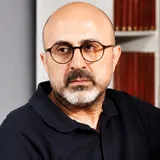
Babak Abbasi
AuthorAsking a philosophy researcher and teacher which philosopher has been important and influential in their intellectual life may, at first glance, seem like a personal question that has little to do with celebrating World Philosophy Day. But such a question can be a celebration of philosophy in that it yields micro-narratives of what philosophers actually do and how they affect people’s lives. This question can even be a philosophical one in that it resonates with Socrates’ motto that “the unexamined life is not worth living.”
Any philosophy student may have turned to many philosophers, and from each encounter a trace may have remained in their intellectual and spiritual life—philosophers whose writings refine thought and purify the soul, thinkers who have more or less lived the same intellectual and spiritual life we are now living, but who have managed to cope with it better than we have and to connect its fragments to one another and to a larger, liberating picture. I say this to explain that choosing among my intellectual heroes is no easy task. For instance, it is not easy for me to omit William James, Wittgenstein, and Levinas in my answer. But setting these aside, for me one of the most influential figures, whose influence is not yet exhausted, is someone about whom there is even disagreement as to whether he should be considered a philosopher at all: Søren Kierkegaard.
Philosophy revolves around universality and necessity, but Kierkegaard detested universality and necessity in the conventional philosophical sense. That is why, in his early youth, he wrote: “The crucial thing is to find a truth which is truth for me… After all, what good would it do me to discover a so-called objective truth, or to work my way through the systems of the philosophers… and to construct a world I was not going to inhabit but merely hold up for others to see?” (translated by Saleh Najafi). Nevertheless, this same person who perhaps ironically considered himself devoid of philosophical talent brought about a full-fledged revolution in the philosophy of self, whose insights were later cultivated and expanded by towering philosophers such as Heidegger and Wittgenstein; a theory according to which we do not possess a substance called the “self”; our “self” is our decisions, choices, and actions: we are our deeds.
To stay close to the question and make my narrative more personal, I should say that Kierkegaard’s thoughts and words have been thought-provoking and influential for me in two domains in particular: the philosophy of life and theology—two domains that are thoroughly intertwined in Kierkegaard’s thought.
Kierkegaard’s main concern was finding a philosophy for life. A significant part of his work is devoted to examining different forms of life and their corresponding philosophies of life. In doing so, Kierkegaard essentially delineated the stages and the process of becoming a “self” and “self-realization.” His three stages are now well known: the aesthetic life (a life revolving around sensation and pleasure), the ethical life (a life revolving around commitment and duty), and the religious life (a life revolving around faith, and of course, suffering). By Kierkegaard’s standards, for example, most of us are in the stage of sensory, pleasure-seeking life, trapped in the vicious circle of desire and boredom; a life that, because its axis is desire, lacks integrity, and once the colorful desires are satisfied and the weekend has passed, then comes the time for the boredom of Friday evenings. Then we must look for interesting things to dispel this boredom. Everyone must ask themselves at least once what they want to do with their life. Kierkegaard’s important lesson was that you must decide about your life, you must take responsibility for your own life, and in this you are utterly alone; you cannot hide behind this or that person, or behind the mask of “the crowd.” But for such a decision, you must first see where you are. That is why he holds up a mirror before you. Perhaps upon seeing yourself and the principle governing your life, you may wish to change and turn to a different kind of life.
Decision is unavoidable and cannot be evaded. We try, by distracting ourselves with various things, to push away the fundamental despair that has taken up residence in the depths of our being. But sooner or later, the "moment of truth" will arrive: "You may become someone in the eyes of others, but you lose yourself, the self which is the most important thing in life. A midnight will come when you will realize this and must tear off the mask, but by then it is too late and you can do nothing about it... Do you think life will let you mock it forever? Do you think you can sneak away a little before that midnight and not have to tear off your mask?" (translated by Khashayar Deyhimi). Whenever I read these words of Kierkegaard, this couplet from the Masnavi comes to mind: He said, O self, you have lived as a hypocrite, you will also die a hypocrite; what are you! In any case, Kierkegaard's philosophy is an invitation to the will to be oneself, to be an individual.
The concept of truth, for Kierkegaard, is also founded in the individual and their life. Truth means living in truth, living in the shadow of sincerity: "The crucial thing is to find a truth which is truth for me, to find the idea for which I am willing to live and die" (translated by Saleh Najafi). This is a non-propositional, inward conception of truth. Truth is not a theory to be debated forever. Truth must be lived. Truth for me means a truth that can transform my life. The inward relation we establish with truth is more important than objective truth; for this reason, as Kierkegaard says, truth in some mouths becomes a lie (because the speaker has no relation to it). In this sense, truth is an inward journey that stands opposed to objective truths; truths that are true in themselves but have nothing to do with us. For example, we have five proofs for the existence of God, but none of them has the power to make us take a single step on the path toward God.
Let us bring this same conception of truth into the realm of theology: having a "true conception" of God is one thing, and having a "true relationship" with God is another. Although this statement is not from Kierkegaard, if he were here, he could, with his usual biting tone, say to us students of philosophy and theology, who are constantly busy constructing religious proofs: You do not need to prove God; instead, prove that you truly believe in God.
Let us do what Socrates did: "He posed the question in an objective manner and in a conditional way: 'if there is an immortality.' Compared to the modern philosopher who has three proofs for immortality, should we consider Socrates a skeptic? Not at all. He stakes his entire life on this little 'if,' courageously rushes to confront death, and spends his life with such boundless passion that this 'if' ('if there is an immortality') is confirmed. Can one find a more decisive proof for life after death than this? But those who possess the three proofs do not design their lives in such a way that their life-plan confirms this view. If there is an immortality, it surely detests the tasteless, listless, and slack way of life of these philosophers. Do you want a stronger refutation of those three proofs than this?" (translated by Mostafa Malekian). Yes, there will always be the temptation to try to give faith a reasoned, demonstrative form, and of course, this situation, insofar as it falls under the project of "faith seeking understanding," is useful and illuminating. But it must be acknowledged that between faith and the conclusion of arguments "there is always a gap"; this is the very "objective uncertainty" that is the condition of our religiosity in the modern world.
Anyone who wants to think about religion in the modern world must begin with Kierkegaard and his "objective uncertainty." For God in the modern world, and perhaps from the modern world, is hidden (the very discussion of "Divine Hiddenness" that has been raised in recent years). This is what causes us to become "threshold-dwellers" and tremble like a willow over our faith. (The beautiful and expressive term "threshold-dweller" is from Reza Rezaei.) A threshold-dweller is someone who is admitted neither to the mosque nor to the tavern! According to Kierkegaard, the requirement of religious passion and devotion is precisely this threshold-dwelling; otherwise, our minds become complacent, and religion will degenerate into something easy and self-evident, on the level of axioms. Very well, where could such a religion lead to a rebirth?
Thus, in religion too one must live as an individual, and since each person appears alone before God, the faith and unbelief of each is defined within the sphere of his unique relationship with God: “How many a time, if Abu Dharr were to understand what passes in Salman’s heart, he would declare him an infidel.”
My little narrative has grown somewhat long! Now that the patient reader has accompanied me this far, I wish to add another point: Kierkegaard helped me gradually let go of the temptation and obsession with system-building, or surrendering to a “meta-narrative” and a system of thought that would settle the matter of all parts and categories. The will to dominate the world through systematization is, after all, the will to dominate, even if by way of theory. Fortunately, no matter how hard we try, we achieve nothing more than fragments of thought, philosophical scraps. There is always a rooster’s tail-feather that will stick out of our carefully constructed and polished system!
.
.
Living as an Individual
Author: Babak Abbasi
.
.


Discussion0 comments
No comments yet; let yours be the first voice.