Philosophy
Marcel and the Theology of Hope
In Marcel's philosophy, hope is a creative force born of connection with the other, one that opens up new possibilities. This approach sees life with others as the condition for religious life, and hope as an affirmation of the mystery of being against the despair of closed calculations.
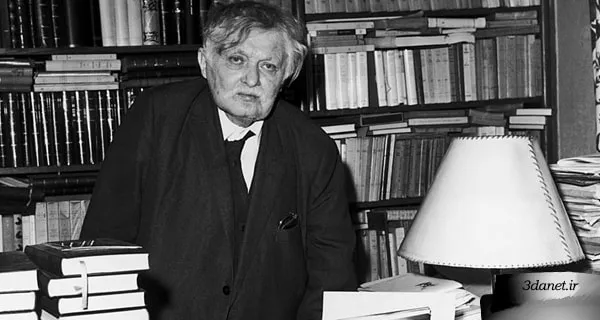
Hope plays a central role in the philosophy of Gabriel Marcel (the theistic existentialist philosopher). First and foremost, it must be said that hope is not a passive matter concerning the state of affairs in the world; rather, it is a dynamic and transformative force that changes the state of the world. It does not describe reality; it creates it. The more hopeful one is, the more solutions one finds along one's path; just like someone who is more grateful finds more things to be grateful for.
In principle, positive emotions such as joy, gratitude, hope, courage, creativity, and the like are not the effects of good events, but rather the cause of good events. That is, it is not the case that because we achieve success, we become joyful and hopeful (this windfall joy is carried away by the wind). We succeed because we are joyful and hopeful; this is an authentic success that rests upon the sturdy pillar of our character, and its helm is in our own hands, not the winds of fortune and luck.
Hope means the creation and generation of new possibilities in life. The hopeful person creates new possibilities for themselves and others. The possibilities and capacities of life are actualized and flourish through hope. But how is this hope attained? According to Marcel, it is love for the other that begets hope. When the other exists and the affection of the other is present, the shoots of hope also grow. We humans live for one another. We have no affinity or secret bond with the dead, inanimate world, except through the connection we establish with the living, conscious world and the bond we have with the
Hope means affirming the mystery of being. That existence cannot be reduced to calculable and mechanical objects. That in existence, there is passion, creativity, will, and consciousness, and these prevent the reduction of being to limited and calculable matters. The hopeful person does not abbreviate the world and participates with humility in the mystery of being; a mystery that cannot be reduced to scientific, mathematical, and mechanical problems. A mystery that signals creativity, innovation, novelty, life, and another beginning. A mystery that heralds "hope" and shatters all definitive, mechanical, and airtight calculations. Mystery in Marcel's philosophy does not mean the unknown and insoluble, but rather depth, profundity, and inexhaustibility. For example, one could say the Divan of Hafez is a mysterious work; because every time we encounter it, and every age and generation that reads it, they find new speech, a new discovery, and fresh content within it. It is as if it is an ocean that never ends and never reaches a conclusion, and there are always new allusions and tidings in it. If someone says Hafez is exactly what "I" have explored and understood and there is nothing else in it, then they have denied the mysteriousness of Hafez. In the same way, a scientific encounter with the world sometimes denies its mysteriousness. That is, it denies whatever is not measurable and calculable. In this state, there is no escape from hopelessness and despair, because our calculations always rely on finite matters. When we stand in fear and trembling lest our possessions run out, and we are oblivious that their nature and destiny is inscribed with nothing but finitude, then there is no escape from despair and deprivation. So despair is the product of a particular type of encounter and approach to the world. An approach that relies on the "having" of possessions and calculable, finite matters, and turns its back on "being" and the "mystery of being."
Author: Dr. Seyed Hossein Hosseini (Philosophy graduate, translator, and instructor)
Discussion6 comments
ممنون از مطلب زیباتون جناب استاد روزگارتان پر از دانسته های نو
سلام لطفا از گابریل مارسل مطالب بیشتری بگذارید، این فیلسوف بیشت از سی نمایشنامه نوشته که هیچکدام به فارسی ترجمه و چاپ نشده اند. متشکرم
چرا با این همه آگاهی، در مورد دوستان غافل می شویم؟
عالی بود. تشکر. ای کاش از این فیلسوف مطالب بیشتری منتشر شود.
بسیارسپاسگزارم.متن حاوی نکات عمیقی در ارتباط انسان با دیگری بود،ارتباطی که در روزگار امروز مغفول واقع شده است و لذا انسان امروز تنهاتر و منزوی تر می شود.
عالی بود تشکر