اندیشهفلسفهخردگفتگوحکمتمعناپرسشفرهنگ
Religion
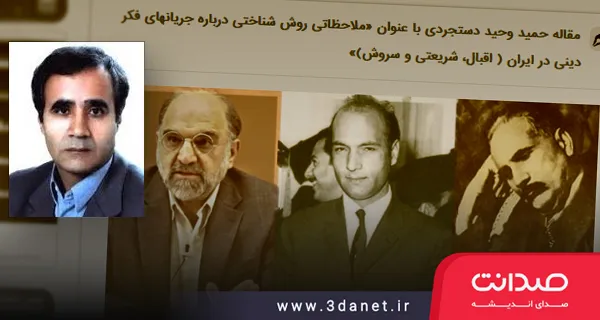
Mostafa Malekian: Shariati Distorted Our History
Malekian considers Shariati's classification of his works into social, Islamic, and desert writings to be incorrect; he sees them as social issues viewed through the lens of religion. By delineating three levels of religion, he identifies Shariati as a critic of second-level Islam.
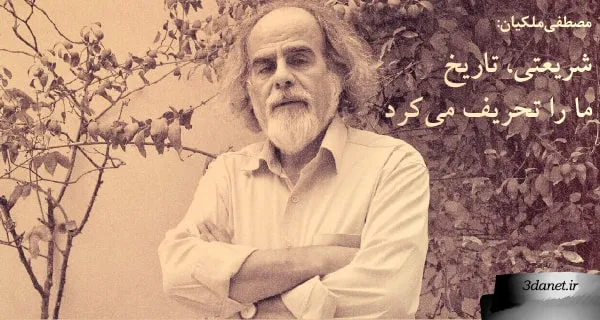
Mohammad Sadeghi - Shargh: At the beginning of his book Kavir (Desert), Dr. Shariati says that his writings are of three kinds: “Social writings, Islamic writings, and Kavir writings. What only the people like: the social writings; what both I and the people like: the Islamic writings; and what satisfies me myself, and with which I feel I am not doing work—what am I saying—not writing, but living: the Kavir writings.” However, it seems that this face of Shariati we see in the Kavir writings does not quite correspond with the more established and official face imprinted in people’s minds. Some have even imagined and continue to imagine this face in opposition to his better-known face. What is your assessment?
First, I would like to say that, in my opinion, neither Dr. Shariati’s division of his collected works into three categories—namely social writings, Islamic writings, and Kavir writings—is precise, nor is the judgment he made about these three categories, for instance when he said that only the people like the social writings, both the people and he himself like the Islamic writings, and he himself likes the Kavir writings. Neither this division nor the verdict he expressed for these three categories is, in my view, precise. Why? Because dividing the collected works and what remains of Dr. Shariati into these three categories is not a correct division, for the Islamic writings that Dr. Shariati relates are, if I do not say one hundred percent, more than ninety percent social writings. That is, what he has quoted from Islam, which can be said to be a kind of commentary, elaboration, expression, and explication of sacred religious texts—and is in fact a new kind of interpretation of materials for which others had also provided interpretations, and Dr. Shariati intended to offer his own specific interpretation—these too are, if I do not say one hundred percent, nearly ninety-five percent social writings. Therefore, one cannot say that we have Islamic writings and social writings. To put it another way, one can speak about society in two ways: one kind of discourse is based on revealed texts, and another kind of discourse about society can be said to be based on the latest achievements of human sciences and knowledge, for example, the latest achievements understood by, say, sociologists, economists, political scientists, and the like. In terms of subject matter, both of these are social writings; however, sometimes we examine social writings from a theological perspective, which, in Dr. Shariati’s terms, becomes Islamic writings; sometimes we do not examine them from a theological perspective but from the perspective of human sciences and knowledge, that is, from the perspective of philosophical sciences, historical sciences, empirical sciences, and from these perspectives we examine social matters. Here we are dealing with social writings, but we are no longer addressing social matters from the perspective of theology; rather, we address them from the perspective of philosophy, history, or the like. Otherwise, look at all of Dr. Shariati’s Islamic writings: where does he not address social issues? However, he wanted to say that here I am addressing social issues, but from the perspective and viewpoint of Islam and the sacred religious texts, ultimately from the viewpoint of what I refer to as Islam One, Islam Two, or even Islam Three.
Could you elaborate further on this classification you are making?
Yes, we call the collection of sacred religious and doctrinal texts of any religion or denomination
No, so for example the rise of the Safavid dynasty is also considered part of Islam Three. Dr. Shariati dealt with almost entirely social issues, but from the perspective of Islam. Sometimes from the perspective of Islam One, sometimes from the perspective of Islam Two, and sometimes from the perspective of Islam Three. Of course, it can be said that most of what Dr. Shariati says is from the perspective of Islam One and Two, and especially regarding Islam Two, his critical aspect is greater than his reportorial and analytical aspect, but ultimately he speaks from this perspective. This is like when a theoretical problem or a practical difficulty is posed to you, for example, they say that one of the practical problems our society faces is the problem of increasing divorce. Then they ask, what solution do you know of to resolve this problem? Someone, to resolve this problem, refers to the sacred religious and denominational texts or the opinions of religious ethics scholars and here says the sacred religious and denominational texts or religious ethics scholars say that to resolve this problem, one must do this, this, and this. Here, you are actually seeking a solution for this social problem from the perspective of Islam. At another time, instead of doing this, to resolve the same problem, you refer to the works of social psychologists or sociologists. Here too, you are looking to resolve the same problem, but not from a religious perspective; you address the problem from the perspective of the latest achievements that humanity has attained. In both cases, you are grappling with a social problem. But one time you get the answer from religion, which is called a theological answer, and another time, to resolve this problem, you seek an answer from a non-religious perspective and look at the problem from the perspective of human reason; here too, your problem is a social problem. Sometimes we divide the affairs of the human world from the perspective of whether they are individual or social, then they are divided into individual and social affairs, meaning individualities and socialities. Sometimes the division is made from the perspective of the source you refer to for resolving the difficulty or solving the problem, then affairs are divided into two categories: theological and rational. From this perspective, you can examine an individual issue or problem from a religious perspective and examine the same individual issue or problem from a rational perspective, and likewise a social issue or problem. Therefore, considering what the issue or problem itself is, the discussion of individual and collective arises, and from the perspective of which source we refer to for resolving the issue or solving the problem, the discussion of theology and non-theology arises there. Dr. Shariati has placed one of the categories of the first division alongside one of the categories of the second division, and this is where, in my opinion, there is a logical problem in his division. But the judgment he has also issued, regarding history's verdict, is not correct; for example, he says I myself prefer the Kaviriat more, but I think those who engage more deeply with Dr. Shariati's works actually prefer the Kaviriat more than the Ejtemaiat. Then he also says that people prefer the Ejtemaiat more, but history says this judgment is not correct. I believe even if we speak using his same division, the most enduring part of Dr. Shariati's works, in my opinion, is his Kaviriat. With all due respect I hold for Dr. Shariati and all the affection and emotional attachment I have for him, I must say the Islamiat section is the least enduring part of Dr. Shariati's works, and if it is the least enduring, that means it has not been favored by the audience and has been less favored by the audience than all three sections, even though in his own words he says that the audience also favors the Islamiat, and I myself favor it. Now, whether he himself favors it is his own affair, there is no problem. But that he says people also favor this section more is exactly the opposite, because the educated favor this section less. In any case, I wanted to say that I do not consider this division logically correct, and I do not consider the judgment he made about these three categories historically correct. That is, now that nearly 36 years have passed since Dr. Shariati's death, we see that his judgment has not proven correct; that is, now I think Dr. Shariati's Kaviriat is the most enduring part of his works.
In what year did you first read "Kavir"? And what effect did it have on you at that time?
The first time was in 1352 (1973), when I had just entered university. I can say that one of the most influential books I have read in my entire life (during that period) was Dr. Shariati's Kavir (Kaviriyat is the term we use today), which engaged me emotionally, affectively, and passionately to a great extent, held me in its thrall, created an attachment in me, and bound me to the personality of Dr. Shariati. It was truly impactful. In the years that followed, which have mainly been the years after the revolution, I read this book several times, even quite recently. There is no doubt that the captivation I felt upon the first reading diminished somewhat with each repetition, but even now, when I read Kavir, I hold it in very high esteem, and it is still very effective on me. Although, in my opinion, influencing a 57-year-old person is no easy task, yet truly, even in these past few days when I was reading it, it had a great effect on me. But in my mind, a contrast arises between the positive impact of Kaviriyat and the negative impact of other parts. In my view, the secret to the permanence of Kaviriyat lies in three things: First, the subject matter in Kaviriyat naturally concerns what we term human existential affairs, issues, theories, or problems. These affairs, issues, and problems have no temporal, spatial, or situational aspect. Every human being, in any religion, creed, school of thought, disposition, ideology, or affiliation with any 'ism,' in any historical era, and in the embrace of any culture and civilization, confronts these existential issues and problems. One can almost say that all these issues are touched upon in Kaviriyat (there is almost no existential issue or problem that is not mentioned somewhere in Kaviriyat), and because they are not specific to a particular society, time, or place, they can be interesting to everyone. Unlike an issue that is specific to Iranians, and moreover to Shia Iranians, and furthermore, for example, from the rise of the Safavids onwards, which has specific temporal, spatial, and situational coordinates. Another reason (the second) for the permanence of Kaviriyat is its pleasant prose. This pleasant prose, of course, manifests itself in Dr. Shariati's other works as well. Dr. Shariati is fundamentally a man of letters, and his speeches and writings always have a pronounced literary aspect. But in any case, the greatest manifestation of the artistic beauty of Dr. Shariati's works is evident in Kaviriyat; this, too, provides immense artistic and aesthetic appeal. But the third point is that Kaviriyat also reveals aspects of Dr. Shariati's personality and character. That is, I might also speak of loneliness, I might also speak of love, but what manifests from my personality and character in my way of addressing and perceiving love and loneliness might be very distant from what manifests in Dr. Shariati's writing. I truly think that certain manifestations of Dr. Shariati's personality attract any morally virtuous human being and any human being who is psychologically healthy. In other words, one feels envy, wishing, 'If only I were like this too,' 'If only I, too, could give an honest account of myself.' These three aspects have made Kaviriyat the most enduring part of Shariati's works.
Not everyone agrees with this interpretation and opinion of yours. In the 40s and 50s (1960s and 1970s) and during the period of struggle, this part of Shariati's works was, in a sense, called 'defeatism.' Before the victory of the revolution, when Kavir was read abroad, some expressed that: 'He, too, has given up!' In the years after the revolution, especially in the 60s and 70s (1980s and 1990s), not much attention was paid to this part of his works. I even think that those who are devoted to him and his thoughts, and who define themselves in his continuation and within that intellectual current, do not much agree with your opinion, perhaps because with the rising of this face (in Kaviriyat), the sunset of the face they have in mind arrives.
Yes, I accept that some may disagree. Essentially, at a certain juncture in our country's history and for a significant portion of our country's young generation, I think, following what was happening in the West, political struggle or even, in a more general sense, social reform held an extremely high value, a value incomparable to the value of other aspects of human personality and character. That is, they absolutely did not value a thinker's mental health as much as how much he was engaged in political struggle and how much he was engaged in social reform. They did not value an intellectual's moral virtues as much as how much he opposed oppression and how much he was an advocate of the poor and the masses! This was not unique to Iran either. For that historical period and for that segment of the young generation, there is no doubt that when they study the Kaviriyat, they encounter the fact that in the Kaviriyat, there is no longer talk of social reform, no talk of political struggle, but talk of attending to the "self," and what's more, above all, not attending to the doctrinal-epistemic aspect of the self, but attending to two other aspects of one's personality and character. One is one's emotional, affective, and sentimental aspect, and the other is the aspect of one's wants, ideals, and aspirations. When you see Dr. Shariati in the Kaviriyat and you also have that inclination, you are, to use your expression, suddenly shaken! This part is shocking, and I accept that, but the entire debate is over whether this kind of perception is fundamentally a defensible perception? In the sense that, firstly, is reforming society prior to reforming the self? Or is reforming the self always prior to reforming society? The second point is, is it even correct for us to consider social reform as our goal? Or should social reform be the result of our work, not the goal of our work? Should our goal in life be self-reform? If we do not succeed, then nothing; and if we do succeed and achieve this goal, that is, self-reform, to the extent that we have succeeded, the result of this success of ours is that we will have a reformative influence on those around us, on our audience, and on those who are intimate and acquainted with us, and that reformative influence was not the goal of our work, it was our result. In reality, which of these two is correct? The third point is, even if the goal is reformative, is the first thing one must address in society the political regime governing that society? Or is it the society's economy? Or is it the society's culture? Again, in this view, it seems as if the greatest problem of a society, or the sole problem of a society, is the political system governing that society, and from this perspective, we value that reformer for opposing that regime. Even though someone might say, I consider the reform of society a sacred goal, but at the same time say, when we intend social reform, we should not first go after the political regime governing that society, but rather, for example, like Marxist intellectuals, our attention should be directed at economic power relations, and then someone else might say something else and say that is not important either. Neither the greatest and sole problem of society is the political system governing it, nor the economic relations governing it, but rather the general culture of the citizens of that society. Such a person considers social reform their goal and says, we should not go after what is the effect; we must go after the cause.
In other words, here the importance of the political order is diminished, and consequently, we may not be able to approach the demands of intellectuals, especially in the field of education. I also remember years ago, in a discussion that was raised (Is political development prior to economic development or vice versa?), you engaged and stated your opinion. But some, pointing to examples like North Korea and South Korea, say that these are one nation and a line has separated them. On one side, a closed political regime is in power, and on the other side, this is not the case. I even think if we look further back, East Germany and West Germany are also good examples. Don't you think this judgment is controversial?
No, of course many have considered this statement debatable, but let us suppose, according to the interpretation you recount, that North Korea and South Korea now have two different cultural situations, and that the reason for these two cultural situations is the political regimes governing these two societies. Let us suppose this is correct; now I say that if one of these two were desirable—for example, if the culture that the people in South Korea have were desirable and we wanted to make the culture of the North Koreans like that of the South Koreans—what would the way be? Would the way be to bring a political regime like South Korea's to power in North Korea? Or would the way be for us to work with the citizens of North Korean society themselves? That is, to consider the issue a cultural one, a matter of education and ethics. If someone believes in that point you mentioned, then they say if you want the people of North Korea to live like the people of South Korea, overthrow the North Korean regime and bring a regime like South Korea's to power. But if it were up to me, I would say no, if you bring a political regime like the political regime of South Korea to North Korea and do not do any cultural work, nothing will change. This is my argument. I want to say that political regimes are not as powerful as we imagine; at the same time, I never deny that ultimately, when a Marxist regime comes to power, or a pro-Western, capitalist regime comes to power, it too, to the extent of its power, can influence education and ethics, but not to the degree that we think the greatest problem of a society, or the sole problem of a society, or the cause of causes of a society's problems, is its political regime... Cultural work takes place when, in your encounter with the people, you use persuasive forces, not motivating forces or coercive forces. Whenever you encounter the people with persuasive force, cultural work takes place, and then you can hope for a different nation to emerge—with slowness and great gradualness, of course. Let me give a good example: as long as people love work only for its income (which existed in the past and still exists now), if our country's economic resources were multiplied tenfold, and if our country's economists and economic planners' intellectual and scientific power were multiplied a hundredfold compared to now, our economy would still not be set in order. Why? The economy is set in order when there exists a people with a culture in which the value of work is not only for the income it brings. I have said many times, suppose—in an imaginary world, of course—it is announced on radio and television today that the government has decided this month that whether a person goes to work or not, their salary will be deposited into their account at the end of the month. What percentage of our people do you think would still go to work? Looking at it optimistically, perhaps one percent would go; the rest would say we went to work for the salary at the end of the month; if they are going to give this money anyway, why on earth should we work? If we judge optimistically, this one percent who go to work were the same one percent in the past, so the situation has not changed. But suppose we were like that mystic who said, if, hypothetically, work cannot be found in a society, go pay someone a monthly sum and say, "Employ me." That is, you pay the employer a wage. Why? Because work makes you grow, and there is nothing wrong with a person spending money for their own growth. If this perception existed, even if our economic resources were at this same level, even if our economic thinkers and planners were at this same level, our country would have a hundred times this economic growth. Valuing work as an end, or valuing work merely as a means to income—is this an economic issue? Not at all. Is it a political issue? Not at all. This is a cultural issue, and again, the issue of non-reasoning and imitation in society, which is an important issue; that is, to say: who said this statement is not a reason to accept it. What reason the speaker gave for this statement is what matters to me. Establish this in any society, and you will have a different people. From this perspective, while I accept the influence of economics and, perhaps even more so, the influence of politics on the quality of managing and administering social affairs, I say that the agents are individuals who, if their culture has not changed, will engage in negligence, malfeasance, and deceit, and will turn to violence in any society. In socialist and liberal regimes, in both, there are those who are prone to deceit and violence; political regimes cannot create an essential change in this direction unless they use all their persuasive power, not their motivating and coercive power,
use themselves.Let us return to Kaviriyat. I will read you a passage from “Solitude Dialogues”: “My life situation, my upbringing, my thoughts and beliefs, and especially my temperament aged me from childhood... and reclusiveness, solitude, imagination, and melancholy settled into my bone marrow and never left.” He then describes his own state, how unlike other children he was not one for play, amusement, outings, and joy, and whoever came to him did so to pour out their heart, pose a question, or solve a problem: “I had become convinced that I existed solely for people to ask me questions and for me to answer them, and everyone considered me duty-bound to solve all problems, to know the answer to every question...” And he adds: “Saying ‘I don’t know,’ ‘it’s none of my business,’ or ‘I haven’t thought about it’ was not acceptable from me.” Can one suppose that Kaviriyat is a response, a reaction, and perhaps a protest against this situation? Because in Kaviriyat, the certainty seen in his other works is less visible, and sometimes, when confronting issues, he leaves the reader in a state of suspension—for instance, when he alludes to “after being together...”
In what sense do you mean it is a protest?
Because perhaps a feeling of dissatisfaction and complaint about that situation exists in what I read to you. Since he himself says that Kaviriyat satisfied him, and I think his essential mode of living can also be understood in this very text.
It is not unlikely that what you say is correct. But I suspect that the fact that people refer to me for their questions and do not accept “I don’t know,” “I haven’t thought about it,” and “it’s none of my business” from me—this may be more my own fault than the people’s. That is, it is always my behavior that spins the web of social expectations around me. If they came four times and asked me something and I said it’s none of my business, well, they wouldn’t come a fifth time to ask me. In my opinion, in such cases, if we are dissatisfied with our own situation, we must direct the critique toward ourselves: why did we ever consent to being a counselor, a resolver of disputes, an arbiter, and to this sheikhdom? Therefore, one can say Kaviriyat is a protest, but it is a protest that, in my view, Shariati directs at himself and ought to direct at himself, not a protest he directs at the people. You may have a request of me, and I can choose not to fulfill this request, but if I do fulfill it, and the second time you come with such a request again, or send your brother with such a request, then from that point on, I must complain about myself. He could have refrained from taking on such a social role, a role that aroused these expectations in others. But the second part of your statement is certainly correct, meaning that Kaviriyat truly describes what Shariati was happy to be, whether we approve of it or not. That is, Shariati in his solitude. The English philosopher and logician Alfred North Whitehead says somewhere: “Religion is what a man does with his own solitude.” In this sense, we must say that Kaviriyat is Shariati’s religion. That is, if we want to say what creed Shariati had chosen in life, we must say that this was his creed and doctrine, and he did anything else for another reason. When, in solitude, love is this important to him, we must say that this is his creed. Even though, when one looks at his social writings, justice is Shariati’s religion. But if we accept Whitehead’s definition, we must say that Shariati has a religion of love, not a religion of justice that seeks the realization of rights, the elimination of injustices, and giving each their due.
But what many people imagine is precisely this point that you reject. So do you consider Kaviriyat to be in contradiction or opposition to Shariati’s other works?
Yes, I say that if someone imagines Shariati is what appears in his Islamiyat and Ejtemaiyat, then I tell them that a Shariati also appears in his Kaviriyat, in direct opposition to that. I say that Shariati is this and that and that, but if what we do in solitude reveals us more than what we do in society, then it must be said that Shariati is more what we see in Kaviriyat. A person may have several dimensions; for instance, scientific truth-seeking and social justice-seeking may both exist within me, but scientific truth-seeking may dominate over social justice-seeking. In my view, if we accept Whitehead's saying, the justice-seeking found in his social works is not the dominant aspect of his personality, but the subordinate aspect of his personality. So the discussion is about how one aspect of a person's character can overshadow the other aspects without negating them, and if the reality of an individual is known more in his 'solitude' than in his 'public presence'—which is what Whitehead's saying points to—then we must say that the real Shariati manifests more in Kaviriyat than in his other works. You do not see such a thing in Engineer Bazargan or Taleghani; I am, of course, not privy to the secrets of their hearts, but the works they left behind show this. You cannot imagine something like Kaviriyat for Bazargan or Taleghani. For someone like Engineer Bazargan, issues of social reform, issues of social justice, issues of social freedom overshadowed personal matters. Dr. Shariati is not like that. There is a great difference between a person who, if asked 'What is your greatest wish?', replies, 'To have a free and just society,' and one who says, 'To be able to act in my solitude as my pure nature dictates.' Such a person does not have a collectivist spirit; they have an individualist spirit. Dr. Shariati, in my opinion, was an individualist who played the role of a collectivist. That is why, if left to his own devices, he would turn toward his personal affairs, but this kind of individualism is not seen in Engineer Bazargan. In his Ejtemaiyat and Islamiyat, Dr. Shariati plays a role that is incompatible with his pure nature, and a kind of affectation and artificiality is visible in it.
Where is such a thing visible?
Where, for example, Dr. Shariati creates myths and then uses his own self-made myths. It is like a well that has no water, and then I pour twenty buckets of water into the well, and then, using the well's wheel and bucket, I draw these twenty buckets of water out and say, 'O people, I have drawn water from the well.' Dr. Shariati deviates from our history and from the reality of our history, first creating a myth and then extracting the myth he himself has created. He himself poured this water into the well of history; he should not rejoice that he is drawing it out, because this well did not have this water. He needs myth, and then, for some reason, he sees that the myths that have been effective elsewhere are not effective in his culture and society, so he distorts historical realities.
Does he distort here, or does he have his own particular reading?
No, one can speak of a particular reading when there are, say, five existing readings, all of which accept the historical facts but interpret those historical facts in five different ways. But when it is presented in this manner, distortion occurs—like Marx's reading, which first offered an interpretation of history, and then the reality of most societies did not conform to these interpretations. So, one had to stretch and chop these societies to fit the interpretation: that we first had primitive communism, then a period of slavery, then feudalism, then capitalism, and then... Like that character in ancient Greek mythology who placed a bed in the desert, and would take every stranded, lonely traveler and lay them on this bed; if they were too short, he would stretch them until they fit the bed, and if they were too tall, he would chop them down to size. I think this was the error Marx committed, and afterward, to prevent anyone from understanding this error, Marxists deformed and distorted historical realities. Then, Mansur ibn Husayn al-Hallaj would become a socialist materialist, or Rumi himself, and so on. Abu Dharr's becoming a socialist has the same degree of validity. The culture of our society could not fulfill what Dr. Shariati tasked it with. What Shariati put into people's mouths was not the words that came from the mouths of those historical figures. He would put something in their mouths and then say, 'Come, let us see what they are saying!'
So, he was using them instrumentally?
Yes, of course, instrumental use always seems, in a way, to consider personal interests. No, Dr. Shariati perhaps had no personal interests. Instrumental use, not for himself personally, but he had an ideal, and for this ideal, he could not find raw materials in history. So, he first fabricated the raw materials, and then extracted what he himself had made from the heart of history.
Something called the line of struggle (non-peaceful struggle) does not begin with Shariati, because he is simply not present and not in the loop. One could even say such a line takes shape with Bazargan; I mean the individuals influenced by him who chose methods of non-peaceful struggle. But some of the individuals who joined them were close associates and, one might say, students of Shariati, and later met those fates. The works you have in mind perhaps belong more to the period when those groups became active, and they are not of much substance; it seems the intention was to provide them with sustenance. They were giving their lives, and he did not withhold his sympathy. He even, specifically affected by the execution of a number of guerrillas, gave a speech in praise of them. The degree of his sympathy and compassion for those on the line of struggle is striking. Of course, perhaps at times they also pulled him along, which itself raises questions about his work as an intellectual—and those were people who, having read a handful of books, so to speak, imagined themselves at the cutting edge of world thought.
I think this is correct too. I have always wondered why a social reformer, instead of relying on the common rationality of human beings and the common morality of human beings and framing programs within this framework, must always refer people back to their historical figures? And say, you who have these historical figures, be like this. Well, say, you who have this reason, must be like this. I do not understand why in our country, and perhaps it is the same in similar countries, though I have not researched it, we must first reach out to Cyrus, to Darius the Great, to Abu Dharr, and so on, and say, despite having had these figures (though I do not know who this "you" is that had Abu Dharr, and this is of course a linguistic deception), why is your situation like this? Why can a social reformer not appeal to rationality and morality and present rational and ethical arguments that this situation you are in is bad? I honestly do not understand this, and to me, this is one of the complex parts of the reformist and intellectual project of Dr. Shariati and others like him, who are of course numerous. Why can you not tell me, for this reason, for this reason, for this reason, this conduct and this lifestyle you have is irrational, and for this reason, for this reason, for this reason, this conduct and lifestyle you have is unethical? Why must you first say, you had a grandfather who was such and such, it is a shame that his grandchild lives like this. Now, since my grandfather was not a very important person either, first you must invent a grandfather for me and then say it is unlikely for the grandchild of that grandfather to live like this! That for social reform we need myth-making or need to return human beings to past history, and then that argument which, if we delve into its foundation, means: why, since a certain person lived in this house a thousand years ago, now after these thousand years, you who have come to this house do not live like him—I do not understand this. That we have Muhammad ibn Zakariya al-Razi, we have Avicenna, we have Mulla Sadra, we have Abu Dharr, meaning we live in a land where centuries ago, in this land and somewhat more broadly, someone else lived, why do you not live like him? What kind of argument is this? Because possessive pronouns are used, we can grasp the intent, which is our ancestors. But in what sense are these my ancestors? When we say we have had Saadis, Ferdowsis, Hafezes, Nezamis, Khayyams, Avicennas, Sheikh al-Ishraqs, and so on in our culture, do you know what that means? It means we lived in a land where 200 kilometers this way and that way, a thousand years ago, someone else lived. Now, in what sense does that other person become ours? That is, Sheikh al-Ishraq is ours because he lived in a city where Iranians live now, so we tell Iranians to live like him. This is a linguistic deception. We say our Saadi; well, in what sense can you and I attach Saadi to ourselves? That is, O people of Shiraz, O people of Fars, more broadly, O Iranians, you now live on a land that this land you and your cousin now have was once owned by a person named Saadi, so now we expect you to live the way the previous homeowner lived! What kind of argument is this? Especially when the previous homeowner was not a very important person either, so first we must make him seem important, then say it is disgraceful that a person, when living in the house of these people, does not live like them! I say it is good that we free our intellectual project from this historical bondage and, more importantly, from this historical distortion, and say, O people, this way of life is contrary to rationality and morality, change it, not that we say, O people, this way of life is unbecoming of the grandchild of so-and-so. Dr. Shariati also made my grandfather an important person for me! So that later I cannot say, well, why should my grandfather not follow me and I must follow him? And such talk. Now, someone says, be mindful that you have had Avicenna, and someone else says philosophers are the poodles of history! Nationalists also say this was the place of Fereydun, Kay Khosrow, Siavash, Rostam, Sohrab, and so on; what does that have to do with us, except that we also live in the same land they lived in. There is no difference in these allusions and references (even to myths).
حالا وقتی هم میخواهید به آموزهای از یکی از شخصیتهای تاریخی استناد کنید، اول باید آن آموزه، آموزه او باشد، یعنی جعلی نباشد و آن آموزه هم قبل از هر چیز خودش باید به ترازوی عقلانیت و اخلاق سنجیده شده باشد و در آن ترازو سربلند بیرون آمده باشد. آن وقت به آن آموزه اشاره شود و این سوال که چرا اینگونه زندگی میکنید؟ نه اینکه بگویید چون نوه فلانی هستید و او هم در ملک شما زندگی میکرده است، چرا اینگونه زندگی میکنید. دکتر شریعتی به نظر من، شاه مصداق کسانی بود که برای ساختن حال و آینده دست به تاریخ دراز میکنند و بعد چون تاریخشان هم کفاف نمیدهد، تاریخ را هم تبدیل به اسطوره میکنند و من میگویم که وقت آن است که روشنفکری ما یکبار دیگر مردم را به تعبیر قرآن «رجعوا الی انفسهم» بکند نه رجعوا الی آبائهم و فلاسفتهم و حکمائهم. با مردم جوری صحبت کنیم که وقتی به خودشان رجوع میکنند، بگویند راست میگوید این زندگی چون با عقلانیت و اخلاق نمیخواند، برازنده من نیست.Shariati, in his works, names and refers to various thinkers, writers, and different schools of thought. In Kaviriyat, where he expresses his existential concerns, he refers to the philosophy of existentialism, and particularly Sartre's existentialism. He is not a philosophy graduate, and considering his thoughts, it might be more natural for him to pay more attention to the non-atheistic branch of existentialism and figures like Kierkegaard, etc., but in Kavir, he refers to Sartre 15 times and to Kierkegaard once. To what extent, in your opinion, was he familiar with this branch of philosophy? This is important to me because I think he sometimes blends these concepts with other concepts like mysticism, which requires precise understanding. For example, in "Revolutionary Self-Construction," he combines Buddha, Hallaj, and Mazdak (with a view to Marx) into another character, and also considers the position of the Eastern intellectual superior to their Western counterpart in terms of resources and assets. What is your assessment?
The first point is that if a person is one of the literary critics of our time, is also a philosopher, has an inclination towards existentialism in their philosophy, and at the same time has a distinctive style in painting, depending on which part of their works you use, you must name that specific part. That is, if you use one of their opinions in literary criticism, you should not say that I am using their existentialism. They are a literary critic, but in the realm of philosophy, they are an existentialist. These two are unrelated. The painting they do necessarily has a style in painting, so if you imitate their painting style, you should not say I am imitating the existentialist so-and-so or the literary critic so-and-so; you are using this aspect of their personality. Or if you quote some of this person's views, then no one can conclude that you are a follower of a certain painting style because this person also has a painting style. In other words, if several concepts are instantiated in one human being, meaning a person was both a theater actor, a translator, and held a position in a ministry, now three concepts are instantiated in one person. Now, when I quote something from that person and one of their aspects, I must specify from which aspect I am quoting. Sartre was a philosopher and called himself an existentialist philosopher. He was also a social reformer and an intellectual. If I admire Sartre in my reformist views, then I must say that I know and admire Sartre the reformer, not Sartre the existentialist. Suppose you studied mathematics with me, but while I am a mathematician, I am also a painter; should it be said that you were a student of me the mathematician or me the painter? It is true that I am also a painter, but I did not teach you painting. In my opinion, Dr. Shariati took no existential substance from Sartre in his works, and had neither studied nor understood it. The Sartre that Shariati has in mind is Sartre the social reformer. Therefore, I cannot say that because he had an affinity for Sartre, he also had an affinity for existentialism. Sartre is also an existentialist, but one must see what he took and saw from Sartre; is it an existentialist theme or a theme in intellectualism and reformism? But because we also know Sartre as an existentialist philosopher, whenever Shariati speaks of Sartre, we think Shariati also had an affinity for existentialism; this is absolutely not the case. Even where he mentions "Camus," one must see whether he is speaking of Camus's existential ideas or Camus's commitment of the writer? These are two different things. Camus proposes the idea of the commitment of the writer, and Shariati also believes in this commitment, but if one day someone sees this commitment in Shariati's works, they should not conclude that Shariati is a student of Camus's existentialism; we must say he is a student of Camus's theory of the social commitment of the writer. But because both Sartre and Camus, in addition to being considered existentialist philosophers, were also social reformers, then whenever Shariati more or less uses these reformist views of theirs, we think Shariati is using existentialism. I am not saying Shariati himself does not have existential tendencies, but merely mentioning the name of Sartre or Camus does not mean Sartre and Camus the philosophers are in Shariati's view; he has in mind Sartre and Camus the social reformers.
Meaning he has their militant aspect in mind?
Yes, it is from this perspective that when you look at his works, whenever the name Sartre or Camus appears, Frantz Fanon inevitably follows them. Kwame Nkrumah is also mentioned. This lumping together is only correct if we are considering socio-political reform; otherwise, Frantz Fanon has no attachment to existentialism. Patrice Lumumba and Kwame Nkrumah have nothing to do with existentialism, yet you see them as if they are on a single list. They can be, but only on the condition that the list is a list of socio-political reformers of the second half of the twentieth century. But if we want to address the list of existentialists, they cannot be placed on it. The second point is that what I see from Dr. Shariati are very general, concise, and to some extent very famous and even clichéd statements from these people, but I do not see a precise philosophical opinion from any one of these individuals in Dr. Shariati's works at all. Among the existentialists, certain figures should have received more attention from Shariati for two reasons: one, because they have a theistic perspective, like Kierkegaard, Gabriel Marcel, Unamuno, and Ortega y Gasset; and another, because from the perspective of a commentator and historian of philosophy, their importance is simply not comparable to, say, Simone de Beauvoir. If someone wants to study the school of existentialism, where does Kierkegaard stand and where does Simone de Beauvoir? He should have paid attention to these, but they are not given attention. Why? Because his engagement with Sartre himself is due to his social reformism, and social reformism is not present in Kierkegaard, in Jaspers, or in Gabriel Marcel. In the Kaviriyat, if their names are mentioned, it is truly a kind of using them as ornaments for the gathering. Otherwise, if he wanted to be an existentialist, who is more suitable for the Kaviriyat than Kierkegaard? He should essentially be immersed in and a specialist on Kierkegaard, but in reality, he has nothing to do with this aspect and is focused on their social mission. But the third point, which seems very strange to me, is how these personalities can be reconciled in Dr. Shariati's thought? That is, how can one reconcile Sartre with Ayn al-Quzat Hamadani, or Hallaj with Camus? I say, if you see in my thinking that two thinkers who are irreconcilable have been brought together, know that at least my knowledge of one of those two thinkers is incomplete, allowing them to sit side by side in the imaginary house of my mind. Suppose, if in my thinking I said that Rumi and Khayyam sit side by side in the imaginary house of my mind, at least know that I do not know one of these two. Because if you accept Rumi, you cannot also accept Khayyam, or if you accept Khayyam, you cannot accept Rumi. Why? Not because there isn't a single point where Rumi and Khayyam might be right and say the same thing—such points exist—but the foundation and core of their thought are different. You cannot take one sentence from my words and one sentence from another person's words, put them side by side, and then say these two think alike; you must see from what foundations these two sentences arose. Where is the materialistic foundation of Simone de Beauvoir and Sartre, and where is the foundation of Ayn al-Quzat and Hallaj? Otherwise, there are common words in the sayings of Jesus and in the sayings of Marx, but based on this, no one can say, "I am a Jesus-like Marxist" or "I am a Marxist Christian"! Marxism negates Christianity from its very foundation, and Christianity negates Marxism from its very foundation. Therefore, the compatibility of two sentences from this thinker with two sentences from another thinker is different from being able to be a Christian Marxist. Unfortunately, this point is prominent in Shariati's works; refer to the index of Shariati's works and compare it with the index of the writings of Engineer Bazargan, Dr. Soroush, or Mujtahid Shabestari. You will see that the index of Shariati's works is much more extensive; many names of personalities appear, and several times more than other religious intellectuals. But this much referencing and showing and seating so many people in one's intellectual system, in my opinion, indicates that he was unable to see the differences, and fundamental differences at that. Nietzsche also has common words with Marx and Christ, but where is Christ, and where is Nietzsche.
.
.
PDF files of this conversation in Shargh newspaper
First Page
Second Page
Third Page
Fourth Page
.
.
Mostafa Malekian: Shariati Distorted Our History
Shargh Newspaper, Saturday, November 23, 2013, Supplement on the Visage of Shariati; Shariati's 80th Birthday
.
.

Discussion3 comments
با آن بخش که می گویند: اگر من در سرزمین بزرگان و اسطوره های پیشین زندگی می کنم نمی شود گفت که به آن اسطوره ها باید بازگشت، مخالفم. بحث بر سر خانه و سرزمین نیست، موضوع؛ متنِ ثابتِ قرآن است که آنچنان که در اختیار سلمان و ابوذر و مولانا و شیخ اشراق بوده در اختیار ما هم هست. آنها بر مبنای همین قرآن چنان تمدنی را پایه گذاری کردند. بنابراین دعوت به شناخت دوباره ی بزرگان، امری درست است.
نکته اولی که متوجه نمیشوم، بازنشر چنین متنی سطحی بعد از چهارسال است که ضرورت آنرا مشخص نمی کند. دوم هم اینکه ایشان در تمام متن مشغول برچسب زنی به دکتر شریعتی بدون ارائه مصداق و نقل قول کلیدی است. مسئله ایشان و امثال ایشان این است که بعد از چهل سال هنوز نتوانسته اند تاثیری که ایشان به عنوان روشنفکر دینی در مخاطبان داشته اند را تکرار کنند و برای از زیرسایه درآمدن راه تحریف و تکذیب را در پیش گرفته اند
دوست عزیز، تاثیرگزاری به تنهایی فاقد ارزش است و باید تاثیر از حقیقتی سرچشمه گرفته باشد نه از عوام فریبی و اوهام و اباطیل. در غیر این صورت امثال هیتلر هم تاثیر فراوانی در جامعه زمان خود داشتند و محبوبیتشان هم بسیار زیاد بود ولی مغز کلامشان بر پایه دروغ بنا شده بود و استاد ملکیان که چهره اصلی افراد را واکاوی می کنند حق بزرگی بر گردن همه مردم دارند و بنده شخصا مدیون ایشان هستم چون دیدگاه جدیدی به روی من گشود.ارادتمند.