Political Science
Neither Reason nor God
Modernity pushed God to the margins and the religious stormed politics, but experiments like the Islamic Republic imprisoned God in a cage of bigotry. Today, modernity and the faithful need a dialogue—a new synthesis of reason and the divine.
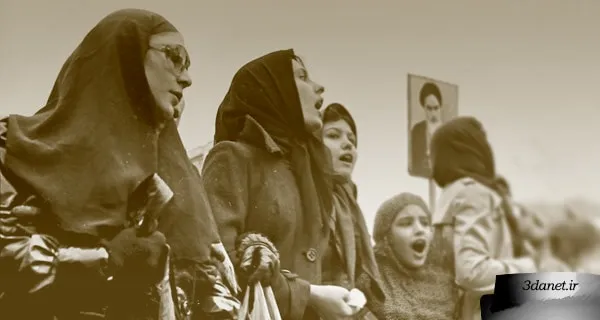
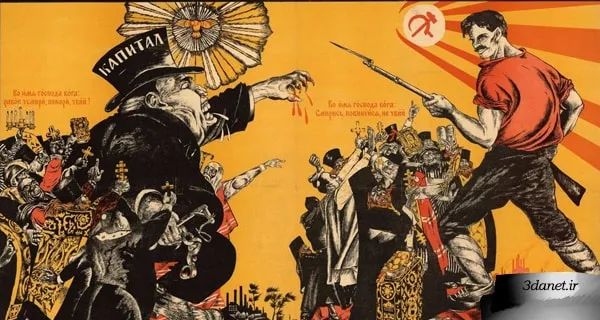
The mechanism of the new world was founded on human reason and prudence, and God was pushed to the margins. The religious felt alienated in such a world. Thus it was that, here and there across the globe, the religious stormed the political arena to build a new world—a world in which God is neither forsaken nor a stranger. The twentieth century was the century in which the prestige of the modern world was stained. Economic crises, two bloody world wars, the crematoria in Germany, and the advent of weapons of mass destruction and environmental degradation—all this provided an opportunity for the religious to air the long-suppressed resentments within. God became a name for the emergence of new movements. Everywhere in the world, the religious came to the fore with different tongues and expressions. The theme of all of them, however, was that a world without God is a world without a soul. They were in search of a soul for the soulless world. The Iranian Revolution of 1979 became a symbol of such a desire.
The modern world claimed universality. It claimed that everyone could find a place in its bosom. But in reality, this was not so. The one who was initially considered modern was male, white, wealthy, European, and secular. Broadening the narrow bosom of modernity to make room for women, other peoples and races, the lower classes, and the religious required time and was pregnant with far-reaching struggles—struggles that are still ongoing. Women strove mightily so that we all finally came to see that the modern person is not necessarily male. Black people strove mightily so that we came to see that the modern person is not necessarily white. The lower classes waged bloody and eventful campaigns so that we came to see that the modern person is not necessarily bourgeois or belonging to the upper class. The Third World peoples strove so that we came to see that the modern person is not necessarily European. None of these efforts and struggles were simple or smooth. In all of them, a world of blood, conflict, defeat, and victory was in flow. Now it seemed the turn of the religious had come to show that the modern person is not necessarily an unbeliever in God and religion. Modernity has reread itself each time so that its bosom might become broader and broader. We are at the dangerous bend of the struggle between the religious and the new world.
The Islamic Republic in Iran was only one answer among dozens of possible answers to this question. Only one answer. The question, however, still remains, even if the Islamic Republic has not provided a fitting and convincing answer to this question of the new century. In its answer, the Islamic Republic placed Sharia at the center. It advised that if we follow the rulings of Sharia, we will have brought God into the new world. It placed a logic at the center that was, in its essence, particularistic. It was incapable of seeing anything but itself. It was exclusionary and had a growing desire to refrain from establishing a relationship with the world in all its diversity. Not only did it close its eyes to the world and its colorful expanse, but even within the country, it could not engage in dialogue with others. The Islamic Republic brought God into the world in a cage. It hung it in a corner and asked others to come and watch.
The Islamic Republic and the religious movements that emerged, especially in the Islamic world, not only failed to answer the problem of establishing a relationship between the modern world and the world of the religious, but they also stained and made terrifying the very question. The question remains unanswered, yet it sits awaiting an answer.
Our understanding of being modern is no longer masculine, European, upper-class, or white. But it still bears no relation to the world of the religious. Our understanding of being modern is still akin to living in a secular and non-religious way. The religious sit on the margins. They are still full of the potential to storm the new world. Modernity must still answer: if it is universal, why does it have no place for the religious to feel at home and familiar?
The experience of the past four decades, however, has also exposed the religious to a great question. Until they answer this question, they will not free themselves from the accusation: what relationship do they establish with their God in a world where so many voices, so many colors, so many incompatible worlds are in flow? What help will their God offer in increasing understanding and empathy in such a world? One can be universalist in claim, but particularist and narrow-minded in practice. Modernity has suffered from the same predicament, but it has gradually learned to broaden its embrace. Modernity today is far more open than the modernity of the seventeenth and eighteenth centuries. The religious must confess that, despite their claim to universality, they have been narrow-minded in practice and have been the source of suspicion toward the God of whom they have spoken. In His name, they amassed power and wealth, and to secure their own interests, they stained His name.
With every step it has taken to broaden its embrace, modernity has become richer and deeper. A modernity that accepted women within itself gained greater richness. It found a new relationship with the environment and ethics. A modernity that accepted the lower classes within itself appeared more just; a modernity that saw Black people within itself became filled with the heritage of other ethnic traditions. A modernity that can also establish a relationship with the world of the religious will breathe a new spirit into its own world. The modern world, for its enrichment, and the religious, for their survival and legitimacy, need a new arena of dialogue.
We, the generation of the revolution, have endured much heartache from these harsh times. We were waiting for a relationship to be established between human reason and the spiritual experience of God. One was burned in the fire of fascism and class and ethnic conflicts, and the other in the incompatible models of governments and religious movements. We were in search of the fusion of God and reason; what are we to do in a world where neither God nor reason holds sway?
The Islamic Republic can still step out of the frame being constructed for it. By opening a new arena in the realms of politics, thought, and culture, it can free God from the cage of particularist narrow-mindedness. It can be the opener of a new horizon for a field of dialogue between the new world and the world of the religious. God must be liberated from the cage of sectarian narrow-mindedness, just as reason must be liberated from the cage of Eurocentric narrow-mindedness. The world thirsts for a new fusion. The savior will emerge in the relationship between these two.
.
.
Neither Reason nor God
Author: Mohammad Javad Gholamreza Kashi
.
.

Discussion3 comments
عدم انسجام متن در همان ابتدای متن مثل خورشید می درخشد.
مطلب قابل توجهی بود ولی جهت گیری نویسنده و بغض و کینه او از آنچه در کشور ما نام دین روی آن گذاشته اند مشهود بود
مطلب خوبی بود ، حیف که احساس می شود نویسنده در فشار زیادی قرار داشته تا چیزی ننویسد که سر از ناکجا آباد دربیاورد ،این فشار در جمله جمله نوشته حس می شودو بدا به حال ما