Literature
On the Novel: A Conversation between Alefya and Mostafa Malekian
Mostafa Malekian defines the novel as prose that engages with a social issue and, beyond action, delves into the mental lives of its characters—a work that reflects a universal truth within a particular situation. Its emergence, he argues, is indebted to humanity's shift from agency to spectatorship.
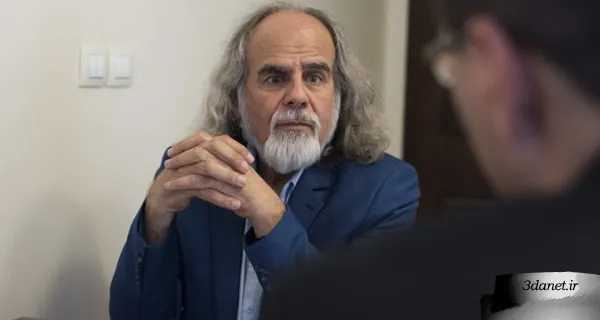
The conversation between Alefya and Mostafa Malekian, the Iranian writer, translator, philosopher, and meaning-oriented intellectual, took place in his office on a spring Thursday afternoon. As always, the captivating point in Malekian's exposition is his categorization and systematization of concepts and theories—a task that appears as easy to his critics as it is, in fact, difficult. In this conversation, Malekian has presented a combination of definitions, theories, functions, and his personal tastes regarding the novel. Whatever we may overlook about Malekian, we cannot overlook his moral virtues. We, too, as in all our previous experiences encountering Mostafa Malekian, benefited from his good nature and envied his ethical way of life.
Shirvani: To begin the discussion, we must clarify our position on the definition of the novel. What everyone agrees upon is that the novel is a new phenomenon, with a history of about 3-4 centuries. The disagreement over identifying the first novel indicates that there have also been differences of opinion regarding its place of origin. You have made some remarks about the novel. It is better that we reach an agreement on what the novel is.
Malekian: If four characteristics come together in a literary work, I call it a novel. The first point is formal: the writing must be in prose, not verse. But the second, third, and fourth characteristics are entirely content-based. The second characteristic is that the novel deals with a social matter as opposed to a collective matter. A social matter versus a collective matter, meaning a social matter versus a collective one; that is, it deals with a matter in which my action and reaction do not take place in a space of individuality. If it rains today, you take an umbrella solely to save your own body and clothes from dampness and wetness; I also take an umbrella with the same motive. But the result is that, for example, the radio can announce that 75% of Tehranis took umbrellas. Taking an umbrella is a collective matter; it is not social. Here, it is true that 75% of us performed a similar action, but each person was thinking solely, solely, solely of themselves. Similarly, if I take food to my workplace in the morning and you also take food to your workplace, and then statistics show that 64% of the people of Tehran bring their lunch with them, we are again dealing with a collective matter. But if, when I want to take my lunch, I say to myself, "It is true that I will be satisfied with one apple, but there are two colleagues in my room, and they also like apples," then we are dealing with a social matter; that is, I have brought you into the story. If I want to take pickled garlic with me and then think to myself that you are bothered by the smell of garlic and for that reason I do not take the pickle, again we are dealing with a social matter. The novel deals with the social matter, not the collective matter. In the novel, characters always consider their actions within a social context and perform that specific action.
The third characteristic of the novel is that it never deals with behavior alone; it deals with behavior plus the mind. If only external behaviors are reported in a novel, I call this a novel in quotation marks; this is a so-called novel and is not a novel. In reality, the novel always deals with behavior and what lies behind behavior, which is the mind. The novel is not just a report of speech and action; because speech and action together constitute behavior. The novel is behavior plus the three things that are behind behavior: beliefs, feelings and emotions, and desires. The novel addresses those three, and if it reports a behavior, it is so that you can discern through it what beliefs, feelings and emotions, and ultimately desires the character in the story has. The sum of beliefs, feelings and emotions, and desires is what we call the mind. So, behavior is not merely reported, and even if behavior is reported somewhere, it is so that you can access the mind through the behavior. This is the third characteristic.
The fourth characteristic present in the novel is that, in my view, a universal and therefore general human matter always manifests itself in a particular instance. I consider the novel a literary work that presents a universal, general matter in a specific, particular situation. In other words, it presents a global matter in a local form. If the novel speaks of a specific time, a specific place, and specific circumstances, behind it, it reports a phenomenon such as hope, love, hatred, optimism, or pessimism, which is a universal and global matter. If you report a particular matter and from within it no general matter can be extracted, inferred, or deduced, you are not dealing with a novel. If I were to write a novel, although all the characters in my story are in a specific temporal, spatial, and situational state—for example, the characters are at time t1, in place p1, and in situation c1—yet a universal matter must be extractable from within it.
When these four characteristics—one of which was formal and the other three related to content—come together, I say we are dealing with a novel. You might ask whether the length of the novel matters here. According to my definition, length is no longer important because, based on the characteristics I mentioned, the novel is not separate from the novelette. I do not believe that the novel and the short novel are two phenomena; rather, I believe it is due to quantitative conventions that we separate the two, and I do not consider this a substantive matter. This is my definition, or to put it better, this is what I mean by the novel.
Shirvani: What do you see as the background for the emergence of the phenomenon called the novel? What situation befell humanity that it was drawn toward the novel?
Malekian: The more humanity moved from agency to spectatorship, the more the ground was prepared for the emergence of the novel. I see the difference between modernism and pre-modernism in the fact that spectatorship gained importance in modernism. Before modernism, we dealt with agency. It is as if you are traveling in a caravan, and I am traveling in the same caravan, but all we know is what we ourselves see in the caravan, and no one is standing on a high peak looking down at the caravan. From the moment humanity desired and was able to achieve spectatorship—that is, in addition to agency, the capacity for being a spectator and observer grew strong in humans; in other words, from the moment we were able to make ourselves the object of our own gaze—this led to the emergence of the novel. With the emergence of the novel, we gradually demonstrated spectatorship, showing that we can look down upon human society from above. Therefore, while the individuals in the caravan are aware of many things in greater detail, they are also unaware of many things; they do not know that after crossing this pass they will meet another caravan, and they do not know that there is a lake behind this mountain, but the one sitting atop the peak may not see the details but can look from above. I consider this view from above to be the factor behind the emergence of the novel, and because I see it this way, I cannot judge in the historical dispute. For I have not researched whether this spectatorship is exercised in Cervantes' Don Quixote or not. Basically, whenever a matter takes on a historical aspect, I immediately say I have no knowledge in that regard. I am fundamentally not someone who deals much with history.
Deyani: Previously, in another conversation I had with you, I heard a statement from you to the effect that the novel is the religion of the modern world. This could have a Durkheimian interpretation—that cinema, the novel, or football are the religion of the modern world because of the functions they serve; Charles Taylor also has a similar statement in the final chapter of his book The Variety of Religion Today. Is your view that the novel is the religion of the modern world the same as Taylor's point, which refers to the ritualistic nature of activities such as reading novels, watching football matches, or going to the cinema, or do you have a different interpretation?
Malekian: Religion, in fact, had three functions for human beings. One, it showed them a map of the universe—a very, very, very small map, yet with the same precision as the vast world. Two, it showed the human condition within the world; if the world is this, where does the human stand within it? Three, based on the map it presented of the world and the place it assigned to the human, it showed them the way: you are here, and this is how you should walk. These were the three tasks of religion in ancient times. But it conveyed these three in a pre-experiential manner. For religion, truth was self-evident, and so, with the same self-evidence it attributed to truth, it declared: the world is this, the human's place in the world is this, and the appropriate conduct for the human in this place they occupy in the world is this. I believe the novel does these same three things for the human, but in a completely empiricist way. The novel shows the human what the world is, what the human's place in the world is, and how the human should walk and conduct themselves.
You might ask, can philosophical texts not do this? No, philosophical texts can only and solely express general propositions about these three subjects. But the human is known in their particularity, and in the novel, we come to know the human in their particularity. In philosophy, it is ultimately said that the human is like this or is not like this, that the human has this relation with the other or does not have this relation; all of these are generalities. But I am known not when a series of general matters that apply to all humans are also applied and implemented onto me. Let me put it more simply: what is the difference between Socrates' 'know thyself' and Aristotle's 'let us know the human'? When Aristotle said 'let us know the human,' it meant that Hassan and Hossein, Taqi and Naqi, Zahra and Zohreh, Shahin and Mahin, all should come to know the human; that is, they should know what they have in common with their fellow humans. Thus, I, Hassan, would know the human, Hossein would know the human, Taqi and Naqi and Shahin and Mahin and Kobra and Soghra would all know the human. This was Aristotle's message for anthropology, but anthropology in the sense of knowing the common existence. Yet, through the commonalities of humans, neither Mostafa is known, nor you, nor you, because each of us is a completely unique, singular, and peerless being. Socrates, who was Aristotle's intellectual forebear, did not say 'let us know the human'; he said 'know thyself.' That is, Hassan must know Hassan, Hossein must know Hossein, Zahra must know Zahra, Zohreh must know Zohreh, Shahin must know Shahin. 'Know thyself,' which was one of the two pillars of Socratic philosophy—alongside the other pillar, 'the unexamined life is not worth living'—was suddenly transformed into Aristotle's 'let us know the human,' and from one perspective, this was a great deviation in the history of human thought. It was certainly a tremendous transformation, but whether this transformation was positive or negative, many believe it was negative. In the view of many, the good, pleasant, valuable life is one in which each person knows themselves, which makes each person peerless, not the aspects that make them share with the rest of humanity.
Philosophy, in fact, is doing what Aristotle wanted, and the novel is doing what Socrates wanted; because the novel places each person in a specific situation: in a specific time, a specific place, and a specific condition. Now, this specific character is somewhere where they themselves can know themselves, and we can also know them. Therefore, the uniqueness of human beings cannot be shown anywhere except in the novel. If I want to speak a little more cautiously, I must say that in the novel, the peerlessness, matchlessness, incomparability, and uniqueness of each person can be shown in the best possible way.
Let us return to the question. Religion was like philosophy; it spoke in generalities, but the novel does not speak in generalities. In Victor Hugo's Les Misérables, you come to know Jean Valjean, not a universal abstraction. It is in the novel that we understand just how much each of us is a unique world. This is not the case in philosophy and religion. When the Quran says: "Man was created anxious; when evil touches him, he is fretful; and when good touches him, he is withholding" ... this is a general truth. Even if this is a correct judgment, it is a universal judgment about human beings, but it does not show our differences from one another. In the novel, we see difference; we see that human beings, despite the more or less commonalities they share, each possess a unique world that cannot be analogized or replicated. In this respect, the service the novel renders in helping me know myself and know others is far more extensive than the service philosophy renders. Unlike aspirin tablets, a billion of which coming off a machine are all alike, we are not alike, and if someone supposes that we human beings are all alike, they have truly neglected the knowledge of human beings and possess compound ignorance regarding them, not knowledge. If we want compound ignorance to become knowledge, we must move away from generalities and show that every human being has their own particular destiny, while also sharing a common nature with other human beings. Reading a novel confronts us each time with one, two, three, and N other unrepeatable human beings. It is not the case that whoever is brave is also generous; let me show you a brave but miserly human being. Nor is it the case that whoever is generous is also brave; I can also show you a generous coward. It disrupts all the correlations we imagine exist among human characteristics and shows that these correlations are an illusion. We think there is a correlation between being rich and being cruel, between being poor and being humble, between honesty and generosity; it is absolutely and utterly not so. The novel disrupts the meaningful correlations that arise from hasty generalizations. In my view, displaying the variegation of human beings is accomplished only through the novel. In the words of the mystics, "There is no repetition in theophany." There is no repetition in God's manifestation; God has never created two human beings alike. Each of us is a unique, unrepeatable being; we have not been repeated and will not be repeated, for there is only one of us. I see this neither in philosophy, nor in the empirical human sciences like psychology, sociology, and economics, nor in mysticism, nor in historical anthropology, nor in religion and creed. In poetry, you see me, but no one else is with me. You see the poet, but no one else is with me. In the novel, I, as one character, and you, as another character in the novel, understand through our interactions just how different we are, while of course sharing a series of general matters, the understanding of which is only useful for the generalizations of the empirical human sciences and philosophy, but which solves no problem for us and removes no difficulty.
This can also be said in another philosophical language. All the problems that arise in social life, and the way to resolve these problems, are possible through knowing individuals one by one, not through knowing the commonalities of human beings. The commonality of human beings is that every buyer wants to purchase goods at the cheapest possible price, and every seller wants to sell goods at the most expensive possible price, and ultimately, a transaction takes place through the mutual consent of the two. Regarding buying and selling, this is all we can say. But this does not at all show why my buying and selling with him differs from my buying and selling with you. We are only dealing with three rules: the buyer wants to buy the goods at the lowest possible price, the seller wants to sell the goods at the highest possible price, and the deal is struck when both the buyer and the seller relent from their expectations. But with these three rules, one cannot explain all the buying and selling that takes place in the world. When you see that I conduct one kind of transaction with you and another kind with someone else, the multiplicity of transactions cannot be explained by this rule at all. In the novel, I sought multiplicities; of course, the fewest human realities that appear in the novel are physical realities, while more of the mental realities of human beings are shown, and even more than that, the psychological realities of human beings are shown. In studying the novel, we actually acquire a kind of mental and psychological self-knowledge and knowledge of others.
Diyani: What you say reminds me of Umberto Eco. The prevailing view, in any case, was that philosophy and religion precede the novel, and on that basis we could have a religious novel by producing the message, the ideology, the theme elsewhere and then pouring it into the form. Eco, however, has an interpretation to the effect that the novel, in fact, begins precisely where philosophy and religion reach an impasse.
Malekian: I completely agree with that statement. Of course, I am hearing it from you now and have not read it before, but I completely agree. When generalities cannot solve a problem, remove a difficulty, or process a subject, we must turn to particularities.
Diyani: He also complains about the rigid frameworks of philosophy and rational laws. Perhaps imagination can open up a wider world for human beings so that they can achieve a better self-knowledge.
Malekian: You are absolutely right, and I agree. What attracts me greatly to the novel, epistemologically speaking, is the theory of the non-obviousness of truth. In religion, our position on every subject, our solution to every problem, and our way of removing every difficulty is clear. It is as if truth is obvious, and its instance is, of course, what I possess. When we come to philosophy, the non-obviousness of truth gradually emerges—as if truth is not obvious to this degree, yet there is still an obviousness there: if truth is to become obvious, it becomes obvious only through human reason. In the novel, we arrive at things that human reason could not make obvious, and therefore here we are faced with a mass of non-obviousness. It is in this sense that I said the novel is empiricist; it has no a priori judgment—neither a philosophical a priori judgment nor a religious one; its judgments are a posteriori.
I think the novel is linked in this respect to the empiricism of modernism. Empiricism here is not in the sense of the dispute between, on one side, David Hume, Berkeley, John Locke, Francis Bacon, and later Russell, and on the other side Descartes, Spinoza, Leibniz, Malebranche, and others—which is a theory in epistemology. I mean that we test everything and express an opinion only after testing. This, I think, is the spirit of modernism: we have neither taboo nor totem; nothing is so sacred that we do not speak of it, nor so ugly and obscene that we do not talk about it. We test everything. You do not see this in religion; in religion, some things are so sacred that one cannot speak of putting them to the test and subjecting them to examination, and on the other hand, some things are so ugly, filthy, and obscene that they must not be tested. In empiricism in the sense I mentioned, which is one of the spirits of modernism, everything is put to the test, and we express an opinion about it only after testing. Therefore, we have no totem that, due to its extreme sanctity, we say do not test this and just accept that it is what it is; nor do we have a taboo that, due to its extreme forbiddenness, filthiness, ugliness, and obscenity, cannot be put to the test. In other words, two things distance us from empiricism: the revered and the forbidden, and in this empiricism, there is neither the revered nor the forbidden. The novel puts human beings to this test and shows that only when you become real in the particularity of affairs can one speak about you; before that, one cannot speak about you. Let me give an example. Suppose we tell a religious person to test free sexual relations as well, to see what their benefits and harms are. Because these are taboo for them, they say we know in advance that nothing but corruption and ruin comes out of free sexual relations, so do not put it to the test. On the other hand, if we tell someone let us see whether prayer really restrains from indecency and wrong, they say it is certain that prayer restrains from indecency and wrong. Some things are so revered that we must not test them because they are positive, and some things are so forbidden that we must not test them because they are negative. Totem-breaking and taboo-breaking are both carried out in empiricism, and this manifests itself in the novel. It does not even manifest itself in psychological and sociological generalizations.
Shirvani: I was looking at the lists you've published of novels to read, and I felt that your interest, which stems from your definition, has led you to show interest in certain novels and not gravitate toward novels written in different genres. For instance, I didn't see any crime-detective novels among the works you've introduced. What is the reason for that?
Malekian: On the contrary, I am actually a very serious fan of police, crime, and detective novels, and I read them very extensively, and noir novels are very appealing to me. If I had the chance, I would show you that right now in my room I have nearly 17 of these novels stacked together to read, and I haven't read them yet. These are novels I've bought recently and haven't yet had the chance to read. I derive a great, great deal of benefit from novels where a crime has been committed and they want to find the culprit. But the fact that I don't name them is not something conscious, because in the discussions I've had, the occasion never arose for me to say you can find this point in such-and-such a novel. However, one judgment you made about me is completely correct, and that is that I like novels, and novels that serve my purpose, are those in which one of three aspects predominates: one is the psychological aspect, which, incidentally, is strong in crime novels; one is novels that are ethical; meaning the impression and effect they leave on you after finishing the novel makes you impressed and affected by an ethical matter; and the third category is novels that address a philosophical problem. I both enjoy reading these three types of novels and enjoy them after reading them; I enjoy them while I am reading and in the process of reading, and they are beneficial to me in that I discover points; psychological, ethical, or philosophical points.
From this perspective, you won't see several categories of novels. For example, I have never been interested in historical novels. I have also never been interested in novels that are doctrinaire and are solely and exclusively depicting a movement or the peasant uprising of some country. Ideological novels fall completely outside my scope. Novels that deal with revolts and social movements are again completely outside it. When I read Salammbô by Gustave Flaubert, while I understand what Flaubert endured for this novel to emerge from his pen, I never derive either pleasure or benefit from this novel. But when the same Gustave Flaubert writes Madame Bovary, it is of interest to me. Through Madame Bovary, I get very close to psychology.
Let me confess one point myself: I simply do not have the intuitive understanding for some novels. For example, novels that are referred to as magical realism, like One Hundred Years of Solitude by Márquez, I simply do not understand, and because I do not understand them, I derive neither pleasure nor benefit. Many postmodern novels are the same for me, and I do not understand them. Of course, in postmodern novels, there are exceptions that I understand and derive pleasure and benefit from, but they are exceptions and not the rule. Therefore, I must confess something here: that my weak understanding of these two categories of novels causes me not to mention them.
Deyani: Have you reached a self-awareness as to why you don't understand magical realism novels or postmodern novels, some of which have high sales or wide reception? In any case, you are a professor of philosophy, and the problem is not a talent for understanding or comprehending these novels. You are certainly rejecting these novels. Is there a point here?
Malekian: I don't think I was being falsely modest at all. When I face myself honestly, I see that I truly do not have the power to understand these novels. For example, I understand Kundera's novels, and among the exceptions I mentioned are the novels of Milan Kundera.
Shirvani: When we look at the hundred-year history of the novel in Iran, I see that the importance of philosophy and philosophers in Iran has, as it were, caused an overemphasis on novels with intellectual-philosophical aspects, and there has always been a tendency to translate these works. The emphasis on philosophical aspects in the novel has meant that the novel is not widespread among people who do not have an intellectual or philosophical mind, and for this reason, the flourishing of the novel that we see in other countries is not present in Iran. In a way, I hold philosophers chiefly responsible for the novel's marginalization.
Malekian: I really agree with you. It is true that when I agree with this fact, I cannot distance myself from my own likes and dislikes, and I still prefer psychological, ethical, and philosophical novels, but I accept this sociological reality that, because of philosophical approaches, we have kept many novels that perhaps had great value out of the arena and have not allowed them to be seen. Therefore, a kind of pathology must be conducted on this issue, and it must be considered a kind of blight.
Shirvani: As a final question, which detective novels are your favorites?
Malekian: Since the issue of translations arises here, and I am very careful not to recommend a poor translation, I apologize for not answering. Generally speaking, I can say that I am still a fan of Agatha Christie. Agatha Christie is still at the peak for me. When I compare her with Simenon, for me, Agatha Christie still sits at the top. But I do not want to say that all of Agatha Christie's works translated into Persian are really well translated; some of her works are well translated, and some of her works are unfortunately not well translated. Yet, even now, when I want to read a detective novel, if I can get hold of something by Agatha Christie, I read it. I like Chandler, even more than Hammett. I also really like Conan Doyle.
Ali Kashani
Related articles
All articles Literature
Mostafa Malekian's Recommended Novels
 Philosophy
A Conversation with Mostafa Malekian on Consumerism, Class Divide, and the Emotional Divide
 Religion
Alfiya in Conversation with Hassan Mohaddesi on the Book 'A Polytheist in the Prophet's Family'
 Literature
Introducing the Novel 'Wilful Disregard: A Story About Love' by Lena Andersson
 Philosophy
.webp)

Discussion4 comments
والله! بعلت «ترجمۀ بد» و «سانسور شدید» ما رمان خوانها که بیشستر این چیزهایی را که آقای ملکیان گفتند (و کمابیش درست هم گفتند) در رمانها نمیبینیم: یا رمان آنقدر بد ترجمه شده که قابل خواندن نیست یا اینکه همۀ حرامهای شرع مقدس در آن حرام است و همۀ مقدسات هم در آن مقدس است! با این حساب، چیزی دست رمانخوان فارسی زبان را نمیگیرد از خواندن رمانهایی که در داخل و رسماً منتشر میشوند! اگر باور ندارید؟! خودتان امتحان کنید!
من اقای ملکیان را کما بیش دنبال میکنم و به نظرم آدم جالبی هستند ، ولی بعضی موقع ها یک حرف هایی میزنند که آدم را واقعا به تعجب وا میدارند!! مثلا جمله ی زیر رو بخوانید: " ویژگی سوم رمان این است که رمان هیچوقت به رفتار کار ندارد، به رفتار به علاوه ذهن کار دارد. اگر در یک رمان فقط رفتارهای بیرونی گزارش شود من این را میگویم رمان در علامت کوتیشنمارک؛ این به اصطلاح رمان است و رمان نیست. " والا با این تعریف ، اقای ملکیان این همه رمان مهم توی تاریخ ادبیات رو که از زاویه ی سوم شخص بی طرف روایت می شوند رو ترکوندند!! مثلا همینگوی توی خیلی از داستان کوتاه هاش همچین روایتی رو داره و قس علی هذا...
سلام اینطور به نظر میرسه که شما منظور آقای ملکیان را درست متوجه نشدید یا اینکه کامل ویژگی سوم را نخوندید؛ایشون گفتند:رمان فقط گزارش گفتار و کردار نیست؛ رمان رفتار است به علاوه سه چیزی که پشت رفتار است: باورها، احساسات و عواطف و هیجانات و خواستهها. رمان به آن سه میپردازد و اگر رفتاری را گزارش میکند برای این است که شما از طریقش پی ببرید که کاراکتر داستان چه باورها، احساسات و عواطف و هیجانات و در نهایت خواستههایی دارد. پس صرفاً رفتار گزارش نمیشود و حتی اگر در جائی رفتار گزارش میشود برای این است که از طریق رفتار دسترسی پیدا کنید به ذهن. اینکه زاویه دید رمان سوم شخص باشه ابداً به این معنا نیس که رمان خالی از عناصر ذهنیست،بلکه در همون شرحِ رفتارِ نویسنده از شخصیت ها نهفته ست
به نظر می رسد شخصیت ها و حوادث رمان بر اساس ذهنیت و زاویه دید نویسنده خلق می شوند و بنابراین ناگزیر مسبوق به یک نگاه کلی و پیشاتجربی خواهند بود.