Philosophy
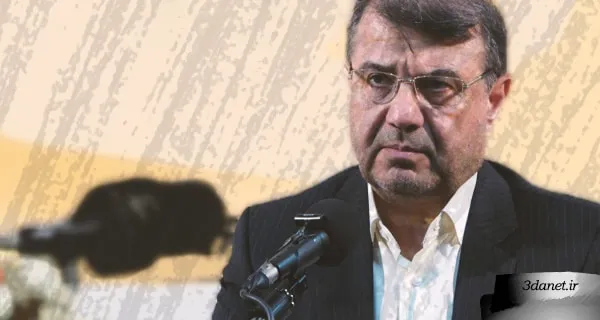
Philosophy and the Encounter of Two Philosophical Traditions: A Conversation with Hamid Talebzadeh
Hamid Talebzadeh sees philosophy not as an objective science but as a mode of thinking and relating to Being that begins in wonder; a review of Dialogue between Hegel and Islamic Philosophers and the distinction and dialogue between Western and Eastern philosophical traditions.
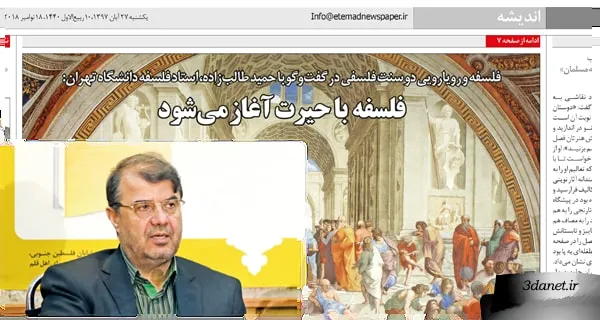
Mohsen Azmoudeh: Philosophy, in its foundation, is a true and proper dialogue, frank and fearless, without ceremony or flattery, yet at the same time logical and courteous, between thinkers and, in fact, between thoughts, concerning existence or being, a truth that cannot be grasped, that encompasses all beings, and in encountering which the questioning human being becomes filled with wonder—and this is the origin of philosophy. Throughout history, from the pre-Socratics, Plato, and Aristotle to Farabi and Ibn Sina, from Mulla Sadra to Hegel, from Heidegger to Allameh Tabatabai, philosophers have striven to step forth from this wondrous existential experience and, with the conceptual and theoretical resources of their predecessors, to philosophize, to enter into dialogue with them, so that ultimately they might transcend the mere experience of wondrous existence and offer a rational understanding of being, an understanding commensurate with the manner of being's disclosure to them in time, which is their contemporaneity and determines their historical destiny. Seyyed Hamid Talebzadeh believes that, in this respect, there is no essential and fundamental difference between philosophers in the West and the East of the world, and that modern Western philosophers are as much practitioners of metaphysics as the proponents of Transcendent Wisdom. With this view, he has striven in his brilliant book, "The Dialogue between Hegel and Islamic Philosophers: Becoming, Dialectic, and Idealism," to arrange a "dialogical" assembly, emphasizing the distinction between the two traditions of Islamic philosophy and modern philosophy. He believes that "in this dialogue, it becomes clear what contribution the philosophical tradition can make to the thought of the present day and what revisions it must undertake within itself." Undoubtedly, this book is one of the finest examples of pure philosophical dialogue between two different philosophical traditions with identical origins, especially since this encounter is undertaken by a scholar who possesses deep and profound knowledge of the thoughts of both sides of the debate. For a better acquaintance with this book and on the occasion of World Philosophy Day, we conducted a conversation with this full professor of philosophy at the University of Tehran, which follows:
At the outset, you have written that philosophy, unlike the sciences which "owe their validity to their objectivity," "must question its own whatness anew, time and again" and "re-examine itself and see whether it is still alive" or not? Here you speak of a fundamental difference between philosophy and the sciences (in their common sense). What is the source of this essential and fundamental difference?
By sciences, I mean the modern sciences, which possess an objective aspect. Each of these sciences pertains to a specific domain of beings and investigates the states of its subject matter using specific methods. These are positive, affirmative sciences, and their propositions are gradually established. Verifying the correctness of these propositions is possible for scientists wherever they may be, such that scientists do not disagree with one another about the propositions and laws of the sciences. For example, solid-state physics has specific laws that are accepted everywhere, and this very consensus and shared opinion among scientists, along with the use of similar methods for investigating scientific problems, is the criterion for the objectivity and validity of those sciences. Students in scientific fields learn the discipline and order of the predicted stages and steps of these sciences in universities and research centers, and within a certain period, they can become learned scholars and scientists in that field and can pursue and expand the scope of scientific research, thus repairing or completing the edifice of science. The sciences are progressive, and the common concept of the frontiers of science arises from this very progressive characteristic. In their path toward perfection, the sciences encounter new problems, and there are scientists who research these problems to expand the scope of science. Philosophy, however, is not like this. Philosophy is not a specific order of concepts to be taught or learned, and someone equipped with philosophical training who can recount arguments related to philosophical problems is not necessarily called a philosopher. Philosophy is not of the order of knowing, but rather of the order of thinking. A chemist might research the properties of an element or elemental compounds. The subject of research, however, is determinate, and they can conduct research in an equipped laboratory with the aid of efficient instruments and reach results that advance the science of chemistry a step. The research results of this chemist are valid for other chemists anywhere in the world, and they too can take steps on the same path and obtain the same results. The determinate subject and its defined limits, the accepted methods of research, the necessary apparatus and laboratory environment for conducting the research, yield similar results that bring chemists to a consensus, to the extent that the results obtained from one scientist's research can be a point of universal citation and relieve others of the need to repeat the same research. The conditions and requisites described for scientific research ensure the objectivity of the sciences and are the criterion of their validity. For this reason, the mathematical and experimental sciences are called exact sciences. These sciences, which have grown astonishingly in the modern era, have been recognized as the complete form of knowledge and have influenced other domains of knowledge, becoming a standard for evaluating them. But philosophy has had a different story. Philosophy deals with the existence of beings insofar as they exist, and the existence of beings cannot be placed in the basket of objectivity or examined with complex laboratory devices and instruments. The existence of entities cannot be delimited and placed before us. Existence and Being do not stand before us or opposite us, nor do they submit to the vicissitudes of objectivity; rather, they encompass everything, including ourselves. Being is encompassing of everything and everyone, and that which is encompassing cannot be taken hold of and directed toward intended purposes. One can only encounter the encompassing, and because it is encompassing and beyond limits, the encounter with it is wonder-inducing and awe-inspiring. Philosophers have said that philosophy begins solely with wonder. Wonder does not arise from encountering the determinations of things; determination, whatever it may be, is limited. Wonder pertains to the foundation of things, or their Being. Wonder tears away the veil of habits and everydayness—the habit of the things among which we live: the earth, mountains, forests, rivers, the sea, birds, grazing animals, and the nature in which we dwell. Society, people, friends, and enemies also shape our human relationships, and we have grown accustomed to them. If this veil of habits is rent, a person is struck by wonder. This wonder is not of the kind of psychic affections like fear, joy, anger, compassion, etc. Rather, wonder is the state of a drowsy person who suddenly awakens, the illusion of a dream is swept away from before their eyes, and they encounter reality and Being. Wonder is concomitant with awakening and alertness and speaks of the openness of the realm of understanding to reality. This openness is accompanied by questioning, and questioning is the gateway to reflection and thinking. Philosophy is of the order of thinking, and thinking is the fruit of wonder, and wonder arises from the encounter with all-encompassing Being, and this encounter is tantamount to establishing a relation.
Thus, philosophy is the result of entering into a relation with the being of things. Philosophers speak of this relation, and all philosophical opinions are interpretations of this very relation. Philosophy is an account that philosophers give of their encounter with the being of things, expressed in the language of demonstration and rational arguments. Philosophy consists of these thought-relations, and naturally, these relations, unlike the subjects of the sciences, cannot be so determined as to be objectively verifiable and investigable. Philosophy is not a form of accumulated knowledge that increases the precision of its achievements through progress. Philosophy speaks each time of a new relation with being, and each new relation is a new thinking. Philosophy must examine itself anew each time and question its own relation once more.Inspired by Schelling and Hegel, you have described philosophy as a rationality posterior to the objective world and defined it as a form of understanding life. You have written, “Philosophy is a contemporaneity that thinks itself and becomes conscious of itself.” What do you mean by contemporaneity? And why, if philosophy does not think this contemporaneity, does it lose its connection with life and turn into a “worthy treasure” and a “made and finished” science?
Philosophy contemplates the existence of beings, and philosophers express their views about beings in a rational form. The rational expression concerning the existence of beings and the demonstrative framework of this expression make philosophical understanding possible. Philosophy is precisely this existential experience of philosophers, which has been elaborated through rational arguments in the writings and views that have survived from them. Philosophy is Plato’s dialogues, philosophy is Aristotle’s Metaphysics, it is the theology of Avicenna’s Shifa, it is Kant’s Critique of Pure Reason, it is Mulla Sadra’s Asfar, it is Sartre’s Being and Nothingness, it is Husserl’s Logical Investigations, it is Hegel’s Phenomenology of Spirit, and so on. Philosophy is these very things. Kant speaks of two kinds of philosophical thought or philosophizing. He calls one historical cognition or cognition based on given facts (cognitio ex datis) and the other rational cognition or cognition based on principles (cognitio ex principiis). By historical cognition, he means delving into the thoughts and views of philosophers and learning them. This way of philosophizing is the method common in universities and seminaries. The thoughts of philosophers are taught, and those engaged in philosophy learn those thoughts, memorize the arguments for each issue well, and manage to understand the ideas of philosophers. This type of philosophizing views philosophical books as treasuries of supreme knowledge, a legacy of the past that must be preserved. Kant likens this type of philosophizing to making a plaster statue of a living human being; a statue that has no trace of life in it and is made of dry, lifeless material, yet is, in any case, well “made and finished” and can compel viewers to admire it. But by the other way of philosophizing, he means genuine philosophical cognition. Kant calls the first method philosophizing and the second method philosophy. Philosophy originates from that authentic experience of encountering being, and delving into the views of philosophers and their writings—or, in Kant’s terms, historical cognition—is merely a prelude to this mode of philosophizing. Delving into these thoughts prepares the thinker to participate in their philosophical experience and paves the way for an authentic philosophical experience. Philosophy begins with the encounter with being. But this encounter is a temporal matter. Temporality here means the horizon that is opened. The encounter with being is the opening of a horizon of understanding, which is the very understanding of the existence of beings, and the truths of things are understood within this horizon. Since this horizon entails a dispensation that calls everything toward its limits and measure, it is interpreted as a temporal matter. Time is the open horizon, and by contemporaneity, I mean this very mode of encountering being within the horizon of time. The objective world is a world in which everything, both natural and human, is directed toward limits and measures within the open horizon of being. When Moses (peace be upon him) steps into the sacred valley, he is addressed: “You stayed for years among the people of Midian, and then you came here according to a decree, O Moses.” You have come here according to a destiny and dispensation. The experience of revelation and divine address, which is the highest existential encounter, has in its essence a destiny and dispensation. Philosophy, too, in encountering being and in the experience of this encounter, expresses the truths of entities as they have been destined, in philosophical expression and within the framework of the deepest and most steadfast thoughts, and recounts this open horizon. The contemporaneity that is thought speaks of the human relationship with being, a relationship that is manifested in the mode of human life. Therefore, if philosophy is, in Kant’s terms, a historical cognition, it has no perception of contemporaneity, is distanced from the experience of the relationship with being, and has lost its connection with human life.
What is the importance of the revival of philosophy, as opposed to its transformation into a made and finished science, and what role does it play in the scientific and cultural life of the inhabitants of a cultural ecosystem?
Philosophy is rigorous, reasoned, profound thinking; it is contemporaneity thought through, and contemporaneity encompasses all aspects of human life—science, culture, ethics, art, education, familial and social systems, international relations, and so on—all are interconnected under the concept of contemporaneity. Philosophy is a mirror that reflects contemporaneity in a rational realm and reveals the human being to itself. In this state, the human being becomes aware of the abilities and powers latent within it for actualization, the path it can traverse, and the future it can have before it. Philosophy is contemporaneity thought through, which manifests the plan for the future within itself and reveals the human being's connection to the past; and without such thought, the thread of affairs is lost, everything loses its solidity, and matters remain scattered and superficial, like accidents without substance.
You have written that the great thinkers of the Islamic philosophical tradition, each by breathing new life into philosophy, "linked it with their own time." This is while many critics of the Islamic philosophical tradition believe that one of the reasons for its abandonment and (in their view) the impasse of that intellectual tradition was the absence of this very relationship and link. If possible, could you clarify what you mean by linking with one's own time, or contemporaneity, and briefly explain how, for example, great figures like Farabi, Ibn Sina, or Mulla Sadra established this link? This question arises particularly because in the Western philosophical tradition, philosophical discussions are presented in a clear connection with political, social, and especially scientific developments, but we do not see this explicit relation and connection in the discussions presented by Islamic philosophers.
Islamic philosophy is the philosophical interpretation of religion. The religion of Islam has been a vast ocean that has inspired thinkers and made ideas fruitful. Islamic revelation is the foundation of Islamic philosophy. Islamic revelation introduces the entire universe, in all its levels, as a sign of the Truth. The Divine Essence is the origin of existence and the true owner of all beings. The requisite of His absolute ownership is His creative and legislative lordship. Human life, both individual and social, is shaped and defined under the creative and legislative lordship of God. The contemporaneity of the religious community is a deep understanding of the powers latent in the life of faith. Islamic philosophy has always contemplated the life of faith; in this contemplation, the central axis is servitude to the Truth, knowledge, and drawing near to Him. Ibn Sina, in the eighth and ninth namats of al-Isharat, discusses felicity and the stations of the gnostics, and Shaykh al-Ishraq invites man to the realm of presence and abstraction from the darkness of the body and the natural world. Sadr al-Muta'allihin speaks of the unity of the reality of existence and the gradation of the levels of existence, and philosophically proves the possibility of the journey of the natural human being, bound to the material world, towards God until reaching the station of annihilation in the Divine Essence. These philosophers have all contemplated life, but for them, contemporaneity lacks a historical aspect; rather, contemporaneity is a moment of eternity. Human life finds meaning in the light of the creative and legislative lordship of the Truth, and for them, this alone is real life. Worldly life in itself is nothing but play and amusement, and the building of worldly life in itself is death, not life. "And the life of this world is not but diversion and play; and indeed, the home of the Hereafter is the true life." Life in the light of the lordship of the Truth is true life and vitality, and the human being's station in this kind of life is acceptance, submission, and obedience. "O you who have believed, respond to God and the Messenger when he calls you to that which gives you life." Social life, development, prosperity, politics, and the relations of rulers with the people are all connected to this meaning of life and must be made to conform to the standards of legislative lordship in order to lead to individual and social perfection. Farabi discusses social life and the types of cities in detail and describes the characteristics of the virtuous city, or the city in which a human being can attain the desired perfection and true life. The life of faith is a life lived according to the model of the Truth, and the Truth is from your Lord: "The truth is from your Lord." If this model is ignored, life goes astray into ruin: "And what is there after truth except error?" The Islamic philosopher, in his interpretation of divine revelation, explains the model of the Truth in a philosophical manner. He expounds the creative order in its hierarchical chain from the origin of existence down to the level of prime matter and the matter of matters, and he also explains the legislative order according to the model of the Truth in individual and social life. Islamic philosophers from Farabi to Allameh Tabatabai have more or less thought along these same lines. Since their philosophical interpretation of revelation has discussed the creative and legislative model of the Truth, and this is an eternal model, their thinking on contemporaneity cannot take on a historical hue; rather, it is a renewed expression of eternity.
You have spoken of an important distinction between two ways of considering thought, namely considering "thought with the condition of nothingness" (be-shart-e la) and "thought without the condition of anything" (la-be-shart). You have called the former incapable of experiencing the contemporaneity of the world and the latter a harbinger of new horizons. If possible, could you speak about this distinction and explain how, in your view, unconditional thought can enter into dialogue and incline towards other thoughts?
Philosophy, firstly, is totalizing and considers its expression of truth to be a complete expression. Ibn Sina, Sadr al-Muta’allihin, Spinoza, Kant, Hegel, and Husserl each considered their own thought to be complete. Hegel believed he had elevated philosophy from the love of wisdom to the totality of wisdom and had brought all the faculties of thought to actuality. Mulla Sadra, too, brought the various arts of thought—from theology, Peripateticism, Illuminationism, and mysticism—to a synthetic unity in Transcendent Philosophy and led philosophy to the level of mysticism, which is the pinnacle of human perfection. Secondly, philosophies have a firm bond with critique; philosophers consolidate their own views by critiquing the thought of their predecessors, just as Aristotle challenged the ideas of the past, especially Plato, and Shaykh al-Ishraq spoke explicitly of demolishing and destroying many Peripatetic ideas. The philosophers of the modern age have also subjected the thought of their predecessors to critique. However, Islamic philosophy has always proceeded by invoking Quranic revelation and has striven to conform itself ever more closely to this model. The model of revelation, like a steadfast anchor, has protected the ship of philosophy amidst the struggle of turbulent waves of thought. Islamic philosophy has gradually perfected itself, moving from deficiency to perfection. For example, the tremendous problem of God’s knowledge of particulars at the level of the Essence became explicable solely through the revolution that occurred in Transcendent Philosophy, whereas Peripateticism and Illuminationism remained incapable of explaining it. Thus, critique and ratification in the history of Islamic philosophy originated from a specific theoretical perspective, which was the philosophical interpretation of Quranic revelation. This interpretation reached its perfection in the thought of Sadr al-Muta’allihin, and philosophers after him have mostly been engaged in commenting on and editing his ideas, as if eternal wisdom has manifested itself perfectly in Transcendent Philosophy. Islamic philosophy is the reflection of Islamic revelation in the mirror of philosophical reason and has traversed its path to perfection. But the philosophy of the modern age was not, and is not, in search of conformity with the model of eternal wisdom. This philosophy essentially began with doubt. Wonder, which was the starting point of the history of metaphysics, has given way to doubt. This doubt is not a psychological state or of the nature of passive affections of the soul; rather, it is constitutive and formative of the very essence of thought in the modern period. The astonishing story of modern thought teaches us that thought no longer yearns for its own conformity with an eternal model or the rationality latent in the truth of revelation; instead, thought is in the passion of laying the foundations and constructing the edifice of rationality, and in this passion, it draws aid from the spirit of critique, continually demolishing its self-made structure and, from the ruins, erecting a new edifice anew. The essence of critique in modern thought is oriented toward human experience of life, not a divine model. The ever-renewing human experience of life in the modern period is a historical experience, and the meaning of contemporaneity arises from it; consequently, modern philosophy also has a historical identity in this same vein and is the rational understanding of contemporaneity. Now, contemporary humanity finds itself in the grip of the achievements of modern science, technology, and political and social relations. The question is: what path lies ahead for Islamic philosophy, which has attained the rank of completeness in accordance with eternal wisdom and can be characterized as ‘bi-shart la’ thought—that is, a thought that possesses realized matter and form—in the grip of the diverse achievements of the modern age, which are the product of critical thought? The reasonable path is dialogue and conversation. It is necessary to open the gate of thought toward understanding and dialogue; I have interpreted this meaning as ‘la bi-shart’ thought.
You have emphasized that you have absolutely no intention of comparing the views of Hegel and Islamic philosophers. Your work is not the imposition of the views of one philosopher or group of philosophers upon another; you do not wish to interpret Hegel’s views in terms of the views of Islamic philosophers, nor do you intend to critique Hegel’s views according to the opinions of Islamic philosophers, or vice versa. Rather, your work lies in-between Hegel and Islamic philosophers. If possible, please explain this ‘being in-between’ and clarify your method.
The encounter between the tradition of Islamic philosophy and Western philosophy is usually interpreted as comparative philosophy. For a long time, comparative philosophy departments have been established in some universities in the country, admitting students at the graduate level. The prevailing tendency is to consider specific topics in comparative philosophy and then compare the views of certain philosophers on those topics with one another. Comparative philosophy in this sense is a philosophy of comparison. The views of philosophers are expressed through these comparisons, and their differences and similarities are clarified. However, another approach to comparative philosophy in our academic community is the examination and critique of Western thought based on Islamic philosophy. In this approach, it is assumed that Islamic philosophy is the entirety and perfection of philosophy, and that Western philosophies are full of conceptual and judgmental weaknesses; comparative philosophy, on the subject under comparison, proves the capability and truth of Islamic philosophy and the incapability and falsehood of Western philosophy. This kind of comparison is partisan from the outset, and the comparer sits in the position of a judge, holding a trial among thinkers and showing the correctness and incorrectness of thoughts. Aside from whether such a comparison is justified or not, one can ask what benefit this method of comparison brings and what gift it can offer our philosophical tradition. But dialogue and being-in-the-midst is another story. "Being-in-the-midst" describes the state of a seeker who, on the one hand, draws support from a powerful philosophical tradition cultivated over centuries and ages, and on the other hand, seeks to acquaint this tradition with the language of the thinkers of this era. Being-in-the-midst is the condition of one who strives to show the philosophical tradition the untrodden paths that lie before it, so that in this passage, the philosophical tradition may realize what emerges from this precious heritage, what paths it can traverse, what expectations it can fulfill, what things it must learn, and how it must re-examine itself.
You have spoken of Hegel's dialogue with Islamic philosophers, and your claim is that Hegel is in conversation with Islamic philosophers and grapples with the same problems and predicaments as the Islamic Peripatetic philosophers, and even before them, Plato and Aristotle. Is this view of yours not based on a perspective that sees no rupture between modern civilization and modernity on the one hand, and past civilization, culture, and pre-modern tradition on the other, and believes in a kind of continuity? In other words, shouldn't there first be a discussion about whether these two sides of the dialogue can fundamentally engage in dialogue with one another or not?
I have not claimed that Hegel and Islamic philosophers are in conversation; rather, I have arranged a forum of discourse where philosophers from two different traditions can become acquainted with one another and engage in dialogue. Although the tradition of Islamic philosophy and the tradition of modern philosophy differ in their foundations, it should not be overlooked that both traditions originate from the same source, namely Greek philosophy. For this reason, these two traditions are not alien to each other, yet at the same time, they are distinct from one another. If this distinction in foundations did not exist, there would be no dialogue either. Philosophers belonging to one tradition all speak with one voice, and the difference lies in the perfection or deficiency, or the instability or solidity of their expression. But dialogue, which also requires listening, is a new opportunity. Those who have thought within two distinct traditions listen to each other's words, draw assistance from each other's thought, open new paths for one another, show each other's intellectual limitations, and benefit from one another. In this dialogue, it becomes clear what contribution the philosophical tradition can make to the thought of the present age and what revisions it must undertake within itself. "Being-in-the-midst" demands that the philosophical tradition become contemporaneous in its thinking, lend an ear, and abandon the claim to totality.
The fundamental discussion of your book lies in the realm of metaphysics, a subject that, since Descartes (and especially after Kant's critical philosophy), has not been much discussed, overshadowed by serious attention to epistemological issues. Of course, in recent years, attention to metaphysical discussions has increased again. You also begin the book with the discussion of becoming, which is fundamentally a metaphysical and ontological discussion. What is the reason for your serious attention to metaphysics? Shouldn't we first clarify what we can fundamentally know and where the limits and boundaries of our knowledge lie?
The philosophers you mentioned, such as Descartes and Kant, did not consider themselves epistemologists. This is a term that gained currency in the twentieth century, largely through the analytic philosophers. The philosophers of the modern era are all metaphysicians. However, since the rationality of the universe was denied in the modern age, ontological discussions were framed from the perspective of the thinking self. They realized that discussing objects independently of the possibilities and limits of human consciousness leads nowhere, and henceforth any discussion of being must take place from the horizon of consciousness. What we can know belongs to the domain of critique that has shaped the metaphysics of the modern period; otherwise, the discussion of knowledge apart from metaphysics had no place among modern philosophers, and this approach belongs to later stages.
.
.
PDF file of the conversation with Hamid Talebzadeh (Part One - Part Two)
.
.
Philosophy and the Encounter of Two Philosophical Traditions: A Conversation with Hamid Talebzadeh
Interviewee: Hamid Talebzadeh, Professor of Philosophy, University of Tehran
Interviewer: Mohsen Azmoudeh
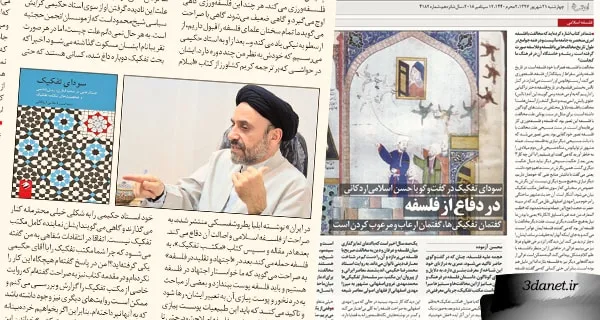
First published on page 7 of Andisheh, Etemad newspaper, 27 Aban 1397
.
.

Discussion0 comments
No comments yet; let yours be the first voice.