اندیشهفلسفهخردگفتگوحکمتمعناپرسشفرهنگ
Religion
Religion in the Secular Age
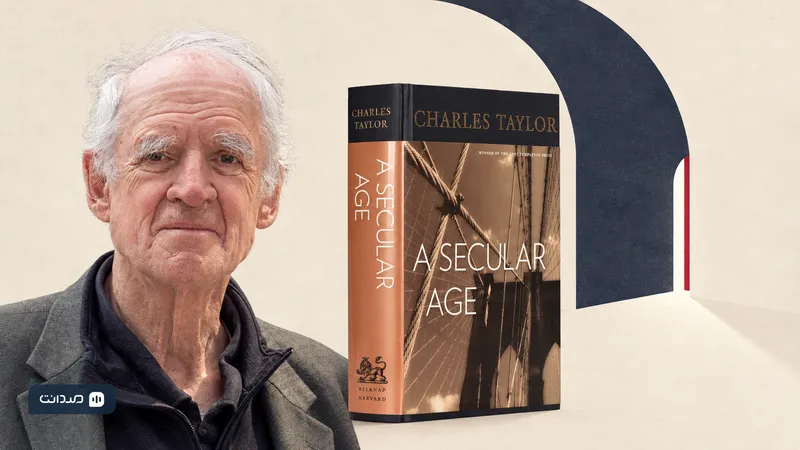
Charles Taylor's *A Secular Age* challenges the simple narrative of religion's decline in the modern world, showing that the primary transformation is not the disappearance of faith, but a change in the 'conditions of belief'. By examining concepts such as the immanent frame, the buffered self, cross-pressures, and fullness, this piece explains why, in the modern world, both belief and unbelief have become conscious, contested options.

Hossein Houshmand
AuthorCharles Taylor's Account of the Transformation of the Conditions of Belief in the Modern World
Understanding secularism, its achievements and its limitations, is one of the fundamental issues of contemporary thought. The difficulty of the discussion becomes apparent from the very beginning, because "secularism" and "secularization" do not refer to a single phenomenon. Sometimes secularism means the separation of the state and public institutions from religious authority; sometimes it refers to the decline of religious belief and practice in a society; and sometimes the issue is posed at a deeper level, concerning a transformation in the way human beings experience the world, the self, and the possibility of faith. The significance of Charles Taylor's monumental book, A Secular Age(1) lies above all in this very shift of the level of discussion from the question of the "presence or absence of religion" to the question of the conditions of possibility for faith and unbelief.
Taylor's fundamental question is this: How did Western societies move from a world in which belief in God was almost axiomatic for the majority of people, to a world in which faith is merely one of many possibilities for human life? The issue is not simply why some people no longer believe in God; the very structure of human experience has been transformed, to the point where even the most steadfast believers know that reasonable and moral human beings can live meaningful lives without religious faith. Religion, which was once a presupposition, has become an "option" in the modern world. If faith is no longer self-evident, unbelief is also not merely the absence of faith. For this reason, A Secular Age cannot be considered a historical survey of the decline of religion; it is a genealogy of a world in which meaning, faith, identity, and morality are no longer under the dominion of a single horizon.
The Self-Interpreting Human Being and the Three Meanings of Secularity
To understand A Secular Age, one must situate it within the broader context of Taylor's philosophy. His foundational thought is that the human being cannot be explained solely through observable behaviors, the calculation of interests, psychological mechanisms, or biological processes. The human being is a self-interpreting animal who lives within horizons of meaning, value, and moral good. Taylor critiques the view that sees the human agent as isolated and separate from historical, linguistic, and moral contexts; in contrast, he believes that the human being is from the outset situated within a web of language, relationships, history, and values, and possesses, prior to any choice, an understanding of what is important and unimportant, higher and lower among values. Therefore, secularization cannot be explained merely by declining church attendance or the separation of the state from religious institutions; one must also see the transformation of horizons of meaning. Hence, the project of A Secular Age is not merely a sociology of religion, but a kind of philosophical genealogy of modern experience.
Taylor distinguishes between three meanings of secularity. The first meaning pertains to the public sphere: the independence of the state, law, education, and other public institutions from the direct authority of religion. A society can be very religious and yet politically and legally secular. The second meaning is the sociological meaning of secularization: the decline of religious belief and practice, the weakening of the authority of religious institutions, or the increase in the number of individuals with no religious affiliation. Many classical theories of secularization have focused on this meaning.
اما معنای سوم، که مفهوم محوری کتاب عصر سکولار است، به شرایط باور مربوط میشود. تفاوت بنیادی میان جامعه پیشامدرن و جامعه مدرن صرفاً در تعداد مؤمنان نیست؛ در جهان پیشامدرن باور به خدا و امر متعالی می توانست زمینه تقریباً بدیهی تجربه جهان باشد، حال آنکه در جهان مدرن این باور باید در کنار بدیل های متعدد وجود داشته باشد و با آنها مواجه شود. شخص مدرن میتواند مؤمن، ملحد، لاادری گرا، اومانیست، معنویت گرا یا متعلق به انواع ترکیبی و شخصی شده جهان بینیها باشد. هیچ یک از این امکان ها نمی تواند به آسانی خود را یگانه شکل ممکن زندگی انسانی معرفی کند. از این رو، یک جامعه ممکن است از نظر نهادی بسیار سکولار باشد و در عین حال دین در آن نیرومند باقی بماند، یا عمل دینی کاهش یافته باشد اما جست وجوی معنویت و امر متعالی به اشکال دیگری ادامه یابد. آنچه عصر ما را به معنای خاص تیلری سکولار می کند، بیش از هر چیز این است که کثرت امکان های اعتقادی به بخشی از خودآگاهی ما بدل شده است.
نقد «روایت های حذف» و تبارشناسی جهان سکولار
یکی از اهداف مهم عصر سکولار نقد چیزی است که تیلر آن را «روایت های حذف» یا subtraction stories مینامد. بر اساس این روایت ها، انسان پیشامدرن زیر لایه هایی از اسطوره، خرافه، اقتدار دینی و باورهای ماوراء طبیعی قرار داشت و با رشد علم، عقلانیت و مدرنیته، این لایه ها به تدریج کنار رفتند تا انسان واقعی و جهان واقعی آشکار شوند. در چنین روایتی، سکولاریسم چیز تازه ای نمی سازد؛ فقط توهمات را حذف می کند. در برخی دیدگاه ها این تصویر با لحنی خوش بینانه عرضه میشود: بشر از تاریکی جهل به روشنائی دانش و از اسطوره به عقل گذر کرده است. در برخی دیگر، مانند روایت ماکس وبر از «افسون زدایی جهان»، لحنی تراژیک تر بر بحث حاکم است: جهان قابل محاسبه تر شده، اما الزاماً معنادارتر نشده است.
تیلر با این نظر که مدرنیته فقط لایه های غیرعقلانی را از انسان کنار زده است مخالفت میکند. مشکل «روایت حذف» آن است که نتیجه خود را از پیش در مقدماتش قرار میدهد: ابتدا فرض میکند تنها جهان بینی معتبر، جهان بینی طبیعی و غیرمتعالی (non transcendent) است و سپس تاریخ را چنان روایت میکند که گویی انسان با کنار گذاشتن دین سرانجام به حقیقت رسیده است. از نظر تیلر، این تاریخ نگاری بی طرف نیست، بلکه حامل موضعی فلسفی و متافیزیکی است. بدیل او انکار علم و عقلانیت مدرن یا بازگشت به جهان قرون وسطی نیست؛ میخواهد نشان دهد که مدرنیته صرفاً چیزی را حذف نکرده، بلکه صورت های تازه ای از هویت فردی، جامعه، اخلاق و معنا را پدید آورده است.
روایت تاریخی تیلر چند قرن را دربرمی گیرد و بر مجموعه ای از تحولات متداخل تأکید می کند. سکولاریسم برای او نتیجه اجتناب ناپذیر رشد علم نیست. اصلاحات دینی، دگرگونی الهیات مسیحی، پیدایش دولت مدرن، انضباط اجتماعی، تغییر در تصور انسان از طبیعت، رشد فردگرایی و ظهور نظم اخلاقی جدید همگی در شکل گیری جهان سکولار نقش داشته اند. در اروپای قرون وسطی، دین صرفاً حوزه ای مجزا از زندگی نبود؛ امر مقدس، سیاست، نظم اجتماعی، طبیعت و زندگی روزمره درهم تنیده بودند و خدا صرفاً موضوع یک «باور شخصی» نبود، بلکه حضور خدا و نیروهای معنوی بخشی از بافت جهان انسانی بود.
یکی از نکات ظریف تبارشناسی تیلر این است که تلاش مسیحیت برای اصلاح و تعمیق زندگی دینی، ناخواسته در پیدایش جهان سکولار سهم داشت. انضباط اخلاقی، آموزش منظم تر روحانیان، الزام های تازه در اعتراف و مناسک و کوشش برای یکسان سازی مناسک دینی، با هدف مسیحی تر کردن جامعه صورت می گرفتند، اما همین تلاش برای منضبط تر کردن دینداری بسیاری از اشکال محلی، افسون شده و سنتی تجربه دینی را تضعیف کرد و به افسون زدایی جهان یاری رساند. در دوران اصلاح دینی، پروتستانتیسم بر ایمان فردی، انضباط شخصی، مسئولیت اخلاقی و رابطه مستقیم تر انسان با خدا تأکید کرد. قصد اصلاح گران حذف دین نبود، اما بخشی از پیامد تاریخی این حرکت تضعیف جهان یکپارچه قدیم و تقویت انسانی بود که خود را مسئول تر و مستقل تر می دید.
Taylor even considers the disputes between realism and nominalism to be involved in this genealogy. In his account, the nominalist emphasis on absolute divine will and the radical separation between God and the created order inadvertently contributed to a conception of nature in which things no longer necessarily carried inherent meanings and ends, and nature could be understood as an external order knowable through instrumental reason. This development was initially religious, but in the long run it strengthened the possibility of conceiving a world that could also be explained without constant reference to the transcendent. The history of secularism cannot be reduced to a simple battle of “science versus religion”; some of the forces that made the secular world possible took shape within the heart of the religious tradition itself.
From the Enchanted Cosmos to the Immanent Frame
For pre-modern humans, the world was not merely a collection of material objects. Nature could be a bearer of meaning, signs, blessing, spiritual elements, and the presence of forces beyond the individual, and the natural and the supernatural were not two entirely separate realms. Taylor uses the concept of the “porous self” to describe this type of experience. The porous self lives in a world where the boundary between the inner and outer worlds is not as rigid and firm as in the modern world; good and evil, grace, spiritual forces, and rituals can genuinely affect the individual, and the individual does not understand their identity independently of the network of social, natural, and sacred relations.
In the modern world, by contrast, another form of selfhood emerges, which Taylor calls the “buffered self.” This self sees itself as having a clear boundary with the outside world. The source of thoughts and feelings is located “within” the individual, and external nature is no longer necessarily a bearer of meaning that can directly penetrate the human being. The individual can distance themselves from the world, reflect upon it, control it, and formulate the meaning of their life independently of inherited traditions. The emergence of the buffered self is linked to autonomy, freedom of conscience, the ability to critique tradition, the development of the sciences, and the increase of human control over nature. Taylor does not deny these achievements; his concern is the dual consequences of this transformation, because the very force that has given humanity freedom and power can also make the experience of connection with the world, community, and the transcendent more difficult.
The concept of the “immanent frame” is one of the most fundamental concepts in A Secular Age. Taylor means a framework of experience and understanding of the world in which the natural order, society, and human life can be explained without necessary reference to the transcendent. Science, politics, economics, and a large part of morality can be organized within such a framework. The essential point is that the immanent frame is not in itself equivalent to atheism; it is the common horizon of modern humans, and both the believer and the non-believer live within it. The main difference lies in whether we understand this frame as closed or open. For some, the immanent world is the whole of reality; for others, this same natural world can be open to something beyond itself.
The emergence of a world in which nature can be explained without God does not logically prove that God does not exist or that the transcendent is impossible. Modernity has created conditions in which methodological independence from the transcendent has become possible, but this is not the same as the metaphysical negation of the transcendent. Nevertheless, living in the immanent frame profoundly changes human experience. Even the believer experiences their life in a world for which a non-religious explanation is possible, and the non-believer may also encounter experiences such as beauty, death, love, sacrifice, wonder, and justice that call their entirely closed framework into question.
Cross-Pressures, the Nova Effect, and the Age of Authenticity
Taylor uses the concept of "cross-pressures" to describe this situation. The human being in the secular age is pulled by different horizons. On the one hand, the scientific and natural world allows us to explain life without reference to the transcendent; on the other hand, there are experiences that some people do not easily fit into a wholly immanent picture. This pressure is not only directed at the believer. The believer faces doubt, the diversity of worldviews, and the success of non-religious lives, and the non-believer may also ask, in the face of suffering, love, beauty, or moral obligation, whether a purely natural and human language is sufficient to express everything they experience. Hence, one of the characteristics of the secular age is fragility: faith has become more fragile because it sees viable alternatives alongside it, but unbelief can also be fragile. This fragility is the result of living in a pluralistic world where competing perspectives are constantly exposed to one another.
If the classical narrative of secularization were correct, one would expect the weakening of traditional religion to lead to the uniform spread of a non-religious worldview, but modern history has not shown such a path. Alongside the decline in the authority of some religious institutions, diverse worldviews and spiritualities have emerged. Taylor calls this phenomenon the "nova effect": an explosion of religious, spiritual, and secular possibilities; from traditional Christianity and individualized forms of religion to atheism, agnosticism, secular humanism, and non-institutional spiritualities. The result of modernity is not a mere void, but moral-religious plurality.
This plurality gives human beings a new freedom, but it also increases the burden of choice. The human being is no longer merely the inheritor of a pre-given answer and must, to a large extent, determine who they are, what they consider good, and what they believe in. Taylor refers to one of the consequences of this transformation as the "Age of Authenticity": each person must find their own path and be faithful to what truly originates from within them. In the realm of religion, too, faith must be personally meaningful for the contemporary person, and religiosity often becomes more personal, more elective, and more experiential. This ideal is important, but if it is reduced to the meaning that "whatever I choose is valuable simply because I choose it," the human being's relationship with shared horizons of the good and meaning is weakened.
The New Moral Order, Exclusive Humanism, and the Concept of Fullness
One of the greatest transformations of modernity is the formation of a moral order in which human flourishing in this world becomes a central value. Welfare, freedom, health, the reduction of suffering, justice, human rights, and the possibility of realizing human talents become independent and legitimate goals. Taylor does not deny the importance of this achievement and defends the capacity of secular society to create a common space among human beings belonging to different religions and worldviews. Nevertheless, Taylor asks whether human flourishing, if it becomes the only possible moral horizon, encompasses the full moral and existential capacity of the human being. How should we understand the experience of sacrifice, loyalty, sanctity, self-transcendence, and the readiness to forgo personal interests for the sake of a greater good?
This question leads him to a critique of exclusive humanism: a worldview that seeks the possibility of a moral and meaningful life solely within the confines of the human and the immanent world, and considers any reference to the transcendent as superfluous or erroneous. This humanism can defend human dignity, freedom, equality, and justice, and Taylor's critique of it does not mean a denial of humanist values. The problem begins when humanism becomes "exclusive" and claims not only the possibility of a moral life without religion, but also the absence of any meaningful horizon beyond human flourishing. Taylor asks whether an immanent life, however rich, can accommodate all dimensions of human experience. Death, suffering, evil, sacrifice, love, beauty, and the sense of moral obligation sometimes confront the human being with something that seems to lie beyond the logic of individual well-being and success. Of course, he does not say that the secular person is deprived of deep meaning; on the contrary, he accepts that non-believers can also have profound moral and meaningful experiences. His argument is that one should not conclude from the possibility of a meaningful life without faith that the transcendent is definitively impossible or meaningless.
The concept of "fullness" or Fullness refers to experiences in which life takes on a particular depth, meaning, harmony, and intensity for the individual; moments when one feels they have come into contact with something more real, more complete, or more valuable than the ordinary flow of life. Fullness may occur in religious experience, but it is not limited to it. A believer might find it in worship, the presence of God, or the experience of grace, and a non-religious person in love, nature, art, truth, moral commitment, or service to others. Therefore, the main boundary between the believer and the non-believer lies not in the presence or absence of the experience of fullness, but in the interpretation of its source and meaning.
For Taylor, fullness is not merely a psychological and transient state; the human being experiences it as an encounter with a meaning that is not simply a construct of their own mind. In the pre-modern world, such experiences were more easily interpreted within a shared religious framework, but in the secular age, their interpretation has become a site of contestation. The experience of wonder before nature can be, for one person, a sign of the presence of the transcendent, and for another, an expression of human emotional and cognitive capacity. The experience may be shared, but the horizon of interpretation is no longer shared. Taylor does not see this situation solely as a kind of loss; when faith is no longer a product of social obviousness, its choice can become more conscious and existentially deeper.
The Crisis of Meaning, the Age of Plurality, and the Future of Religion
The multiplicity of meaning horizons brings freedom on the one hand, and on the other, increases the possibility of a crisis of meaning. A human being living in a society with a single belief system receives many fundamental answers in advance from their culture; the modern human has been freed from a large part of this determinacy, but this very freedom obliges them to find their own answers to a great extent. This is the paradox of modern freedom: more freedom, more responsibility for meaning-making. Hence, Taylor does not see the crisis of meaning merely as a result of the loss of religion; the more important issue is the disappearance of the monopoly of any single framework of meaning. Even a return to religion is no longer a return to the previous world, because the modern individual chooses religion from among alternatives.
Taylor is concerned about some of the outcomes of exclusive humanism and a wholly immanent horizon, but his position should not be reduced to the simple claim that "irreligion equals nihilism." He accepts that modernity has generated powerful moral resources such as human rights, the struggle against suffering, freedom of conscience, and justice. His question is posed on another level: can the foundations of these values be explained without any deeper horizon of meaning? Why should the dignity of every human being be respected, and why must personal interests sometimes be sacrificed for justice? Secular traditions have offered serious and diverse answers to these questions, and Taylor does not ignore them; but he considers the issue of the sources of motivation and the deep foundations of morality to remain open. His critique, more than a proof for religion, is an invitation to philosophical self-awareness.
An important conclusion emerges from Taylor's analysis: it is better to call the secular age not the "age of the end of religion," but the age of the plurality of possibilities. Secularization has not eliminated religion from the world. In some societies, religious institutions have weakened, but at the same time, new forms of faith, spirituality, and religious experience have emerged. Religious traditions can no longer rely on their former cultural monopoly or social authority, and faith is compelled to articulate itself within a broad field of beliefs and ways of life. Thus, the question of the future of religion is less a matter of "survival or destruction" than a question of the manner of religion's presence in a pluralistic world.
If faith has been transformed from obviousness into a choice, religious institutions also cannot continue the methods of the era of obviousness unchanged. Institutional authority alone is not sufficient to preserve faith. The modern individual wants to know why they should accept a tradition and how this tradition can enter into dialogue with science, ethics, freedom, and the issues of the contemporary world. Religious institutions that rely solely on obedience, rigid boundary-drawing, and the reproduction of authority face difficult challenges. At the same time, adaptation must not mean the complete dissolution of religion into the dominant culture; if religion merely repeats what secular culture already says, it will have no independent reason for its presence. The challenge is how a religious tradition can speak from its own specific resources—rituals, narratives, ethics, the experience of the sacred, and the horizon of transcendence—without leading to dogmatism or the negation of the achievements of modernity.
Developments in recent decades have shown that religion has not disappeared from the public sphere. The term "post-secular" refers more to the end of the certainty that modernization necessarily drives religion into the private domain. In the post-secular world, religion and secularism stand alongside one another, and the old boundary between the "religious" and the "secular" is not always clear.
The modern world has been disenchanted in many respects. For modern science, nature possesses a lawful order, but disenchantment is not merely a matter of scientific explanation; it also pertains to the mode of experiencing the world. A world considered entirely calculable and controllable loses a significant part of its quality of wonder, sacredness, and depth. The religious and spiritual quest can be an effort to recover a non-instrumental relationship with the world; a relationship in which nature, the other, and life itself are not merely resources for consumption and control. This "re-enchantment" does not necessarily mean a return to superstition or the abandonment of science, but can mean the recovery of the capacity for wonder, silence, attention, beauty, and the sense of the sacred.
Taylor is a Catholic thinker, but it is a mistake to reduce A Secular Age to a simple defense of Catholicism. He seeks to understand the experience of the believer and the non-believer within a historical framework, accepts the moral and political achievements of modernity, and also questions the limitations of its self-sufficient narrative. It might be more accurate to consider him a philosopher of the complexity of secularity.
Conclusion
The greatest achievement of Charles Taylor's A Secular Age is perhaps the change in the question itself. The main question is no longer "Is religion dying out?" or "Has secularism triumphed over religion?" The question is how our historical and cultural conditions have been so transformed that both faith and unbelief have become conscious, contestable, and to some extent fragile possibilities. The believer can no longer easily assume that their faith is the only reasonable way of life, and the non-believer can no longer assume without argument that religion is merely a remnant of past ignorance. Both live within a shared immanent frame and are confronted with a plurality of worldviews.
The "secular age" is not the name of an era from which God has disappeared, but rather a world in which the human relationship with God, the transcendent, morality, and meaning is no longer predetermined. This age is not the end of the religious question; the question of the ultimate purpose and meaning of life has emerged from beneath the cover of social self-evidences and has become a personal, philosophical, and existential problem. What remains from A Secular Age is an image of the modern human standing between freedom and anxiety, autonomy and a longing for belonging, immanence and the possibility of transcendence, everyday life and the search for fullness. Hence, the secular age can perhaps be understood not as the age of religion's decline, but as the age of the end of self-evidences and the beginning of a difficult yet fruitful coexistence of multiple possibilities of meaning.
(1) Taylor, Charles. A secular age. Harvard university press, 2007.





Discussion0 comments
No comments yet; let yours be the first voice.