Religion
Religious Realism and Anti-Realism
The realist view of religion that prevailed for centuries has, over the last two hundred years, been challenged by critical realism and religious non-realism. Hick clarifies the distinctions among these perspectives and argues that contemporary non-realist interpretations are not anti-religious.
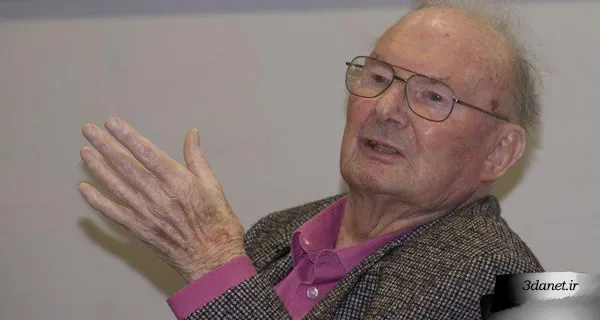
Over the last two centuries, the realist approach to religion, which for a long time was considered the only way of looking at religion, has been overshadowed by a number of newly emerged ideas, among which one can mention critical realism and religious anti-realism. In this essay, which constitutes the first chapter of his book entitled “Disputed Questions in Theology and the Philosophy of Religion,” Hick seeks to explain these new ways of thinking about religion and the relationship between them by clarifying that contemporary religious anti-realist accounts consist of religious interpretations, not anti-religious interpretations.
***
I
The debate between realist and non-realist understandings of religious language reveals the most fundamental issues in the philosophy of religion today. I use the term “today” because, although logically this debate constitutes a fundamentally timeless concept, it is only in the last 150 years or so—roughly, since the pioneering works of Ludwig Feuerbach—that it has generally emerged as a problem at all, and only during recent decades has it been explicitly focused upon in Western religious consciousness. Throughout previous centuries, and indeed previous millennia, religious self-understanding was implicitly or explicitly realist. Perhaps the only notable exception lies in one tendency within what we now know as the single, highly diverse Buddhist tradition. But today, assured non-realist interpretations of Christianity and Judaism, and of Buddhism as well, are available that enjoy wide appeal in our contemporary industrialized, science-oriented, anti-supernatural Western societies.
In my view, philosophical discussion cannot put an end to the dispute between religious realists and non-realists. It can, however, help in clarifying the nature of this issue; and this is the limited task I now wish to undertake.
I will pursue the examination of this subject primarily within the framework of Judeo-Christian-Islamic monotheism, which has so far provided the framework for Western debates on it, but with occasional reminders that this same fundamental issue also arises in the Eastern traditions.
II
The first point that must be noted is that it is not appropriate to speak of realism, or non-realism, so comprehensively as if one were obliged to be consistently realist or consistently non-realist in interpreting all types of language—perceptual, moral, aesthetic, poetic, scientific, religious. In fact, there is probably no thoroughgoing realist who believes in the reality of fairies and imaginary animals just as in the reality of tables and electrons; and similarly, there are few, if any, absolute non-realists who deny the objective reality of a material world and other people just as they deny the objective reality of the force of gravity and God. So we are not faced with two logically indivisible sets—or even invariable correlatives.
It is therefore correct that we should not conflate the contemporary realism/non-realism dispute about religion with other realism–non-realism debates. For instance, this matter is entirely distinct from the debate between realists and nominalists in the Middle Ages. The debate at that time concerned the status of universals—goodness, redness, roundness, etc.; meaning that realists believed universals, as abstract Platonic forms, exist independently of our conception of them, and nominalists held the contrary view. But their problem is entirely distinct from the problem that preoccupies contemporary religious non-realists and realists. These contemporaries are free to take a position in the medieval debate or not. Some religious non-realists are also non-realists in the discussion of universals and mathematical and logical truths, entities, and essences. But others are non-realists only concerning the objects of religious discourse. Similarly, religious realists can equally be nominalists or realists in the medieval sense. Some (for example, like Richard Swinburne) tend to be realists in relation to at least some universals and also in relation to logical truths, whereas others (like myself) prefer to be non-realists on this subject.
Our current religious debate has borrowed its terminology from Western epistemological discussions that were at their height in the first half of the twentieth century. The realist view typically held that in sensory perception we are in contact with a surrounding world that exists independently of all perceivers. The opposite pole was the idealist view that the sensible world exists only as a set of modes of our own consciousness, i.e., to be is to be perceived. Realism then divided into naïve realism, which held that the world is exactly as we perceive it, and critical realism, which attributes a significant subjective contribution to our perception, so that the world as it comes to our experience is a distinctively human construct, arising from the impacts that the real environment makes upon our sense organs, but conceptualized within the realm of consciousness and language in culturally shaped forms.
III
Although logically the subjects of the philosophy of religion and the philosophy of sensory perception are independent of one another, the distinction between naïve realism and critical realism has an equally important analogue in religion. In connection with sensory perception, the type of critical realism I have in mind is that presented by American philosophers such as R. W. Sellars, Arthur Lovejoy, A. K. Rogers, and J. B. Pratt. They took full account of the interpretive and conceptual element in sensory perception, and regarded our ordinary awareness as a complexly mediated consciousness of a real physical world of which we, as bodily organisms, are a part. They held that the sensory content of which we are directly aware (or, as they often said, which we intuit) is peculiar to perceptual consciousness, yet through it we are able to live successfully in a real physical world that transcends our own consciousness. For example, Sellars wrote passages such as this:
"Perceiving involves more than sensing . . . there is belief, construction, and interpretation, and all this leads to what we call an awareness of things. . . , [we need] to distinguish between the intuition of sensory appearances, which is the sole datum, and the overt selection of the thing-object which is believed in and described. . . In short, all sorts of facts about what is perceived . . . influence our perceptual experience . . . Attitudes, desires, memories, accepted facts, all operate in an interpretive manner. Or, to put it differently, there is a stimulus and a complex interpretive response."
Since that time, two or three generations ago, when the critical realists were writing, we have become even more aware of the part that subjective interpretation plays in any awareness of our environment, including that ultimate environment of which the religions speak, if such an environment exists. Naturally, there is still a kind of naive realism in religion, as in everyday life, and probably always will be. A philosophically unsophisticated person who has not been troubled by the kinds of questions raised by epistemologists is, though probably without encountering this concept or its alternatives, a naive realist in relation to the physical world. This person simply assumes that the world around us is as it appears to be; and in the same way, the ordinary unsophisticated religious person, of whatever tradition, has usually been a naive religious realist. Of course, what is believed in this way is almost infinitely variable, for naive religious realism is not a religious belief but a way of thinking – in other words, it assumes that what is spoken of in the religious language one has learned is exactly as it is described in that language, and that this language is understood literally. And by the word "literally" I mean only "simply, not metaphor or myth." As many argue today, it may indeed be the case that literal and non-literal uses of language are not typically distinct but form a continuum of legitimate uses. But a continuum can encompass major differences, and, for example, there is often a major difference between understanding a biblical story literally and understanding it as myth. For instance, a naive Christian realist, reading the third chapter of Genesis and taking it as an authoritative text, might believe that the human race originally consisted of a single pair who lived in a place called the Garden of Eden until they were expelled for disobedience. In contrast, a critical Christian realist might regard the third chapter of Genesis as a mythic story that depicts the state of moral and spiritual disorder into which all generations are born. Also, the naive Christian realist might imagine God as a great superhuman person looking down on us from the sky. Critical religious realism, as opposed to naive realism, can take many forms. The form that I myself favor thinks of the Yahweh of the Israelites as a particular historical persona jointly formed by the universal presence of the Real and the thought-forms culturally specific to the Jewish people. The persona of Yahweh developed over the centuries from the tribal warrior god of the earliest strata of the tradition to the one holy Being of rabbinic Judaism, blessed be His name. Consequently, both divine presence and human projection were at work together in the formation of the character of Yahweh; and the same has been true of the heavenly Father of the New Testament, the Allah of the Qur'anic revelation, Shiva, Vishnu, and so on; and also, more broadly, in the formation of the various impersonal ultimates – such as Brahman, the Dharmakaya, the Tao, and so on.
If we distinguish, as we should, between the anthropological, psychological, and sociological insights of the psychologists, anthropologists, and sociologists of religion, on the one hand, and, on the other hand, the naturalistic presuppositions that have often accompanied them, the insights (though not the presuppositions) can be fully accommodated within contemporary religious realism. As a simple and basic example, this separation can readily accept that the idea of God as heavenly Father is clearly an idea of God within the framework of human concepts; but it will reject the naturalistic dogma that supports the inference in the minds of many social scientists that the heavenly Father is nothing but a human projection.
Thus, a kind of critical religious realism affirms the transcendent divine reality that theistic religions call God; but it is aware that we always conceive and experience this reality in ways shaped and colored by human concepts and images. We always and only see the Real through the lens of our own religious categories; and as we are deeply aware today, these categories vary significantly from culture to culture.
Therefore, critical religious realism differs significantly from both of these alternatives; both from naive religious realism, which accepts that the divine reality is exactly as it is spoken of in the language of a single tradition, and from religious non-realism or anti-realism, which denies the existence of a transcendent divine reality over and above, and independent of, us human beings.
IV
It is now time to characterize the non-realist religious view in greater detail. This view can also take highly diverse forms, but it primarily deals with the interpretation of religious language, not as language that refers to a transcendent reality or realities, but as language that expresses our fundamental feelings, moral insights and intentions, or our way of looking at the world, or refers to our moral and spiritual ideals. The assumption, explicit or implicit, behind non-realist understandings of religion is the naturalistic belief—or indeed faith—that the only existing realm is the realm of material objects and living beings, including the human organism with its immensely complex brain, and that God is merely an idea in the human mind/brain; in the mind and not in reality. Its classic expression still belongs to Ludwig Feuerbach, whose book The Essence of Christianity was first published in German in 1841. He considered the idea of a loving God to be a projection of our ideal of love into the world. The heavenly father is love personified in the religious imagination and regarded as God. Similarly, today, Feuerbach's spiritual descendants begin by denying "objective theism"; that is, by denying belief in God as an independently existing reality (reality a se) which, consequently, exists regardless of whether human beings can or cannot perceive or conceive it, and then proceed to develop their alternative account of religion, which flows along one of the following two paths. Some, heavily influenced by Wittgenstein, and represented today by Dewi Philips, regard God less as an idea in our minds than as an element in our language, and indeed, the central element of the realm of theistic language. This, in turn, is one dimension of something that has many more dimensions, namely the theistic way or form of life. From this viewpoint, that God exists means that the concept of God functions fruitfully in the specific expressions and communications of religious people. Others, of whom Don Cupitt is a prominent representative, see God as the imaginary personification of human spiritual ideals. These ideals have intrinsic validity and we must serve them, for their own sake and with all our might. However, the personality of the imaginary God, while sometimes lending fresh psychological force to these ideal needs, has also been effective in all sorts of harmful and restrictive ways and is better set aside today. While Philips, in his works, has not emphasized the negative consequences of this position, Cupitt has sought to confront us with all of them so that we can consciously continue to live in a post-realist religious world.
According to this last statement, it is important to understand that these contemporary anti-realist accounts of religion constitute religious interpretations, not anti-religious ones. Although these interpretations are atheistic in an important sense, they differ from the atheism of philosophers such as A. J. Ayer, Antony Flew, Paul Edwards, and many others, who deny the entire realm of religious practice and language, at best as the experience of an illusion and therefore worthless, or, less charitably, as a decidedly harmful phenomenon. In contrast to this view, the current that runs from Feuerbach to thinkers like Santayana, Dewey, and Randall in the United States, and Julian Huxley, R. M. Hare, and now D. Z. Phillips and Don Cupitt in Britain, regards religious language as a highly valuable form of expression, although its value is fundamentally different from what religious people have usually imagined. A useful way to reveal the positive character of anti-realist religious thought is to consider its resemblance to Kant's move in establishing the autonomy of morality. For Kant, the moral demand upon us possesses inherent authority, independent of any external source or power, even God. We are obligated to perform a right action solely because it is right. An action performed for the sake of reward or to avoid punishment is a sub-moral action. By analogy, anti-realist religious thinkers believe that the religious life, including its distinctive practices and language, possesses intrinsic value and validity. It is to be pursued for its own sake, as that which is inherently the best way of life, and its value is not dependent upon any factor or state of affairs beyond itself. For example, the practice of "worshipping God" does not derive its value, even to the slightest degree, from the existence (external to the mind) of a God who is to be worshipped; rather, by "worshipping God" we celebrate ideals that we have personified in our imagination and elevated to divine status. The reality of God is the reality of our ideals, and the "life of God" consists in putting those ideals into practice. And thus we find that the religious anti-realist can employ the entire range of religious language, and can participate in prescribed prayers, recite creeds and supplications, listen to sacred texts, sing religious hymns, and perform religious ceremonies, but all within the invisible parenthesis of the belief that this practice is considered an end in itself, not a response to an ultimate transcendent reality upon which our ultimate good depends. What has driven religious anti-realists to this radical reinterpretation?
On the negative side, they are convinced of the validity of the twentieth-century positivist critique of religion. They regard talk of God or of eternal life, if construed realistically, as meaningless or wholly unreasonable. For instance, the first chapter of Phillips's Death and Immortality largely mirrors Anthony Flew's arguments against all forms of survival after bodily death—as Flew himself has, in effect, pointed out. And Cupitt's denial of the idea of God, if construed realistically, reflects the denial of many contemporary sociologists and psychologists who, without argument, consider God entirely a projection of the human imagination. Nevertheless, this naturalistic assumption prevalent in many social science communities holds great power as a dogmatic and accepted belief, weakening the force of counter-arguments that have been advanced today by important figures such as, for example, Richard Swinburne, Alvin Plantinga, William Alston, and many others.
That said, the main argument must be conducted in this domain—in the realm of the perennial debate between (realist) religion and naturalism. For only if there are strong reasons to deny religious realism is there a need to devise a non-realist alternative. However, by noting this point I do not intend to enter into that debate here. For non-realist religious thinkers have not, in truth, played a prominent role in this domain: here they have merely joined in the denial of the concept of a transcendent being, which enjoys widespread currency in the contemporary era, and they evidently feel little need to offer arguments in support of it. (Even the first chapter of Phillips’s Death and Immortality, to which I have referred, is little more than a superficial discussion.)
Another, more positive point behind religious non-realism is the feeling that religious life, as a totality comprising a language and its associated practices, is not an anomaly but, on the contrary, the most valuable and noblest aspect of our human life. The thinkers whose views we are examining, therefore, wish to preserve religious life; and they seek to do so by emptying it, in their view, of its unacceptable metaphysical and cosmological entailments. Accordingly, they reject the conception of religion as a diverse spectrum of human responses to a transcendent being and reinterpret it as a purely human activity that has value as an end in itself.
V
Before attempting to evaluate this non-realist project, we must examine the central issue separately; and this purpose depends on clearing away other, related issues with which it might be confused. One such issue, which features prominently in some of these works, concerns the autonomy or non-autonomy of ethics. Some of the most eloquent polemics in the non-realist writings attack the basing of morality on the hope of divine reward or the fear of divine punishment, whether in this life or in the afterlife. These authors point out that an action motivated in this way is not truly moral, and they conclude that a realist belief in God substitutes self-interested prudence for genuine morality. And it must be admitted that in the history of religion this has occurred on a very large scale. The great nineteenth-century archdeacon William Paley—who, in the late twentieth century, began a second life as one of the canonical sources of our mistaken views—wrote that virtue is “the doing good to mankind, in obedience to the will of God, and for the sake of everlasting happiness.” But this statement is now considered obsolete. Most critical religious realists, believing that we are created (and originally created in the divine image) such that morality is intrinsic to our nature as social beings, accept Kant’s view on the autonomy of ethics. And indeed, long before Kant, religious thinkers taught that we should love God solely for God’s own sake, not with any expectation of reward. This prayer is attributed to both the Muslim Rabi‘a and the Christian Saint Francis Xavier: “O God, if I worship Thee for fear of Hell, burn me in Hell; and if I worship Thee in hope of Paradise, exclude me from Paradise; but if I worship Thee for Thine own sake, withhold not Thine everlasting beauty.” And even earlier, it was Plotinus who said, “If a man seeks the good life for anything other than itself, it is not the good life that he desires.” Therefore, it seems to me that although the issue of the autonomy of the moral life may still remain an unresolved problem between religious non-realists and some naïve religious realists, it is not an issue that compels them to debate it with contemporary critical religious realists.
It also seems to me that another issue emphasized to this extent in some anti-realist texts—namely, the social conditioning and cultural relativity of all religious phenomena—is not a matter of dispute between them. For example, the tendency to conceive of God in terms of feminine attributes in the settled agricultural societies of the ancient world, and in terms of masculine attributes in pastoral nomadic societies—along with many other correlations between the exigencies of human life and the religious beliefs and practices found among them—has been a matter of increasing common knowledge at least since the work of Max Weber. This knowledge effectively undermines naïve religious realism. But the new critical religious realists fully accept it. This, too, is not a subject of debate between them and religious anti-realists.
VI
What, then, is the real issue? The real issue concerns the nature or structure of the universe in which we find ourselves. From a "human perspective," is this universe good, or bad, or indifferent? Whereas pre-axial religion (or, in Eliade's set of terms, archaic religion) was primarily concerned with maintaining the equilibrium of human life, tolerating or enjoying human life as it was, post-axial religion, embodied in what we today call the great world religions, is primarily concerned with salvation; that is, with the transformation of human life. Post-axial religion regards ordinary human life as radically deficient: as a fallen life in a fallen world, or as something steeped in self-centered illusion and widely subject to dukkha. But at the same time, post-axial religion proclaims a limitlessly better possibility and teaches a way to reach or attain it, for some hold it to be granted from beyond and others consider it to arise from within. According to the great traditions, every human being is capable, sooner or later, of stepping through this gate of transformation by entering the Kingdom of God, or attaining moksha, or nirvana. And these traditions, in terms of their very different mentalities, declare that the structure of the universe is such that this immeasurably better possibility is genuinely attainable, and can even be entered now. For the transcendent reality to which the religions are turned is not an entity or a person that can be directly observed or encountered, but the ground or source of everything, including the experienced absolutes and deities through which the universe, from our human perspective, is ultimately gracious or agreeable. And therefore—according to the great post-axial religions—to live consciously in relation to that ultimate reality in which our final good lies is not, as naturalistic thinkers believe, to cherish a vain hope or a persistent illusion, but to live in accordance with reality. With this affirmation of the rightness of, or delight in, the nature of things, the great world religions are forms of cosmic optimism. This ultimate optimism is, however, linked with an immediate pessimism that regards our ordinary life as sorely in need of a radical transformation. It is true that in each tradition, if considered as a vast historical totality, a strand of a minor current of ultimate pessimism can also be seen. This pessimism found doctrinal form in Christianity in the belief in a hell to which many—indeed, according to St. Augustine, the majority—are destined to be condemned to eternal torment. And it is implicitly present in that new development within Buddhism which denies the traditional belief in a long cycle of rebirths that eventually leads to universal nirvana; so that one could say the universe is truly good only for those few individuals who are fortunate enough to attain, or at least approach, nirvana in this present life. But from the perspective of the normative interpretation of religion that I have adopted here, these currents of thought move in the opposite direction of the central and dominant message of their traditions.
The cosmic optimism of the world's great religions rests upon a realist interpretation of their language. For only if this universe is created by, or is a manifestation of, a benevolent, all-encompassing ultimate reality, and is such that the spiritual project of our lives continues in a form beyond this present life, can we anticipate a kind of satisfaction that could justify the immense pain and suffering of this journey. Conversely, if concepts such as God, Brahman, the Dharmakaya, rebirth, and eternal life are fabrications of our imaginations, we must confront the unpleasant truth that the astonishing spiritual potential of human beings flourishes only to the very imperfect degree that it actually does in this world; that is, in some individuals it will not flourish at all, in the majority of us humans it will flourish to a negligible degree, and in a very small number it will flourish to a remarkable degree. An anti-realist interpretation of religion, therefore, inevitably leads to profound pessimism. From the perspective of the fortunate few, the anti-realist interpretation is a source of consolation, but from the perspective of humankind as a whole, it is deeply indicative of unpleasant news.
Thus, the issue between religious realism and anti-realism is an issue between two fundamentally opposed conceptions of the nature of the universe as it affects our human life in its totality, across the breadth of geography and the length of its history. Anti-realist faith begins from, and returns to, the naturalistic notion that we are merely complex animals who live and die, and the circumstances of life, by chance, bring happiness to some and misery to others. Probably half or more of the children born throughout human history and prehistory died in infancy, their potential remaining almost entirely unfulfilled. Of those who survived to adulthood, vast numbers lived under oppression or in slavery, or experienced countless other forms of suffering, including fear accompanied by anxiety about hunger or slaughter by enemies. And amidst these severe pressures, the human potential, dimensions of which we observe in saints, artists, thinkers, and creative leaders, has only been able to take a very small step toward its fulfillment in the majority of human lives. If the naturalistic view is correct, that potential can never be fulfilled in the vast majority, for they have perished with death. And the expectation that our situation in this world will become entirely different is nothing but fantasy. Therefore, the anti-realist form of religion, by presupposing this naturalistic interpretation of the human condition, destroys hope for the totality of humanity. Yet, one can scarcely observe any awareness of this matter in the works of our anti-realist colleagues. In my opinion, they could learn here from Bertrand Russell, who resolutely confronted the unpleasant consequences of his naturalistic philosophy; as stated in this famous passage:
"That man is the product of causes which had no prevision of the end they were achieving; that his origin, his growth, his hopes and fears, his loves and his beliefs, are but the outcome of accidental collocations of atoms; that no fire, no heroism, no intensity of thought and feeling, can preserve an individual life beyond the grave; that all the labours of the ages, all the devotion, all the inspiration, all the noonday brightness of human genius, are destined to extinction in the vast death of the solar system, and that the whole temple of Man's achievement must inevitably be buried beneath the debris of a universe in ruins—all these things, if not quite beyond dispute, are yet so nearly certain, that no philosophy which rejects them can hope to stand. Only within the scaffolding of these truths, only on the firm foundation of unyielding despair, can the soul's habitation henceforth be safely built."
In fact, as Russell himself notes in a letter some forty years later, the language of this passage is somewhat stilted. He adds, however, that “my outlook on the world and human life has not fundamentally changed.” And this, surely, is where an honest religious anti-realist must begin. Such a person can then join the small elite whose heredity or environment, or both, is such as to enable them, before death overtakes them, to attain personal beatitude, purity, the eternal quality of life, moksha, nirvana, satori. But if they are deeply concerned for their less fortunate fellow humans they may well conclude, like Omar Khayyam:
Ah Love! could you and I with Him conspire
To grasp this sorry Scheme of Things entire,
Would not we shatter it to bits — and then
Re-mould it nearer to the Heart’s Desire!
By contrast, the great world traditions see the universe, from our human point of view, as ultimately good. As William James expresses it, religion “says that the best things are the more eternal things, the things in the universe that throw the last stone, so to speak.” This does not mean that suffering and pain, injustice, failure, disaster and present tragedy are not dreadfully real, but that they are not the last word of the universe. The overall process of the universe, whether conceived in the Buddhist or Hindu manner, or in the Judaeo-Christian-Islamic manner, is seen as grounded in a reality that is the unlimited love or grace of God, the being-consciousness-bliss (satchitananda) of Brahman at the very depth of our own being, or the boundless flowing compassion of the eternal Dharmakaya.
I do not believe that on the basis of our present limited experience it is possible to prove or disprove the truth of this religious vision, if it is interpreted in a critically realist way; one cannot even show it to be conclusively probable or improbable. The universe can be interpreted both in a religiously realist and in a naturalistic way; how one interprets the world philosophically reflects the way one practically interprets it and lives within it. If one has entered the currently prevalent naturalistic state of mind, the anti-realist interpretation of religious language becomes an option. And it is at this point that the fundamental disagreement with religious realists occurs. Pursuing this fundamental issue is beyond the scope of this discussion. The aim of this chapter is only to identify what the main issue is. And it is my belief that the debate between religious realists and anti-realists is a new form of the old debate between naturalistic and religious (which in the past has always meant religiously realist) interpretations of the universe.
VII
Nevertheless, in conclusion we must ask whether we are truly faced with a choice between religious realism and anti-realism. Might there not be intermediate options? I think not. Within each of them there can be subtle, infinitely varied, and infinitely complex variations, which will undoubtedly have new forms that have not yet emerged. But ultimately, all of them can be placed on one side or the other of the distinction between naturalistic and supernaturalistic interpretations of the universe. Unfortunately, there is no agreed or agreeable vocabulary for this distinction. [The term] "the natural and the supernatural," which was the title of John Oman's famous book published over fifty years ago, is no longer current today. Furthermore, for natural/supernatural and natural/supra-natural we have the terms natural/transcendental and natural/non-natural, none of which, I believe, are entirely suitable words. Thus we are compelled to use words that lack suitability. Robert Adams, while employing the term "non-natural," has defined non-natural reality as something "which is not simply any fact or set of facts that can be fully expressed in the language of physics, chemistry, biology, and human psychology." I think the language of sociology must also be added to the naturalistic languages. The fundamental question about understanding the universe, then, is whether it contains reference to any allegedly non-natural facts or realities or denies such reference. In anti-realist interpretations, all such apparently non-natural realities—such as God, Brahman, the Dharmakaya—are fully describable in a sociological and psychological manner. They are believed to refer to ideas in our minds and/or to modes of human behavior, including linguistic behavior. On the other hand, in realist interpretations (some of) these "transcendent realities" are non-natural, that is, they are not fully describable in physical, psychological, or sociological terms. According to critical realism, they are all indeed phenomenologically describable in the terms of the human sciences; for religious experience, as a psychological phenomenon, is composed of the same (culturally variable) elements as our other experiences. But realists believe that religious experience is at the same time, and to varying degrees, a cognitive response to a non-natural reality or realities. The supernatural or non-natural reality impinges upon us; although the form it takes in our conscious experience and thought depends upon the concepts and images that our minds possess.
And it seems that whether religious language relates entirely to natural facts, fully describable in the language of physics, psychology, and sociology, or also relates to non-natural facts that enter language indirectly through human concepts, is the real subject of debate and controversy. It appears that we are faced with a genuine either/or, which there is no benefit in concealing.
.
.
* This article is a translation of:
John Hick,"Disputed Questions in Theology and the philosophy of religion", published by MACMILLAN PRESS LTD. First edition 1993, reprinted(with alterations) 1997, pp. 3- 16.
* Endnotes are available in the journal's office.
.
.
Bibliography
1.R.W.Sellars, ‘A Statement of Critical Realism’ ,Revue international de philosophie, vol. I(1938-9) pp. 474-7. // 2.William Paley, Moral and Political philosophy, 2nd edn (Boston,Mass.:West & Richardson,1817) p.36. // 3.St Augustine, Enchiridion, 24:97. // 4.Bertrand Russell, Mysticism and logic (1918) PP.47-8. // 5.Bertrand Russell, Autobiography, vol. III (London:Allen & Unwin, 1969) PP. 172-3. // 6.William James, The Will to Believe and Other Essays (New York and London: Longmans Green, 1905) PP. 25-6. // 7.Robert Adams, The Virtue of Faith (New York and Oxford: Oxford University Press, 1987) PP.105.
.
.
Religious Realism and Anti-Realism
John Hick
Translated by Naghmeh Parvan
Edited by Behzad Saleki
Source: Ettela'at-e Hekmat va Ma'refat, Year 9, No. 4
.
.





Discussion2 comments
مقاله خوبی بود، مرسی. در زمینه ناواقعگرایی دینی اگر باز هم مطلبی بود لطفا بگذارید
مقالهی ارزشمندی است اما به نظرم باید ترجمهی آن مجددا ویراستاری شود. بعضی جملات اصلا مفهوم نیستند.