Religion
Shariati in the Mirror of Three Generations' Thought and Action
Seven thinkers from three different generations—from his contemporaries to those who encountered his ideas after his martyrdom—recount how they first came to know Shariati, revisiting his influence from the 1970s to the present day.
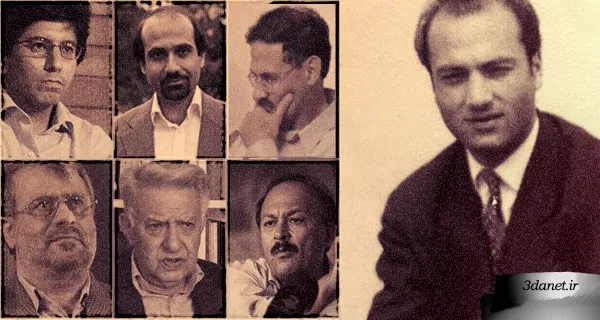
The Awakening Breeze: The proposal before you is the result of designing questions about the thought, character, and constructed concepts or fundamental themes of the intellectual and political life of the late Dr. Shariati, which had created a world of influence for his audiences and companions from the 1350s (1970s) onward. Revisiting and re-examining that powerful world was impossible except by posing questions that encompassed everything from acquaintance with Shariati to a hypothetical prediction of his life in our time. These questions were shared with several experts, professors, and religious intellectuals so that the responses obtained could be presented to readers in a continuous text.
The text now before you comprises the answers of Saeed Hanaei Kashani, Alireza Rajaei, Ezzatollah Sahabi, Bijan Abdolkarimi, Mohammad Mehdi Mojahedi, Ali Mohammadi Garmsari, and Hassan Yousefi Eshkevari to the following questions. The responses of three different generations—those who were contemporaries of Shariati, those who were young adults or teenagers among his audience and had a particular understanding of him at that time, or those who were children during his lifetime and never saw Shariati but later joined the circle of thinkers reflecting on him and colored an intellectual rainbow whose various spectrums are now passing through the third to eighth decades of their lives.
1- How did you come to know Shariati?
Yousefi Eshkevari: In 1348 (1969), I first became acquainted with the book "Islamology" (Mashhad) and then with its author. In those years, he was not yet widely known across the country, and perhaps I would not have known him. But I first saw him by listening to his lecture "Hijrat and Civilization" at Hosseiniyeh Ershad.
Sahabi: My first acquaintance with Shariati occurred in late Esfand 1332 (March 1954), during a week-long trip to Mashhad. At that time, I had passed through the period of the Islamic Students' Association and entry into the socio-political and cultural scene of the era from 1327 to 1332 (1948-1953). Through the publication of two regular journals named "Forugh-e Elm" and "Ganj-e Shayegan," as well as cultural (religious-intellectual and political) activities, I had experienced engagement with the activities of the Tudeh Party at the university and was not exactly a novice. The late Ali Shariati, at that time (Esfand 1332 / March 1954), was still a high school student who benefited from the scholarly and Islamic knowledge of his late father, Professor Shariati; therefore, at that date, Shariati and I were like-minded. From that date until 1336 (1957), when I went to Mashhad again and stayed there for fifteen days, Ali was a student at the University of Mashhad. Naturally, the level of our like-mindedness and exchange of ideas was more in the field of foundational Islamic thoughts, such as theism, spirituality, and eschatology. Later, after he passed through the prison years of 1342 to 1346 (1963-1967) when Shariati was returning from Europe, our acquaintance with him extended to the level of revolutionary ideas derived from Algeria by him and the thoughts of the leaders of the Algerian revolution, such as Mau'ud Far'aun and Frantz Fanon, author of the books "Year Five of the Revolution" and "The Wretched of the Earth," and the level of our like-mindedness deepened. With the beginning of Shariati's Islamology lessons, his brilliance at the University of Mashhad and then in Tehran and Hosseiniyeh Ershad, the process of my like-mindedness and unity with Shariati reached perfection. Another book Shariati sent to me while I was in prison was the book "The Supreme Jihad," by Omar Ouzgan, which we began translating in prison with the cooperation of Dr. Sheibani, and it remained unfinished with the end of my imprisonment, but later Dr. Hassan Habibi translated and published it completely in France. This book was also very effective in our revolutionary and social education, and in fact, I owed all of these to Shariati.
Abdolkarimi: I came to know Shariati through the news of his martyrdom. In the year 1356 (1977), I was a first-year high school student. On the last day of Khordad of that year, I heard the news of the passing of a university professor on the television news. The following day, I saw the photograph of this university professor on a book called "Aqideh" (Belief). One of the students, who had become acquainted with Shariati earlier through his university student brother, introduced him to me. Probably the first book I read by him was also the first book I saw by him.
Mohammadi-Garmsari: Before the Islamic Revolution, I, like countless young people who sought religious knowledge, used every opportunity to become more familiar with new, and especially social, ideas. In this quest, I encountered traditional and so-called religious individuals who negated Dr. Shariati, believing that he had presented countless blasphemies and absurdities in the field of religious studies and was leading the young generation astray. They said he was a Sunni and opposed to Shia religious authority and so on. In that atmosphere and era, people's criticism of the late Dr. Shariati did not go beyond this; they either repeated hearsay or resorted to distortion and forgery of documents. These very discussions became my point of intersection with the thoughts of that unforgettable figure and drew me, day and night, toward his works; works brimming with cognition, wisdom, and love.
Rajaei: I was born in 1962. Therefore, like many others of my generation, I came to know Shariati during high school, and in a very superficial and cursory way at that, and I think in this respect I was even behind others my age who perhaps had more political motivations. The first book I bought by him was "The Most Beautiful Worshipping Spirit"; a year or two before the '79 Revolution. On its cover was a sketch of Shariati's face with a drop of blood trickling down, which was, of course, very common in those years. I found the book very difficult to understand, or perhaps I did not understand it at all. The image of Imam Sajjad (AS) presented in that book did not align with our traditional mindset about the Imams, especially the Fourth Imam.
Hanaei Kashani: I was in my first years of high school, from 1970 onwards. My father was involved in politics and the struggle. He was a Mosaddeghist and had been acquainted with the "Center for the Publication of Islamic Truths" in Mashhad and with Professor Mohammad-Taqi Shariati since his youth. He was also familiar with the militant clerics of that time and had joined the struggle from '63 onwards. He would bring home Shariati's books published by Hosseiniyeh Ershad. Shariati also had a book for adolescents: One, Infinity Before It Zero. But his other books could also be read, especially the shorter ones. Add to this the cassette tapes of his lectures. My father really wanted me to become a book reader, and I did. Almost from the time I learned to read and write.
Mojahedi: Before I began reading Shariati in my adolescence, I became acquainted with the antagonism toward him shared by both the majority of clerics and many thinkers advocating the secular modernization of the state structure. The intensity, sharpness, and anger that surged in the clerics' opposition, as well as the defensive tone they adopted in protecting the institution of the clergy, carried at least two indications for me: one, that his critiques, deeper and more radical than those of other critics of the traditional clergy, had targeted the social identity of the clergy; the other, that these critiques had become very effective in the cultural and social atmosphere of Iran at that time and had therefore worried the official custodians of religion. Later, when I read Shariati, I realized that it was not merely Shariati's fundamental critique of the social structure of the clergy that had made him so hated by the majority of clerics; rather, all that anger poured upon him was rooted in his discovery of two deeper layers of that flawed social structure, which he had seen with a penetrating eye and proclaimed with a loud voice and incisive words. One, an organic and systematic relationship between this flawed structure and its epistemological output, especially formalism in understanding religion and jurisprudential Akhbarism; the other, a synergistic link between the institutionalized body of the clergy and the despotic structure of the state in Iran. As time passed, I understood more why and how this diagnosis by Shariati, and his proclamation of this synergistic link between the flawed aspect of this social structure and the despotic structure of the state in Iran, made him the perpetual target of the enmity of those two groups: one, the official defenders of this traditional structure, and the other, the followers of the model of secular modernization of the state structure in Iran.
2- Which Shariati inspired you more, or which did you consider his primary image: Shariati of the Desert Solitudes (Kaviriyat)? Shariati of Islamic Studies (Islamiyat)? Shariati of Social Studies (Ejtemaiyat)?
Yousefi Eshkevari: In this regard, it can be said that, seriously and precisely, one cannot separate and distinguish between these three perspectives or three types of Shariati's work, but initially I was more influenced by his modernist and at least unprecedented Islamics (at least in terms of language, literature, and religious-scientific and sociological conceptualizations) in the realm of the religious discourses of the forties and fifties, as well as revolutionary Shiite Islamics. However, later, in the years after '55 until the mid-sixties, the social writings became more prominent for me, and in the last two decades, the Kavir writings have shone more brightly, and this is perhaps proportionate to circumstances, needs, and to some extent, age. At the same time, I should add that I read the book Kavir back in '48 and enjoyed it immensely, recommending it to others to read, but I must confess that at that time I understood this book and Shariati's Kavir literature in general more as literature than as profound mystical thoughts and intuitive and existential experiences, because I had no knowledge of mysticism and mystical teachings.
Sahabi: Most of all, Shariati the social thinker, because it both aligned with the needs and concerns of my own days back then, and it was within the framework of the social writings that we also grasped, in brief, Shariati's Islamics and Kavir writings.
Abdolkarimi: In my view, one cannot really separate these three domains in Shariati. The beauty of Shariati lies precisely in this aspiration to synthesize these three domains together. What drew me to Shariati in those days, as a thirteen or fourteen-year-old student, is not very describable. This acquaintance, like many events in life, should be regarded more as the result of a kind of happening. In the cultural desert of Iran, Shariati was a beautiful lone tree. In those days, in the world of a student like me, other cultural figures, such as Fardid, Motahhari, Seyyed Hossein Nasr, and others, were essentially absent. It was only Shariati who, through the broad movement he had created among university students and young seminarians, was able, by means of his loving and devoted army, to find his way into the heart of a lower-middle-class student like me—who belonged neither to the clerical class or the traditional families connected to them, nor to an aristocratic or upper-middle-class family that dealt with books, university, and culture in some way—and reveal a horizon beyond everyday, empty life. In Shariati's works, highly transcendent values surged forth that could easily conquer the pristine and unformed spirit of university and school students like me. A sense of commitment and responsibility, loving and thinking of the other, especially the scent of God, as well as the values and the greatness of transcendent Shiite personalities, surge forth in his apologetic language. Also, his language and literature, compared to the linguistic and discursive systems of others, possessed extraordinary beauty and power, a language and discourse that simultaneously granted the audience both the power to understand the modern world and the ability to look upon the world of their own historical tradition.
Mohammadi-Garmsari: To be serious, I became accustomed to all three images. His Kaviriyat acquainted me with a world of culture, love, art, poetry, literature, and unattainable mysteries, and shaped the solitude of my loneliness. I understood that one could be both religious and aware of the unspoken aspects of the Descent, and also commune with God through divine poetry and music. But the Islamiyat? Without exaggeration, my knowledge and understanding of religions, especially Islam, and of Islamic glories and luminaries, began with Dr. Shariati. I grew up with him, matured, and remained steadfast; I have said before that in many difficult passes adorned with a dash of various isms, when the fashion of attachment to materialist schools had overtaken many and they sometimes prided themselves on their fabricated and real personalities, flaunting them against our religious orientation, it was the literature and thought of the great teacher and reformer, the late Shariati, that made us victorious. His Ejtemaiyat, which was derived from his Islamiyat, also greatly aided our political and social outlook. He, who strove to make us understand that Islam minus society is meaningless, saved us from mere adoration and worship, and taught us that in the social equations of Islam, the understanding of society, the psyche, and even geopolitical regions have a direct involvement. In these images, he spoke to us and our generation of the essence of Shi'ism and love for the immaculate household of the Messenger of God—a glimpse of the truth and nature of the Pure Imams. He made us understand that we are of the lineage of those who, with their pure and humane lives, gave meaning and substance to how to live and how to die. He showed that Muhammad is a mercy to the worlds; Ali, the axis of the universe of existence; Fatima, the epitome of chaste women and a militant who, in the age of ignorance, seeks the realization of rights; and their children, the Kawthar of life and the symbol for measuring truth and falsehood, peace and martyrdom. And it was in this way that we saw the clay house of Fatima as grand as all of history, and the Shi'a as their true followers, without a speck of deceit, cunning, hypocrisy, lies, or slander...
Rajaei: In truth, I was more affected by his Islamiyat, but I did not consider it his primary image. Shariati possesses an indescribable spiritual passion in all three realms, so I did not believe he could be reduced to just one of these three.
Hanaei Kashani: Well, at the time I was reading his works, such a categorization did not exist in my mind, or rather, such a division was not in use, although this categorization comes from him. But I can say it was more Shariati's theoretical and intellectual discussions that attracted me, especially the things he said about Western writers or the quotations he made from them. Also, the interpretations and exegeses he offered of religious subjects and figures.
Mojahedi: In my opinion, this division, although I know it is widely accepted, is not an illuminating one—neither for a conceptual and critical analysis of his intellectual program nor for an evaluation of his political project, a program and project that are deeply intertwined. This tripartite division of Shariati's works may, of course, be useful for organizing a study plan for his numerous and diverse works, but in order to distinguish between the core and the periphery of Shariati's views, which I believe the second part of your question also refers to, one must first ask: what was his most important question, and what was his primary motivation in pursuing that question? What I know of Shariati's thought convinces me that his most important question, around which all his works revolve in some way, could be something like this: 'What mode of understanding the culture, history, and texts of Shi'ism, and what type of practicing Islam, prevents us Iranians from breaking free from the grip of despotic, colonial, and stupefying systems of domination, and what understanding of religion and what manner of religiosity aids us in this liberation?' In my view, Shariati expended all his intellectual, psychological, and social capacity and assets, and all his resolve, to answer this compound question. For him, grappling with this question was not merely an intellectual and mental endeavor. He also had an existential encounter with it. I do not wish to present a systematic picture of his life, thought, and personality, as if there were no internal contradictions within it or as if it were not subject to evolution and fluctuation. On the contrary, I believe this problem-centered model helps us to better see and analyze all three—that is, the diversity, evolution, and fluctuations of Shariati's experiences—without falling into the trap of system-building. What shone forth from Shariati and held me captive for a long time was, more than anything else, this very grand question with all its magnitude and difficulty.
3- To what extent do you imagine the image you held of Shariati, and upon which you acted, was a complete and accurate image of him?
Yousefi Eshkevari: Fundamentally, presenting a complete image of Shariati and figures like him is no easy task, and I still cannot say that I have, or can present, a comprehensive and exhaustive picture of him. I only know that at any given time, a particular dimension of his personality or his specific thoughts and literature became more prominent in my mind and speech. I have described that trajectory. Shariati is rich enough to elevate and enrich diverse and even contradictory seekers across age, intellectual, and social groups.
Sahabi: Firstly, in that era when I learned the most from Shariati, it was the period after he completed his studies in France, where he earned a doctorate in history. France at that time, unlike today, was a major hub of sociology in the world. The level and depth of Shariati's social education and perceptions reached maturity and perfection during that time. His understanding of social and revolutionary issues, and his face-to-face analyses of Islam, are fully reflected during the period of Shariati's Islamology lessons at the University of Mashhad and Hosseiniyeh Ershad. Secondly, as I mentioned in response to the second question, it was within the framework of Shariati's social writings that people like me also became aware of his Islamic and desert-themed works. Shariati emerged in our country, and in the revolutionary conditions of the years 1340 to 1357, as an indigenous sociologist from the social conditions and environment of Iran.
Abdolkarimi: The reality is that we have never had, do not have, and will never have a fixed and correct image of any event, personality, or text. Conceptions and images are transformed with the occurrence of new experiences. Previous conceptions always die and new conceptions are born, and previous conceptions, phoenix-like, are revived with new understandings and interpretations and become present among us. Undoubtedly, the Iranian Revolution was a great historical experience in our country that influenced many of the previous images of many of our historical events and personalities, including Shariati. My feeling towards Shariati is exactly like the first experience of a feeling of love in the heart of a student that he had found for his teacher. After many years, reaching the age of maturity, the passage of life, and the change of that initial feeling, the recollection of that pure feeling of love is still exhilarating and inspiring. The relationship of many people of my generation with Shariati is exactly like the relationship of a child who is several decades old and no longer feeds on his mother's breast milk, but let us not forget that same mother's milk has been the substance of this child's life throughout his entire life. The past does not merely remain in the past. The past is present with us and is even present ahead of us in the future. In this sense, Shariati is with us, beside us, and present in our future. Another point is that a teacher's relationship with his pupils and students is not merely summarized in the transmission of some teachings and fragments of cold and lifeless words and propositions. True teachers shape the way of living and the way of viewing life of their audiences in the deepest and most unchangeable layers of the human soul. It does not matter that their propositions and teachings are subjected to serious and profound criticisms; what matters is that the true teachers of any society continue their life by penetrating the depths of the soul of that society's cultural and historical life.
Mohammadi-Garmsari: I think my possessions and accumulations speak of a real and complete image of a human being with whom I have lived for more than thirty years. I truly think that he was the miracle of the century, and God, through his pen and speech, spread true Islam among the young and educated generation and even brought some of our elders to their senses. Now, some may not have the courage and audacity to honor him, although he is not in need of such an act, because righteous people and the young generation, by welcoming his works, have greatly contributed to his permanence, and he is still alive. At the same time, I firmly believe that the critique of his thought and works is not without effect in this immortalization, because Shariati scholars and critics of his works have, at every juncture of time, discovered many unknowns within his being.
Rajaei: No one can have a definitive and absolutely correct image of another, just as no one even has such an image of themselves. But as I said, Shariati cannot be reduced to a single dimension, and at the same time, he cannot be understood without his profound religious and spiritual passion. For example, to say that Shariati was the ideologue of a specific type of religious ideology does not correspond with the totality of Shariati. Of course, Shariati was a revolutionary thinker, but the revolution he envisioned was preceded by a great intellectual and cultural liberation, such that political revolutions took on a secondary aspect in relation to it. Unfortunately, Shariati's students, in the continuation of that same reductionism, translated the revolution envisioned by Shariati into a purely political revolution, and this was done so extensively that many people of the next generation understood Shariati based on that same erroneous translation.
Hanaei Kashani: Well, I don’t know how one can say what the correct conception of Shariati is. In any case, in every writer, given the evolution of their life, there are many periods and contradictory statements. The writer or speaker themselves might also, at some point, discard many of their deeds and words. In any case, I have never been a “Shariatist” (Shariatist) , just as I have never been, and am not, interested in any other “ist” (ist, ism) . I love “philosophy” precisely for this reason, that one can truly be free from any “attachment.” Shariati was not the only one whose works I read in my youth. From the very beginning of my youth and the start of high school, I was also acquainted with the works of other great world writers. I read Greek plays in my final years of school (I was no more than ten or eleven), I also read novels, stories, plays, and poetry, and I was very interested in watching films and reading about them. I was also interested in theoretical discussions and philosophers, and I read the works of Plato, Sartre, Nietzsche, and Heidegger from that same time, whatever was available in Persian. Therefore, Shariati was not my sole reference. Nevertheless, in those years, Shariati was a reference for me in the domain of religion, and I greatly admired his view of “religion,” and I still think he has many things to say in this regard. Well, personally, I think Shariati has been as influential in my life as my father, and has shaped a kind of “combativeness,” “purity-seeking,” and “individualism” in my character.
Mojahedi: I have had images of Shariati, but I have rarely made an image of Shariati the basis and model for my actions. On the other hand, I do not think we can establish agreeable or reliable criteria for assessing the perfection and correctness of any such image. For these two reasons, I cannot answer this question.
4- Was Ali Shariati the teacher of the revolution?
Yousefi Eshkevari: Without any doubt (as his opponents also acknowledge), Shariati, for whatever reason, played a prominent role in the intellectual and social groundwork of the revolution, and for this reason, he has rightly been called the “teacher of the revolution.” However, if we pay attention to Shariati’s thoughts, plans, and ideals, and consider his “desiderata,” not only do I see no relation between this revolution and those ideals, but at least in many instances, I observe fundamental contradictions between the two. This is one of the wonders, and one might even say paradoxes, of Shariati. If Shariati’s intellectual followers (including his qualified children) can, using accepted research and linguistic methods, dissect and explain this important paradox, they will have taken a great step and rendered a great service to that great man himself and to his path and school of thought.
Sahabi: One hundred percent. Iran's national movement had several branches: 1- The National Front, which during the years '42 to '57 was referred to as the Second National Front and carried the legacy of Mossadegh's national movement, but it fell behind Iran's socio-political current, stepped aside on Mossadegh's orders, and was more or less silent until '57. 2- The Freedom Movement: which was active and present on the political scene between '40 and '57, fell silent after its conviction in the military court of '43, but was not extinguished, and its activities were largely transferred abroad. Domestically, it only remained as an irreconcilable face against the former regime and, apart from cultural and religious publications such as A Ray from the Qur'an (Taleghani), The Infinite Particle, Love and Worship, The Evolution of the Qur'an (Bazargan), and The Creation of Man (Dr. Sahabi), had no other works. 3- Marxist movements, which in the '40s and '50s, although distancing themselves from the Tudeh Party, which was accused of dependence on the former Soviet Union, were mostly, indeed entirely, inspired and nourished by global Marxist teachings and were less indigenous and national. 4- The religious movement, led by the clergy and especially Mr. Khomeini, entered the scene from the year '40 and reached its peak by '57. This movement, although during the years '41 to '57 the driving and very active engine of the national movement and also endogenous and indigenous, was mostly equipped with and engaged in stirring religious sentiments. 5- The People's Mojahedin Organization, which in a period from '50 to '54 was widely influential in Iran's transformation-seeking and revolutionary society, but because it was under revolutionary Marxist training and especially from '54 onwards suffered a Marxist coup, lost its effective position in Iran's revolutionary society, and finally 6- Dr. Shariati's movement, especially between the years '50 and '56, truly carried out the theoretical and cultural education of the revolution, which had a completely indigenous and endogenous aspect. The scope of its influence and role-playing went beyond the young generation and encompassed the middle-aged and even the elderly. In the revolution of '57, the most active and role-playing thoughts were precisely these teachings of Shariati. This is why I claim that Shariati was, one hundred percent, the teacher of the revolution.
Abdolkarimi: Without a doubt. No office or personality bestowed this title upon him, and no political power tried to honor him with this epithet through oil money, propaganda, and media injection, and no power or office can take this title away from him. He was quite naturally dubbed the "teacher of the revolution" by a vast segment of the revolution's main bearers, namely students, intellectuals, seminarians, and ordinary people.
Mohammadi-Garmsari: He was a teacher; he taught us how to confront manifestations of oppression and cruelty; he taught us on whose stature the robes of gold, force, and deceit are befitting. He taught, without wanting to identify the germs of corruption and decay. We ourselves knew who they were. In the streets of those days, we chanted: "Our martyred teacher, had devoted his life, it is the beginning of awakening, it is the beginning of awareness, it is anti-colonialist." Whether he was killed or died a natural death, he was the teacher of our generation. Perhaps that is why, according to the honest and upright man of this era, the dear Mr. Doaei, the founder of the Islamic Republic of Iran, Imam Khomeini, regretted that the Doctor died young and his propagation did not become widespread.
Hanaei Kashani: Yes, undoubtedly. I have no doubt that without Shariati, no one could have overcome the historical distance between "academics" and "clerics," "government employees" and "bazaaris." He managed to bring everyone closer, to show that he was an "intellectual," "civilized," "humanitarian," and "patriot," and at the same time, did not look with contempt upon what he knew of his country's history and tradition. He undertook the "extraction" of tradition and added its golden capital, like oil, to the country's wealth. Nevertheless, alas, he did not remain to complete his work, or could not have students to continue his work. "History" left his work unfinished, and perhaps brought it to an end altogether. The "revolution," in a way contrary to custom, fulfilled Shariati's wish, but did not leave him in place and entrusted his "legacy" to his enemies.
Mojahedi: Yes and no. He was the teacher of Shiite revolutionism in Iran. Undoubtedly, the reading of Shiism that he presented and the epic, artful manner he chose to instill his intentions not only into the minds of his audience but into their very souls and psyches elevated him to the status of the teacher of Shiite revolutionism. But if your meaning in this question is that the Islamic Revolution took shape, advanced, and reached its conclusion solely or mainly on the scale of his ideas, no, in my opinion that was not the case. Although this negation does not mean denying his powerful and deeply influential, inspiring role on revolutionary individuals, currents, and organizations, even on revolutionary clerics. The 1979 Revolution was the outcome of the convergence of intellectual and socio-political forces within a vessel of state developments in Iran and regional and international events. Revolutions are not fundamentally formed based on a design and a program for revolution; therefore, making a revolution is not essentially a matter of teaching and learning that would involve teachers and students. However, for individuals or groups to be willing to take risks and enter the struggle in a situation on the verge of revolutionary transformation, mobilization is needed. The mechanism for mobilizing the more educated forces of society differs from the mechanism for mobilizing others; while only a revolutionary intellectual can mobilize the former group, the mobilization of others can be undertaken by many others. Shariati's teachings, as the teacher of Shiite revolutionism, manifested a mobilizing capacity among some of the educated members of society within a vessel of political and social developments.
5- Did Shariati, in his own mind, think of an "Islamic government"?
Yousefi Eshkevari: It can be definitively stated that Shariati not only in his mind, but also in his speech, did not think of a religious government. Shariati's anthropology, ideology, and view of history cannot be compatible with any form of despotism and authoritarianism, to the extent that at times, some of his statements border on anarchist thought and literature. Hence, even if he somewhere spoke explicitly or implicitly about Islamic government, logically they must either be interpreted in light of the principles and definitive tenets of his thought, or be disregarded as instances of contradiction.
Sahabi: Yes and no. Yes, in the sense that both Shariati and we in the Freedom Movement, as well as the Mojahedin Organization, in that era thought of the idea of "Islamic government" as an alternative to and contrary to monarchical rule. But "no" in the sense that the concept of Islamic government was summed up in the Alavid government, which was not subservient to and a follower of gold, force, and deceit—not that Islamic government which was customary and accepted among jurists, religious scholars, or traditional clerics, meaning the rule of formal jurisprudential decrees and the dominance of clerics over the thoughts, emotions, and feelings of the people. This kind of Islamic government was not in Shariati's mind. Even in 1978, the late Imam Khomeini, after migrating to Paris, advised our friends who were proposing the slogan "Freedom, Independence, Islamic Government" not to say "Islamic Government," because Islamic government in jurisprudence has regulations that are neither practical nor expedient today; rather, say "Freedom, Independence, Islamic Republic," and it was this very slogan that became established as the definitive slogan of the 1979 Revolution. Beyond all this, among the three great Marja's of the Constitutional era, the most renowned of them, the late Akhund Mulla Kazem Khorasani, author of the book Kifayat al-Usul, also explicitly states in his works that we do not have an Islamic government in Islam, but rather the government of the Muslim republic (meaning the Islamic Republic). Therefore, what was established in Shariati's mind was that very Muslim republic, which is neither hereditary (familial inheritance or the inheritance of a specific class, i.e., the clergy) nor merely subject to traditional jurisprudential regulations.
Abdolkarimi: Not at all. No one thought of "Islamic government" in the sense that we experience it in Iran today. Islamic government was not a pre-existing idea that was realized; rather, this government, more than being the result of a clear theoretical formulation—though I am not saying it lacks any theoretical and historical foundations—is the product of a very complex historical process and more the result of our mode of livelihood and historical existence.
Mohammadi-Garmsari: All the actions, demeanor, and thought of the late Doctor were dedicated to the explication of Islamic ideology and the revival of religious values, and naturally, such a person would have desired the best government to rule. One might be able to understand what kind of government his searching and creative mind was attached to; that is, a government in which humanity is valued, human dignity is not trampled, and the elements of wickedness, ignorance, and folly depart from Muslim society, and lies, slander, vile thoughts, and the spirit of hypocrisy vanish—this was significant to him, meaning that humanity would prevail. But an important point that should not be overlooked about him is Dr. Shariati's idealistic view of religion and religious teachings, to the extent that he was willing to give his life for it, and he thought that the explication and analysis of religious subjects, and even the realization of his favored ideology, was not dependent on any particular class or group.
Rajaei: In the strict sense of the word, Shariati did not think about an Islamic government. He was fundamentally an anti-power thinker, and he did not consider the emancipatory fervor he had discovered in Islam and Shi'ism to be definable within the grip and monopoly of the rigid structure of governments. In general, he was a thinker of change, not stability. And this is in conflict with the nature of any government, under any title.
Hanaei Kashani: Well, both yes and no. It depends on what we mean by Islamic government. Certainly, Shariati did not consider Islamic government to mean "government of the clerics." Nevertheless, as a Shi'a individual, Shariati had a conception of government that was itself a product of the history and tradition of the Shi'a faith. Shariati never thought about the conceptual and contradictory possibilities of what Shi'ism conventionally expects from government. Shariati, like all other Shi'as, believed in the "Platonic ideal," meaning he thought the best government is the government of the "wise" / "righteous" or the "infallible." Nevertheless, he considered the model of Imam Ali's (AS) governance and his treatment of opponents as a model of democracy, but he could not see how these historically come into contradiction with one another. For that, he would have had to be alive and witnessed the experience of the "Islamic Revolution."
Mojahedi: Based on his works, one can judge that he was moving towards developing an alternative governmental model. His explicit works in this area are few and indicate that he was still on the path and thinking out loud. However, although one cannot say precisely what kind of governmental model the course of his thought on this matter could have ultimately led to, one can speak with greater certainty about what his proposed model for government could not have turned out to be. In my opinion, given his understanding of the institution of the clergy, his governmental model could not have entailed the rule of the clergy as a group or class or as the official spokespersons of religion. Also, considering his understanding of the position of jurisprudence among the Islamic sciences and teachings, the government he had in mind could not have been a jurisprudential government or the rule of jurists. I would like to briefly mention another point here. In my opinion, Shariati was mainly preoccupied with challenge, transformation, and transition, not stability, succession, and establishment. A project formed around the question of transition does not pivot smoothly and easily onto the question of establishment, nor does it provide a well-crafted answer to its questions, not even to the original owner and creator of the project himself.
6- Was Shariati opposed to democracy, in the sense of popular rule?
Yousefi Eshkevari: Although Shariati, for clear reasons abundantly evident in his works, was not very reconciled with the democracy prevailing in the West (at least in his time) and was considered one of the serious and radical critics of democratic governance in the service of harsh capitalism and imperialism, at the same time he not only did not negate the principle of democracy (in the sense of popular sovereignty of political power based on secular and democratic authority), but he also strongly defended it, and in his works, one can find many such defenses and supports, and referring to them is possible for everyone. For instance, at the very end of the book "Ummah and Imamate," democracy is specified as an Islamic principle in the age of occultation. In this case too, I must say that in conflicting instances, what is fundamental are the definitive verses (muhkamat), and the ambiguous ones (mutashabihat) are necessarily interpreted in light of the definitive ones.
Sahabi: Shariati did not accept democracy in the sense of the rule of the majority of individuals, or in his own words, the rule of the majority of heads; that is, he did not find democracy manifested solely at the ballot boxes, but rather considered it to entail the rule of the wise and the knowledge of the general populace, who, in a socio-political process and with awareness of all sciences and social achievements, would have attained a kind of national and social consciousness.
Abdolkarimi: As I demonstrated about a quarter of a century ago in my draft essay titled "A Re-examination of Shariati's Political Philosophy, or a Reflection on the Paradox of the Committed," Shariati in the realm of political thought is faced with countless paradoxes, conflicts, and contradictions. He wanted to remain faithful to classical political philosophy and politics based on the concepts of truth and virtue, and to the critiques of classical political philosophy regarding democracy that have existed from Plato's time to our own. On the other hand, he wants to believe in modern political philosophy, the people's right to vote, democracy, and individual freedoms. These are not compatible. Where he defends the values of modern political philosophy, he has completely democratic tendencies, but in defending classical philosophies, he adopts an anti-democracy stance. Therefore, the late Shariati's political thought does not have a systematic structure and lacks internal consistency.
Mohammadi-Garmsari: In the teachings of that great teacher and divine miracle, opposition to democracy had no meaning or concept. He taught how human beings, especially the Shia community, can be democratic and how they can live freely. How is it possible for someone to speak of the social struggles of human beings for freedom, and his best model be the five-year rule of the Master, the Commander of the Faithful, and yet be opposed to popular sovereignty?! His "Ummah and Imamate" shows the depth of his attachment to democracy; some may not have such an interpretation of it. It doesn't matter; what matters is that his thesis was proposed at an age (40) when there was still a path to completion, and perhaps if he had lived, he would certainly have shown his critique by creating other works. In short, the point is that many people at this age are just beginning to take shape and, after a long period of study and research, reach new thinking and creativity, but he, as if he had no opportunity to continue his path, only set forth ideas and reformed and revived religious values and symbols, and vaccinated us against various -isms. He loved Islam and considered Shi'ism the manifestation of oppressedness and courage and the cradle of freedom, and believed that while there is opportunity, fundamental reforms must be made, and it was not without reason that he said, "If I remain alive, I will revive the jurisprudence of Muhammad and the Family of Muhammad." These were signs of his passion and intellect, arising from his religious knowledge.
Rajaei: Shariati considered democracy a stage in the struggle for freedom, but he did not explain it as the final point and the end of history. Therefore, he was not infatuated with Western democracies, because the definitive reflection of the will for emancipation is not present in democratic governments. In general, Shariati was anti-government, and of course, this opposition took a more intense form against despotic governments.
Hanaei Kashani: No. He was not opposed to "democracy." But his "democracy" was not what we understand today. He always thought our people are "Shi'a" and will remain "Shi'a"! He did not consider the possibility that "historical experience" could destroy "religion" and "faith." In his view, if the people are "Shi'a" and "revolutionary," democratic government is good, but if they are not, then no. He looked at religion, faith, and ideology as beliefs-in-themselves whose "truth" or "falsehood" is based solely on their own primary concepts. He did not consider the possibility that democratic government, at least in certain periods of history, means the rule of many things we do not like and deem "bad." Shariati, based on Shi'i teachings, imagined that the rule of truth means a government based on the "belief" that is true. Like many other intellectuals of that time, he only liked "democracy" when the people "understood and acted in the way" that they themselves liked. In other words, he was "elitist" in this respect. Whereas "democracy," at least in politics, means the rule of the mediocre and people who may turn in a different direction every day, and rulers who may be very far from ideals, yet are the "elected" and "desired" of the people. Shariati, like many twentieth-century intellectuals, thought in a "utopian" or "nowhere-land" manner and sought an ideal city.
Mojahedi: As you know, he scorned the rule of the majority of votes with the contemptuous metaphor of the rule of heads. Nevertheless, if we define democracy by the moral values that a democratic system must guarantee and uphold, I do not think Shariati's political thoughts are incompatible with them—values such as transparency, guaranteeing diverse sources of information and analysis, the possibility of the non-violent removal of rulers within fair and declared rules, the possibility of fair competition among alternative ideas and groups, the deconcentration of wealth and resources, rule of law, and public consent. Democracy, however, is in any case concerned with processes and mechanisms. Shariati, though, was more worried about content than form. He believed there exists a superior worldview, a superior ideology, and ultimately a superior socio-political and economic system. This value monism evokes, if not necessitates, a kind of methodological monism, which I doubt can easily be reconciled with a democratic mode of governance. I say I doubt it, because I know and you know that one can have a democratic government in the sense of a "popular government," yet sacrifice the values of democracy at its altar, or at least not be concerned with those values.
7- Shariati saw the pain of Muslims and Islam in these things: the official custodians of Islam; colonialism, stupefaction, and exploitation; superstition and deviation from authentic Islam. Was his diagnosis correct?
Yousefi Eshkevari: Although one can add to this list based on Shariati's works, in my opinion, his diagnosis regarding the issues raised was correct and is entirely consistent with historical evidence. The developments of the last three decades in our country and the spread of fundamentalism in the Islamic world are a confirmation of these statements. Of course, the reality is that other contemporary Muslim reformers have also, each in their own way and with their own language and analysis, pointed to these issues. Among them, the issue of custodians, superstition, and deviation from authentic and early Islam can be seen in the discourses of all reformers.
Sahabi: In my opinion, Shariati was not mistaken in these five instances and had diagnosed them correctly, but there was another matter, which we realized in the experience after the 1979 revolution, that he did not include among the afflictions of today's Muslims: the importance of work, effort, and creativity in the material (economic) and cultural (art, thought, and knowledge) spheres, and the necessity of social defense. In the social experience before the victory of the revolution, these matters I mentioned had not manifested much and had not reached the (awareness) of thoughtful and concerned people. Today, all Muslim nations, especially in the Middle East and the Maghreb (North Africa), suffer from this ailment—that is, a lack of creativity and innovation, and imitation of Western models on the one hand, and a lack of effort, hard work, and productivity on the other. This is why, with the passage of time, the gap between non-Islamic societies—Europe, America, China, and East Asia—and Islamic nations is constantly widening, even though liberation movements exist among Muslims, yet collectively they do not achieve progress or speed in material and spiritual advancement.
Abdolkarimi: Two fundamental points must be noted in this regard: first, these were part of our afflictions, not all of them. Second, diagnosing the affliction is not the most important part of the story, or at least not the whole story. Many others shared Shariati's diagnosis, including Motahhari, Taleghani, Bazargan, Nakhshab, Shariat Sangalaji, and others. The crucial and fundamental issue is on what basis we seek to cure these afflictions. Sometimes our solutions may themselves exacerbate the affliction, or even lead to the emergence of new afflictions, or attention to some afflictions may prevent us from understanding and attending to other, deeper afflictions.
Mohammadi-Garmsari: The cases you enumerated are the great affliction of Muslims, an affliction whose analysis began with the late Seyyed Jamal and continues to this day. If these issues are pursued carefully, you will find that people expect far more responsibility and a sense of mission from the official custodians of religion. If a reading of religion and faith leads to the stupefaction and exploitation of the Muslim masses, and what is unrelated to religion is fabricated and religious teachings are distorted, this is the very instrumental use that many propagate today. Nearly half a century ago, the late Doctor cried out about the discussion of superstition and deviation from Islam, yet today we see many thinkers and intellectuals of society crying out about it. We are responsible before the Muslim generation, and today's generation, in a world that has become a global village, cannot accept something without reason and logic, and it is impossible to keep them in ignorance and superstition; they seek awareness and understanding. It is not without reason that in Shia jurisprudence, the elements of time and place are embedded, and the Shia jurist must, with correct discernment, analyze new questions and doubts and prove that Islam possesses creativity and innovation for all times and places.
Rajaei: Shariati's diagnosis and pathology of Muslims and the Islamic world has demonstrated its historical validity today more than ever before. In religious understanding, he was fundamentally not very text-oriented and had correctly diagnosed how a real power structure forms around the text, concealing or revealing itself under the guise of belief or Sharia. For this reason, with great emphasis on history, he tried to break the rigid structures surrounding the "text and the interpreter," and to a large extent, he succeeded in this endeavor. In fact, this is Shariati's most revolutionary aspect in the field of Islamic studies.
Hanaei Kashani: Well, in slogans, yes. But what was this "authentic" Islam, and how was it to be understood? Whose "understanding" and how? In any case, Shariati's own understanding of Islam could also be characterized by such attributes! How can we distinguish "authentic Islam" from the inauthentic? This matter, beyond methodology, requires a sphere that "politics" must open up! When you cannot present your understanding of "Islam" under the label of being "inauthentic," how can you critique or even negate the "ruling Islam"? Such words can always produce "opposite" results.
Mojahedi: As I mentioned in response to the second question, that compound, complex, and difficult question was for years the central concern and guiding light of the intellectual search and existential and spiritual attachment for me and many others of my generation, and it is quite possible that this prior impetus and background has driven many along the same path to this day. But for me, over time, some components of that question changed. He looked particularly to Shi'ism and expected religion to provide a worldview, an ideology, and a political system for all human conditions. His attachment to religion was also an attachment in the form of a collective identity with a political mission. Moreover, he thought that political and social change is a function of change in the cultural system, and he saw change in the cultural system as dependent on changing society's relationship with religion, and he considered this change in relationship to require the epistemological refinement of religion and empowering it for struggle and playing an active social and political role. Gradually, these more implicit presuppositions in Shariati's approach to that grand question faded for me, and that question transformed into new questions.
8- Shariati's solution was "return to the self." Why, and what was your understanding of what it was?
Yousefi Eshkevari: Shariati himself spoke in detail about the idea of the Islamic-Shi'i return to the self, and there is no need to recount those or to add or explain, but we must note that his "return to the self" is understandable and analyzable in connection with his thought on "cultural alienation." He said that Muslims in their history (including through colonialism in the modern era) have either been emptied of or distanced from the religious truth and the positive human and cultural identity of their past; therefore, they must return to that faith and those first, movement-creating thoughts to attain human and Islamic awakening and self-consciousness, and after that, prepare themselves for freedom, justice, sciences, technology, and the creation of a new, indigenous civilization. The purpose of this slogan was neither an invitation to religious or national reaction, nor aimed at a return to the life and devout sharia of early Islam, nor to the jurisprudential thought and tradition of recent Muslim centuries. At that time, I (and others as well) had no conception other than this. At the same time, this slogan carries ambiguities that must be resolved or corrected today.
Sahabi: The return to the self was first raised in the 1950s by the late Engineer Bazargan, in his speech "Self-Generation." There, referring to the book The Face of Asia (dafacede, ssie), he claimed that the path to progress for Asian countries lies not in imitating and following Western teachings and schools, but in drawing inspiration from and using their own civilizational and cultural talents for the healthy development and progress of society, by which they can compensate for their backwardness from the West, and even surpass it. But in the 1970s, this return to the self was interpreted and promoted by the Pahlavi regime and some intellectuals and writers affiliated with the regime as a return to the values and traditions of the imperial, Achaemenid, or Sassanian monarchy. In opposition to this stance of the former regime, Shariati proposed a return to the transcendent spiritual values of Islam and the justice and populism of Alavid Shi'ism. Therefore, the return to the self, according to Engineer Bazargan's view in "Self-Generation," was a necessity for salvation from backwardness, and according to Shariati's discovery of the concept of the (Pahlavi) return to the self and its degeneracy, a national and Islamic return to the self was proposed.
Abdolkarimi: From ancient times and in very remote eras, the "self or selfhood" has been regarded in all historical traditions as one of the most fundamental sources of consciousness and self-consciousness. In the Hebrew tradition and in the three great religions of this historical tradition (Judaism, Christianity, and Islam), self-knowledge was the starting point of the path to knowledge of God: "He who knows himself knows his Lord." In the tradition of Greek metaphysics as well, Socrates' principal motto was: "Know thyself." In Indian and Far Eastern traditions, and even in Native American and African cultures, the "self or selfhood" was also regarded as one of the authentic sources of self-consciousness and inner power. However, in the metaphysical tradition, the Socratic motto was increasingly forgotten, until in the modern era, with the advent of modern rationality, the human being was regarded merely as a rational animal, a subject or knowing agent, and the inner depths of the human being were completely and utterly neglected. This neglect was fiercely protested by a thinker like Kierkegaard, to the extent that he made his entire mission to draw the Western human being's attention to the truth of the human being, or in his own specific term, existence. Heidegger also considered knowledge of the truth of the human being (Dasein) as the starting point of his inquiry into the meaning of Being and the point of departure for confronting the question of Being, and, following Kierkegaard, he set forth two fundamental possibilities, two modes of Dasein's being, namely the two modes of authentic and inauthentic being. But Shariati's slogan of "return to the self," which was to a large extent influenced by thinkers such as Frantz Fanon, Aimé Césaire, and others, was a political, social, and cultural slogan; it was more a reaction against the phenomena of Westoxication (in a social and political sense, not an ontological and philosophical one) and becoming like Europeans (assimilation). The "self" to which Shariati summoned us was the "Iranian-Islamic-Shi'i self," and in a sense, more of a historical (Iranian), theological (Islamic), and ideological (Shi'i) self. It was precisely because of the limitations of Shariati's historical, theological, and ideological beliefs that the "self" to which he and all the proponents of theology and ideology called us completely faded after merely one or two decades following the victory of the revolution and with the change in political and social conditions, and it could not offer any very serious resistance against the global tide of Westoxication; and today, the entire society, especially the young generation, has become completely weak and powerless in the face of the tempest of alienation and rootlessness of the new era. Shariati was unable to cross the boundaries of historical, theological, and ideological beliefs, to show the roots of our self in the heart of the soil of "Being," and to show our authentic self not in terms of our relationship with nationality, theology, ideology, and politics, but based on the human being's relationship with "existence," with the reality of the world, with truth, and with the sole transcendental truth of the world. The true human being and self that Shariati sought to attain was, like other social types, a rootless human being who had not found the true soil for the growth and development of his mode of being.
Mohammadi-Garmsari: The return to the self is a return to the human self, a return to the precious identity and heritage of which we are proud. A return to the era of the Prophet of mercy and humanity, and the era of the justice and piety of the great Ali; if we wish to have a gift for our generation and to defend the religious governance arising from the blood of martyrs and the sacrifice of the youth, we must return to our identity and, by reviving those values, add to our national cohesion and solidarity.
Rajaei: Shariati's "self" was an exit from the monopoly and the scope of the dominant interpretation of the text. A self freed from domination is placed in a direct confrontation with spiritual and religious fervor. This was precisely what our noble Prophet did in Islam during the period of the Bi'tha, sometimes placing others within the radius of his own being without any speech or hadith, but Muhammad was so great that he would also divest himself of the station of "being the core of that radius," such that his audience would find themselves in the direct presence of the Truth, and Shariati called for this.
Hanaei Kashani: This is one of Shariati’s most controversial statements, and I don’t think it can be adequately explained in a few lines. He himself tried very hard to clarify this concept, but the idea still has its problems. When it was first expressed, this concept was taken to mean “anti-Westernism” and the revival of “ancient traditions.” But that was perhaps not exactly what Shariati intended. In my view, he disapproved of “passivity” and “submissiveness” before dominant values, whatever tradition they might come from—Western, Eastern, or Islamic. He called for choice, selection, and refinement. And in his view, this was not possible unless we first recognized our own “factical” (factical) possibilities, to use the term of the “existentialist philosophers.” Shariati’s “return to the self,” I think, was an understanding of these very factical possibilities, that is, a return to our history and tradition and a confrontation with it. Now, by virtue of the occurrence of the “Revolution,” we have perhaps involuntarily been confronted with these “possibilities,” and now we may be better able to recognize our historical “self.”
Mojahedi: In keeping with that grand question—which was, incidentally, an identity-seeking question and the organizing principle of his political life and intellectual life—Shariati also offered an identity-based answer. The return to the self was an answer to a question concerning the identity-wandering of a people, or what he himself, drawing on leftist and critical thought, called its alienation or self-estrangement. The implicit priority he gave to the question of ontology over the question of epistemology led him in this direction: that to answer any question, we must first recover our existential position. We must find our real coordinates. In this regard, he was not only influenced by leftist thought, but was far more influenced by Iqbal Lahori, who had a mystical upbringing on the one hand and a Hegelian one on the other. These three sources, in my opinion, were the wellsprings of his identity-oriented tendency.
9- Why “Ali”? What was Shariati’s image of Ali for your generation?
Yousefi Eshkevari: One of Shariati’s pedagogical and consciousness-raising methods aimed at achieving emancipation and freedom was the revival of historical and Islamic-Shiite symbols. For him, as a full-fledged Shiite after Muhammad, this meant reviving figures such as Ali, Fatima, Hasan, Husayn, Abu Dharr, Salman, and others, whose personalities and lives had, over the course of history, either been contaminated with all kinds of superstitions or, in any case, been forgotten, emptied of their natural properties, and even, in his own words, turned into “opium.” This method is fundamentally very important for generating movement and awakening, and as it happens, the current new-thinkers of Iran are deprived of this method, and for this reason they cannot easily speak to the masses and call them to action. In any case, for our generation, Ali ibn Abi Talib, as narrated by Shariati, was the human symbol of faith, freedom, resoluteness in the pursuit of justice, and the embodiment of egalitarianism. It should be added that Shariati created a new myth out of Ali, which perhaps diverged somewhat from historical realities, but it was effective, and he was also probably consciously reconstructing Ali ibn Abi Talib in his own persona, that is, Ali Shariati. The lecture “Ali and His Sufferings” is an example of this effort.
Sahabi: In the eyes of our generation, that is, the youth of the 1320s and 1330s (Solar Hijri), Imam Ali was a figure who was not only the first to believe in the religion of Muhammad (PBUH)—which spoke to his highly active intellect and his doubly pure and transparent heart—but was also known as a democrat in the fullest sense (Sermon 207 of Nahj al-Balagha) and, at the same time, a warrior and hero, and above all, a sincere social opponent of oppression and a ruler unparalleled in vigilance and love for the people and the governed. Shariati presented such a role of him to us.
Abdolkarimi: “Ali,” that great protégé of the Prophet of Islam, is a grand and outstanding example of the first-rate human being that the Hebrew historical tradition sought to create. Shariati was well aware of this and demonstrated it as beautifully as possible. But Shariati only grasped the fruits and branches of Ali ibn Abi Talib’s mode of being—that is, values and virtues such as courage, loyalty, and struggle for the school of thought, unity, justice, etc.—and did not see the roots of this mode of being in the soil of “existence.” All of Ali ibn Abi Talib’s values and virtues, with all his human limitations, stemmed from roots that had grown from the depths of his being in the heart of the “land of existence,” and he had lodged his mode of being within existence itself. “Ali” was not, like so-called revolutionary, theological, ideological, and politicized human beings, a “homeless human.”
Mohammadi-Garmsari: Imam Ali (AS) is our entire identity. A beautiful name with which we lived, and with his loving supplications and human justice, we confronted the enemy and called ourselves his followers and Shia. His image and conception were a blessing and a value for us. When our brothers and sisters in the prisons of the past felt the black whip of tyranny; when our struggling and freedom-seeking contemporaries were thrown into dungeons for the slightest protest or criticism; when they sought to extract confessions from them for the pleasure of the sovereign and humiliate them with all manner of inhuman tortures, the name and memory of Ali, the memory of Ammar, Yasir, Hujr, Bilal, and dozens of other figures and glories of the Islamic world, were a treasure that calmed us. Shariati’s image was a beautiful and magnificent one, and undoubtedly, by emulating these great figures, we triumphed over all that deceit, trickery, and torture, and in the words of Master Hakimi, we became “minstrels of love,” and I hope that this image remains alive for us and our generation.
Rajaei: The image Shariati crafted of Ali was the absolute model of the perfect human being. So perfect that his totality is discovered in a vast process of self-construction, and our initial encounter with him is that of an individual sitting at the foothills facing a mountain. The result of this encounter is a small image of a vast totality. On the other hand, Ali and his children were subjected to the greatest social calamities, and despite this, they never strayed from the path. This means, as Shariati said, Ali was a superior human being, not a superhuman.
Hanaei Kashani: Imam Ali (AS), as history narrates for us, is the representative of an “understanding” of “Islam,” “humanity,” and the “world” that has rarely been found among non-philosophers. Shariati, with his own ingenious “readings” of religious figures, which he himself acknowledged he learned from European intellectuals and their “work” with myth, was able to once again transform these “figures” into our contemporaries. Imam Ali (AS), in this way, became for us a man who considered the struggle against “oppression” the duty of “intellectuals” and their commitment to “God.” For us, no one could illuminate such a path like “Ali.”
Mojahedy: In my view, in addition to Shariati personally loving Imam Ali, Ali, as Shariati portrayed him, was a choice and indeed a strategic necessity for his project. The distorted and fabricated images of Ali were, in Shariati's view, the very muddy source that had polluted the entire river of Shi'ism. The water had to be purified at the source. Shariati undertook the dredging of this river's origin. By rectifying the old, worn-out, dead, superficial, formalistic, superstitious, sectarian, and narcotic images on the one hand, and also rectifying images that placed Ali as superhuman, inimitable, and inaccessible, he sought to replace them in the historical and religious memory of his audience with an image of that Imam that was alive and inspiring of struggle, that called to justice, and that daily stirred his Shiites anew against those who spend the Imam's share for name and bread, and who possess nothing of spirituality beyond a rosary, a turban, and pretensions. Ali, as he introduced him, was both the identity, epistemic, and historical reference point of Shi'ism, and following him entailed seeking martyrdom, sincerity, wisdom, freedom from class ties, sensitivity to the hunger of the lower classes and the poverty of the wretched, avoidance of expediency and comfort-seeking, and in short, constant pursuit of justice and continuous quest for truth.
10- Was "Abu Dharr" the sole symbol of Shariati's thought and action?
Sahabi: Since Shariati was deeply attached to and emphasized the struggle against oppression and the pursuit of justice in society, and Abu Dharr al-Ghifari was a personality who could not tolerate the social injustices of Uthman's era, and who possessed candor and honesty, he stood against Uthman until he was exiled to al-Rabadha. Such a personality was Shariati's ideal, and therefore he chose him as a symbol of his pure thoughts. However, I cannot claim that Abu Dharr was the sole practical symbol of Shariati's thought, because the Holy Prophet, comparing Salman to Abu Dharr, said that if Abu Dharr knew what Salman knew, he would surely become an infidel. Salman was also beloved by Shariati, as he translated and published Louis Massignon's book Salman Pak into Persian. Therefore, Salman was also a symbol of Shariati's thought and action. I know that the Holy Prophet (PBUH), among his other companions who were all the elites of their time, held special sessions with Salman and Ali ibn Abi Talib and disclosed to them glimpses of the sublime teachings of Tawhid and theology. Thus, Salman had the additional merit of knowledge and understanding of the teachings of Tawhid over the other companions.
Abdolkarimi: "Ali" and "Hussein" were also, like "Abu Dharr," symbols that Shariati used to express his own thoughts and ideas about the kind of consciousness he sought, and also to express the relationship between action and theory in his own view. But "Abu Dharr" and "Abu Ali," both because of the nature of their personalities and due to the pun in the first part of their names (Abu), led Shariati to use "Abu Dharr" more as a symbol for expressing his thoughts.
Mohammadi-Garmsari: We cannot reduce Shariati, with that prismatic image we know of him, solely to Abu Dharr. Abu Dharr is one of the Doctor's important, influential, and model-setting dimensions, but he also has other images and inspirations. The late Doctor's scientific method and tireless research effort take him beyond the mold of a mere Abu Dharr and political actionism.
Rajaei: Abu Dharr was the symbol of that anti-text tendency of Shariati. A human being of flesh and bone, a desert-wandering nomad, who had not studied, had not accumulated culture, but when the liberating breeze of the Prophet blew upon his soul, he became so enriched with knowledge that the official scholars paled in comparison. Shariati paid more attention to anthropology than to textology, and Abu Dharr was the symbol of that free human being, filled with divine knowledge, who challenged the conventional and reactionary tradition of domineering religions.
Hanaei Kashani: Certainly not. Shariati spoke of many figures. But the conspicuousness of "Abu Dharr" may be that becoming "Abu Dharr" is, at least in the religious tradition, easier than becoming "Ali" or "Hussein"! Shouldering the duty of Abu Dharr is more humble.
Mojahed: I am not sure I have correctly understood what you mean by "the sole symbol of Shariati's thought and action." In any case, you know that he himself greatly highlighted Abu Dharr. To provide an example of the Shia he had in mind, from among all the companions of Imam Ali, he chose Abu Dharr, and this was a very intelligent choice. Before Shariati, Abu Dharr had no place in the conventional religious education of religious families, nor among the clergy and those of the pulpit, preaching, and oratory, and essentially in customary religious discourse; he still does not. There is also not much reliable historical information available about him; even the image of Abu Dharr presented in Nahj al-Balagha, as an individual deeply and predominantly engaged in contemplation and constant in fasting and silence, does not entirely correspond with the image Shariati highlights of Abu Dharr as a professional and lifelong revolutionary. Of course, I am not saying it is incompatible; I am saying that the comprehensive personality of Abu Dharr in Nahj al-Balagha's portrayal is wholly reduced to a revolutionary figure in Shariati's view. But for him, Abu Dharr nonetheless had a capacity that inspired the Shiism he favored: a duty-bound Shia, standing by the covenant, without a particle of personal or familial self-interest and expediency, selfless, patient, and resistant, yet so courageous as to voice the sharpest criticisms against the Caliph and his close agents, loudly and in public, and to accept the consequences. In my opinion, the typification of the "Abu Dharr Shia" versus the "Abu Ali Shia" shows what expectations Shariati had of the Abu Dharr model.
11- You have lived and flourished with Shariati; if he were among us today, how would he define his most important intellectual project?
Yousefi Eshkevari: Providing a precise and truthful answer to this question is not an easy task, because I am not Shariati, nor is the era Shariati's era, and naturally, the conditions and needs are not entirely the same as forty years ago. At the same time, I can say that if Shariati were living in our time and era now, he would certainly pursue the same project of "Reconstruction of Religious Thought" as narrated by Iqbal, or at a more general level, the same "religious reform," with greater seriousness, because today his famous saying, "Any revolution before awareness is a catastrophe," has come true and has proven this claim more than ever. But regarding how this reform would be carried out, with what research and discursive priorities, and with what tools, nothing can be said. It seems that in Shariati's time, more "enlightenment" had taken place, but now, more "intellectualism"—that is, deep reflection on foundations and serious, transformative theorizing "in the entire apparatus of Islam" (in Iqbal's words)—is needed, which is the fundamental mission of his intellectual followers.
Sahabi: With the familiarity I have with Shariati's expression and method, I think that if he were present in our current Iranian society today, two concepts or two points would manifest more prominently in his mind and he would emphasize them more: 1- The concept of nation and homeland: I think Shariati had no doubt about the concept of nation and nationality. It is the Quran that says: O mankind, indeed We have created you from male and female and made you peoples and tribes that you may know one another. Indeed, the most noble of you in the sight of Allah is the most righteous of you. After the creation of man in the form of male and female, or Adam and Eve, the first creatures God created were peoples and (nations) tribes, the more preliminary form of the nation, but these nations settled in a spatial location called "homeland." Homeland in the culture of Islam and Muhammad (PBUH) was not something vain and false, for the Prophet (PBUH) himself said: Love of homeland is part of faith. In these times we live in, if Shariati were here too, he would find it his human duty and intellectual responsibility to strive for the salvation and survival of this homeland, which has a 4,000-year history. 2- The concept of development: If the homeland is the material and spatial vessel of the nation, development is the nation's journey on the path of progress and evolution, which takes place in the vessel of time. If there is no development, the nation and homeland continually move toward decline, poverty, and death, which is contrary to the Lord's way regarding His creatures. Whatever is with you will perish, and whatever is with Allah will remain. That which characterizes you humans or all creatures is moving toward death, and that which characterizes God is eternal survival and life. Therefore, material development (economic-political) and cultural development consist of following the attribute of the Lord, that is, survival and evolution, just as in Surah An-Nahl, God says to the honeybee: Feed from the heavens and the earth and human structures, then follow the ways of your Lord: meaning traverse the path of your Lord, that is, attain evolution and transcendence until you reach the heaven of your Lord and become annihilated in it. Development means this very evolution and transcendence toward God and becoming God-like.
Abdolkarimi: Answering this question is impossible. Because life, thought, and history are unpredictable matters. Any answer to this question is, in fact, indicative of the mental constructs of the respondent themselves. On the other hand, your question rests on this hidden assumption that "if everything after the revolution had occurred just as it has occurred until now, then if Shariati were among us today and in this very situation, what projects would he pursue?" However, this assumption is completely wrong. Shariati was not an ordinary and conventional individual among many others. He was a historical figure with the power of historical influence in the history of our revolution. He had naturally risen to the status of "teacher of the revolution," so one can only say, purely based on the element of imagination and in an unprovable and irrefutable way, that if Shariati were alive, due to his massive popular base, perhaps the course of the revolution would have taken a different path. Perhaps we would naturally have witnessed a kind of pluralism in society due to his presence and his followers, and we would not have fallen into a path of monophony and monopoly of power in society. Perhaps with Shariati's presence, the Mojahedin Organization would never have taken the path of violent and bloody confrontations that it did. Perhaps with Shariati, the term "Islamic Republic" would have been accompanied by one word less or more. Perhaps... But no one can speak definitively about these perhapses. In any case, if Shariati were alive and sought to defend his beliefs in a fanatical manner and without any attempt at revision, he would undoubtedly have been eliminated from the course of our social life, just as today his orthodox and extremist supporters, withdrawn into themselves, have no openness to the future and no influence on the course of the rapid and accelerating transformations of this historical period of ours. But the Shariati we know is very far from such fanaticism and intellectual rigidity. In these last three decades, everyone, including the most fanatical individuals, has been forced to change their views. Undoubtedly, Shariati's restless, fluid, and truth-seeking mind could not have remained aloof from these transformations. I think if Shariati were among us today, he would strive to greatly reduce the theological and ideological hues of his thoughts and seek the answer to the conflict between traditional rationality and modern and postmodern rationality in a non-theological and non-ideological discourse. If he were among us, perhaps he would grasp the subjectivism of the new era with greater depth and would seek to resolve the conflict between the historical perspective and belief in the trans-historical with more depth and authenticity.
Rajaei: Shariati's intellectual project is still alive, and the reason for its survival is Shariati's death before the revolution. Shariati's death was mysterious and played a role in the divine plan for the survival of a monotheistic thought and spirit.
Hanaei Kashani: Shariati's greatest characteristic, like any great historical figure, was having a penetrating "historical intuition." Individuals like Shariati take the pulse of the earth, hear the blowing of the wind, and with the step of a dove, stir up a "storm." To be Shariati means precisely this: to be able to hear the "call of the age" or the "voice of being." Now, one might become Hegel and Nietzsche, another Heidegger, and another Shariati. Who hears correctly and what they do about it is something that cannot be predicted. In any case, in my opinion, our era may no longer tolerate someone like Shariati, but I imagine that if Shariati were among us today, he would be a fearless "anti-Shariati": he would unravel everything "Shariati had woven."
Mojahedi: Although I do not consider myself an exemplar of the premise of this question, I imagine that if he were among us today, he would, more than ever, subject to the blade of criticism that which befalls religion and religiosity, and also what befalls the community of the faithful in the name of religion—such as the dominance of religious appearance and pretense over inner essence and sincere devotion, and the dominance of expediency and self-interest over truth. If he were here, he would discover new relationships among the sides and angles of the triangles of gold, coercion, and deceit—or blade, gold, and rosary. Perhaps he would even discover entirely new connections and polygons, showing how governments founded on the primacy of ideology over humanity, tasked with safeguarding a singular worldview and an exclusive ideology, can easily and cheaply violate their own fundamental values and transform into their opposite. They first harness the apparatus of the modern state with the dream of employing it for lofty ideological purposes, and then gradually enter its service themselves, day by day spending the historical reserve of their core values as fuel for the very machine that was supposed to serve them and their values. Shariati, who was himself a critic of the liberal democratic system, capitalist economics, and the colonial mechanisms and modern reproduction of ancient despotism, overlooked one crucial point: that despotism can escalate or transform into totalitarianism or its semblances. For totalitarianism, as John Gray, the contemporary political philosopher, has clearly revealed, is above all a system that safeguards an exclusivist worldview and, relying on the technology of the modern state, sets out to conquer all spheres of life. If Shariati were among us now, I would expect him to critique his own ideas and thoughts from this perspective, weighing them in the balance of their historical realization, and to invite his admirers to learn this lesson. I would be very hopeful that his truth-seeking nature and fairness would fulfill this expectation. He is not among us, but a legacy of his theoretical striving and practical experience remains with us. We are indebted to him. To repay this debt, one can, and indeed must, sit and carefully observe the reflection of his views in the mirror of their historical realization in Iran, and rise to truthfully and fairly assess the idea of political and revolutionary Shi'ism in the scale of the lived experience of Muslim societies in recent decades.
Mohammadi-Garmsari: Perhaps his most important intellectual project in this day and age was thinking. If this were to happen, everyone would understand where they want to go and what they want to achieve, for thinking brings responsibility and awareness. On the other hand, society and the context must also be prepared for the realization of the “prayer” that is still occasionally invoked today: O God, grant our scholars responsibility, and our common people knowledge, and our believers illumination, and our intellectuals faith, and our fanatics understanding, and our understanding ones zeal, and our women consciousness, and our men honor, and our elders awareness, and our youth authenticity, and our professors conviction, and our students... conviction as well, and our slumbering ones wakefulness, and our wakeful ones will, and our missionaries truth, and our religious ones religion, and our writers commitment, and our artists pain, and our poets consciousness, and our researchers purpose, and our despairing ones hope, and our weak ones strength, and our conservatives audacity, and our seated ones uprising, and our stagnant ones a jolt, and our dead ones life, and our blind ones sight, and our silent ones a cry, and our Muslims the Quran, and our Shi‘a Ali, and our sects unity, and our envious ones healing, and our egotists fairness, and our foul-mouthed ones courtesy, and our strugglers patience, and our people self-awareness, and to our entire nation, bestow the resolve for decision, the aptitude for sacrifice, and the worthiness for salvation and honor...
.
.
PDF file of the article “Shariati in the Mirror of Three Generations’ Insight and Action”
.
.

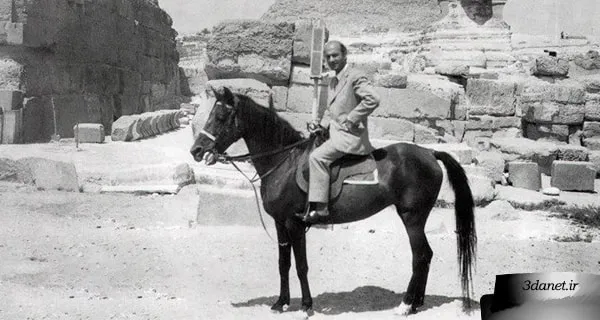
Discussion0 comments
No comments yet; let yours be the first voice.