Political Science
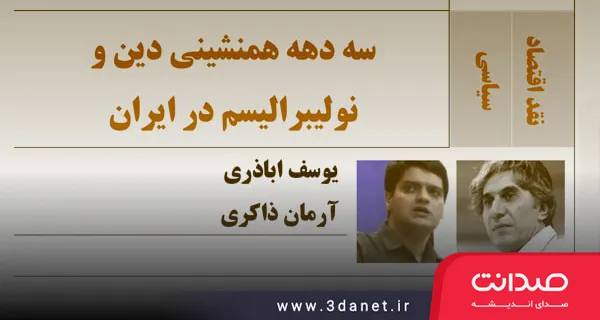
The Anatomy of Iran's Political Economy: Yousef Abazari, Ramin Motamednejad, and Morad Farhadpour
Yousef Abazari describes the structure of Iran's political economy as neoliberal and abortive, pointing to the rise of a 'khasoulati' sector; Ramin Motamednejad, meanwhile, characterizes Iranian capitalism as monopolistic and bank-centered, where money circulates in closed loops merely to reproduce itself.
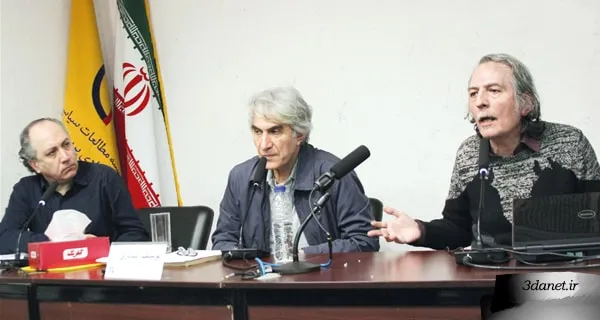
The Anatomy of Iran's Political Economy in Discourses by Yousef Abazari, Ramin Motamednejad, and Morad Farhadpour
In Struggle with Phantoms
The Contradictions and Paradoxes of Iranian Neoliberalism
Mohsen Azmoudeh: These days, the nature of the structure of Iran's political economy has become a contentious subject. Especially in conditions where sanctions and pressure have placed various strata of society, particularly the underprivileged and wage-earners, in hardship, while we simultaneously witness the exposure of corruption among some of the well-to-do. Opponents of privatization and economic liberalization programs see the problem as stemming from The claim under discussion is that a school of thought has emerged on the global stage, and some have brought it to Iran, carrying out a set of actions and measures under its banner that have had consequences and repercussions for the country. The unfortunate events currently occurring in society are due to the importation of the school of thought known worldwide as neoliberalism. It should be noted that I do not intend to elaborate on this school of thought and its ideology in detail, but I will recount parts of it. Generally, those who believe in the free market mechanism usually speak of a genuine private sector. However, a genuine private sector virtually does not exist in the country, and over the past four decades, the state has intervened in the public and private sectors more than ever before. Not only has a strong, genuine private sector failed to emerge, but a “quasi-state” sector has arisen in the country. In other words, by expanding itself, the state has created a sector called quasi-state. These quasi-state entities are the very sectors that, in the economic literature dominating society, should be downsized; yet not only did the state not shrink, but another sector emerged that will seriously challenge the realization of neoliberal thought’s claims, such as freedom preceding democracy, state non-interference in people’s affairs, handing over tasks to the private sector, and so on. Land Reform, the Abandonment of the Destitute in Cities Until a century ago, 80 percent of Iranian society was rural, and people’s lives followed their natural course. However, after the land reform, some villagers who had lost their lands came to the cities, and others who became landowners not only attained wealth but were also able to secure important roles in the country’s politics at that time. The result of the land reform was the abandonment of the destitute in cities, which came about through state intervention. This very factor led independent, established parties to launch a revolution to somewhat alleviate this destitution, but the result was “nouveau-richeism” and the opening of the path for neoliberalism’s entry into the country. After many years, it seems the current situation resembles that of several years ago, and we are, in a way, witnessing a repetition of the events that occurred in the country due to the land reform. That is, due to certain state actions resulting from neoliberal thought, the destitute are once again coming to the cities to seize politics from those who play a significant role. To elaborate further, I want to employ Nietzsche’s idea of the “eternal return of the same” and explain that our destiny is the eternal return of the same. That is, the coercive state, which in ancient times had a small domain, has now grown larger and is present everywhere, and through its interventions, it enlarges the sectors it favors. In the following, I will try to address the opponents’ claims regarding this idea with some quotations. Mr. Nili, in the book The Political Economy of the Islamic Republic (written by Bahman Ahmadi Amouyi), says: “Whenever we wanted to start, we had to begin from this point: that we must create jobs with the private sector” (p. 300). “In the year 1990 or 1991, the discussion was about a set of measures aimed at forming a nascent private sector in the country. Because a strong private sector did not exist, the state undertook the task of investing in various sectors and areas.” Elsewhere, Mr. Nili is quoted as saying: “We did not have, and still do not have, the institution of a private sector in the country. That is, a private sector in the sense of a real and effective organization in the country’s economy with defined relationships among its pillars. One of the goals pursued by the Third Plan (Mr. Khatami’s government) is to create the institution of a private sector in the country.” The purpose of these quotations is to point out that capital accumulation occurred in the country once or twice during the eras of Reza Shah and Mohammad Reza Shah. But why, despite capital accumulation, must we start from scratch again? This question, and naturally its answer, is technical, and I will not delve into it for now. Another point that critics emphasize is the quasi-state enterprises (khosoulati-ha). This group of critics believes that certain organizations control resources in such a way that, under these conditions, there is no room for a private sector in the true sense of the word. This group ties the private sector as a function of the state and believes that quasi-state enterprises interfere in the private sphere of people's lives. In contrast, neoliberals regard the private sector as highly beneficial and legitimate, arguing that if the state's duties are transferred to this sector, better results will be achieved and we will move toward more progressive changes in the economic sphere. The better functioning of the private sector under conditions of a small state is one of the set of reasons that has led neoliberals to place great importance on rights and law and to work toward reducing the state's authority and scope of action. Of course, reducing state intervention in the economy is a discussion that Poulantzas raised in the 1970s, and now this group has brought the discussion into the country, and they are even very insistent on reducing the state's authority through law and regulations, so much so that in 1987 they emphasized amending Article 44 of the Constitution, as they believed the state's hand was open for privatization under this law. In this regard, Mr. Nili says: "We hope that over time the negative effects of the targeted management of enterprise-holding in the country's economy will be neutralized. The method of privatization, the method of implementing the general policies of Article 44, the prioritization of large enterprises for transfer while this work should have started with small and medium-sized enterprises, the transfer of these same large enterprises to the quasi-state sector, and the creation of quasi-state enterprise-holding in Iran's economy, which simultaneously enjoys the privileges of being both state-owned and private, are among the challenges of implementing this policy in the country." In other words, state enterprises (large, small, and medium), despite being transferred to the private sector, still benefit from the privileges of being state-owned. In reality, the transferred enterprises leave the state's regulatory domain and are not genuinely transferred to the private sector. When Mr. Nili raises these challenges, the journalist (Ahmadi Amoui) asks him: "Nevertheless, do you think it is possible that, like some privatization experiences in Eastern Europe where, due to inefficiency, the state again took control of enterprises, private enterprises in Iran might also become state-owned?" To which Mr. Nili replies: "This is probably not the right thing to do, because it could bring about new disruptions." From recounting this quotation, I want to draw the conclusion that the free-marketeers' opposition to quasi-state ownership and their focus and greater emphasis on the genuine private sector is, in fact, nothing more than a myth. In the last quotation, Mr. Nili explicitly stated that he opposes the re-nationalization of quasi-state enterprises. This is tantamount to this group suffering from a political-ideological confusion, as if they are fighting ghosts. They repeatedly say that a genuine private sector does not exist. So who created this sector that operates under the name of the private sector? If the economy is fixed, everything will be fixed I recall a time when some at the Faculty of Social Sciences of the University of Tehran were writing biographies of entrepreneurs, and the point was that all of these entrepreneurs had started their work during the Pahlavi era. That is, over these 40 years, you haven't had a single entrepreneur who did not use some form of rent and instead relied on the power of thought and creativity (these are what they call entrepreneurs)? Meaning, in all these years, you couldn't cultivate a single entrepreneur? To organize and continue the discussion, I will examine Althusser's philosophy of base and superstructure; regarding this philosophy (which, incidentally, is highly favored by free-market advocates), he believes that if the economy is set right, everything will be set right. In other words, the relationship between the economy and other social spheres is based on a kind of imbalance, which is precisely a balance in that they also have relative independence from one another. That is, we have a political practice, an ideological practice, a scientific practice, and an economic practice. Using a Spinozist method, he unifies these four practices. Althusser's important point is that these four practices are non-synchronous. Non-synchronicity means that an individual (society) can be very backward politically, yet act in a very advanced manner ideologically. That is, there is no temporal correspondence between them. For example, I can have a very advanced economy, yet at the same time be backward ideologically. This asymmetry is precisely what Althusser has in mind, and by using it, one can analyze how the middle class might currently have liberal-democratic ideological demands, and if some of its issues, such as freedom of dress, are resolved, it might not pursue higher levels of freedom, namely democracy. But one must note that mere attention to freedom of dress does not guarantee political freedom, just as during the Pahlavi regime, individuals had freedom of dress but lacked ideological freedom. Another example is present-day Brazil. In that country, the issue of freedom of dress essentially does not exist, but the ideological battle takes a different form. Theorizing issues related to asymmetry is very difficult. I do not intend to do so in the continuation of this discussion; I merely want to point out the historical trajectory of the entry of free-market thought into Iran. Some ask me: Are we (the thinking that governs the country's economy) neoliberal? The answer to this question is definitively no. Fundamentally, neoliberalism does not exist; it is an ideal that exists nowhere, not even in America, and obviously, it will not exist in Iran either. If we are not neoliberal, then what are we? It is under these conditions that we must understand what the Iranian ruling body has been politically and how it has created a lacuna within which a series of powers are situated and a series of powers are outside it. Where are the powers that are not inside this lacuna? What ideologies do the powers inside it hold? Because ideologies are not uniform, contradictions sometimes occur in Iran. For example, certain pressure groups prevent concerts from being held in Mashhad. But they do not realize that this 'obstacle' can become its greatest promoter, because by doing this, they grant it legitimacy. The result of this action is the lowering of the level of music. And the people who become fans of this type of music think that by listening to it, they have bypassed the 'obstacle' and achieved ultimate freedom! These contradictions and ideological conflicts are entanglements that must be untangled, but they still have not been. In reality, the Principlist and Reformist factions share the same origin but are entangled in contradictions; one calls its own private sector real and the other's unreal, and vice versa. And anyone who tries to discuss the issue fundamentally is attributed by each side to the other. Who is situated within the lacuna of power? The general picture toward which we must move is an analysis and examination of the lacquer in which certain powerful figures and pressure groups find themselves, and others do not. We must discuss how powers have formed that sometimes “obstruct” certain actions. Which of them are aligned with one another? What contradictions do they have? To which economy are they tied? In whose hands are the monopolies? Another question that must be answered is: what is the structure of these entities? That is, what is the composition of this capital? Why and how does a “holding company” emerge whose ideology is, on the one hand, bound up with people’s freedom in behavior, and on the other, believes that there must also be “barriers” to freedom? In answering these questions, we are caught up in a certain chaos and oversimplification that leads to repetition in Iran’s history. But truly, where does this repetition in Iran come from? Answering this question requires deep reflection on the anatomy of political economy. The anatomy of political economy means: where are we ideologically? What are we doing politically? In the anatomy of political economy, I also introduce Althusser’s notion of theoretical practice. In 1933, workers who had rebelled voted for Hitler The anatomy of political economy is a kind of theory that also contains action (practice) within itself. The raw material of theory is previous theories. Regarding the country’s economy, two groups have engaged in theorizing. The first group is the free-marketeers, and the second is the ruling establishment. Others have either been unable to theorize on this matter or have been so devastated that they lacked the possibility. I hope that now, with the country’s economic situation as it is, we can reach a synthesis and find a principled path and method for solving the current predicaments. We must not overlook the fact that Iran has had many hard and difficult moments, yet it has managed to reproduce itself with all its might. Now, with this environmental situation and the state of poverty, we must pray and the resolve of all individuals must be marshaled to solve the problems. Under current conditions, a subject (a knowing and conscientious agent) has been constructed that does not think about politics, is self-interested, hedonist, and pursues its own interests. It thinks of saving itself and emigrating. I believe everyone has a theory and everyone has an opinion. Self-taught individuals who have neither received an education nor have a teacher, and they fight over their own interpretations. But we must discuss the “subject” and all strive for liberation from this situation. Unlike Morad Farhadpour, I am not very optimistic about the movements taking place, and I suspect that fascist movements are taking shape. Everyone warns that a kind of 1933 lies ahead. In 1933, workers who had rebelled voted for Hitler. *** Neoliberalism as a Social Reality Morad Farhadpour Researcher and Translator There are certain words that conceal a reality within themselves, but through inattention to them, they are pushed aside—such as the word capitalism, about whose nature and essence no discussion takes place. Other terms I want to address are the current conditions of the monetary system and the blocking of power. In the country, after the events of the 2009 election, occurrences began that led to the blocking of power and the current state of the monetary system. In other words, in those years, the state and primitive accumulation began in the form of the plunder that continued in the ninth and tenth administrations of Mr. Ahmadinejad, and which persists to this day through the drafting of bylaws and the distribution of billions upon billions of money. در واقع كل دعوای سیاسی كه در آن سال ایجاد شد، بر سر همین شكل غارت سرمایه بود كه البته مقاومت جامعه در برابر این قضیه تا حدی توانست جلوی برخی از جهات فاجعه را بگیرد. شاید بتوان اینگونه نیز مطرح كرد كه مردم برای جلوگیری از این فاجعه در انتخابات شركت كردند تا دور جدید انباشت سرمایه (به نفع طبقه خاص و با هدف غارت) ایجاد نشود. اما انباشت سرمایه به راه افتاد و درست بعد از اینكه واقعیت اجتماعی زیر فشار سیاسی له شد، فضا دوباره توسط همین واژگان بیمعنی و برای توجیه وضع پر شد. از سویی دیگر چون دانشگاه نداریم تا بتوانیم اقتصاد بازار را با واژگان مخصوصی كه در زمان اسمیت و ریكاردو بهكار برده میشد، مطرح كنیم و از طرف دیگر باتوجه به فضا و فقر فرهنگی جامعه و شكلنیافتگی طبقات و تا حدی فرصتطلبی و آنچه در جامعه ما وقاحت را در همه عرصهها از هنر گرفته تا اقتصاد به برگ برنده تبدیل كرده، با واژگانی بیمعنی تا حدی دو واقعیت امروز جامعه كه نظام پولی و بلوكه شدن قدرت است، پوشاندیم و به جای آن از مباحث بیمعنا كه در مجلات امثال آقای غنینژاد به عنوان دیسكورسهای ایدئولوژیك، مثل سنت و مدرنیته و جامعه مدنی و یكسری خزعبلات مربوط به فلسفه سیاسی كه هر كسی از مكتبی بگیرد، استفاده كردیم. با این كار عملا جامعه را از واقعیت اجتماعی و طبقاتیاش دور كردیم. تاكید من بر این است كه اجازه ندهیم مفهوم نئولیبرالیسم آلت دست گفتارها و مجلات و فضای مبهم عمومی و فقر دانشگاه و گیجی كلی فضای روشنفكری شود. از نظر من نئولیبرالیسم صرفا یك برنامه اقتصادی و اجتماعی یك گروه یا یك توطئه یا حتی برنامه یك دولت یا حكومت نیست، بلكه یك واقعیت اجتماعی تاریخی است كه نشان میدهد پیشرفتهترین و آخرین شیوههای حركت و سلطه سرمایه، حاصل تكرار قدیمیترین و اولیترین حركتهاست. با همین استدلال است كه پیشرفتهترین كشورها با عقبماندهترین جوامع امروز تحت یك نظام مشترك گرد آمدهاند. به اعتقاد من درسی كه از این دویست سال مبارزه ورای پیروزی و شكست انقلابها میتوان گرفت، این است كه فهم واقعیت و نقد واقعیت به تعبیر ماركس باید از درون خود این واقعیت صورت بگیرد. به همین دلیل است كه میبینیم نئولیبرالیسم با وجود همه تفاوتها، توانسته است شرایطی را به وجود آورد كه جنبش جلیقه زردهای فرانسه در ذاتش با جنبش دی ماهی كه بیش از صد شهر ایران را فراگرفت، همپوشانی و نزدیكی كامل دارد. مقاومت را نباید در ذیل ایدههای گنگ حقوق مدنی و سنت و مدرنیته، بلكه برای گرفتن كار و مبارزه با فقر و مقاومت در برابر بیاعتنایی مطلق سرمایه به وضعیت پرآشوبی كه به وجود آمده، معنی كرد. به نظر من بدون رجوع به واكنش واقعیت اجتماعی ما به نئولیبرالیسم نمیتوان این مفهوم را فهمید. جامعه ما كاملا عادت كرده بود كه واقعیت وجود سرمایهداری را نه پشت گفتارهای علمی دانشگاه، بلكه با گفتارهای كلیای كه در مجلات و مطبوعات مطرح میشود، تبیین كند. بحثهای طولانی كه از دهه 1360، برخی روشنفكران با طرح مباحثی چون حقوق دینی و حقوق فردی و حق و تكلیف و... میكردند، در واقع ریختن خروارها جهل تاریخی برای خفه كردن و مبهم كردن واژهها بود. درحالی كه بدون مراجعه به خود واقعیتی كه در برابر نئولیبرالیسم و در برابر جرقهای كه دورههای بعدی برای انباشت سرمایه زده شده، نمیتوان این مفهوم را چنان كه باید و شاید فهمید. خوشبختانه امروز شاهد این هستیم كه خود واقعیت بدون درگیری با آنچه قبلا به عنوان حركتهای تهیدستی به آن اشاره میكردیم، در حال شكلگیری است. به بیان دیگر در شرایط فعلی شاهد مبارزه روشن و واضح معلمان، كارگران، پرستاران، مزد و حقوقبگیران به شكلهای مختلف و آگاهانه با وجود همه فشار و سركوبی كه میشود، هستیم. باید از تلاشها برای بیان خودِ واقعیت حمایت كرد چراكه اگر چرخه انباشت سرمایه به این صورت ادامه یابد، میتواند كل هستی تاریخی ما را بر باد بدهد. *** گفتار رامین معتمدنژاد، استاد اقتصاد دانشگاه سوربن در موسسه پرسش اقتصاد سیاسی سرمایهداری ایران نئولیبرالیسم یك هسته مركزی دارد كه آن هم تضعیف طبقه كارگر است Ramin Motamednejad Economist and Professor at the Sorbonne University| Before beginning the discussion, I would like to point out a few things. The concept of “capitalism” today, not only among Iranian economists inside and outside the country, but also among all economists in other societies, is a category that has been marginalized, and there are reasons for this. I will mention two points in this regard. The Relationship of Economists with the Concept of Capitalism There is a tradition of political economy from the end of the eighteenth century and the beginning of the nineteenth century to the present day, whose founders include figures such as Adam Smith and Ricardo (a prominent official of the Bank of England), and which encompasses schools such as the Neoclassical school, the Cambridge school, the view of Irving Fisher who proposed the quantity theory of money, and the Austrian School (Hayek and Mises). The common denominator of these schools is that, firstly, they do not accept the term capitalism, and secondly, even if they were to accept it, they say capitalism is nothing but a market economy. Therefore, from their perspective, capitalism is nothing other than a market economy. And a market economy is nothing other than an economic system based on two fundamental principles: 1- perfect competition and 2- private property. They conclude from this that capitalism is nothing but a system based on, firstly, perfect competition and, secondly, pure ownership. Of course, in the writings of none of these individuals, from Smith and Ricardo to John Stuart Mill and others, do we find the term “capitalism”; even those like Hayek and Mises who accept this term speak of it in the aforementioned sense. Therefore, the view of these economists on capitalism is entirely normative, meaning they do not state what is, but rather what they desire. So, when we ask them to provide an example of a capitalism, even in the form of a pure and perfect market, they say nowhere, and of course, it is not our theory that is wrong, but rather those who are in charge of affairs prevent that pure market economy from being implemented. Domestic liberals like Mr. Ghaninejad, whose views are entirely legitimate, also offer this same justification when they reach an impasse. During Obama's time, they would say that America is not pure capitalism either! Thus, the relationship of liberal and neoliberal economists with the concept of capitalism is the negation of this term, concept, and its reality. What is painful is the relationship of dissident economists with capitalism, meaning those whose beliefs, in Bourdieu's terms, lie outside the prevailing soft norms. From the end of the 1980s, a shift occurred, and the term and concept of capitalism exited the literature of many leftist, even Marxist, economists. This is not accidental. Those who use the concept of capitalism within this tradition are mainly not economists, such as David Harvey, who is a geographer, or sociologists and specialists in international relations, etc. These are the few who believe in and use the Marxist conception of the concept of capitalism. That is, since the collapse of the Soviet Union, meaning from the end of December 1991, economic dissidents no longer discuss the nature, logic, and evolution of capitalism like Marx, Engels, Hilferding, Lenin, etc., and these discussions have been marginalized among these dissidents. What has become dominant instead among dissident economic thinkers is the discussion of models of capitalism. The French economist Michel Albert first addressed this subject in his book Capitalism Against Capitalism, examining different models of capitalism in different societies. Now, leftist economists also mainly deal with the models and forms of capitalism, and the discussion of what capitalism is, its content and essence, has been marginalized. The new shift that occurred and once again raised this problematic, in the terms of Deleuze and Guattari in their small book “What is Philosophy?”, was the crisis of 2007 and 2008. Since then, we have once again seen a return to the concept of capitalism among European-American dissident economists. Even between 2008 and 2012, Sarkozy, who represented the interests of finance capital, exposed financial capitalism. Therefore, unfortunately, the view of thinkers and economists, in both camps, towards categories such as capitalism is opportunistic. What is Contemporary Iranian Capitalism? Thousands of pages could be written about the literature that has become prevalent in the field of Iran's economy over the past 10 years. In this literature we encounter terms such as predatory capitalism, rapacious capitalism, rent-seeking, quasi-state capitalism, and so on. My point is not to deny these terms, but I believe they are severely reductionist. These phenomena—the rise of a predatory, rapacious, rentier capitalism—are not the cause, but rather the effect. Moreover, the emergence of these phenomena is not unique to Iran. In Turkey and Egypt, for instance, the military is the greatest economic power. In Russia, too, the security forces wield considerable economic power. In America itself, the Pentagon is one of the principal economic actors. Through the contracts it awards to contractors, the Pentagon creates millions of jobs. This is how the Americans were able to extricate themselves from the economic crisis of 1980–1982; that is, on the one hand they implemented a contractionary monetary policy, and on the other, they resolved the resulting recession through the Pentagon's massive contracts with the civilian sector. Therefore, to understand the cause of this matter, one must step outside this clichéd framework. It is true that our economy has become monopolized, and this monopoly takes various forms, but what matters is not where our capitalists and institutions are affiliated, but rather that we move beyond the previous framework—a framework that reduces the analysis of Iran's economy to the reiteration of realities that are at times nauseating. Repeating concepts such as predatory capitalism, rent, and so on leads nowhere. To use Althusser's expression, the terrain must be changed. A new terrain and a new game must be created, and new questions must be posed. My contribution to this discussion is that, to paraphrase Einstein, when a theory reaches an impasse and has lost its grasp on reality, we must change our questions. The Relationship between Political Order and Monetary Order The initial and fundamental premise of my discussion concerns the place of money in history. I have addressed this subject in the book Monetary Crises Yesterday and Today. The discussion is about "money" and not "finance" or "liquidity." In this research, I have concluded that between politics (in the Spinozist sense, i.e., power relations) and money, or more precisely between political order and monetary order, there exists a reciprocal and intimate relationship. Between these two orders, one cannot specify a causal relationship in the sense of saying that the political order determines the monetary order, or vice versa. In this extensive research, from ancient Greece to the present day, we have examined and seen that there is a kind of isomorphism between these two orders; that is, where there is political stability, there is also economic stability, and where a monetary crisis occurs, it coincides with a political crisis. It is for this reason that from 2009 onward we have witnessed a monetary crisis in Iran; that is, from this year onward, people began buying dollars and gold. Another example is America. At the end of the nineteenth century, a severe political crisis occurs in America simultaneously with a monetary crisis. In America, a civil war takes place between 1861 and 1865, between the North, which favors industrialization and opposes slavery and wants to form a nation-state, and the South, which favors agriculture and slavery. With the end of the Civil War (1865), a monetary crisis begins in America because money is scarce, and there are class and structural differences, especially between the East and West of America. In the West of America, there are small landowners (except for the large landowners of the South in Texas, Arizona, and Southern California) who have taken out loans and bought land, and the process of mechanization is gradually taking place. At this time, America is overtaking England on the international stage. These landowners are heavily in debt. On the other hand, there is a working class that works for the railroad, and this class is also indebted. Thus, we see heterogeneous social groups that are debtors. Conversely, in the East of America, we have industrial capitalists who borrow from banks and create small companies. These three groups are debtors, and it is in their interest for inflation to follow an upward trend, because as inflation increases, the real amount of the debtors' debt decreases; therefore, it is in the interest of these debtors for inflation to increase. On the other hand, we witness large financial capitalists in America at that time who, being creditors, have an interest in controlling inflation, because the more inflation is controlled, the more the real value of their claims increases. Thus, we witness a dispute arising between these two groups over what should be our monetary standard and basis: silver (as desired by the debtors) or gold (as desired by the creditors). This dispute leads to political differences, and the opposing Silver Party, People's Party, and Populist Party are formed. Ultimately, the Northerners who favored gold win and impose their power. Thus, we see that monetary and financial disputes lead to a severe political crisis. The reverse of this situation is also possible. That is, changes in the political order can affect the economic and monetary order. In Iran after 2009, it is a political crisis that weakened parts of the ruling establishment, and this allowed parts of the political power, including Mr. Ahmadinejad, to endure. What Mr. Ahmadinejad did is unprecedented in modern human history. In a 1978 article titled "The Denationalisation of Money," Hayek proposes creating competing currencies, and society makes a natural Darwinian selection. Somewhere in the article, he suggests that the central bank should even be privatized. Of course, this is not new; before the World War, the Bank of France, which Napoleon I had established, was private. Hayek also proposes that the central bank be privatized. But Mr. Ahmadinejad did not privatize the central bank; he personalized it. The actions Mr. Ahmadinejad took do not even occur in the most economically backward countries like Bangladesh, Haiti, or Greece and Portugal during the era of dictatorship. What is a Monetary Order? When we speak of the close and mutually dialectical relationship between the political order and the monetary order, we mean that there is no deterministic relationship between the two; that is, it is not the case that the political order shapes the monetary order, or that the monetary order completely determines the political order. But to understand this point, a definition of the monetary order must be provided. Many say our economy lacks a monetary order. Such claims are fundamentally wrong. Even today, not only our economy but also Somalia, which has lacked a nation-state for 30 years, has a real monetary order, even if it is not written into a constitution. But in my view, a monetary order comprises the set of norms, rules, and political, legal, economic, and social principles according to which all individuals in a society are equally and uniformly subject to the obligation to pay their debts. But how is it that this obligation and pressure are not applied to certain groups in present-day Russia, Iran, or China? Why is this pressure and obligation not applied equally to all groups in society? Why is this pressure applied selectively? Why do large-scale debtors exist? In a 1921 article, Keynes says that a segment of society consists of political debtors. Political debtors are those who, due to their relationships within power, can evade repaying their debts. Therefore, the obligation to pay debts ultimately comes back to the nature of power relations and the debtors' relationship to these relations. If the ruling state is, in Weber's terms, rational and legal, everyone must be equal before the obligation to pay debts, but if it is patrimonial, the matter is different; and because the Iranian state has been patrimonial from the past to the present, this obligation does not exist equally. Another complementary point in the discussion of the relationship between politics and money is that politics and money, or the political order and the monetary order, in their dialectical relationship, determine the nature of the capitalist system that exists in this or that country or society. Naturally, that capitalism with its own nature, if it is a patrimonial capitalism, in turn influences the spheres of money and politics. Of course, this relationship is not a form of infinite regress, but rather, in Hegelian terms, has a dialectical and spiral relationship. That is, it is not the case that the two stagnate statically, but rather they relate to each other dynamically. Iran's Political Economy Based on what has been said, what can be said about present-day Iran? My suggestion is to begin with politics. In 1978, a political revolution occurred in Iran. To discuss this, I turn to Gramsci's brilliant works, such as the Prison Notebooks and The Gramscian Moment (2009). Another very important book is by Christine Buci-Glucksmann (Christine Buci-Glucksmann), a student of Althusser, titled Gramsci and the State. We know that Gramsci tries to move beyond the contradiction between superstructure and base and speaks of the historical bloc. The historical bloc, in Gramsci's view, is the interweaving of base and superstructure and viewing them together. Within the superstructures and the political superstructure, Gramsci highlights the concept of the power bloc. Therefore, the power bloc should not be equated with the historical bloc. He suggests that economic developments must be understood through the discussion of the power bloc. I also use this same method to understand Iran's economic developments after the Islamic Revolution. After the revolution, in the 1980s, this power bloc gradually changed and had two fundamental poles. One was a pole that favored a distributive policy and believed in the redistribution of income for the lower strata. People like Mr. Mousavi believed in this view. In that period, a segment of the clergy also believed in this approach; for example, Ayatollah Beheshti believed in this view. This line was known in the political literature of that period by the term "radical." Therefore, one pole was the radicals, who favored an economic policy based on redistribution, a state-run economy, and the nationalization of the state, insurance companies, and banks. The other pole was mainly based on a segment of the very conservative clergy and major merchants, such as the Khamoushis and the Asgaroladis, etc., people who still control the chambers of commerce and today control the current private commercial and economic institutions. These groups, in fact, also form a monopoly. These individuals control newspapers and institutions and, as Gramsci says, possess a private apparatus of hegemony, because according to Gramsci, hegemony is not solely in the hands of the state; rather, private hegemonic apparatuses also exist. These individuals also possess their own private hegemonic apparatuses with their newspapers, research institutes, and exclusive media. The interest of this second pole lies in preserving their own commercial interests. They are advocates of the free market and private property. Imam Khomeini, the leader of the Islamic Republic, maintained a balance between the two factions in the 1980s; of course, he strongly supported the first faction, but he also supported the second faction in at least one structural instance, namely Imam's 8-article decree, in which private property is respected. But the second pole, which could not tolerate the banking system and the state monetary order, created an institution called the Islamic Economics Organization in the spring of 1979, before the bill for the nationalization of banks was passed. This organization brought the interest-free loan institutions that had been formed since the 1960s under its umbrella and named them firms and companies. At that time, the interest-free loan institutions numbered a few dozen companies, but today these interest-free loan institutions have reached 6,000 to 7,000. In other words, a dual monetary order governs Iran; therefore, we witness that politics influences the monetary order. The Dual Monetary System But why has this dual monetary system remained so stable and enduring? We cannot attribute this to the ill will of this or that president. The question is why they have not been able to end this duality so far and establish a unified sovereignty of money in Iran? Our problem now is the multiplicity of monetary sovereignty. Why have they not been able to do this? In an article by my colleague Bruno Théret, dedicated to Brazil in the 1980s, I was able to find an answer to this question. He shows that it is not at all a matter of ill will or the conspiracy theory of this or that person; rather, this multiplicity arises from our social reality. Our social groups are so heterogeneous, and within each class and even within each social group, there are such contradictions and differences that they cannot coalesce around a single value. Mohammad Maljoo, in his review of Ervand Abrahamian's work, carefully points out that the problem arises from heterogeneity. The issue is not that the difference Bourdieu speaks of has been created, but rather that, structurally, this heterogeneity means our banking system cannot serve the interests of all the various groups. This coordination is impossible because some groups are inherently and structurally creditors—that is, they have claims and are, in the strict sense of the word, rentiers. I do not mean "rentier" in the sense it has been used in the last 10 years, but rather they are rentiers in that they are large landowners who possess ground rent in Ricardo's sense, and consequently their interest lies in high bank interest rates; as a result, they do not tolerate a state system that does not provide this profit. On the other hand, there are groups that are inherently debtors and borrowers—those who are industrial capitalists, those who are employees, the middle class, and so on. Of course, the term middle class is a baseless word. But in any case, the interest of these groups lies in low interest rates. A single banking system in the country cannot simultaneously satisfy these two contradictory interests and benefits. In other words, the duality of the banking system in Iran has emerged from within. This is the reality of our class and social differences, and this issue cannot be resolved with a reform. Iranian Capitalism Is Not State Capitalism On this basis, we can examine the course of the evolution, development, and metamorphosis of Iranian capitalism. In the 1980s, the fundamental polarization within the power bloc was between commercial capital on one side and state capital on the other. But the process that took shape after the end of the war, referred to as neoliberal, involves both the rise of other forms of capital and the fragmentation of the privatization process; a kind of dispossession process takes place, not just the dispossession of employees and workers but also the dispossession of the state. Thus, a kind of fragmentation process of state capital takes shape: first the interest-free loan funds, then the credit cooperatives, and finally financial and credit institutions, and ultimately private banks are formed. Even the transformations within the formal banking system did not end this story. New banks were created, but ultimately that story remained; only those powers whose economic power had increased entered this market. Staying outside this formal system had benefits—the benefit was not being subject to the norms and requirements of the Central Bank—but entering it meant gaining trust and consequently being able to attract deposits on a much larger scale and, from there, being able to invest in largely non-productive circuits. In the mid-2000s, we witness the formation of a real estate bourgeoisie. This bourgeoisie, without taking a single rial from their own pockets, take out loans, buy apartments for one million tomans per square meter, and then sell them for 30 million or 40 million per square meter, and do not repay those loans. There are groups and factions of contemporary Iranian capitalism that are the result of these processes but have become autonomized and independent. This trajectory of Iranian capitalism is deeply intertwined with the transformations of the power bloc and the monetary order. Carl Schmitt says of politics that after the end of World War I in 1918 and the signing of the Treaty of Versailles in 1919, we witness the end of classical politics. Until that era, whenever a war occurred between powers, territories would change hands between them. But from 1918 onward, the vanquished were labeled criminals. It is from that period that politics transcended the framework of the nation-state. Perhaps one could say of Iran that from 2009 onward, an era has arrived in which both politics and money are breaking free from the framework of the current state, and Iran today is a country with a weak state and weak capital. Unfortunately, contrary to what Mr. Ghaninejad and his friends say, Iranian capitalism is not state capitalism. If only it were. But how can it be called state capitalism when it can neither control the monetary order nor collect taxes—a tax that, in the view of Weber, Elias, and every other great sociologist, is one of the fundamental pillars of any modern nation-state. A state that has no command over the monetary order and the fiscal order, and cannot even collect taxes from the private sector, cannot claim power. . . . . . .
Audio file of the session on The Anatomy of Iran's Political Economy
PDF file of the Etemad newspaper report on the session on The Anatomy of Iran's Political Economy
Text source: Full report by Etemad newspaper on the Porsesh Thursday sessions, 27 Dey 1397, The Anatomy of Iran's Economy, published on pages 7 and 15 of the newspaper dated Saturday, 29 Dey 1397
Audio source: Sociological Files
Porsesh Institute website


Discussion13 comments
سلام چرا وقتی _ بصورت حرفه ای؛ یا مدل ایرانی! البته من هنوز تعریفی برایش ندارم. _ نقدهایی می کنید، حرف و سخن دیگر مستدل یا مستندی ارائه نمی کنید؟ بنده خدا آقای اباذری هم از دست مدل ایرانی! هی تپق می زند. بریده بریده می نویسد و می گوید. شاخه به شاخه و منقطع و ناکامل. شاید علت و دلیلش فقط و فقط کمبود وقت باشد.شاید. شابد هم دردسرهای عظیم روبرو شدن با مدل ایرانی. باباجون! ما ایرانی جماعت فعلا مهارت 2، 3، 4، و چند نفره باهم گفتگو کردن و نقد و دفاع کردن و ... را که منجر به ایجاد معناهای موجود مشترک ( حتی ناموجود مشترک )بشود را کسب نکرده ایم. بنظرم حتی اغلبمان در شک کردن مثل نوع دکارت، یا استدلال کردن مثل اسپینوزا، ... یا گفتگو باهم با در نظر گرفتن مشترکاتمان و راجع به مشترکاتمان، فعلا درمانده ام. یعنی مهارتش را نداریم. البته خودشیفتگان خودپسند قهاری هستیم.( انشاالله که بدتون نیاد. آمین! ). نه جمعیتی، نه جماعتی، نه حزبی، نه پرداختن حق جمعیت و جماعت و حزبی. نه شرکت در جمعیت و جماعت و حزبی. پس از کجا مهارت چند نفر باهم بودن _ باهم بودن. باهم شدن. باهم ادامه دادن. _ را خواهیم آموخت؟ من نمی دانم. قربانام
گزارش حرفهای از این نشست در روزنانه شرق آمده یک بخشیش را اینجا میذارم بخوانید تفاوت روزنامهنگار حرفهای و غیرخرفهای را تشخیص کنید گرچه اباذری خود را سخنران اصلی این نشست قلمداد نمیکرد و به قول خودش برای ارائه «مقدمهای بر بحث رامین معتمدنژاد» به جلسه آمده بود، سخنان او به هر چیزی ربط داشت جز تشریح کالبد اقتصاد ایران. او جلسه را با تکرار مکرراتی درباره نولیبرالیسم و اقتصاد بازار آزاد شروع کرد، چند کلامی به برنامه خصوصیسازی در ایران پرداخت، چند جملهای به طبقه متوسط تاخت، چند نکتهای درباره وضعیت کنونی گفت و در نهایت با اشارهای به آلتوسر بحث خود را پایان داد. حرفهایی کلی و پراکنده از هر دری سخنی که البته مسبوق به سابقه است. شکل صوری جلسه به این صورت بود که در ابتدا اباذری مقدمهای سیدقیقهای گفت، سپس رامین معتمدنژاد بحث دقیق و منسجمی درباره اقتصاد سیاسی سرمایهداری در ایران با تکیه بر رابطه متقابل نظم سیاسی و نظم پولی ارائه کرد و پس از آن بار دیگر اباذری به ذکر نکاتی کلی اکتفا کرد. در پایان در میان حاضران جلسه از مراد فرهادپور دعوت شد تا چند دقیقهای درباره این بحث نظر دهد و صحبت کند. او با انتقاد از اباذری و کاربرد واژه نولیبرالیسم در گفتار او بر این نکته تأکید کرد که نباید اجازه دهیم نولیبرالیسم بدل به آلت دستی شود که امکان نقد واقعیت را از ما میگیرد. به اعتقاد فرهادپور اشاره به نولیبرالیسم بدون رجوع به واقعیت ایران و نیز بدون رجوع به مقاومت کنونی جامعه در برابر نولیبرالیسم میتواند رهزن ذهن شود و این مفهوم را نیز به سرنوشت بسیاری از مفاهیم دیگر در ایران دچار کند. در مقابل اباذری در پاسخ به فرهادپور خوشبینی او را به مقاومت تودهها در برابر نولیبرالیسم نقد کرد و معتقد بود از دل چنین واقعیتی احتمال ظهور فاشیسم بیش از مقاومت است. او حتی از این فراتر رفت و معتقد بود در درون مقاومت کنونی واقعیت در برابر نولیبرالیسم رگههایی از فاشیسم قابل تشخیص است. خلاصهکردن سخنرانی فاقد انسجام اباذری در قالب یک متن منسجم کاری است نشدنی. آنچه در ادامه میآید منقحترین متنی است که میتوان از این سخنرانی ارائه کرد. متن سخنرانی رامین معتمدنژاد و نیز اظهارنظر مراد فرهادپور درباره بحثها در ادامه آمده است. رامین معتمدنژاد هماکنون دانشیار دانشگاه پاریس یک و همچنین استاد اقتصاد بینالملل دانشگاه سوربن فرانسه است. او دورههای لیسانس، فوقلیسانس و دکترای خود را در رشته اقتصاد بینالملل در پاریس گذرانده و ازجمله آثاری که تحت نظرش منتشر شدهاند، میتوان به «اتحاد جماهیر شوروی و روسیه، انقطاع تاریخی و استمرار اقتصادی» و «کاپیتالیسم و سوسیالیسم در آینده» اشاره کرد. https://fararu.com/fa/news/387149/نظم-سیاسی-و-نظم-پولی-در-ایران-معاصر
« گزارش حرفهای از این نشست در روزنانه شرق آمده یک بخشیش را اینجا میذارم بخوانید تفاوت روزنامهنگار حرفهای و غیرخرفهای را تشخیص کنید » .نوشته اید « روزنانه شرق » ، بعد به سایت « فرا رو » ارجاع داده اید ؛ « روزنامه » را « روزنانه » و « حرفه ای » را « خرفه ای » نوشته اید ، با کاربرد ویرگول و نقطه هم که آشنا نیستید؛ « تشخیص دهید » را هم « تشخیص کنید » نوشته اید . نویسنده گزارش « حرفه ای » مورد تأیید شماهم با تعبیر « کالبدشناسی » در حوزه بیرون از « بیولوژی » آشنا نیست ؛ گزارش او ارزش گذارانه و « غیر حرفه ای » است ؛عبارت « شکل صوری جلسه به این صورت بود ... » در نوشته او سطح مهارت او را آشکار می کند .... ؛ با این اوصاف به دیگران می توپید که « گفتگو و ادب نقد سطح داره هر بنجلی را در مجامع فکری نشر نمیدهند که ..... » ( ؟!!! )
مقاله مهدی حق باعلی در نقد اباذری را در کانال فلسفه خواندم بذارید
این نسل پیر مرد های بی سواد به اندازۀ کافی فرصت نقد و ارائۀ نظریه داشته، الان وقت پرسش است که آقایان که از قضا کرسی های دانشگاه دولتی را هم پر کرده اند و ترک هم نمی کنند و عمری را به نقد و تخریب گذرانده اند تا به حال کدام نظریه و ساختار را بالا برده اند؟ نقد نکردن اینها آن قدر آن ها را وقیح کرده که بدون اطلاع از اولیات اقتصاد، در مفهوم بافی های درون ذهنی خود کاملا غرق شده اند و دیگران را هم می خواهند به پذیرش آن مجاب کنند. آقایان لطف کنند و همین نقد های مشعشع را در یکی از ژورنال های اقتصدی یا جامعه شناسی مطرح دنیا چاپ کنند. تا مردم دنیا هم بهره ببرند،ما که سیراب شدیم. این برچسب نئولیبرالیسم هم بازی تازه است.آن چه که دارد زیر سول می رود کلیت علم اقتصاد در زمان معاصر است.بسیاری از مفاهیم که آقایان می بافند کاملا زاییدۀ تفکر شخصی است، و هیچ ما به ازایی در گفتمان و بافت اقتصاد یا فلسفه یا جامعه شناسی ندارد. و البته این از تنبلی و بی حوصلگی نسل جدید هم هست که این آقایان را به خاطر چنین بیانات رسوایی ،نقد نمی کنند تا یاد بگیرند بالا نشستن و اظهار نظر کردن هزینه هم دارد. متاسفانه سایت صدا نت هم در بزرگ کردن همچین افرادی بی تقصیر نیست.چرا به جای ده ها مطلب از نسل جوان،دانشمند، محقق و دارای ارتباط فعال و زنده با دنیا که مستدل و علمی است استفاده نمی شود اما سرفه های این پیرمردان هم به دقت گزارش می شود؟ گرفتم که نسل جدید شهرت ندارد، و دعوا درست نمی کند، با معرفی آن ها شهرت هم ان شا الله می یابند.خوب است علاوه بر دغدغۀ جذابیت و جذب مخاطب، قدری هم نگران واقعیت و دانش و آینده باشیم.
چون علم روز دنیاست ارزشمند است؟appeal to authority
آقای اباذری از اقتصاد چه میداند که با این قاطعیت حکم صادر میکند؟ از گفته هایش مشخص است که حتی کتاب مقدس چپ گرایان یعنی کاپیتال مارکس را هم نخوانده اگر هم خوانده درست نفهمیده. گذشته از آن که بطلان اندیشه های اقتصادی مارکس در عمل بر همگان ثابت شده. اگر اقتصاد ایران طبق نظر این دو به اصطلاح متفکر میخواست اداره شود الان وضعیتی مشابه کره شمالی و کوبا حاکم بود. جالب اینکها این به اصطلاح متفکر به سلبریتی ها هم حمله میکند در حالی که مهملات خودش دست کمی از افاضات سلبریتی ها ندارد با این تفاوت که آنها ماهی ده میلیون از دانشگاه حقوق نمیگیرند و به اندازه این حضرات هم ادعای روشنفکری و نسخه پیچیدن برای عالم و آدم ندارند.
عمری روی منبرها ودر سخنرانیها سرمایه داری را کوبیدند و گفتند که حضرت علی فرمودند که هیچ عمارتی بالا نمی رود مگر انکه حق چندین مظلوم ازبین رفته باشد شعار عدالت میدادند و دین را داعیه دار مساوات نشان میدادند که یک جامعه دینی بی طبقه بودن در ان نهفته است شعاری که سازمان مجاهدین خلق میداد و مذهبیون به ان اشکال میکردند که نباید گفت جامعه بی طبقه توحیدی که این توهین به توحید است ! و بی طبقه بودن در توحید نهفته است ویک جامعه توحیدی ذاتا بی طبقه میباشد !!!بعد از به حکومت وقدرت رسیدن همه چیز عوض شد عدالت معنایش تغییر کرد واینطور معنا کردند که عدالت مساوات نیست ! بلکه عدالت اینست که هر چیز سر جای خودش قرار بگیرد واندازه خودش قدر وقیمت ببیند بنا بر این ما بالاییم وبالادست حق مسلم ما اینست وشما که پایین و فرو دست هستید هم اندازه ظرفیتتان همان است !!!که این معنا از عدالت را هرکسی میتواند چنین ادعایی از ان دربیاورد وزرا وسناتورهای شاهنشاه هم میتوانستند چنین ادعا کنند که حقشان است بالادست باشند دوستان مذهبی یادشان رفته که معنای عدالت به مساوات نزدیکتر است تا ان معنای من دراوردی انان که راه سوئ استفاده را هم میبندد کمی جلوتر که امدند خصوصی سازی را مطرح کردند انگار نه انگار که عمری روی منابر علیه سرمایه داری سخنرانی میکردند وحالا که حاکم شدند جامعه را بطرف سرمایه داری سوق میدهند خصوصی سازی راهیست که به یک جامعه سرمایه داری منتهی میشود واین با اقتصاد اسلامی که دولت محور است هرگز همخوانی ندارد بعضی از مذهبیون گمان میکنند که خصوصی سازی یعنی اینکه یک سرمایه دار بیاید و کارخانه ای راه اندازی کند وعده ای را بکار گمارد خیر اینطور نیست این جذب سرمایه گذار است که با خصوصی سازی فرق اساسی دارد خصوصی سازی یعنی سپردن شاهرگهای حیاتی اقتصاد کشور بدست بخش خصوصی که از جمله میتوان صنعت نفت ومعدن وبانک ومخابرات و....را طرح نمود البته در ایران ما شاهد یک خصوصی سازی واقعی نیستیم واین دولتیها هستند که با تاسیس شرکت خصوصی وارد اقتصاد ایران شده اند سرمایه ترسو است خصوصی سازی واقعی در ایران شکل نمیگیرد چون سیاست خارجی ایران سیاست تعامل با دیگر کشورها نیست درکشوریکه مدام در تنش و جنگ وتحریم است خصوصی سازی واقعی شکل نمیگیرد که اگر فضا اماده شود وشکل بگیرد هم همه داشته های ارزشی سابق را دگرگون میکند وامنیت شغلی کمرنگتر میشود قطع به یقین یک اقتصاد دولتی میتواند به عدالت نزدیکتر باشد اگر رفاه همگانی را قبلا منظور داشته باشند وکف رفاه برای همگان فراهم باشد ودولتیان فاسدو رانتی و اختلاسگر نباشند
حجت همه حرفهایت دقیق و درسته ولی مسئله چپ رگرسیو هم هست. هنوز مث حزب توده هستن. استراتژی را مبارزه با امپریالیسم یعنی آمریکا تعریف میکنن و هدفشون اینستکه ایران سرمایهداری و خصوصیسازی نشه تا وقتی سوسیالیسم موعود را ساختن ما هم بهش ملحق بشیم. نظریه آخرالزمانی چپهاست. هدف اینها فقط و فقط یک چیزه ایران به نظم جهانی آمریکا نپیونده حالا دیگه حقوق بشر هست نیست اینا مهم نیست براش.
آقای اباذری از اقتصاد چه میداند که با این قاطعیت حکم صادر میکند؟ از گفته هایش مشخص است که حتی کتاب مقدس چپ گرایان یعنی کاپیتال مارکس را هم نخوانده اگر هم خوانده درست نفهمیده. گذشته از آن که بطلان اندیشه های اقتصادی مارکس در عمل بر همگان ثابت شده. اگر اقتصاد ایران طبق نظر این دو به اصطلاح متفکر میخواست اداره شود الان وضعیتی مشابه کره شمالی و کوبا حاکم بود. جالب اینکها این به اصطلاح متفکر به سلبریتی ها هم حمله میکند در حالی که مهملات خودش دست کمی از افاضات سلبریتی ها ندارد با این تفاوت که آنها ماهی ده میلیون از دانشگاه حقوق نمیگیرند و به اندازه این حضرات هم ادعای روشنفکری و نسخه پیچیدن برای عالم و آدم ندارند.
آفرین سعید دقیقا حرفت درسته و سایت صدانت با بازنشر این مطالب غلط و بدون ارائه ی نقد آنها تنها در حال ترویج این خرافه ها است. متاسفانه حتی کامنت را هم تایید نمیکنند چه رسه به اینکه نظر اعمال بشه
1 ـ « از گفته های آقای اباذری مشخص است که کاپیتا مارکس را نخوانده یا درست نفهمیده » ، شما لابد خوانده و فهمیده اید که برای تان نخواندن یا نفهمیدن ابذری « مشخص » شده است ، نمونه ای می آوردید که برای دیگران هم مشخص شود . 2 ـ « بطلان اندیشه های اقتصادی مارکس در عمل بر همگان ثابت شده» ، کدام اندیشه هایش را منظور شماست ؟ تفکیک ارزش مصرف و ارزش مبادله ؟ منشاء ارزش و سود بودن نیروی کار ؟ بازده نزولی سود ؟ رشد ترکیب ارگانیک ؟ گرایش سرمایه به تمرکز و تجمیع ؟ ... کدام ؟ 3 ـ « اگر اقتصاد ایران طبق نظر این دو به اصطلاح متفکر میخواست اداره شود... » . جالب است که می گویید « این دو » ، گویا معتمد نژاد را ندیده اید !
متاسفانه شما به جای پاسخ مستند به سخنان استاد اباذری، به شیوه کسانی که برای پنهان کردن ناتوانی خود در پاسخگویی، به طرح معجونی از کلی گویی و تهمت پراکنی می پردازند روی آورده اید(به دوست همفکر خودتان جناب سگرمه نگاه کنید که افتادگی ساده حرف"ل" در کلمه کاپیتال در هنگام تایپ را چگونه ابزار کنایه زدن به دیگران میکند...این را گفتم تا بدانید که تنها نیستید!)شما آقای اباذری را متهم میکنید که حتی کاپیتال را نخوانده است بدون اینکه بگویید از کجا به این کشف کشاف رسیده اید از این گذشته شما که مدعی هستید که کاپیتال را خوانده اید و خوب هم فهمیده اید باید می فرمودید که کجای این بحث ارتباط مستقیمی به کاپیتال مارکس داشت متاسفانه باید گفت که این خود جنابعالی هستید که حتی در حد تورق کاپیتال را نخوانده اید البته همین حکم کلی که در مورد بطلان اندیشه های اقتصادی مارکس داده اید خود بهترین شاهد بر این حقیقت است که نه تنها در مورد اندیشه های مارکس بلکه حتی در مورد سایرین نیز چندان مطالعه ای ندارید.شما که میفرمایید اگر اقتصاد ایران طبق نظر این دو متفکر اداره میشد الان وضعیتی مشابه کره شمالی و کوبا حاکم بود چگونه اقتصاد کشور هایی مثل ایران را که اقتصادی متکی بر نفت است با کره شمالی و کوبا مقایسه میکنید؟ دوست عزیز آیا بهتر نیست که تنها در حوزه هایی که در صلاحیت شماست وارد شوید و به جای کلی گویی و تحقیر دیگران بگونه ای مستند ابراز نظر کنید وگرنه حداقل این است که به شعور دیگران توهین میکنید....