Literature
The Article “Is Persian a Sterile Language?” by Mohammad Reza Bateni
Persian lacks the necessary productivity for scientific word-formation because its common compound verbs, unlike simple verbs, are sterile and do not accept derivation. Mohammad Reza Bateni examines the derivational shortcomings of Persian in coining new vocabulary.
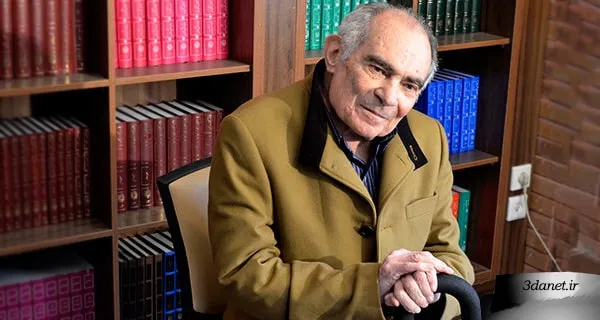
Mohammad-Reza Bateni
AuthorThe article “Is Persian a Sterile Language?” was first published in Adineh magazine (March/April 1989). The present text is a summary of it. The full file is available for download at the bottom of this page.
Persian: A Sterile Language
We have heard much about the beauty, sweetness, literary treasure, and other merits of the Persian language. Perhaps the time has now come to realistically study the capabilities of Persian and see whether this language can meet the needs of our society today. Are there deficiencies in it, and if so, how can they be remedied?
One of the characteristics of language is its generativity or creativity. The creativity of language can be examined from various aspects (literary, syntactic, lexical, and perhaps others). Our discussion here is limited to creativity or generativity in the lexicon of the language. Lexical generativity enables the speakers of a language to create new words in step with the changes occurring in their society and to adapt the efficacy of their language to their needs.
From a linguistic standpoint, lexical generativity pertains to the topic of derivation or word-formation (henceforth we will use “generativity” in place of lexical generativity). Derivation means being able to form a verb from a noun or adjective, to form a noun or adjective from a verb, and so on. With a degree of latitude, one can say derivation means moving from one grammatical category to another. Therefore, if we wish to ascertain the degree of generativity of a language and possibly compare it with the generativity of other languages, we must see with what degree of ease one can move from one grammatical category to another in that language. Among the various derivational changes, the most important is the transition from the category of noun or adjective to the category of verb, or, more simply, forming verbs from nouns and adjectives. The reason for this is that the verb itself possesses considerable generativity and can yield other derivatives. For example, in English, from “ion,” a noun belonging to the terminology of physics and chemistry, a verb is formed, and then other derivatives are obtained from it in the following order: ion ionizable ionize ionizability ionized ionization ionizing ionizer
And then, by combining these derivatives with other words, new terms are created: ionization chamber ionization energy ionization potential ionization track ionizing radiation ionized gas As we can see, after “ion” is converted into a verb using the suffix “-ize,” it can be the source of seven derivatives or new words, which themselves can combine with other words to create six new terms, making a total of 13 words and compounds, and this is by no means the end of the generativity of the verb “ionize.” But let us see what the situation is in Persian:
1. In Persian, only simple or basic verbs possess generativity, meaning derivatives can be obtained from them.
2. In contemporary Persian, simple verbs are no longer created, meaning one cannot normally form a verb from a noun or adjective.
3. The number of simple verbs that possess generativity and have come down to us from the past is very small. 4. Of this small number, many are in the process of disappearing and becoming obsolete, and are being replaced by compound verbs. However, compound verbs are sterile and cannot yield derivatives.
5. No derivatives are obtained from the “artificial infinitives” of Persian, whether those formed from Persian nouns or those formed from Arabic words. In other words, artificial infinitives lack generativity.
6. Conclusion: The Persian language, in its current state, faces no difficulty in meeting the everyday needs of the people, but for scientific word-formation, it lacks the necessary generativity and cannot be a scientific language, unless a remedy is found for its deficiencies.
In the remainder of this article, we will endeavor to support the points listed above with sufficient evidence, and at the end, we will offer recommendations that appear useful.
1- We said that in Persian only simple verbs are productive, meaning that derivatives can be obtained from them. Proving this is very simple. Take the verb “nemudan” (to show/appear) as an example. We obtain many derivatives from this verb: nemud (display/appearance), nemudār (chart/diagram), nemudeh (shown), nemuneh (sample/example), namā (appearance/facade), namāyān (visible/apparent), namāyesh (exhibition/display), namāyandeh (representative) (and other derivatives such as: namād (symbol), namādin (symbolic), namādgari (symbolism), namāyeh (index), which have been recently coined and popularized, as well as second-order derivatives like: namāyandegi (representation/agency), namāyeshgāh (exhibition hall), namāyeshnāmeh (play/script), namāyeshi (theatrical/showy), which are made by adding a suffix to first-order derivatives.) Nevertheless, “nemudan” in the sense that Saadi used in this verse:
You show your face and yet you abstain,
You sharpen your own market and our fire.
is used very rarely in today's speech and writing, to the extent that one can say this verb has disappeared or is on the verge of disappearing. In common Persian, the compound verb “neshān dādan” (to show) has replaced its transitive meaning, and the compound verbs “be nazar āmadan” and “be nazar residan” (to seem/appear) have also replaced its intransitive meaning. But these compound verbs are sterile and no derivative is obtained from them. In other words, if we had not had the simple verb “nemudan” from the beginning and these compound verbs had been used in its place from the very start, none of the derivatives we listed above would exist in Persian today (1).
As another example, one can compare “fariftan” (to deceive) and “farib dādan” (to deceive). From “fariftan,” which is a simple or non-composite infinitive, one can obtain derivatives: farifteh (deceived), fariftegi (deceivedness/gullibility), farib (deceit), faribā (deceptive/alluring), faribāyi (allure), faribandeh (deceiver), faribandegi (deceptiveness). But from “farib dādan,” which is a compound infinitive, no derivative is obtained.
“Fariftan” was used in the past both intransitively and transitively. However, today it has completely lost its intransitive meaning and is not widely used in its transitive meaning either. The frequency of the use of “farib dādan” is much higher than “fariftan,” and if the trend of converting simple verbs to compound ones continues, it will become the undisputed successor to “fariftan” in the future.
2- In today's Persian, simple verbs are no longer coined, meaning one cannot normally make a verb from a noun or adjective. The Persian language tends to make compound verbs and uses this same pattern for new concepts. Mentioning a few examples will clarify the matter. In English, the verb “televise” was made from “television,” and in French, the verb “téléviser” was made.
In Arabic, too, they make a verb from it and say “talfaza, yutalfizu.” But in Persian, we say “az television pakhsh kard” (broadcast from television). In English, the word “telephone” is also used as a verb. In French, too, they made the verb “téléphoner” from it. In Arabic, they also make a verb from it and say “talfana, yutalfinu.” But in Persian, we use the compound verb “telefon kardan” (to telephone). In English, the verb “philosophize” was made from the word “philosophy,” and in French, “philosopher” was made from “philosophie.”
In Arabic, too, they make a verb from “falsafeh” (philosophy) and say “tafalsafa, yatafalsafu.” But in Persian, if it is accepted, we say “falsafeh pardākhtan” or “be falsafeh pardākhtan” (to engage in philosophy).
When Dr. Mahmoud Houman coined the infinitive “falsafidan” and used it in his philosophical writings, it was not well-received and was considered “far from sound taste.” In English, the verb “polarize” was made from the adjective “polar,” and in French, the verb “polariser” was made from the adjective “polaire.” In Arabic, too, they make a verb from “qotb” (pole) and say “istaqtaba, yastaqtabu.” But we prefer to say “qotbi kardan” (to polarize) and consider the infinitive “qotbidan” to be artificial and its derivatives to be “artificialities.” In English, the verb “iodize” was made from “iodine,” and in French, the verb “ioder” was made from “iode.” In Arabic, too, they make a verb from it and say “yawwada, yuyawwidu.” But in Persian, we prefer to say “bā yod mo'ālejeh kardan” (to treat with iodine) or “yod zadan be” (to apply iodine to).
The above examples suffice to show that Persian tends to form compound verbs and does not create new simple verbs. From the verbs that are coined in English, French, and Arabic, examples of which were mentioned above, one can easily derive new derivatives, just as we observed above regarding the derivatives of ionize. But in Persian we cannot easily derive new derivatives from our “phrasal verbs” (as can be understood from the examples, by compound verb we do not mean prefixed verbs here).
3- The number of simple verbs that are productive and have come down to us from the past is very small. Dr. Khanlari, in his book The History of the Persian Language, has provided a list of simple verbs, “including both those that appear frequently in texts and those used in today’s colloquial speech” (2).
There are only 277 verbs in this list. But a cursory glance at the said list shows that a large number of the verbs listed are used neither in today’s speech nor in writing. Verbs such as: غارتیدن, آهیختن, اوباشتن, بسودن, چمیدن, خستن, خلیدن, سپوختن, زاریدن, سگالیدن, شکفتن, گساردن, کفیدن, طوفیدن, مولیدن, گرازیدن, موییدن, خوفیدن, and many others.
In fact, the number of active simple Persian verbs, that is, those used in speech and writing, is far fewer than the figure 277. In three separate studies conducted by three linguistics students (3) during their course of study in the Linguistics Department of the University of Tehran, who extracted simple verbs from everyday spoken and written texts, the highest figure was 115.
By adding verbs that are less frequent but still used in writing, this figure falls between 150 and 200; that is, there are at most 200 active simple verbs in the Persian language from which derivatives can be obtained!
After mentioning the small number of simple Persian verbs, Dr. Khanlari writes in a footnote on page 258 of the same work: “Compare this with the number of verbs in the French language, which is estimated at 4,160.”
In English, where the transition from the category of noun to verb is very easy and occurs very frequently, the number of simple and productive verbs is much higher. By consulting the Random House English dictionary, I was able to find, among the words formed with the prefix tele- which constitute only 1.5 pages of the dictionary’s 2,214 pages, 16 simple verbs, all of which have their own specific derivatives.
If this sampling is “a handful indicative of the heap,” then it can be said that there are about 23,000 simple verbs in the said dictionary (4).
The fact that simple verbs are few in Persian and are gradually giving way to compound verbs has also attracted the attention of others.
Mohammad Reza Adel, in an article titled “The Verb in the Persian Language” in the Spring and Summer 1988 issue of Roshd: Persian Literature Education, writes: “As has been said, simple verbs are decreasing day by day, and the use of compound verbs is increasing. This is to such an extent that sometimes in several consecutive sentences there is no sign of a simple verb...” and he provides examples in support of his statement.
A sampling of compound verbs demonstrates the frequency of their use in the Persian language. In this research, approximately three thousand compound verbs were obtained, of which 1,056 verbs are formed with “کردن,” such as: آزمایش کردن, گود کردن, نامزد کردن, etc. (5).
4- Of this small number of Persian verbs that have come down to us, many are also in the process of disappearing, giving way to compound verbs. But compound verbs are sterile, and one cannot derive derivatives from them (6). We previously said that the verb "nemudan" in its transitive state has given way to "neshan dadan" and in its intransitive state to "be nazar amadan" and "be nazar residan," all of which are sterile compound verbs. We also said that in place of the simple verb "fariftan," the compound verbs "farib dadan" and "gul zadan" are used far more frequently than "fariftan," and it is likely that in the future they will completely drive this simple verb from the field and replace it. Here we point to a few more examples.
The verb "shayestan" has completely disappeared today and has given way to "shayesteh budan." The derivatives "shayesteh," "shayestegi," "shayan," and "shayad" are remnants from the time when this verb was productive.
The verb "bayestan" has completely disappeared and has given way to the compound verbs "lazem budan," "vajeb budan," and the like. "Bayad" (and its other forms such as "bayesti," etc.) and "bayesteh" are the only remnants of this verb. The verb "khoshkidan" and its transitive form "khoshkandan" are used very little and in some dialects, and the compound verbs "khoshk shodan" and "khoshk kardan" have replaced them.
The words "khoshk," "khoshkeh," and "khoshki" are the surviving derivatives of this verb. The verb "geristan" is used very little and has given way to "geryeh kardan," and its transitive form "geriyandan" has also ceded its place to "be geryeh andakhtan." The words "geriyan" and "geryeh" are the only surviving derivatives of the verb "geristan."
"Amikhtan" has almost fallen out of use. Its intransitive meaning has completely disappeared, and in its transitive meaning, it has given way to "makhlut kardan" or "ghati kardan." The words "amizesh" and "amizeh" are the only derivatives that remain from this verb. The verb "negaristan" has fallen out of use and has given way to "negah kardan" and "moshahedeh kardan."
The forms "negaran," "negarani," and "negaresh" are the common derivatives of this verb that have remained. "Shetaftan" is no longer used and has given way to "ajaleh kardan," "shetab kardan," "ba shetab raftan," and the like, and "shetab" and "shetaban" are its surviving derivatives.
Of course, compound verbs also existed in the Pahlavi language, such as "nigah kardan," "ayad kardan" meaning "to remember," "to bring to mind," but the number of these compound verbs was very small and insignificant (7).
The use of compound verbs became common in early New Persian and has accelerated with the passage of time. Dr. Ali Ashraf Sadeghi writes: "This tendency became much greater in later periods..." and also "It seems that the Persian language is still moving along the path of this evolution. Perhaps today, verbs ending in '-idan' can no longer be considered regular, for no new verb is made in this form anymore. On the contrary, making phrasal verbs with 'kardan,' 'zadan,' and the like is very common: telefon kardan (zadan), telegraf kardan (zadan), post kardan, etc." (8).
Dr. Khanlari, in the aforementioned work on page 331, writes: "From the seventh century onwards, verb prefixes gradually fell out of currency and compound verbs took their place." And also on page 332: "The compound verb in modern Persian has taken the place of many simple and prefixed verbs.
A great number of simple verbs in contemporary Persian are completely obsolete, and compound verbs are used in their place..." Dr. Khanlari then provides a list of 52 familiar simple verbs that have become entirely obsolete.
The tendency to form compound verbs is so strong that for infinitives made from nouns or adjectives, which are called "artificial infinitives," there is often also a compound verb, such as "جنگ کردن" (to wage war) alongside "جنگیدن" (to fight), "خم کردن" or "خم شدن" (to bend) alongside "خمیدن" (to bend), "ترش شدن" (to become sour) alongside "ترشیدن" (to sour), and so on.
Today, the compound form of these verbs is far more commonly used than their simple form, to the extent that one could say their simple form has almost fallen out of use.
Regarding the reason for this tendency, namely the formation of compound verbs, nothing can be said with certainty. However, it is probable that historically, the formation of verbs from Arabic loanwords, such as رحم کردن (to have mercy), بیان کردن (to express), etc., has been, if not the sole cause, at least one of its major causes. Apparently, the formation of compound verbs from Arabic loanwords gradually expanded and spread to Persian words as well, to the point where it has become the only pattern for verb formation in Persian (9).
5- As previously mentioned, in contemporary Persian, moving from the category of noun and adjective to verb is not common, meaning one cannot form a simple verb from a noun or adjective. Despite the fact that some verbs formed in this way have been common in Persian for centuries and have been used by the great figures of Persian literature, such as "دزدیدن" (to steal), "طلبیدن" (to summon), many literary figures and grammarians nonetheless call them "artificial infinitives," which itself is a sign of their reluctance and displeasure with this type of verb (to avoid using this term, we call such verbs "transformational verbs," meaning that a noun or adjective has been transformed into a verb.).
The base of a transformational verb can be a Persian noun or adjective, such as "بوسیدن" (to kiss) and "لنگیدن" (to limp), and it can also be of Arabic origin, such as "بلعیدن" (to swallow). The formation of transformational verbs was more common in the past and was more compatible with the taste of Persian speakers, such that we see a large number of them in the works of the ancients that have currently fallen out of use. For example, "تندیدن" (to become angry), "خروشیدن" (to roar) (10), and many others:
He became angry with me, saying, "Where is your intellect? / Since you know and yet ask, your question is wrong."Saadi's Bustan
When he heard the story of Solomon from the birds, / He became angry, and raged, and fretted.Attar's Bulbul-nameh
Garsivaz then roared in anguish: / "O you who know not your kin, you impure man!"Ferdowsi
The celestial organ's melody is a highwayman to people of art; / Why should we not lament this sorrow, and why should we not roar?Hafez
But one should not imagine that Persian speakers today do not form transformational verbs at all. The fact is that most of these verbs are colloquial and find their way less into formal speech, and even less into writing.
These are examples of such verbs: سلفیدن (to become a loan shark), توپیدن (to blow up), تیغیدن (to cut with a razor), پلکیدن (to blink), پکیدن (to puff), شوتیدن (to shoot), ماسیدن (to massage), چاییدن (to have tea), تمرگیدن (to squat), شلیدن (to become loose), کپیدن (to squat), سکیدن (meaning to look), چپیدن (to squeeze in), چپاندن (to stuff in), لنباندن (to cram in), لمیدن (to lounge), لولیدن (to roll about), سریدن (to slide), چلاندن (to squeeze), قاپیدن (to snatch), لاسیدن (to flirt), and many others.
What is important for our discussion is that from transformational verbs, whether those made from Persian words or those of Arabic origin, no derivatives are obtained. These verbs, although simple, lack productivity, and except for a few from which what is termed a "noun-infinitive with sheen" has been made (such as: چرخش (rotation), غرش (roar), رنجش (offense)), the rest have no derivatives, or a derivative from them has rarely become common. In other words, transformational verbs, like compound verbs, are sterile.
6- Conclusion: The picture that can now be drawn of the Persian language is as follows: In Persian, only simple or basic verbs can be productive, meaning that derivatives can be obtained from them; the number of these verbs in Persian is astonishingly small; of this small number, some are in the process of disappearing and becoming obsolete; new simple verbs are no longer normally coined in Persian, rather the tendency is to form compound verbs; neither compound verbs nor converted verbs are productive, meaning that the derivatives of simple verbs cannot be obtained from them. The Persian language in its current state faces no difficulty in meeting the everyday needs of the people, but this language lacks the necessary productivity for scientific word-formation and cannot be a scientific language, unless a solution is devised to remedy its deficiencies.
***
Nevertheless, the Persian language can be a scientific language, provided that we undo the shackles and chains we have placed upon it. In the remainder of this article, we will try to show that Persian potentially possesses the necessary productivity. However, we do not bring this potentiality into actuality. But before we enter into this discussion, we must pay attention to a few points.
A Scientific terms are not coined for the common people in the street and marketplace, but for a group of experts, specialists, and students studying in a particular field. Therefore, if we expect everyone to understand new terms and perhaps even like them, it is an unreasonable expectation. You can be certain that the meaning of ionize and its other derivatives, which we listed at the beginning of this article, is not known to ordinary English speakers, except for a group of specialists, and they may have never even heard them.
B Language planning is one of the activities undertaken by many countries. In language planning, they consciously intervene in the course of the language; they accelerate some trends and slow down others so that the outcome is appropriate for the needs of society. To avoid any misunderstanding, it should be added that these interventions are not of the kind that, for example, people should not say "hamam gereftan" (to take a bath) but must say "be hamam raftan" (to go to the bath) and the like; rather, the issues that fall within the domain of language planning are those related to the general policy of the language: for instance, answering the question of whether, in scientific word-formation, one should only use the living elements of the language, or whether dead roots, prefixes, and suffixes can also be revived and used? Or whether verbs can be made from borrowed elements in the language and, for example, say "televizidan"? and "televizideh"? and the like.
C Another important point is that the problem of scientific terms must be solved comprehensively and as a family. For example, if equivalents are to be coined for the 13 terms we listed at the beginning of this article, all of which are formed from "ion" in English, a method must be employed that not only answers the need for those 13 terms, but also remains effective if their number increases.
With regard to the points mentioned above, we will now discuss the methods that appear useful for scientific word-formation. In fact, what I want to say is not a new idea; others have said it before and have even put it into practice. My purpose is to justify the correctness of the path they have taken and to clear up the misunderstandings that have arisen in the minds of some individuals as a result.
1- The most important and most fruitful method for coining scientific terms is the creation of the converted infinitive, or the so-called "artificial infinitive." In Persian, as in English, French, Arabic, and many other languages, we must form verbs from nouns or adjectives so that we can obtain the necessary derivatives from them and untie our knot.
It is only by coining a verb that the problem of scientific terms can be solved on a group basis. For example, if the verb “yunidan” is formed from “yun” (ion) with the verb-making suffix “-idan,” one can obtain all the necessary equivalents for the 13 terms I listed at the beginning of this article: yunidan (to ionize), yunide (ionized), yunande (ionizing), yunesh (ionization), yunidegi (ionized state), yunesh-pazir (ionizable), yunesh-paziri (ionizability), otāqak-e yunesh (ionization chamber), enerzhi-ye yunesh (ionization energy), potānsiyel-e yunesh (ionization potential), radd-e yunesh (ionization track), gāz-e yunide (ionized gas), tābesh-e yunande (ionizing radiation), and many others that may be needed later.
As mentioned earlier, this is not a new idea: Dr. Mohammad Moqaddam makes the same suggestion in The Future of the Persian Language (11), except he believes that the verb stem must also be of Persian origin. We also previously referred to Dr. Mahmoud Houman and his inclination toward coining transformative verbs. But the first person to put this idea into practice was Dr. Gholamhossein Mosaheb, who, in The Persian Encyclopedia, used verbs such as “qotbidan” (to polarize), “oksidan” (to oxidize), “barqidan” (to electrify), and “yunidan” (to ionize), and he was indeed right to do so.
Today, the terminology groups at the University Publishing Center follow the same policy. Here, to clear up any misunderstanding, it would not be amiss to explain a few points.
A I do not believe in a “pure Persian” containing no Arabic or European words, because I consider it impractical. Trying to find a Persian equivalent for “yun” (ion) is a futile endeavor. However, I do not believe that “yonizāsion” (ionization), “yonize” (ionized), and their other derivatives should be used in Persian.
Because the Persian language has the capacity to form these derivatives. On the other hand, I do not believe in expelling commonly used Arabic words from Persian. Some of these words have been used in Persian for centuries and are now part of the Persian lexicon, just as a large number of Persian words are used in Arabic in an Arabized form and are today an inseparable part of the Arabic language. “Regarding the influence of Persian on Arabic, we begin with the Holy Quran itself. We see that many Persian words appear in this heavenly book, and we further see that, contrary to the nationalistic zeal and prejudice of Arabs, Iranians, or any other race who say the language must be purged of foreign words, this heavenly book has used non-Arabic words, including Persian ones.” (12)
Therefore, when word coinage is discussed, the illusion should not arise that the intention is de-Arabization.
B Some of our literary figures, when they see the spread of words like “qotbidan” (used as an equivalent for polarize), “qotbesh” (polarization), and the like, become anxious that “these fabrications ruin the sweet Persian language, damage the precious treasure of Persian literature, sever our connection with the great figures of Persian literature like Hafez and Sa’di—where in the works of the ancients have such things appeared?” and other concerns of this sort.
In response to these esteemed individuals, it must be said: Firstly, “qotbidan” is structurally no different from “talabidan” (to seek), which was used by Onsori, Naser Khosrow, Khayyam, Sa’di, Rumi, Hafez, and other great figures of Persian literature (see the entry for “talabidan” in Dehkhoda’s Dictionary). Secondly, words like polarize, iodize, ionize, and their equivalents are also not seen in the works of great figures of English literature such as Shakespeare, Milton, Byron, and others. Yet the coinage of these infinitives in the English language, and the dozens of derivatives obtained from them, has done no harm to the treasure of English literature.
Today, the enthusiasm for reading Shakespeare’s works is perhaps greater than in the days when these words had not been coined. In fact, these two matters have no connection whatsoever. Thirdly, as previously stated and supported by evidence, the Arabic language—which in the eyes of many is a fossilized language—adapts scientific terms to its appropriate verbal forms and derives the necessary derivatives from them.
If this is the case, then why should we not make use of the potential of the Persian language, create transformative verbs, and derive the necessary derivatives? In this regard, the word-formation process in English is the most interesting and instructive of all. The English language borrows the word ion (meaning "going") from Greek and uses it in a completely new scientific sense. It then adds the suffix -ize, which it acquired from Greek via Latin, and creates the verb ionize. In the next stage, it adds the suffix -able, inherited from Latin via French, and forms the adjective ionizable, and no one objects.
Yet we, after centuries, still say that talabidan is a spurious infinitive, and we do not permit a new verb to be created in the Persian language, even with a verb-forming suffix that belongs to Persian itself!
In any case, the concerns of our literary figures, though well-intentioned, are not rooted in reality. Perhaps the time has come to remove the labels "spurious" and "forgeries" from new words. If we do otherwise, Persian will remain a sterile language in terms of scientific vocabulary.
2- Another method that must be used for scientific word-formation is to utilize the derivatives of verbs currently in use in Persian, that is, to create derivatives through analogy, regardless of whether those derivatives were not used in the past or are not currently common: for example, creating neveshtar by analogy with goftar, or resaneh by analogy with maleh, and the like.
Dr. Mohammad Moghaddam, in The Future of the Persian Language, provides a table of ten Persian verbs, from each of which seven derivatives can potentially be obtained, making a total of seventy forms. He writes: "Of the seventy forms we have in this table, we see that we do not use forty-five forms, even though we need all of them. Now add to that the hundreds of compound words we have not made with them, and the thousands of other words we could make from just these few roots by adding various prefixes and suffixes..."
From the time Dr. Moghaddam delivered this lecture (December 24, 1962), which was later published as a booklet, until now, three of those unused forms have come into use: neveshtar, sakhtar, and sazeh (structural engineering).
Today we do not use the adjective konā, even though it is formed from "kon + ā", like: guyā, shenavā, ravā, tavānā, and others. Moreover, this adjective was used in the past: "If it were in his essence, he would be receptive, not konā" (13). The same applies to konāyi, which is formed by analogy with
tavānāyi, guyāyi, and the like, and was also used in the past to mean "agency." Also, the verb konānidan was used in the past as a causative transitive form (14). Now, using these possibilities of the Persian language, we can solve the problem of a group of chemical terms as follows: کناننده activating کنا active کناننده activator کنایی activity کنانش activation کنانیدن activate انرژی کنانشی activation energy کنانیده activated
The purpose of this example is not to say that the terms chemists use in Persian are wrong and should be discarded in favor of this set; rather, the purpose is to demonstrate the unrecognized potential of the Persian language and, especially, to show the importance of analogy in scientific word-formation. In the example above, konā, konāyi, and konānidan were all previously used in Persian. But let us suppose that none of them had been used. Even in that case, we could have constructed this same set or its equivalents through analogy and put them to use. Even if we were compelled, we could construct this set with a word of Arabic origin: faʿʿāl, faʿʿālāyi (or faʿʿāliyat), faʿʿālānidan, faʿʿālānandeh, faʿʿālānesh, faʿʿālāneshi, and the other necessary derivatives.
We must become more familiar with the needs of scientific word-formation. We must forget the notion that creating a “جعلی مصدر” (artificial infinitive) is impermissible. We must abandon the incorrect assumption that word usage is a matter of “سماعی” (based on received authority) and not analogical.
The language used by the ancients met the needs of our society in their day. We can and should use the legacy they have left us as a foundation, but we cannot be content with it alone. We must undo the shackles and chains we have unknowingly placed on the Persian language and allow it to advance freely in step with the needs and tremendous transformations of today's society. It is here that the need for an Academy of Sciences is keenly felt—an academy that looks at the world of realities with open eyes and can proceed judiciously and wisely.
.
Notes
1- The Mo'in Dictionary records one of the meanings of “نمودن” (nemudan) as performing, acting, and doing, just as it is used today. For example: “تسلیم نمودن” (taslim nemudan) instead of “تسلیم کردن” (taslim kardan). Dr. Mo'in notes that some scholars do not consider this usage correct, but adds: “It should be known that the great masters have used it:
پس سلیمان آن زمان دانست زود
که اجل آمد، سفر خواهد نمود
Masnavi
2- Khanlari, Parviz, History of the Persian Language, Volume II, Appendix No. 1. Bonyad-e Farhang-e Iran, 1352.
3- Mrs. Parivash Ghafouri, Mrs. Akram Shirzadeh Farshchi, and Dr. Enayatollah Sediqi Arfa'i.
4- Random House Dictionary of the English Language, 1986
5- Zhaleh Rostampour, A Study of Compound Verbs, Master's thesis in Linguistics, 1359.
6- Derivatives have occasionally become common from some compound verbs, but their number is very small.
7- I am grateful to Dr. Rahmat Haqdan for assisting me in gathering the necessary information related to the Pahlavi language.
8- Sadeghi, Ali Ashraf, “The Evolution of Irregular Verbs in the Persian Language,” Journal of the Faculty of Literature and Humanities of Mashhad, Winter 1349 issue.
9- I have benefited from conversations with Dr. Ahmad Tafazzoli on this subject. I am grateful to him.
10- Most of these examples are taken from the Dehkhoda Dictionary.
11- Moqaddam, Mohammad, The Future of the Persian Language, Mehregan Club Publications, Dey 1341.
12- Ahmadi, Ahmad, “The Nature, Structure, and Scope of the Persian Language,” Persian Language, the Language of Science, University Publishing Center, 1365. 13- See the relevant entries in the Mo'in Dictionary.
14- Dehkhoda Dictionary..

Discussion15 comments
اشتقاق کلمه از کلمه امری درون جوششی است و با مصدر جعلی – که چیزی شبیه به وصله پینه از بیرون و خارج از سرشت و اصالت کلمه است – نمی توان به زور عقیمی را زایاند .عدم قابلیت زایش در زبان شیرین ما مربوط به ماهیت بین زبانی آن است . زبان فاخر بیهقی و مولانا و سعدی و حافظ و شهریار و …مولود و پروار شده ی زبان عربی و تورکی و دری اقلیم خراسان قدیم و الفاظ باقیمانده از ده ها زبان معدوم شده ملل و اقوام باستانی فلات ما و پیرامون از اواخر عهد عباسی و در طول ۹ قرن سلطنت تورکان بعد از اسلام است . بد اقبالی و آفت این زبان از آنجا شروع شد که در ۱۰۰-۱۵۰ سال گذشته رنگ و لعاب شوونیستی زدند و آن را به دروغ منتسب به زبان معدوم شده قوم پارس و آن قومِ مستحیل شده کردند و عناوین و ترکیبات جعلی مثل ” فارسی دری !! ” و ” فارسی پهلوی ” به آن دادند .(همانگونه که امروزه از کسی نمی توان ادعای قومیت و زبان اورارتویی ، عیلامی ، بابلی ، هیتی ، سومری بودن را پذیرفت ، ادعای فارس یا پارس بودن و زبان پارسی را هم نمی توان قبول کرد )... غرض اینکه راهکار دوام بالندگی این زبان گرامی ، نه کلمه سازی از مصادر جعلی ، که وام واژه گیری از زبان های مولّد آن خاصه زبان تورکی است چرا که ریشه آوایی تعداد قابل توجهی از همان ۱۰۰ و اندی فعل ساده و بسیط مورد اشاره در متن این مقاله که قابلیت زایایی داشته اند تورکی است و در تورکی هم از آواهای طبیعت و شمنی اقتباس شده ، بنابراین زبان غنی و با ظرفیت بالای تورکی(بالغ بر ۹۰۰۰ فعل و ۴۶ زمان افعال ) و عربی به عنوان مادران اصلی می توانند شیرابه جان شان را نثار مولود شیرین شان کنند و همانند ۱۱ قرن گذشته به آن اعتلاء ببخشند .
بزرگترین مشکل این مقاله، نام آن است. جناب آقای محمدرضا باطنی شاید متوجه آن نبوده است که فقط تیتر این مقاله، دستاویز کسانی خواهد شد! وگرنه مطلب داخل مقاله با اینکه از لحاظ علمی جایگاه مخالفت دارد، که هر مطلب علمی اینگونه است، ولی سوگیری خاصی و اشکال ساختاریای ندارد.
عدم انسجام در متن نویسنده حاکم است. ایشان از generative زایایی بعنوان یک traitزبانی (general linguistics) یاد می کنند اما می گویند بطور مثال زبان فارسی فعل ساده نمی سازد و به علت عدم دقتشان از جایی در متن منظورشان این است که نمی تواند بسازد. عدم انسجام دیگر مربوط به concept غلط و درست است که ارزشهایی در زبانشناسی کلاسیک و سنتی بیشتر محسوب می شوند. بزنگ که در نگاه زبانشناسی رادیکال می تواند یک واژه nonce termاست (فارسی اش را نمی دانم) یک نمونه counterexample خطای دانشگاهی های است که نگاه حقارت به زبان کشور خود دارندو با والگی و شیفتگی و غیر عقلانی به کشورهای حاکم می نگرند.
به نظر من این مسائل باید نخست در بین اهل قلم در ایران رایج شود و آنها با شجاعت و به سادگی شروع نوشتن با استفاده از وش های گفته شده و تولید فعل های ساده نمایند و از این راه از نوشته ها به گفته ها و نمایش نامه ها و فلیم نامه ها و در نهایت به جامعه انتقال یابد و ترس همه ریخته شود . من با نویسنده موافقم که با این وضع زبان فارسی آینده خوبی نخواهد داشت.
منم ترک هستم.ولی فارسی رو هم کامل بلدم. زبان خوبیه ولی باید گفت که اولین و زیباترین زبان دنیا(ترکی)هست.مخصوصا ترکی استانبولی(ترکیه ای)
نظر شما فقط برای خودتان قابل قبول است دوست عزیز خوش باشید
به نظرم همة زبانها زیبا هستند. و بزرگترین اختراع بشر زبان و نوشتار است؛ مابقی حاشیه هستند. وقتی در مورد زبانها به صورت علمی مطالعه کنیم دیگر به هیچ زبانی متعصب نخواهیم بود. من هم زبان مادریم ترکی است، اما مگر میتوان آهنگ زبان ایتالیایی، زیبایی زبان فرانسه و... را نادیده گرفت. برای درک زبانها کافیست به جز زبان مادری یک زبان دیگر را به طور کامل یاد بگیریم، آنوقت ارتباط واژهها برایمان شگفتانگیز خواهد بود. تنوع زبانها با آن ساختار دفیقشان چه در جوامع ابتدایی و چه در جوامع پیشرفته واقعاً تحسینبرانگیز است.
همون که تمام حروف ربط و ضمایرش فارسی و ۷۰ درصد کلماتش فارسی عربی فرانسوی انگلیسی هست؟؟
حرف های نپخته و ایران ستیزانه... برای دیدن یکی از پاسخ های به این مقاله مراجعه کنید به https://cgie.org.ir/fa/news/24004 کلاً سخنان ایرانستیزانه در بین روشنفکرنمایان مد شده است...
هرگونه دخالت ، و تغییر در خط ، و زبانِ فارسی ، می بایست توسّط کارشناسان ، و به صورتِ شورائی انجام شود . و در معرضِ داوریِ افکارِ عمومی نیز قرار گیرد ، تا از هرگونه سهل انگاری ، و خدشه ، درامان باشد .
گرچه با 300 سال تأخیر ، ولی به هرجهت قدمی بود که باید برداشته می شد. من از 35 سال پیش در زمینه ی تغییرِ فونت فارسی کار کرده ام . امیدوارم اگر تغییری خواست صورت بگیرد ، من را هم در جریان بگذارند ، تا بلکه با مشکلاتِ کمتری روبرو شویم .
مقالۀ بسیار ارزنده ای بود.نکات بسیار خوبی مطرح شد.توجه به این نکات در نگارش مقالات و پایان نامه ها که سالانه به هزاران عنوان هم می رسند،می تواند سازنده باشد.دوستانی که این مقاله را خوانده اند لطفا آن را در شبکه های اجتماعی نشر دهند.
ای کاش فرهنگستان به جای تلاش برای ساختن زورکی معادل پیتزا و امثالهم به این موضوع می پرداخت. و تلویزیون و رادیو و در کل همه ی رسانه ها را قانع و ملزم کنند به رعایت این ها و کمک به بارورتر شدن زبان.
درود بر شما. فرهنگستان تاکنون هیچ معادلی برای واژهٔ پیتزا تصویب نکردهاست. قبلاز نشر هر مطلبی به مرجع مربوط مراجعه کنید.
خداروشکر که زبان من ترکی هست