Religion
The Name of God and the Remembrance of God 2
Shabestari examines the distinction between the name and the remembrance of God; an anthropomorphic conception of God leads to alienation and the instrumentalisation of religion. Reforming the semantic charge of God's name transforms the relationship with Him into one of love and liberation.

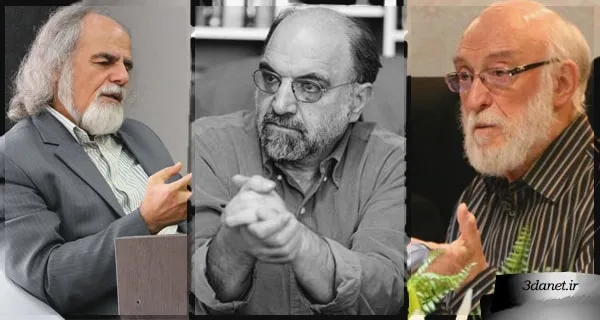
Text of a speech by Mujtahid Shabestari on the twenty-third night of Ramadan 1387 at Hosseiniyeh Ershad
Tonight my words are a continuation of the speech I gave on the twenty-first night of the blessed month of Ramadan. I can say that what I said that night was a brief definition and explanation of the name of God, and what I say tonight concerns the remembrance of God. In the previous session, I said that insisting on an unacceptable conception of the name of God has two unfortunate consequences. The first unfortunate consequence is that a person becomes alienated from themselves and even becomes pathological; it is the feeling that a being called God is a nuisance to the person, an obstacle to their flourishing and decision-making, and alienates them from themselves. We see many people who are like this. I see many young people who, when they hear the name of God, it is as if the name of a nuisance is brought up, a nuisance that family, society, and government constantly say you must have faith in. The other unfortunate consequence is that this unacceptable conception can become a tool in the hands of people and governments for instrumental use in the direction of illegitimate group and political interests, in which case the health of politics is destroyed and more complex problems arise for societies. Therefore, the distortion of the name of God has two unfortunate outcomes, individual and social. This was the introduction I gave in the last session, and I said that on this basis we must strive to understand precisely what concept we intend when we say God.
I said the name of God is very vague and ambiguous. A person may imagine this name has a very clear meaning, but when asked what exactly they understand by the name of God, they fall into reflection and feel they cannot properly define it. They might say God means the Creator of the universe, but if you ask them again what the Creator of the universe means, they become incapable of sufficient explanation, or if they do explain, they give an anthropomorphic explanation, defining an anthropomorphic God for you; for example, they say: just as every clock has a maker and every building has a builder, this universe also has a maker and a builder. This is an anthropomorphic conception of God. Early in life, a person does not realize what consequences such a conception of God might have, but when their thinking develops a little, they read some books, briefly study philosophical schools, or participate in the political process and become aware of the twists, turns, and problems of politics, and encounter the issue of human rights, freedom, human dignity, and the like, and make a reassessment of those elementary and popular beliefs of theirs, they see that these are no longer acceptable to them. God as the maker of the universe, like the builder of a building, and the other religious rulings based on it, are no longer acceptable to them. Every name has a semantic and conceptual load that is acquired throughout history and affects the course of human social and individual life. Whenever that name is brought up, that semantic and conceptual load, and those bitter or sweet experiences, and those feelings of flourishing or suffocation that accompanied that name, all of these mount a person's shoulders and weigh heavily upon them. Correcting the semantic and conceptual load of any name is, in fact, correcting the conception of the bearer of that name. If God is mentioned and love, affection, forgiveness, flourishing, and enabling flourishing come to mind, this God and the relationship with Him is liberating and gives meaning to human life. But if the name of God brings to mind imposition, being silenced, not asking, blind imitation, the experience of oppression, and the like, this God and the relationship with Him is a nuisance to the person, and the person takes a negative stance toward Him.
Last night I said that anthropomorphic conceptions of God are incorrect and that we cannot describe God or encompass Him, and I said, however, one can experience God and narrate Him, one can call upon Him, one can be intimate with Him, one can question Him, one can complain to Him, one can be content with His decree, one can trust in Him, one can entrust all affairs to God, one can seek help and guidance from Him, and so on. I also said that human beings can express to others the experiences they have with God, and the work of the prophets was precisely this: they shared with others the experiences they had with God, made others aware of those experiences, and invited them to a relationship with God. Their expression was what God did and does with me, what He does with the world, what He does with nations; for them, the acts of God and the names of God, which are symbols of those acts, are at issue. I said that merely reading religious teachings and principles of belief and learning them like mathematical formulas does not cure any pain, and a person may later arrive at the bitter experience that these things they have read do not provide an answer.
Now I must explain what the origin of these connections with God and these remembrances of God in various forms is in human beings. We know what causes us to go and study, for example, chemistry or physics; we study these to fulfill the needs that we humans have and that are met by these sciences. We study medicine because if we do not study medicine, we cannot cure our illnesses; we study nutritional sciences because we need food science, and so on. The origin of the movement toward these sciences and techniques in humans is known, and it is human needs. Now one can ask, what is the origin of the quest for a relationship with God in human beings? What happens, what causes arise, and which backgrounds come together and become active so that the name of God is brought up among human beings in various forms? (The history of theism is very convoluted, long, and diverse. I recommend reading a useful book that has been translated in recent years. This book is called "The History of Theism," translated by Mr. Khorramshahi and Mr. Saleki, and published by the Center for Cultural and Scientific Research Publications).
The psychology of religion is a new scientific branch that perhaps emerged no more than two centuries ago. Numerous scientists have worked in this field. The psychology of religion examines the question of what goes on in the psyche and inner being of God-believing humans, what their states are, what the relationship of these psychological states is with other states of these humans, under what conditions theism is intensified within a person, and under what conditions it is weakened, and the like. These topics are a series of psychological discussions, not philosophical or theological. Importantly, the psychology of religion does not seek to take the place of the philosophy of religion or theology and say that the issue of God and theism is solely these things we see in the psyche of humans and has no other authenticity. Here, I will very briefly present a few of their theories and then put forward a view that our mystics, or our mystically-inclined philosophers, have specifically expressed in connection with this very matter, and the root of their words is in the Holy Quran itself. My method in such discussions is to provide information and explanations to the listeners so they can decide for themselves. I do not inculcate belief in anyone. I even consider such lectures and gatherings as classes, not "propaganda" sessions.
Some psychologists say that their research shows there is an instinct in humans that can be called the "God-believing instinct"—of course, this is one view and has its proponents and opponents. They say that as a child grows, an instinct emerges within them that spontaneously brings forth the idea of God. Another view is that belief in God is related to the human conscience, and so to speak, belief in God is the voice of the human conscience, that very center we consider the center of moral perceptions. When we wrong someone, we say my conscience bothers me, or my conscience does not permit such an act. It is as if there is a place within the human being that is the base of ethics and values. There have been many discussions in psychology about what the meaning of conscience could be; this group of psychologists says that belief in God is the voice of the human conscience. When a person hears the voice of their own conscience, they experience hearing the voice of God; God emerges from the human conscience—this is also one view. Another group says that the raising of the question of God for the human being is a rational and epistemic necessity, meaning that in the process of rational development, the human being reaches a stage where they experience being intellectually compelled to ask about the existence of God and to think about God. For example, they look at the world or reflect upon themselves and begin to think about what the root and the cause of causes is, what the origin and source of beings is, or they ask how the secret of the world should be unlocked, and as Hafez says, "What is this high, simple, yet highly adorned dome— / Of this riddle, no wise one in the world is aware." The human being reaches a stage where the world appears to them as a mystery. These are rational and epistemic necessities. Schleiermacher, the famous Protestant philosopher and theologian, also said that every human being experiences within themselves a "feeling of absolute dependence on God." This view has also become the starting point for many discussions. I will also mention another view, which belongs to an important and famous psychologist named "Carl Gustav Jung." He says: The story is that in addition to a personal unconscious, the human being also has a collective unconscious, and the question of God originates from that collective unconscious of humanity. In that collective unconscious, there are forms, there are ideas, there are eternal memories. What I have cited here from the psychologists of religion are examples of the views of those psychologists who have had a sympathetic relationship with religion.
But our great mystics have raised another issue regarding the origin of human belief in God, which I will also present and explain to you. These mystics say that every human being is aware of the existence of God through their own existence. Their issue is the issue of "being aware." In this context, no word is better than "awareness." Each of us is aware of our own existence; we are conscious of our own existence. The mystics say that through awareness of one's own existence, the human being is also aware of "Absolute Existence" (God). When one is aware of one's own existence, one is also aware of God. Our awareness of ourselves makes us aware of the absolute existence of which we are a portion and a drop. Let me give you an example; perhaps many of you have swum in the sea, which is also very enjoyable. When a person swims in the sea, what is within the domain of their control and constitutes the place of their swimming is, for example, that 400 or 500 cubic meters of water in which they swim, but precisely through this, this person is in a unifying connection with the entire sea and is connected to the sea. As an analogy of the intelligible to the sensible, the relationship between the human being and God is seemingly like this, and the human being is in a real connection with Absolute Existence through their own existence. God is not at all absent from the human being and is always with the human being. Not that the human being must search to find God. Of course, not in an anthropomorphic sense, the way a human being is beside another human being, nor the way another entity is beside us.
Everyone who experiences their own limited existence also experiences Absolute Existence, and limited existence can never be experienced in isolation. You might say, if this is so, then the question of God should be a perfectly clear matter, and we should always be mindful of God and find God beside us, always having this experience that my existence is a drop of that Existence, and that when I experience my own existence, I experience that Absolute Existence; yet our condition is usually not like this. The great mystics have answered this question. They say that we are usually not even aware of our own existence, meaning that we usually forget ourselves. Especially when we are intensely absorbed in a task, we become completely oblivious to ourselves. But if we come to ourselves and find leisure, we realize that we have ourselves, that we are present to ourselves, that is, we become aware of ourselves. We always have ourselves present to ourselves, but we are not always aware of this fact and are heedless of it, because our attention goes to a thousand other matters. The mystics say that the story of humanity and God is just the same. The affliction of humanity is heedlessness of God, and for this reason, they say that the task of humanity must be to 'remember' God, and this is the very 'dhikr' (remembrance) that is so greatly emphasized in the Holy Quran. A person must strive to make present within themselves, through recollection, that of which they are ordinarily heedless, and in more precise terms, to rediscover His presence. In the station of spiritual perfection, a person must constantly remember God. Reasoning to prove God is philosophy, theology, and science, but reading proofs for the existence of the Maker and such things does not open the way to God. God is to be remembered.
In the course of our lives, it sometimes happens that we have seen and known a person somewhere, become friends and intimate with them, and developed a history, but then, for example, for several years we have not seen them, and a long temporal gap has occurred between us, such that we have become heedless of them. If, for any reason, we remember that person again, this remembrance is preceded by our external sensory, experiential contact and acquaintance that happened years ago, and now I remember them. On the gravestones of some individuals, poems are written with this theme: O living ones! Remember us; we were with you for years. Now one can ask: remembering God is not of this kind. A person has not become acquainted with God through external, experiential sensory knowledge, seeing, hearing, and interacting, so that remembering Him would be like remembering a forgotten human being. Remembering God becomes possible through the same means by which knowing God became possible, that is, through our own existence, our very selves, and through the existence of our own being. The remembrance of God must occur within our own selves. He is not remembered from the outside, because He is always within us.
No matter how many perfections a human being possesses, they can know God and remember Him only to that very extent, and no more. If a person is endowed with knowledge—which is a perfection—they become aware of God's perfection of knowledge; if a person is loving, they become aware of God's lovingness; if they are forgiving and merciful, they become aware of God's forgiveness and mercy; if they are creative and inventive, they become aware of God's creativity and inventiveness, and so on. Conversely, an ignorant person, or one who is spiteful and envious, or selfish and tyrannical, fashions for themselves a god who possesses these same unworthy attributes. Since they themselves are unaware of the attributes of perfection, they do not truly become informed of the Absolute Perfection, that is, God. This is a matter of becoming aware, not of reading books. No matter how many books a person reads about love and affection, they will not understand what love and affection are unless someone lets them taste love and affection and they taste it, or unless love and affection well up from within them for some reason—that is, they themselves become a lover. It is through these things that a person understands what love and affection mean. There is a very good point in child psychology; they say: children who do not taste affection from their mother and father cannot, after growing up, show affection to others. Someone can transmit affection to another only if they have been made to taste affection. These are inward matters; they are to be tasted, practiced, and realized; they are to be welled up, to be experienced. The relationship between the human being and God is also like this. We human beings become aware of God and God's perfections in proportion to our own existential capacity. The purpose of philosophical reasoning is to answer the doubts and questions that may arise in the rational structure of the human being. The great mystics tell us to remember God so that God may well up from within you. This is the reason why night vigils and worship in the late hours of the night are so highly recommended. A person must prepare the grounds for this welling up so that this event may occur, and one of the most important of these grounds is leisure. A person must have some leisure to become aware of themselves, and through becoming aware of themselves, become aware of God. We usually lack this leisure. One must set aside time, one must create an opportunity, one must excavate oneself, and this excavation requires time. We do not set aside time for the upbringing of our children, and then we see that our children have not grown and attained perfection as they perhaps should, and then we say, why have they turned out this way! Let thoughtful young people pay attention to this issue: a person must also set aside time for their own upbringing. The notion that one can live in any way, blend in with the crowd under any circumstances, and be constantly immersed in daily preoccupations, yet expect that the question of God will be resolved for them by, say, reading books and articles—this notion is incorrect. The Prophet of Islam, whose primary mission was the call to monotheism and the propagation of monotheism, said, 'I have been sent to perfect the noble traits of character,' because until one's moral qualities change, a person does not become self-aware, nor do they become aware of God.
You know, in our religious teachings there is great emphasis on night vigil and the night prayer, especially in the last third of the night. The importance of this nightly wakefulness is not exclusive to Islam; in some other religions, too, the night has its own stories. In Islamic mysticism, the night has its own stories. One of my students in a master’s program completed a thesis under my supervision titled “The Night in the View of the Mystics.” He collected and analyzed the views and poems of the mystics about the night. The point is that at night, a person does not have the daily preoccupations and is somewhat within himself, not having leaped out of himself. During the day, we leap out of ourselves and are flung to a thousand places. We are not within ourselves. One of those who engage in such practices used an analogy, saying that a flower petal inside a glass full of water settles and rests at the bottom of the glass only when the water is completely still. We human beings become still at night and settle; we are within ourselves and have not been flung outward. It is then that we can discover ourselves, delve into our own depths, because occupations and external factors do not pull us this way and that. The recommendation to engage in whispered prayer and intimate communion with God in the last third of the night, to speak with Him, is for this very reason: in that hour there is a state of leisure, and in that leisure one can feel that one is attaining spiritual expansion, that the horizon of one’s being grows wider, that a voice is heard from every corner of one’s existence and an aperture opens, that what was not remembered comes to mind, that the realm of the “Unseen” diminishes and the realm of the “Visible” increases. In short, God is not remembered in every condition, nor does He well up from within a person. In the Holy Qur’an, the expression “dhikr” is used dozens of times; it is said: “So remember God with much remembrance” — remember God often, very often. The reader at first glance says, what does it mean to remember God very often? In another verse it says: “Say, ‘My Lord would not care for you were it not for your supplication.’” We imagine that in every condition God is present for us, that in every condition a path from us to God is open. No, it is not like that; in many conditions we are in heedlessness, and we must push aside the veil of heedlessness and call upon God, and call, and call, until our calls bear fruit and God shows Himself to us from within and without. But we must call from the depths of the heart, not merely with the tongue. This kind of calling is possible for those who themselves possess spiritual perfections; they, in reality, during this calling, expand the perfections of their own being, and the experience of this expansion is the very experience of the divine perfections and the existence of God. One can become aware of the scholarly ranks of a very eminent scientist only if one possesses a portion of that knowledge oneself; the ignorant cannot be informed of the learned. Likewise, the heedless and those lacking spiritual perfections cannot become informed of God. In the Noble Qur’an, it is said that the Qur’an itself is a dhikr, or a “reminder”; the Qur’an is the remembrance of God. The Qur’an is, in the first degree, the dhikr of the Prophet, and then it becomes a means of dhikr for us. This Qur’an is the very act of remembering God by the Prophet, with the aid (revelation) of God. Regarding the books of other prophets, it is also said in the Qur’an that they too were a dhikr. Elsewhere in the Qur’an it says: “So remind, for the reminder benefits the believers.” That which benefits the believers is the remembrance of God.
The summary of my words is that the story of the human being’s wayfaring to God is not the wayfaring of the human being to an entity outside and other than himself. It is not the case that we must find God in some place; God is always with the human being, but not that anthropomorphic God from whom one must flee. The limited existence of the human being is a drop from the unlimited existence of God. We are children of God and are always in the lap and embrace of God, but we do not know that we are in God’s embrace. We are not separate from God. Here the mystics have very lofty words, which there is no time to address. So the mystics’ view is that the root, foundation, and substance of the emergence of God, the remembrance of God, speaking with God, hope and trust in God, and everything of this kind, lies within the human being himself. Remembering God is not about filling every place in society with the name of God by creating noise and clamor while pursuing our own illegitimate worldly interests.
.
.
Related Content:
The Name of God and the Remembrance of God 1
The Name of God and the Remembrance of God 2
.
.




Discussion0 comments
No comments yet; let yours be the first voice.