Religion
The Place of Ethics and Jurisprudence in the Works and Activities of Lady Amin
Contrary to the common perception that Banu Amin was merely a jurist, her works and concerns reveal a deeper focus on ethics, mysticism, and Quranic studies. The dominance of a jurisprudential outlook in the religious community has led to her one-dimensional portrayal as a 'mujtahida'.
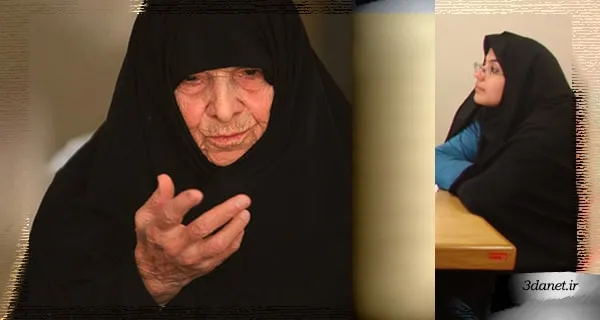
Zeinab Salehi: Sayyida Nusrat Beygum Amin is one of the contemporary female thinkers whose life, personality, activities, and works have been examined and evaluated from various aspects. Given the predominance of the jurisprudential perspective in Iran's religious society, the jurisprudential dimension of this scholarly figure—whose works span diverse fields such as Quranic exegesis, ethics, hadith, mysticism, and jurisprudence—has been foregrounded, and she is essentially referred to as a mujtahida, a designation that itself reflects the dominance of such an approach in engaging with her works and introducing the services of this great lady. In this article, we seek to understand the scholarly personality of Lady Amin and its various dimensions through the mirror of her works, and to demonstrate that, contrary to the prevailing perception in this regard, she was more devoted to and engaged with Quranic studies, hadith studies, ethics, and mysticism than with jurisprudence in its narrow sense. Although she achieved successes in the science of jurisprudence that many of her contemporaries did not, in terms of the content of her works and her concerns—without passing judgment on her scholarly caliber or the depth of her discussions—she can perhaps be considered more akin to Allameh Tabatabai; yet, in our religious society, Allameh is renowned for Quranic studies, the science of exegesis, philosophy, and mysticism, while Lady Amin is known for jurisprudence and ijtihad. It seems this issue has certain sociological factors, which we will briefly touch upon.
Scholarly figures in Islamic civilization have been distinguished for various reasons and from different aspects. Various factors play a role in this matter. The type of activities a thinker undertakes during their lifetime, as well as the works they leave behind, are perhaps the best criteria for judgment in this regard, but sometimes other criteria and factors intervene in these judgments, such that even figures who are not yet historically distant from us and were at least contemporary with the generation before us are introduced to society in such an altered way that it becomes necessary to re-examine their lives and works.
Lady Amin is one of these figures who, despite not having authored a single independent work in jurisprudence and whose activities and works show that she was more concerned with ethics, mysticism, and the Quran, has been introduced to society as a jurisprudential figure and is even referred to with the title "Mujtahida." In this article, the author endeavors, while accepting that Lady Amin, in the conventional sense, had attained the rank of ijtihad and her contemporaries acknowledged this point, to demonstrate that jurisprudence was not the central focus of Lady Amin's activities and works; rather, ethics, mysticism, Quranic studies, and hadith studies held greater importance for her. To prove this claim, we will first review the life and activities of Lady Amin. Then, we will try to better understand Lady Amin and her concerns through her works. In this way, we will review aspects of her life and works that have received less attention or whose jurisprudential dimension being highlighted has prevented attention to them. It seems that a one-dimensional introduction of a multifaceted personality who has diverse works in various fields is not morally permissible; because it is an injustice to her and to those to whom such a personality is introduced; certainly, over time, this leads to the distortion of individuals' personalities. 1. The Life of Lady Amin
Seyyedeh Nosrat-Beygom Amin was born in 1274 A.H. (1312 A.H./ 1895 CE) in Isfahan. Her father was Seyyed Mohammad Ali Hosseini Esfahani, titled Amin al-Tojjar, one of the wealthy and renowned merchants of Isfahan. Her mother was Zahra, daughter of Haj Mehdi, titled "Jenab," who was very pious and famous for helping the poor (Islamit, 1389: 3). Fortunately, Lady Amin's parents were well-off and had a special concern for her education and studies. Therefore, they sent her to a traditional school (maktab-khaneh) at the age of five and, as much as they could, provided the preliminaries for her education. This was at a time when conditions were such that few families sent their daughters to school for education (Islamit, 1389: 3-4). At the beginning of her studies, she did not show much aptitude, and even the school teacher despaired of teaching her, but gradually she shone brightly (Amou-Khalili, 1379: 33). At the age of thirteen, she married her paternal cousin, Haj Mirza Aqa, known as Mo'in al-Tojjar, and gave birth to seven children; but only one of them survived, and the rest died in infancy (Islamit, 1389: 4-6). At the age of twenty, her parents invited a private tutor to their home, and Lady Amin's education continued (Amou-Khalili, 1379: 36). She began studying religious sciences, Arabic morphology, and syntax. Lady Amin learned Arabic so well that she was able to write some of her works in Arabic. At the age of thirty-two, she began learning jurisprudence (fiqh), its principles (usul), and philosophy (hikmah) (Islamit, 1389: 5-6). She continued her education with diligence and perseverance in a difficult era. At the same time, she paid sufficient attention to the rights of her husband and children and also participated in managing the household. Lady Amin considered hardship and troubles as a blessing and a means of self-purification. She had a particular seriousness in her studies and believed that nothing could cancel a class, not even the death of a child.
In 1307 A.H. (1928 CE), Reza Khan officially announced the unveiling decree and organized ceremonies for various classes and guilds, inviting prominent figures. These individuals were required to attend the ceremonies with their wives, without the hijab. Mo'in al-Tojjar, Lady Amin's husband, was also invited to this ceremony. Lady Amin, in order to oppose this invitation and the very principle of the unveiling decree, left Isfahan and resided in Qom for four months. Later, in the book The Way to Happiness (p. 90), she analyzed the wrong policies of politicians and explained the obligation of hijab by presenting rational and scriptural proofs (pp. 91-92). She added some content of a political nature to the book The Way to Happiness, but the official at the publishing office refused to print it. In 1330 A.H. (1951 CE), she also wrote an article in response to doubts about the hijab and sent it to one of the magazines (Islamit, 1389: 6-8).
In addition to this, Lady Amin rendered many cultural services.
In 1344 [1965] she founded the first women's seminary in Isfahan and named it Maktab-e Fatemeh (S). She also established Amin Girls' High School, where in addition to the standard curriculum, three languages—Persian, Arabic, and English—were taught (ibid.: 10). Moreover, she held weekly sessions on ethics and Qurʾanic exegesis and devoted herself to training students.
In 1354 AH (at the age of 42), she received authorization for ijtihad and the transmission of hadith from Ayatollah Mohammad-Kazem Shirazi and Ayatollah Abdolkarim Haeri Yazdi. In the same year, she also received authorization for ijtihad and hadith transmission from Ayatollah Ebrahim Hosseini Shirazi Estahbanati. In 1357 AH, she obtained authorization for hadith transmission from Ayatollah Mohammad-Reza Najafi Esfahani. Furthermore, eminent figures such as Ayatollah Mar'ashi Najafi, Allameh Abdolhossein Amini, and Seyyed Mohammad-Ali Qazi Tabatabai obtained authorization for hadith transmission or ijtihad (or both) from her (ibid.: 11-12).
While engaged in self-knowledge, Lady Amin also strove greatly to acquire moral virtues. As has been recounted, she was deeply devoted to spiritual vigilance and possessed particular mystical states and heartfelt inspirations, some of which she herself recorded in the book al-Nafahat al-Rahmaniyya. She wrote this book in Arabic to prevent any cause for misunderstanding. She wrote her works under a pen name and preferred anonymity. She passed away on 13 Khordad 1362 SH (1403 AH).
2. The Works of Lady Amin
Lady Amin is a prolific author. Her nine major works are:
1. al-Arbaʿin al-Hashimiyya, which is Lady Amin's first work, written in Arabic at the age of forty. This book comprises forty hadiths on beliefs, ethics, legal rulings, etc. She quotes the statements of Fayz Kashani, Allameh Majlesi, and others, and then proceeds to compare and critique them. She then either selects one of the views or presents another opinion of her own. This book has been translated and commented upon by Alaviyeh Homayouni, Lady Amin's student (ibid.: 12).
2. al-Nafahat al-Rahmaniyya (in Arabic); containing 56 "Nafha" (inspirations) in which Lady Amin's mystical states and heartfelt inspirations are reflected. In a relatively lengthy introduction, she explains the reason for writing about these states, blocking any path for slander and accusation, and distancing herself from accusations of self-praise, vanity, and hypocrisy.
3. Makhzan al-La'ali fi Manaqib Mawla al-Mawali; which, in an introduction, five chapters, and a conclusion, discusses the virtues and excellences of Ali (AS).
4. Sayr wa Suluk (Wayfaring and Spiritual Journey); an examination of the correct paths to attaining true felicity and the obstacles to reaching it.
5. Maʿad ya Akharin Sayr-e Bashar (The Resurrection, or the Final Journey of Humanity); a rational and textual examination of the proofs for the resurrection in nine articles.
6. Ravesh-e Khoshbakhti (The Method of Happiness); an explanation of the meaning of felicity and happiness and the path to attaining it in simple language, accompanied by good counsels for believing women.
7. Akhlaq wa Rah-e Saʿadat (Ethics and the Path to Felicity); a translation and abridgement of Tahdhib al-Akhlaq wa Tathir al-Aʿraq by Abu Ali Miskawayh al-Razi. Lady Amin has, of course, included her own interpretations and views in its margins.
8. The exegesis Makhzan al-ʿIrfan is Lady Amin's final work, written in fifteen volumes in Persian. The writing of this work took approximately twenty years (1374-1394 AH). Lady Amin is the only female exegete of the Qurʾan to have interpreted all the surahs of the Qurʾan (ibid.: 43-44).[1] In writing this exegesis, Lady Amin draws upon various works and examines and critiques the views of earlier and later exegetes, and in some cases, she also explains her own view regarding the verses, accompanied by humility and without dogmatism (ibid.: 35-37). Furthermore, in interpreting the verses, she sometimes adopts a philosophical and mystical approach, and at other times a jurisprudential, ethical, or theological one (ibid.: 37).
An interesting point is that Lady Amin named her Qurʾanic exegesis Makhzan al-ʿIrfan (The Treasury of Mystical Knowledge), and this indicates that in her approach to the Qurʾan, the mystical perspective predominates, or at the very least, that other sciences—whether jurisprudence, philosophy, ethics, etc.—serve as a groundwork for the knowledge and recognition of God, a matter that receives greater attention in mysticism. Lady Amin had a particular dedication to self-knowledge and the purification of the soul, considering it a prelude to the knowledge of God. For this reason, while interpreting the verses, she endeavored to highlight their mystical aspects, either by citing the statements of exegetes or by relying on her own mystical insights from the verses (ibid.: 40). In addition, she would also discuss the ethical and educational points related to the Qurʾanic verses and the hadiths transmitted concerning those verses (ibid.: 41).
Marzieh Islamit believes that what mattered to Lady Amin was the ethical and educational use of exegesis (ibid.: 42). Ayatollah Ma'refat also believes that the style of the Lady's exegesis is educational, ethical, and based on self-purification and refinement (ibid.: 43). Moreover, a kind of rationalism is clearly evident in the Lady's exegesis, to the extent that she sometimes prefers rational proof over the apparent meaning of verses (ibid.). In his book Shenākhtnāme-ye Tafāsir, Ayazi considers the Lady's exegesis to be among the comprehensive commentaries of the Quran, whose primary character is ethical-mystical, although it also pays attention to theological doubts and therefore has an argumentative aspect; however, the Lady's concern in writing it was ethical and educational applications (Ayazi, 1378: 247-248; Islamit, 1389: 193-195).
The Lady, contrary to the Akhbārīs, considers it possible to access the meaning of Quranic verses and God's intent. She also believes that since the Quran is a book of guidance and intends to convey its message to its audience, this message must be understandable and transmissible through words; for if the Quran were not understandable, it would defeat the purpose, and the mission of the prophets would remain incomplete. Furthermore, God has commanded deliberation and reflection upon the verses of the Quran. If deliberation upon the Quran and the exegesis of its verses were not permissible, such a command would not have been given. Therefore, from the Lady's perspective, the exegesis of the Quran is a necessary matter (Islamit, 1389: 49-51). Although the Lady utilizes Quranic sciences, theology, jurisprudence, principles of jurisprudence, hadiths, literary and rhetorical sciences, mysticism, philosophy, and ethics in this exegesis, she also adds her own understandings, inferences, and viewpoints, while simultaneously striving to avoid exegesis by personal opinion (ibid.: 85-107).
Another point is that the Lady, in writing this exegesis, drew upon numerous works, which indicates the breadth of her studies. Some of these works include: Quranic exegeses written before the Lady as well as contemporary exegeses (ibid.: 112-130); Shia and Sunni hadith collections (ibid.: 130-138); various lexical sources (ibid.: 138-143); diverse works such as the Manẓūmeh of Mullā Hādī Sabzavārī, the Arbaʿīn of Shaykh Bahāʾī, Iḥyāʾ ʿUlūm al-Dīn, al-Futūḥāt, Irshād al-Qulūb, Baṣāʾir al-Qulūb, Dalāʾil al-Nubuwwa, al-Iḥtijāj, ʿIlal al-Sharāʾiʿ, and so on (ibid.: 145-149); and historical sources (ibid.: 143).
Makhzan al-ʿIrfān is not a purely narrative exegesis; rather, independent reasoning and inference also play a significant role in it. That is, the exegete engages in a kind of scholarly effort and independent reasoning to elucidate the meanings of the verses, while simultaneously striving to avoid exegesis by personal opinion (ibid.: 154-156). In addition, the Lady also employs the Quran-by-Quran exegetical method (ibid.: 171). Another point is that jurisprudential discussions are not very prominent in Makhzan al-ʿIrfān, and the Lady rarely enters into jurisprudential discussions to elucidate the verses (ibid.: 187-188). Mystical discussions are another part of the content found in Makhzan al-ʿIrfān (ibid.: 188-191).
9. Jāmiʿ al-Shatāt (in Arabic); the major part of which consists of numerous questions from various teachers and the Lady's answers to them. This book is not actually the Lady's own writing; rather, Sheikh Morteza Mazaheri Najafi compiled and edited it.
3. The Influence of Lady Isfahani
The Lady's works were often printed several times and found a large audience. Her Quranic exegesis was even taught in some of the brothers' seminaries. Lady Amin's works were distributed in various cities of Isfahan province as well as other provinces. Sometimes, the Lady's students would travel to surrounding cities to promote religious teachings and would strive to spread the Lady's thoughts and the teachings she was concerned with. Furthermore, the Lady's renown spread beyond Isfahan and reached other cities and some Islamic countries. Scholars from Isfahan, Tehran, Qom, and even Najaf would visit the Lady and speak with her on certain scholarly matters (Amoukhili, 1379: 47).
4. Characteristics of Lady Amin as a Writer
Lady Amin is a capable writer who writes consciously and responsibly. Her most important characteristics as a writer are:
1. Use of simple and understandable language for everyone
2. Humility and piety in expressing opinions and judgments
3. Attention to possible errors and slips during writing
4. Intellectual and authorial independence, despite using the works of others and having extensive studies;[2]
5. Sufficient command of both Persian and Arabic; although, by her own judgment and according to circumstances, she wrote some of her works in Persian and some in Arabic.
6. Attention to the order and priority of the sciences and their degree of importance.
7. A noteworthy scholarly level compared to many of her predecessors and contemporaries.
8. Attention to various methods of acquiring knowledge and employing them in learning and transmitting knowledge.
9. Attention to the audience and their capabilities in the writing of each work.
5. The Ijtihad of the Lady
As the Lady's contemporaries have stated, and the documents also exist, some of her contemporary scholars granted her permission for ijtihad, namely: Ayatollah Haj Mirsayyid Muhammad Ali Najafabadi; Ayatollah Haj Sheikh Abdul Karim Haeri Yazdi; Ayatollah Ibrahim Hosseini Shirazi Estahbanati; and Ayatollah Muhammad Reza Najafi Esfahani. Some also granted the Lady permission for narration (riwaya), including: Ayatollah Muhammad Reza Najafi Esfahani; and Ayatollah Mazaheri Najafi Esfahani. In addition, some individuals obtained permission for narration from the Lady, the most important of whom are: Ayatollah Marashi Najafi; Zuhair al-Hassoun (Amou Khalili, 1379: 39-40); Allama Sayyid Abbas Hosseini Kashani; Allama Sayyid Muhammad Ali Qazi Tabatabai; Allama Sheikh Abdul Hussein Amini; Allama Sayyid Muhammad Ali Rouzati, Allama Sheikh Abdullah Subaiti; Zinat al-Sadat Homayouni and others. (http://www.banooyeirani.ir).
The granting of permission for ijtihad and narration to the Lady followed the writing of the book al-Arba'in al-Hashimiyya, which, when it reached the seminary in Najaf, aroused the scholars' astonishment and led them, while welcoming and appreciating it, to test the Lady through questions and answers and then grant her permission for ijtihad and narration (Islamit, 1389: 12-13). Despite having permission for ijtihad, the Lady did not write any work that was independently jurisprudential.
6. The Ethical and Educational Concerns of Lady Amin
Felicity is one of the central concepts in the science of ethics. Lady Amin attached great importance to reasoning, contemplation, study, the acquisition of knowledge, and moral virtues, with the aim of attaining felicity, and she strove greatly in this path. Her works are replete with ethical themes.[3] Lady Amin sought beneficial knowledge and did not consider true knowledge to lie in learning idle disputations. Therefore, she considered knowledge to be that which perfects a person's spirituality and increases their servitude and lordship. In other words, knowledge should make a person more luminous, not add to the veils of their darkness. The Lady considered purification (tazkiya) more important than instruction (ta'lim) and believed that knowledge without the refinement of the soul is a veil.
The Lady was concerned with the salvation of herself and her fellow human beings, especially women. She considered ostentation and showing off to be one of the main characteristics of women, which can hinder spiritual perfections. Therefore, she emphasized chastity and hijab and believed that the study of Quranic teachings and spiritual perfections could place women on the path to salvation. She considered peace of heart to be the highest happiness (Yadnameh-ye Banu-ye Mujtahideh: 27-29).
The Lady endeavored, by writing books and articles, establishing a school and scholarly circle, holding Quran interpretation sessions, teaching Islamic teachings, and responding to seekers of knowledge and virtue and guiding them, to provide a platform for the education and refinement of her fellow human beings. In the era in which the Lady lived, even men rarely had a concern for learning, let alone women. She not only traversed this path herself but also invited others to traverse it and assisted them as much as possible. The Lady had a special concern for women's issues, although she was never a feminist. In a time of repression, she demonstrated through her personal conduct that gender cannot be an obstacle to the intellectual, ethical, and spiritual growth and elevation of women.
Sayyid Ismail Hashemi considers Lady Amin and her life to be the embodiment of ethics and human virtues (Majmu'eh-ye Maqalat: 54). Haj Muhammad Ali Amin, the only child of Lady Amin, emphasizes that the Lady believed it is not right for someone to sit in a corner and merely engage in the study of knowledge or the worship of God, but do nothing for the people (ibid: 64). Lady Amin had a particular view of knowledge and learning. Following the Noble Prophet (PBUH), she considered knowledge to be of three types: "a firm sign" (Aya Muhkama), by which is meant theology; "a just duty" (Faridha Adila), by which is meant the science of ethics; and "an established practice" (Sunna Qa'ima), by which is meant the science of rulings, which entails acting upon obligations and abandoning prohibitions (Yadnameh-ye Banu-ye Mujtahideh: 26).
Although she does not explicitly use the terms beneficial and non-beneficial knowledge, her outlook is precisely this. In her will, after emphasizing piety and godliness, she distinguishes the knowledge that results from piety from theoretical knowledge, which is merely the product of formal learning. The Lady considers happiness and salvation to depend on the acquisition of divine knowledge and love. She also, by citing numerous hadiths and verses, sets forth important ethical teachings throughout her will, the practice of which can be a prelude to salvation (see: Collected Articles: 36-42). Lady Amin also paid special attention to educational matters. In her book Spiritual Wayfaring, she considers the human being educable and emphasizes the role of the will in human growth and perfection. In her view, life consists of the collection of thoughts and feelings that draw a person onto the path of happiness or wretchedness (Amin, 1387: 61-64).
Ayatollah Javadi Amoli considers Lady Amin an instance of those in whose inner being and essence a transformation occurred, and who came to possess a knowledge that was not the result of lessons read in school. He also considers the Lady's works a reflection of her biography and places special emphasis on al-Nafahat al-Rahmaniyya. He also considers the Lady's book Spiritual Wayfaring an eloquent description and exposition of the fourfold journeys common in mysticism (Collected Articles: 349-357). Allameh Jafari also uses the expression "new birth" in describing the Lady's life (Group of Researchers, 1389: 175). Vaezzadeh Khorasani, while pointing to the mystical themes of the Lady's works and her effort to write simply and avoid technical terminology, also highlights another point: that the Lady broke the barrier that mystics have always placed before the wayfarers of the path—that everyone must have a spiritual master—and apparently emphasized, above all, study, contemplation, and self-purification, and sought guidance from the Quran, hadiths, etc. (Collected Articles: 369).
7. Lady Amin: The First Founder of a Women's Seminary
The proposal to establish Maktab-e Fatemeh (PBUH) and Amin Girls' High School came from Alaviyeh Homayouni, who, through the follow-up of the Lady's legal representative and her daughter-in-law, and based on the Lady's certificate of ijtihad, obtained the establishment license. Homayouni, who was a pioneering and leading student of Lady Esfahani, founded Maktab-e Fatemeh in 1344 with the Lady's scholarly credentials and assistance, and assumed its management under the Lady's supervision. At Maktab-e Fatemeh (PBUH), in addition to the Quran, exegesis, principles of beliefs, etc., three languages—Persian, Arabic, and English—were also taught (Homayouni, 1388: 12-13). The Lady herself also taught Quranic exegesis at this school.
Part of Lady Amin's concern for women's education and influencing them stemmed from her effort to elucidate Islam's perspective on women, and part was in reaction to extremist currents and groups advocating Western-style social freedom for women, whose approach the Lady did not approve of.
Due to the numerous inquiries she received, before the establishment of the school, the Lady held public sessions on exegesis, religious rulings, hadith, and ethics at her home on Wednesdays, and once a week she would invite her private students for instruction. After the school's establishment, the Wednesday sessions were moved there (Amou Khalili, 1379: 45-46). Thus, after traversing the stages of scholarly and spiritual perfection, the Lady entered the arena of authorship, propagation, training students, and cultural and social activities. She valued the social life of women and considered education and the acquisition of knowledge a prelude to such a life. Of course, she believed such education must take place in a healthy environment and lead to the intellectual, moral, and spiritual elevation of women.
After the establishment of Maktab-e Fatemeh, the women of Najafabad first thought of founding a women's seminary. Therefore, they invited the Lady's students to establish a center similar to the one founded in Isfahan. Homayouni and the Lady's other students accepted this invitation and, with the help of the women there, established a similar center in Najafabad. Zahra Mazaheri was another student of Maktab-e Fatemeh who studied in Isfahan until 1348, and after migrating to Qom in the academic year 49-50, she engaged in scholarly-religious activities in Qom, holding classes on Arabic grammar and Quranic exegesis in the mornings at the home of one of Qom's bazaar merchants. After two years, at the invitation of Ayatollah Meshkini, Mrs. Mazaheri also held sessions on exegesis and religious sciences at his home in the afternoons. However, after some time, due to certain difficulties, these classes were closed, and with the opening of "Maktab-e Tawhid" in Qom, the various scattered classes being held in Qom were moved to this location and became centralized. In 1349, Homayouni, at the invitation of one of the scholars of Qom and for the inauguration of Mrs. Mazaheri's classes, traveled to Qom with a group of sisters from the school and delivered a speech there.
با به وجود آمدن انگیزه تحصیل علوم دینی در زنان و پی بردن علما به اهمیت دانشاندوزی زنان، برخی از علما درصدد تأسیس یک مرکز آموزش دینی برای بانوان برآمدند. به همت آیتالله قدوسی در 1354 مکتب توحید تأسیس شد که برنامه درسی آن را شهید بهشتی تنظیم کرد و آیتالله شرعی نیز به این مجموعه کمک میکرد. در سال تحصیلی 54-55 مکتب توحید آغاز به کار کرد. بعدها به فرمان امام خمینی مکتبهای کوچک در یکدیگر ادغام، و در مهر 1365 جامعة الزهرا تأسیس شد. در سال تحصیلی 67-68 خانم همایونی به دعوت مدیریت جامعة الزهرا و مسئولان فرهنگی آن هر هفته از چهارشنبه تا جمعه به قم میآمد و به سخنرانی و تدریس مشغول بود (همایونی، 1388: 130-134).
بدینترتیب مکتب فاطمه (ع)، که در میان مردم معروف به مکتب بانو امین بود، به عنوان مکتب مادر زمینه پرورش و رشد مکتبهای دیگر در سایر شهرها را فراهم کرد و شاگردان بانو با مهاجرت به سایر شهرها زمینه تأسیس مراکز علوم دینی خواهران را فراهم کردند. برنامه مکتب فاطمه صرفاً آموزش علوم و دروس رسمی پر قیل و قال نبود، بلکه در کنار دانشهای عقلی و نقلی، برنامههای اخلاقی و عرفانی نیز اهمیت ویژه داشت (همان: 134).
البته همزمان با فعالیتهای بانو امین برای تأسیس حوزه علمیه خواهران حرکتهایی هم در دیگر شهرها، از جمله قم، آبادان، تهران، فسا، شیراز، کاشان، زاهدان و سمنان، با حمايت معنوى و مادى روحانيون نوانديشی همچون دستغيب، بهشتى، قدوسى، محمدعلى شرعى، اشرفى اصفهانى و سيدحسن مكى، اغلب بین سالهای 1340 تا 1346 آغاز شد، اما هیچکدام گستردگی و رونق حوزه علمیه و مدرسه بانو امین را نداشت. پس از انقلاب، امام خمينى حكمى مبنی بر تأسيس مركز واحدى در شهر قم جهت آموزش علوم اسلامى بانوان صادر کرد و سپس، به امر شوراى عالى حوزه علميه قم، مركز مديريت حوزههاى علميه خواهران جهت ساماندهى امور مدارس علميه بانوان در كل كشور تأسيس شد.
فریده مصطفوی در مقالهای با عنوان «ضرورت تشکیل حوزههای علمیه خواهران» که در نخستین کنگره بانو امین ارائه شده با استناد به آیات و روایات ضمن تأکید بر اهمیت تفقه زنان در دین و نیز نقش آنها در خانواده و جامعه، از ضرورت تشکیل حوزههای علمیه خواهران سخن میگوید و با استناد به سخنان امام خمینی بر چنین ضرورتی تأکید میکند، اما سخنی از این مسئله که در واقع بانو امین، پیش از همه، بنیانگذار نخستین حوزه علمیه خواهران در ایران بود به میان نمیآورد (مجموعه مقالات: 77-84). گرچه پس از انقلاب اسلامی ایران بستر مناسبتری برای تحصیل بانوان در زمینه علوم دینی فراهم شد، اما قبل از انقلاب این کار شروع شده بود و در شهرهایی همچون اصفهان، آبادان، تهران و ... نمونههای آن دیده میشود، که البته هیچکدام گستردگی و رونق مکتب فاطمه را نداشت. ضمن آنکه بانو امین چنین کاری را با ثروت شخصی و بدون داشتن قدرت اجرایی یا سیاسی خاص آغاز کرد. خانم شبستری در همان کنگره بانو امین را آغازگر حرکت تأسیس حوزههای علمیه خواهران در شرایطی دشوار میداند (همان: 252).
8. مقام علمی بانو امین
تاکنون سه کنگره برای بانو امین برگزار شده است؛ نخستین کنگره به پیشنهاد خانم همایونی، با دستور رئیسجمهور وقت (آیتالله خامنهای) و در دوره وزارت ارشاد سید محمد خاتمی در خرداد 1371 در اصفهان برگزار شد. به فاصله یک هفته از این کنگره در شیراز نیز کنگره کوچکی برگزار شد. در 1372 نیز به کوشش علی لاریجانی کنگره دیگری در قم برگزار شد. سید محمد خاتمی، وزیر فرهنگ و ارشاد وقت، در پیامی به نخستین کنگره بزرگداشت بانو امین، وی را در زمره کسانی دانست که میکوشید با احیای ارزشهای اصیل دینی، در برابر اغوای مزوران و ارعاب زورمداران بایستد و جلوههایی از شخصیت زن را بنمایاند که کمتر شناخته شده بود (همان: 51-52).
احمد مسجدجامعی، در نخستین کنگره بزرگداشت بانو، حرکت علمی او را در تقابل با دو جریانی میدانست که همزمان در روزگار بانو و در اصفهان قوّت داشت. نخست جریانی مدرن که میکوشید ارزشهای فرهنگ غربی را بیچون و چرا بپذیرد؛ و دیگری جریان سنتی که یا فعالیت زنان را به حرمسراها خلاصه میکرد و مانع فعالیت فرهنگی زنان و مخالف تحصیل آنان بود و یا به دلیل انگیزههای مذهبی بستر لازم برای تحصیل زنان را مهیا نمیدید. بانو امین نه خودباختگی به فرهنگ غربی را میپذیرفت و نه نگاه سنتی را بیعیب میدانست. لذا کوشید راه میانهای در پیش گیرد تا از مقصود باز نماند (همان: 67-76؛ 179-215).
سومین کنگره نیز در 1392 در تهران برگزار شد.
نکتهای که باید به آن توجه داشت این است که هم در جهتگیریهای بانو امین و فعالیتهای او مسئله جنسیت و به تبع آن پرداختن به مسائل زنان اهمیت دارد و هم در تحلیل شخصیت بانو و تمجید از او به این عنصر بسیار توجه شده است. این مسئله هنگامی بیشتر اهمیت پیدا میکند که بخواهیم درصدد ارزیابی قوّت علمی آثار بانو و مقایسه آن با آثار علمی سایر اندیشمندان، فارغ از جنسیت، برآییم. لذا نباید در ارزیابیهای علمی، صرفاً به دلیل جنسیتِ بانو، آثار او را ستود، بلکه چنین ستایشی باید تابع محتوا، و قوت و ضعف ادله باشد.
9. Critique and Analysis
Without a doubt, Lady Amin, compared to many of her contemporaries, was deeply engaged in study, teaching, and learning, and she was highly influential. However, at the same time, it seems she cannot be considered a first-rate thinker; rather, she largely compiled the thoughts of others and, like other Sadrian thinkers, engaged with various sciences such as Quranic exegesis, mysticism, philosophy, ethics, jurisprudence, and so on.
Fundamentally, in our society, when religion and religiosity are mentioned, jurisprudence immediately springs to mind. This indicates the dominance of a jurisprudential perspective among the religious, or the hypertrophy of jurisprudence, whereas religion and religiosity are not confined to jurisprudence (in its narrow sense) and have other dimensions, including the ethical and mystical. Of course, according to the view of many religious people, all three dimensions can be compatible and aligned toward a single goal (which, in the religious outlook, is nearness to God or felicity). Jurisprudence deals more with bodily actions, while ethics and mysticism deal with inner actions; unfortunately, many religious literalists have focused their attention so much on the outward appearance of religion that they have practically forgotten the main goal and relegated ethics and mysticism to obscurity, whereas it seems that jurisprudence is a prelude to ethics, and ethics a prelude to mysticism. The most important factors that caused the title "Mujtahida" to have the highest frequency among the epithets and titles used to describe Lady Amin are:
1. The hypertrophy of jurisprudence in Iranian society and among the religious.
2. Holding up Lady Amin as a model to encourage women to attain the degree of ijtihad (with the aim of elevating women's religious knowledge).
3. The shortcomings and failures of scholars of ethics, Quranic studies, hadith studies, and mysticism in introducing the other dimensions of Lady Amin's scholarly personality.
4. The rarity of granting a license for ijtihad and narration to a woman in Lady Amin's time.
This is despite the fact that Lady Amin possesses characteristics that make her unique, including:
1. She is apparently the only woman to have written a comprehensive commentary on the entire Quran.
2. She was the founder of the first women's seminary in Isfahan and Iran.
3. Despite having numerous engagements, she was a prolific author, mastering both Arabic and Persian and writing in both languages.
4. She is the only woman of that time who endeavored to author works in the field of ethics and also to translate within this same field, and beyond that, she had ethical concerns.
In any case, it is a serious question why those who have sought to make Lady Amin a role model and promote her in society have emphasized her jurisprudential aspects more, thus presenting a caricatured image of her scholarly personality. This has led to the formation of certain stereotypical perceptions of her multifaceted character, which we are ethically obligated to dispel.
An examination of the following components shows that jurisprudence was by no means Lady Amin's first priority:
1. Lady Amin's scholarly interests (Quranic exegesis, ethics, mysticism, hadith, jurisprudence) and her studies; while enumerating her scholarly interests, Lady Amin lists Mulla Sadra's Asfar, books of traditions and hadith, and exegesis, especially Majma' al-Bayan, among her priorities. Khwaja Abdullah Ansari's Manazil al-Sa'irin was also among the ethical-mystical works favored by Lady Amin. Thus, she was influenced by Mulla Sadra, Allama Tabarsi, and Allama Majlisi. The commentary Makhzan al-Irfan is also a type of mystical exegesis (Amoukhallili, pp. 38-39; Collection of Articles: 33; Memorial Volume of the Lady Mujtahida: 27). Lady Amin also had a great fondness for Fayd Kashani's Haqa'iq and Khwaja Abdullah Ansari's Maqamat-e Ma'navi (Memorial Volume of the Lady Mujtahida: 46).
2. Influences on Lady Amin; Mulla Sadra's influence on Lady Amin is evident. Lady Amin sought to reconcile rational argument, heartfelt and illuminative inspirations, and transmitted proofs. Mulla Sadra is more a sage and theologian than a jurist.
3. Lady Amin's written works, the content of which was briefly mentioned.
4. Lady Amin's personality and preoccupations, which have been partly discussed.
5. Lady Amin's social and cultural activities and services.
6. Her teachings: Lady Amin taught Mulla Sadra’s Asrar al-Ayat (Homayuni, 2009: 72), Quranic exegesis, ethics, and Fayz Kashani’s Haqa’iq.
Here it is appropriate to pose the question: is the goal of religion to bring human beings to the level of ijtihad and render them independent of jurisprudential emulation? It seems that this matter is not fundamental or substantive in religion; rather, the goal of religion is to bring people to salvation and deliverance, and other issues are secondary to that. Moreover, religious teachings are broader than jurisprudence in its narrow sense. Some believe that jurisprudence (in the narrow sense) is a prelude to ethics, and ethics a prelude to mysticism. This is while, in the seminaries and centers of religious learning, the study of Arabic literature, jurisprudence, and legal theory still takes priority and constitutes the core curriculum and scholarly body of the seminary, whereas the Quran, Quranic exegesis, ethics, mysticism, and philosophy are entirely marginalized. Were it not for the efforts of great figures such as Allameh Tabatabai and Imam Khomeini, the study of these fields might never have been institutionalized in the seminaries. Nevertheless, it seems that the program Lady Amin implemented in her seminary guided seekers of knowledge and virtue more toward gnosis and truth than the program implemented in many seminaries. Safavi Qomi, who was Lady Amin’s student in mysticism, says in describing her: “This eminent lady had attained the rank of ijtihad in jurisprudence and was also well-versed in philosophy, but what mattered most to her was the question of mysticism” (Collection of Articles: 115). Marzieh Islamit believes that in Makhzan al-Irfan, Lady Amin does not discuss jurisprudential issues in detail, but occasionally enters into jurisprudential discussions to a limited extent to elucidate the verses, and sometimes refers the discussion to jurisprudential works (Islamit, 2010: 187-188).
Raising these points does not mean that jurisprudence was unimportant to Lady Amin; she revered jurisprudence and the Sharia and considered adherence to the Sharia a prelude to attaining truth, but the point is that on this path she did not stop short of reaching the truth (Group of Researchers, 2010: 331-332).
Beyond all these sciences, Lady Amin was a practitioner of an art: the art of living; living simply, living sincerely, living ethically, and living mystically. Not only Lady Amin’s works, but also her methods in promoting knowledge, training students, authoring books, and her way of living contain instructive points that make it necessary to revisit and reexamine her life, thoughts, activities, and methods.
Conclusion
Willy-nilly, there exists in society a kind of general perception of the course of affairs that in many cases directs our minds and is sometimes created by society itself with the aim of achieving social goals. Part of our epistemic duty is to prevent stereotypes and false perceptions from entering the public sphere of society, especially the academic space. We are morally obliged to prevent the distortion of individuals’ characters and exaggeration about them. Exaggeration about individuals may stem from a sense of sanctity and respect. Sometimes propaganda and the media also cause exaggeration about people. The feeling of having been deceived is a natural feeling for those who set aside stereotypes and encounter the real character of great figures. It may well be that sometimes people speak of personalities with good intentions but in an exaggerated manner, and by doing so they pave the way for the distortion of their character. This is morally wrong. Our epistemic duty requires that if we wish to form a conception of someone or something, or to create such a conception for others, we should not stray from the truth as far as possible and within our capacity. The image of individuals’ characters that forms in our minds is part of our beliefs. The requirement of the ethics of belief is that we safeguard the truth of matters and the truth of persons and present them as they are (see: Clifford, 2008: 66-68). Without a doubt, propaganda is highly effective in consolidating stereotypes and stereotypical perceptions. Those who are concerned with truth and strive to attain it must always be on the lookout for factors that may well prevent them from reaching the truth.




Discussion0 comments
No comments yet; let yours be the first voice.