Philosophy
The Reign of Science in the Realm of Conscience: An Essay on Intellectualism, Ideology, the People, and Malekian's Conceptions
The intellectualism born from defending Dreyfus has transformed today. Here too, controversy has replaced scholarly critique: an essay on Mostafa Malekian's conceptions of intellectualism and the rethinking of thought and ethics.
Alas for these shameless wantons, how stony are their hearts, that they sow the seed of cruelty in the soil of faithlessness. These ill-wishers practiced much austerity and strove mightily, and for years consumed the smoke of the lamp, desiring to attain precedence over the elders and, like them, become renowned and celebrated for miracles; their aspiration was naught but vanity.
Ruzbihan Baqli, Sharh-e Shathiyat
We are the tumult of a hundred assemblies, the turmoil of India’s upheaval; though outwardly, like aged wine, we are silent.
Saib Tabrizi
* Introduction
The unjust accusation of espionage and treason led to the birth of the “intellectual”; a word we have translated as “rowshanfekr.” The word and phenomenon of the intellectual are creations of the final years of nineteenth-century France. Alfred Dreyfus, a Jewish officer in the French army, accused of selling military secrets to Germany, was convicted and imprisoned (1894). France was still grappling with the memory of the harsh and humiliating defeat it had suffered at the hands of Germany (Prussia) (1870–1871). The army, the Catholic Church, and right-wingers sought to blame and punish those they considered enemies of France’s national-religious values and identity—Freemasons, Protestants, Jews, or those of a heretical disposition. Writers, academics, researchers, and artists entered the fray in support of Dreyfus’s rights and dignity, published open letters and manifestos, mobilized public opinion, and demanded a review of Dreyfus’s case. Figures such as Émile Zola, Anatole France, Jean Jaurès, Charles Péguy, Marcel Proust, Georges Sorel, Émile Durkheim, Claude Monet, and many others staked their names and social standing in support of freedom and individual dignity, and in defense of someone they considered a victim of intrigue and fabrication. Dreyfus’s innocence was eventually proven, and he was saved from ending his life in one of France’s most horrific prisons. The French army delayed openly acknowledging his innocence for a century—until 1995! The reverberations of attention to Dreyfus’s fate did not subside; thereafter, those cultural luminaries who staked their symbolic capital in defense of freedom, shattered dignities, trampled rights, and in protest against the injustices of the powerful, and who did not acquiesce to silence and the evasion of responsibility in such matters, came to be regarded as “intellectuals.”
Today, the concept of the intellectual encompasses a broader spectrum of luminaries in the cultural sphere, but the importance of leveraging moral standing to influence social and political life has not diminished. A number of those called intellectuals still do not refrain from striving to support individuals or groups who have been targets of injustice and whose rights and dignity have become playthings of the powerful. From their perspective, the intellectual must be an advocate for liberal and justice-seeking ideals and values, the representative of the moral conscience of their age, and the spokesperson for the forgotten and the deprived. Protesting the violation of victims’ rights, discrimination, accusation, exploitation, harassment, and contempt, and especially emphasizing the rights of those who lack the possibility of effective self-defense, is a monumental duty that must not be neglected. Intellectualism, or one of its most important conceptions, has been the endeavor to fundamentally critique and transform the conditions that have compelled people to submit to and accept bitter fates, or to resign themselves to a meager share of the blessings of life in their society. The intellectual has been regarded as a cultural figure who holds leftist or critical attachments and possesses the courage to critique oppressive political, social, and cultural structures, to remind the powerful of often bitter truths, to be an advocate for right, conscience, and justice, and a supporter of the harmed or vulnerable people, and to consider their dignity above bowing in submission before the lords of the age.
In European societies, for a long time the intellectual enjoyed a kind of moral authority and was considered a pioneer and leader of rights-seeking endeavors. Today, this concept has been transformed. There is no trace of the renowned intellectuals of the past. The age of Bertrand Russell and Jean-Paul Sartre has come to an end. The aging Noam Chomsky is the last remnant of the intellectual tradition in a country that has never had much affinity with intellectualism. Since the 1960s, idealism and attachments to justice-seeking have declined. The rise of neoliberalism and the collapse of the Soviet Union have caused unbridled capitalism, and the political arrangements compatible with it, to be seen as the destiny of humanity. Universities have contented themselves with minimal training in trades and skills for job placement; "think tanks" have turned thought into a servant of power; all eyes are fixed on spectacles and false dissonances; everyone is in pursuit of wages, fame, and entertainment; mass and "social" media adorn every hollow and worthless utterance with the ornament of publication; if there is any questioning, critique, or accountability, it is all directed at peripheral or minor issues. The consensus on the legitimacy of the structures of power, domination, and wealth scarcely provokes any doubt or skepticism.
In Iranian society as well, from the Constitutional era to the present, the "enlightened ones" (monavar-al-fekr), and later the intellectuals, have played various roles. After August 1953, the protest role of those considered intellectuals became more prominent. But it seems that now the meaning of intellectualism has changed. Attention to honesty and detachment, belief in the necessity of withdrawing from the pillars of political power, and the importance of oppositional civic attachments have subsided. Those who have a persistent presence in the public sphere, especially in the media, who put themselves on display and stir up controversy, are considered intellectuals. Iran is a land whose literate have been spellbound by "erudition" and "thought" and status, titles, and utterances they have deemed profound; the intellectual, at least for those who still consider themselves intellectuals, remains alluring and relevant. The deplorable state of universities in the social sciences and humanities has had a palpable effect on intellectual categories and public sphere dialogues. Despite the diversity of publications and the abundance of translations, the level of serious theoretical discussions is low. Moralizing, sensationalism, and seeking disciples have increasingly become the dominant aspect of intellectual discourses and approaches. Critique, too, instead of being seen as the primary tool for the advancement of thought and knowledge, is perceived as nothing but conflict and negation and easily sinks into the quagmire of aggression. Selfish contentiousness, disciple-cultivation, and bestowal of honors have constricted the ground for truth-seeking and the possibility of fair judgment, and have imperiled the reclusive and controversy-averse disposition that is a requisite of scholarship and humble wisdom. The scientific spirit, the culture of scholarly dialogue, and critique based on knowledge, conscience, and a humane-professional ethic have, in most cases, withered away.
* Malekian's Perspective
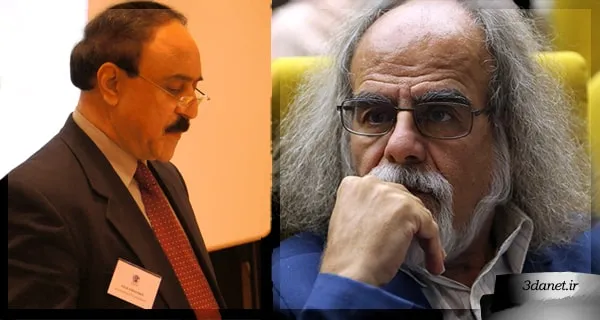
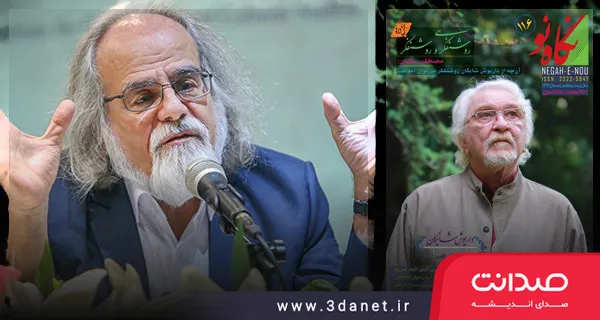
Nevertheless, noteworthy efforts in the realm of writing, translation, and thinking, and in seeking solutions and sharing the sorrows of the people of this land, especially outside the university, have been underway. One of those who, backed by painstaking inquiry, the knowledge he has accumulated from Iranian learning and spiritualities, and familiarity with the theories of Western thinkers, has girded himself for rethinking intellectual-ethical categories, cultural critique, and the phenomenon of intellectualism and its nature, is Mostafa Malekian.
Among the prominent aspects of Mr. Malekian's inquiries are a belief in the necessity and culture of dialogue, candor mixed with sincerity, the negation of unquestionable claims to the discovery of truth, and an acceptance of the importance of assessment and critique. These characteristics prompted me to share my reflections on intellectualism, and on his writing in the previous issue of Negah-e No (116, pp. 21-41), with him and the readers of Negah-e No. Malekian also has a piece in the same issue about the intellectual aspect of Dariush Shayegan's career, but he writes that since his "concern" is solely focused on "learning lessons," he does not point to the "weak points and negative aspects of Shayegan's views and opinions." It is unclear why Malekian has overlooked the point that one can also learn lessons from examining shortcomings. An examination of Malekian's assessment of Shayegan's intellectualism requires another occasion; here, I will confine myself to Malekian's aforementioned writing on "The Vice and Virtue of Intellectualism."
In Malekian's view, intellectualism is neither a job nor a profession, nor is it "cultivating interests" to satisfy "one's own desires or needs." Intellectualism is a kind of "art of education and upbringing" and has its own ethics, manners, and pathologies. The intellectual is "the arbiter and critic of the people's culture." Their work is "a kind of gratuitous giving and ethical living, the kind that addresses the reform of the inner realm, that is, the reform of the culture of each and every citizen of society." The presupposition of intellectualism is that "at least a more or less large part of the pain, suffering, torment, and harm that humans endure stems from their own culture, that is, arises from their own false beliefs, inappropriate feelings and emotions, or unreasonable desires." To eliminate the "wretchedness and misfortunes that have beset human life, one must reform both their external environment and their inner domain," but the intellectual "undertakes the reform of the inner domain." Unlike those who believe in the "primacy" of politics, economics, and culture and see the main cause of problems in political, economic, and cultural issues, the intellectual "considers a significant share of the problems and afflictions of people's lives to be caused by their own inner selves" and holds that humans suffer many of their pains and failures because some of their beliefs are false, or some of their feelings and emotions are inappropriate, or some of their desires are unreasonable, and therefore, one must strive to reform their beliefs, feelings, emotions, and desires.
Malekian holds that the intellectual discerns the truth or falsity of beliefs, the appropriateness or inappropriateness of feelings and emotions, and the reasonableness or unreasonableness of desires, and the way to reform them, "with the aid of the latest achievements of the human sciences and knowledge" and places these achievements in the service of reducing the pain and suffering of the citizens of their society. The difference between intellectuals and doctors, engineers, and managers is only that the latter "improve people's external environment, while intellectuals improve their inner domain." It is not necessary for the intellectual to be an expert in the human and social sciences; it suffices that they benefit from their achievements "to the necessary and sufficient degree." Malekian expresses regret over the deeds and words of Iranian intellectuals from over a hundred years ago to the present; that they have praised Iranians unreservedly, and considered them, by the misfortune of the times, caught under the "yoke of the oppression and injustice of malevolent, ignorant, corrupt, and incompetent rulers and statesmen" and deemed it their duty to "represent and speak for these innocent oppressed." In his view, the "more or less oppression and injustice of rulers" is undeniable, but "flattering" the people also prevents them from ambushing one of their greatest enemies, namely their own inner selves. In his view, as long as "false, erroneous, delusional, and superstitious beliefs" prevail, "one cannot expect or anticipate that with the change of a corrupt political system or a system of unhealthy economic relations, everything in this society will turn towards good and righteousness."
Malekian is a critic of "demagoguery," and his understanding of this phenomenon is: "Essentially, demagoguery is nothing but sacrificing people's needs and interests for their desires and whims, and approving, endorsing, and presenting to them whatever the people like, without examining its compatibility or incompatibility with their interest, and not being concerned that their interest, that is, their long-term and ultimate benefit, might be lost. The true intellectual is never a demagogue." In his view, the intellectual is also "never swayed by the masses," meaning they are also indifferent to the value judgments of the people; they avoid conformity with the crowd; as long as they believe themselves to be in the right, they show steadfastness and firmness; they "do not surrender their heart, mind, spirit, and intellect to any ideology" and consider "ideological thinking" to be a manifestation of the fact that "the person is not rationally independent." Malekian believes in the "non-obviousness of truth" and writes that ideological thinking "is nothing but the negation of the principle of the non-obviousness of truth and the assertion that truth is not only not non-obvious but, moreover, was discovered and proclaimed long ago by the founder of such-and-such ideology."
In Malekian's view, the intellectual must seek to ensure that people "understand" his words, but "absolutely must not seek that his views and opinions meet with people's acceptance, favor, and welcome. If people's rejection or acceptance becomes valuable and important to him, he descends and falls from the station of cultural judgment and the cultural education and upbringing of the people to the station of representing and speaking for them and, gradually, to the level of vulgarization and demagoguery." Nevertheless, in his view, despite disregarding people's "rejection and acceptance," the intellectual must, as much as possible, avoid "ambiguous, equivocal, and obscure speech." Scholars also "have no right to use equivocation and ambiguity." An intellectual whose words are "full of ambiguity, equivocation, and complexity is not a true intellectual." Intellectualism, apart from ethics, also has etiquettes, which are "precepts and rules" that guarantee or facilitate the intellectual's success; avoiding laxity and hastiness, perseverance and hard work, resorting to no weapon other than rationality and reasoning, and strengthening one's spirit of skepticism and self-critique are among them. Malekian emphatically states, "the true intellectual is only a teacher, educator, and guide to the people, nothing else;" he considers political activism one of the "afflictions of intellectualism."
* The Intellectual, Knowledge, and Truth
It appears that Malekian is mostly seeking a normative model of the intellectual. The role he delineates for the intellectual is not fraught with much rebellion or danger. He blends the intellectual's role with a prophetic one; the intellectual, without any expectation, is girded for the reform of human beings' "inner realm," but since he is deprived of revelation, he relies on modern sciences. The intellectual, according to Malekian, "addresses that part of people's disarrays and distresses for which they themselves are the culprit and cause; that is, their beliefs, feelings and emotions, and desires." Are people's beliefs, feelings, emotions, and desires synonymous with "disarrays and distresses"? How should one assess the role of structural conditions, problems, and deficiencies beyond human will and agential capacity? How should one gauge the impact of those conditions on people's culture and on their beliefs, feelings, and desires? It might be said that this is not the intellectual's task, but if the intellectual does not correctly grasp the roots and causes, how will he devise an effective remedy? Why should attention to politics, economics, and culture, and the transformation of structures that hinder the realization of human capabilities, and striving and acting to lessen the burden on people's shoulders, be considered incompatible with the desired intellectualism? Why should the intellectual's role be confined to the inner transformation of people and to education and upbringing? Reducing intellectualism to a technique or considering it akin to engineering and medicine (engineering and medicine of the soul) entirely ignores the cultural and critical dimension, and, in this writer's view, the civic-political nature of the concept of the intellectual.
Malekian considers the intellectual's task of recognizing "true" beliefs, "appropriate" feelings and emotions, and "reasonable" desires possible in light of utilizing the latest achievements of human sciences and knowledge. The intellectual "need only take enough from these fields, as required for changing and reforming human beings' inner selves, from specialists and experts, and use them to the necessary and sufficient extent for the cultural change and reform of the people." But how much is "enough" and "to the necessary and sufficient extent"? What groundwork is needed for this? In the age of specialization and the expansion of the scope of knowledge, how does the intellectual learn all these sciences and branches of knowledge to an effective degree and digest their achievements? Someone who considers truth non-evident, how does he measure falsehood, inappropriateness, and unreasonableness, and how does he definitively deem something false and something true? On what basis does he enumerate the distinguishing features of the "true" intellectual versus the false one, and upon what do his oughts and ought-nots rest? How has he arrived at this truth that the intellectual "absolutely" must not do such and such? How can he say that some have the right or do not have the right to do such and such? How does he know that some are misguided, and that certain ways of finding the path are insightful?
Is truth in human and social affairs, and in the realm of ethics, concealed, or is it concealed in all realms? If truth is not manifest, then why should the theory of its non-manifestation be considered a manifest truth? Can truth not be rendered more manifest through methodical inquiries? If we consider many truths to be non-manifest, will not the possibility of dialogue and mutual understanding become negligible? Claims to being in the right can be assessed. Some theories, or systems of thought, rely on scientific and empirical findings. Some can be more readily evaluated by rational criteria. Methods exist for recognizing justified and unjustified beliefs. Not all claims to being in the right possess equal value and validity, nor do they rely on equal sincerity and precision. The aim of anyone whose professional work is scientific inquiry, in its broad sense, and understanding, is to strive, backed by a truth-seeking conscience, explanatory theories, and methodical effort, to examine realities and data, and to grasp the whys and wherefores of matters as accurately and completely as possible. This work requires that one be insightful and skilled in one's scientific work, and also enjoy political immunity.
*Gratuitous Giving and the People's Interest
From Malekian's perspective, "one of the characteristics of the intellectual" is gratuitous giving. The intellectual has come to give the people what he possesses (such as knowledge, understanding, experience, wisdom), not to take from them what he lacks (wealth, power, fame, respect, reputation, popularity, and things of this sort). Altruistic motives cannot be ignored, but categories such as benevolence and "gratuitous giving" must be scrutinized. The expression "gratuitous giving" is an unquestioning endorsement of the claims of those who consider themselves above any motive except generosity and goodwill. This expression reflects a magnanimous conception of the kind-heartedness, open-handedness, and self-sacrifice of sages who consider themselves, without any expectation, reward, or obligation, as sympathizers with the misguided, and deem their pure realm and the ethereal horizons of their abstemious lives entirely removed from the temptations that beset the everyday existence of the earthbound denizens of the street and marketplace. The expression "gratuitous giving" is incompatible with the analytical categories of the social sciences.
Attachment to otherworldly reward or recognition and renown in this world are among the principal motives for actions considered benevolent or gratuitous. The profit or reward of these actions is symbolic; it soothes the conscience, engenders a feeling of satisfaction. The inner contentment resulting from benevolent steps is no small reward. One can reasonably consider the desire for esteem and attachment to name and renown, and to increasing the number of disciples and readers, as important motives of intellectuals. The attention and admiration that the intellectual's work stirs up is his reward. Reward is not always tangible and material. The intellectual's principal reward is often symbolic; it is the pleasant feeling that enables him to convey his words to the ears of others and to present what he says as worthy of attention. Being counted among the renowned, the "enduring figures," and the cultural leaders of society is a reward that has tangible consequences. Attaining this position is the achievement of those who imagine they have spent their lives self-sacrificially and gratuitously fostering culture. The pursuit of knowledge and thought is accompanied by toil and hardship, but its fruit is also joy and pride. Successful seekers are appreciated in the world of spirituality and by discerning people. After death, too, the name and works of many, or a number of them, endure. A good name after death is no small motive. Few benefactors do not think of a good name after death and of escaping oblivion.
One of the thought-provoking aspects of Malekian's writing is his conception of "the people," which is sometimes not easily distinguishable from "the common folk." The intellectual, in Malekian's view, must keep himself above the reactions of the people and be neither "vulgarized" nor a "demagogue." He must "have no expectation or anticipation of acceptance from the people, and fundamentally lower the wick of any kind of expectation and anticipation from the people as much as he can. The true intellectual, while out of compassion and love for human beings, whatever is truth and
He presents it to them in the most comprehensible expression he deems in their interest, does not await their acceptance, favor, or reception, and therefore does not turn from truth to falsehood and error, nor from the interests of human beings to their preferences." Let us set aside the category of "truth"; the fundamental question here is: What enables us to grasp the needs or interests of others better than they themselves can? What characteristics distinguish our claims from the paternalistic claims of others? By what pretext does an intellectual who considers himself free from ideology grant himself the right to claim he has discerned the "interest" of the people, or to say that attention to the "needs and interests of the people" must not be sacrificed to their wants and preferences? Does this not mean that the people are utterly incapable of understanding their own interest and that "we" intellectuals must shoulder this task? What should be done if the people hold a different view about their own interest, and if they do not accept the intellectual's judgment and his reformist, awakening claims? From Malekian's perspective, the intellectual is the "judge of the people," not the "representative and spokesperson" of the people; in the capacity of judge, he is not chosen by the people, he has appointed himself; but if the people pay him no heed, how can he influence them? What should be done if his judgment conflicts with the people's judgment about themselves?
What is meant by "the people" and "the common folk," and what are the analytical differences between the two categories of the common folk and the lower classes? The category of "the common folk" may have sociological utility in some instances, but its meaning must be clarified or more thought must be given to its analytical applications. There are those who, often hypocritically or tendentiously, try to present themselves as representatives of the lower strata of the people, or as devoted to their interests and preferences. Nevertheless, we need more pause and reflection in the use of expressions such as "common folk," "demagogue," and "vulgarian." Does "common folk" refer to the urban masses and the lower classes of the streets and bazaar, or does it also encompass villagers and nomads? What effect do differences of gender, generation, and occupation have on this category? Does it refer to the shapeless mass or to those who have not been able to attend school or university? Does it refer to those who are more vulnerable, who more readily submit to hypocrisy and falsehood, and who are more easily provoked or trained? Does it refer to those who more readily surrender their hearts to anger and malice, or who seek to improve their lives through the pretext of certain beliefs or slogans? Perhaps heads empty of thought are more easily filled with malice, but not every heart full of malice is empty of justified worries, thoughts, and hopes. In examining wrongful behaviors, individual responsibility cannot be ignored, but one must not overlook the conditions that make deceit and the evasion of responsibility possible or prevalent. What commonalities do the Iranians of the Constitutional era share with the people of Iran today? Do they have similar difficulties and desires, and can they be considered in need of identical guidance? Furthermore, on what basis can the intellectual consider himself in every respect above the problems he believes entrap "the people"?
All practitioners in the realm of culture owe their opportunities and their cultural life-context to the toil and suffering of the lower classes in the fields, factories, workshops, roads, and deserts; those who have enjoyed but a meager share of their land's blessings. Those who have had the fortune, opportunity, and means to study a lesson and acquire knowledge must not look with contempt upon those who have not had such fortune and means. Those who consider themselves intellectuals or scholars must not ignore the experiences and practical knowledge of the lower classes, their awareness of the affairs of their own lives, and their capacity for agency, nor claim mastery over them, nor deem themselves entitled to discern and determine their interests. It is more fitting for the intellectual, drawing on the position he holds in society, to defend what he deems right and just, and to leave the claim of saving the misguided and guiding the ignorant to others. One must not neglect the point that the "enlightened" despots of history, and other claimants to the leadership and benevolent guardianship of the people, have had no pretext other than claims of expediency and salvation-seeking. The resonance of the statement that the people lack the ability to discern their own benefits and interests, and the capacity to represent themselves, is unpleasant.
Considering oneself the people's comforter, well-wisher, and guardian of their best interests, without regard for their own wishes, views, and perceptions of their own good and interest, is incompatible with the foundations of modern thought and the concept of citizenship. Claims of this sort disregard the principle of equal human dignity. The belief that human beings enjoy equal dignity has its roots in the thought of Jean-Jacques Rousseau and Immanuel Kant. This belief, which entails the principle of moral equality and equal rights for human beings, is the essence of the concept of citizenship and the foundation of democratic thought. Undoubtedly, both abstract condemnation and abstract praise of "the people" are misplaced. Like Montesquieu, we must avoid considering free citizens to be virtuous in every respect. However, a stable and institutionalized democracy, more than any other political regime, is compatible with the growth of civic virtues and the reduction of grounds for domestication and "vulgar" behaviors. In the absence of freedom, we will all find ourselves insignificant and bewildered, and will be more inclined toward dissimulation, flattery, and hypocrisy. Disregard for the people's reaction cannot be combined with the expectation that our words will have an effect on them. Despite the recommendation to disregard the people's reactions, Malekian desires that the "true intellectual" write simply even about complex issues and that his speech be at the level of the people's "understanding," because he "has a tremendous need for the people's trust." How can disregard for the people's reaction be reconciled with the necessity of gaining their trust? One should not deliberately write in a convoluted manner, but there are discussions, and complex realities, that must be reflected with the utmost precision. They cannot be rendered simply and made easily accessible. Fundamental issues must not be vulgarized and reduced to journalistic, salon, and television debates. This reduction is the mission of mass and "social" media; with the help of these media, everyone today has become capable of conveying their message to ears, and, far more than they read and think, they write and speak. Not knowing many subjects is better than knowing them incompletely and incorrectly. One of the tasks of serious intellectuals is to understand and analyze complex social matters based on methodical depth and relying on modern humanities and social sciences. This work must not be commercialized.
Malekian's writing begins by commemorating Mostafa Rahimi, "an intellectual who sat crooked but spoke straight," yet the role Malekian has delineated for the intellectual is incompatible with what distinguished Rahimi's intellectualism. Those, including this writer, who have had the fortune to know Rahimi closely, and all those who have read Rahimi's writings, know that his work went beyond individual pedagogy and moral cultivation. What highlighted Rahimi's merit, and his courage as an intellectual in Iran's recent history, was rooted in his social character and modern intellectual attachments. Neither the clamor of the devotees and heralds of native traditions and Asian "spirituality" excited him, nor the alienated lamentations of the proclaimers of the West's estrangement. Rahimi was an intellectual, a socialist, and devoted to the ideals of the national movement, and a fierce critic of political autocracy and imperialism. He remained steadfast in his advocacy for social justice; he was ashamed of "owning a car in the face of people who have nothing, and also in the face of the queues of bus passengers"; he wanted to remedy this "shame," and saw the remedy in "great service" to the people. His speech was free from the taint of arrogance and "gratuitous" fantasies. Rahimi's most important intellectual concern was the relationship between intellectuals and the people and linking them together. His hope was that the intellectual would find a place "in the embrace of his nation." In his view, the intellectual's going toward the people "is not an act born of dignity and magnanimity, but rather born of an authentic need: corruption, lies, betrayal, ruin, and putrefaction have so engulfed the upper classes that there is no space to breathe." Intellectual ideals have no environment for cultivation and fruition except among the people. Rahimi's counsel was that "silent intellectuals, mission-escaping intellectuals, intellectuals absorbed in miniature-making, intellectuals playing with chains, intellectuals who have not found a source of being, if they cannot grasp the nation's strength, should at least not insult their nation."
* Culture, Democracy, and Intellectualism
Malekian considers the "problem" of society to be "the culture of each and every citizen." But culture, including cultures themselves, are collective phenomena. An approach that relies on methodological individualism does not advance cultural understanding very far. Culture is a mixture of the legacy of the past and present-day learnings, acquired and internalized at home, school, in the streets and alleys, and under the shadow of propaganda tools and media; familial, class, and ethnic ties, the exigencies of wealth and poverty, and social standing have a decisive effect on it. Culture must be viewed from the perspective of anthropological and sociological discussions and from a historical viewpoint. Furthermore, cultures should not be considered (like Johann Gottfried Herder and Johann Gottlieb Fichte) as impenetrable fortresses and closed, unique realms with clear and stable borders. Cultures have been formed in contact with one another. Human needs, too, despite cultural differences, have become increasingly similar. As the American theorist Martha Nussbaum says, for people to be able to cultivate their talents and realize their human capabilities, there must be provisions and arrangements in place that have universal measures and do not depend on a specific culture or land.
Rousseau, in distinguishing between "savage man" and "civilized man," said that savage man lives entirely within himself, but civilized or social man always lives outside himself. The measure of his life is the opinion and belief of others. His feeling about his existence and importance is rooted in the judgment of others. In modern societies, the inside and the outside cannot be separated. The inside is a reflection of the outside. A rich cultural life has a greater symmetry with inner refinements, but civilized life depends on freedom and external, capability-enhancing structural possibilities. Perhaps this is why, from Shafi'i Kadkani's perspective, being forced into an inner life is nothing short of torture.
The transformation of the present and future of this land depends on these very people, with their good and bad characteristics and their abilities and inabilities. Every building is rooted in its own water and soil and is raised with the available stone and brick. Moreover, it is not only benevolent "free-givers" in the role of reformers and enlighteners who are thinking of engineering or "reforming" the inner selves of the people. Many other forces are engaged in this task, or interfere in it, and rely on traditions, customs, and beliefs, or undertake to invent them. Neither governmental and non-governmental propaganda, nor domestic and foreign broadcasting, nor the exigencies of fashion, status, taste, and norms arising from globalization can be ignored. With what resources does the emancipated intellectual want to compete with the extensive propaganda tools and facilities at the disposal of the holders of political and material power, and with modern media? The imagination of an ideal world that provides the opportunity for the unblemished rational education of the people under desirable conditions is fanciful. Inspired by Bertolt Brecht, it must be said that we cannot overthrow the people we dislike and choose another people. We cannot dismiss them as insignificant. We cannot ask the throngs of the unemployed and helpless, and the masses of the discontented, to remain patient until the blessed sapling of cultural cultivation and the refinement of the people's morals bears fruit.
Adorning the soul and refining one's own and others' moral character is a worthy and praiseworthy task, and one of the beneficial intellectual endeavors, but to consider this as the sole definition of "true" intellectualism is neither acceptable nor justifiable. In today's common understanding, an intellectual is someone who contemplates and strives for the elevation of civic virtues and the improvement of people's collective living conditions. They see the improvement of people's inner state as resulting from the enhancement of their quality of life, their enjoyment of rights and capabilities for realizing their potential, and a dignified existence under political, social, and cultural institutions based on modern human norms and the requirements of civic culture. The enjoyment of civic virtues, and what is necessary for civic life, is not the product of the advice of ascetics or following the guidance of the benevolent; these must be learned through persistence and continuous trial. To establish a democratic system, one cannot wait for the transformation of human beings' inner realm. Above all, the experience of grappling with democracy, living in the realm of freedom, and being free from the dominance of fear, coercion, and conditioning is necessary. Overcoming spiritual abjection and the degradation resulting from being a subject becomes possible when bowing before the lords of power, proximity to them, flattery, and begging are not tools for survival or advancement. Breathing for a while in the air of freedom and the institutional security resulting from a deeply rooted democratic system can polish the soul, eradicate baseness, and cultivate a spirit of liberality far more than years of cultural cultivation by moralizing preachers. Adornment of the soul and peaceful coexistence are not achieved by submitting to abjection and slavery. As Baruch Spinoza, the seventeenth-century Dutch philosopher, rightly noted, the consequence of political tyranny is the enslavement of the people, not peace and tranquility. Peace and tranquility are the empathy and consensus of the people, not merely the absence of war and bloodshed. Democracy, and its political culture, empowers people to feel a sense of self-governance and responsibility, to take their right to judge and choose seriously; to confidently select worthy individuals and approaches from among various options, candidates, and volunteers to represent them and govern the country; and to correct their political errors without turmoil and violence. This ability, awareness, and the sentiments associated with it are only obtained from democracy itself.
Even if the theory of the protesting intellectual has subsided, the theory of the intellectual as a critic of power, independent of its pillars and agents, still stands firm. Our society needs reformers and teachers of virtue and moral conduct—those who strive to transform the inner realm of the people; but it also needs those who contemplate the transformation of socio-political and cultural structures, and see the path to collective well-being in this, and in negating the structural grounds for the perpetuation of oppression, injustice, and exploitation. Which group is more needed is not a question that individuals like this writer or Mr. Malekian should answer or claim exclusively for themselves. The answer must be given in the public sphere. In modern society, the arena for discerning and determining the public good and interest is civil society and the dialogues of citizens who have found the opportunity to inform themselves about what is connected to their collective destiny. One of the duties of intellectuals is to help make the dialogues in this arena more fruitful. The study of human life has fundamental differences from the study of the life of birds and reptiles. Humans themselves also have opinions about their own meanings, ends, interests, benefits, aspirations, and motivations. In studying and understanding them, we cannot ignore their own perceptions and interpretations of their lives.
A distinction must be made between the intellectual as a person and their social role. Their role takes shape in a specific connection with particular social conditions. Sometimes the exigencies of the social role overshadow personal characteristics. An intellectual who is bound by social responsibility and the requirements of their role is concerned about the fate of their society. They do not take a step that would jeopardize their personal dignity and, more importantly, their social role, position, and efficacy. The intellectual, as someone who has the opportunity for more systematic theoretical reflection and inquiry than others, can, by virtue of the moral credibility and standing they have attained, make their views and words worthy of attention. It is for this reason that their considerations and concerns provoke greater reflection. In this position, they must both be a critic of cultural elitism and themselves overcome the temptations of succumbing to it. They must also confront anti-intellectual populist tendencies. Cultural elitism, as the French sociologist Pierre Bourdieu (1930–2002) has shown, endangers the values and foundations of democracy. Tendencies that target intellectual approaches, values, and standards (as we have seen in populist movements in America) and, as we are witnessing in the Trump era, have destructive effects on democratic foundations and values.
* Ideology
Malekian condemns "ideology" and "ideological thinking" outright, considering them incompatible with intellectual independence and the love of truth, and equating them with "false consciousness" and the "rendering of certain views as unquestionable." Malekian's warnings about ideology are not misplaced; however, ideology has a broader spectrum of meaning than what he has presented. Moreover, the intellectual cannot, merely by opposing the ideological outlook, ignore the phenomenon of ideology and its socio-political functions. "Ideology" is one of the most complex and contentious concepts in the social sciences today, and one must attend to these complexities when employing it. The word ideology, since its coinage in the late eighteenth century, has become a concept with multiple semantic loads and has had descriptive, analytical-explanatory, and pejorative uses. In some instances, it has been equivalent to an intellectual tendency or worldview; in others, a positive meaning has been intended: a creed that increases the solidarity of groups or classes and galvanizes them to strive for their desired political goals. Some have considered all political beliefs or ideas to be ideology. In many cases, people have called the intellectual approach of their opponents ideological while considering themselves free from such taints. For most right-wingers, ideology has meant nothing other than leftist attitudes.
The concept of ideology is, in some instances, linked to the justificatory contexts of an oppressive system. It sometimes implies that people have been compelled to see the world from the perspective of their rulers and in the same way as them. It sometimes indicates that correct ideas have been put to wrongful uses. Ideology has, in some cases, been considered synonymous with baseless, misleading, and harmful notions, and implies beliefs that diminish the capacity for critical assessment and perspective, prevent their adherents from a correct understanding of realities, and impose fanciful perceptions upon them. The epistemological foundation of all ideologies is not equally shaky or flawed. Their compatibility or incompatibility with the requirements of common sense also varies.
Ideology, from Karl Marx's perspective, is an amalgam of beliefs and conceptions shaped by the material conditions of life, through the lens of which people comprehend their world. The ruling beliefs in any era are the beliefs of the ruling class, and any class that holds material, economic, and political dominance over society also holds ideological dominance. Marx's followers, and those influenced by him, have employed ideology—one of their principal descriptive-analytical categories—in various ways. Stuart Hall (1932–2014), the Jamaican-British theorist and a founder of the New Left Review, equates ideology with the mental frameworks that different classes and social groups use to understand, define, and explain the workings of society. In his view, the concept and theory of ideology help us grasp how certain ideas come to dominate the mentality of specific groups, how they bind them together and enable them to perpetuate their dominance over society, and compel the masses to acquiesce to their subordination. At the same time, the concept of ideology aids in understanding the process by which new forms of consciousness, and a different understanding of the world, take shape and incite the masses to act against the existing social order. Ideology can serve both as a pretext for justifying domination and repression, and as a resource for striving for liberation from adverse socio-political conditions.
Another concept linked to ideology is "false consciousness." This expression is not found in Marx's writings; Engels alluded to it, but it was Georg Lukács, the Hungarian theorist (1885–1971), who turned it into one of the analytical concepts of the Marxist perspective. Lukács held that the beliefs appropriate to the objective conditions of workers' lives can be identified. "Class consciousness" comprises the ideas, feelings, and inclinations that workers, by virtue of their class position, ought to have. If workers are in thrall to beliefs incongruent with their class situation, they are afflicted with "false consciousness." Today, "false consciousness" is understood to entail beliefs that serve to preserve and justify domination, but those who adhere to them are unaware of this fact. The function, origin, or motives for employing these beliefs are false. The "false consciousness" of the subordinate is a consequence of the ruses and contrivances stemming from the power of the dominant, which cause the subordinate to acquiesce to a situation incompatible with their true interests, yet they lack the possibility of recognizing these interests and are thus content with, or do not complain about, their fate and their share of social life's blessings. One can, reasonably, argue that workers' support for parties that are mindful of their interests is more beneficial to them than backing right-wing parties. If workers support right-wing parties, they can be considered afflicted with false consciousness. But identifying this is not sufficient. It must be explained and its causes understood; these causes cannot be reduced to the characteristics of their individual temperaments.
Karl Mannheim, another Hungarian theorist (1893–1947), who was influenced by Lukács, took a step forward in advancing the study of ideology and the impact of social conditions on norms and knowledge by proposing the theory of the "sociology of knowledge." His aim was to examine how, following changes in social conditions, the norms that were products of them become incompatible with them, and the knowledge and historical perspective linked to them are transformed. From Mannheim's viewpoint, we understand and interpret the world only through the lens of our culture, social position, interests, and ideologies; we cannot seek ultimate truth but rather seek to understand the truths, norms, and modes of cognition that history has shaped. In Mannheim's view, knowledge can be considered distorted and imbued with ideology if it disregards new findings and realities or attempts to conceal them. Mannheim emphasized the function of ideology in covering up social realities and justifying and stabilizing the existing social order. He employed this concept in contrast to "utopia," which, in his opinion, consists of wishful fantasies that fuel the actions of opponents of the status quo and seek to transform the existing social order.
But theorists who have deemed the existing economic-political system in Western societies desirable have only considered pro-change ideas as ideological and have portrayed the term ideology as synonymous with tendencies advocating social justice. Daniel Bell (1919–2011), the American sociologist, although he considered himself a socialist in the economic sphere, introduced the theory of the “end of ideology” and wrote that wise people no longer pay attention to political ideology; he and Seymour Martin Lipset (1922–2006), the American sociologist, said that the problems of administering advanced industrial societies have been resolved; the status quo has achieved the desired stability; the well-developed society is nothing beyond what we have already attained; the age of ideology, that is, pinning hopes on socio-political alternatives other than capitalism and the political order based upon it, has come to an end. The American political scientist, Francis Fukuyama (b. 1952), also, following the collapse of Soviet communism, introduced a similar theory of the “end of history”: humanity has no access to any alternative other than capitalism and the democracy reliant upon it; this represents the final stage of socio-political development and the inescapable destiny of humanity. The ideological aspects of such theories are evident.
Spinoza held that even under the freest conditions, the dominance of illusions would persist. In his view, the belief that people can be motivated to live solely by the light of reason is nothing more than naive fantasy. Louis Althusser (1918–1990), the French Marxist theorist, following Spinoza, held that even in a communist society, people would still remain captive to ideological fantasies. In his view, all human societies, for their historical life and breath, require the “secretion” of ideology. Althusser considered ideology to be the mythical or imaginary reflection of realities in the realm of the unconscious. He considered its social function to be the binding of human beings within society and held that ideology, in every period of human history, is a necessary factor for social cohesion. Althusser also paid attention to the link or relationship between ideology and “discourse”: how ideas are internalized, and how we, without knowing it, think within the framework of categories that compel us to think within their confines.
In France, a long-standing intellectual tradition, from Rousseau onward, has held that social cohesion is the product of belief, not reason and will. Rousseau spoke of “civil religion.” Auguste Comte (1798–1857), the social theorist and founder of positivism, created the secular creed of the “Religion of Humanity.” Alexis de Tocqueville (1805–1859), the historian and sociologist, considered dogmatic beliefs a necessity for social order. Émile Durkheim (1858–1917), one of the pioneers of sociology, paid special attention to the link between religion and social life and cohesion. His emphasis was on the role of religion in social integration and regulation and in giving meaning to life through a sacred realm, institutions, values, and rituals that ultimately have their roots in society itself. He considered the emergence and legitimacy of religion to be the product of moments of collective effervescence, regarded religion as society’s tendency to worship itself, and, in this sense, saw it as a permanent part of social life. From the perspective of thinkers in this tradition, in contrast to the Utilitarianism prevalent in England, society can never be the outcome of rational calculations and the self-interested considerations of individuals. Even a socialist theorist like Régis Debray (b. 1940) considers the cohesion and identity of any human group to require a foundation of belief. Debray views Marxism, in the sphere of political outlook, as afflicted by fundamental shortcomings. In his view, one of these shortcomings is the neglect of nationalism. Nationalism, due to its reliance on evocative symbols and myths of the past, and the eternity and glory of the nation, and the esteem for its martyrs, has been a more powerful historical force than socialism, which relies on rational perspectives. Nationalists, in Debray’s view, blend concepts like the “sacred” with soil and water or borders and homeland and show themselves to be more aware than others of the importance and necessity of emotional bonds and the need for affective belonging to a specific society and culture. In Debray’s view, political reason, in contrast to pure reason, pays particular attention to beliefs. Belief is linked with the collective spirit, and consequently with political existence. Thought without action is possible, but action without thought and belief is not; only ideology or myth can lead to collective cohesion and serve as a motive for action.
One should recall the thought-provoking remark of Oscar Wilde (1854–1900), the Irish-English poet, satirist, and writer, who said that anything that takes the form of religious belief becomes more believable. An idea that is accepted and fosters a conviction more easily conceals its own weaknesses and dons the borrowed garment of truth; denying and refuting its truth becomes more difficult. Certain secular tendencies, too, are often interwoven with rites, rituals, and stirring rhetoric; to enhance their persuasive power and emotional appeal, they have assumed religious iconography; they have confronted believers who, with some commotion, have left their circle of fraternity with the fate of despised apostates. These beliefs have adorned themselves with redemptive expressions and promises; they have claimed to have discovered truth; they have invoked the “evolutionary” movement of history or the inescapable “logic” of progress. These claims have increased their allure and acceptability, rendering them more believable and effective under specific historical conditions. Perhaps this is why the theory of political theology advanced by the German thinker Carl Schmitt (1888–1985) has attracted so much attention. Schmitt held that the major concepts of the modern theory of the state are secularized theological concepts.
Any social thinker who employs the concept of ideology must bear in mind its complexities and understand the sociology of its formation and efficacy. The principal question concerning ideologies, regardless of whether one opposes or agrees with them, is why they take root in minds and attract multitudes. Exploring the function of ideologies does not preclude evaluating their content. This exploration does not lead us to regard the claims of various ideologies to discover truth or their attachment to it as equally baseless. Fascism, socialism, and liberalism are all ideologies, yet they possess qualitative differences and rest upon different epistemological and ontological conceptions of the human being. Socialism and liberalism rest upon the intellectual heritage of the Enlightenment, whereas fascism rests upon beliefs opposed to the Enlightenment; fascism is rooted in myths more than other ideologies.
Intellectualism, by virtue of its connection to critique and questioning, negates authoritarianism, yet the claims of intellectualism are not exempt from reaching for a kind of intellectual authority. Reconciling the praise of intellectual independence with the effort to persuade others to follow intellectuals intellectually is no easy task. In the realm of politics and society, authoritarian tendencies have relied on the belief that the essence of humanity is mingled with evil. Man, who is inherently wayward and wicked, must be bridled and his instincts curbed. The symbols of political authoritarianism have been the yoke and the whip, whether in real and tangible form or in metaphorical imagery. Intellectual authoritarianism has likewise manifested itself in the forms of “cultivation of thoughts,” “cultural revolution,” “directive” sermonizing, indoctrination, propaganda, and the like. This kind of authoritarianism can be an instrument or the crystallization of symbolic violence. Certain functions of ideology are linked to the role of symbolic violence, as reflected in the thought of Bourdieu. Symbolic violence is the imposition of particular intellectual categories upon subordinate people, and influencing their mentality and epistemic capacities in such a way that they perceive the existing social order as just. In some respects, the effect of symbolic violence, owing to its impact on individuals’ mental and epistemological categories, is greater than the effect of tangible, naked violence. The justifying pretext of authoritarianism is that people must be protected from themselves and their fellow human beings; their excesses, anger, violence, lusts, and clamor must be curbed; they must be guided to the right path. The other side of this coin is the endeavor to tame, keep ignorant, entertain, and domesticate people. The primary function of today’s propaganda apparatuses is nothing other than this. The modern state, in dominating and surveilling people, intervening in all affairs of life, and especially controlling their thoughts, possesses capabilities that have existed in no other period of human history. Successful states are those that possess the capacity to manufacture consent and can reconcile people to their deprivations, presenting their dominance as normal and the result of the people’s will and consent, and making them believe that this is so.
Voltaire said that superstition sets the world ablaze and philosophy pours water on that fire. We know what Voltaire meant by superstition, but in our time determining what is and is not superstition has become a contentious matter. The entanglement of superstition with power and technology has fueled new challenges. Many of those caught up in superstition bestow pleasant names upon their beliefs. Advocates of tolerance or cultural pluralism also refrain from offending this or that person on account of their beliefs. One of today's difficulties is that the negation of beliefs is equated with the disparagement of those who adhere to them. This makes cultural and social criticism difficult.
The record of those claimants to the guardianship of truth who serve power and act as agents of its justificatory myths must be examined more rigorously, but one cannot expect them to have the concern to accept their own untruthfulness. Cultural and social criticism is impossible without a more or less clear conception of which beliefs rely on superstition, myth, and similar fancies. On the other hand, one must not overlook the fact that as long as fancies and myths stir multitudes of people, and as long as such phenomena are efficacious, rational attitudes cannot replace them or confront them effectively. The prevalence of superstitious, fanciful, and illusion-fostering beliefs in any society is a manifestation of the power of the forces and interests that have been engaged in advancing them, and stems from conditions that have fueled the need for such beliefs and rendered them acceptable. The mental horizons of any people are shaped by the historical conditions and socio-political exigencies of the era and the land in which they live. The fundamental alteration of those horizons depends, more than anything else, on the transformation of the conditions that have made them efficacious.
In a broader perspective, one cannot ignore the fact that for survival, adaptation to their surroundings, coping with crises and misfortunes, and individual or group emotional needs, human beings have turned to attachments that are incompatible with the conventional calculations of instrumental reason. This very fact caused Romanticism, which took shape in reaction to the ideas of the Enlightenment era, to possess great appeal. The persistence of attachment to myth stems from the fact that rationality cannot, in all instances, answer human needs. The place of passion and rapture, and of intuition, emotion, and devotion, especially in the realm of privacy, the domain of personal bonds, and the sphere of the need to bestow meaning upon life, must not be overlooked; the passion for rational cognition must not remain aloof from recognizing passion and rapture.
Nevertheless, the intellectual, without entertaining the fancy that one can live in a world free of fancies, must remain attached to the ideas and values of the Enlightenment era and their correct understanding. In the public sphere of life, they must advocate beliefs rooted in rationality and the rational experiments of humanity—beliefs to which attachment does not lead to the harm, disparagement, and elimination of others. Such beliefs cannot be evaluated solely by the measure of pure reason; they must be measured by civil norms worthy of the dignity and honor of humanity, and more importantly, by the measure of conscience. Conscience is the most mysterious manifestation and the most wondrous indicator of normative humanity. The guidance of conscience is to refrain from that which one cannot openly confess or take pride in. Mark Twain, the American writer and humorist (1835–1910), said, “A clear conscience is a sure sign of a bad memory.” It is better, with a strong memory, and vigilantly, to have a clear conscience; to treat others as we expect them to treat us; and not to demand of others adherence to that to which we ourselves have not been attached.
Past societies resorted to myths to justify or legitimize their social order, institutions, and values. Contemporary societies are not free of myths that serve similar functions. One of the questions that Bernard Williams (1929–2003), the renowned English philosopher, posed was: Can we hope to be committed to an ideal for founding a society worthy of living in that does not rely on myth? Reflecting on this question is among the great tasks of the intellectuals of any society. If we measure the state of today's world by the standard of reason, we will arrive at nothing but pessimism and bewilderment. One can only embrace optimism in the shadow of will. But it is better to surrender neither to bitter-minded pessimism nor to simple-hearted optimism. Thinking is an important endeavor, but one must also reflect on the contexts and requisites for the fruitfulness of rational inquiry, as well as on the importance of tolerant perseverance and courageous steadfastness.
The endurance of any culture is rooted in its dynamism, generativity, and expansiveness, and in the breadth of the ground it provides for rethinking, questioning, assessment, and critique. Critique has no connection to praise and obeisance, but if it falls into the vortex of aggression and personal mudslinging, it is not only this or that individual who is harmed; intellectual ethics and civic culture become sickly and half-dead. The hearts of critical thinkers must themselves be safe from dossier-fabrications, labels, nonsense, and the harms of silent scorpions. The mainstay of the fruitfulness of all endeavors is devotion to freedom and its requisites. The common, limited conception of freedom, which is nothing more than the removal of obstacles, is insufficient, yet it is a fundamental necessity. One must be able to speak one's word fearlessly, backed by truth and conscience, whether it is deemed permissible or not, whether it is heard or remains unheard.
Across the history of this land, thinkers have always been anxious: anxious of the wrath of sovereigns, the fury of holy warriors, the overreach of the short-sleeved, the clamor of the credulous or the hirelings. How many chests have been targets of the night raids of the dry-brained and fiery-tempered; how much dust has been thrown in the eyes of truth; how many scholars have, at the threshold of power, inevitably bowed their heads at the doorstep of servitude or submission. According to the account of Nizami Aruzi of Samarkand, Sultan Mahmud, the Ghazi of Ghazna, told Abu Rayhan Biruni: "Speak according to my desire, not according to the sovereignty of your knowledge." As long as the echo of this command is heard in the dark chamber of this land's history, every thinker bears a heavy burden: to bring to fruition this freedom—to speak according to the sovereignty of one's own knowledge and conscience, not according to the desire of the commanders.
.
.
The Reign of Science in the Realm of Conscience
An Essay on Intellectualism, Ideology, the People, and Malekian's Conceptions
Source: Issue 117 of Negah-e No Magazine
Author: Fakhreddin Azimi
.
.
Related Content:
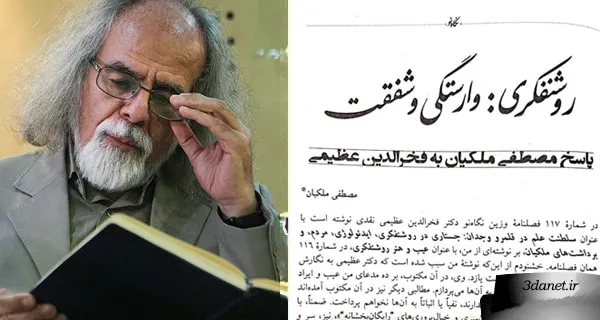
Intellectualism: Detachment and Compassion; Mostafa Malekian's Response to Fakhreddin Azimi
The Vice and Virtue of Intellectualism
.
.
Discussion0 comments
No comments yet; let yours be the first voice.