Religion
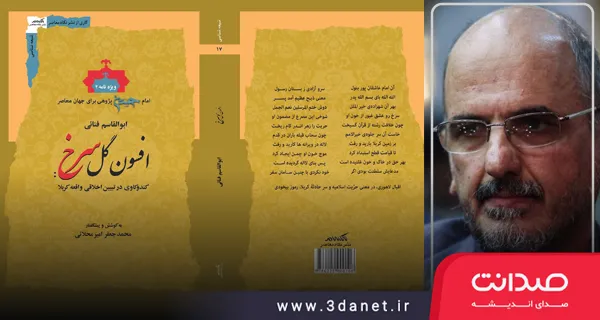
The Spell of the Red Rose by Abolghasem Fanaei
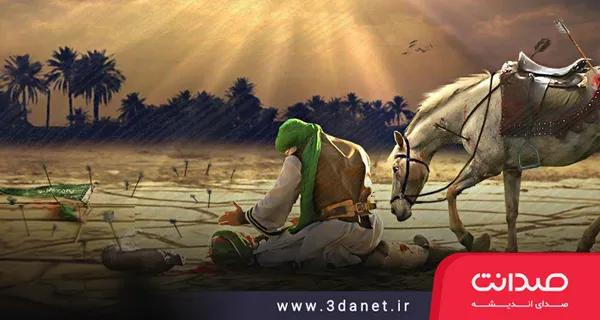
The ideas of Iris Murdoch and David Cockburn have raised key questions about the life of Imam Hussain (AS) and the sorrow-laden identity of Shiism. Abolghasem Fanaei's book The Spell of the Red Rose offers original responses to these questions in the contemporary world.
The theories of two contemporary thinkers, Iris Murdoch and David Cook, pose two key and anxiety-inducing questions for contemporary scholars of Imam Hussein. Murdoch believes that the general outlook of contemporary cultures toward ethics and normative schools is crisis-oriented; that is, people turn to ethical schools only to resolve crises in their private or social lives; otherwise, they have no concern for ethical reflection. Now, a Shia Muslim may ask themselves whether, in principle, the conduct and school of Imam Hussein (AS) in the concrete life of the present generation is considered merely for resolving a crisis, such as remedying an injustice; or whether it is also a source of reference and use for a non-crisis situation and for transcendence?
David Cook, a contemporary scholar of martyrdom, has an original point regarding the approach of Islamic denominations to the phenomenon of martyrdom. He says that for the Sunnis, martyrdom is a joyous matter, while for the Shia, it is a sorrowful one; and for this reason, the Shia make the martyrdom of their Imam the subject of historical mourning. At the same time, the martyrdom of the Master of Martyrs, namely Hazrat Aba Abdillah al-Hussein and his companions—which is the subject of very extensive mourning rituals in the Shia world—plays, in a way, a very major role in giving identity to the Shia community. In this case, a paradox is formed wherein, on the one hand, the martyrdom of Imam Hussein is a requisite for a historical identity for the Shia, and on the other hand, it is considered a regrettable matter. Is a sorrowful identity justifiable and defensible?
In other words, considering that if Imam Hussein and his companions had not been martyred, the identity we know today as the Shia world would have had a different form, content, and meaning, do the Shia view the tragedy of Ashura as a random incident, or do they consider it a necessity due to the emergence of the highest example of sacrifice and selflessness by the Imam and his companions?
The above questions, at the same time, bring with them a constellation of other questions: Through the lens of which ethical school does the tragedy and sacrifice of Karbala find its best expression and meaning? Which of the ethical systems—consequentialist, deontological, intentionalist, virtue ethics, method-oriented, capacity-oriented, rights-oriented, Sharia-oriented, religious or extra-religious ethics, and other schools—can better explain this tragedy and sacrifice? To what extent has the philosophy of mourning in Shia history been instrumental, and to what extent has it been authentic and non-instrumental? In the tragedy of Karbala, were two individuals pitted against each other, or two schools—represented by Imam Hussein and Yazid? In this historical confrontation, where does the equation of the relations between power, justice, and rationality stand? What lessons does the event of Karbala hold from the perspective of violence studies and the ethics of war and peace? What are the consequences of shifting and transforming the analytical perspectives and views on this event from conventional extra-religious rationality to ethical, emotional, intra-religious, ritual, and jurisprudential foundations? What meaning, message, and consequence does the tragedy of Karbala have in the equation of the relations between life, dignity, and freedom?
Answers to the above questions are possible through several ways. First, through referring to the conduct and words of the Imam himself and his companions during the event of Karbala; and second, through the subsequent analyses of scholars of Imam Hussein and Ashura, relying on various ethical, philosophical, and historical theories.
The book The Spell of the Red Rose, which belongs to the category and constellation of books on "Imam Hussein Studies for the Contemporary World," has arrived on the threshold of the Islamic world's entry into the fourteenth solar century, and is very timely; it offers original and path-opening answers to some of the above questions...
Foreword
When the caliphate severed its thread from the Quran,
It poured poison into the palate of freedom.
That leader, the glory of the best of communities, arose,
Like a rain-bearing cloud, with footsteps of blessing.
He rained upon the land of Karbala and departed,
He sowed tulips in the ruins and departed.
Until the Resurrection, he severed the root of tyranny,
The wave of his blood created a garden.
Iqbal Lahori
There are ideals worth dying for,
but no ideal is worth
killing for.
Albert Camus
In the Name of a Friend
The theories of two contemporary thinkers, Iris Murdoch[1] and David Cook[2], pose two key and anxiety-inducing questions to contemporary scholars of Imam Hussein. Murdoch believes that the general outlook of contemporary cultures towards ethics and normative schools is crisis-oriented; that is, people turn to ethical schools only to resolve crises in their private or social lives, and otherwise have no concern for ethical thinking. Now, a Shia Muslim can ask themselves whether, in principle, the life and school of Imam Hussein (AS) in the concrete life of the present generation is considered merely for resolving a crisis, such as remedying oppression, or whether it is also a point of reference and use for a non-crisis situation and for transcendence.
David Cook, a contemporary scholar of martyrdom, has a novel point regarding the approach of Islamic denominations to the phenomenon of martyrdom. He says that for the Sunnis, martyrdom is a joyous matter, while for the Shia, it is a sorrowful one; and for this reason, the Shia make the martyrdom of their Imam the subject of historical mourning. At the same time, the martyrdom of the Master of Martyrs, namely Hazrat Aba Abdillah al-Hussein and his companions—which is the subject of the very extensive mourning rituals in the Shia world—plays a very major role in giving identity to the Shia community. In this case, a paradox is formed whereby, on the one hand, the martyrdom of Imam Hussein is a requisite for a historical identity for the Shia, and on the other hand, it is considered a regrettable matter. Is a sorrowful identity justifiable and defensible?
In other words, considering that if Imam Hussein and his companions had not been martyred, the identity we know today from the Shia world would have had a different form, content, and meaning, do the Shia view the tragedy of Ashura as an accidental event, or do they consider it a necessity due to the emergence of the highest example of sacrifice and selflessness by the Imam and his companions?
The above questions, at the same time, bring with them a constellation of other questions: Through the lens of which ethical school does the tragedy and sacrifice of Karbala find its best expression and meaning? Which of the ethical systems—consequentialist, deontological, intention-based, virtue ethics, method-oriented, capacity-oriented, rights-based, Sharia-based, religious or extra-religious ethics, and other schools—can better explain this tragedy and sacrifice? To what extent has the philosophy of mourning in Shia history been instrumental, and to what extent has it been authentic and non-instrumental? In the tragedy of Karbala, did two individuals stand against each other, or two schools—represented by Imam Hussein and Yazid? In this historical confrontation, where does the equation of the relations between power, justice, and rationality stand? What lessons does the event of Karbala hold from the perspective of violence studies and the ethics of war and peace? What are the consequences of shifting the analytical perspectives and views on this event from conventional extra-religious rationality to ethical, emotional, intra-religious, ritual, and jurisprudential foundations? What meaning, message, and consequence does the tragedy of Karbala hold in the equation of the relations between life, dignity, and freedom?
Answers to the above questions are possible through several ways. First, through referring to the life and words of the Imam himself and his companions during the event of Karbala; and second, through the subsequent analyses of scholars of Imam Hussein and Ashura, relying on various ethical, philosophical, and historical theories.
The book The Spell of the Red Rose, which arrives among and within the constellation of books on "Imam Hussein Studies for the Contemporary World" on the threshold of the Islamic world's entry into the fourteenth solar century, and is very timely, offers novel and illuminating answers to some of the above questions.
As noted in the preface to the earlier books in this series, the primary motivation behind the Imam Hussein Studies for the Contemporary World publications is, firstly, to ensure that the Imam’s character, life, and teachings are not confined solely to the tragedy of Karbala. Secondly, it is so that both the entirety of these teachings, and the teachings of the tragedy and sacrifices of Karbala, may serve as a beacon for present and future generations.
In the first two volumes of “Imam Hussein Studies for the Contemporary World,” readers became acquainted with the theories of a wide spectrum of contemporary writers and thinkers concerning propositions and analyses from the perspectives of political philosophy, economics, ethics, psychology, sociology, anthropology, and law regarding the teachings of Imam Hussein and the tragedy of Karbala. Furthermore, in the first special issue of Imam Hussein Studies, penned by the contemporary author Abdullah Ahmad Yusuf and translated by the esteemed Morteza Rahiminejad under the title “Imam Hussein and the Method of Tolerance,” new dimensions of Imam Hussein’s teachings on peace-building and non-violence were presented, making readers more aware than ever of the depth of the Ashura tragedy and the maximalist violence of Yazid’s rule.
This author has noted in several places, both in the forewords to the aforementioned books and in the articles contained within, that fundamentally, if Imam Hussein’s teachings are examined from the perspective of the ethics of war and peace, particularly the comparative ethics of war, it yields very fresh and astonishing results, worthy of consideration by peace-builders and futurists.
The Second Special Issue of Imam Hussein Studies
The present book—published as the fourth volume in the Imam Hussein Studies series and its second special issue, authored by the esteemed Abolghasem Fanaei—is significant in several respects. Firstly, it analyzes Imam Hussein’s life from a different perspective, that of an ethicist, within a meta-religious intellectual framework, thereby shedding light on new dimensions of the teachings of that great Imam.
The five articles by Professor Fanaei, published shortly after the six articles by the late Professor Davoud Feirahi in the second volume of Imam Hussein Studies, form a natural continuation of those discussions and serve as a fitting complement to Imam Hussein Studies from the perspective of political and economic philosophy. In that book, Feirahi spoke of the “deviation of the Prophet’s (PBUH) tradition” by the Umayyad regime, and Fanaei traces the continuation of this deviation to the confrontation between Umayyad Islam and Alawite Islam, presenting readers with multiple equations thereof. Within these equations, the relationship between power, justice, rationality, dignity, and freedom is particularly clearly depicted.
In the second volume of Imam Hussein Studies, an article by Professor Abdolrasoul Hadian, titled “The Ethics of the Free,” addressed freedom as a meta-religious ethic. Continuing along the same line of thought, Professor Fanaei has dissected novel and fresh points from this ethical realm, demonstrating that the behavioral and intellectual system of Imam Hussein in confronting the authoritarian Umayyad regime is entirely meaningful and exemplary from the perspective of a non-Shiite and non-Muslim, and even from the viewpoint of a secular democrat who believes in democracy.
In an article titled “Meta-Analysis of the Ashura Event,” authored by Professor Saeed Rahimian in the second volume of Imam Hussein Studies, some intellectual frameworks for analyzing Imam Hussein’s ethical teachings were examined comparatively, exploring mysticism-oriented, oppression-oriented, revolution-oriented, war-oriented, reform-oriented, and moderation-oriented perspectives. Fanaei adds another dimension to this system, drawing a line between Sharia-oriented and ethics-oriented views, which aids in the universalization of the teachings of Karbala and its heroes as ethical models.
While Professor Fanaei exercises due care in avoiding anachronistic analyses, the present book nonetheless provides suitable intellectual nourishment for religious intellectuals and neo-Mu’tazilite tendencies, the extension of which reaches the recent controversial debates concerning the relationship between religion and power.
The analyses concerning the capacity-based ethics set forth in the present book, revolving around the triad of fear-based, greed-based, and freedom-based religion, assist readers in confronting the challenges of the discussions raised by Jan Assmann,[3] the contemporary German Egyptologist. We know that Assmann believes one of the most significant civilizational tensions in history has been the tension between inclusive monotheistic religions (Greek, Egyptian, Indian religions—where lesser gods are subordinate to a greater god) and exclusive monotheistic religions (Abrahamic religions—which tolerate no god but the One God).
Assmann believes that, in principle, "exclusivity" in the monotheistic view harbors the potential for violence. Of course, some other contemporary European thinkers, in examining the causes of violence, have arrived at ideologies as the generative causes of widespread violence through other paths. For instance, Hannah Arendt,[4] Slavoj Žižek,[5] and especially Byung-Chul Han,[6] consider the imposition of opinion to be among the damages of ideologies or an instance of positive violence. A Muslim political philosopher need not go far to trace the roots of social and political violence. It suffices to glance at the theories of one of the most important classical and prominent Muslim political philosophers, namely Abu al-Hasan al-Mawardi (d. 450 AH), and see how a despotic sultan—who has dominated Islamic society through military campaigns and power, not any other merit—gains legitimacy merely for establishing security.[7]
In contrast to the above thought, one of the prides of traditional Shiite political philosophy has been its emphasis on the priority of trans-religious justice over security, the manifestation of this normative preference being the famous saying: "The kingdom endures with unbelief but does not endure with injustice."
Therefore, for a Shiite thinker, and beyond that for anyone living in the 21st century, the preoccupation of some societies or political parties with the power-security-justice-dignity equation is not so unfamiliar or novel, and its traces can be observed in many discussions within democratic systems. For example, if a researcher reaches the depths of the doctrinal conflicts between the Republican and Democratic parties of the United States, they realize that the main theoretical dispute between the two parties stems from choosing the most fitting option between security and power, on the one hand, and justice and freedom, on the other, as the most important norms in social life.
The present book, looking at the teachings of Imam Hussein (AS) as a living ethical model engaged in one of the most tragic historical confrontations, also addresses some of the most important equations of the ethics of war and peace. Although these are presented concisely, they are blessed seeds that, with growth and flourishing in the soil of comparative and critical ethics research, can yield fruitful and sturdy trees and become a canopy for seekers of the path of freedom and liberty at the beginning of the third decade of the 21st century.
Let us not forget that right now, the Islamic world is preparing to enter the fifteenth century of the Hijri Shamsi calendar while bearing vivid and painful memories of the violence wrought by ISIS, the Taliban, Boko Haram, Israel, and the like in the wars of Palestine, Iran-Iraq, Syria, Yemen, Libya, Kashmir, and Myanmar. If, with the help of analyses such as those presented in this book, the Shiite community can, by relying on the teachings of the Karbala tragedy experienced by the Master of the Free of the World and his companions, place before present and future generations on both sides of the globe a violence-averse and trans-ideological political philosophy, not only for the realm of thought but also for concrete socio-political life, then this book will have achieved complete success.
I extend my thanks and gratitude to Professor Fanaei, for this enlightening special issue; to my esteemed friend, Akbar Ghanbari, director of Negah-e Moaser Publications, for the wisdom and courage he exercises in publishing; to the Majd Research Center of Shiraz, whose books are always components of civilizational bridges between the noble traditions of the predecessors and the vast horizons of a peaceful future; to Professor Mohammad Barakat, the scholarly director of the Majd Research Center; and to my esteemed friend, Abdolrasoul Kohan-zadeh, who undertook the transcription of part of this book with precision and skill.
This special issue, together with the first special issue, and the first and second volumes of Imam-Husayn Studies for the Contemporary World, collectively, as four interrelated and coherent books, are rare or unparalleled resources upon which, owing to their theoretical novelty and the presentation of practically illuminating interpretations, an advanced course on Imam-Husayn Studies for the Contemporary World can be established in seminaries and universities; God willing.
Mohammad-Jafar Amir-Mahallati
14 Bahman 1399
.
.
Introduction
Mourn, then, for yourselves, O you who slumber,
For this heavy sleep is an evil death.
(Masnavi, Book Six)
This book contains three conversations and three articles, organized into five chapters. The central theme of the book is "the ethical explanation of the Karbala event." The first conversation (Chapter One), titled "Karbala: The Scene of the Confrontation between Alavid Islam and Umayyad Islam," endeavors to situate the Karbala event within its historical context and texture, introduce Imam Husayn (a) as an ethical and spiritual exemplar for humanity, and explore and elaborate upon the consequences and logical implications of this perspective. This conversation took place at the invitation and through the efforts of the House of Humanities Thinkers on (3/6/1399), and was subsequently transcribed, and repeatedly reviewed and rewritten. I sincerely thank all the organizers and staff of the House of Thinkers, especially Dr. Mohammad Jalali, and Mr. Mehdi Simaei, the esteemed host of the program, for the invitation and for providing the means to record and broadcast this conversation in the virtual space.
The second and third conversations (Chapter Two), titled "The Karbala Event from an Ethical Perspective," demonstrate that an ethical explanation of the Karbala event is both possible and desirable. Throughout these two conversations, three important ethical principles are emphasized as a basis for explaining the decisions of Imam Husayn (a). These three principles are: the principle of justice; the principle of dignity; and the principle of freedom. The role of common approaches and theories in normative ethics in explaining the Karbala event is another topic discussed and examined in these conversations. The final subject addressed in these conversations is the ethics of mourning and lamentation.
These two conversations were conducted at the invitation and through the efforts of the Imam Husayn (a) Cultural Center of Kashan, as part of a series of virtual conversations titled "Mourning of the Sun," on (2/7/1399), and were subsequently transcribed thanks to Mr. Abdolrasoul Kohan-Zad from the Majd Research Center in Shiraz, and then reviewed and rewritten. I sincerely thank all the organizers and staff of the Imam Husayn (a) Cultural Center for the invitation and for providing the means to record and broadcast these two conversations in the virtual space. I also thank and appreciate my dear friend and esteemed, learned colleague, Dr. Hamed Shivapour, who obliged me by undertaking the task of chairing the session and posing the questions.
The first article in this collection (Chapter Three), titled "Common Explanations of the Karbala Event," attempts to review, examine, and critique some of the most important common explanations of the Karbala event. These explanations include: the mythical or metaphysical explanation; the political explanation; and the jurisprudential explanation. The first draft of this article was presented in a public lecture on (1/5/2008) at the Towhid Center in London and has since been revised and rewritten many times. I am very grateful to my dear friend, Mohammad-Reza Jalaeipour, for the invitation and for arranging the presentation of this article.
The second article in this collection (Chapter Four), entitled “Hussein: The School of Justice and Dignity” (Session One - Session Two), after explaining the importance and status of justice and dignity among moral values, as well as describing the mechanism, conditions, and stages of realizing social justice, attempts to elucidate Imam Hussein’s movement from Medina to Mecca and then to Karbala in light of these two ethical principles. The first draft of this article was presented in a public lecture on (8/8/2008) at the Kanoun-e Tawhid in London and has since been revised and rewritten many times. I sincerely thank my dear friend, Mohammad Reza Jalaeipour, for the invitation and for arranging the lecture.
The third article in this collection (Chapter Five), entitled “Religious Ethics and Meta-Religious Ethics in Karbala,” elaborates on and interprets one of the sayings attributed to Imam Hussein (AS) in Karbala and explains the connection and relationship between religious ethics and meta-religious ethics. These two ethics differ more in moral psychology and in terms of motivational reasons than in their evaluative and normative content. The first draft of this article was delivered in a public lecture commemorating Ashura on (16/11/2013) before a gathering of some cultured students and dear Iranian compatriots residing in Cambridge, and has since been revised and rewritten many times. I am very grateful to the organizers and hosts of that ceremony.
I extend my thanks and appreciation to my dear and learned friends, Dr. Seyyed Rasoul Mousavi, for finding the majority of the sources and documentation for these dialogues and articles and for compiling the bibliography, and Mohammad Hossein Motahhari for finding some of the sources and documentation for the second article. My learned friends, Dr. Seyyed Amir Hossein Hosseini and Seyyed Emad Tabatabai, have enriched the discussion in the first and second articles of this collection with their written and oral critiques and suggestions. Finally, I offer my special thanks to my esteemed friends and patrons, Dr. Mohammad Jafar Mahallati, Professor Morteza Rahiminejad, and Professor Mohammad Barakat from the Majd Research Center in Shiraz, and Mr. Akbar Ghanbari, the cultured and learned director of Negah-e Moaser Publications. The typesetting and layout of the book are indebted to the taste and effort of my dear friend Mr. Omid Seyedkazemi. I pray to Almighty God for the ever-increasing health and success of all these dear ones.
.
.
[1]- Iris Murdoch.
[2]- David Cook.
[3]- Jan Assmann.
[4]- Hannah Arendt.
[5]- Slavoj Žižek.
[6]- Byung-Chul Han.
[7]ـ See: Al-Ahkam al-Sultaniyya w'al-Wilayat al-Diniyya; Abu al-Hasan, Ali ibn Muhammad ibn Habib al-Mawardi.
.
.
Book Title: The Spell of the Red Rose
Author: Abolghasem Fanaei
Publisher: Negah-e Moaser
Edition: First
Publication Year: 1400
Buy the Book Online
.
.

Discussion0 comments
No comments yet; let yours be the first voice.