Religion
The Thinker of the Establishment Period by Mohammad Mansour Hashemi
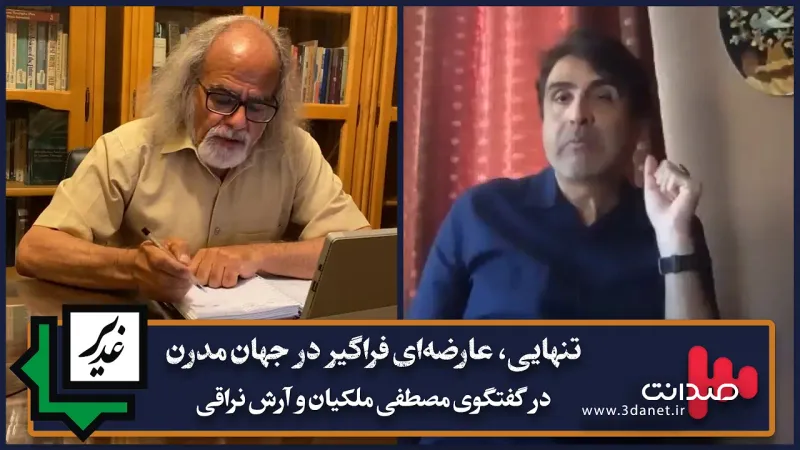
By foregrounding the relationship between religion and reason and attending to existential suffering, Mostafa Malekian marks a turning point in the history of religious intellectualism—a position that extends the lineage of Shariati and Soroush yet bears distinctive differences. Mohammad Mansour Hashemi examines this standing.
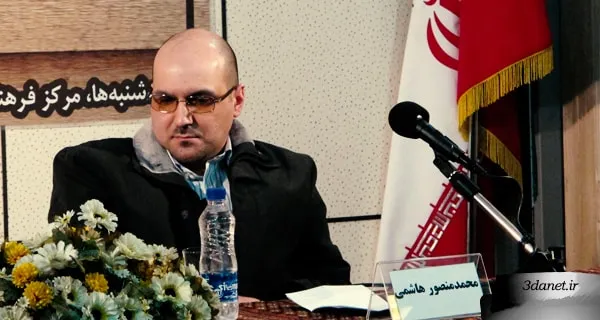
In this article, Mohammad Mansour Hashemi examines and evaluates the position of Mostafa Malekian as a turning point in the history of religious intellectualism.
ـــــــــــــــــــــــــــــــــــــــــــــــــــ
Download this article from here or read it below.
Published in Mehrnameh, no. 3, Khordad 1389.
Source: Personal website of Mohammad Mansour Hashemi
ـــــــــــــــــــــــــــــــــــــــــــــــــــ
Why should Mostafa Malekian be considered a turning point in the history of religious intellectualism(1)? This is the question I will attempt to answer in this piece.
For someone to be considered a turning point in the history of thought, it is not necessary that all of their ideas be correct or accepted (not to mention that, in reality, such a person cannot be found anywhere in the history of human thought), and even the critique and opposition of the historian of ideas and their analyst has no bearing on this matter(2). To attain such a position, a person's ideas, while being a continuation of the ideas of previous thinkers, must possess a novel and original aspect, and one must be able to find in them something or things that cannot be found in the same form in others. Of course, mere novelty is not enough. Many individuals have brought forth novel ideas, but their innovation was not accepted or noticed by others and naturally did not gain influence or importance. In fact, to enter the history of thought, importance and influence are also conditions.
These things are neither achieved through propaganda nor sustained through collusion, even if, with the help of these tools, some people manage to stand out for a while. A hundred other points besides these connections, possibilities, and means are necessary for someone to "become acceptable to the taste of discerning people." This acceptability is rooted in concrete and objective realities and is related to the logic of the history of thought; it is not a favor one can grant or take away. Those who imagine that these attributes and positions can be given and taken actually suppose that, for example, calling Ferdowsi "the Sage," Sa'di "the Most Eloquent of Speakers," and Hafez "the Tongue of the Unseen" are mere titles, conventions, customs, and habits, and that collective wisdom played no role in these astute, reality-oriented classifications. Such people can try their hand at, for instance, changing the attributes of the aforementioned figures and see what they gain from this experiment. And if, in the history of ideas, a role has been mistakenly attributed to someone, the very course of the history of thought will erase that role from memories, with no need for the conspiracy-mongering clamor of those whose unspoken lament is why "our name is not on the payroll of this office." It has been rightly said that the one holding the sieve comes from behind. The thinker, artist, and even scientist who finds a place in the history of a discipline stands creatively against the commonplaces and accepted notions of the time, and this stance is, of course, also a manifestation of the spirit of the age and the needs of the era, because it meets with the approval of others who look after him. This standing is not necessarily in having answers, but in posing questions, and creativity manifests itself precisely in these successful questionings. Creativity has no fixed formula or rule and is that unique aspect and "je ne sais quoi" that distinguishes one person's work from others. With this creativity, someone who is a continuation of the past lays the foundation of a question in the present that extends into the future. With this general introduction, let us turn to Malekian.
In the history of modernist religious thought in Iran, Ali Shariati, Abdolkarim Soroush, and to a lesser extent Mohammad Mojtahed Shabestari have raised issues that have entered the repertoire of concerns for those preoccupied with reconciling religion and modernity. Raising these issues has secured them a more or less unrivaled position in the history of modernist religious thought in this land, such that it is unlikely anyone, regardless of their approach or opinion, would doubt their historical standing in this arena. The thread connecting those issues and these positions has shaped and continues to shape the current we know as “religious intellectualism.” The next position must be both a continuation of these positions and distinct from them—that is, on the one hand, cognizant of these positions, or in other words, the previous turning points, and on the other hand, possessing distinctive and prominent aspects; for instance, just as Soroush’s position is in relation to Shariati’s.
Mostafa Malekian, born in 1956, with both seminary and university education but in reality self-taught,(3) through the works he published from the late 1990s onward, was able to attain this distinctive and prominent position. His writings and talks attracted the attention of both proponents and opponents of religious intellectualism and drew a segment of that current’s audience toward him. In what follows, I will try to show that he was, firstly, a continuation of religious intellectualism and, secondly, possessed distinctive and prominent aspects compared to the previous turning points.
The discussions and issues through which Malekian became known in religious new-thinking circles were topics such as the relationship between government and religion, or more precisely, the discussion of religious government,(4) the relationship between science and religion,(5) and the issue of the interpretability of religion.(6) In raising these discussions and his manner of addressing them, he was clearly influenced by the world of religious intellectualism. He did not, of course, consider the term “religious intellectualism” to be precise or expressive,(7) but regardless of the verbal and conceptual debate, he honored its legacy and said:
“I have absolutely no intention of denying the social and cultural function of those we refer to as religious intellectuals, nor of belittling or diminishing their worth and services; rather, I firmly believe that this group has played a very important role in reforming the culture of religious thought in society. My entire point concerns only the term religious intellectualism itself... My suggestion is that we not call it religious intellectualism, but rather religious new-thinking or revisionism.”(8)
Thus, Malekian was a continuation of the religious intellectualism current, not in opposition to it or outside it. However, reflection on the legacy of that current, including this very discussion of the incompatibility of the components of the term “religious intellectualism,” was the beginning of the expansion of the religious intellectualism discourse and, ultimately, stepping beyond its boundaries—a task that is coeval with the distinctive and prominent aspects of Malekian’s thought.
If Shariati pondered the relationship of religion with politics and social matters, and Soroush reflected on its relationship with science and human knowledge, Malekian raised the discussion of religion’s relationship with reason; and if it had been assumed that all of religion could be presented rationally and argumentatively, he inquired about the relationship between rationality and devotion; and if that rational and argumentative religion was imagined to be universally accepted, he brought up the issue of psychological types and sought the status of reasons among upbringing, interest, and other causes, and reminded us of the presupposition of the “epistemological authority” and “historical reliability” of the text. On the other hand, he spoke of the “existential” concerns of human beings and their pains and sufferings, and tried to find a place for religion and its essence, namely spirituality, from this perspective, and to draw attention to such needs. In short, he turned religion itself into an object of reflection.
If in religious intellectualism from the beginning, that is, from Ali Shariati’s ideology, politics had acquired a central aspect, Malekian opened the door to revision in this regard and wrote:
“An intellectual who holds a political conception of their role considers the greatest problem, or the cause of all problems, or the sole problem of society to be the political system governing that society, and therefore regards confronting that system as their most important and most beneficial task… [Such an intellectual] sees themselves as the spokesperson and representative of the people, and by virtue of this spokesmanship and representation, embarks on criticizing the political system…. [Such an intellectual] is prone to… compromise and accommodate the popular culture of the people… [Such an intellectual] suffers from a kind of laxity and hastiness. They are lax because they imagine that the amelioration of society’s condition is possible and feasible merely through a change in the political system governing that society, and they are hasty because they want this task to be accomplished within a few years.”(9)
In place of this political conception, he posits a cultural conception of the intellectual, according to which:
“The greatest problem, or the cause of all problems, or the sole problem of society is the cultural system to which the citizens of that society are attached… [In this view] the intellectual is first and foremost a critic of the people… and the intellectual’s work is essentially the critique of common notions, accepted beliefs, axioms, conjectures, illusions, and fancies.”(10)
Despite the fact that Malekian is fundamentally not a political thinker and is more concerned with ethical issues, even in the realm of politics he raised questions that involved critical reflections on the views of earlier religious intellectuals.(11)
Malekian revived and highlighted existential preoccupations (in Shariati and later Mojtahed Shabestari) and issues of moral philosophy (in Soroush) within the tradition of religious intellectualism, and stripped them of their ideological patina. It suffices to recall the status of the term “creed” in Shariati’s thought and to have before us Malekian’s article “Creed-Worship” to see what a trajectory has been traversed:
“In the opinion of the author of these lines, the most salient instance of idolatry… is creed-worship. In creed-worship, a person first elevates their own self to the station of absoluteness and perfection, that is, to the position of divinity… then… falls into a malignant narcissism… and finally comes to regard their own beliefs as part of their possessions and assets. The product of this three-stage process is that they worship their own beliefs… Creed-worship is the greatest rival to God-worship… What is a cause for regret and a source of a sense of danger is that creed-worship… is mistaken for the very essence of God-worship.”(12)
Here, perhaps the predestined question I must answer is whether a person who now proposes the theory of “Rationality and Spirituality” and no longer fits within the framework of “religious intellectualism” can have a place in the history of religious intellectualism. The answer is yes. To clarify this matter, citing an example concerning a current toward which we do not, in principle, have an emotional or sentimental attachment can be useful. Consider the history of idealism in England. Can anyone write the history of idealism in England without mentioning George Edward Moore and Bertrand Russell? Is the story they narrate complete without the names of these two? If idealism dominated the philosophical atmosphere of England with McTaggart, Bradley, and Bosanquet, then with Moore and Russell—who emerged from within that tradition, were themselves once idealists and Hegelians, and then became its most serious critics—idealism, and the entire current of thought in England, took a different path. The meaning of this statement is not that no idealist remained in England and no one was attached to the legacy of the three aforementioned figures. Perhaps even now there are idealists in England. The point is that idealism at that time and place, with figures like Moore and Russell, encountered questions that fell outside its defined boundaries, and thereby took a different path. Today, too, if someone is an idealist, they must be familiar with those critics and have prepared an answer for them in advance. In the same way, religious intellectualism, and a fortiori modernist religious thought, can also continue, but this continuation must necessarily be informed by the previous turning point and therefore be at a different stage and level.
If Shariati was the ideologue of the revolution’s genesis, and Shabestari and Soroush the thinkers of its regime’s founding period, Malekian is the thinker of the period of establishment. Hasty pragmatic concerns are less evident in him, and unhurried theoretical reflections more so. He has extended the religious rationalism of post-revolution thinkers to its limits and has greatly intensified the philosophical hue of reflections on religion. In place of ideology, he has addressed issues of the “ethics of belief” (13) type, and in place of political-mindedness, he has instituted cultural analysis. The scope of his intellectual exchange has also transcended the boundaries of religious intellectuals and encompassed other contemporary Iranian thinkers. (14)
Malekian’s intellectual trajectory is a turning point in a narrative and the fate of a particular attitude. Even his autodidacticism might be seen not merely as an accident but as a symptom of an era—the era of the disproportion between the fervor of idealistic quests and the unformed, unsystematized molds of reality. That fate, in a sense, was not inevitable, but it is something that, in any case, has occurred and is meaningful and noteworthy in terms of the logic of the history of thought and its writing.
.
.
Endnotes
- In the book Modern Religious Thinkers: Religious Intellectualism from Shariati to Malekian (Kavir Publications), I have assigned such a position to Malekian.
- As I have explained my critiques and opinions regarding Malekian’s thought in the aforementioned book (see Modern Religious Thinkers, pp. 271–277, pp. 305–315). I will not repeat those points here.
- See “Moshtaqi va Mahjuri” [Longing and Abandonment], Negah-e Moaser, 1385 [2006], pp. 8–9.
- See “Sonnat va Secularism” [Tradition and Secularism], Serat, 1381 [2002], pp. 245–265.
- See “Rahi be Raha’i” [A Path to Liberation], Negah-e Moaser, 1381 [2002], pp. 53–92.
- See “Rahi be Raha’i,” pp. 64–65, 98–105.
- See “Rahi be Raha’i,” p. 364.
- “Moshtaqi va Mahjuri,” p. 112; also see ibid., pp. 285–299.
- “Mehr-e Mandegar” [Enduring Kindness], Negah-e Moaser, 1385 [2006], pp. 453–457.
- “Mehr-e Mandegar,” ibid.
- For example, doubt about the possibility of combining religious government with democracy (see “Moshtaqi va Mahjuri,” p. 345). The significance of his translations of works by liberal thinkers such as John Rawls and Robert Nozick (see “Mehr-e Mandegar,” pp. 263–299) also becomes clear in comparison with the leftist origins of someone like Ali Shariati.
- “Mehr-e Mandegar,” pp. 462–463.
- “Akhlagh-e Bavar” [Ethics of Belief], Daftar-e Nashr-e Farhang-e Eslami, 1379 [2000].
- For instance, one can point to his critical attention to “Traditionalism” (see “Rahi be Raha’i,” pp. 381–445, “Seyri dar Sepehr-e Jan” [A Journey in the Sphere of the Soul], trans. Mostafa Malekian, Negah-e Moaser, pp. 213–234), of which Seyyed Hossein Nasr is a prominent figure; certain similarities between his spiritualist project and the ideas of Dariush Shayegan, for example in New Enchantment (despite fundamental differences, especially in the method of approaching the discussion); and also his intellectual exchange with Seyyed Javad Tabatabai in the book Jadal-e Ghadim va Jadid [The Quarrel of the Ancients and the Moderns] as editor (see Seyyed Javad Tabatabai, Jadal-e Ghadim va Jadid, Negah-e Moaser, 1382 [2003], p. 50).
.
.




.webp)
.webp)

Discussion0 comments
No comments yet; let yours be the first voice.