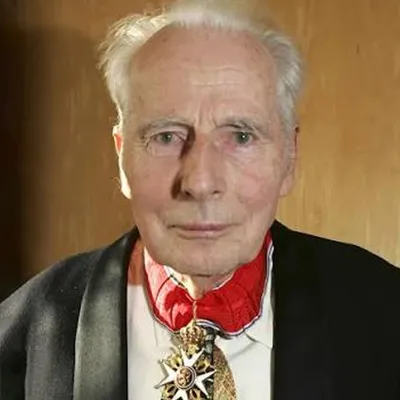
Foreign thinker
Arne Næss
Arne NæssEnvironmental philosophy, deep ecologyNorwegian1912–2009
“All living beings have an equal right to live and blossom.”


Life and Thought
Arne Næss was a Norwegian philosopher and the founder of the deep ecology movement, playing an important role in connecting philosophy with environmental issues. By criticizing anthropocentrism, he emphasized the intrinsic value of all living beings and the need to transform humanity’s relationship with nature.
Arne Næss was born in 1912 in Oslo, Norway. He studied at the University of Oslo and later became one of Norway’s most prominent philosophers of the twentieth century. Næss was a professor of philosophy at the University of Oslo for many years and worked in fields including epistemology, philosophy of science, philosophy of language, and political philosophy.
Næss is best known for founding the deep ecology movement in the 1970s. In his influential essay “The Shallow and the Deep, Long-Range Ecology Movement: A Summary” (1973), he distinguished between reform-oriented environmental approaches and a deeper perspective that called for a reconsideration of human values and ways of life. For him, the environmental crisis was not merely a technical or economic problem, but was rooted in humanity’s understanding of itself and its place in nature.
Næss’s deep ecology argues that nature and living beings are not merely instruments for satisfying human needs, but possess intrinsic value. He developed the idea of ecological self-realization and argued that humans should understand themselves as part of the wider web of life rather than as separate beings dominating nature.
His important works include “Ecology, Community and Lifestyle” (1989) and numerous writings on Gandhi’s philosophy, peace, meaning, and the relationship between humans and nature. Næss’s ideas have had a wide influence on environmental philosophy, green movements, and contemporary environmental ethics.