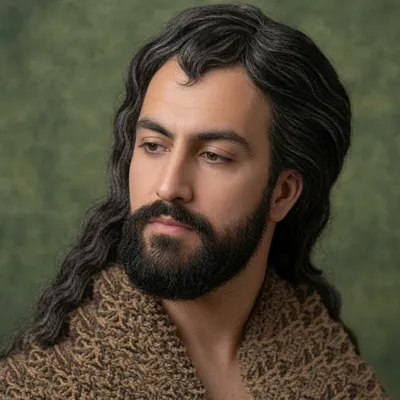
Never dies he whose heart is quickened by love / Our perpetuity is inscribed on the world's record


Life and Thought
Shams al-Din Mohammad Hafez Shirazi, known as Hafez, is a great Persian-language poet of the eighth century AH. His Divan includes ghazals, qasidas, and rubaiyat, and has had a profound influence on the course of Persian poetry.
Khwaja Shams al-Din Mohammad Hafez Shirazi, known as Hafez and Lisan al-Ghayb, is one of the greatest Persian-language poets of the eighth century AH. Definitive information about the details of his life is scarce, but according to common research, he was born around 715/1315 in Shiraz and died around 792/1390 in the same city. The title 'Hafez' is usually attributed to his memorization of the Quran; his deep familiarity with the Quran and religious language is evident throughout his poetry.
Hafez is above all a poet of the ghazal. His poetry is a blend of love, rendi (libertine wisdom), critique of religious and social hypocrisy, reflection on the impermanence of the world, the joy of living, and a multi-layered, ambiguous language. One of the main characteristics of Hafez's ghazal is that it can be read as amorous, ethical, mystical, and critical all at once. Iranica considers him the representative of the peak of Persian lyric poetry and emphasizes that no Persian poet after the eighth century has influenced the course of the Persian ghazal as much as he has.
Hafez's main and authentic work is the Divan of Hafez. This Divan mainly consists of ghazals, and alongside them, a number of qasidas, fragments, rubaiyat, and a Saqi-nama are also attributed to him. It is said that the Divan was compiled after Hafez's death, probably by Mohammad Golandam or within a tradition close to him.