“I have nothing to say and I am saying it, and that is the poetry I need.”
In their times
Open in the Timeline of ThoughtLife and Thought
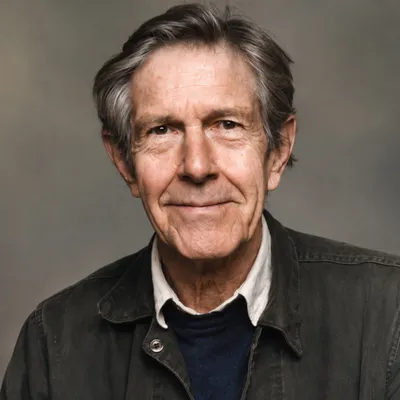
John Cage was an American composer, music theorist, and artist, and a central figure in twentieth-century avant-garde music. Through his use of silence, environmental sounds, prepared piano, and chance procedures, he transformed conventional definitions of music and the role of the composer. His best-known work is 4′33″.
John Milton Cage Jr. was born in Los Angeles on September 5, 1912. After a brief period of study at Pomona College, he pursued musical training with Henry Cowell and Arnold Schoenberg. From the 1930s onward, Cage sought new sonic possibilities; in his early percussion and prepared-piano works, he placed objects between piano strings to alter the instrument’s timbre.
The major transformation in his thought came in the 1940s and 1950s through a deeper engagement with Zen Buddhism, Asian thought, and the I Ching. To reduce the dominance of the composer’s personal taste and will, Cage used chance procedures, including coin tosses and consultations of the I Ching. For him, surrounding sounds and unpredictable events could also become part of musical experience.
4′33″, first performed in 1952, is the best-known example of this approach. In the work, the performer produces no intentional sound for the prescribed duration, directing the listener’s attention to environmental sounds, presence, and silence. His other important works include Sonatas and Interludes for prepared piano, Music of Changes, Concert for Piano and Orchestra, and the book Silence: Lectures and Writings.
Cage maintained a long-term collaboration with choreographer Merce Cunningham and exerted a major influence on experimental music, performance art, contemporary dance, and conceptual art. He understood music not merely as a collection of pre-controlled notes, but as a space for hearing the world and encountering chance and possibility.