In their times
Open in the Timeline of Thought

Life and Thought
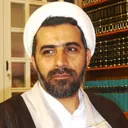
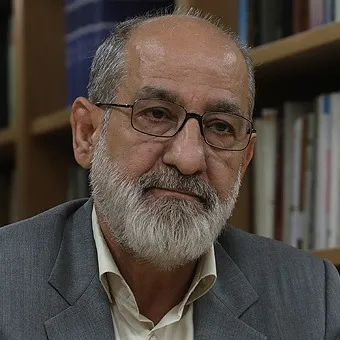
Mohammad Esfandiari (born 1338 AP / 1959–60 in Tehran) is an Iranian scholar of Islamic studies, historian and bibliographer. He heads the "Mawsu'at al-Imama fi Nusus Ahl al-Sunna" encyclopedia project and has written on the history of Ashura, on the pathology of religion, and on the lives and works of thinkers such as Ali Shariati, Seyyed Mahmoud Taleghani and Mohammad-Reza Hakimi.
Mohammad Esfandiari was born in Tehran in 1338 AP (1959–60). He studied the traditional seminary sciences in Tehran and Qom, benefiting from teachers such as Yahya Nouri, Abdollah Javadi Amoli, Ostadi, Gerami Qomi, Vojdani Fakhr and Mohammad-Reza Hakimi. He describes himself as a scholar of Islamic studies, historian and bibliographer, and he heads the encyclopedia project "Mawsu'at al-Imama fi Nusus Ahl al-Sunna."
His career has been recognised on several occasions: he was named exemplary author and editor in 1376 AP (1997–98), exemplary bibliographer in 1383 (2004–05), supporter of manuscripts in 1384 (2005–06), and a veteran of the field of critique in 1386 (2007–08).
His writing has two main strands. The first is bibliography and intellectual biography: "Peyk-e Aftab" (a study of the career and thought of Ayatollah Seyyed Mahmoud Taleghani, with a biography and list of works, first published in 1393 AP), "Rah-e Khorshidi" on the life and thought of Mohammad-Reza Hakimi, "Shoʿle-ye Bi-Qarar" on Ali Shariati, and "A Descriptive Bibliography of Dr. Ali Shariati." The second is history and the pathology of religion, including "A Historical Bibliography of Imam Hossein," "The Truth of Ashura" (Nashr-e Ney), "Ashura Studies," "Religious Pathology," and "We Are All Brothers: The Humane and Ethical Face of Islam."
Across these works, a critical approach to historical narratives, especially the distortions surrounding Ashura, and rigorous documentation of sources and of the works of contemporary Iranian thinkers hold a prominent place.