Philosophy
Mohammad Esfandiari on the Ethics of Belief
Our beliefs are not merely part of our inner world; they shape our own lives and the lives of others, and so we ought to act responsibly in forming and holding them. In this article, Mohammad Esfandiari takes up the idea of the "ethics of belief" and defends the necessity of seeking the truth, along with principles such as avoiding reliance on a single source, refusing to imitate others, not being cowed by intellectual fashions, and remaining ready to revise one's convictions.
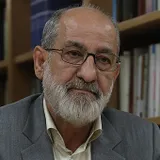
Mohammad Esfandiari
نویسنده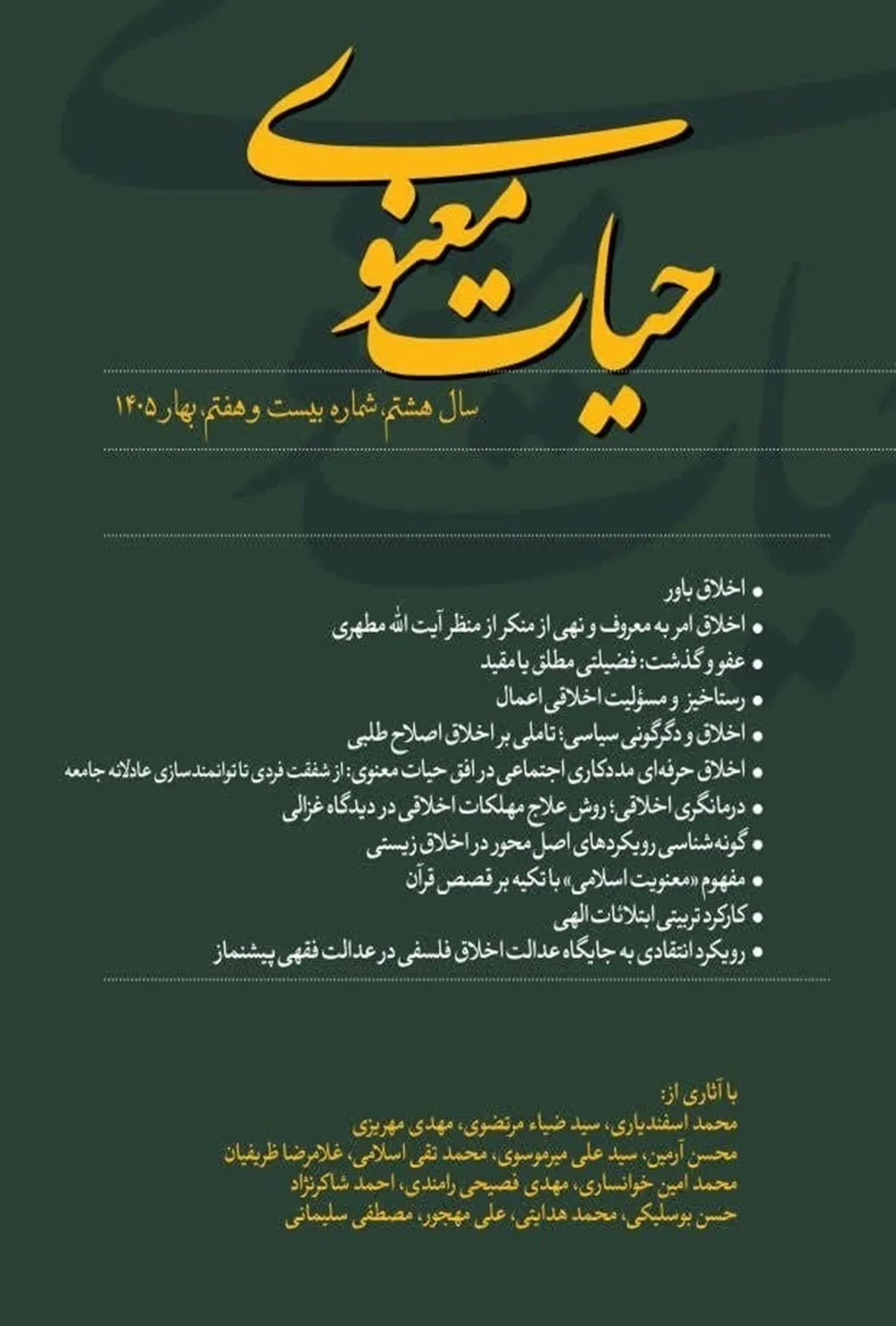
This text was first published in issue 28 of the quarterly Hayat-e Ma'navi. To obtain the electronic edition of this issue, you may visit Taaghche at the address below:
https://taaghche.com/magazine/340891
.
Our beliefs matter, and in the view of some, Rumi among them, they matter so much that a human being is nothing but thought. How we think affects not only our own lives but the lives of others as well. As rational beings, we are expected to hold beliefs that are rational and logical. It is unseemly to regard ourselves as wise, the crown of creation, and yet allow no role for rationality in our beliefs. Moreover, it is with our beliefs that we shall be raised up, and in the next world we will be asked what we believed and did not believe, and why. So if we spend half of our scholarly life arriving at a rational belief, we have not only lost nothing, but have done something right and necessary.
It is astonishing that so many people make no inquiry and take no care over their beliefs. They accept easily, reject easily, change their minds easily, and interpret everything according to what pleases them. To buy, say, a piece of clothing, they poke around in several shops and search; yet they treat their convictions casually. They are fastidious about a garment they will cast aside in a while, but show no care at all for beliefs they will live with for a lifetime. It is reported of Imam Hasan (peace be upon him):
"How strange it is that one who ponders his food does not ponder what he knows by reason."[1] That is: it is astonishing that a person who thinks about his food does not think about the nourishment of his intellect.
Indifference to truth is the flip side of the coin of dogmatism, and both are harmful. In the past, dogmatism was more widespread; today, it is indifference to truth. We have passed from an age of rigid fanaticism about truth to an age of contempt for truth. This indifference stems from a mistaken understanding of tolerance, which some take to be the same as indifference. That is to say, it does not matter what our belief is, because everyone has their own taste, or because all beliefs are, in a sense, equal, or because no one's hand can reach the truth.
There are rules and principles for arriving at a correct belief, which today are called the ethics of belief; that is, if someone applies them, they have observed ethics in matters of conviction. The term "ethics of belief" was coined by William Clifford, who wrote an essay under that title. Yet the term is open to dispute, and one may argue that belief (acceptance or rejection) falls under epistemology and other fields of knowledge, and that the ethics of belief is nothing but epistemic and scholarly duties. Every individual is epistemically obliged to follow certain principles, even if he is an immoral person. Still, there is no doubt that a number of our beliefs have moral consequences.
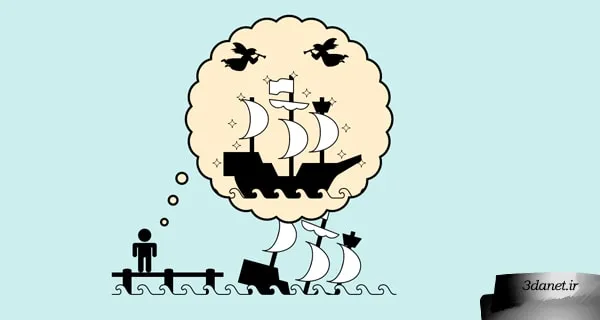
In his essay Clifford offers a striking example, to this effect: a shipowner, though not certain that his ship was seaworthy, sent it on an ocean voyage. The ship sank, and its passengers drowned along with it. It is evident that the shipowner acted immorally and is to blame. Clifford then alters the end of the story and says that even if the ship had not sunk, or if the passengers had been saved, the shipowner would still have deserved censure. For he was not sure that his ship was sound, and consequently his conduct was immoral. Clifford then states the principle: "It is wrong always, everywhere, and for anyone, to believe anything upon insufficient evidence."[2] But this principle is an epistemic proposition, and the very fact that Clifford says "wrong" (not "immoral") supports my view. Of course, many epistemic propositions do have moral consequences, but the moral consequence of an epistemic proposition does not change its nature.
With one striking example, Clifford drew everyone's attention to the "ethics" in belief. But other examples can be offered against his claim and his example, among them: is belief in the existence of God, without sufficient evidence, immoral? Can it be said that the billions of people who have believed and do believe in God without possessing a proof have acted immorally?
In any case, some of the scholarly rules for arriving at a correct belief (or what is called the ethics of belief) are as follows:
Let us not rely on a single source
Every belief appears reasoned and logical when one consults its sources. There is no belief that does not have its adherents, and some group has always tried to give it a rational defense. The world's religions are no exception to this rule, and each religion has its own arguments. It therefore falls to us not to depend on a single source, and if we read works that favor one side, to read works that oppose it as well. A person who draws on several sources can judge better than one who feeds on only one. Beyond this, the person with a single source has no right to judge and cannot say, "This is my view." Only one who has read and heard all the views can speak of his own view and be counted a person of informed opinion.
In the Quran, God gives glad tidings to those, and counts them as guided and wise, who listen to the various sayings and follow the best of them: "Those who listen to the word and follow the best of it."[3] It is likewise related from the Commander of the Faithful (peace be upon him): "Set some opinions against others [place them side by side] so that the correct opinion may emerge."[4]/ "Whoever welcomes diverse opinions will recognize the mistaken ones."[5]/ "Know that the wise person is one who, with sound thought and an eye to the outcome, welcomes diverse opinions."[6]/ "The correct opinion is obtained through the circulation of ideas."[7] / "Know that you will not recognize the straight path until you recognize the one who has abandoned it."[8] So the first step toward a sound view is to compare theories with one another. "God, deliver me from the man of one book." This is a Spanish proverb. "I fear the man of one book."[9] This, too, is a saying attributed to Thomas Aquinas.
Let us avoid imitation
Imitation is intellectual suicide, a thinking with another person's brain. One who imitates wants to shrug off the burden of responsibility for his belief and to lay the proof of its soundness on another's shoulders.[10] Yet everyone is responsible for his own belief and cannot appoint a deputy or an advocate. We do not imitate even the Prophet; rather, after we have recognized the truth of his words through reasoning, we affirm him. Every belief must come from intellectual independence, insight and inquiry, not from imitation. Shams of Tabriz said: "Every corruption that has befallen the world has come from this: that one person became a believer on another's authority, or became a denier on another's authority."[11] Let us learn from Aristotle, who said that Plato is dear, but truth is dearer still.[12]
Devotion, wherever it may be justified, is out of place in the realm of knowledge and understanding. No one holds intellectual guardianship over another, and no individual is the lord of other people's beliefs and thoughts. Intellectual imitation is a sign of immaturity and of a need for a guardian, and it makes no difference whom one imitates. Abu al-Hasan al-Amiri made no distinction between the imitator and the tamed animal,[13]and Ghazali said that if anyone has even a single vein of imitation in him, he is not fit to keep my company.[14]
Imitation may be of an individual, of a group, or of a government. The last form is the most common, and the thought of the ruling class is, for the most part, the thought of the ruler, so that people take their religion not from God, the Most Just of Judges, but from the rulers of the earth.
Some, looking at the greatness of the great, suppose that they do not err. In fact the great make great mistakes, but a greater mistake is for us to imitate their mistakes. The great should be measured by the truth, not the truth by the great. Of course, free-thinking great figures call everyone to free thought, not to imitation. So it is that Sharif al-Murtada, at the end of both his book al-Shafi and his book al-Dhakhira fi 'ilm al-kalam, adjures his readers not to imitate him on any subject.[15]
Let us flee the spirit of the age
In the world of ideas, as elsewhere, there are fashions and styles. At times a theory, though it is not correct, becomes fashionable for one reason or another, and the majority run after it. The fashions of the age must be disregarded, and one must not be cowed by the majority or by the dominant way of thinking. The dictatorship of the age is one of the most stubborn and most hidden of dictatorships; one must recognize it and not submit to it. This dictatorship, like other dictatorships, is a wave, not a current. It comes and goes, unlike a current, which endures.
Keeping pace with the times and knowing the needs of the times is different from chasing the beliefs of every era. Some, out of a notion that they must not fall behind their age, chase whatever belief is current in their time, come what may. But the art is for a person to be ahead of his time. It may well be that the people and the elites of an era are mistaken, and that after a while another view proves correct. So one must not be swayed by the prevailing atmosphere and prevailing beliefs. Majority and minority are not the measure of right and wrong. A day may come when the majority's belief becomes the minority's, and vice versa. "Those who follow the age and turn whichever way the age turns are not worth pointing at, nor are they one to whom anyone could point.... The one worth pointing at is he who confines the age to his own thought."[16] - So said Socrates.
Let us hold beliefs provisionally
Loyalty to any belief is not necessarily a sign of sincerity; sometimes it is a mark of folly. We need not bind ourselves permanently to every belief we hold; rather, we must be ready to reconsider if criticism or refutation is brought against it. One who regards his belief as an inseparable part of his personality cannot tear himself away from it and takes any criticism of his belief as an attack on his person. Likewise, one who regards his belief as part of his property cannot give it up. It is true that for our belief we use a word that denotes ownership (we say, for instance, "I have a belief"), but not all our possessions are worth keeping, and at times we must do an intellectual spring-cleaning. We may hold one view today and another some other day. What matters is that we pledge allegiance to the truth and make a lasting covenant with it. Whatever view we hold, we must stay with it only so long as it does not come into conflict with the truth. The moment it becomes clear that such-and-such a view of ours is mistaken, let us let it go and embrace the truth. One should not regard oneself as a resident of the truth's quarter, but should make oneself a wanderer for the truth's sake and follow the argument wherever it leads. But this is possible only if we have a dynamic identity, not a static one. That is, let us not become addicted to a belief, and let our attachment to a belief not be due to mere habituation to it.
Gottlob Frege was a brilliant example of those who held beliefs provisionally and left part of the vessel of their minds empty. When Russell informed him of a contradiction in the fifth axiom of his book, the Basic Laws of Arithmetic, Frege submitted to Russell's objection and gave up a belief about which he had researched and reflected for many long years.[17] Another example of such rare men was Wittgenstein, who after years of philosophizing composed a profound book titled Tractatus Logico-Philosophicus and left a remarkable mark on the world of philosophy, but who, some years later, arrived at a different view and compiled a book under the title Philosophical Investigations, declaring in its preface: "I have been forced to recognize grave mistakes in what I wrote in my first book."[18]
Let us not reject what we do not know
Some suppose that the things they themselves know are important, and the things they do not know are not. They take themselves, not the science itself, as the measure of its importance. Others oppose what they do not know, and how many things they reject of which they know nothing at all! This very fact of not knowing tempts a person to deny what he does not know, because a person has no attachment to what he does not know. But, as Spinoza said, one must not make ignorance one's argument, nor take one's ignorance as one's excuse. In the Quran a certain group is described thus: "They denied that whose knowledge they could not encompass, and whose interpretation has not yet come to them. Likewise did those before them deny."[19]
What each individual knows is small beside what he does not know. If we are to reject whatever we do not know, we have been content with only a little knowledge. It is reported of Imam Ali (peace be upon him):
"Do not be hostile to what you do not know, for most of knowledge lies in what you do not know."[20] That is: do not make an enemy of what you do not know, for most knowledge lies in the things you do not know.
Let us not accept what we do not know
Not knowing and accepting is the flip side of not knowing and rejecting, but it is more common and worse. One who does not know and rejects has an excuse, in that he rejects something to which he has no attachment; but one who does not know and accepts has no excuse at all. It is said that on the signet ring of Aristotle and the king of China was engraved this sentence: "One who does not know and denies is more excusable than one who does not know and accepts."[21] In the Quran, too, we read:
"Do not pursue that of which you have no knowledge. Surely the hearing, the sight and the heart, each of these shall be questioned."[22] That is: do not follow what you have no knowledge of, for the ear, the eye and the heart will all be called to account for it.
On the strength of this verse, no one is permitted to hold as a conviction what he does not know. As Tabarsi says in his commentary on that verse: "Hold no belief except in what you know it is permissible to believe."[23] Tabataba'i likewise writes in his commentary on the verse above: "Do not hold a belief in anything of which you have no knowledge."[24] It is also related from Imam Sadiq (peace be upon him) that one must beware of professing as religion what one does not know: "Beware lest you ... profess as religion what you do not know."[25] Therefore each person's convictions should be commensurate with his information, and no more. Among Ghazali's counsels to those at the start of the path is that in matters of belief they content themselves with the two testimonies of faith. Fayz Kashani does not accept this view, but Motahhari does not accept Fayz's view and deems Ghazali's opinion correct.[26]
Let us suspend judgment
We said that we should neither accept nor reject what we do not know. But since there are many things we do not know, we must practice scholarly suspension of judgment; that is, refrain from any pronouncement and neither affirm nor deny. Many suppose that on any subject there are only two options: acceptance and rejection. Yet there is a third option, called suspension of judgment, to which scholars have paid heed since antiquity, and on matters they did not know, they passed judgment neither in the negative nor in the affirmative. No one is condemned for what he does not know and therefore does not pronounce upon. Those who are condemned are those who do not know and yet accept and reject.
Scholarly suspension of judgment arises not from ignorance but is a sign of the perfection of knowledge and of knowing one's limits. When someone falls silent and suspends judgment about what he does not know, it becomes clear that he knows one important thing: the extent of his own knowledge. As a result, he neither stumbles himself nor makes others stumble. It is related from Imam Sadiq (peace be upon him) that God's right over His servants is that they halt at what they do not know: "That they halt at what they do not know."[27]
Let us beware of reactive theories
At times, in the face of an exaggeration in one theory, or in the face of a deviant theory, an opposing theory takes shape that is itself exaggerated and deviant. Such views should be called reactive theories, and one should shun them. A reactive theory is an extreme counterblow to a theory that is itself extreme in another way. One theory shows only one side of the coin, and another, in reaction, shows the other side. Such polarizations and dichotomies take shape because some people, in order to stress the importance of a theory, exaggerate about it and lean on it and emphasize it more than they should.
Extremism in one direction is not corrected by extremism in the opposite direction. Yet some fall into this trap unknowingly and unintentionally, and in fleeing one extreme end up in another. Evidence for this claim is the abundance of extremist theses and antitheses, among them revolution against conservatism and vice versa, modernity against tradition and vice versa, West against East and vice versa.
Reactive theories also take shape about personalities, from portraying someone as an angel to regarding him as a devil. This kind of judgment occurred in the case of the Commander of the Faithful: against the Kharijites, who said that Ali was an unbeliever, a group said in reaction that he was God.[28] His Holiness foresaw this, and said that both the "extreme friend" and the "extreme enemy" would perish on my account.[29]
Let us know that we do not know
What humans do not know exceeds what they know, and the further humanity has advanced, the more it has discovered of its own ignorance. This ignorance is of two kinds, and the second is more harmful than the first. The first kind is what we do not know and know that we do not know (simple ignorance); the second is what we do not know and imagine that we know (compound or double ignorance).
All people know less than they suppose. And each person, too, knows less than all people together, and less than he himself supposes. In the Quran God did not say, "We gave you a little knowledge," but rather, "You have been given only a little knowledge": "And you have been given of knowledge only a little."[30] Therefore the knowledge of each of us is nothing but less than little, and this point must be kept in view, rather than bestowing the title "'Allamah" on some group.
The ancients held that on every subject there is one truth, and that it is clear, "like the sun in the middle of the sky," and that whoever does not see it is biased. But the passage of time has made clear that truth is unobvious and elusive, and that even if it is attained, it is the product of collective effort. A great deal has been said in just the last century or two in the name of "science" and then proved false. Likewise, how many things have been said in past centuries in the name of "religion" which people have now turned back from.
Socrates is so greatly esteemed and sits at the head of the line of philosophers because he said that he "knows nothing, and is wiser than others only in that he knows that he knows nothing."[31] Likewise Karl Popper, one of the greatest philosophers of science of our age, held to conjectural knowledge and said time and again in his works that we know nothing, but only conjecture. A thousand years ago, Abu al-'Ala al-Ma'arri had also said: "As for certainty, there is no certainty; the utmost of my striving is to suppose and to guess."[32] That is: certainty without certainty; the limit of my effort ends in supposition and conjecture. And centuries before Abu al-'Ala, the poet Xenophanes had said: "As for certain truth, no man has known it.... All is but a woven web of guesses."[33]
If we know that we know little, even less than we suppose, we cultivate epistemic humility and try to be like a student, always learning. Instead of being the sentinels of what we already know, defending what we have so far understood, we will try to be hunters of what others know. We leave part of the vessel of our minds empty, unlike those who stamp it with the seal "capacity full." When the Commander of the Faithful wished to teach Kumayl something, he first said to him: "These hearts are vessels, and the best of them is the one that holds the most."[34] That is, hearts are like containers, and the greater their capacity, the better. Saadi, too, tells of a man who had a little skill in astronomy but was arrogant. He went to the great astronomer Gushyar Gilani to learn something from him. Seeing his arrogance, Gushyar taught him nothing, and the man made ready to return. As he left, Gushyar said to him: You have imagined yourself full of wisdom; / how can a vessel that is already full take in more? / You go away empty because you claim to be full; / come back empty, that you may be filled with meaning.
Let us not take our homeland and our nature as the measure
Many people take their beliefs from their surroundings. In a Muslim environment a Muslim is raised, in a Christian environment a Christian, in a Hindu environment a Hindu. At most, some make adjustments to their belief according to their own temperament and nature. The hot-tempered Muslim leans toward fundamentalist Islam, the gentle Muslim toward democratic Islam. Human beings differ from one another more in geography and genetics than in thought. Our fate is determined by our land and our nature.
But the pursuit of truth requires that wherever our land and nature conflict with the truth, we side with the truth. We must not treat our environment as the criterion of truth, nor make it our presupposition that truth lies here, where I happened to be born. Truth is fluid and mobile, not fixed and resting in one place, and it is too great to fit within the bounds of our dwelling. So we must reconsider our local and indigenous beliefs, and even after we are sure of their soundness, we must still examine their details
with care.
Our other duty is not to let our nature and genes interfere in the interpretation of beliefs. We must not present and interpret anything according to our psychological type and temperament. Let us look at what the reality is, but without genetic tampering.
In short, each person should reconsider his belief to the point where he can say
"This is my belief." And he can say "my belief" only when his belief has been purified of social determinism (land) and hereditary determinism (nature).[35]
Let us not prejudge
We are constantly judging: we accept one view and reject another, we agree with one group and disagree with another. This should not be taken lightly. In forming a scholarly judgment about any subject, which has many pages, we should read all its pages, rather than judge without reading, or having read only half, or on the basis of hearsay. One who prejudges commits one error, but when he offers several arguments for it, he commits several. So first investigation, then judgment, not the reverse; but alas, the method of many is the reverse.
Those who are hasty and want to reach a conclusion quickly on every subject become quick to conclude and prejudge. The quick-to-conclude person is one who, on reading a single text or considering one or two arguments, is quickly convinced that this is just right. But perhaps against this one or two arguments there are dozens of others, and stronger. To avoid prejudgment one must not be hasty or quick to conclude, and must delay and defer one's judgment.
Let us seek out opposing arguments
Some people, once they come to believe in something, constantly go in search of evidence to confirm their belief. They attend wholly to what supports their belief but ignore what weakens it. Yet one must also search for the weakening and opposing considerations against one's belief. There may be arguments both for a view and against it. It is one-sidedness to cling to one set of arguments and ignore the others. A thousand years ago Abu al-Hasan al-Amiri said: the wise man is not persuaded by the arguments put forward for a thing until he has also grasped the arguments against it.[36]
To establish any claim, two conditions are necessary: there must be arguments in its favor, and there must be no argument against it. For a number of false claims, especially in the fields of religion and history, arguments can be found, but there are more arguments against them. So we must seat ourselves in the dock, seize our beliefs by the collar, interrogate them, and even offer the converse argument, that is, an argument in favor of the other side. Those who read and hear only what they already know remain right where they are.
In disputed questions of religion, citing the verses and traditions for one claim without examining the verses and traditions that oppose it is one-sidedness, and an instance of partial quotation.
Let us not be seduced by propaganda
It is not only in the world of economics and politics that propaganda is decisive; propaganda exists and is effective in other arenas too, even in religion and philosophy. Its form is this: to present his belief, someone scatters slogans, swaggers and boasts, makes thunder and lightning without rain, spends grandiloquent words, stirs up feelings and emotions, speaks with intensity and certainty, and makes impossible promises: the promise of heavenly partridges in the toilers' frying pan, and the promise of roast gazelle, unhunted, for the dispossessed. When they say "Liberalism is humanity's lifeboat," "The train of history finally arrives at Marxism," "Islamic philosophy is the ultimate goal of philosophizing," and the like, all of it is propaganda.
We must not be charmed or cowed by propaganda; rather, we must strip every belief and theory of its ornaments and slogans and, far from agitation and emotion, make reason our measure.
If propaganda were removed, that is, if all beliefs and theories were presented with the same volume, the same imagery, and in dry scholarly language, the views of many people would change.
Let us not be dogmatic
Not all truths are with us and in our creed. Everyone knows everything, and truth has a collective identity; it is common property and the monopoly of no individual or group. One who seeks the truth does not look at all to see in whose hand the truth lies; he seeks only the truth, whoever holds it. One who believes that God is real (that is, who believes in God because He is true) must also regard truth as a divine phenomenon, even if it runs against his view and is found with his opponent. For the source and origin of truth is God: "The truth is from your Lord."[37] In the traditions of the religious leaders it is said: learn wisdom from whomever has it, even if he be a "hypocrite," a "polytheist," a "follower of falsehood," a "wicked man," a "base man," or a "madman." To turn away from the truth out of hatred for the one who speaks it, because he is, say, an unbeliever or a transgressor, is nothing but the partisanship of pre-Islamic ignorance.[38] It is related from Imam Ali (peace be upon him): "Wisdom is the believer's lost property; so take wisdom, even from the people of hypocrisy."[39] That is: wisdom is the believer's lost possession. Take wisdom, even from hypocrites.
It is likewise related from Jesus (peace be upon him): "Take the truth from the people of falsehood, and do not take falsehood from the people of truth."[40] That is: take truth from the people of falsehood and do not take falsehood from the people of truth. So let us make this our motto: the correct from anyone, the incorrect from no one.
Dogmatism is not confined to the religious and to religious matters; it is wider than that. One example of dogmatism, in both hatred and adulation of the West, is what Shafiei Kadkani wrote years ago: "If an Orientalist says 'Yogurt is white,' always leave room in your mind for the possibility that either 'yogurt is not white at all,' or 'proving the whiteness of yogurt is a prelude to denying the blackness of coal.'"[41] Thirty years later Shafiei freed himself from that anti-Western dogmatism, but this time he said: "For centuries Muslims have had no thought .... If we were to compile an encyclopedia of human thought, the share of the later Islamic world would be nearly zero. All the Muslims of recent centuries together have not offered as much 'thought' as a single year of Wittgenstein's philosophical life."[42]
Let us have the courage to know
Sometimes the majority goes down a mistaken path, and a false belief comes to prevail in society or among the circle of scholars. In such a situation one must have the courage to know and not follow the majority's road. Courage is one of the conditions of knowledge, and one who is courageous can know things that another, however intelligent, never can. History bears witness that those who managed to criticize baseless popular opinions and consensuses were those who were courageous and did not fear being in the minority. In the Nahj al-Balagha we read: "Do not feel desolate on the path of guidance because of the fewness of those who walk it."[43] That is: do not be alarmed by the path of guidance because its travelers are few.
After a scholarly discussion, Shaykh Mufid says that he feels no alarm that someone should disagree with him on this subject, for his intimacy is with proof, and he has no dread of the truth.[44] His student Sayyid Murtada likewise says that one should not shrink from a creed because it has no followers; rather, it is a belief that is not well argued that one should flee.[45] The Enlightenment in the West began when a group, with the courage to know, relied on their own understanding, perception and reason. In an essay on enlightenment, Kant says that the motto of the Enlightenment was: "Have the courage to use your own understanding."[46]
Let us not abandon caution
Scholarly courage is necessary, but caution is necessary too. These two, which seem to conflict, must be blended like milk and sugar, and neither sacrificed to the other. One who knows that what we know is negligible beside what we do not know, and who knows that he is answerable for what he says, takes up the staff of caution. This staff must be taken up from the very beginning of youth, not in old age or out of fear.
If a person accepts only the principle that he must not accept what he does not know, that is enough for him to be cautious. In that case he never becomes a conservative. Conservatism is total submission to tradition, whereas cautiousness is a prudent sifting of tradition and is not at odds with innovation. Many new theories have their source not in scholarly courage but in caution.
In numerous traditions caution in religion is urged,[47]and the counsel of scholars to their students in their licenses of transmission is caution and again caution. This matter became the source of a discussion in the principles of jurisprudence under the title of practical principles (presumption of continuity, presumption of innocence, caution, option),
and it is among the points of disagreement between the Akhbaris and the Usulis, and among the Usulis themselves.[48]But both groups have no doubt about the principle of caution, and some exercise so much caution that they do not issue fatwas at all,[49] or, if they arrive at a new view, they search until they find one of the predecessors who agrees with them.[50]
Let us be diligent
To arrive at a correct belief, besides sincerity, seriousness is also necessary. Love of truth is not enough; one must run after the truth and sweat from the spirit in the hope of reaching it. Ijtihad (scholarly striving) is not peculiar to jurists and is not confined to the science of jurisprudence; whatever belief we hold must rest on effort and exertion. Truth is not always clear, simple, close at hand, and like the sun in the middle of the sky; sometimes it lies beyond the horizon of our sight and is half hidden, and to attain it one must be diligent. And to be diligent means not to be satisfied with ready-to-hand sources, ready-to-hand information and ready-to-hand readings. If in many cases we take it as the rule that truth is not obvious, we will exert ourselves more to reach it. It is related from Imam Ali (peace be upon him): the truth has no conspicuous marks by which one could distinguish the kinds of truth from falsehood.[51] In the matter of judgment, too, the worthy judge in the Imam's view was one who: does not content himself with his first impression of understanding, before reaching the depth of the matter.[52]
Let us avoid interpretation by personal opinion
Interpretation by personal opinion does not apply only to religious texts; it applies to every text. Of course, the more important a text is, the more dangerous it is to interpret it by personal opinion. Interpretation by personal opinion means putting one's own words in another's mouth and letting one's likes and dislikes interfere in interpretation. This is imposing one's view on another and a kind of bullying. One who interprets another's words by personal opinion is in fact speaking coercion and falsehood; that is, he attributes to another what he did not say. If we do not consider a text proof of our claim, let us refrain from citing it, rather than interpreting it by personal opinion. This is spiritual distortion, and at times more treacherous than verbal distortion, even if it is not done knowingly and deliberately.
Sometimes interpretation by personal opinion is of a single text and in a particular way, and sometimes it is of an entire creed and in a general way. In the latter case, an interpretation of a creed is offered that can never be inferred from it. For example, in interpreting the view of Islam or Christianity they say it is thus and so, when it is neither thus nor so. Another form of this interpretation occurs in reporting the views of figures. We often read that Aristotle or Kant holds such-and-such, but when we look closely, we find that it is interpretation by personal opinion, based on personal likes and dislikes.
Let us not flee from reality
Not all realities are so objective, and even if they are wholly objective, they may well conflict with some people's presuppositions. This is where a group flees from confronting reality and resorts to a hundred kinds of justification to present reality in another guise. They forget that we do not fabricate reality; reality is what it is, and it cannot be dragged along behind us. We must go after reality.
All beliefs and theories must be put to the touchstone of experience and reality, and whatever does not conform to this touchstone must be cast aside. Those who theorize with no regard for what is the case, and those who cling to theories contrary to reality, prefer mental constructions to objective findings and are adherents of the primacy of theory[53] (in Louis Althusser's phrase). By verbal sleight of hand, by manufacturing arguments, and by resorting to quasi-rational reasoning, one cannot set a theory on the throne. "If the argument of reason flies off into the air, / once it opposes sense and observation, its wings are broken." Woe to the one who said: woe to reality if it does not agree with my theories.[54] And woe to the one who said: woe to experience, the theory is right.[55]
Some accept only those realities that agree with their presuppositions. In Rumi's words: the ear goes where the head's concern lies. Goethe likewise said: "We see only what we know."[56]And according to an ancient proverb: "We are ready to see what lies behind our eyes, not what appears before them."[57] Galileo built a telescope and asked the Aristotelians to look through it at the moons of Jupiter, but they refused, for fear of seeing the very thing Galileo had seen and Aristotle had not mentioned.[58] Likewise, in the Middle Ages, when dissection had become common and corpses were being opened, whenever Galen's view did not match the features of the corpse, they blamed the corpse, not Galen's view.[59]
Let us not laugh at those who came before us, but be such that those who come after will not laugh at us. Instead of interpreting realities so that they conform to our theories, let us change our theories so that they conform to realities. Let our prayer in this house of deceit, where by the sorcery of speech they make truth appear falsehood and falsehood truth, be this: O God, show us every thing / just as it is, in this house of deceit. And, according to what is related of the Prophet in mystical texts: "O God, show us things as they are."[60]
Let us not fear labels
We live in a world of names and labels, and we call one another by various names, supposing them accurate; among them: theist, atheist, Sufi, Buddhist, communist, conservative, liberal and intellectual. These names and labels serve our knowing one another, but at times they become a veil over knowledge and lead us not to approach those who do not think as we do and who carry a different label, and not to know them. For example, because we consider ourselves Muslims, we pay no attention to what Christians say in theology, or because we count ourselves intellectuals, we do not examine what the Sufis claim. No belief is devoid of strengths, but when we regard them as outcasts because of their labels, first we cannot understand them, and second we cannot benefit from their strengths. Labels should not be for us what the bogeyman is for children. Let us dismantle the taboo of labels and look not at what label others bear, but at what their reasons are.
Sometimes labels are not a single word, like "communist" and "liberal," but a clichéd phrase. For example, they say that Plato and Aristotle believed such-and-such, or that Ibn Khaldun and Ghazali held that so-and-so. These clichéd labels, though accurate, should not lead to the complete rejection of those labeled.
Sources
1. Abu Hayyan al-Tawhidi. Ali-Reza Zakavati Qaragozlu. First edition: Tehran, Tarh-e No, 1374 [1995].
2. The Ethics of Belief. Andrew Chignell. Translated by Amir-Hossein Khodaparast. First edition: Tehran, Qoqnus Publications, 1395 [2016].
3. Nicomachean Ethics. Aristotle. Translated by Mohammad-Hasan Lotfi. First edition: Tehran, Tarh-e No, 1378 [1999].
4. Arghanun (journal).
5. al-Usul min al-Kafi. Muhammad ibn Ya'qub al-Kulayni. Edited and annotated by Najm al-Din Amoli and Ali-Akbar Ghaffari. Tehran, al-Maktaba al-Islamiyya, 1388 [1969].
6. al-I'lam bi-Manaqib al-Islam. Abu al-Hasan al-Amiri. Translated by Ahmad Shariati and Hossein Manouchehri. First edition: Tehran, Markaz-e Nashr-e Daneshgahi, 1367 [1988].
7. al-Insan al-Kamil. Aziz al-Din Nasafi. Edited by Marijan Mole. Sixth edition: Tehran, Tahuri Publications and the French Institute of Iranology in Tehran, 1381 [2002].
8. A Scientific Foundation for a Rational World. Paul Davies. Translated by Mohammad-Ebrahim Mahjub. Fifth edition: Tehran, Nashr-e Gaman, 1400 [2021].
9. al-Dhakhira fi 'Ilm al-Kalam. Ali ibn Husayn Musawi (Sharif al-Murtada). Edited by a group of scholars. First edition: Mashhad, Islamic Research Foundation, 1399 [2020].
10. al-Rasa'il wa al-Masa'il. Ali ibn Husayn Musawi (Sharif al-Murtada). Edited by a group of scholars. First edition: Mashhad, Islamic Research Foundation, 1399 [2020].
11.al-Shafi fi al-Imama. Ali ibn Husayn Musawi (Sharif al-Murtada). Edited by Sayyid Abd al-Zahra Husayni Khatib. Reviewed by Fazil Milani. Second edition: Tehran, al-Sadiq Institute, 1426 [2005].
12. Awa'il al-Maqalat fi al-Madhahib wa al-Mukhtarat. Muhammad ibn Muhammad ibn Nu'man (Shaykh Mufid). Edited by Mehdi Mohaghegh. Second edition: Tehran, Institute of Islamic Studies of the University of Tehran and McGill University, 1382 [2003].
13. With Lamp and Mirror: In Search of the Roots of the Transformation of Contemporary Iranian Poetry. Mohammad-Reza Shafiei Kadkani. Second edition: Tehran, Sokhan Publications, 1390 [2011].
14. Bihar al-Anwar al-Jami'a li-Durar Akhbar al-A'imma al-Athar. Muhammad-Baqir Majlisi. Second edition: Beirut, Mu'assasat al-Wafa, 1403 [1983].
15. al-Basa'ir wa al-Dhakha'ir. Abu Hayyan al-Tawhidi. Edited by Widad al-Qadi. First edition: Beirut, Dar Sadir, 1408 [1988].
16. Philosophical Investigations. Ludwig Wittgenstein. Translated by Fereydoun Fatemi. Seventh edition: Tehran, Nashr-e Markaz, 1393 [2014].
17. A History of Western Philosophy. Bertrand Russell. Translated by Najaf Daryabandari. Sixth edition: Tehran, Ketab-e Parvaz, 1373 [1994].
18. Islamic Sufism and the Relation of Man and God. Reynold A. Nicholson. Translated by Mohammad-Reza Shafiei Kadkani. First edition: Tehran, Tus Publications, 1358 [1979].
19. The Scientific Outlook. Bertrand Russell. Translated by Hassan Mansour. Fourth edition: Tehran, Agah Publications, 1378 [1999].
20. The Fruit of a Lifetime (Hasil-e Omr). Albert Einstein. Translated by Naser Movafaghian. First edition: Tehran, Islamic Revolution Publishing and Education Organization, 1370 [1991].
21. In Search of a Better World. Karl Popper. Translated by Hassan Teymouri. First edition: Tehran, Nashr-e Shabkhiz, 1398 [2019].
22. The Diwan of Abu al-'Ala al-Ma'arri: al-Luzumiyyat. Annotated and edited by Ghurayd al-Shaykh. First edition: Tehran, Mu'assasat al-A'lami, 1420 [1999].
23. What Is Enlightenment? Eighteenth-Century Answers and Twentieth-Century Questions. Edited by Ehrhard Bahr. Translated by Sirus Arianpour. First edition: Tehran, Agah Publications, 1376 [1997].
24. The Roots and Consequences of Caution in Ijtihad and Ifta: Conversations with a Group of Seminary and University Professors. Edited by Saeed Ziaeifar. First edition: Qom, Research Institute for Islamic Culture and Thought, 1400 [2021].
25. Life of Galileo. Bertolt Brecht. Translated by Abdolrahim Ahmadi. Eleventh edition: Tehran, Nilufar Publications, 1400 [2021].
26. The Superfluous Woman (Zan-e Ziyadi). Jalal Al-e Ahmad. Fifth edition: Tehran, Ravaq Publications, 1356 [1977].
27. The Story of Philosophy. Bryan Magee. Translated by Hassan Kamshad. First edition: Tehran, Nashr-e Ney, 1386 [2007].
28. Thirty Essays (Si Maqaleh). Reza Ostadi. First edition: Qom, Islamic Publications Office, 1373 [1994].
29. Six Wings: Men of Science in the Renaissance. George Sarton. Translated by Ahmad Aram. Third edition: Tehran, Islamic Revolution Publishing and Education Organization, 1364 [1985].
30. Ghurar al-Hikam wa Durar al-Kalim. Abd al-Wahid Amidi. Edited by Sayyid Mahdi Rajai. Second edition: Qom, Dar al-Kitab al-Islami, 1410 [1990].
31. Ghazaliyyat of Shams of Tabriz. Introduction, selection and commentary by Mohammad-Reza Shafiei Kadkani. Fifth edition: Tehran, Sokhan Publications, 1387 [2008].
32. al-Qistas al-Mustaqim. Muhammad Ghazali. Edited by Victor Chelhot. First edition: Beirut, al-Matba'a al-Kathulikiyya, 1995.
33. Majma' al-Bayan fi Tafsir al-Qur'an. Abu Ali Tabarsi. First edition: Beirut, Dar al-Ma'rifa, 1406 [1986].
34. Mahbub al-Qulub. Qutb al-Din Ashkevari. Translated by Sayyid Ahmad Ardakani. Edited by Ali Ojabi. First edition: Tehran, Ministry of Culture and Islamic Guidance and the Library of the Islamic Consultative Assembly, 1380 [2001].
35. al-Mahajja al-Bayda fi Tahdhib al-Ihya. Mohsen Fayz Kashani. Edited by Ali-Akbar Ghaffari. Qom, Islamic Publications Office.
36. The Discourses of Shams of Tabriz (Maqalat-e Shams-e Tabrizi). Edited by Mohammad-Ali Movahhed. Second edition: Tehran, Kharazmi Publications, 1377 [1998].
37. Introduction to the History of Science. George Sarton. Translated by Gholam-Hossein Sadri Afshar. Second edition: Tehran, Scientific and Cultural Publications, 1383 [2004].
38. al-Mizan fi Tafsir al-Qur'an. Sayyid Mohammad-Hossein Tabataba'i. Fifth edition: Qom, Mu'assasat Ismailiyan, 1371 [1992].
39. Nuzhat al-Arwah wa Rawdat al-Afrah (Tarikh al-Hukama). Shams al-Din Muhammad Shahrazuri. Translated by Maqsud-Ali Tabrizi. Edited by Mohammad-Taqi Daneshpazhuh and Mohammad-Sorur Molaei. First edition: Tehran, Scientific and Cultural Publishing Company, 1365 [1986].
40. Nahj al-Balagha. Edited by Subhi al-Salih. Qom, Hijrat Publications, 1395 [2016].
41. The Art of Scientific Investigation. W. I. B. Beveridge. Translated by Mohammad-Taqi Faramarzi. First edition: Tehran, Mazyar Publications, 1386 [2007].
42. Professor Motahhari's Notes (Yaddashtha-ye Ostad Motahhari). First edition: Tehran and Qom, Sadra Publications, 1379 [2000].
[1]. Bihar al-Anwar, vol. 1, p. 218.
[2]. The Ethics of Belief, p. 15.
[3]. Surah al-Zumar, verses 17–18.
[4]. Ghurar al-Hikam, p. 158
[5]. Nahj al-Balagha, section of Sayings, saying 173.
[6]. Ghurar al-Hikam, p. 178.
[7]. Ibid., p. 419.
[8]. Nahj al-Balagha, Sermon 147.
[9]. Six Wings: Men of Science in the Renaissance, p. 91.
[10]. Taqlid (imitation) means placing a necklace (qilada; in Persian, qallada) on another person's neck, not placing another's necklace on one's own neck (as many suppose, wrongly). In other words, taqlid does not mean that the imitator hangs the necklace of command and prohibition belonging to the one he imitates around his own neck; rather, it means that he hangs the necklace on another's neck, placing the responsibility for the action in which he follows another upon that scholar like a necklace. Taqlid is blameworthy for precisely this reason: it runs against independence and choice, and makes a person a ward and a dependent of another. The imitator likes someone else to tell him what to think and what to do, so that he can then be at ease and say, "I bear no responsibility," and "The one under orders is excused."
Dostoevsky in The Brothers Karamazov and Erich Fromm in Escape from Freedom have both pointed out that what terrifies people is the freedom of choice.
[11]. The Discourses of Shams of Tabriz, p. 161.
[12]. As far as I know, his statement originally runs thus: "Both friends and truth are dear to us; it is our duty to honor truth above our friends." Nicomachean Ethics, p. 22. By "friends" Aristotle means Plato.
[13]. See: al-I'lam bi-Manaqib al-Islam, p. 287.
[14]. See: al-Qistas al-Mustaqim, p. 100.
[15]. "We adjure whoever examines it and reflects upon it not to imitate us in anything...." al-Shafi fi al-Imama, vol. 4, p. 366. "We swear by God Almighty, upon whoever reflects upon it, not to imitate us in anything...." al-Dhakhira fi 'Ilm al-Kalam, vol. 2, p. 503.
[16]. Nuzhat al-Arwah wa Rawdat al-Afrah, p. 141.
[17]. See: Bertrand Russell, "On Frege," translated by Zia Movahhed, Arghanun (year 2, nos. 7–8, Winter 1374 [1996]), p. 85.
[18]. Philosophical Investigations, p. 26.
[19]. Surah Yunus, verse 39.
[20]. Ghurar al-Hikam, p. 748.
[21]. al-Basa'ir wa al-Dhakha'ir, vol. 1, p. 127 and vol. 4, p. 96; Mahbub al-Qulub, p. 277.
[22]. Surah al-Isra, verse 36.
[23]. Majma' al-Bayan, vol. 6, p. 641 .
[24]. al-Mizan, vol. 13, p. 92.
[25]. al-Usul min al-Kafi, vol. 1, p. 33.
[26]. See: al-Mahajja al-Bayda, vol. 5, p. 129; Professor Motahhari's Notes, vol. 2, p. 158.
[27]. al-Usul min al-Kafi, vol. 1, p. 34.
[28]. Abu Hayyan al-Tawhidi, citing Abu Hamid al-Marwarudhi, said: "Had the Kharijites not said that Ali is an unbeliever, the extremists would not have said that Ali is God." al-Basa'ir wa al-Dhakha'ir, vol. 4, p. 234. Some have suggested that Abu Hamid al-Marwarudhi never actually existed and was a creation of Abu Hayyan's imagination. See: Abu Hayyan al-Tawhidi, p. 10.
[29]. See: Nahj al-Balagha, Sermon 127. See also Sayings 117 and 469.
[30]. Surah al-Isra, verse 85.
[31]. A History of Western Philosophy, p. 150. Abu Shakur Balkhi likewise said: My knowledge has reached the point / where I know that I am ignorant. And Mohammad-Taqi Bahar said: I have gained a measure of knowledge / such that I have arrived at the nearness of "I do not know."
[32]. The Diwan of Abu al-'Ala al-Ma'arri: al-Luzumiyyat, vol. 2, p. 25.
[33]. In Search of a Better World, pp. 110–111.
[34]. Nahj al-Balagha, section of Sayings, saying 147. It is worth noting that Jalal Al-e Ahmad, in a remarkable essay titled "The Epistle of Paul the Apostle to the Scribes," which is in effect his counsel to writers, says: "Let each of you be like a well, which, though a thousand buckets be drawn from it, does not go dry, and though a thousand buckets be poured into it, does not overflow; not like a cup, which is drained in one sip and filled with a few drops. Let your heart be deep and your breast be wide, so that speech may sink into it and it may never grow cramped." The Superfluous Woman, pp. 20–21.
[35]. Those who are sensitive to the word "determinism" may say "requirements" or "heredity" in its place. For example, social requirements and hereditary requirements, or social heredity and biological heredity.
[36]. See: al-I'lam bi-Manaqib al-Islam, p. 285.
[37]. Surah Al Imran, verse 60.
[38]. In the brilliant words of Allamah Tabataba'i: "Truth is truth wherever it may be, however it may be found and from whatever place it may be taken; the faith or unbelief of its bearer, his piety or his transgression, has no effect on it, and turning away from the truth out of hatred for its bearer is nothing but clinging to the partisanship of pre-Islamic ignorance." al-Mizan, vol. 5, p. 258.
[39]. Nahj al-Balagha, section of Sayings, saying 80 .
[40]. Bihar al-Anwar, vol. 2, p. 96.
[41]. Islamic Sufism and the Relation of Man and God, p. xx, translator's introduction. It is strange that Shafiei Kadkani made this remark in the introduction to a book he translated from an Orientalist. And stranger still that the book in question is by Nicholson.
[42]. Ghazaliyyat of Shams of Tabriz, vol. 1, p. 70. Elsewhere Shafiei says that all the progress and transformation of modern Iranian poetry is the product of its connection with the poetic world of the West. See: With Lamp and Mirror, pp. 25–26. Compare this view with his emphatic pronouncement that "If an Orientalist says, etc."
[43]. Nahj al-Balagha, Sermon 201. "La tastawhishu" can be translated in other ways as well.
[44]. See: Awa'il al-Maqalat, p. 50.
[45]. See: al-Rasa'il wa al-Masa'il, vol. 3, p. 23.
[46]. What Is Enlightenment? Eighteenth-Century Answers and Twentieth-Century Questions, p. 17.
[47]. See: Bihar al-Anwar, vol. 2, pp. 258–261.
[48]. Ayatollah Reza Ostadi, one of the conservative jurists, writes: "If a jurist wished to avoid caution altogether and nowhere mentioned obligatory caution, his being a jurist would be doubted." Thirty Essays, p. 151. By contrast, Ayatollah Mohammad-Hadi Ma'refat, one of the reformist jurists, noting that he has never issued a fatwa against the well-known view of the early authorities or against consensus [which is itself a kind of caution], says: "One who reaches an impasse in deduction and issues a fatwa by way of caution, we never count him a jurist." The Roots and Consequences of Caution in Ijtihad and Ifta, p. 252. He also says: "I wrote a complete, solid and strong course of jurisprudence in which, from beginning to end, there is not a single instance of caution." Ibid., p. 248.
[49]. One of this group was Sayyid Ibn Tawus, who says that for fear of attributing a statement to God and falling under the verse "Had he invented some sayings against Us..." (Surah al-Haqqa, verses 44–47), he shunned issuing fatwas. See: Bihar al-Anwar, vol. 104, p. 42.
[50]. It is well known that Ayatollah Abdolkarim Ha'eri, reviver of the Qom seminary in our era, whenever he arrived at a new view, in order to escape the dread of being alone in a fatwa, would say: Go and find some dead mullah who agrees with me on this question.
[51]. Nahj al-Balagha, Letter 53.
[52]. Ibid., Letter 53.
[53]. théoricisme.
[54]. It is attributed both to Hegel and to Pol Pot!
[55]. See: A Scientific Foundation for a Rational World, p. 243, citing Einstein. Even if he did say this, he meant something else. For his view, see: The Fruit of a Lifetime, pp. 67 and 107. But he did say this: "Only bold theorizing, not the accumulation of information, can carry us forward." The Story of Philosophy, p. 220.
[56]. The Art of Scientific Investigation, p. 123.
[57]. Ibid., p. 123.
[58]. See: Introduction to the History of Science, vol. 1, p. 36; The Scientific Outlook, p. 44. Bertolt Brecht depicted this episode in his play Life of Galileo (pp. 171–175).
[59]. See: Six Wings: Men of Science in the Renaissance, pp. 244–245.
[60]. al-Insan al-Kamil, pp. 198, 346 and 417.



Discussion0 comments
No comments yet; let yours be the first voice.