Foreign thinker
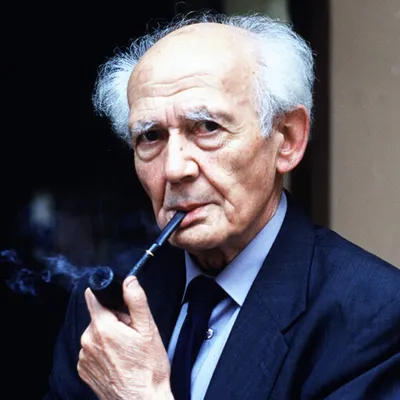
Zygmunt Bauman
Zygmunt BaumanSociologyPolish1925–2017


Life and Thought
Zygmunt Bauman (1925–2017) was a Polish-born sociologist and thinker who spent most of his academic career at the University of Leeds. Through his concept of "liquid modernity" and his analyses of the Holocaust, consumerism, identity and human bonds, he became one of the most influential theorists of contemporary society.
Zygmunt Bauman was born on 19 November 1925 in Poznań, Poland, into a Jewish family. When the Second World War began, his family fled to the Soviet Union, and at the end of the war he served in the Polish army alongside Soviet forces. After the war he studied sociology at the University of Warsaw, where he later became a professor of sociology. During that period he focused mainly on the sociology of socialism, the labour movement and Marxist thought, including the ideas of Antonio Gramsci.
In the course of the anti-Jewish campaign of 1968 he was dismissed from his academic post and forced to leave Poland. After a period in Israel, he took up a chair in sociology at the University of Leeds in England in 1971 and remained there until his retirement in 1990. Even after retiring he continued to write, and he published a large part of his best-known work in this period.
In Legislators and Interpreters (1987), Bauman examined the role of intellectuals in the modern era. In Modernity and the Holocaust (1989), he argued that the Holocaust cannot be regarded as an aberration from modernity, and that instrumental rationality, bureaucracy and the modern division of labour played a part in making it possible. In the 1990s, in books such as Postmodern Ethics, he turned to postmodernity and ethics.
His worldwide fame rests mainly on his body of work on "liquid modernity", which began with the book Liquid Modernity (2000). In his view, contemporary society has moved from a "solid" modernity of stable institutions to a "liquid" one, in which identity, work, relationships and commitments are temporary, fragile and constantly changing. He extended this framework to themes such as love, migration and asylum, fear, consumerism and individuality in works including Liquid Love (2003), Wasted Lives (2004), Liquid Life (2005), Liquid Fear (2006) and Consuming Life (2007).
Bauman received awards including the Amalfi Prize (1992), the Theodor W. Adorno Prize (2010) and the Prince of Asturias Award for Communication and Humanities (2010) in the social sciences. He died in Leeds on 9 January 2017.
Bibliography
Writings and transcribed lectures2 titles
Sedanet articles about Zygmunt Bauman