Philosophy
What We Left Behind in Childhood!
Returning to childhood does not mean regressing to self-centeredness, but rather recovering qualities that sages have long commended: presence in the moment, simplicity, and a questioning spirit. The valuable childlike traits that adults have often lost are the key to entering the realm of wisdom and creativity.
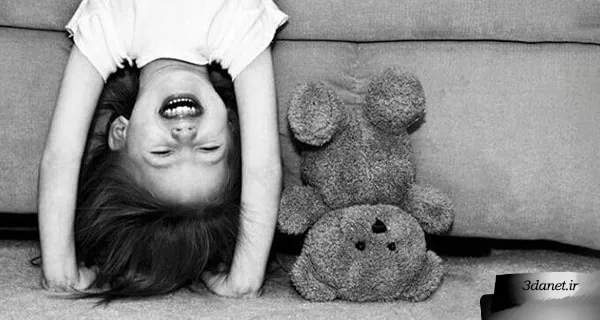
Poets say: “The dream of growing up was not good / Would that we had remained children all our lives.” And they say: “Come, let us become simple like the lark / Come, let us return and become children,” but is a return to childhood possible? What does a return to childhood mean? The recovery and re-cultivation of what sensibilities can make us children again? And fundamentally, is recovering all childish sensibilities a good thing?
Of course, children have states and sensibilities that are better left behind, and we too are better off not returning to them. By way of example, one can point to children’s self-centeredness. Children want everything for themselves and must gradually learn that at times, it is better to prefer another over oneself. Or that children often lack self-restraint and cannot, through foresight and prudence, forgo certain pleasures and gratifications. Children possess a kind of unexamined hedonism which, were it not for the care of adults and parents, might well ruin their lives.
It is clear that when people speak of returning to the states of childhood, they do not mean returning to that lack of self-control, absence of self-restraint, self-centeredness, and unexamined hedonism.
Nevertheless, what blessed and precious sensibilities exist in most children that the sages recommend we adorn ourselves with?
“Our problem is that we never trust the three-year-old child within us. Where words lose their power, it is this inner child of ours who speaks a new word, and where we have reached dead ends, it opens a new path before us.” (Weariness, Christian Bobin, translated by Pirouz Sayyar)
Life in children is full, vibrant, and fresh. Vitality, light-heartedness, serenity of mind, the unmediated experience of existence, simplicity, and a wonder-filled gaze upon the world are among the components of childhood. Christ considered the key to entering the Kingdom and the secret of wisdom to lie in returning to childhood:
“They came to Jesus and asked, ‘Who is the greatest in the kingdom of heaven?’ He called a little child to him, and placed the child among them. And he said: ‘Truly I tell you, unless you change and become like little children, you will never enter the kingdom of heaven.’” (Gospel of Matthew, chapter 18)
André Gide extols the agility and liveliness of children and loathes a wisdom that is accompanied by slowness and distrust:
“I loathe anyone and anything that degrades human dignity, and I loathe anyone and anything that seeks to diminish a person’s wisdom, self-confidence, and agility. For I do not accept that wisdom is always accompanied by slowness and distrust. That is why I believe children often possess more wisdom and sagacity than the elderly.” (Fruits of the Earth and New Fruits, translated by Mahasti Bahreini)
Jean Piaget said:
“The ideal I personally try to attain is to remain a child until the end of life. Childhood is the highest period of creativity.” (Quoted in: Poetry and Childhood, Qeysar Aminpour)
In what follows, some of the good sensibilities that most of us have left behind in childhood will be mentioned.
The Good Sensibilities of Children:
1. Living in the Present Moment
Living in the present moment is nothing other than being present. Being present in the here and now. “Bathing in the pool of the now” such that you are entirely soaked and washed. Living in the present moment means engaging in an activity with attention and presence of heart. Children possess this sensibility, for when they become absorbed in something, they engage in it with all their heart and soul, and this is living in the moment. Most of us, when doing something, do not direct all our senses and attention to it and suffer from a kind of dispersion and distraction of mind.
“If wisdom exists for me, it consists of the art of being fully present, with immense and sustained attention. That is why children fascinate me, because of their talent for being fully present, in the pure present moment. I have a deep understanding with them.” (The Light of the World, Christian Bobin, translated by Pirouz Sayyar)
Since feeling God is only possible through a deep presence in the present moment, children are the closest to God. Christian Bobin writes:
«His boundless existence is manifested only in the whispers of children... God is what children know, not adults.» (The Very Best Friend, translated by Pirouz Sayar); «God is not a thought or an idea, but the pink and blue vapor left by children's snail-like lips on the glass, the care for ordinary life—a profound, contemplative peace of heart» (A Killer as Pure as Snow, translated by Farzaneh Mehri); «Infants hold God captive within their closed fists.» (Life Anew, translated by Sasan Tabassomi); «In every newborn, God places Himself once again in our not-so-certain hands.» (Ruins of the Sky, translated by Seyed Habib Goharian and Saeedeh Boughiri); «A child at play radiates more light in their game than saints in their prayers or angels in their songs. A child at play is a comfort to God.» (Six Works, translated by Mahtab Bolouki)
۲. Acting on One's Natural Disposition
Acting on one's natural disposition means our behaviors are in harmony with our feelings and emotions. The fact that children burst into tears whenever they feel like it is a sign of this spirit. We often refrain from crying or laughing, and by considering expediencies and the opinions of others, we do not act in accordance with the emotions that surge within us.
A child is largely removed from indoctrinations, suggestions, prevailing fashions, propaganda, and widespread teachings, and can experience life as they themselves prefer, not as the approval of others dictates. Esmail Khoi says:
«When I was a child
People did not exist.»
۳. Taking Play Seriously
When children play, they are immersed in the game with their entire being. As we pass through childhood, we forget that the art of living is the art of playing. But wholeheartedly, and with all one's soul. Nietzsche says: «Maturity in a man: that means having rediscovered the seriousness one had as a child, at play.» (Beyond Good and Evil, Aphorism 94)
۴. Inquisitiveness
Inquisitiveness is a childlike trait that gradually gives way to surrender and passive acceptance. Seekers of truth have been those who kept this childlike characteristic alive within themselves and strengthened childlike questioning and exploration. Isaac Newton said:
«I do not know what I may appear to the world, but to myself I seem to have been only like a boy playing on the sea-shore, and diverting myself in now and then finding a smoother pebble or a prettier shell than ordinary, whilst the great ocean of truth lay all undiscovered before me.» (A Window, compiled and translated by Simin Saleh, Shur Publications)
۵. Simplicity
Children are straightforward and simple. Their appearance reflects their inner being. The seeds of children's hearts are visible. Sohrab Sepehri said:
«I peel a pomegranate, seed by seed, and say to my heart: It would be good if these people's hearts' seeds were visible.»
Forough Farrokhzad said:
I burn from this duplicity and deceit
I desire a childlike single-heartedness
Childhood is the era of simplicity and unadornedness.
Abu Sa'id Abu'l-Khayr considers the essence of Sufism to be unadornedness, simplicity, and the abandonment of affectation: «al-taṣawwuf tark al-takalluf / Sufism is the abandonment of affectations.» (Tasting the Flavor of Time, from the Mystical Heritage of Abu Sa'id Abu'l-Khayr, edited by Mohammad Reza Shafiei Kadkani)
Sa'di considers the mystic to be a person without affectation:
Affectation is not for the dervish man
This advice is but a single word, no more
(Bustan, Chapter Two)
۶. Wonder and Fresh Perception
«It is very hard to endure the fixed gaze of a child. It is as if God is seated before you... scrutinizing you and at the same time astonished by your existence.» (Everyone is Afflicted, Christian Bobin, translated by Negar Sedghi)
Vitality and the capacity for wonder is a desirable psychological state and brings about freshness. The virtue of wonder and amazement is that it delivers one from the tedium of habit. It is for this reason that Rumi praises childlikeness and considers the wise to possess this childlike quality. He says:
«God Almighty bestows a childlikeness upon the old, out of His grace, of which children themselves are unaware. For childlikeness brings freshness, makes one leap up, laugh, and desire play, because it sees the world anew and has not grown weary of it. This old person also sees the world anew; he too desires play, is lively, and his skin and flesh increase.» (Fihi Ma Fihi)
Rollo May writes:
«Jesus' saying that unless you become as a little child you shall not enter the kingdom of God. This has nothing to do with childishness or immaturity; it refers to the child's capacity for wonder and amazement at everything he encounters.... Wonder is the opposite of pessimism, boredom, and listlessness; it is a sign of vitality, interest, hope, desire, and being affected by the things one encounters. Wonder is, in fact, the state of being open to the existence of things and matters whose depth and meaning one's thought is incapable of grasping. Moreover, as Joseph Wood Krutch says: wonder is short-lived... and human lives would be richer than they are if their reaction to anything new were more often: 'Oh, how interesting!' rather than 'So what?'... Goethe said that 'Wonder is the highest feeling a human being can have, and if the simplest phenomena of life fill him with amazement, blessed is he; nothing higher or more sublime can exist.'» (Man's Search for Himself, Rollo May, translated by Dr. Seyed Mehdi Soraya)
To be in wonder, which is a prominent characteristic of children, is a poetic talent that places children in the rank of poets. Dr. Shafi'i Kadkani writes:
«Perhaps it can be said that in one period of history, all humans were poets. In that period when they were amazed by ordinary events of nature and every sensory perception of the environment was novel to them, it was wondrous, and naming things was itself poetic inspiration. Early humans, who dealt with the essence and nature of things and were close to them, named things, and this naming gave things a kind of secondary emergence or existence.» (Imagery in Persian Poetry, Mohammad Reza Shafi'i Kadkani)
Romantic-era writers and poets, especially, have emphasized the childlikeness of the poet and praised childlike disposition:
«Werther, the hero of Goethe's famous novel, says, referring to the precious words of Jesus Christ: 'Would that you also become like children.' Jean Paul says: 'Dreams take us back to childhood.' Novalis emphasizes that to examine nature, the simplicity and quick receptivity of a child are needed. William Blake, the great English poet, strives to create a golden age of intuition by recreating childhood within himself. Coleridge says: 'The poet is one who combines the simplicity of childhood with the powers and capabilities of adulthood, and contemplates everything with the freshness, wonder, and amazement of a child.' For Wordsworth, 'The Child is father of the Man.' Addressing the child, he says: 'Thou best Philosopher.'» (Quoted from the book: Poetry and Childhood, Qeysar Aminpour)
7. Animism
The child finds and sees all beings as alive. He listens to the water's words and can address the lily flower as 'you.' A quality that poets have cultivated well within themselves and thus possess a living childhood. Forugh used to say:
«Little Ali was sitting by the pond, listening to the water's words.»
Sohrab Sepehri used to say:
«I saw a child, smelling the moon... I saw a poet, when addressing, say to the lily: you»
Mystics, too, who possess a living childhood, find existence to be animate and entirely filled with clamor, cries, and tumult.
Amid the garden, the red rose makes a great commotion,
Saying, "Smell my mouth, see what scent it has!"
- Rumi
These trees are like the people of the earth,
They have raised their hands from the dust,
They make a hundred gestures towards the people,
And speak to those who have an ear to hear.
With green tongues and long hands,
They tell the secrets from the heart of the earth.
(Masnavi / Book One)
8. A Mysterious View of Existence
Children see the world as mysterious. Attaining spiritual and sacred experiences depends on such a perspective. Religious experience is the experience of the mysterious. Albert Einstein says:
"The most beautiful and deepest experience a man can have is the sense of the mysterious. It is the fundamental experience that underlies religion and all the most profound endeavors in art and science. He who has never had this experience seems to me, if not dead, at least blind. To sense that behind anything that can be experienced there is something that our minds cannot grasp, and whose beauty and sublimity reaches us only indirectly: this is religiousness." (A Window, compiled and translated by Simin Saleh)
Christian Bobin writes:
"Day and night I can speak with an infant: someone arrives who has suffered no harm from false truths and habits. Infants possess something that seems founded on wisdom, like Buddhas. They bring us news from a very distant star, news that words have not yet made slow. Infants also allow themselves to stare, which is precisely what we do not allow ourselves to do. If we look at this absolute stranger, the infant, we see that they are almost startled by the ordinary language we use to speak to them. When we utter foolish little words to them, we see their gaze flash at our inappropriate speech. Infants are pure metaphysicians, and it is our shallowness that grants them nothing more than ordinary praise. This is an insult we inflict upon the very subtle intelligence of these sages." (The Light of the World, translated by Pirouz Sayar, Agah Publishing)
9. The Unmediated Experience of the World
Children taste and savor existence under their teeth. Existence has a livelier, more dynamic, and more immediate presence in children.
Children do not connect with existence through words and concepts constructed by the mind. The child has an existential, not a conceptual, contact with the world. The child is in existence; the wall of language has not yet created a distance between them and the world.
Christian Bobin writes:
"The first knowledge of God in life is a bittersweet knowledge, swallowed in childhood with the first morsels of food. The child sucks God. Drinks Him, hits Him, laughs at Him. Shouts after Him and finally, in His arms, in the depth of darkness, falls asleep with a full stomach. This is an instantaneous knowledge. It is given to those newly born; the men of the church do not have it, nor do those who have a weak knowledge of God." (The Little Party Dress, translated by Mozhgan Salehi)
Sometimes an abundance of information robs a person of the wings to fly. Becoming Aristotle robs one of the chance to be a swallow. Sohrab Sepehri recalls his childhood with sorrowful regret. A time when one was not so confined by words and names and could savor and taste life, and in his words, drink water without philosophy and eat mulberries without knowledge:
"Our garden was on the shady side of knowledge.
Our garden was a place where feeling and plant intertwined,
Our garden was the point of intersection of gaze and cage and mirror.
Our garden was, perhaps, an arc of the green circle of bliss.
I was chewing the unripe fruit of God that day, in sleep
I drank water without philosophy.
I picked mulberries without knowledge.
The child, tiptoe, tiptoe, slowly disappeared into the alley of dragonflies
I packed my burden, left the city of weightless fancies
My heart full of the dragonfly's estrangement."
Sohrab saw that the sweet-singing swallow of human existence had fallen, trapped under the weight of tons of names:
"Let us set the burden of knowledge down from the swallow's shoulder to the earth.
Let us reclaim the name from the cloud,
from the plane tree, from the mosquito, from summer.
...
"Words must be washed.
The word must be the wind itself, the word must be the rain itself."
Let us push aside the layer of words that prevents our direct contact with existence, and in this existential and overflowing connection, invite the world into our interior and open the door to the sacred.
When the veils of concepts and words are drawn aside, we become filled with existence. God comes to our home. The world flows within us and, in Sohrab's expression, "all the rivers of the world pour into me."
10. Causeless Joy
Children can enjoy processes. We, however, often do not enjoy the path and the process, and wait for important events or reaching the endpoint and the result to be happy. Causeless joy is when we unify ourselves with the way, with the path, and take pleasure in the very act of pulsating, the very act of going. Connectedness to the path is a quality that children apparently possess more of. It is as if the unspoken language of childlike joy is: "The shore is an excuse; the going is the arrival."
Aldous Huxley, who said, "The real genius is to have a childlike spirit in adulthood," was probably referring to this particular genius.
The genius of connectedness to the path and causeless joy.
Francis Thompson has said:
"Do you know what it means to be a child?
To be a child is a gem that people have lost in these times.
To be a child is to have faith in faiths and beliefs.
To be a child is to be so small that fairies cannot whisper in your ear.
To be a child is to turn a pumpkin into a golden carriage,
and mice into horses,
and lowliness into loftiness,
and nothingness into being.
To be a child is to live in a hazelnut shell
and consider yourself the king of infinite space.
To be a child means:
To see a world in a grain of sand,
and a heaven in a wild flower,
to hold infinity in the palm of your hand,
and eternity in an hour." (Quoted from: Kimiya, a journal of literature, art, and mysticism (5), compiled by Dr. Hossein Elahi Ghomshei and Seyyed Ahmad Beheshti Shirazi)
Esmail Khoi, in a poem, speaks of the wondrous ecstasies of childhood. Of the negligible distance between the child and the world. The flight of a kite takes you to the orange groves of the sun. The volume of existence is more visible, and the music and melody of life have a louder resonance and rhythm. Starlings of delight and joy nest in the tree of life, and the cats of "thought" are not plentiful and do not scare away the birds of freshness:
"When I was a child,
the flight of a kite
It would take you from the rooftops of eyelid's dawn-waking
to
the orange groves of the sun
ah
those short distances.
When I was a child
there was more water and earth and air
and the cricket
at night
in the midst of the moon's music and the deep silence
would sing.
When I was a child
in every thousand and one nights
one tale was enough
for your drowsy sleep and waking
to be brimful.
When I was a child
on the windows of smiles
the tamest starlings of joy had their nests.
ah
in those days the cats of contemplation
were not so many."
.
.
What We Left Behind in Childhood!
Sedigh Ghotbi
.
.




Discussion1 comments
با سلام و تشکر فراوان کاش امکانی می گذاشتین واسه به اشتراک گذاشتن مطالبتون