Psychology
Why Do We Lie?!
Psychiatric studies show that people tell lies many times a day; although society sometimes rewards the liar, this behaviour is rooted in fear and need, and honesty brings greater inner peace.
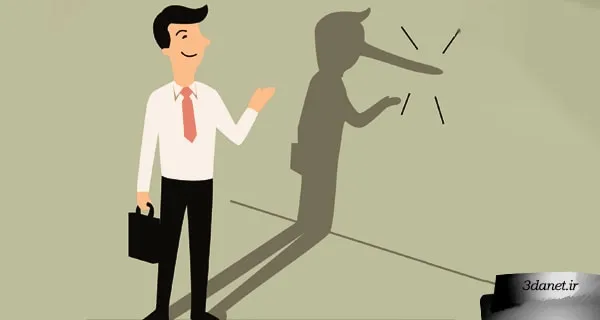
I am sitting inside the clinic, waiting for the next patient to arrive. A tall, cheerful woman enters; she appears sociable and exchanges pleasantries warmly. Standing, she shows me her request, which is for a nerve conduction study and electromyography. She looks like a 50–55-year-old person, but she says she is 67. She has lived in America for years and has been in Iran for a while to care for her disabled veteran brother. She has had diabetes for 15 years and injects 5 units of NovoRapid insulin before each meal. Her request is written on a blank prescription form by a specialist. She also hands me a disposable EMG needle, and I ask her to show me the receipt. On the receipt are the patient’s admission date, the name of the requested service, my name as the provider, the cost of the service, which is zero (completely free), and the patient’s name, which is Jalal... I ask her, “Are you the patient?” She says yes. I say, “But the patient’s name here is a man’s name!” She says, “Admissions probably made a mistake; my name is Halal!” I say, “Well, your request is on a blank prescription; please hand over your medical booklet.” She hands over a booklet in the name of that same Jalal..., and the request for the nerve conduction study and electromyography is also unprofessionally written, stamped and signed by a general practitioner, whose name differs from the specialist who wrote the request on the blank form! ... Leonard Sax, a professor of psychiatry at Brandeis University, says that lying has a long history, and not a day goes by when we do not tell or hear a lie! Until just the last thirty years, this subject was rarely discussed in the fields of psychology and psychiatry. In psychiatry books from fifty years ago, lying might have been confined to a single line or a paragraph, and the traces of this topic essentially had to be sought under cultural, ethical, and theological discussions. Freud, the founder of psychology, said almost nothing about lying. It was only recently that psychiatrists realized the complexities and depth of lying. Another psychiatrist named DePaulo has conducted extensive studies on lying in interpersonal and social relationships, in connection with personality, as well as changes in facial expressions, gaze incongruity, facial and speech patterns during lying, along with manner of speech, speech errors, changes in tone and pitch, and their philosophizing. Some of her study’s findings are also used by intelligence and interrogation services so that, by identifying “micro-expressions” in the overall patterns of gaze, face, and speech, they might detect the guilt of suspected individuals. DePaulo also affirmed Nietzsche’s saying that “lying is a condition of life.”
In Persian literature and culture, lying is utterly cursed and condemned. The rich treasure of our literature is full of praise for truthfulness and reproach of lying, but it is clear that this has not had much impact on spreading a culture of honesty! Religious teachings have called the liar an enemy of God and counted it among the major sins, yet it is evident that for some believers, telling a lie is easier than drinking water! In the social arena, lying is reprehensible, but the affairs of liars run more smoothly! In politics, it is no exaggeration to say that honest politicians are fewer, and dishonest politicians more often ride the throne of power.
The results of DePaulo’s studies are somewhat embarrassing. In a 1996 study by her and her colleagues on 147 individuals aged 18 to 76, she found that they tell lies once or twice a day. Both men and women, in a ten-minute social conversation with each other, spin lies twenty percent of the time. Over the course of a week, this rate reaches up to thirty percent. This situation is worse in relationships between parents and their teenagers. On romantic dates, couples lie to each other appallingly, but in marriage, the situation is slightly better, and husbands and wives lie to each other in only ten percent of cases—and here, perhaps marriage plays a protective role. In this study, the exchange of pleasantries, such as “I’m fine,” “No problem,” etc., were not counted as instances of lying.
Is lying intrinsic to social life?
In some professions, lying is essentially intrinsic to the job; lawyers, for the sake of their clients and the success of their work, are forced to find legal pretexts for lying! The closer people are to one another, the more surprisingly they lie to each other, which is probably a form of benevolence and altruism. Over time, women become more skilled at sensing lies, while men are in a deplorable state in this regard and readily accept lies about themselves. People with higher self-confidence, who are sociable and extroverted, lie more compared to depressed and introverted individuals; responsible people, however, lie less. Psychologists have even gone further, saying that a little "self-deception" is not bad for mental health and serves as a kind of defense mechanism to escape anxiety. In Arthur Miller's story "Death of a Salesman," the hero, after his lies are laid bare, becomes an immortal spirit and a tragic character! Essentially, society rewards Machiavellian and deceitful individuals more than honest and upright people; many liars repeat their lies and deceptions because of receiving this reward. The thought that one day there would be no opportunity for lies and deception, and the world would be entirely filled with a ceiling of honesty and truth, is terrifying; then the pillars of society might have buckled under this weight and collapsed!
All this has been said to arrive at this point: although liars may be rewarded in society, it is not the case that they have a calm and assured psyche, a happy inner self, and a joyful countenance. Liars are not comfortable people in any case. The psychological root of lying stems from no more than three states: fear, need, and the desire for more attention and fame. Therefore, liars are cowardly, needy, selfish, and narcissistic, and lying for them is mostly a defensive, negative act carrying a negative charge. On the other hand, in honesty, due to adopting a positive and constructive approach, the individual carries a positive charge and more energy, and in a word, feels better. So, if the percentage of liars is still higher in the social sphere, it is because most people, unfortunately, in terms of psychological needs, are still at the base of Maslow's pyramid and not at its peak, and are engaged in addressing primary needs, the fear of losses, and the constant worry of not benefiting from life's advantages.
.
.
Why Do We Lie?!
Author: Dr. Mojtaba Khakpour (Neurologist)
.
.





Discussion1 comments
« گنجینه غنی ادبیات ما مملو از ستایش راستی و نکوهش دروغ است ولی واضح است که تاثیر چندانی برگسترش فرهنگ صداقت نداشته است » . دروغ کم بسامدتر از راستی است و زمانی نافذ است که راستی غالب باشد . در واقع دروغ بر بستر راستی است که مؤثر و کارآمد به نظر می رسد . دروغ ستیزی دروغ گویی را کاهش داده است و کاهش می دهد ؛ آن را نابود نکرده است و نابود نمی کند . همین که دروغ گو از بر ملا شدن دروغش واهمه دارد و پیش خود از دروغ گفتن شرم می کند ، نشان درستی راست گویی و نأثیر ژرف دروغ ستیزی در فرهنگ دیرینه ایران است .