Philosophy
A Conversation with Hassan Bolkhari: Emanating from the Essence of Art
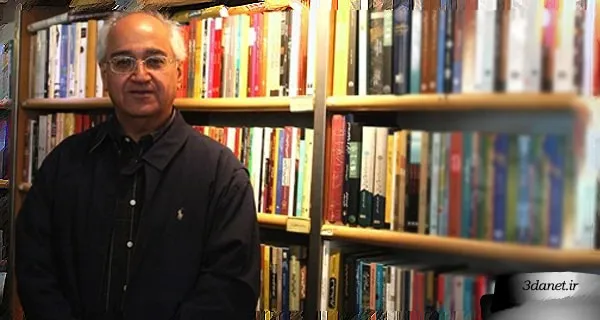
Art is the trans-rational dimension of the human being and the narrator of the truth of existence; the philosophy of art uses rational tools to explain its origin, purpose, and place. Hassan Bolkhari says this discipline should not merely recount philosophers' opinions and has a nature distinct from the creation of an artwork.
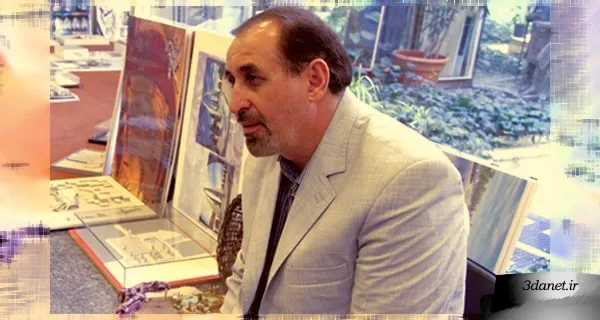
Since the academic discipline of the philosophy of art has recently been established in Iran, Dr. Hassan Bolkhari, in a conversation, has critically examined some of the dimensions of this field.
● In general, what are the subjects, issues, definition, and domain of study of the philosophy of art? How does this discipline differ from other “philosophies of …,” and fundamentally, where does it originate? Naturally, to explicate the philosophy of art, we need a definition of art itself, which serves as a prelude and an entry point for discussing its philosophy. Defining art is no easy or simple task; especially if we wish to offer this definition from the perspective of the thoughts of Wittgenstein and figures like him who fundamentally consider the definition of art to be impossible, the matter becomes even more complex. But the reality of the matter is that throughout the 25 centuries of human artistic thought and functions, alongside theoretical discussions, such debates concerning the quiddity and nature of art have also existed. Today, four or five theories have been proposed regarding the definition of art and its origin; some consider art to be imitation; the famous term “techne,” which is a Platonic term used in ancient Greek philosophy by Plato and Aristotle to explicate art, indicates that humans imitate nature, and this very imitation of nature, or techne, is itself art. In expressing the concept of art and the imitation of nature, there is a difference between the views of Plato and Aristotle; Plato, due to his belief in the world of Forms, considers the artist to be someone who draws a veil between the reality and the truth & a thing (the Form). It is for this reason that in Plato’s thought, art & the artist hold little value, except in specific branches such as music, which has its own particular domain. Aristotle, in a rational view, posits imitation within the human dimension of poietike; Aristotle believes every human being has three realms: theoretike (theoretical), poietike (poetry and imagination), and pragite (practical). Pragite is the practical aspect of human life; theoretike is the theoretical and cognitive aspect of human thought or his human realm, and poietike is the inventive and creative aspect of the human being, which is precisely where the discussion of art is also raised. So, the first theory in the realm of defining art is the theory of imitation (Mimesis). The second theory is the theory of expression, which considers art to be the expression of human emotions or inner desires, and it is a new theory regarding the nature of art. Figures such as Tolstoy and Croce have proposed views in this domain. In another definition, art is Form. In this theory, the artist is no longer the basis for understanding the concept of art or for analyzing and explicating the artwork; rather, the artwork itself becomes the focus. By Form, we mean structure, or in Aristotelian thought, the substance and essential nature of the work. The next theory in the realm of the philosophy of art is the theory of Beauty. This theory considers art to be a kind of depiction of natural beauty within the heart of existence. Recently, another theory has been mentioned under the title of the foundational theory, which pertains to approximately the last 15 years. This theory considers art to encompass all those schools that, throughout history, have raised points concerning feeling and that poetic and imaginative aspect of the human being. On one matter, there is no doubt, and that is that art is the trans-rational aspect of the human being. A famous saying in this context is: “When speech ends, music begins.”; in other words, art is the aspect in which the human being depicts the unspoken inner realities of life. Today, almost all thinkers agree that art is something that narrates the beyond, or as Heidegger says, narrates an Other Thing, which from his perspective, that other thing is the “Unseen” or the truth of Being; even figures such as the followers of the Frankfurt School (those who discussed the thoughts of Marx and Engels in the realm of art) or, for example, Marcuse, who later wrote the philosophy of socialist art, also concur in the realm of the philosophy of art with this notion that the artwork is not a complete image of reality but rather depicts something beyond reality.
● So far, very brief and limited definitions of art have been given. But what is the philosophy of art? To explain this issue, it is necessary to first mention that in the realm of philosophical division, from my perspective, pure philosophy is that philosophy which deals with the issues of existence and essence and those fundamentally philosophical matters that philosophy is responsible for explaining, elucidating, and answering; for example, the question of what existence is, or what the relationship between existence and essence is. Does unity exist in the world under the title of Unity of Being, or multiplicity? Which is real and which is metaphorical? But we have another branch of philosophy called secondary philosophy (philosophy of…); a philosophy that is placed alongside a subject and uses philosophical tools to explain the beginning, end, origin, and ultimate end of that annexed subject. For example, in the discussion of the philosophy of physics, you do not have physics qua physics, meaning you do not discuss the scientific issues of physics. What is presented today as the philosophy of art is a scientific discipline or an academic field that tries to rationally explain and analyze the rational aspects or the general principles governing art. Why? Because the realm of philosophy is the realm of reason; even Illuminationist philosophy needs a rational language to express its illuminations, because no philosophy is needless of rationality. So, in such a context, the philosophy of art examines the origin and source of art, how art is creatively cultivated in the mind and brain, the ultimate end of art and its relationship with humanity and society, the effects of art on the human worldview or vice versa, the effects of worldviews on artistic methods, styles, and techniques, and matters of this kind. In other words, the philosophy of art is the explanation of the place of art in human life, whereas the artist qua artist has nothing to do with this place; when a painter or a sculptor creates a work, a filmmaker makes a film, or a musician composes and plays a piece, they have nothing to do with any of these rational definitions; even if you ask them at that moment, what are you doing? They do not know; just as if they had rationally asked Rumi in the middle of the night, at the time of composing the truth of the Masnavi upon the soul of Hisam al-Din, what he was doing, he would not have known. The same is the state of a worshiper when they are truly worshiping in their prayer, because they are immersed in another sea. Based on such a definition, since the realm of art qua art is the realm of imagination and a supra-rational domain, the artist cannot provide a rational explanation of it. The rational explanation belongs to the philosopher; the rational explanation of that concept which occurs within the essence of the artist belongs to the one whose tool of thought and movement is reason, and this means the philosophy of art. But in my opinion, the discipline established under the title of philosophy of art at the master's and doctoral levels in Iran is different from the philosophy of art discussed in the West. Even if such a view exists in the West, the critique I am about to present still applies to that view, and that is: what distinguishes the philosophy of art from other philosophies? I want to answer this question with this critique. From my perspective, the philosophy of art is not the recounting of philosophers' opinions about art. (This is a common mistake that we must correct.) When we speak of the philosophy of art, our minds immediately go to the point of, for example, what a philosopher like Hegel said about art? Or why does Hegel see art as buried in its own historical reality? If we say that Hegel's philosophy of art is such and such, there is no problem, but if we equate Hegel's thoughts about art with the philosophy of art, it is severely wrong. Hegel, Heidegger, and especially Kant in the discussion of aesthetics and art can have philosophical discussions, but the sum total of philosophers' ideas and thoughts about art is not the philosophy of art. Why? Because the realm of philosophy is separate from the realm of art. A philosopher can present a series of theoretical ideas about art, but philosophical ideas do not necessarily mean the philosophy of art. From my perspective, the philosophy of art emanates from the essence of art, not from a philosophical look at it. Let me give one or two examples to clarify the issue. Two of the most prominent artists and art connoisseurs of the Renaissance period, named Leonardo da Vinci and Leon Battista Alberti, have very subtle and interesting thoughts about art. Lionello Venturi, in his book "History of Art Criticism," believes that the thoughts of individuals like Alberti and da Vinci are absolutely not taken seriously in the history of the philosophy of art; whereas, for instance, I, as someone who examines the foundations of art and is familiar with art, see that the founders of the theory of "expression" in art are precisely these individuals; where in Hegel's philosophy of art are the thoughts and subtle points that da Vinci has about color and its application discussed?
اصلا داوینچی چقدر در فلسفه هنر زنده است؟ سخن میکل آنژ مبنی بر این که «من وقتی به سنگ نگاه می کنم ، سعی می کنم آن زیبایی را که در بطن آن وجود دارد، استخراج و کشف کنم و به تجلی بگذارم»، در کجای فلسفه هنر جای دارد؟ جایگاه هندسه مقدس در پردازش هنر شرقی به ویژه هنر اسلامی ، در فلسفه هنر کجاست؟ جایگاه رنگ و نور در هنر اسلامی در فلسفه هنری که تنها دغدغه نظر فیلسوف را دارد، کجاست و هزاران مصداق دیگر. من این سوال را جدی می دانم که آیا کسی که با روح هنری آشنا نیست ، می تواند تفسیر دقیق و عقلانی از هنر ارائه بدهد؟ من معتقدم اگر کسی روح هنری نداشته باشد، نمی تواند پیرامون هنر نظر بدهد. فلسفه هنر باید توسط هنرمندانی تدوین و مبانی نظری اش آشکار شود که آنها، بالذات هنرمندند و بالعرض متفکر اما در فلسفه هنر رایج ، نگاه فلسفه و بالتبع فیلسوف ، بر هنر تحمیل می شود و اتفاقا به همین دلیل ، آن مبانی ذاتی که در ذات هنر وجود دارد، افشاء نمی شوند. من سوال می کنم ، در فلسفه هنری که در دانشگاه ها تدریس می شود، جای تارکوفسکی کجاست؟ تارکوفسکی از آن دست هنرمندانی است که سعی می کنند دیدگاه هستی شناسانه خودشان را در قالب هنر بیان کنند. در فلسفه هنری که صرفا مبانی نظری در آن در نظر گرفته می شود، آن هم صرفا با ابزار فلسفی یا با نگاه فلاسفه ، تارکوفسکی قابل تحلیل نیست بلکه در حاشیه قرار می گیرد. من نمی گویم که فلسفه هنر اصلا کاری با تارکوفسکی ندارد، چرا؟ چون اتفاقا برخی از فلاسفه می توانند از تارکوفسکی نقد فلسفی ارائه دهند، اما واقعیت قضیه این است که باز هم در اینجا نگاه خاص فلسفه بر اندیشه های تارکوفسکی تحمیل می شود. از دیدگاه من واژه مناسب برای بیان ماهیت هنر، حکمت هنر است نه فلسفه هنر زیرا حکمت که نوعی عقل اشراقی است با ذات خیال انگیز هنر بیشتر تطابق دارد تا فلسفه که نگره ای کاملا عقلانی است.● Now that the discussion has reached this point, please explain how the path of the philosophy of art diverges from pure philosophy. Art has an essential difference from all other academic disciplines; art is a philosophy unto itself; art is a worldview unto itself, therefore it cannot be placed alongside other academic disciplines. That is, you cannot say we have physics and chemistry, and we also have art; rather, you can say we have philosophy, and we also have art; you can say we have religion and a worldview-oriented perspective on humanity and existence, and we also have art. Why? Because art inherently possesses an identity in itself; when an identity is in itself, it is no longer an adjunct. It is for this reason that I insist the philosophy of art must be defined by the artist, or at least, the philosophy of art should be explicated by looking at the spirit of the artist. This is the very discussion we have, again, in the philosophy of art in its conventional sense and in art criticism. When critiquing a work of art, art history provides us with two tools: 1- Critique of the artwork itself, which can be analyzed in terms of "form" and "beauty." 2- The spirit of the artist who is the creator of this work, and in a way, this work reflects their spirit, perception, and ontology. We have these two tools and can use both in critiquing a work of art and also in defining art. If we take Heidegger's thought as a basis here (Heidegger believes that art is that specific intermediary between the artist and the artwork, and these return to each other in a circular manner), this question arises: what is our tool for the precise interpretation of a work of art? To truly be able to approach the spirit of the artist, but approaching the artist's spirit is not possible except through a kind of artistic feeling. If you lack artistic feeling, if you do not traverse the same spiritual journey that the artist has traversed, can you be a true interpreter and expositor for the artist and the essence of their work? How can one not approach the mystical spirit of an Islamic artist who sees existence as a mirror for the manifestation of the Truth, and yet seek to analyze and explicate the nature of Islamic art? What I am saying, that the true philosophy of art is that which must emanate from the essence of art and that a philosophical perspective should not be imposed upon art, is made possible precisely by a new scholarly class; this new scholarly class views the artwork according to the spirit of its creator; a spirit that has, in truth, manifested a part of its own perspective and worldview in the artwork. In other words, in this realm, we need a new spectrum of individuals. In previous sentences, I mentioned that, for example, Venturi in his book "History of Art Criticism" says: "The history of the philosophy of art passes through the thoughts of Leonardo and Alberti." These two, in the realm of the philosophy of art, by changing humanity's view of nature, took nature as the substrate of God's mind; in this way, the human discoverer of nature became a human who now looked at nature with a divine mind, and this issue became a very important factor for the creation of the theory of "Expression" in 19th and 20th century Europe. Now, if the history of philosophy makes the engagement of philosophers with art the axis of its philosophical work, the thought of artists like da Vinci is inevitably excluded. Whereas, from da Vinci's perspective, painting is creation; that is, painting is, in truth, a method by which the artist undertakes the discovery of a secret of the universe's mysteries. This is a clear concept that exists in the thought of individuals like da Vinci in painting and Michelangelo in sculpture. (Of course, there was a difference of opinion between da Vinci and Michelangelo, in that Michelangelo considered sculpture the supreme principle of art, and da Vinci, painting.) Da Vinci considered the design, or that which later becomes a painting or picture, not only a science but a kind of divinity. In his view, the artist, in imitating the secrets of nature, creates new concepts. According to Alberti and Leonardo: "The artist does not dissolve into God, but rather becomes a deity themselves, and instead of imitating nature, according to the principles created by the human mind, they engage in knowing those secrets of nature that flow within its core." It is here that one must hear the philosophy of art from the tongue of the artists themselves.
● According to your view in the discussion of the philosophy of art, the artist necessarily needs a rational and philosophical language to express their work, but you said in your remarks that the realm of art is the realm of imagination, not the realm of reason; how can this contradiction be articulated and resolved? The answer is very simple. You see, in mystical discussions, it is argued that the essence of mysticism is not thought, but rather the essence of mysticism is wayfaring and intuition; yet Ibn Arabi gives a rational language to his unveiling and intuition. Stace, in his book Mysticism and Philosophy, makes a very interesting point: it is true that the mystic has intuition, but when they want to convey this intuition to others, they necessarily use a language to express their ideas to the audience. If language has expansiveness, it can carry this meaning with it; but if someone who has not perceived that world wants to analyze mysticism with a philosophical gaze, what picture do they truly present? Will this picture not be a defective one? A picture that, due to the lack of perception and feeling of that meaning, will only be an incomplete narrator of the truth of the meaning. Let me give another example; a few years ago, a literary writer won the prestigious Pulitzer Prize in England. In an interview, they asked him, how were you able to win this prize? He replied: The reason for my success was presenting an accurate picture of the miners' lives in this story, and that was because, as a writer, I abandoned my personal life and for 7 months, deep underground, I suffered with the miners' suffering and rejoiced in their joy, until I was finally able to establish an essential relation with what I was trying to narrate; that is, I removed the distances between myself and it. I believe that art, like mysticism, can choose a language for itself and not become the vehicle for the dominant gaze of philosophers. Philosophy is separate from art both in subject and in language. Philosophy, with the language of reason, is concerned with discovering existence; as people like Venturi say, the philosophical gaze is a quantitative one, but art is different both in language and in content and theme. Art narrates another world, the inner world. In Persian miniature painting, specifically, color narrates another meaning; the concept that exists in this miniature painting is a concept that flows in the inner essence of the world. A thinker like Titus Burckhardt believes that Persian miniature painting is the depiction of the very immutable archetypes that exist in the thought of Ibn Arabi. Pay attention to this point: why in Persian miniature painting is the perspective vertical, and not linear, horizontal, or deep? Why in Chinese painting, according to their six principles, one of the most important of which is meditation, is the perspective also vertical? Is this not due to the Chinese trinity or great triad (Heaven, Man, and Earth)? Someone who wants to define Chinese art and Chinese myths must go to that land and establish a relationship with the meaning that exists there in order to be able to offer a definition of art and then put a painter like Picasso on trial for why he sanctifies the beauty of ugliness and, instead of depicting beauty, tries to depict the beauty of ugliness. To answer your question, in sum, I must say that in my opinion, the philosophy of art must emanate from the essence of art. It is true that artists who are concerned with imagination and journey in another world do not find a rational language, but if we want to teach the philosophy of art to our students, those who speak about this philosophy must either be artists originally and from the outset, or at least possess an artistic spirit, and then, just as mystics have employed theoretical language to explain their intuitions, choose a language to explain those meanings; just as figures like Tarkovsky have done in cinema.
● But artists usually do not do this, just as only a limited number of mystics have done so; therefore, different and sometimes contradictory interpretations of a work of art may arise, and the problem of arbitrary interpretation may occur, because artists themselves present their work as their artistic language and are not much concerned with its verbal and rational explanation unless they are asked about it? Yes, I accept this point, but just as mystics, if they themselves could not or did not wish to express their intuition, found individuals who became their voice, in the realm of art we can also witness such individuals; now, they either must come into being, for example, we should discover the theoretical ideas of people like Michelangelo, da Vinci, or, in our own civilization, Behzad. Just as Leonardo himself, as an artist, explained the foundations of his view of art, we too can find artistic individuals who have explained this particular artistic view and then consider that as the philosophy of art. The point you made about arbitrary interpretation also occurs in the realm of reason; that is, arbitrary interpretation is not a factor that negates this meaning. Is Aristotelian philosophy not a one hundred percent rational philosophy? Is reason not the serious tool of pure philosophy? So why, in the realm of pure philosophy, do you not encounter a single understanding in many cases? For example, in the realm of philosophy, some people sanctify Plato, but in the same domain, other people excommunicate Plato; so, in the domain of philosophy, we also have arbitrary interpretation; this issue goes back to various factors, why? Because interpretation is the product of the interpreter, and the interpreter is a concept defined in view of various connections and factors; whichever factor is more prominent, the interpretation takes on its color. Of course, a very important discussion arises here that must be addressed in the realm of the foundations of hermeneutic critique. Arbitrary interpretation does not mean that you should not consider the artist involved in expressing their artistic theories because their intuition is subject to various interpretations. The artist must express their own views, even if everyone has their own understanding of their art. But the reality of the matter is that just as you have general principles in the realm of mysticism, you can also have similar general principles in the philosophy of art, derived from the essence of art.
● Considering the points you made, it seems that it is the influence of a philosopher's artistic spirit that leads a philosopher to engage with the subject of the philosophy of art; that is why not all philosophers have engaged with this subject. In other words, whether a philosopher also has views on the philosophy of art depends on their spiritual states and thoughts. That is correct. In my opinion, a distinction must be made between the artistic views of a philosopher like Heidegger, especially when he considers art the narration of an "other thing" or the unseen, and other philosophers. Because Heidegger's view of the world and Being is a special view, as Heidegger employs other foundations in this realm. In Heidegger's artistic thoughts, the illuminative aspects are stronger and more prevalent than the rational aspects. Even in my opinion, the complexity and ambiguity in Heidegger's views partly stem from the predominance of the illuminative dimension of his views over their rational dimension, and such a philosopher is closer to the philosophy of art because the realm of art is the realm of imagination, intuition, and illumination. This is my general definition. For example, there is a difference between Plotinus's and Aristotle's approaches to art, and this difference is the product of the type and tool of these two individuals' perspectives; in the era in which Plotinus lived, illuminative aspects increased, and as it happens, he himself, Porphyry, and the Alexandrian school in general become revivers of Plato's allegorical and illuminative thoughts. Plato, too, because of this illuminative view, is closer to art than Aristotle. Although Plato, in his specific view of art, also considers it the imitation of an imitation or copying. Plotinus, in his thoughts on art, which were very influential in Christian art, believes that, as it happens, the artist removes that intermediary which has created a distance between the world of Forms and the work of art and imitates directly from the eternal exemplar and absolute ideas. The artist is not a mere imitator of reality; even in depicting reality itself, the artist manifests something added to reality itself. But the origin of that addition is another world (in Heidegger's terms).
●Does the philosophy of art merely pursue a theoretical discussion, or does it also have practical achievements? That is a very interesting question. Bertrand Russell, at the beginning of his book The History of Western Philosophy, says: Philosophers learn from the past and the present, meaning they are children of their time and of yesterday's meanings and foundations, and they influence tomorrow. A philosophy student must necessarily pass through the conduit of the history of philosophy. For this reason, postmodernists who destroy history are, in truth, destroying tomorrow, because history is the passageway to tomorrow; the philosopher uses the thoughts of yesterday but is not limited only to today and yesterday; rather, tomorrow, in the cycle of time, creates transformations at the heart of all issues, even social and political ones; art is the same. If the theoretical foundations of art are dissected by the artists themselves, with the definition I offered you, they become a "style." If Tarkovsky, for instance, in an interview, presents his theoretical explanation regarding the film Solaris, this mode of his perspective becomes a cinematic style; this is the practical image.
Truly, some artists possess an artistic language, like Rumi, who, despite all his illumination in the amorous play with Shams, in the Masnavi, his language is rational. If Rumi were to explain his own theoretical basis, he would create a style, and this style is the very technique, meaning the practical effect that is imparted upon something. The artist takes mystical foundations and implements them in their own work, like the Persian miniature painters. The adoption of this mystical foundation and then its use in creating an artwork, after a while, turns this process into a style, and in this way, a theoretical foundation also finds a practical achievement. These achievements are the founding of new styles, methods, and techniques in art. Another point that must be discussed in detail elsewhere is: what is the relationship between technique and meaning, or the relationship between content and form, in this realm? Because one of the most critical discussions in the theoretical foundations of art is precisely this relationship between form and meaning.
.
.
Text of the conversation with Hassan Bolkhari titled Emanating from the Essence of Art
Source: / News Site / Jam-e Jam Online
.
.
Discussion0 comments
No comments yet; let yours be the first voice.