Philosophy
A Conversation with Mohsen Javadi on Practical Atheism
Practical atheism refers to theoretical believers whose lives bear no trace of the divine and who show no practical commitment to religion. A conversation with Mohsen Javadi on the roots of this phenomenon and the four ways the human soul responds to faith and atheism.
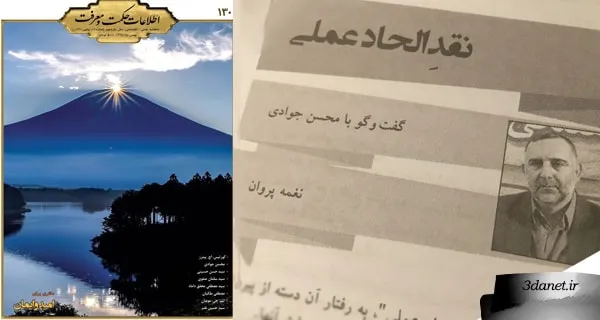
The present conversation on “practical atheism” refers to the behavior of those followers of religions who “theoretically” believe in God, yet their lives and their fundamental preferences and choices show no sign of “heartfelt faith” or inner belief. In the everyday lives of these theoretical and doctrinal believers—yet ethical and practical materialists—self-centeredness and sufficing with one’s own views and interests are clearly visible, and in practice they sometimes pursue material pleasures and carnal desires even more than those without theoretical faith. No spiritual or immaterial matter takes precedence over the material in this life, and therefore altruism, love and sacrifice, benevolence, chastity and virtue, etc., are considered worthless if they do not yield immediate material results.
A Conversation with Dr. Mohsen Javadi
At the outset of this conversation on “practical atheism,” it will likely be of interest to those in this field if, while outlining a general picture of it, you could mention how and why the subject of practical atheism became compelling enough for you to address it.
The subject of practical atheism, very briefly, is the discussion of how a group of people, while believing in the existence of God or acknowledging the prophethood of the prophets and even believing in the Resurrection, do not, in practice, commit to the practical and moral teachings of religion, and indeed their lives are no different from those of atheists. Despite their belief in monotheism, prophethood, and the Resurrection, their lives show no sign of God-centeredness, attention to prophethood and divine law, or concern for the reckoning of the Hereafter; rather, self-centeredness, sufficing with one’s own opinion, disregarding divine guidance, and heedlessness of the Hereafter’s accounting are clearly visible in them. The issue of practical atheism exists among the followers of various religions, and it was even mentioned in the latest papal encyclical this year. There are many who are considered Jews, Christians, and Muslims in terms of belief, but their lives and their fundamental preferences and choices have no divine hue and are no different from the lives of atheists, and sometimes they pursue material pleasures and carnal desires even more than them. Such people can be considered theoretical and doctrinal believers, yet ethical and practical atheists or materialists.
However, what initially sparked my interest in the issue of practical atheism and led me to address it were concepts such as practical materiality and doctrinal materiality that Martyr Motahhari had used in his book The Causes of the Tendency toward Materialism. Although he himself never directly used the terms practical and theoretical atheism, he raises the question of what relation and connection exists between practical and doctrinal materialism. This led me, after examining the works of Martyr Motahhari, to also search the works of Christian thinkers and intellectuals, and just recently I realized that the discussion of practical atheism is now being seriously raised in the letters and books of some Vatican cardinals. They are more concerned about Christians sinking into worldliness and material pleasures and neglecting the core values of Christianity, abandoning the struggle against the self, than they are about theoretical atheism and people’s disbelief in God and Christ. One of them precisely points out that the problem of Christianity today is not absolute atheism—doxastic atheism, doxastic materialism—but rather the spread and prevalence of the phenomenon of practical atheism.
The Oxford Dictionary, under the entry for Materialism, also refers to and defines two types of materialism: practical or moral materialism and doctrinal or theoretical materialism. The above definition is very similar to the definition given by Martyr Motahhari, but today the term practical atheism is used to refer to moral materialism. This dictionary first considers moral materialism and regards it as a way of life in which nothing is valued more than material pleasures such as money, power, etc. No spiritual or immaterial matter takes precedence over the material in this life, and therefore altruism, love, sacrifice, benevolence, chastity, and virtue, etc., have no value if they do not yield immediate material results. An interesting point in the Oxford Dictionary is that, contrary to expectation, it first discusses practical and moral materialism and, after explaining it, speaks of theoretical or absolute atheism.
In the Islamic world, as I said, the late Motahhari addressed this, and although he took many of his ideas on this subject from his teacher Allameh Tabatabai, he offers a very good treatment of the topic. Of course, attention to this matter is not new, and the core idea is very old. The idea of scholars without practice has existed since the past. Thomas Aquinas considers one of the basic goods necessary for moral life and human perfection to be the reasonableness of one's practical decisions, and in explaining practical reasonableness, he refers to the actions of those who, despite religious belief, spend their time, opportunity, and even their belief on pleasure-seeking. In our own mysticism and literary texts, it has been frequently mentioned, and perhaps even the concepts concerning roguery seen in Hafez's poetry have sometimes been a reaction to this very state of faith without practice.
In general, what different forms can the human soul's confrontation with the issue of faith and atheism take? What characteristics in the soul do you consider effective in enabling a person to be receptive to these different states?
The human soul can react to faith and atheism in four ways. Before mentioning these four states, to better delve into their various angles, we must speak a little about the soul and its characteristics. All human activities of a person arise from their soul. This soul has a single, unified reality but possesses various faculties and powers. The soul, insofar as it is the source of thought, is called Mind; insofar as it is the source of feelings and emotions, it is called Heart; and insofar as it is the source of activity, it is called Will—all of which together are different aspects of the soul. In religious texts, sometimes considering the soul's inclination towards ugliness and mischief, it is called the commanding soul (nafs al-ammara), and sometimes considering its inclination towards reform and returning to good, it is called the blaming soul (nafs al-lawwama). In fact, according to philosophers like Avicenna, it is precisely the existence of these different states and directions in humans and animals that causes the issuance of various actions and effects from them, and indeed, it is for this reason that we call them animate. Whereas in inanimate beings, only one effect and action is seen. It is as if inanimate beings are designed and regulated in such a way that a specific task is expected of them, but animals and, at a higher level, humans are such that we expect various effects from them, and sometimes contradictory or unnatural behaviors and movements are also seen in them. The best state of a soul's activity is that a kind of harmony and coherence is seen in its effects and activities. For example, what is important and holds a high rank in the cognitive realm should also hold such a position in the emotional and practical realms of the soul. It should not be that one part creates a challenge and conflict for another part, leading to disharmony in the realms of the soul. The existence of disharmony in the soul is an imposed and forced state for the soul. Aristotle divides motion into two types: natural and forced. He defines natural motions as those that occur according to nature, and forced motions as those upon which a force contrary to their natural course is exerted.
The important point here is that it is the natural function of the soul for there to be harmony between its theoretical faculty and its practical faculty. If the theoretical faculty, which seeks to discover truths, sees the divine truth and its fundamental place among other truths, the practical faculty should also, in proportion to that, give a central role to God and His satisfaction in its action and conduct.
Let us now return to the four conceivable states of a human being in confronting practical and theoretical atheism. First, one can imagine a person who has intellectual faith and, parallel to this faith, organizes their moral life accordingly; just as the true origin and foundation of existence for them is God, in practice they also regard God as the principle of good and the basis of action, and live a life of faith. In this state, there is harmony between theory and practice, and such a person is a true sage, because in addition to knowing the depths of existence, in practice they also transcend the material level and benefit from the pure waters of spiritual depths. This harmony brings about a kind of tranquility and peace, and indeed, in the Quranic expression, the "serene soul" (nafs al-muṭmaʾinna). When such a person, in the realm of theory and belief, says and accepts that "the Abode of the Hereafter is indeed the true life," in the realm of practice and their emotional life, they also set their heart on the afterlife and set aside worldly pleasures in contrast to otherworldly pleasures. They take provision from this fleeting world for that enduring life, not forgetting the afterlife or making it the price of their worldly life.
In the second state, we imagine a person who does not believe in God and the Hereafter, and their life, corresponding to this unbelief, bears no trace of the Hereafter and God. For them, neither God, nor divine law, nor the Hereafter provides any motivation, and in accordance with their limited view, they prefer limited material options in practice over everything else. Justice, humanity, altruism, and kindness to others are valuable to them only insofar as they yield material benefit. Although this state is false and unpleasant, it possesses a kind of harmony and coherence between theory and practice and does not create conflict and tension within that person's soul. This person adheres only to natural limitations and, as much as possible, does not impose moral constraints upon themselves, except when a moral trade-off is involved. They may adhere to morality only because it will lead them to their material ends in a better way. Such a state is usually called deliberate egoism. They accept morality within the framework of a kind of evolutionary explanation, which is in fact for the preservation and strengthening of individuals in their biological life and has no intrinsic value. Such people abandon adherence to morality whenever they find the opportunity. In this state, the theoretical spirit of the human being is aligned with their heart and will (the aspect of agency and action), and no duality appears within the soul.
Although the rule and nature of the matter is that theory and practice are always harmonious, sometimes conflict and duality may arise between them, and contrary to the two previous states, there may be no harmony between theory and practice. The two other states we have before us require more reflection precisely because disharmony between theory and practice is seen in them, and for this reason, I will speak about them in greater detail.
In the third state, a person has an atheistic mindset, does not believe in God and the Resurrection, but spends their life as if they had faith. They are self-sacrificing and devoted, and do not limit their moral life to the framework of material goods and pleasures. They are even willing to sacrifice themselves for others and the ideal of justice. This person has not turned to morality in order to lead a better material life. We are therefore faced with a situation in which a person, although theoretically an atheist and without belief in God and the transcendent world, in practice chooses options that transcend the material world and bear the color and mark of eternity and divinity.
Thus, on this side of the matter, there are human beings who are not believers in the theoretical sense, yet live by spiritual values and place great worth on the pursuit of truth. Even despite their atheism, they are characterized by a very lofty morality, and without seeking power, position, or wealth, they act morally and are ready for any sacrifice for their fellow human beings. Because these individuals are not morally wicked or reckless, they are not stubborn in the face of truth either, meaning that if the truth becomes clear and doubts are removed, they will come to believe in a transcendent world. But in any case, now, despite their unbelief, they live in practice as if religion had demanded such a thing of them, and they accomplish something that could only come from someone who theoretically believes in spiritual living. Perhaps one can find such individuals in the history of the lives of irreligious nations, like the Communists. The pursuit of justice, sacrifice, and egalitarianism are examples of spiritual living. Although servitude to God and worship of Him is the central axis of spirituality, wherever there is a transcendence of the self and a heartfelt devotion to the service of others without expectation, signs of spirituality can be seen there. The fact that Imam Ali (AS), in his final words, besides prayer and worship, also emphasizes attention to orphans and neighbors, indicates that these, too, are part of spirituality.
But the natural state and harmony between theory and practice demands that if a person is an atheist in the theoretical sense and does not believe in God and a world beyond matter, the effects of this atheism should also be seen in his actions and choices. When there is no belief in the existence of a world other than matter, what meaning is there in living as if we will find an answer beyond the material world, or why should we not take advantage of everything possible in this world and, in the dream of the ideal of justice, ruin our opportunities for material gain?
Therefore, it seems that our discussion here is not about the existence of such people, but rather about whether such a practice can, firstly, endure? And, secondly, whether it enjoys epistemic justification and is considered a rational matter or not. In fact, here we are examining the Kantian possibility of this subject. That is, even if we say such people exist or not, the point is: "Is this practice valid and permissible?"
Yes, individuals like Kai Nielsen, the Canadian atheist philosopher who is still alive, believe in the compatibility of morality, in its true sense, with theoretical atheism. Nielsen has a book titled Ethics Without Religion, which is one of the most important books in proving the point that atheistic thought can be combined with morality and that this kind of life is also justified. But on the other hand, a greater number of people oppose his view on this matter. They believe these practices are not sustainable in the long term because the harmony between the theoretical and practical aspects of the human soul necessitates that this state of challenge be resolved and the matter become one-sided. They argue that since forced states are generally not durable, when a person has no faith theoretically but is not a materialist in practice, the opposition between action and theory will create a kind of tension within him, placing the two faculties in conflict with one another. What our theoretical faculty or intellect says falls into a state of disharmony with what the practical faculty commands, and this will become a source of a kind of anxiety, tension, and restlessness within the person, and therefore, to escape duality, the human soul will inevitably be drawn towards a kind of coherence and harmony in the long term, and inevitably, to achieve this harmony, one side must be sacrificed, because both sides cannot exist simultaneously. If, in his life, he believes in things beyond the natural self and the material self—as he does in practice—he has taken the first step towards religious beliefs and accepting a non-material world and a stronger, vaster realm of existence, and in that case, the importance of matters such as justice, equality, etc., which are manifested in his actions, will also find their proper place in the theoretical realm. But on the other hand, such a person may ultimately, by the decree of his materialist worldview, abandon the moral life and gradually wash his hands of his lofty deeds and continue living within the confines of material pleasures.
Some, like the late Motahhari, believe that such individuals—theoretically unbelieving yet practically self-sacrificing and virtuous—have, without realizing it, absorbed virtues from religions over the course of history. For instance, many values such as justice-seeking, equality, and the like that emerged in communist Russia were not values of the communist system itself but originated from the theoretical and doctrinal religious past of the Russian nation. For it is clear that these behaviors are not easily eliminated and require a great deal of time before they can be driven out of society.
The fourth state, which is the main subject of our discussion, is precisely the opposite of the previous one. The person believes in God and the afterlife, yet their way of life is such as if they live in a purely material world; they are only willing to accept those moral laws and commitments that bring some material benefit, and they will not even submit to religious attachments, and things they consider theoretically fundamental and important are of no importance to them in practice. Therefore, although belief in God ought to leave effects on a person's life, in practice it is sometimes observed that this is not the case, and the theist's belief in this tremendous matter—the afterlife, which in the words of the Holy Qur'an is the great news, "They ask you about the Great News"—leaves no trace in their life. Although they theoretically consider the most important form of life to be the afterlife, and the most important truth to be beyond the material, and they also believe in the existence of God, they spend their lives entirely without regard to this matter, and in seeking the good, they content themselves solely with material goods and overlook non-material goods. Such a person is, in truth, a materialist in the realm of seeking the good, and lives in such a way and directs their attention to things that are entirely material. Thus, an external observer unaware of their theoretical beliefs views them as a materialist individual. So, in practical materialism or atheism, the person, in their life and in their preferences, desires, choices, and wherever their vital activities are involved, chooses something that has a material aspect and does not transcend the material dimension, and the divine aspect of the matter, the word of God, nearness to God, will hold no importance for them whatsoever.
A person afflicted with practical atheism loses regard for others insofar as they are others, and their relationships with others are limited to reciprocal relations that are beneficial to them, and thus they remain heedless of this aspect of spirituality as well. Where we sacrifice for the sake of humankind, because they are God's creation and God's vicegerent on earth, spirituality comes into play, because, as we said, although worship has a very large share in spirituality, spirituality is not confined to worship. And it is for this reason that it is even said that worship of God is nothing but helping God's creation.
The concept of ethical materiality in this sense can be very dangerous. Many are those who, relying on the theoretical and doctrinal aspect, consider themselves believers, but in practice have fallen into very dangerous whirlpools and face an uncertain end. It is highly likely that if such people do not abandon a life of lust and self-centeredness, the light of faith in their hearts will gradually fade, and their entrusted faith will also be lost. Faith is only established in the heart through action. Such people may ultimately fall into the abyss of atheism and skepticism to justify their actions, in order to escape the torment of this duality of thought and deed. Perhaps in the end, like Yazid ibn Mu'awiya, they will say there is neither a God nor a prophet; rather, the Sharia and revelation are a means for the worldly affairs of the Banu Hashim.
Whether it is even possible for someone to act contrary to what they believe to be correct, despite their belief, is an ancient dispute also seen in the disagreement between Plato and Aristotle over the existence of weakness of will (akrasia). We all generally take an Aristotelian view, meaning we believe such a thing is possible and that Mind alone is not the determinant of one's way of life, and we do not usually think like Plato, who believed that Mind imposes itself and is the helmsman of all our will. Our will is not only influenced by Mind; other factors, such as spiritual pollutions, may prevent Mind from translating into action and lead a person toward other realms.
Generally speaking, in order to remove this incompatibility and duality and to harmonize the two faculties of theory and practice within itself, which one will the soul sacrifice for the sake of the other? Will it gradually impose its theory upon its practice, or does practice have greater power to alter theory?
Some, like the late Motahhari, consider a change in theory more probable, because they deem changing one’s view far easier than changing one’s desires. A person who sinks into selfishness and mammonism will not be able to easily curb their desires, because action leads to habit, and the process of changing it is very difficult. Theory, however, is more fluid and malleable (provided there is no dominance of caprice), and a person can, for example, bring about a change in their belief and conviction much more easily through research and reasoning. Thus, the danger of practical atheism is that it will ultimately rob a person of their theoretical faith as well. Referring to those who initially have faith and do not deny the divine signs, but are drawn toward atheism and the denial of God’s signs as a result of sin, the Holy Quran says:
ثُمَّ کانَ عاقِبَةَ الَّذینَ أَساءُوا السّوأی أَنکَذَّبوابِآیاتِاللَّهِوَکانوابها یَستَهزِئونَ( روم:10)
Such people, though they initially have theoretical faith, sink deeply into the baseness and filth of sin, and in the end, they also deny the clear signs of God which they had previously accepted.
In truth, we see that the story of a person’s unbelief sometimes has its roots in practice, and a lack of belief in the Resurrection, for instance, is for the sake of being free and unleashing human desires. The human being is drawn toward practical freedom and irresponsibility and does not want to submit to constraints: “Nay, but man desires to persist in his wickedness,” and even if he recognizes the truth, he does not accept it and will not submit to it. Of course, the possibility that theory can sometimes cause a change in practice is not ruled out. Like the famous story narrated about Fudayl ibn Iyad. It is said he was a dangerous thief who, upon hearing the melodious voice of a Quran reciter in the heart of the night reciting: “Is it not time for those who believe that their hearts should humble themselves to the remembrance of God and the truth that has come down?” (Al-Hadid: 16)
He became aware of what he had previously known but had become rusted over behind the filth of his actions, and suddenly answered: Yes, the time has come, and indeed it is late, and I must cease sinning.
Of course, such cases are not very numerous, and people whose nature has become mixed with evil through their actions cannot easily change their practical conduct, and it is much easier for them to change their theory and align it with the requirements of their practice.
Philosophically speaking, is there a justification for this disharmony between theory and practice?
Following Aristotle, Avicenna attributes two functions to the theoretical intellect: theoretical wisdom and practical wisdom. Unlike theoretical wisdom, which emphasizes purely theoretical aspects over which humans have no power, practical wisdom relies on the contingent and alterable aspects of human existence. However, it must be noted that the virtue of practical wisdom differs from the knowledge of practical wisdom. The virtue of practical wisdom is the work of the practical intellect, but the knowledge of practical wisdom is the work of the theoretical intellect. Thus, in one sense, practical wisdom falls under the category of theoretical knowledge. On this same basis, al-Farabi considers ethics a civic science. Science in this sense means universal theoretical knowledge, that is, episteme in Greek, which differs from modern sciences. In his book Topics, Avicenna states that belief and thought seek the truth; that is, he considers thought to be directed toward truth and verity. So the theoretical orientation in thought is to find truths, and when it reaches these truths, its purpose is fulfilled and it has attained its end. But action or deed is directed toward the good and is in search of goods. Thus, we have two aspects within ourselves: one forms theoretical beliefs (the knowledge of practical and theoretical wisdom), and the end of these is to reach the truth. But the story of practical wisdom as a virtue is different from the theoretical intellect and even from the scientific practical wisdom that is the product of the theoretical intellect. Here, truth is no longer the concern. Virtue is a kind of art, that is, the Greek arête, meaning a capacity. This capacity sometimes relates to production and sometimes to action. The first category comprises productive virtues, which derive their value from the value of the good they produce. The second category comprises moral virtues, which build the human being and are, in fact, valuable in themselves.
And for this reason, it is generally said that ethics has two aspects: knowledge and art. Moral decision-making is like drawing up a plan to build a house, which, in addition to general knowledge, also requires the power of imagination and design. Moral design is the work of the virtue of practical wisdom. A moral plan is similar to the maxim that Kant refers to. Maxims are the plans drawn up for carrying out a moral act. And after this comes the turn of action. A person who has reached this stage is very close to acting and has resolved the will to act. In this state, a break from action is very rare, and if the action does not take place, it is related to luck and chance, which can be discussed under the topic of moral luck.
It is for this reason that Avicenna sometimes believes that the practical intellect is not called intellect but is rather called action itself. Or he considers this a case of homonymy between the practical intellect and the theoretical intellect, because the main work here is done by action. But when do these plans reach their destination and become actions? Of course, goods differ for each thing, and the moral good is attained when it creates a good character in the human being.
Avicenna considered the breadth of a person's theoretical sphere to be proportionate to their theoretical ethics—that is, the truths they believe in—and he believed that the greater the extent and openness of their truths, and the more they possess theoretical humility, the more spirituality is possible for them.
Now that the roots of this disharmony between action and thought have been identified, as a final question, please tell us what factors you consider to be involved in the creation, cultivation, and reinforcement of practical atheism?
As mentioned, this problem has always existed in all religions. Wittgenstein believes that these beliefs themselves are not derived solely from theoretical aspects but also originate from a form of life. Unfortunately, the religious system revolves mostly around theoretical parts, and not much value is given to the practical way of life, even though, from the perspective of thinkers like the late Tabatabai, moral piety precedes religious piety, because the noble verse "That is the Book, wherein is no doubt, a guidance for the God-conscious" from his viewpoint considers religious guidance beneficial for those who have first found moral guidance based on their own intellect. Perhaps the secret to why the voice of religion has different resonances in the hearts of different nations goes back to this very ethical background of theirs.
Even if we look a little more deeply from a philosophical standpoint, we might perhaps claim that this great attention to the theoretical aspect and the neglect of practice in religious and moral life can to some extent have its roots in Greek philosophy. In the philosophy of Plato and Aristotle, contemplation has always been highly valued because they believed that God's work is solely contemplation, and His action is also through contemplation—that is, what they referred to as contemplation. And since they believed that to have a good life we must become like God, their model of happiness was more about contemplation. In his earlier books, Aristotle placed more value on action, but gradually, in his later books, he considered action merely a prelude to contemplation. In the end, when explaining the reason for justice, he sometimes points out that if there is no justice in society, there will be no opportunity to become a philosopher, and the arena for our deliberation and contemplation will be constricted; that is, he turns action into merely a prelude to contemplation. Moving forward, we can observe this type of thinking in the last links of this philosophical chain, for example, in Mulla Sadra. In his commentary on the Verse of Light, he states that what remains for the human being is contemplation, because contemplation is substance, and the rest of things, such as actions, justice, etc., are accidents and can only give you the possibility to grasp the substance of knowledge. This dominance of contemplation has always been one of the important challenges between our philosophy and our jurisprudence, and it is something that jurists have opposed. Therefore, the category of action should not be treated unkindly; in any case, the category of action is, in itself, a part of human identity.
Of course, those who tread the path of practical atheism, more than being preoccupied with justificatory and theoretical discussions, have been captives of material desires, and material things have dragged them into this abyss, and only perhaps some of them use these justificatory mechanisms.
Among other factors that seem important to me is the great strengthening of individualism in the present age, which can bring about many harms. Not only because collectivism creates a kind of moral and external guarantee for the human being, but also because individualism gradually turns the human being into the pole of the universe. That is, the centrality it gives to the human being causes the other to be unseen, and this is the source of many vices and causes a very intense self-love. Moreover, it is greatly emphasized in the narrations that human dignity must be considered in the broader culture of society. A person whose dignity is lost may commit any act. Poverty, humiliations, and discriminations all endanger human dignity, and their dangers spread to the whole of society, preventing other human beings from remaining safe and plunging the entire society into corruption. True happiness, when we witness the misery of our neighbors, is not very pleasant or sweet. For this reason, I believe that those who work for the welfare of society, the elimination of discrimination, and so on, are in fact doing religious, spiritual, and moral work, and are therefore worthy of appreciation and praise. And it is important to realize that such works need not be carried out only through the government; rather, creating employment and providing a life free from poverty for others is an individual duty for everyone and a form of moral transcendence for them.
Perhaps "Man was created hasty" (khuliqa al-insānu 'ajūlan) means not only that man is hasty in his actions, but more so that man seeks immediate goods and wants to obtain goods in this world and cannot wait for otherworldly goods. Dr. Nasr, in his book Religion and the Order of Nature, has an interesting interpretation regarding the environmental crisis, and considers a large part of the environmental crisis to be, in fact, within the human being himself and rooted in human greed and avarice, which recklessly and without any restraint seeks to acquire material goods. Of course, if he distances himself a little from haste and seeks otherworldly goods, perhaps the possibility of a dignified life for others will also be provided, and through this, the practical ground for propagating religion, faith, and religious belief among human beings will be further prepared, and their faith will be less threatened by the adversities of life.
Therefore, eliminating practical atheism is no simple task. It requires a kind of medical treatment, a kind of prescription-writing for each individual, because each person's life differs from another's, and one cannot prescribe the same remedy for everyone. The general principles of ethics are almost clear to everyone at this time, and merely focusing on repeating these general principles will not get us anywhere. Rather, as we said, we need physicians who, out of compassion, contemplate the illness of others and chart for them a plan for the good life, and of course also assist in preparing the medicine and providing nursing services. We need preachers who, going beyond the scholars and with fervent passion, call these patients with their warm breath to follow the skilled and sincere physicians.
.
.
Practical Atheism
A Conversation with Dr. Mohsen Javadi
Published in Issue 130 of the Ettela'at-e Hekmat va Ma'refat Monthly; February 2017
.
.




Discussion10 comments
این گفته شما چیز عجیبی است؟ در میان حیوان ها هم ایثار دیده می شود! اما ایثار در دین مرتبه و تکرر بسیار بالایی دارد و قابل قیاس با مکتبهای فکری دیگر نیست.
خسرو گلسرخی وقت محاکمه در دادگاه با اینکه الحاد داشت گفت من از خود دفاعی ندارم ومن از خلقم دفاع میکنم بیزن جزنی ودیگرانی بودند که اسطوره بودند وایثار کردند واز زندگی خویش گذشتند تا ارمانی را که برای ان میجنگیدند تحقق بخشند وخود را فدایی خلق مینامیدند بلی ایثار حتی در الحاد هم میتواند باشد اگر ارمانی وهدفی درنظر گرفته شود خلبانان زاپنی در جنگ جهانی دوم خود را به ناو جنگی میکوبیدند ودر دم کشته میشدند وخود را فدای مردم ومیهن خود میکردند انان نه مسلمان بودند ونه خدا باوریشان معلوم بود ونه بخاطر اعتقادات دینی به چنین اعمالی دست نزده بودند وقتیکه زلزله در چندین نوبت ایران را لرزاند از کشورهای مختلف خدا باور وخدا ناباور همه وهمه به کمک شتافتند کمک مالی کردند وبعضی ها با عنوان دکتر وپرستار وامدادگر از دیگر کشورها خانه وکاشانه ی خود را رها کردند وبه ایران امدند تا به زلزله زدگان یاری رسانند اینها همه نشان از ایثارگری خداناباوران وخداباوران همه باهم است نوع دوستی وانسانیت واخلاق جدای از دین وخدا دراعمال اینان نمود عینی دارد
ایشان امام حسین(ع) را الگوی خود معرفی کردند. شما حرف ایشان را با تحریفی ظریف دارید تفسیر شخصی خودتان می فرمایید.
این نظرات حاکی از این است که تفکر نویسنده متعلق به قرون وسطی است زمانیکه متکلم صرفا با ادعا کردن توقع داشت تا مخاطب ادعاهایش را بپذیرد، اینکه به همین راحتی و بدون هیچ دلیلی و صرفا با گفتن اینکه عدهای معتقدند، بگوییم الحاد و اخلاق انسجام ندارند و این رابطه پایدار نخواهد بود در این عصر مورد قبول نیست، در عصری که فیلسوفان اخلاق و معلمان اخلاق غیر دین دار در سرتاسر جهان وجود دارند اخلاق در مقام ثبوت و اثبات مستقل از دین است و حتی خود متکلمان میگویند برای اثبات دین یا حداقل برای اثبات عدل، نبوت و معاد ما چارهای نداریم مگر اینکه از حسن و قبح عقلی استفاده کنیم که توان تشخیص این حسن و قبح در همه انسانها هست و بنابر همین فرض ما میتوانیم با ملحدین بحث کنیم حال که عقل سکولار چه خداباور چه خداناباور، حسن و قبح عقلی را تشخیص میدهد، چرا ایشان میگویند بین الحاد و اخلاق انسجامی نیست؟!!! اینگونه نظرهای جزمگرایانه متعلق به قرون قبل است و جای تاسف است که مصاحبه کننده به جای به چالش کشیدن گوینده و یا حداقل پرسیدن از دلایل وی برای ادعاهایش صرفا نظرش را میپرسد، ما که نسبت به ایشان متعبد نیستیم که ایشان فقط نظر بدهند و ما قبول کنیم
مگر وجد فیلسوف ضرورتا به معنی صدق ادعاهای اوست؟
گروه دیگری هم هستند که به لحاظ نظری بدون هیچ دلیل عقلانی فقط ازنظر قلبی اعتقاد به خدا دارند ولی چون معتقدند که خلقت بیمعناست ودردنیایی پراز ظلم زندگی میکنیم وعدالتی را در جهان هستی جاری وساری نمیبینیم وادیان که مدعی حقیقت مطلق بودن وحاوی پیام الهی بودن هستند خودشان کمترین بهره از عدالت را برده اند همه وهمه دست به دست هم میدهد تا زندگی خدا محوری نداشته باشند تا دین را وزیست دینی را منشا زیست اخلاقی ندانند که حتی موجب بی اخلاقی هم بدانند اینان در زندگی شخصیشان تلاش میکنند تا خود اخلاقی زندگی کنند چون اخلاق را جدای از دین میدانند وچه بسیار از منافع شخصی خود میگذرند وایثار را تجربه میکنند چون به اسلوب اخلاقی وفادارند ولی مدام با خدای درونی وقلبی خویش درستیزند واو را وجهان پر از ظلم ورنج وبی عدالتیش را به چالش میکشند وراه عصیان برگزیدند تا داد خود را بستانند که من از این دسته هستم
این که اخلاق مستقلا می تواند وجود داشته باشد به این معنا نیست که اخلاق را از دین ضرورتا جدا کنیم. این بی دقتی است.
اگر دین را منشا بی اخلاقی می دانند پس چرا خدا را قبول دارند؟ خوب شاید بفرمایید خدا را قبول دارم ولی دین را نه. انگاه مشکل بزرگی برای موضع شما پدید می آید و آن هم ابهام حرف شماست. خدا چیست؟ آیا خدای غیر دینی قابل تبیین است؟ تعریف دین چیست؟ موضع شما نسبت به دین چیست؟ چرا؟ آیا موضع شما موجا است؟ بفرمایید.سالیان متمادی این بحث ها جریان داشته. بیان های شما نشان دهند ه غیر کلاسیک بودن، غیر آکادمیک بودن، و فردی بودن مواضع شماست. که من به آن با وجود بیشمار تناقض در آن احترام می گذارم.
تعادل در ارئه مواضع بایست در کناراخلاق دانشگاهی رعایت شود.
رفتار یک نهاد فلسفی از جمله گزینش موضوع ها نبایست همراه با جانبداری باشد. چرا همه موضوع ها یک طرفه چرا همه اگرسیو نسبت به دین و چرا خصومت و دشمنی؟