Sociology
A Liberal Theory for Defending Majority Rights
In a liberal argument, Liav Orgad contends that increased immigration can impoverish majority cultures, which may therefore require protection. In contrast to multiculturalist theories, this view emphasizes cultural defense against demographic change.
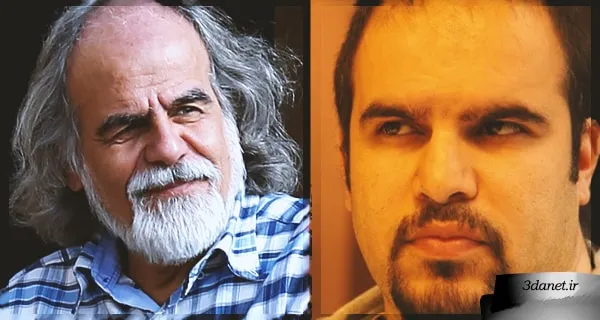
Author: Liav Orgad
Translator: Meysam Badamchi
Translator's Introduction:
In the book The Cultural Defense of Nations: A Liberal Theory of Majority Rights (Oxford University Press, 2016), Liav Orgad addresses the relationship between the majority and minority groups in contemporary liberal-democratic systems. The author explains that the increase in migration rates and the number of migrants worldwide, especially in Western and European countries, has fueled a host of overt and covert conflicts between majorities and ethnic minorities in these countries. The rise of the far right in Europe and the world, the claim of the
Immigration in Western countries, in particular, and in the world, in general, has become the crossroads of the predicaments of contemporary liberal-democratic systems. The immigration crisis is the issue of our day. Immigration affects our interpretation of concepts in political philosophy such as sovereignty, self-determination, and the nation-state. Changes in recent decades in the number, composition, and rate of immigration, along with profound sociological changes in societies, have brought about one of the greatest challenges of the twenty-first century. Demographic changes have been so rapid and dynamic that political theorists have had little opportunity to reflect on the impact of global immigration and the consequences of the policies chosen to address it. Undoubtedly, the positive and negative aspects of immigration will become more apparent in the next generation.
Immigration has had a clear impact on majority-minority relations. Contemporary democratic theory has always assumed that the majority is capable of "taking care of itself" [and that it is only minority culture that needs care]. Based on this presupposition, the majority can always preserve its culture by controlling the inputs of society and using democratic decision-making mechanisms. The argument is that because democratic legislative institutions are dominated by the majority, the government is not sufficiently neutral towards the minority and sides with the majority. According to this view [of which the Canadian philosopher Will Kymlicka is one of the theorists], in the real world of Western liberal democracies, neutrality does not exist in practice. The reason for this is that liberal democracies inevitably promote the majority culture throughout society by relying on the instruments of the official language, which is the language of the majority, public holidays, the choice of national symbols, and political institutions. In the face of such an unfair situation, a well-ordered democracy must compensate for the consequences of inequality resulting from common democratic decision-making in favor of the majority by granting special privileges to minorities. This is the essence of theories supporting the rights of cultural minorities.
Theorizing about minority rights is a kind of important progress in late liberal political theory. However, this theory ignores the fact that the intersection of adherence to the rights of cultural minorities and the massive influx of immigrants has had unexpected and unintended consequences, including "a change and shift in majority power." This shift is not only demographic but also normative: the gradual weakening of the majority culture can be seen in legal documents, judicial decisions, and the shared social covenants of countries. Accordingly, in today's high-immigration world, the majority is at risk of becoming "needy." Of course, the majority becoming needy and destitute is not a new phenomenon. (Traditionally, the most important cause of the majority becoming destitute has not been immigration but the occupation of the country or military defeat against a foreign power[1].)
The relationship between immigration and majority culture can also be studied empirically. As we said, the prevailing view is that immigration poses no danger to the majority culture; however, in our view, under certain conditions, the majority, like minorities, needs support and protection for its cultural rights, and this can be justified based on a logic similar to what political philosophers have used to justify the rights of cultural minorities. Accordingly, the two concepts of "personal autonomy" and the "right to identity" provide the necessary foundations for protecting majority rights under special conditions. In the following argument, which Will Kymlicka presents in his book Multicultural Citizenship: A Liberal Theory of Minority Rights, one can well swap the places of minority and majority cultures to arrive at the aforementioned conclusion:
"Every culture must be free and able to decide for itself when and how to adapt to the achievements of the larger world outside itself. Learning from the larger world [and external cultures compared to one's own] is one thing; being engulfed by an external culture, as if sinking into a swamp, is another. In such a situation, smaller nations and minorities probably need the right to self-government to control the direction and rate of change in their culture."[2]
In our view, the assumption that the majority can “take care of [its] own culture” is no longer self-evident. The factors behind this transformation include: changes in recent years in the scale, composition, and speed of global migration; the theoretical and practical safeguarding of minority cultural rights in Western countries; the fading of national identities and traditional ways of life due to globalization; the rise of transnationalism; technological developments; and, finally, legal constraints that have sometimes made it more difficult for majorities to impose integration policies on newcomers and minorities. As a result, majority groups in the West, especially in Europe, have shrunk in size and population (it should not be forgotten that in democracies, numbers and demographics matter greatly), and their culture has become more vulnerable and, in our terms, more needy. This reality opens the way for a normative shift in majority-minority relations.
Existing legal concepts are ill-suited to address the challenge that global migration poses to majority culture. The concept of “majority” does not even exist in international law, which is itself built around the concept of “peoples,” and it has been assumed that granting the right to self-determination is sufficient to protect majority culture. In the absence of this concept and of direct legal protection for majority rights, majorities in Western countries have found indirect ways to defend their culture by regulating immigration laws and standards and through so-called “legal fictions.” For example, in many cases, majority rights are defended under the names of “protecting state interests,” observing the “common good,” “mainstream” interests, and similar phrases; yet these phrases are, in many instances, a dressed-up and renamed version of the concept of the majority. Another tactic involves using “universal” and supposedly non-national arguments to defend the “particular situation of the majority” (in other words, universalizing the particular). Here, to conceal the defense of the majority’s national cultural identity, they rely on universal and general values [in the book’s introduction, the author refers to the Italian government’s justification for the continued presence of crucifixes in school classrooms by emphasizing the humanist aspect of this symbol rather than its religious message.]
The present book is a defense of cultural majority rights, drawing on international law, moral philosophy, and constitutional theory. After a discussion of the concepts of “peoples,” “nations,” and “majorities,” as well as the distinction between four types of so-called “needy” majorities—namely, diminishing majorities (shrinking due to migration), regional-minority majorities (becoming a minority due to regional circumstances), victimized majorities, and minoritized majorities (majorities with a minority mindset) (see the book’s introduction)—we proceed to offer two broad justifications in defense of cultural majority rights: a justification based on personal autonomy and self-determination, and a justification based on the right to identity. We then discuss the scope of these rights and important factors in their implementation. (See Chapter 5)
Our proposed solution for defending majority rights is a kind of two-stage immigration process as a general framework for protecting majority culture without falling into the trap of illiberal immigration policies (see Chapter 6). To simplify, this book seeks to protect a thin (as opposed to thick) version of majority cultural rights within a constitutional framework, crystallized in content by the idea of “national constitutionalism.” The gist of the argument is that we focus on the basic structure of each country’s national constitution, that is, its values, covenants, and institutions. The result is that national constitutionalism simultaneously attends to the concepts of national identity and public culture. Rather than focusing on the cultural customs, lifestyle, and folkloric culture of an ethnic group, this approach to national identity studies the foundational identity embedded and implicit in the country’s constitution.
National Identity in the Constitution
Rousseau, in his advice to the people of Corsica, says the first rule to be observed in drafting a constitution is that “every people either has or ought to have a national character; if a people lacks a national character, they must be given one.”[3] Nevertheless, the notion of a national character (or identity, culture, or ethos) is an elusive and slippery one. If you ask ten Britons what it means to be British, what the most distinctive features of Britishness are, and who a “typical” Briton is, you will likely receive ten different answers. Yet, at an abstract level, namely the level of the constitution and fundamental laws, every nation has its own specific characteristics. For example, Britain is a kind of constitutional monarchy whose political system is a parliamentary democracy, it is the birthplace of the phenomenon of criminal justice in the world, it is English-speaking, and it values liberty, the rule of law, fairness, and tolerance. These are a few of the fundamental identity elements that were included in the circular diagram “What is British?” in the report of the British Commission for Racial Equality in response to the above question.[4]
Immigration policies are a mirror of every country’s constitutional identity. The requirements for acquiring citizenship (the criteria “they” must adhere to in order to join “us”) define “our” way of life, thinking, and behavior. By analyzing the legal requirements for acquiring citizenship, one can learn a great deal about each country’s view of its collective identity. By researching the legal paths to becoming a citizen, one can obtain much information about the meaning of the national “we” in that country. (See Chapter 3)
What has the study of immigration policies led me to regarding constitutional identity? One point is the increasing effort of nation-states to discover and rediscover their “collective identity.” Many countries have established commissions and conducted surveys to find a shared national identity based on the results obtained. But the results are contradictory. One outcome of the research of Western nation-states has been that collective identity has imperceptibly faded. In many surveys, discussions concerning national identity end up in trivial matters that are largely rooted in popular culture—films, carnivals, and, of course, sports.
In Will Kymlicka’s words, the “Disneyfication of cultural difference” is perhaps the most obvious indicator of the current crisis afflicting national identity in the West.[5] Today, some political leaders in the West speak of the death of multiculturalism and chant slogans about focusing on “our culture,” without being able to say what exactly this shared culture of ours is and what its characteristics are. Of course, we and the politicians know that this shared culture in the West is, at best, a particular version of political liberalism. [Translator’s note: In the Rawlsian approach, meaning liberalism based on a thin shared culture as opposed to liberalism based on thick, comprehensive doctrines.]
Paradoxically, the attempt at a cultural defense of majority rights has shown how thin and tenuous majority culture has now become in the West. That is, majority culture has become so pluralized [and, in John Rawls’s terms, pluralistic] that finding a shared culture within it, in the sense intended by anthropologists, is now difficult.[6] This paradoxical situation can be seen in the immigration policies and citizenship laws of Western countries, which today are more liberal and inclusive than ever before.[7]
This, however, is only one side of the story. On the other side, discussions about national identity sometimes ultimately lead to the celebration of national cultural luminaries and markers of "high culture": discussion of Rembrandt (the painter of the Dutch Golden Age in the 17th century), Nietzsche (the German philosopher of the second half of the 19th century), Molière (one of France's renowned playwrights of the 17th century), or the English Shakespeare. And since a large percentage of the people in any country lack sufficient information and knowledge about these great figures, this tendency ultimately results in a kind of "romanticizing" of collective identity. In this approach, the national "we" identifies more with what we think "we" are (our ideal national self), or the self we would like others to have in mind of "us" (the ideal self we wish we were), rather than the "real" self we are in practice. Moreover, [contrary to what John Rawls rightly held in Political Liberalism] liberal democracies are busy thickening and fattening their liberal-democratic identity. Sara Wallace Goodman's research shows that in recent years, citizenship requirements in Western countries have become more liberal, but a thicker, fatter, and more muscular liberalism [a more comprehensive liberalism].[8] Liberal nationalism in Western countries is becoming fatter and simultaneously fattening the conditions for the integration of newcomers into the liberal-democratic system by emphasizing cultural requirements rooted in the legal culture of the country in question.
Nevertheless, in the age of globalization, speaking of the necessity of protecting cultures (in this case, the majority culture) may seem outdated. Today, cultural exchanges occur more than ever before. In our contemporary world, ideas are traded (mainly through free markets, international media, and the internet), and claims to the enjoyment of an exceptional and unique culture face increasing difficulty. What was once called the "other" is present today not only materially but also spiritually within national borders. Cultures are subject to change, and this change is faster than ever before. This is one of the driving forces behind cultural defense policies. Consequently, immigration law in various countries is still considered a "controllable" domain, and in many countries, the majority strives to design immigration laws that are attentive and sensitive to its own cultural preferences. But cultural defense policy also has its own limitations. Even if the majority can control the flow of people into its country with stricter immigration laws, it is difficult to limit the flow of the exchange of values and cultures. Yet, it is still too early to predict whether we will witness a farewell to the old structure of national identity, or whether old national identities will adapt themselves to new developments.
Immigration Laws and Constitutional Design
International law has traditionally granted states broad discretion in regulating immigration. In 2008, the British House of Lords, in a statement, reaffirmed this historically long-standing position that "deciding whether (and if so, which) non-nationals are permitted to enter a country's territorial domain, and regulating and imposing the conditions under which immigration is allowed, is one of the oldest powers of any sovereign state."[9] Shortly after that date, the California Court of Appeal in the United States officially declared in an opinion that "the exclusion or admission of foreign nationals and the setting of practically backed criteria for the rejection or acceptance of foreigners into the country are among the inherent rights of every nation-state."[10] In recent years, international courts have increasingly intervened in immigration matters, but decisions regarding the granting of citizenship, unless entirely arbitrary or involving special discrimination against a specific nationality, still enjoy varying degrees of judicial immunity. This is especially true in cases where the state's selection of immigrants is based on specific cultural criteria.
Setting immigration criteria draws our attention to the debate over the place of national identity in a country’s constitution; who “we” are and what our model for the ideal nation is. In designing and embedding national identity in the constitution, one must specifically discuss and reflect upon the function of immigration law. [If majority rights are to be preserved] there must be specific objectives in immigration and citizenship laws, and alongside this broad goal-setting, continuous monitoring is needed to see whether the current state of immigration and naturalization is aligned with achieving the intended goals. Our study shows that in many cases, the conditions defined for immigration and citizenship are a mixture of various elements, without a fundamental theory linking them together and giving them coherence.
The Aim of This Book
The central question of this book is whether, from a liberal and libertarian perspective, defending the cultural rights of the majority by relying on the regulation of immigration law is justified, and if so, what are the legitimate and proper ways to achieve this? If I were to summarize my work in the book, I would say that in the descriptive dimension, I have laid before the reader’s eyes the increasing tendencies of nation-states to regulate immigration and naturalization policies to defend the majority culture. Simultaneously, in the analytical dimension, I have criticized some of these policies for approaching a point beyond which they become incompatible with liberalism. And in the normative dimension, I have argued and concluded that a specific and limited defense of majority culture rights [based on liberal political philosophy] is justified.
Problems and challenges related to immigration are as old as the stories of the Bible. The story of the Israelites’ migration to Egypt and the subsequent events display many elements of the contemporary immigration crisis: the economic migration of people (i.e., the Israelites) who differed ethnically and religiously from the host society (i.e., the Egyptians); demographic change as a result of immigration and fertility, the growth of suspicion towards immigrants and the accompanying social tensions, an unusually negative reaction to the presence of immigrants, and the exodus to Palestine (Exodus). In contemporary societies, it is unlikely that the exodus of immigrants will result in divine intervention and their victory, but by resorting to this metaphor, one can predict that the cultural challenges arising from mass immigration and global migration will remain in our societies for a long time.
Translation: Meysam Badamchi
Liav Orgad is the director of the ‘Global Citizenship Law’ project at the Robert Schuman Centre for Advanced Studies at the European University Institute. What you have read is a translation of the concluding chapter from the following book:
Liav Orgad,‘The Cultural Defence of Nations: A Liberal Theory of Majority Rights, Oxford: Oxford University Press, 2016, 273pp.
[1] See:
Eric P. Kaufmann, “The Decline of the WASP in the United States and Canada,” in Rethinking Ethnicity: Majority Groups and Dominant Minorities, Eric P. Kaufmann, ed. (New York: Routledge, 2004): pp. 54–73.
[2] See:
Will Kymlicka, Multicultural Citizenship: A Liberal Theory of Minority Rights (Oxford: Clarendon Press, 2000): p. 104.
[3] See:
Jean-Jacques Rousseau, Constitutional Project for Corsica (Whitefish: Kessinger Publishing, 2004): p. 12.
[4] See:
Commission for Racial Equality, “Citizenship and Belonging: What is Britishness?” 2005: p. 34.
[Translator’s note: Britain does not have a specific written constitution like the United States or France, but it has specific traditions regarding the administration of the public sphere that function like the constitutions of other countries.]
[5] See this article by Will Kymlicka:
Will Kymlicka, “The Rise and Fall of Multiculturalism? New Debates on Inclusion and Accommodation in Diverse Societies,” in The Multiculturalism Backlash: European Discourses, Policies and Practices, Steven Vertovec and Susanne Wessendorf, eds. (New York: Routledge, 2010): pp. 32–49 at 34.
[6] In practice, the pluralization of the majority culture is most visible at the municipal level in metropolises. See:
Christian Joppke, Is Multiculturalism Dead? Crisis and Persistence in the Constitutional State, Ch. 2.
[7] See:
Christian Joppke, Citizenship and Immigration (Malden: Polity Press, 2010): pp. 34–67.
[8] See:
Sara Wallace Goodman, “Integration Requirements for Integration’s Sake? Identifying, Categorising and Comparing Civic Integration Policies,” Journal of Ethnic and Migration Studies 36, no. 5 (2010): pp. 753–772 at 757, 762.
[9] See:
R (BAPIO Action Ltd and anor) v. Secretary of State for the Home Department and anor [2008] 1 A.C. 1003: p. 1007.
[10] Kiyemba v. Obama 555 F. 3d 1022, p. 1025 (D.C. Cir. 2009).

Discussion0 comments
No comments yet; let yours be the first voice.