A Religious Scholar in Conversation with Atheists
Interview with Ahmad al-Qabbanji by "The Arab Atheists Magazine"
Translation and Introduction: Yaser Mirdamadi
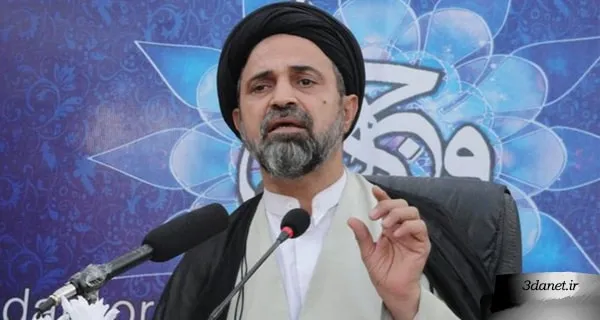
Translator's Introduction: Ahmad Ali Hassan Qubbanchi, known as Ahmad al-Qabbanji (Arabic: أحمد القبانجي), born in 1958 CE/1336 SH in Najaf, is one of the renowned Iraqi religious intellectuals. He completed his seminary studies in Najaf, Beirut, and Qom, and was a student of, among others, two eminent Shiite scholars, Muhammad Baqir al-Sadr (1935–1980 CE) and Muhammad Hussein Fadlallah (1935–2010 CE).1 His father and five of his brothers were killed by Saddam's regime, and after fleeing Iraq, he eventually settled in Iran. During his years of residence in Iran, he fought alongside Iranian forces against Saddam's forces and was wounded.
His long years of residence in Iran led to a significant intellectual transformation in al-Qabbanji, who initially held very traditional views. Having first translated books by Dastgheib and Motahhari into Arabic and authored traditional works, he gradually began translating the books of Iranian intellectuals such as Abdolkarim Soroush, Mohammad Mojtahed Shabestari, and Mostafa Malekian into Arabic, and was deeply influenced by them. This profound influence can be seen in his numerous authored works, including a book he wrote on revelation titled "Prophethood and the Problem of Divine Revelation" (النبوة وإشكالية الوحي الإلهي), and the similarity of its discussions to the theories of revelation of Soroush and Shabestari.
Al-Qabbanji's new religious thinking was not without political repercussions. After the fall of Saddam's regime, al-Qabbanji returned to Iraq. In late 1391 SH, following a trip to Iran, he was arrested by agents of the then Ministry of Intelligence. It is said that this arrest was carried out partly under pressure from his brother, Sadr al-Din al-Qabbanji. Sadr al-Din al-Qabbanji is the Friday prayer leader of Najaf and one of the leaders of the "Islamic Supreme Council of Iraq" (a council close to the Islamic Republic of Iran), who had declared his brother Ahmad an infidel and apostate. Although this arrest did not receive much reflection in the Persian-speaking world, it sparked protests from some Arab intellectuals, including Ayad Jamal al-Din (an Iraqi liberal cleric and politician), and led to demonstrations in front of the Iranian embassy in Baghdad.2 After these pressures, al-Qabbanji was eventually released and now resides in Iraq. A few months before al-Qabbanji's arrest, an anonymous article was published in the Iranian magazine "Ketab-e Mah-e Din" examining one of al-Qabbanji's books titled "Woman, Concepts and Rights" (المرأة، المفاهيم والحقوق). At the very beginning of the book review, the work was introduced as follows: "It contains new ideas that fall within the framework of the cultural invasion of Iraq."3
The conversation between "The Arab Atheists Magazine" (قناة الملحدين بالعربي) and Ahmad al-Qabbanji4 is significant for at least four reasons:
1- Religious intellectuals have very rarely entered into dialogue with atheists who openly define their identity based on atheism. The following conversation is one of the rare examples of this, which can serve as a model for more dialogues of this kind.
2- On the other hand, Iranian atheists have also rarely entered into dialogue with religious intellectuals (let alone with clerics). The initiative of The Arab Atheists Magazine in conversing with a religious intellectual with a seminary background can provide a fitting model for Iranian atheists as well.
3- The seminary of Qom, in terms of pursuing intellectual debates and new branches of the humanities, is far more advanced compared to the seminaries of Najaf, Karbala, and Samarra, but it seems that Qabbanji, during the years since he returned to Iraq and openly published his radical discussions in book form or on YouTube5, has not faced serious trouble from Iraqi clerics.6 Although he himself complains in this conversation about the prevalence of a takfiri atmosphere, it was ultimately in Iran, not Iraq, that he was arrested. The difference between the atmosphere in Iran and Iraq in this regard can perhaps be explained by the difference between the rule of the Guardianship of the Jurist in Iran and the secular government in Iraq.
4- Iranian religious intellectualism is not only still influential within Iran (though compared to the 1980s and 1990s it has also found serious rivals), but it has also influenced a segment of Persian-speaking Iranians outside Iran, as well as a segment of Afghan and possibly Tajik intellectuals, and, through translation, a segment of Arab intellectualism.
---------------------------------------------------------------
Question- You studied at the seminary in Najaf and learned jurisprudence and its principles there; what did your seminary education add to you? What is your opinion on religious teaching methods in general? What benefit has your seminary education brought you in the current social struggle?
Qabbanji: My seminary education naturally taught me many things, things I did not know before, especially in the field of religious sciences, but if you ask me about the benefit of this education for myself and society, unfortunately, this seminary education, which took up many years of my life, was of no benefit; rather, it was merely a waste of time and energy. However, I can now use those sciences to critique those very sciences and demonstrate their invalidity and obsolescence, in the hope that this will be a groundwork for reasonable and worthy changes in religious studies.
Question- Mr. Qabbanji, do you believe that your views and opinions have reached the people, or is this still in the initial upsurge stage? What is your assessment of the breadth of followers and those influenced by your discussions? Do you see this group as dynamic or static? Are your discussions followed only in Iraq, or do they extend beyond that?
Qabbanji: It seems that new-thinking ideas are reaching the people, whether through my discussions or the discussions of other thinkers. We are witnessing a new awakening today; the hollowness and flimsiness of political Islam and other ideologies have become clear to the people. Just recently in Egypt and Tunisia, we witnessed the ousting of Islamist parties by the people. People's awareness has reached a point where they have begun to critique religious, jurisprudential, and Sharia-centered thinking, and have even begun to critique the Quran. These are signs of the collapse of the sanctities, taboos, and red lines that the Arab mentality has spun around itself, making itself a slave to the heritage of the past. The followers and those influenced by new-thinking ideas have today become a dynamic and vibrant force, and this is despite the lack of resources and the difficulties of enlightenment in the takfiri atmosphere and the past-worshipping, ethnocentric culture in which Arab societies live. The best example of the strength of the intellectual current in Iraq is what happened to me. You know that the region's governments fear the strength and might, as well as the security apparatus, of the Iranian government; nevertheless, the Iranian government feared the group of intellectuals who marched in Baghdad and Basra in protest at my arrest and was forced to release me, and this was despite the Iranian government having leveled serious charges against me.
Question: What is your view on the actualization of your ideas in the future? Are you optimistic in this regard?
Qabanchi: My optimism is not directed at the ideas themselves, but at the extent to which these thoughts spread among the people and the benefit everyone derives in their lives from the expansion of these ideas. I believe we have no choice but to be optimistic, especially since these ideas are compatible with the times and the requirements of reality, and this is precisely the opposite of the past-worshipping thoughts that the guardians of religion carry on their shoulders, which are compatible neither with modern life nor with reality.
Question: How should we categorize you? Are you Sunni or Shia, Mu'tazili or Quranist, or do you belong to another category?
Qabanchi: I reject any framework that fragments the humanity of human beings. I reject all sects, and in my view, Sunnis and Shias are equally invalid. Indeed, the Islam we have inherited today is not the Islam that is with God; rather, it is merely a social categorization. With such an Islam, no human being attains spiritual and moral perfection; instead, with this Islam, the seeds of prejudice, ignorance, superstition, and ethnic and sectarian strife are sown in people's hearts. Today, Islam has become a factor of backwardness and a major cause of the savagery and lack of openness of Muslims to civilization and modernity.
Question: What is your view on Christianity and Judaism? And specifically, what is your view on the Baha'i Faith, which has recently spread in Arab countries, especially Egypt?
Qabanchi: As I mentioned earlier, Christianity and Judaism, as well as the Baha'i Faith and other religions and sects, are, just like Islam, social divisions; religion does not descend from God. As the German sociologist Durkheim pointed out, these divisions serve to maintain social cohesion and strengthen relations among the members of a society. Religion—insofar as it serves to strengthen the social identity of a society's members—is like race, language, and homeland. But what constitutes divine religion is the pure faith by which a person lives with their heart; this faith manifests itself in the form of love for and trust in God, and adherence to moral values and human ideals. Divine religion is what we call conscience. Conscience is the inner voice of God in all human beings. Every individual has a duty in their life to listen to the voice of their conscience, whatever their religion or sect may be, for God looks at people's hearts and not at their outward appearance—as a well-known hadith points to this very point.7
Question: You have repeatedly pointed out that you reject a literalist understanding of religious texts and doctrines. What is your view on the text of the Quran and the meaning of perfection, as found in hadith, tradition, and religious heritage?
Qabanchi: We need to employ the mechanisms of the science of hermeneutics in the process of understanding the religious text. Without employing these mechanisms, the aims of revelation cannot be inspiring for us, and we cannot grasp the prophetic heritage. This is because a literalist understanding of religious texts, which is now prevalent in religious institutions, causes us to remain within the understanding of past generations of the texts and to stagnate there, while truths and cultures change with the change in human needs and thoughts, and consequently, religious rulings and religious thought also change. This means that:
1- A religious text cannot be applied to another historical context that is very different from the past, without considering the context and historical setting of its formation.
2- The influence of the intellectual foundations and presuppositions of the interpreter and jurist in the process of understanding the text must be taken into account.
3- The religious text must not be made subject to the interpreter's inclinations, thereby arriving, in one's interpretation, at results that are far from reason, reality, and the aims of the Lawgiver.
4- One must arrive at a correct understanding of the figurative and metaphorical expressions found in religious texts and undertake a cultural translation of these expressions based on a non-literal method. One should not assume that the meaning of the words in religious texts is their lexical meaning, or that these words are meant to reflect and report an external reality; rather, the correct conception is that the meaning of these words is something beyond their lexical meanings, and that they have a prescriptive aspect and are performative statements.
Question- In your discussions, you generally refer to philosophy. Compared to other values, what is the value of philosophy?
Qabanchi: Your question somewhat lacks the necessary complexity. We do not have a single philosophy, but rather multiple philosophies, and there is no single philosophical criterion to which one can refer. However, philosophy strengthens rationality in human beings, and this is something we need for understanding religion in the present age—an age in which religious thought has been contaminated by many superstitions and unethical beliefs. This need is something that religious authorities fiercely oppose; they deem philosophy forbidden and warn people against rationality, with the justification that God's religion cannot be understood through reason and that human reason is incapable of understanding religion and divine law. The result of such thinking is that people remain in backwardness and in the shackles of ignorance and imitation of religious masters. A person who accepts any superstition in the name of religion is not far from becoming a terrorist.
Question- Today, science has even moved beyond the self-evident truths of human reason. What is your view on the incompatibility of modern science with religious texts?
Qabanchi: Science has not moved beyond the self-evident truths of human reason; rather, the self-evident truths of human reason change. Every era has its own theoretical and scientific self-evident truths. In the past, the Ptolemaic theory in ancient astronomy was considered self-evident, until the Copernican theory arrived, and now this theory is among the self-evident truths. The theory of consultation and allegiance was self-evident in the past, but now democracy has taken its place. The incompatibility of modern science with religious texts is an important issue. This issue can be resolved by following modern methods in theology. This incompatibility is sometimes resolved by distinguishing between the scientific method and the method in religion, and sometimes by noting that the work of science is description while the work of religion is valuation, or that science describes the appearances of nature and natural laws while religion recommends a specific way of life. That is, science belongs to theoretical reason and religion to practical reason. Other theories have also been proposed to resolve the conflict between science and religion, but there is no room to discuss them here.
Question- Many Muslims believe in the scientific and literary miraculousness of the Quran. Do you agree with them? In your view, how can the Quran be a miracle?
Qabanchi: In my discussions and in my book entitled "The Secret of Quranic Inimitability" (Sirr al-I'jāz al-Qur'ānī), I have shown with ample evidence that there is no such thing as scientific, literary, or predictive miraculousness in the Quran—as claimed by Islamic scholars; there is, of course, no room for a detailed discussion here now. But the rationally plausible Quranic inimitability, in my view, is one of these two matters: 1- The theory of Ṣarfah, which the Mu'tazila and, among the Shi'a, Sayyid Murtadā believed in; 2- Conscientious inimitability.
Question- You are known for your unique style of thinking and analyzing issues. What specifically is your understanding and meaning of the unseen world?
Qabanchi: Sometimes what is meant by the unseen world is metaphysics, sometimes a world beyond the phenomenal world, and sometimes the knowledge exclusive to God. Sometimes what is meant by the unseen world is an ontological matter and sometimes an epistemological one. For instance, the question is asked whether an unseen world exists at all? Or the question is asked whether we have any proof that demonstrates the existence of such a world? And whether such a world can be proven by reason or whether we must turn to religion? And what are the boundaries and limits of the unseen world? For this reason, this is a complex question and you must clarify what you mean by your question. But let me answer in a few words so as not to leave the question unanswered. Materialists generally do not believe in a world beyond matter, whether that transcendent world contains spirit, God, or other immaterial beings, but the mystics of all human religions and cultures agree on the existence of another world within this phenomenal world; in their view, everything, from knowledge to the human being to the religious text, has an outward aspect and an inward one. And we are of the same opinion.
Question: In some of your discussions, you have drawn a distinction between the absolute unseen and its connection to God; how do you explain God and the Absolute, and what is the relationship between the two from your philosophical perspective?
Qabanchi: What is meant by "between the two"—between which two things? Generally speaking, connection with God is not a rational, intellectual, or theoretical matter, but an emotional, sentimental, and heartfelt one. Theoretical reason does not have the capacity to enter this domain, as Kant demonstrated. And this is the very view with which Muslim and non-Muslim mystics agree. A person initially feels within themselves a desire for connection with God, then proceeds along this path until an image of God gradually takes shape in their mind. Faith in God is not a rational matter but arises from the human need for God.
Question: What is your view regarding God? How do you perceive Him?
Qabanchi: This question requires a lengthy answer; I implore you not to pose deep and wide-ranging questions like this one. It is better to pose questions in a more specific and detailed manner, because God is a complex category, and the encounter with God and knowledge of Him is likewise. These are among the matters with which prophets, mystics, and philosophers have grappled. It is fitting that we speak of faith in God, not of God Himself. As far as human beings are concerned, faith in God is more important than God Himself, because it is faith that determines a person's destiny and gives direction to their life. God does not enter a person's life except through faith, and it is through one's faith that a person connects with God; and whoever does not find faith in God within their heart will not see God in their life, even if they believe in God's existence in their mind. This means that faith is love of God, not belief in God. Whoever does not find love of God in their heart will not find God in their life.
Question: What is your view regarding the Sunnis?
Qabanchi: Does "the Sunnis" mean from a religious perspective, or does it mean individuals who follow the Sunni denomination? Does it mean the Sunnis from an ethical perspective, or does it mean the correctness of their beliefs, or their national sentiment, or their rationality? This question is also ambiguous and needs clarification. I do not know why your questions lack the necessary precision. In any case, as I said earlier, the Sunni denomination's state and condition is the same as the Shiite denomination's state and condition; both are human constructs and not something sent down by God. Sometimes the historical difference between Shiism and Sunnism is that the Sunnis adopted the political and governmental aspect of Islam and sought to establish a religious government as a principle of the Islamic faith, whereas, in contrast, the Shiites in Islamic history took the side of opposition and protest, and therefore their understanding of Islam became more emotional than that of the Sunnis, and consequently more superstitious than them. The Sunnis, for their part, have been more ruthless than the Shiites throughout history, because governing has necessitated this.
Terrorism is rooted more in the ranks of the Sunnis, just as superstition is rooted more in the ranks of the Shiites, and God is far removed from both terrorism and superstition. Since Shiism historically took shape later than Sunnism and emerged in the form of a political opposition, anyone who opposed the religious government and the caliphs would join Shiism, take refuge behind the bulwark of religion, and accuse the political establishment of irreligiosity so as not to be accused of apostasy and irreligiosity himself. Hence, fabricated and false material is more prevalent in the Shiite heritage than in the Sunni heritage, but the stronger party in the story (i.e., the Sunnis) had no need for fabrication and exaggeration; rather, governance required force and the sword. For this very reason, we see that Shiites appeal less to the Prophet and the Quran, because historically the Quran and the Prophet were in power, and the Quran played its role in endorsing power and governance by the sword. In contrast, however, Sunnis constantly referred to the Quran and the Prophetic tradition, because Sunnis found in these two things confirmation of their sect and legitimation of their rule—even if someone like Saddam was at the head of such a government.
Question— Do you believe that God will take revenge on atheists for their atheism?
Qabanchi: That depends on our conception of God. If we conceive of God as someone like Saddam, who forced people to acknowledge his leadership, then yes, God will take revenge on you and all unbelievers, because according to such a conception, belief in God (like acknowledging Saddam's leadership) would be a condition for people's existence and their ascent up the ladder of progress. But if we conceive of God as having created the world in order to bestow His generosity, magnanimity, and grace, then the meaning of this conception is that God loves all His creatures, and we then come to believe in a moral law in existence (similar to the natural laws in the universe). This moral law affects the good and evil of human actions; if a person does good, they see good, and if they do evil, they see evil. An atheist who makes good deeds their vocation and treats others with love will see goodness in their life, and a believer who believes in the existence of God but does not submit to the requirements of this faith, does not undertake righteous deeds, does not desire the good of people, but instead leads a selfish and mercenary existence, will see evil.
Question— How can one distinguish between a Muslim who has personally understood Islam and a Muslim who engages in blind imitation?
Qabanchi: Traditional Islam and the Islam of the street and bazaar is an Islam that demands blind obedience from the individual, but someone who pulls themselves out from under social pressure and the religion of the street and bazaar and turns to their conscience and reason will find true Islam, and this is an Islam that does not merely call for mere learning; rather, this Islam is a movement on the path of the common good, and the requisite of such an Islam is standing against society and its prevailing ideas.
Question— When the "Arab Atheists Magazine" invited you to a dialogue, what was your reaction?
Qabanchi: I had no particular reaction. I have many atheist friends. In my religion, I do not find a line drawn between people based on belief, sect, or thought; rather, this line is drawn based on humanity and moral values. In my belief, atheism is also a way of life, just like theism. Someone who does not find God in their reason and life has the right to deny God; indeed, they have a duty to deny God so as not to fall into the trap of hypocrisy and dissimulation. What I mean is that when an atheist who does not see God in the world and sees no need for God says God does not exist, their statement is, from a moral standpoint, entirely correct. And when a believer says God exists, their statement is also, from a moral standpoint, entirely correct, because they need God and constantly see Him present in existence and their life. God is not of the same kind as objects existing in the external world; God has a deep connection with the inner being of the human.
Question— How do you view the Arab atheist? What is your opinion specifically regarding him?
Qabbanchi: I see this phenomenon as a blessed one, indicating a movement toward perfection in the Arab intellectual sphere. Atheists have begun to emerge from the magical shroud that society has woven around them; they disregard the customary, social, and traditional religious pressure placed upon every individual in society from the moment of birth. I said earlier that what we encounter today as the religion of Islam has nothing to do with God; rather, this religion has become an idol worshipped in place of God. Every human being who respects their own freedom and reason has a duty to leave this religion, just as the early Muslims moved from the religion of polytheism to the religion of monotheism. The first step on the path to perfection is for a person to shatter the idol of society (whatever that idol may be); this iconoclasm is the “no god” (“la ilaha”), which is atheism and godlessness. It is then that this atheism becomes a prelude and a path to true faith. The atheist should not imagine that with their atheism they have reached the end of the line and that the work is finished. In this sense, atheism is a necessary prelude to faith. But the things that worry me most about my atheist friends are two:
1- That some of our atheist friends, out of fear of society’s reactions against them, might fall into the trap of dissimulation and hypocrisy and not reveal their atheism, thereby perhaps falling into the abyss of the ugliest moral vice, which is hypocrisy and duplicity. They must publicly declare their atheism with courage, just like great figures such as the martyr Hussein Muruwwa8, Fahd9, Hadi al-Alawi10, and other Marxists who possessed awakened consciences. If they do not do this, they will be condemned to acquiescing to the traditional religion of the common people. I believe the most important thing a human being can have is their freedom and independence. If someone loses these two, then whatever else they have is of no importance whatsoever: whether they are a believer or an atheist, a Muslim or an infidel, a Shi‘a or a Sunni, educated or common. Our atheists must not find themselves in the situation of some Marxists of our day who hang a banner at the entrance of their party headquarters reading: “We offer our condolences on the martyrdom of Her Holiness Fatima al-Zahra (peace be upon her) to the presence of His Holiness the Lord of the Age”!
2- My second concern is that the atheism of some of our friends might stem from a shirking of responsibility and a lack of commitment to moral values.
Question- What is your view on the emergence and visibility that Arab atheists have recently found in the media sphere?
Qabbanchi: As I said earlier, I consider this a blessed phenomenon that indicates a movement toward rationality and civilization and a liberation from the shackles of custom and false sanctifications.
Question- These days in Egypt, a new constitution is being drafted, and some are demanding that Egyptian atheists also have a representative in the drafting of the constitution. What is your view on the human and civil rights of Arab atheists and their faint, embarrassed political presence?
Qabbanchi: I do not agree with this demand by atheists; it is sufficient for us to demand secularism, because this is a general title that encompasses all secular groups without any distinction. Atheists are not a group separate from society, so mere citizenship secures all their rights. This discussion was, of course, from a political perspective. However, from a cultural perspective, it is necessary for atheists to act and mobilize under the title of atheism so that the mentality of Arab societies is shaken and the cultural and religious stagnation among them is broken. In any case, what is happening in Egypt in the form of a revolution against the religious party is an opening toward progress, flourishing, and humanity, and I believe this is the first revolution in the true sense of the word since the French Revolution—that is, a revolution in which ideological and religious motives have no place, but rather a human and rational motive exists.
Question- If your child or one of your close relatives were to explicitly say that they have become an atheist, how would your relationship with them change?
Qabbanchi: If his atheism stems from reason and conscience, that is, if it is not a superficial atheism, my relationship with him does not change. Just as faith is divided into superficial faith and spiritual faith, atheism is also divided into superficial atheism and spiritual atheism. Superficial atheism is born of whim and caprice, a flight from moral and religious duty, and the result of irresponsibility. But spiritual atheism is the result of a human sensibility, an awareness of the abundance of evil in the world, the failure to find God in reason and conscience, and also the result of witnessing murder, oppression, transgression, and bloodshed in the name of Allah and religion. The conscience of such an atheist has driven him to deny God, Islam, and the God of other religions; he is a spiritual atheist.
Question- And the final question: what advice do you have for the theist and atheist readers of our magazine?
Qabbanchi: I tell them that in this day and age, when terrorism, ethnic strife, hostility toward the other, and alienation have become the common currency, what we desperately need is not religion, but moral values, a return to conscience and love, and the cultivation of humanistic values. Our human identity is now caught in a real crisis due to the dominance of hollow and unreal identities such as religious, sectarian, and ethnic identity and the like. Once it has been proven to us that these identities are absurd and hollow, we must return to our true identity, which is precisely our human identity. Before we are Muslim, Shiite, or atheist, we are human.
.
.
In Conversation with: Mr. Ahmad al-Qabbanji
Ahmad Hasan Ali al-Qabbanji is an Iraqi liberal Islamic researcher and writer. He was born in Najaf on January 2, 1958, and later moved between Syria, Lebanon, and Iran, and is now settled in his homeland, Iraq. He is distinguished by his different thinking and his boldness in presentation, flying far from the flock. It is enough to put his name in a search engine for titles that some consider controversial to appear, whether in his lectures, articles, or books. Therefore, if atheists and Muslims agree on anything, it will be their confusion and respect for Mr. Ahmad al-Qabbanji. We welcome you to the Arab Atheists Magazine and thank you for accepting the invitation.
In Najaf, you studied at the religious seminary and studied jurisprudence and its principles. What did this study add for you, and what is your opinion on religious education methods in general? And how did it benefit you later in the arena of society?
A: Naturally, studying at the seminary added many things to me that I did not know, especially in the religious field. But the question is about the benefit of this study for me and for society, and I say, unfortunately, that this study, which took many years, was of no benefit whatsoever, but merely a waste of time and a consumption of energies. However, I am now trying to benefit from it by criticizing it and exposing its falseness and lack of credibility, hoping that this will be a cause for bringing about a serious change in religious studies for the better.
Does al-Qabbanji see today that his ideas have reached the people, or are they still in the process of emerging? And what is your estimate of the size of your followers and those influenced by you, and do you see them as an active or dormant force? And is their presence limited to Iraq, or has it transcended geographical borders, in your opinion?
A: It appears that the ideas of modernity have reached people, whether through me or through other thinkers. Today we are witnessing an awakening of a new kind. People have come to see the emptiness and falsity of the claims of political Islam, as well as other ideologies, the latest being what we witnessed in Egypt and Tunisia with the rejection of Islamist parties. Indeed, awareness among people has reached a point where they have begun to criticize religious thought, jurisprudence, Sharia, and even the Quran itself. This points to the disappearance of sanctities, taboos, and red lines that used to shackle the Arab mind and make it subservient to the past and heritage. As for the followers and those influenced by the ideas of modernity, they are today an active and dynamic force, despite the scarcity of resources and the difficulty of working in the atmosphere of takfir, backward-looking culture, and sectarianism that Arab societies are experiencing. The best example of the strength of this rising enlightenment current, specifically in Iraq, is that Iran—which frightened the region's governments with its power, might, and intelligence services—feared the groups of intellectuals who came out in demonstrations against Iran in Baghdad and Basra and forced it to release me, even though the charges leveled against me were not trivial.
What is your future outlook for your ideas on the ground? Are you optimistic about them?
A: Optimism is not for the ideas themselves, but for the extent to which people absorb them and benefit from them in life. I believe we must be optimistic, especially since these ideas are in harmony with the age and consistent with the demands of reality, unlike the backward-looking ideas held by religious men, which are incompatible with reality and modern life.
How do we define al-Qabanji... is he Sunni... Shia... Mu'tazili... Quranist, or does he have a special classification?
A: Al-Qabanji rejects any framework that limits his humanity and rejects all sects. He believes that the Sunnis are on falsehood to the same extent that the Shia are on falsehood. Indeed, Islam today is not the Islam that is with God; rather, it is an Islam and a religion that is a product of society. It does not elevate a person in the stages of perfection, spirituality, and ethics, and it entrenches in a person fanaticism, ignorance, superstition, and sectarian strife. Today, it has become a factor in the backwardness of the nation and an important cause of barbarism and lack of openness to civilization and modernity.
Christianity and Judaism... how do you view them, and what is your opinion regarding the Baha'i faith, which has recently been spreading in Arab countries like Egypt?
A: Christianity, Judaism, as well as the Baha'i faith and all other religions and sects, are all not from God, including present-day Islam. As I said earlier, they are products of society, as determined by the German sociologist (Durkheim), for the purpose of preserving the fabric of society and strengthening the bonds among its members. The state of religion here is like that of nationalism, language, and homeland, in that they are elements for strengthening the social identity of a society's members. As for the divine religion, it is the pure faith that a person lives in their heart in the form of love for and trust in God, and commitment to moral values and human ideals. This is what we call conscience. Conscience is the voice of God in every human being, and every individual must move through their life by listening to the voice of their conscience, regardless of their religion or sect, because God looks at your hearts and does not look at your forms, as stated in the hadith.
You have mentioned in more than one forum and meeting that you reject the literal understanding of texts and doctrines. What is your view of the Quranic text and the concept of perfection attributed to it, and of hadith, Sunnah, and tradition... how do you view them?
A: We must adopt the mechanisms of the science of hermeneutics in understanding the religious text. Without it, we cannot grasp the purposes of revelation, nor can we understand what the Prophet brought, because the literal understanding of texts, as is prevalent in religious institutions, calls for stagnation on the ancients' understanding of the text, while truths and cultures change with the changing needs and ideas of people. Consequently, legal rulings and religious thought change, and this means:
1- It is impermissible to take the text out of its contexts and apply it to other circumstances that differ greatly from the past.
2- Acknowledging the influence of the interpreter's and jurist's foundational principles and presuppositions on their understanding of the text. Therefore, it is necessary to refine these principles and presuppositions, and they must be reasonable and appropriate for the age.
3- Not twisting the text's meaning to subject it to the desires of the reader or interpreter, thereby producing results that contradict reason, reality, and the purposes of the Sharia.
4- Understanding the metaphors and allegories contained in the text and undertaking a cultural translation of the text through the methodology of symbolism in the text, and not imagining that the words of the text are intended in their linguistic meanings or that they reflect and narrate external reality. What is intended is what lies beyond the text, of recommendations and creative decrees.
You often appeal to philosophy in your theses... what is the value of philosophy compared to other values?
A: The question involves some oversimplification, for we do not possess a single philosophy, but rather multiple philosophies, and there is no single philosophical criterion to which we can appeal. The utmost that can be said is that philosophy strengthens rationality in the human being, and this is what we need for understanding religion in the present age, after religious thought has been polluted by many superstitions and immoral beliefs. This is precisely what the clergy fight against with all their might—they forbid philosophy and warn against rationality, under the pretext that God's religion cannot be apprehended by the intellects and that the human mind is incapable of understanding religion and the Sharia. The result is that people remain backward, groaning under the shackles of ignorance and subservience to the sheikhs, and when a person's mind accepts superstitions in the name of religion, there is nothing to prevent him from becoming a terrorist later on.
Science today is even transcending the rational axioms of human beings. What is your view on the conflict between modern science and religious texts?
A: Science does not transcend axioms; rather, axioms themselves change. Every age has its own theoretical and practical axioms. At one time, Ptolemy's theory represented an axiom in the old science of astronomy, until Copernicus's theory came along and later became an axiom. The theory of shura (consultation) and bay'ah (pledge of allegiance) was an axiom in the past, and now democracy has replaced it. As for the conflict between modern science and religious texts, it is a definite issue, but it can be resolved by following modern methodologies in theology, through differentiation—sometimes in methodology, and at other times in the language of religion versus the language of science, or in the descriptiveness of science and the normativity of religion. That is to say, science describes natural phenomena and uncovers their laws, while religion enjoins human beings to follow a specific conduct. This means that science pertains to theoretical reason, whereas religion looks to practical reason. There are other theories in this field, but there is no room to mention them here.
There are many who speak of the scientific and rhetorical inimitability of the Quran. Do you agree with them? And where, in your opinion, does the inimitability of the Quran lie?
A: I have proven in my lectures and in my book *The Secret of the Quranic Inimitability*, with numerous pieces of evidence, that there is no scientific, rhetorical, or predictive inimitability in the Quran, as the scholars of Islam claim. There is no scope here to elaborate on this matter. As for the plausible Quranic inimitability, in our view, it is one of two things: 1. Al-Sarfa (the doctrine of divine prevention), as held by the Mu'tazila and al-Sayyid al-Murtada among the Shia. 2. Conscientious inimitability.
Al-Qabanji is distinguished by his unique approach to thinking and analysis. What is your concept and perspective on the unseen world in particular?
A: The unseen world is sometimes intended to mean metaphysics, at other times what lies beyond the manifest world, and at yet other times the knowledge that belongs to God alone. Sometimes the question refers to the ontological realm of the unseen, and at other times to the epistemological realm of the unseen. Does it even exist in the first place? And assuming it exists, what are the proofs that establish its existence? Also, can this be proven by reason, or must one resort to scripture? And what are the limits and scope of the unseen world? For this reason, we say that this question is ambiguous and requires clarification of what is meant by it. However, I will say a word so as not to leave the question unanswered: Materialists generally do not believe in a world beyond matter, whether it be the soul, God, or abstract beings, whereas the mystics of all religions and human cultures agree on the existence of another world within the interior of this manifest world. Everything—knowledge, the human being, the religious text—has an outward aspect and an inward aspect. We hold to this belief.
In your lectures, you have presented a qualitative distinction for the unseen view of the Absolute and the concept of its connection to the Divine. How does Ahmad al-Qabanji define God and the Absolute, and what is the difference between them according to his philosophy?
A: What is meant by the word 'between them'? The question contains no reference to the second term. Generally speaking, we see that the matter of connection with God is not an intellectual, cognitive, or theoretical matter; rather, it is an emotional, sensory, and heartfelt matter. Theoretical reason cannot intervene in this domain, as Kant proved. This is what the mystics among Muslims and others hold. At the outset, a person may feel within himself an inclination and desire for connection with God, then he proceeds along this path until the picture becomes clear to him, little by little. Faith in God does not come from the intellect, but from the human being's need for God.
God... how do you see Him... or how do you define Him?
A: The question requires a great deal to answer, and please refrain from asking questions of such depth and comprehensiveness as this one; rather, the intended query should be specified clearly. Because the word "God" itself is ambiguous, as is seeing and knowing Him. These matters are among the things that exhausted the prophets, mystics, and philosophers. However, one should speak about faith in God, not God Himself, for faith in God is more important than God because it is faith that determines a person's destiny and charts their life. God does not intervene in a person's life except through faith; a person communicates with God through their faith. So, one who has no faith in their heart has no God in their life, even if they believe in the existence of God in their mind. This means that faith is love, not belief in God; so, one who has no love in their heart has no God in their life.
What is Ahmed Al-Qabbanji's opinion of the Sunni sect?
A: Is the intended meaning of the Sunni sect from a doctrinal perspective? That is, speaking about the Sunni doctrine or Sunnis as individuals? And is the question about Sunnis in terms of their morals, the soundness of their creed, their belonging to their homeland, or their rationality? The question is also ambiguous and needs clarification of the intent, and I do not know why your questions are so vague. In any case, I said earlier that the Sunni doctrine, like the Shiite doctrine, is a human product and not from God. Sunnis may be distinguished from Shiites in that they took the political and governmental aspect of Islam, and therefore they demand religious government as a principle in the Islamic religion. Meanwhile, the Shiites took the side of opposition in the history of Islam, and therefore they are more emotional than Sunnis and, consequently, more superstitious than Sunnis. And Sunnis, in turn, are harsher than Shiites because governance necessitates that.
Thus, terrorism is more deeply rooted in the ranks of Sunnis to the extent that superstition is in the ranks of Shiites, and neither of them has anything to do with God. And since the Shiite doctrine was produced later and began as a political opposition, everyone who opposes the religious government and the caliphs joins Shiism, takes cover in religion, and accuses the authority of having departed from the religion so as not to be accused of apostasy and deviation from religion. Therefore, lying and forgery became widespread in their doctrine, while we find that the powerful, who are the Sunnis, do not need lying and exaggeration; rather, the government needs strength and the sword. From this perspective, we also find that Shiites rarely cling to the Prophet or the Quran because he was a ruler, and the Quran, in turn, supports strength, government, and the sword. Whereas Sunnis always cling to the Quran and the Sunnah of the Prophet because in them is support for their doctrine and the bestowal of legitimacy upon their government, even if Saddam Hussein were at its head.
Do you believe that God will take revenge on atheists because they did not believe in Him?
A: This is linked to our conception of God. If we conceive of Him as being like Saddam, forcing people to acknowledge Him and His leadership, then He will inevitably take revenge on you and on all who do not believe in Him, because belief in Him represents a perfection for Him and a necessity of His existence. But if our conception of God is that He created creation to bestow upon them from His generosity, magnanimity, and grace, this means that He loves all His creation. We believe in the existence of a moral law in the universe, just as there are natural laws in the world, and this moral law affects a person negatively and positively according to their deeds. If one does good, they will obtain good, and if evil, then evil. The atheist who does good and lives in love for others will obtain good in their life, and the believer who believes in the existence of God but does not act according to the requirements of this faith, does not perform righteous deeds, does not do good to others, but rather lives in selfishness and utilitarianism, will encounter evil.
How can you distinguish between a Muslim who follows Islam because they learned Islam on their own, and one who follows Islam through blind obedience?
A: Traditional and social Islam is what demands blind obedience from the individual. But whoever frees themselves from the pressure of society and social religion and returns to their conscience and reason will follow true Islam. This Islam is not through learning but through moving along the path of goodness and righteousness, and it may initially necessitate a conflict with society and the prevailing ideas within it.
What was your reaction when the invitation was extended to you to conduct an interview on the pages of the Arab Atheists magazine?
A: I felt no reaction because many of my friends are atheists, and my religion does not discriminate between people on the basis of creed, doctrine, or thought, but rather on the basis of humanity and moral values. I believe that atheism is a way of life just as faith is also a way of life. Whoever does not find God in his mind and his life has the right to deny Him; indeed, he must deny Him so as not to fall into the trap of duplicity. That is, the atheist does not find God in his world and does not need Him, so when he says that God does not exist, his statement is entirely correct. And when the believer says that God exists, that is also correct because he needs God and always finds Him in his world and his life. God is not of the category of things that exist in the world outside the human being; rather, He is connected to the human being's essence.
The Arab atheist... how do you view him, and what is your own perspective on him?
A: I consider this phenomenon a blessed matter, indicating the existence of an evolutionary movement within the Arab person, such that he has begun to emerge from the bottle and pays no heed to the pressure of custom, society, and the traditional religion imposed on the individual since childhood. I have said that this religion is not from God and may turn into an idol worshipped besides God. Every person who respects his freedom and his reason must exit this religion just as the early Muslims exited from the religion of polytheism to the religion of monotheism. The beginning of the movement toward perfection is for a person to reject the gods of society, whatever they may be—that is, to say (there is no god), which is atheism. Then this atheism becomes a prelude and a path to true faith. The atheist should not imagine that he has reached the final station. In this sense, atheism is a necessary prelude to faith. However, what I fear most for my atheist friends are two things:
1- That they fall into the snares of hypocrisy and duplicity out of fear of society's reaction toward them, so that fear of people dominates them and they do not declare their atheism. Thus, they will become entangled in the ugliest moral vice, which is hypocrisy. Either they must proclaim their atheism courageously, as is the case with some great figures such as the martyr Hussein Mroueh, Fahd, Hadi al-Alawi, and other communists of living conscience, or they must continue upon the traditional religion of the people. Because I believe that the most important thing for a human being is his freedom and independence; if he loses them, then everything else is the same. Atheism or faith, Islam or unbelief, Shiite or Sunni, intellectual or commoner. Their situation should not be like that of some contemporary communists who hang a banner on the door of the party headquarters: We offer condolences to the Imam of the Age (may God hasten his reappearance) and the wise religious authority on the martyrdom of Fatima al-Zahra (peace be upon her).
2- That their atheism stems from their desire to avoid responsibility and not adhere to moral values.
What is your opinion regarding the media spotlight on the recent emergence of Arab atheists?
A: I said earlier that this phenomenon is blessed and suggests the existence of a movement toward rationalism, civilization, and liberation from the shackles of custom and false sanctities.
In Egypt today, a new constitution is being written, and demands have emerged from Egyptian atheists for their representation in the constitution... What is your perspective on the issue of human rights and citizenship rights regarding the Arab atheist and his shy emergence on the political scene recently?
A: I do not agree with this demand from atheists. It is sufficient to demand secularism, which accommodates all groups without discrimination, so that atheists do not become a sect separate from society. Citizenship guarantees everyone their rights; this is from a political standpoint. However, work and movement under this name must be done on the cultural level to stimulate the Arab mind and break the cultural and religious stagnation. In any case, I consider what happened in Egypt in terms of a revolution against the religious party to be a key to progress, prosperity, and humanity. I believe that this revolution is the first revolution in the true sense after the French Revolution—that is, not driven by ideological and religious motives, but by human and rational motives.
If your son or one of your relatives confided in you that he is an atheist... how would that change your relationship with him?
A: It would not affect the nature of my relationship with him if his atheism stems from his reason and conscience—that is, if it is not a superficial atheism. Just as faith, in terms of its individuals, is divided into superficial faith and spiritual faith, so too is atheism divided into superficial atheism, which is born of whims and the desire to shed moral and religious obligation and avoid responsibility, and spiritual atheism, which is born of the human and conscientious sense due to the abundance of evils in this world and the lack of feeling God's existence in the mind or conscience, and because of what a person sees of killing, injustice, aggression, and the shedding of innocent blood in the name of God and religion. Such an atheist is driven by his conscience to deny the God of Islam or the God of other religions; he is a spiritual atheist.
Conclusion: What is the message you direct to readers, both atheists and believers, in the pages of our magazine?
A: I say: In this age we live in, with its indiscriminate killing, sectarianism, hatred of the other, and detachment from the human self, I see that we are in dire need not of religion, but of moral values, a return to conscience and love, and the consolidation of human values. That is, we are experiencing a real crisis in our human identity after false and unreal identities—such as religious, sectarian, and national identities and the like—have taken hold of us. Since the falseness of these identities has been proven, we must return to our true identity, which is the identity of humanity, so that we are human before we are Muslim, Shiite, or atheist.
.
.
1For a readable account in Persian of the views and life of Ahmad al-Qabbanji, see the short piece by Mohammad-Javad Akbarin on the Jaras website, at this address
2 An account of this march appeared on the "Al-Arabiya" website; see this address
3 “A Critical Look at the Book Woman: Concepts and Rights.” Ketab-e Mah-e Din, Shahrivar 1391, no. 179, p. 37.
4 The original Arabic of this interview can be found at this address.
5 See al-Qabbanji's lectures on YouTube
6 Although some pulpit clerics have deemed him doctrinally deviant and warned people against him. For one example, see this video
7 A reference to this famous hadith from the Prophet: "إِنَّ اللَّه لا يَنْظُرُ إِلَى أَجْسَادِكُمْ و لا إِلَى صُوَرِكُمْ وَلَكِنْ يَنْظُرُ إِلَى قُلُوبِكُمْ", God does not look at your bodies or your appearances, but He looks at your hearts.
8 Husayn Muruwwa (1910–1987) was a Lebanese leftist intellectual and writer, among whose works "Materialist Tendencies in Arab-Islamic Philosophy" (al-Naza'at al-Maddiyya fi al-Falsafa al-'Arabiyya al-Islamiyya) is famous. This work caused much controversy in its time. He was assassinated in his home. The assassination is attributed to Hezbollah of Lebanon.
9 Yusuf Salman Yusuf, known as Fahd (1901–1946), was an Iraqi leftist political activist. He is considered the first political prisoner to be executed in Iraq.
10 Hadi al-'Alawi (1933–1998) was an Iraqi leftist thinker and writer. Among his works is "A Glimpse into the History of Torture in Islam" (Min Tarikh al-Ta'dhib fi al-Islam).
.
.



Discussion11 comments
مگر دین بغیر از آزادگی و انسانیت است؟ این چه توصیه ای است که قپانچی می کند؟ اگر ایشان دین را پوچ می داند پس چرا لباس دین بر تن دارد؟ داریم ماهیت آزاد اندیشی فریبکارانه را درک می کنیم. انسانیت تعریف نشده قپانچی از همان لباس فریب که در آن خود را روحانی معرفی اما خنجر بر پشت اسلام می زند افشاء می شود.
آیا در کشورهای که شدیداً مذهبی هستند مانند پاکستان افغانستان آزادی و انسانیت می بینید مگر هر روز شاهد ترور های فرقه های بنیاد گرا مانند طالبان القاعده و... نیستیم انسانیت و اخلاق دینی در چه دوره ای از تاریخ تحقق یافته است
دین سکولار که آقایان پرستش می کنند و مبلغ آن هستند امروز در بسیاری از کشورهای اروپایی و قطب آن آمریکا در حال اجراست و این عدالت گسترده در کشورهایی مثل عراق، افغانستان، سوریه و...محصول آن است البته نظام رضاشاهی و محمد رضاشاهی نیز نظام سیاسی این دین بود با آن عدل و آزادی های گسترده که کمترین آن برداشت چادر از سر زنانی بود که با اختیار خود انتخاب کردند. همچنین دین خداناباوران نیز با نظام سیاسی خود را نشان داده، فراعنه مصر خدایان این دین و حاکمان سیاسی آن بودند که که ذبح بچها و ظلم به زنان، پاره کردن شکم زنان برای کشتن بچه ای که می ترسیدند به دنیا بیاید و مخالف آنها باشد و ...کوچکترین نمونه از آزادی و عدالت گسترده آن بود..
دین سکولار که آقایان پرستش می کنند و مبلغ آن هستند امروز در بسیاری از کشورهای اروپایی و قطب آن آمریکا در حال اجراست و این عدالت گسترده در کشورهایی مثل عراق، افغانستان، سوریه و...محصول آن است البته نظام رضاشاهی و محمد رضاشاهی نیز نظام سیاسی این دین بود با آن عدل و آزادی های گسترده که کمترین آن برداشت چادر از سر زنانی بود که با اختیار خود انتخاب کردند. همچنین دین خداناباوران نیز با نظام سیاسی خود را نشان داده، فراعنه مصر خدایان این دین و حاکمان سیاسی آن بودند که که ذبح بچها و ظلم به زنان، پاره کردن شکم زنان برای کشتن بچه ای که می ترسیدند به دنیا بیاید و مخالف آنها باشد و ...کوچکترین نمونه از آزادی و عدالت گستردگی آن بود..
اولا ً اینکه فراعنه مصر باستان هیچ کدوم بی خدا نبودنند بلکه اون ها خودشون رو فرزندان خدایان می دونستند دوم اینکه خود مردم این کشور ها بنیادگرایی و تحجر رو برگزیدند و الان دارن تاوان حماقتشون رو میدن اگه که مانند ترکیه به جای پرو بال دادن به شیخ و آخوند آنها رو از دخالت درامور سیاسی و اجتماعی منع میکردند و با روی باز به استقبال لیبرال دموکراسی میرفتد وضعی غیر از این داشتند سوم اینکه اشتباه اساسی حکومت پهلوی این بود میخواستند که فرایند مدرن کردن کشور رو بدون داشتن پایه های فرهنگی مناسب ایجاد کنند کشوری که سراسر در خرافه و جهل و عقب ماندگی به سر می برده رو نمیشه به زور مدرن کرد اما اگه مردم آگاه بشن و به حقوقشون واقف بشن خود نماد تحجر رو از سر برداشته به چوب می می بندند
آقای ناشناس اینکه نمی تونن جلوی فیلتر شکن رو بگیرن دلیل بر بودن آزادی نیست سرور تمام فیلتر شکن ها خارج از ایران هست مطمئن باشید اگه مقامات جمهوری اسلامی می تونستند سرور فیلتر شکن رو هم تعطیل می کردن و یا حتی کارکنانش رو ترور می کردن
روشنگری، تبادل فکر ، و اندیشه از جمله ارزشمندترین فعالیتهای بشری است. اما سئوالی در مورد گزینش مطالب و انتخاب عناوین در صدانت مطرح است. اگر اندیشه به گفتار آلترمنیو کاری فکری است، مگر نه این است که به همه می توان اندیشید. چرا صدانت در عمل اینقدر به اشاعه مواضع ضد دین می پردازد؟مگر مواضع دینداران موضع نیست؟
جالب است که از نظرهای جنابعالی زیر بسیاری از نوشته های صدانت مستفیض میشویم. اگر اینقدر به کار این مجموعه انتقاد دارید چرا اینقدر مصرانه دنبال میکنید؟ دیدگاه شما از این نوشته حاصل فکر خودتان است چرا که آقای قپانچی به هیچ وجه ضد دین نیست و مانند سایر روشنفکران دینی به دنبال اصلاح و نجات دین است. اگر منظورتان از نظر دینداران همان خوانش حکومتی از دین هست لابد بهتر میدانید که تمام ابزار آموزشی و تبلیغاتی داخل در اختیارتان هست.. پس اندکی توان شنیدنتان را در نظری متفاوت، که آنهم از این چند وبگاه انگشت شمار منعکس میشود بالا ببرید. با مهر
دینداران به اندازه کافی رسانه برای ابراز عقاید خود دارند اما این ناباوران و منتقدان دین هستند که در جامعه هیچ رسانه ای که ندارند تا بتوانند بدون اینکه مورد تعرض قرار بگیرند عقاید خود را ابراز کنند
آقای قبانچی مگر انسان مخلوق خدا نیست؟انسانیت با اسلام به اوج خود میرسد. بیان شما انکار رشد انسانیت در فرد بوسیله آموزه های اسلام است.
بسیار عالی و مفید بود. ازسایت خوب صدانت و نویسندگان فرهیخته آن متشکرم و امیدوارم انتشار اینگونه مطالب بدون فیلتر و سانسور ادامه داشته باشد