Religion
Yaser Mirdamadi in Conversation with Ahmad Qabel on Superstition in Religion
Ahmad Qabel defines superstition as the transformation of metaphysical exceptions into rules, and does not consider Islam inherently superstitious; fabricated hadiths and the principle of tolerance in the evidence of traditions are among the factors that generate superstition, and combating it requires knowledge and courage.
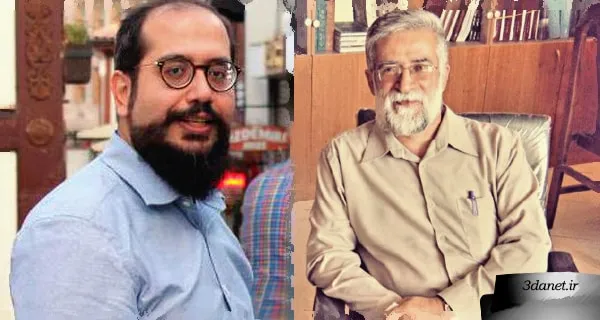
Interviewer’s note: This conversation took place in Azar 1384 (November–December 2005) with the late Ahmad Qabel (1957–2012), an Islamic scholar, jurist, and political critic, in Mashhad. It was first published in the student magazine Soroush-e Kherad at the Faculty of Theology of Ferdowsi University of Mashhad. The interview was later published on the late Qabel’s personal website and is now being republished with new editing on the website «Sedanet».
In this conversation, Ahmad Qabel accepts miracles from a faith-based perspective and says that belief in miracles does not in itself lead to superstition. Nevertheless, he attempts to interpret at least some well-known miracles, such as Jesus raising the dead or Moses’ staff turning into a serpent, in a somewhat naturalistic rather than entirely supernatural manner.
Although he accepts the role of supernatural factors in the world, he considers these matters to be exceptions. In his view, wherever a matter can be interpreted naturally, one should not resort to supernatural explanations; otherwise, superstition is born. In other words, for Qabel, superstition arises when the influence of the supernatural on worldly affairs, which is an exceptional matter, is turned into a rule and the world is interpreted entirely in supernatural terms.
In his view, Islam is not inherently conducive to superstition. Distinguishing between authentic religious texts and the interpretations made of religion, he believes that if authentic religious texts are considered with a rational and holistic approach, superstition will not emerge from them. He identifies fabricated narrations, which he considers to be very numerous, and the jurisprudential rule of “toleration in the evidence of traditions” (laxity in examining the chain of transmission and signification of narrations dealing with recommended and discouraged acts) as two factors in the formation of superstition in Islam.
According to Qabel, the common practice of rational people is accepted from a religious standpoint, but in cases where rational people disagree, the Sharia has its own specific ruling. He considers anti-superstition efforts to be few and insufficient, and emphasizes that combating superstition requires both sufficient knowledge and great courage. In his view, ignorance and exploitation are among the factors behind the spread of superstition among the religious. The dangers that anti-superstition activism entails have also resulted in there being few anti-superstition religious scholars.
Yaser Mirdamadi: Our discussion is mostly about superstition in religion, although when it comes to speaking of superstition, one can also talk about modern superstitions. But if we limit our discussion to superstition in religion, in your opinion, what factors lead to the spread of superstition in religions, specifically the Abrahamic faiths and especially Islam?
Ahmad Qabel: In religious texts that primarily bring us news from the supernatural realm, there are accounts of prophets, the abilities of certain human beings, or specific divine actions that we consider supernatural or sanctioned by the supernatural, such as Christ’s power to raise the dead — the details of which are not clear to me, for instance, whether someone had suffered a stroke and people thought him dead, and Christ, with his divine knowledge and certain considerations, brought him back to life, just as medical science does, or perhaps he truly did raise the dead — or Christ’s power, according to the Quran’s words, to breathe life into clay. Naturally, when a person accepts such instances, the possibility of generalizing this belief automatically arises. However, since miracles were exceptional matters, if they are turned into a rule, that is called “superstition.” Superstition is when, in a matter that can naturally be accomplished or explained, we always draw upon supernatural matters and overshadow that naturally explicable matter with the supernatural. A superstitious person thinks that when they fall ill, they must pray for God to heal them, whereas in these very sacred texts we have it that when Moses, Kalim Allah (peace be upon him), fell ill, he prayed to be healed, and God answered him to consult a physician so that he might be healed through his treatment. Prayer is non-superstitious when you make your own effort but do not achieve a result, or when you pray for that very effort to bear fruit.
So yes, traces of miracles that may foster superstition can be found in authoritative legal and religious texts; however, these miracles themselves appear in these texts as though they are an “exceptional matter,” not that the religious texts seek to generalize these miracles. This generalization is the work of the followers of religions, which later leads to superstition.
Since supernatural factors are, to some extent, affirmed in religious thought, this itself lays the groundwork for the generalization of those factors, and the name of this generalization is superstition. Generalizing supernatural factors means replacing natural and empirical factors and influences with factors other than them.
In the same example of medicine, when we turn to a palm reader, a jinn medium, or even prayer instead of medicine and treatment, this is superstition.
Yaser Mirdamadi: You say that the influence of supernatural factors is affirmed and depicted in religious texts, but this is not superstition; rather, its generalization is superstition, and this generalization, which leads to the fostering of superstition, is not the work of authentic religious texts but the work of the religious. Yet the volume of superstition in religions is not small. Why has such a vast volume of superstition taken shape among religions?
Ahmad Qabel: The reason for the abundance of superstition in the religious sphere is an incomplete understanding of the very existence of supernatural influences in religion, such that if a logical limit is not considered for the influence of supernatural phenomena, or if that limit is transgressed, we fall into superstitious thinking.
We who defend the Sharia and believe in supernatural factors and phenomena say that those instances which occurred outside the ordinary framework of life are exceptions and cannot be generalized. So the reason many religious people turn to superstition is an incomplete belief in supernatural influences, which has laid and continues to lay the groundwork for accepting any claim, and of course, it stems from an incomplete understanding of the texts of the Sharia. It is as if they have believed in part of the Sharia and abandoned another part (believing in some and disbelieving in some).
It is the same in science: if someone, by ignoring part of the scientific and empirical process leading to the formation of a phenomenon, claims to have achieved that phenomenon, their claim is evaluated as unscientific, and if they insist on that baseless claim, they are known as a fanciful (and perhaps superstitious) person.
It is the same in religious accounts: to satisfy the particular mentalities of that time against “sorcerers” and “priests,” God Almighty gave His prophets special abilities or Himself undertook an exceptional act. Some people eliminate those exceptional aspects (like eliminating the process of a phenomenon’s formation), and as a result, a mentality is cultivated as if all the work of the Sharias is based on unnatural matters. This unnaturalizing of natural matters and turning it into a process is superstition-mongering, whether in science, in religion, or in anything else.
Yaser Mirdamadi: To what extent is the influence of supernatural matters, which is mentioned in authentic religious texts, accepted, such that we can then consider anything beyond that as superstition? What criterion or standard do we have?
Ahmad Qabel: I think we should move past the discussion of superstition and first have a discussion about influence and being influenced, and cause and effect, before we then address superstition.
Let us suppose that I, Ahmad Qabel, had an appointment with you today. While I was supposed to come to you from somewhere else. Part of the realization of this event (that is, coming to you) was within my control. That is, I had to say yes. But there also had to be a means of transportation, health had to be secured, no accident would occur, and… thousands of factors must have existed, many of which were beyond my control. A part of these, in terms of religious belief, we call “tawfiq” (success, i.e., the attainment of harmony and cohesion among various factors).
We consider all of these factors to be under the influence of God, the Glorified (perhaps, as some say, we attribute them to God to make things easier for ourselves). Of course, we regard the metaphysical factor as pervasive and flowing, but not in the sense of eliminating physical factors. Regardless of the presence of that metaphysical realm, we too are independent agents who exist. That is, we must not neglect the role of our own determination and will, and the necessary voluntary actions within my power to bring about that phenomenon. Neither could the external matters and factors alone have caused my presence before you, nor could I have realized such a phenomenon solely through the set of factors under my control.
Even in the matter of medicine and drugs, a drug may be effective and the probability of its positive effect may be very high, but it does not reduce the probability of a negative effect to zero; however, because of that weak probability, one should not obstruct the strong, decisive probability. So that we are not among the few individuals who experience the negative effects of the drug (since it is beyond our control), we entrust it to God and ask Him that such a thing not happen; provided, of course, that belief in the metaphysical does not eliminate human social and scientific responsibilities.
Superstition is when a person does not make the necessary scientific and logical effort and yet expects a result; in this case, their approach has been superstitious.
Therefore, although from a philosophical and mystical perspective, all factors can be attributed to the metaphysical realm, our understanding of that realm must differ from those who close their eyes to the natural realities of the world of existence and attribute everything to unprovable, supernatural factors.
The non-superstitious understanding believes that "Abi Allah an yajri al-umur illa bi-asbabiha," meaning God brings all matters to fruition through their natural means and causes.
But the superstitious view holds that natural means, causes, and factors are unimportant, and that one can haphazardly, in any realm of existence, request and benefit from metaphysical forces—which are, for instance, at the disposal of certain specific individuals like the Guiding Imams (peace be upon them)—to achieve desired results.
Yaser Mirdamadi: I feel I have also received the answer to my next question from your speech. The question is, if we define superstition as "the abnormal generalization and unnecessary totalization of the effect of metaphysical matters in the natural world," then the answer to the question of whether religions are inherently conducive to superstition—if we grant religions an essence—is that since the foundation of religions is belief in the influence of the metaphysical in nature, this belief is predisposed to fostering superstition. Is my understanding of your words correct?
Ahmad Qabel: This cannot be affirmed absolutely. In general, belief in the metaphysical, if it leads to negligence in the believer, has the potential to foster superstition. But the assumption is that religion and divine law are concerned with the "attentiveness" of the believer, not the "negligence" of the believer.
For example, the transformation of Moses's staff into a serpent requires a process for such a transformation to occur in the natural world. The staff, which is wood, must become soil, a plant must grow from that soil, then the plant that grew from its soil must be eaten by a herbivore and turn into flesh. Then a viper must swallow that herbivore and turn it into eggs; after laying eggs, the baby viper is born and grows until a form like the serpent produced from Moses's staff appears. So this phenomenon is the result of a cycle that begins with the staff and ends with the serpent. God eliminates those intermediaries and creates an acceleration in the natural factors so that as soon as the staff is thrown down, it becomes a serpent; but this is not contrary to nature.
To consider God bound in His actions by all the laws of nature is a non-religious belief. Of course, in dealing with the people of this world, God generally acts according to the rules of the world, and for us He sends a prophet of our own kind; for animals too, if we accept that they are "communities like yourselves" (Al-An'am: 38), meaning animals are like us, He sends a prophet of their own kind.
Belief in the supernatural does not inherently lead to superstition; however, the Qur'an also states that "We set forth parables, and some are led astray while a group is guided" (al-Baqarah, verse 26). Just as a knife can be used for good or to kill someone, there is the potential, through an incomplete understanding of religion or Sharia, to fall into the realm of superstition, but one cannot say that the essence of religion or Sharia fosters superstition. With religion, one can commit oppression and one can establish justice. With religion, one can be superstitious and also rational and a proponent of knowledge.
Yaser Mirdamadi: In any case, we have elements in religion such as belief in the supernatural and unseen matters. Are these beliefs not themselves a breeding ground for superstition?
Ahmad Qabel: Of course, we have other elements in religion too, such as "the necessity of paying attention to the truths of existence" and "the necessity of knowing the divine laws," which are the same as "natural laws." If those beliefs are considered apart from these beliefs, meaning one part is accepted and another denied, then certainly one can say that religious beliefs are a breeding ground for superstition. But if the totality of religious beliefs is accepted, such an assessment cannot be made.
Furthermore, in my opinion, we must separate two issues. One is what was prevalent as religion during the time of the Messenger of God (PBUH) — which the Prophet of God and the rightly guided Imams explicated and to which the faithful inclined — and the other is the shaping of the inclinations of the faithful, in theory and practice, after the era of their presence.
Considering this point, one can separate the "primary text" from the "secondary text." Ultimately, one can place the definitive narrations of the Prophet and the Imams (in the Shi'a view) alongside the Qur'an as the primary text, and consider the interpretations of theologians and jurists as the secondary text.
Regarding the primary texts, it must be noted that Islam came "'ala fatratin min al-rusul," meaning it came in a period that falls between the previous prophet and the current prophet. Given the prevalence of certain approaches and certain undesirable practices, the Sharia could not change some matters and was compelled to endorse them, matters such as slavery or certain discriminatory relations between men and women.
The reason for this is that some issues had become part of the culture, and changing culture requires a long time so that the grounds for change can be created little by little. The Commander of the Faithful (AS), shortly before his martyrdom, says: "Allah, Allah, regarding women, for the last thing your Prophet spoke of was: Fear Allah regarding the two weak ones: women and those whom your right hands possess." This was the last testament of the Prophet (PBUH), that you should not forget women and slaves. That is, this was the most important concern of the Prophet of God, which is not mentioned in Nahj al-Balagha but is recorded in the book al-Kafi.
In any case, if we believe in the separation between primary and secondary texts, even though proving it is difficult, problems of this kind do not arise. I say explicitly that the primary text, considering the aforementioned points, is in no way compatible with superstition. One of the important questions related to our discussion is: why did the Prophet of God (PBUH) bring no miracle other than the Qur'an? Phrases such as "Afala yatadabbarun," "Afala ya'qilun," "Hal yastawi alladhina ya'lamun wa alladhina la ya'lamun," and "Fa-bashshir 'ibad alladhina yastami'un al-qawl" apparently show that the divine message during the mission of the Seal of the Prophets is that this is no longer the era of sorcery, magic, and casting ropes, but rather the era of turning to knowledge, awareness, and reason.
Yaser Mirdamadi: But there are so many narrations later on ...
Ahmad Qabel: ... I know that we have many narrations regarding the occurrence of certain miracles by the Prophet of God (PBUH) and the rightly guided Imams (AS), but note that, except in some exceptional cases, many of these narrations are fabricated. Proving this matter is, of course, difficult, but I am prepared to prove it.
For example, I submit that in a more important matter like the Imamate, until the year 250 AH, the discussion of the number 12 regarding the Imams was not raised among the followers of the Imams. The prevalent thought of Shi'ism in the first and second centuries AH until the mid-third century, meaning the time of the Imamate of Imam al-Askari (AS), was the continuation of the chain of Imamate from father to son until the end of human life in this world.
Although the Sunnis have had narrations to the effect that “after the Prophet, twelve caliphs will come from Quraysh,” the Shi‘a have disregarded these narrations. The Shi‘i argument has been that until the Resurrection, the earth is never devoid of a Proof (ḥujja), and the Proofs continue one after another, son after father, and, when necessary, brother after brother.
In the time of Imam al-Ṣādiq (AS), he was considered the “Qā’im of the Family of Muhammad,” and in the time of Imam al-Kāẓim (AS), he was considered the Qā’im — but we have become more Catholic than the Pope — until we reach the death of Imam al-Ḥasan al-‘Askarī (AS), when three people testified that he had a son whom they had seen, but who, by God’s command, must be hidden from sight.
Of course, many of the followers of Imam al-‘Askarī said he had no son. Ultimately, counting the son of Imam al-‘Askarī, we have twelve Imams. From this time onward, through figures such as Ibn Qiba and others, the belief in the number twelve took shape in Shi‘ism, and that Imam, since the earth is never devoid of a Proof, becomes the “awaited” Imam (al-Imām al-Muntaẓar) who is in occultation.
This lack of belief in the number twelve before Imam al-‘Askarī (AS) was not specific to one or two individuals; rather, all the companions of the Imams, or an overwhelming majority of them, disregarded it. There were no narrations, and they appeared later, and appeared so hastily that the numbers thirteen and fourteen also took shape regarding the number of Imams. For instance, it is mentioned in al-Kāfī that twelve from the progeny of Imam ‘Alī or Fāṭima (SA) will be Imams, which makes the number of Imams thirteen. Or ten from the progeny of Imam al-Ḥusayn, which makes thirteen. Of course, these books were later corrected, and twelve was changed to eleven and ten to nine, and, qurbatan ilā Allāh, things were set right.
In any case, I submit that sifting the authentic from the spurious in the text of our narrations is difficult, but it should not lead to denying their core.
For example, if we know that a chest of rare and historic jewels lies buried amidst a mountain of discarded rubbish, anyone who knows this, and is sensible and fond of wealth, will search for it until they find it. I have searched through the text of many Shi‘i and Sunni narrations, with all the forged narrations they contain, and have been engaged in this work since 1364 [1985/86], and I have found such pure gems in these texts that being soiled by the superstitions interspersed among some narrations is worth it for the sake of discovering the truth of the Muhammadan Sharī‘a.
You cannot eliminate a particular religion or Sharī‘a, because, regardless of eras of favor and disfavor, believers in these Sharī‘as have always existed. Although I do not believe in the existence of “different religions” and believe that the religion of the One God has always been one, the Sharī‘as have been different. Sometimes one narration out of a thousand is so useful in persuading believers and the audience of the Sharī‘as that it is worth all that superstitious contamination among the narrations. In any case, in my opinion, these incomparable words are so valuable that they are worth searching for. Of course, there are those who do not favor this approach.
The wares of unbelief and faith are not without buyers / One group favors this, another group favors that.
Yaser Mirdamadi: We have spoken about your definition of superstition-belief and the relationship between religion and superstition. Now, what do you consider to be the harms of superstitionism in religion?
Ahmad Qabel: Superstitionism calls the very foundation of religion into question, endangers its existence, causes it to stagnate, and even leads many people to turn back from religiosity. Superstitionism, without any courtesy, tarnishes the face of religion. In my view, the damage that superstitionism inflicts is so great that it is worth making its remedy the focus of our efforts.
Although pious and Sharī‘a-minded yet superstitious individuals are oblivious to the harms of their approach (for this reason, they cannot be considered entirely at fault), they unwittingly and unknowingly cut at the root of religion or the Sharī‘a. These are ignorant friends whose harm is, most of the time, greater than that of any knowing enemy.
Yaser Mirdamadi: What do you consider to be the goal of religion, such that you deem superstitionism harmful to religion?
Ahmad Qabel: The goal of religion is for human beings to attain the truth. The goal of religion is to discover the truths of existence and, of course, to live based on those truths in this very world. The goal of religion is to move away from mirages and fantasies and return to the source of the limpid water of truth.
Yaser Mirdamadi: In your view, which of the three religious domains—1. ethics, 2. beliefs, and 3. jurisprudence—has a greater affinity with superstition?
Ahmad Qabel: I consider the domains of religion's presence to be threefold: theology, ethics, and rulings. In the domain of ethics, since the discussion concerns evaluative oughts and ought-nots, there is not much room for superstitious thinking, unless someone is negligent in defining ethical categories and, for instance, interprets "patience" as "laziness," "asceticism" as "a lack of effort in production," and similar heedless definitions. That is, if an individual is influenced by superstitious beliefs, their ethics will also become superstitious. In this sense, ethics alone is less susceptible to harboring superstitious belief.
However, superstition-mongering greatly influences those other two domains, namely jurisprudence and theology, and especially jurisprudence. It seems that in the domain of beliefs, superstitions theorize themselves in order to expand and find room to manifest in human life.
Within the scope of jurisprudence, superstitious beliefs can shape laws or recommendations, particularly in religiously recommended (mustahabbat) and discouraged (makruhat) acts. The result is that we witness the presence of superstitious solutions in the realm of recommended and discouraged acts. Regarding obligations and prohibitions, because there has been greater sensitivity to verifying the authenticity of the chain of transmission of narrations and their implications in terms of conformity with reason and the Quranic text, the narrations have been considerably refined; but in the case of recommended and discouraged acts, this process of scrutiny is halted, and under the title of "leniency in the proofs of traditions" (tasamuh fi adillat al-sunan, i.e., taking a relaxed approach to narrations concerning recommended and discouraged acts), extraordinary superstitions have taken shape.
Yaser Mirdamadi: In your view, what are the grounds for the historical formation of superstition within the heart of religion?
Ahmad Qabel: Several historical grounds can be considered effective in the formation of superstition: Firstly, the ignorance of the people and followers of religion is the primary cause for the realization of superstition. The ignorance and negligence of scholars in examining individuals' claims regarding the attribution of certain irrelevant matters to religion or the Sharia, and "leniency in the proofs of traditions," have fostered superstition. For this reason, many false narrations in this area have taken shape under the safe shadow of this very "leniency in the proofs of traditions."
The ignorance of non-scholarly followers has enabled exploiters to take advantage of their ignorance for their own benefit, creating false positions for themselves and leading people down paths that have brought them nothing but loss in this world and the hereafter.
Inviting people to actions that make them appear base and contemptible in the eyes of the wise and expose them to all kinds of insults is one of the outcomes of this type of superstition-mongering.
The second historical ground for the formation of superstition is the self-interest of profit-seeking knowers. This is one of the grounds for the production and growth of superstitious beliefs and behaviors. Disseminating superstitious ideas in the form of various written, oral, audio, and visual publications and artistic productions secures the material interests of profit-seekers. Spiritually, this work prevents people from a conscious approach to the texts that secure their well-being in this world and the hereafter.
The third ground for the production of superstitious beliefs is the effort of opponents of the Sharia to sideline the Sharia. To understand this, it is good to refer once more to the first book of the Masnavi, the long tale of the Jewish king. This king used to kill Christians. His cunning minister forbade the king from this act and sought permission to cause sedition and sow discord from within, setting the Christians against one another so that they would destroy each other, and by this means, the king would also be rid of them. From this allegorical story, it becomes clear how some knowing enemies exploit superstitious approaches to discredit the Sharia, and how, through the hands of ignorant friends, they implement their fundamentally destructive plans.
All these grounds can be gathered under one general heading and it can be said that the basis of humanity's superstitious approach is due to ignorance of the true position of the human being within the totality of existence.
Human beings, without any valid rational or scriptural proof, have considered themselves “God’s vicegerent on earth” or “the axis of existence,” and a false pride has enveloped them from head to toe. They appropriate all of God’s absolute power over existence for themselves or for individuals of their own kind, because they cannot conceive of absolute power residing in anything other than a human being. They do not wish to accept that the creation of other beings was more significant than the creation of humankind: “The creation of the heavens and the earth is greater than the creation of mankind, but most of mankind do not know” (Ghafir: 57). They do not wish to surrender the stewardship of the world to another being, and for this reason, even if they do not consider themselves to possess power, they nonetheless attribute supernatural powers to some of their fellow humans. They claim that they or their fellow human knows everything and has the ability to change everything. It is from here that extreme selfishness or irrational species-centrism emerges, paving the way for superstition and many other harms for humanity.
When these extravagant claims confront the realities of human life within the totality of existence, their analysis proves incapable of explaining human helplessness in solving its own problems, and for this reason, they are drawn toward irrational analyses.
On the other hand, human beings, for their needs, seek out means to fulfill those needs. These needs, both genuine and false, compel some individuals to accept nonsense. Therefore, superstition is not exclusive to the Abrahamic religions. For example, a friend who had traveled to Japan found the people there—who follow the Shinto faith—to be intensely superstitious, and he assessed the cause of their progress to be their non-application of superstition in matters related to material life and their acting on the basis of scientific principles.
The method of Western Christianity in separating the realms of religion and the world can also be considered a factor in the growth of societies where, despite the existence of superstition in their religious beliefs, it has not prevented their daily lives from being based on scientific foundations.
The fact that the former female Prime Minister of France, the wife of Mr. Lionel Jospin, went to a fortune-teller to learn about her husband’s premiership for the next term indicates that superstitions also exist in modern Western societies.
We also have Western television networks that broadcast programs by psychologists whose job is to make people cry, and from the techniques of our own religious eulogists and panegyrists, they lack only the singing.
The intensely superstitious funeral rites of the Pope, if not assessed as more superstitious than the ceremonies of Iranians in such matters, will certainly be no less so; this is while the presence of a huge crowd of Christian followers and officials from various countries in this century of “the growth of science and awareness” at that superstitious ceremony, and their tolerance of it, shows that the existence of superstitions stems from a characteristic of human beings themselves, which tolerates such affairs. Of course, in some cases, human beings also feel that because they cannot fulfill their need through scientific means, they turn to superstition, as they do not wish to lose hope.
Yaser Mirdamadi: You pointed to the presence of superstition in the modern world. With this in mind, perhaps one could say that the human being is a superstition-making animal. Historically, can we consider a group of religious scholars to be anti-superstition, and if the answer is yes, which scholars were they, what works of theirs have survived, and do we still have such individuals among religious scholars today?
Ahmad Qabel: Among the anti-superstition works concerning the history of Islam and the Imams, one can point, for example, to the book Lu’lu’ wa Marjan by Muhaddith Nuri or Hamaseh-ye Husseini by the late Mr. Motahhari. But the anti-superstition steps are so few that they can be considered as if they “never were.” The work of combating superstition must begin, and to begin, individuals who have sufficient knowledge and can offer reasoned and convincing opinions must enter the arena. Specialists must approach these subjects because superstitious matters have an emotional aspect, and approaching them is dangerous. You must first prove to the people that you are a physician and an expert, otherwise they will negate you, and consider you irreligious or ignorant of religion. For this reason, confronting superstitions within the body of the Sharia, due to the existence of a religious shield, grants safety to the promoters of superstition and places the opponents of superstition at risk.
A scholarly confrontation with these individuals and this approach requires the courage and sacrifice of people and groups who must enter the arena and engage with superstition-fostering approaches.
Some philosophers, who were rationalists, and mystics, who were esotericists, have of course made efforts in certain areas, but we must reflect on their success, because they were not very successful.
Of course, some precious works have survived from them, and if we regard those works as strong documentation for today's discussion, one could say that their work was not entirely devoid of success; however, these successes have not nearly kept pace with the growth of superstition, and one cannot claim that we have had a strong and coherent movement of struggle against the current of superstitionism.
In Christian thought, Protestants were more successful in their struggle against Christian superstitionists, and for this reason some prescribe their method for the de-superstitionization of the Muhammadan Sharia (PBUH); however, they too were not very successful in de-superstitionizing their own primary texts, and sometimes certain superstitions remain even in their revised texts. This is similar to Mr. Salehi Najafabadi's objection to Mr. Motahhari's use of certain superstitions.
The text of the Quran explicitly refers to the topic of "distortion in the Sharia," if distortion is considered a branch of superstition.
Yaser Mirdamadi: Now that you have mentioned the issue of distortion of the Sharia, let me pose this question: in your view, has the Quran itself been distorted? Have additions or omissions occurred in the Quran itself?
Ahmad Qabel: Distortion in the Quran does not mean distortion of the text; rather, distortion in it means misuse of the Word of Revelation. The Quran itself speaks of the "conceptual distortion of the Divine Word": "They distort the words from their [proper] places" (An-Nisa: 46, Al-Ma'idah: 13).
For example, some critics of the Sharia have taken "Woe to those who pray" (Al-Ma'un: 4) and not cited the continuation of the verse, making a distorted interpretation of it. Distortion in the Quran has not meant adding to or subtracting from the verses of the Quran. What appears in some Shia and Sunni narrations regarding Quranic verses "with additions" can easily be understood as the interpretation of the verse and not its distortion.
Of course, there are a few narrations that directly refer to distortion, but one cannot be confident in their content. Perhaps the discussion of the "value of memorizing the Quran" and the otherworldly rewards considered for it stemmed from an approach aimed at preventing the distortion of the Quran.
Yaser Mirdamadi: I had a question about the structure of Shia jurisprudence. Shariati believed that if we replace the elements of "consensus" and "reason" with "science" and "time" in Shia jurisprudence, we can achieve transformation and dynamism. What is your view on this?
Qabel: I do not know how familiar the audience of this interview is with my blog, "Rational Sharia". If they are familiar, perhaps my words will be repetitive for them. I believe that the Sharia, in worldly affairs, is identical to rationality, but rationality does not have a single prescription that we can say this rationality alone is sufficient. There is also disagreement within rationality. In matters of rational consensus, the Sharia is obliged to affirm the consensus, and in matters where there is disagreement among rational people, the Sharia has the right to choose with reasoning. We must distinguish between "common human rationalities" and matters of disagreement among rational human beings.
On the other hand, we apparently do not have a shared definition of religion. Mr. Soroush speaks of religion without ideology, and Mr. Motahhari or Mr. Shariati say the opposite, of course with Mr. Soroush's specific definition of ideology. One cannot discuss this matter unless an agreement is reached on the foundational definitions. Now we must also reach a consensus on the definition of "science" and "reason." According to my definition, a major part of reason is science itself. Even in religious culture, we have the saying: "Knowledge is the leader of reason."
In terms of external existence, there is a difference between the two matters of "reason" and "transmitted tradition." But this very transmitted tradition affirms reason, stating that "The first thing God created was reason." Reason is God's inner proof. The longest verse in the Quran concerns taking witnesses during a transaction, which is an entirely rational matter.
But we also have differences regarding marriage, such as the right of divorce being given to the man. I have seen five authentic narrations indicating that in khulʿ, the woman can be the applicant for separation, even if the man is not willing. As soon as the woman is serious about separation and refers to the judge, separation is effected, and the man's consent to the principle of separation is not required. Only regarding the amount of money he must take from the woman, he can demand more than the dower if he has already paid it. In other words, he can claim damages. Despite the explicit statements in the narrations about the difference between ṭalāq and khulʿ, and the non-necessity or impermissibility of divorce by the man after khulʿ (if the woman is serious about not continuing the marriage contract), unfortunately, the jurists have confiscated everything in favor of the man and have again issued fatwas on the necessity of divorce by the man.
In my lectures, I have said several times that a miracle greater than the miracle of the Prophet (PBUH) has been employed to distort his Sharia, and they have distorted the religion. I do not know what audacity some jurists have had. Imam Sadiq, in the year 120 AH, says: «ما من شیء علیه الناس الیوم الا هو منحرفٌ عما نزل به الوحی». In Arabic parlance, «ما من شیء الا» means there was not a single thing in which a deviation has not occurred. Of course, this statement does not mean the impossibility of recovering the undistorted text of the Muhammadan Sharia (PBUH). However, finding the undistorted text requires courage in addition to knowledge. Of course, this courage is not something everyone possesses.
Mr. Motahhari, in his book "The Issue of Hijab," says that according to narrations, the lady of the house is not obliged to observe hijab in front of a purchased male slave, and conversely, the female servant of the house is likewise in relation to the master of the house. The Imam (AS), in response to some questioners, confirmed this matter: when mounting a camel, the lady's shin becomes visible; can the lady mount the camel with the help of the male slave? Is it possible for her to travel alone with the male slave? When mounting the camel, she must place her hand on the bare shoulder of the male slave; are these things unproblematic? The Imam says "No." Mr. Motahhari says here that if a jurist dares, he can say that the workers who work inside homes today have the same ruling and can refine the basis of the ruling.
My point is that we should define reason and knowledge. These two are not mutually exclusive such that we can substitute one for the other. Consensus, if it means returning to "the rational consensuses of humanity," is good, but if it means "the common consensus considered by the Shia," it has no scientific value whatsoever, especially in Shia Islam, where some past jurists believed that if individuals like Sheikh Mufid, Ibn Barraj, and Ibn Junayd opposed an opinion, and there was no unknown person among them who could possibly be the Imam of the Age, we would understand that the Imam of the Age is among the rest of the jurists.
Unfortunately, because the secondary texts and these opinions are in Arabic and not all people can study them, they have no way of understanding what flimsy matters have been the basis for the gentlemen's views on some fundamental issues. The religiously observant people are unaware of these matters.
In any case, in my opinion, the jurisprudence of Sharia is based on reason, and that as the primary proof, not that reason, as some Shia jurists say, has no influential role. Reason is the inner and principal proof, and the rest are outer and secondary proofs, meaning transmitted evidence is a secondary and outer proof — whether it be Quranic transmission or authentic narrations. And finally, we arrive at "consensuses," which are subsets of reason and transmitted evidence. Considering consensus as an absolute proof has no place in Shia Islam. Thus, we can bring the same four factors with a theoretical approach to "reason," which we must place at the head of the proofs.
The story of the correspondence between creation and legislation is one of the most fundamental bases of Sharia. The Holy Quran explicitly says: «فاقم وجهک للدین حنیفا، فطرة الله التی فطر الناس علیها، لا تبدیل لخلق الله، ذلک الدین القیم», meaning the "upright religion" is written based on the "unchangeable human primordial nature," and as long as it conforms to human primordial nature, it remains firm and upright. So, if an iota of the Sharia's conformity with the creational blueprint of the human being is deviated from and this relationship is negated, the firmness and survival of the religion are endangered and will be destroyed.
The problem of neglecting the Quran and paying excessive attention to narrations that contradict the apparent meaning of the Quran and oppose rational approaches (despite the Sharia's recommendations to use reason) has gone so far that some, when arguing from the Quran, refer to the opinions of other jurists instead of consulting the Quran directly. Most jurists have also failed to engage in specialized exegesis of the “Verses of the Rulings” (Āyāt al-Aḥkām), let alone broader exegesis.
For example, let me recount a memory of Mr. Seyyed Ali Khamenei from the “Payām-e Enqelāb” magazine (during Mr. Montazeri’s tenure as deputy). Mr. Khamenei says an interesting discussion took place at our father’s house between Mr. Montazeri and the late Mr. Milani. Mr. Montazeri would habitually raise a scholarly discussion in the presence of a learned person. He had come to Mashhad and heard that our father was ill, so he came to visit. At the same time, Mr. Milani also arrived. The discussion was about the principle of exemption (barāʾa). Mr. Milani misread the verse “And We would not punish until We had sent a messenger” (al-Isrāʾ: 15) or one of the other verses in this discussion, and Mr. Montazeri took issue with it. Mr. Milani said that in the Rasāʾil, Sheikh Ansari had cited the verse in this way. Mr. Montazeri said, “It seems you even read the Quran from Sheikh’s Rasāʾil.” Now, some indeed read the Quran from Sheikh’s Rasāʾil.
If we reread the text not on the basis of Akhbarism but rationalistically, our hands are so full that we can easily convince the opponent. I believe that much of what currently exists in society has no connection to authentic religion. However, demonstrating all these cases is not the work of one or two people.
On the other hand, unfortunately, there is no movement that pursues this issue, and years of efforts to establish an institute with an approach of “reforming religious thought,” which would include a group of knowledgeable people and undertake this important task, have not been successful due to the heavy cultural atmosphere, the prevalence of unscientific and superstitious approaches in society, and the many dangers of addressing these issues. However, based on the principle that “an easy matter is not to be abandoned because of a difficult one,” individual activities are also a boon and should not be stopped.
.
.
Yaser Mirdamadi in Conversation with Ahmad Qabel on Superstition in Religion
Azar 1384
.
.



Discussion1 comments
سپاس