Philosophy
Amirreza Sa'bani's essay “A Survey of the Views of the Patchwork Philosopher”
Dariush Shayegan, a “philosopher of forty pieces” and a descendant of Isaiah Berlin’s foxes, lived among “shattered worlds” and coined concepts such as “cultural schizophrenia” and “double illusion” to describe the relationship between tradition and modernity in peripheral cultures.
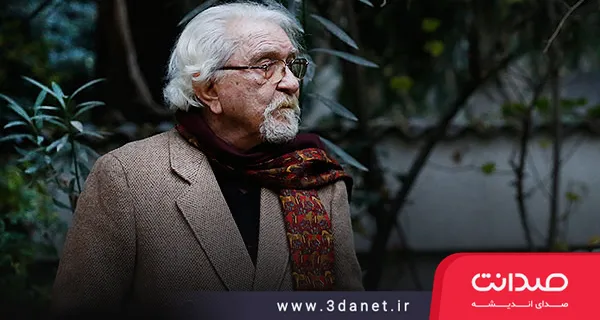
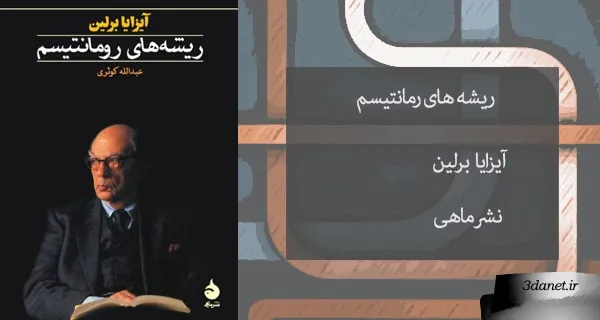
Isaiah Berlin, in his work,[1] divides thinking intellectuals into two categories: the system-building hedgehog thinkers and the foxes. The first group thinks deeply within one particular domain and interprets everything through that single key concept. The second group are subtle, discerning critics who have plucked a flower from every garden, read widely, and observed with an open mind. They are not attached to any creed or dogma, and they confront various issues and subjects with openness, receptivity, and freedom. They do not fear criticizing their own intellectual record, for “welcoming disgrace is better than abandoning truth.” If this division is valid, Dr. Dariush Shayegan undoubtedly falls into the second category. A pilgrim of diverse intellectual spaces who has traversed East and West, with his magic lantern, searching for the torn-out pages of Iranian identity from the book of modern transformations. An exiled man who, on the vast plains of history, has sat in vigil for the chastity of a lost Iranian culture. In this brief piece, we will sit for a while with the playful Iranian philosopher to hear, from his own lips, the descriptions of this identity.
One. The Intellectual Origins of Dr. Dariush Shayegan
Traces of this openness and existential diversity can be clearly found in Shayegan’s childhood. A period when he was “besieged by the boundless attentions of his mother and father, aunt and uncle, enclosed and spoiled to the highest degree.” His mother was Sunni and “Georgian, and possessed a Russo-Caucasian culture,” and “their lineage dated back to the thirteenth century AD; Zulukidze, the paternal family name of Shayegan’s mother, was a branch of the Bagrationi dynasty that had reigned over Georgia for a thousand years.” Living in a multilingual family: “My mother and aunt spoke Georgian together,” “My mother spoke three languages: Georgian—which was her mother tongue, Russian—which she had learned at school, and Ottoman Turkish—which she had perhaps learned due to the proximity to the Ottoman Empire, and also because it was one of the languages of the Muslims.” On the other hand, attending the Saint Louis School, run by Lazarist priests, was like a “true nursery” where all minorities were present: Armenians, Assyrians, Jews. Shayegan’s childhood passed in “disintegrated worlds where nothing was in its place, where incongruous and unrelated languages and knowledges were mounted, piece by piece, upon or alongside one another in random mosaics.” [2] The intellectual seed of Shayegan was sown in childhood, through living in these “disintegrated worlds.”
“As far as I remember, I have lived in disconnected spaces, in spaces where it was impossible for form and content to create a unified body in harmonious connection. On the contrary, as far as the eye could see, you could observe all the cracks of the mind’s convolution scattered everywhere within them. Nothing was in its place, nor did anything lead anywhere. ‘Spaces’ arising from various eras, sneering at one another, were gathered and arranged side-by-side in random mosaics, in such a way that I always felt I was living in a wasteland.”[3]
Two. Shayegan’s Scholarly Investigations
This living in disconnected spaces is evident from Shayegan’s earliest works, which are more investigative and exploratory in nature. “Religions and Philosophical Schools of India,” in which he speaks of “mutual understanding” between cultures, and where the author strives throughout to show the concordance and empathy between traditional Indian culture and traditional Islamic culture. “India is a land of wonders, and this statement is neither an exaggeration nor far from reality, for all the various levels and strata of human culture, from primitive beliefs in the worship of trees and water to the deep contemplation of the quality of the oneness of existence, exist and coexist in parallel in that land; and in an era when some Hindu peasants are still engaged in the worship of snakes and trees—which they have undoubtedly inherited from their native, non-Aryan ancestors—Gandhi’s ‘non-violence’ (ahimsa) movement, which originated from the ancient ethical traditions of India, taught humanity its greatest lesson and achieved India’s independence through a path difficult even to imagine for the modern world.”[4]
Shayegan's doctoral dissertation[5] is devoted to a dialogue between the two cultures of India and Islam. In this work, Shayegan strives to bring the Hindu and Islamic cultures into dialogue. His concern in this work, too, is the commonalities and divergences of cultures. “This writing is in fact an interpretation and exegesis of the treatise Majmaʿ al-Baḥrayn (The Mingling of the Two Oceans) by Muḥammad Dārā Shukūh, son of Shāh Jahān, and since Dārā Shukūh, in this short treatise, has touched upon all the concepts and issues pertaining to India and Islam, the author was compelled to undertake a relatively extensive journey into both realms of these cultures and to strive to interpret the compared concepts as they ought to be, and to re-examine the analogous relations that Dārā Shukūh, perhaps out of excessive enthusiasm, had regarded as mere equivalences, and, where necessary, to expose their incongruity.”[6]
The axis of Shayegan's discussions in his cultural reflections is the relation between tradition and modernity and the aspects of divergence between these two cultures. In two other works that are a reflection of Shayegan's seminal reflections, namely Asia Against the West and Mental Idols and Primordial Memory, Shayegan speaks of the emergence of a rift between the modern era and what preceded it.
“In the modern world, final causes have been eliminated and physics has taken the place of metaphysics”; the worlds of sense, imagination, and intellect have given way to geometric and mechanical worlds. Material causes have replaced essences; “a movement from intellect to instincts, from spirituality to rationality, from the rapturous absorption of the human being dissolved in the Absolute to the benefit of an aggrandizing self-discovery of the ego” has taken place.[7] In Shayegan's view, this course has desiccated the wellspring of human imagination. “Modern man is not only no longer capable of dreaming, but is even incapable of planning his own dreams.”[8]
Third. A Look at Shayegan's Constructed Concepts
Shayegan, after realizing that his task is to delve into and explicate this very situation. A situation from which myths have departed, where our primordial memories are considered mental idols. It is under these conditions that his constructed concepts arrive and become the narrator of a human being who has both lapsed into the “holiday of history” and become afflicted with “double illusion” and “cultural schizophrenia.” The emergence of the realm of “mental distortions” is the twin of the conditions of “cultural schizophrenia.”
Let us begin with “the holiday of history”:
“In the West—for various reasons—an event occurred from which other cultures were absent: the Renaissance, followed by the Reformation, and finally the Enlightenment, in a word, modernity. A dazzling and fateful part of human history took shape in a place where the peoples of peripheral cultures were not present. Peripheral cultures only awoke from this slumber of unawareness at that moment. In this interval, our culture and cultures similar to it seemed to have been on a ‘holiday of history.’ Now that the historical holiday has involuntarily ended, there is a gap between the consciousness of the traditional peoples of these peripheral cultures and the consciousness of the modern peoples who shaped the course of recent history.”[9]
Double Illusion: “An illusion in the course of which the people of these cultures imagine, on the one hand, that they know the nature of Western thought and can bring it under their control, and by mastering it, select the elements they find desirable, and on the other hand, imagine that they can preserve their own culture intact. This ‘double illusion’ manifests in two forms: Westoxication and self-estrangement. Sometimes it also leads to a strange and unpredictable phenomenon that results neither from the new critical rationality nor is rooted in the values of ancient cultures.”[10]
Cultural Schizophrenia: The description of the state of human beings who are caught between tradition and modernity. Suspended between gods lost and gods yet to come, past values and future values. Historically and culturally, an instance of being left behind from here and driven away from there. Cultural schizophrenia is a symptom of a pathological state. This illness sometimes manifests as a pathological attachment to the past and tradition, and sometimes as an aversion to it. Sometimes it appears in the guise of an excessive infatuation with the new culture, and sometimes as a hatred of it; in short, it simultaneously causes dual states such as tradition-worship and tradition-aversion, Westoxication and Westophobia, and so on.[11]
«Mental Aberration» Shayegan explains with a concrete example as follows: “Imagine a television that receives two series of images from two different sources. These images will eventually be superimposed on a single screen or surface and will obliterate the brightness and clarity of the programs. This is almost exactly what happens in our perception of reality. Because a part of our being—that is, our soul—still views objects from an old perspective, while our intellect consumes new ideas inspired by the modern Western epistemological model. Between these two there is a gap that is very difficult to fill. Our consciousness of modernity is in a state of delay; the world we represent, in terms of its philosophical infrastructure, is a post-Hegelian world, but, at the same time, in terms of content, it is pre-Galilean. We participate in the collision of these two, and in the eclecticism, dissonances, and aberrations. These aberrations often operate through veneering (placage). Veneering consists of making ideas that have no real counterpart synchronous and congruent with social realities. Veneering is the method of putting aberration into practice. It is a coin with two sides: the first side is veneering an old worldview onto a new ground, which leads to the traditionalization of society. The other side is veneering a new discourse onto an old ground. An act that appears as a kind of Westernization and modernization. Ultimately, the foundation upon which we stretch the new material or the old subject is neither this nor that. Because it has become blurred and foggy. [12]
«Veneering» is one of the examples of the state of “mental aberration”: “Veneering is the superficial reconciliation of modern and traditional concepts and meanings. It is grasping surface levels without understanding the deep roots. It is finding some slight correspondence between new and old matters and grafting them together, which of course yields nothing but new misunderstandings and failures. Veneering is, in fact, the actualization of aberrations in the field of practice, which is realized in two forms: veneering a modern worldview onto the ground of a traditional society, and in both cases, it is a sign of failing to grasp the distance between realities and ideas. But these veneerings—even with good intentions—lead nowhere, and no true, correct image emerges from the realm of aberrations. In this process of apparent conflict with Western modernity and superficial attachment to tradition, a complex affair occurs that Shayegan calls ‘unconscious West-strickenness.’ In this situation, the peripheral cultural elite do not know and do not see that they have, in truth, been outmaneuvered by the new culture and have unwittingly become bound to it.” [13]
Fourth. Dialogue in Metahistory as a Prelude to the Dialogue of Cultures
In a work published twenty years after *Asia Against the West*, he speaks of listening to the “metahistorical dialogue” of traditions. “Dialogue in metahistory is the equivalent of the vertical or longitudinal connection we have in mind. A dialogue between Shankara, one of the most prominent sages of ancient Hindu thought, and Meister Eckhart, one of the principal representatives of Christian spirituality in the Middle Ages, Ibn Arabi from the Islamic and Iranian tradition, and the two Chinese Taoist sages, Lao Tzu and Chuang Tzu. When we deal with the eminent figures of mysticism in human history, we will always encounter astonishing and bewildering correspondences and find bridges that connect their visions. Because at the metahistorical level of the spirit, always and despite cultural distinctions and differences, there is an undeniable structural homogeneity and congeniality in the mystical experience of the great sages.” [14] On the other hand, Shayegan addresses the preparation of the groundwork for the “dialogue of cultures” that arises from the “dialogue in metahistory.” Both of these are an urgent need of modern humanity.
The concept of “patchwork identity,” which is the title of one of the chapters of The New Enchantment, is an explanation of the realm of the amphibious state of the one-dimensional layers of modern man. “We, the inhabitants of the periphery, live among different blocks of cognition. We are caught in the interstices of incompatible worlds, worlds that mutually negate and transform each other. If this duality, accepted with lucidity and free of resentment, can enrich our existence, expand our realms of cognition, and broaden the spectrum of our sensibility. But if it is driven out of the domain of the critique of cognition, it creates disorder, splits the gaze, and, like a shattered mirror, distorts the reality of the world and the image of the mind.” “We are witnessing the emergence of a kind of planetary consciousness that encompasses all levels of human awareness from the Neolithic Age to the Information Age… Simultaneously with all these fundamental changes, we are also observing another unprecedented event, which is as if the flip side of globalization, and that is the resurgence of religions, sects, and various religious paths.” [15]
Fifth. The Qualities of Allameh, Corbin, and Fardid in Shayegan’s View
The garb of “patchwork identity” fits a seeker like Shayegan himself more than anyone else. Someone who is enamored with various cultures. He is fascinated by the most ancient Eastern traditions. He both joined the ranks of the devotees of Allameh Tabatabai and the circles of Fardid and Corbin. “I felt a devotion and respect for [Allameh Tabatabai] full of love and understanding. Apart from his vast command over the entire expanse of Islamic culture, the quality of his that deeply moved me was his openness and readiness to accept. He listened to everyone, was curious, and had great sensitivity and awareness towards other worlds of knowledge. I benefited immensely from his presence. He left none of my questions about the entire spectrum of Islamic philosophy unanswered. With great patience, care, and clarity, he explained and elucidated everything. He conveyed his wisdom to one sip by sip. Such that in the long run, it brought about a kind of inner transformation within the person. We shared an experience with him that is probably unique in the Islamic world.” [16]
Shayegan’s attachment to the circle around Corbin was such that two years before the revolution, he called him a man with a magic lantern [17], and after the revolution, spoke of him as a sage who was the starting point of a spiritual movement to bridge traditional Iran and modernity. [18] In September of the year the revolution in Iran was gathering momentum, Shayegan was present at the bedside of the holder of the magic lantern, knowing that: “Corbin’s imminent death would coincide with the end of a world.” [19] His description of Seyyed Ahmad Fardid, however, is as follows: “a born troublemaker,” with “sparks of genius and a deep-seated malice,” who inflicts “insidious and venomous slanders upon individuals,” and his circle is the very “dark pit of grudge, enmity, and a volcano of emotions.” [20]
In any case, Dr. Dariush Shayegan is an example of a migrant and itinerant thinker who, according to the definition of a sage, is the embodiment of his own thoughts. He tried to bring the half-dormant Iranian identity out of unawareness and timelessness and acquaint it with the cold storm of history. The star of his constellation is nothing but culture. I seek an opportunity in the future to return to another facet of Shayegan’s thoughts, which is art, for every era has its own capacity and language. If the opportunity arises:
To the sound of the harp, we shall tell those tales
From the concealment of which the heart’s cauldron boiled over
.
.
References:
[1] See Isaiah Berlin, Russian Thinkers, translated by Najaf Daryabandari, Tehran: Kharazmi, 1982, pp. 45-46.
[2] Under the Skies of the World, a collection of conversations with Ramin Jahanbegloo, translated by Nazi Azima, Tehran: Farzan Rooz Publishing, 1997, p. 15
[3] Taken from Lettres aux générations futures, translated by Kamran Fani, p. 1
[4] Taken from Religions and Philosophical Schools of India, Tehran: University of Tehran, 1967
[5] The Hindu Tradition and Islamic Mysticism, translated by Jamshid Arjmand, Tehran: Farzan Rooz Publishing and Research, 2003
[6] Hindu Rituals and Islamic Mysticism, translated by Jamshid Arjomand, Tehran, Farzan Rooz Publishing and Research, 2003, Author's Preface, p. 3
[7] Mental Idols and the Eternal Memory, Dariush Shayegan, Amirkabir Publications, p. 20
[8] In Search of Lost Spaces, Iran Nameh, Year 9, No. 4, Fall 1991
[9] Daryush Shayegan, Le Regard mutilé: schizophrénie culturelle: pays traditional face à la modernité, Paris, Albin Michel 1989.
[10] Asia in the Face of the West, Dariush Shayegan, Amirkabir Publications, pp. 49-61
[11] Daryush Shayegan, Qu ‘ est-ce qu’une révolution? Albin Michel 1991.p. 83-99
[12] Under the Skies of the World, pp. 224-225
[13] Asia in the Face of the West, pp. 76-99.
[14] The New Enchantment: Patchwork Identity and Mobile Thinking, Dariush Shayegan, translated by Fatemeh Valiani, p. 378
[15] Daryush Shayegan, Le regard motile, Albin Michel, Paris 1989, p.9.
[16] Under the Skies of the World, p. 70
[17] Daryush Shayegan, L home à la lampe magique, en S.H Naser(ed), Mélanges offerts à Henry Corben, Tehran, McGill University, Tehran Branch: Tehran University; The Imperial Iranian Academy of Philosophy, 1997
[18] Henry Corbin: The Horizons of Spiritual Thought in Iranian Islam, p. 39
[19] Ibid., 55-65
[20] Under the Skies of the World, 78-79
.
.
A Survey of the Views of the Patchwork Philosopher
Author: Amirreza Sa'bani
Publication Source: Mashghe No Website | Mashghe No Telegram
.
.


Discussion0 comments
No comments yet; let yours be the first voice.