Philosophy
Essay by Seyed Amirreza Soabani: “Ideology in the Court of Philosophy”
Three Iranian thinkers—Shayegan, Soroush, and Tabatabai—critique Shariati's thought by elucidating the components of the ideological mindset; Shayegan calls ideology 'the bastard child of the Enlightenment,' while Tabatabai considers it to have no place in history.
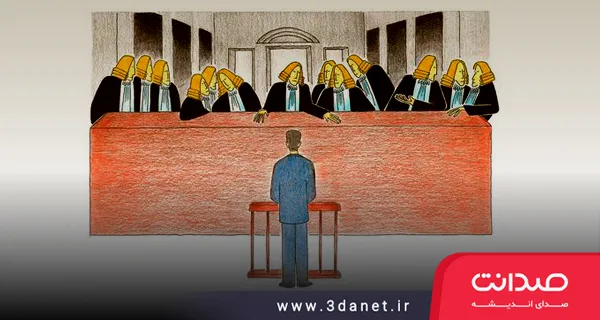
Ideology in the Court of Philosophy
Seyed Amirreza Soabani
Moreover, [philosophy] has lost a great many of its supporters, and one does not see those who have the upper hand and shine in other sciences wishing to squander their reputation by entering philosophy, that is, an arena where every individual who is ignorant in all other respects permits himself to voice an opinion, because in this land there is still no reliable measure for distinguishing fundamental thought from twaddle.[1] (Kant, Prolegomena, Akademieausgabe, S.256)
The nature of ideology, the characteristics and components of the ideological outlook, and the consequences of an ideological outlook on religion are the subjects that constitute the content of the present text. The concern to bring up this topic gained strength, intensity, and sharpness because, in the current foggy cultural atmosphere, thinkers and intellectuals use this term abundantly and have made it the “centerpiece” of their writings, lectures, and publications. On the other hand, the lack of a precise explanation of this meaning at the outset makes “ideology” appear to be a word devoid of meaning, used only to intimidate the opponent and silence the adversary, possessing no substantive meaning. The writer of these lines will apply his effort and endeavor to examine and extract the precise meaning of the word ideology in the thought of three important Iranian thinkers and their critiques of the ideological outlook of Dr. Ali Shariati. The common charge against Ali Shariati from the perspective of Shayegan, Soroush, and Tabatabai is ideological thinking.
Dr. Dariush Shayegan, as befits him, by explaining the concept of ideology and calling this outlook a “bastard child,” sets out certain components for ideology. “Self-centeredness and idealizing one’s own group while demonizing the out-group,” “the conflation of Marxist concepts and Islam,” “self-legitimation,” and “the blending of myth and history” are characteristics of Dr. Ali Shariati’s thought as an “ideologue”[2] from the perspective of the author of Asia Against the West.
The critiques of Abdolkarim Soroush, however, are raised and introduced after Dariush Shayegan. Soroush first examines the meaning and components of ideology in an article titled “Religion is Fatter than Ideology,” and in another writing[3], in response to the criticism of those who accuse Shariati’s critics of “failing to pay attention to the time and context of Shariati’s discourse, and committing the error of anachronism[4],” he writes: “The meaning of this statement is that you should not speak of the truth or falsehood of Shariati’s views. Speak of their usefulness or uselessness, of their compatibility or incompatibility with other circumstances of that era. If the ideologization of religion aligns with the goals of the social system and the historical needs of that period, then praise it; otherwise, do not. And herein lies the secret of functionalism’s unsuitability for analyzing and explaining intellectual and doctrinal systems, for it sacrifices truth and falsehood, with all cruelty and generosity, at the altar of the system’s service, purpose, and need.”[5]
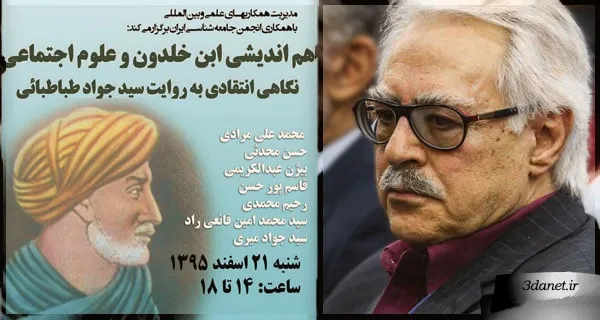
Meanwhile, the concept of ideology has a more substantial and denser presence in the intellectual system of Dr. Seyyed Javad Tabatabai, and at his hands, this concept has gained greater maturity and consistency, and there are few whose views, in Tabatabai’s eyes, are not subject to possessing the components of ideological thinking. Tabatabai approaches the critique of ideology with another weapon, namely “the lack of a place for ideology in history.”[6] The originator of the Iranshahri theory believes that “by disrupting the state and conditions resulting from the deadlock of the impossibility of thought, ideology substitutes the difficulty of understanding the cause and its dominance.”[7]
Part One: Shayegan and the Explanation of the Concept of Ideology
Shayegan: Ideology can, in a sense, be called the “bastard child of the Enlightenment.”[8]
Shayegan was Shariati’s first critic. In Shayegan’s post-revolutionary view, Shariati was “a thinker who, even before the revolution, had created a favorable ground for ideologization.”[9] At the beginning of 1979, he had considered “the late Shariati” a “captivating thinker” who, in pursuit of a “deep understanding of the West,” “considers martyrdom the heart of history and draws inspiration from the Husseini uprising” and “lays the content of this spiritual heritage within the categories of modern sociology.”[10] In 1981, Shayegan found Shariati’s role in the ill-fated link he established between religious principles and vulgar Marxism in theorizing; a link that led to nothing but the ideologization of tradition.[11] Shayegan was the first intellectual who, in critiquing the intellectuals’ relationship with the revolution, attempted to outline the destructive role of ideology. Of course, this effort must be considered a different development of his pre-revolutionary conception of “mutation and Frankenstein’s monsters” in Asia Against the West. There, following the issue of the “impasse” as a state of a “period of interregnum,” Shayegan considered the “vast Asian masses” the “best raw material for accepting any ideology,” “even the most improbable ones”; a phenomenon he referred to as “mutation.”[12]
In What is a Religious Revolution?, Shayegan begins with the issue of the “impasse,” but instead of quickly passing over ideologization, he tries to dwell on its nature and dimensions. In this chapter of What is a Religious Revolution?, Shayegan sees the “role” of ideologies in the contemporary world as the same role myth played in the ancient world: on the one hand, satisfying the conception of a closed society of the ethnic spirit, just as the emotional charge of ideology is the same mythical fervor and ecstasy, and on the other hand, claiming correspondence with experience and reality, just as the logical-rational apparatus of ideology is the same naturalistic justification of myth. The text of his speech is as follows:
«If science is a precise, impartial, and experience-based system, ideology, by contrast, is built upon dogma and does not care whether its presuppositions and premises possess empirical precision, for it accepts these as a priori truths. In other words, ideology does not seek to test or examine what it proclaims. In this regard, Jean Lapierre says, “Scientists pay particular attention to experiments that could demonstrate the falsity of their hypotheses, whereas ideology does not want to know that there is anything that could demonstrate the falsity of its dogmas.”[13] Ideology is not philosophy, for all true philosophy is, in fact, a questioning of the fundamental problems of existence and the conditions of human life. The questions philosophers pose and the answers they obtain constitute the dialectical process of the course of philosophy, whether this process is the gradual objectification of spirit or mind in history or its concealment. Ideology, however, is a closed, internally sealed system whose “central core consists of a few half-truths that are presented as truths possessing universal and absolute value and validity, despite all the evidence that can prove the contrary.”[14] Nor is ideology dialectical thought, for it fears negation and is imprisoned within the internal logic of prefabricated ideas and the deductions derived from them. Hannah Arendt says: “Ideology is precisely what its name indicates: the logic of ideas… Ideology treats the sequence of events as if this sequence were the same lawfulness as the principle from which the idea is presented and exhibited.” Elsewhere, Arendt states: “The accepted axiom of ideology is that, in a discussion proceeding from a premise, a single idea is sufficient to explain everything, because the coherent course of logical deduction itself contains everything.”[15] For example, if the main idea is that only the race that is superior should survive, because it is naturally more fit, or that the class possessing a historical mission must triumph, or that only what is stated in sacred texts is true, then, based on the reductionist logic of ideology, one can conclude that in the first case, “unfit” and “inferior” races; in the second, “decadent” classes; and in the third, the stage of the times must be cleansed of “infidels.” Although the logical apparatus of ideology is rational, the premises upon which it is built are irrational and not only are not “self-evident and clear ideas,” but originate from prejudice; in other words, although ideology follows a binary logic, its driving force arises from the logic of dreams, meaning that while ideology, in its external aspect, adheres to the principle of the excluded middle, its internal driving force is constituted by magical categories; hence the resemblance of ideology to myth—ultimately, ideology is not religion either, for it negates transcendence and any form of revelation or inspiration. Ideology can, in a sense, be called “the bastard child of the Enlightenment.”[16]
Shayegan continues, under the concept of ideology and false consciousness, to outline other components of the concept of ideology. The author of Asia Against the West writes:
«In the view of François Châtelet, the work of ideology is “the idealization of one’s own group and the ‘demonization’ of the opposing group, a totalizing and sub-dialectical vision, and an ethnocentrism of the other”; thus ideology can be considered the expression of an illusion of centrality. Joseph Gabel concludes that “ideology is a system of ideas that, from a sociological perspective, is linked to economic, ethnic, and similar groupings and expresses, in a one-sided manner, the more or less conscious interests of the group in an ahistorical fashion, with resistance to change or the disintegration of totalities. Therefore, ideology is the theoretical crystallization of a form of false consciousness.”[17]
Shayegan goes on to point out the “resemblance of ideology to mythical vision” and writes: “Ideology, due to its tendency toward homogenization, bears a striking resemblance to the categories of mythical vision. Just as the structure of myths bears no resemblance to the order of dialectical reason—for in these two realms, space, time, and causality possess different qualities—ideology, too, has its own spatial and causal categories.” Ideology is a closed and dogmatic thought that shuns the test of experience; for this reason, according to Joseph Gabel, ideological thought is an anti-dialectical and ahistorical thought whose nature is constituted by homogenization and tautology.[18]
“...the core of all ideologies must be regarded as illusion in its Freudian sense. When what dominates the world is neither dialectical philosophy nor the language of myths, but ideological thoughts, all the interpretations that various strands of thought offer us on this matter, and all the critical and evaluative approaches toward the process of ideologization, are valid in their own perspectives; for they all help us in revealing that ‘false consciousness’ which constitutes the structure of all forms of ideology... Thus, it can truly be said that ideology is ‘a system of thought that appears rational but in truth promises the realization of illusion.’”[19]
The second consequence is that ideologies can only emerge and assume such a role in a world where cultural canons have been shattered, a world in which beings that ought to reflect Being have turned into shattered mirrors, and the bond between Being and beings—the bond that makes one the manifestation of the other—has been destroyed and can no longer be reflected except through the distorting prisms of their delirious structure.
He, further drawing on Habermas, writes: “We have reached a level of generalization where we can say that what Max Weber called secularization has three distinct aspects; traditional worldviews have lost their power and authority as myth, religion, traditional rituals, justificatory metaphysics, and as unquestionable tradition, and have instead been transformed into: subjective ethics and beliefs that reinforce the obligatory and private nature of new value-orientations; and finally, these worldviews, having been manipulated, reinterpreted, and reinterpreted again, are transformed into: dual-role constructs that both criticize tradition and reorganize the contents of tradition, thus making them usable beforehand... It is only at this point that ideologies, in the strict sense of the word, emerge: ideologies assume the role of legitimizing domination, yet at the same time they present themselves as proponents of modern science and critics of ideology, thereby justifying themselves.”[20]
After elaborating on the concept of ideology from his own perspective, Shayegan refers to Ali Shariati “as an example of a theorist who seeks to transform the established principles of Twelver Shi‘ism into a force of history and to use the ideological and militant aspect of martyrdom to confront the West.”
“Shariati’s thought is, in the full sense of the word, an ‘ideological’ thought, in which all the inherent defects of the ideological structure can be identified. The ‘demonization of the opponent’—which in this specific case is the Cainite system—and the ‘idealization’ of one’s own group: or the Abelite system. A partisanship that bespeaks a Manichaean view of history and causes all the different characteristics of the adversary to be poured into a single ‘category’: meaning that, religiously, Sunnism is placed in opposition to Shiism; politically, rulers stand against the ruled; and socially, the affluent classes oppose equality and justice, or the share that should be given to each. Shariati’s thought, without batting an eyelid, equates the caliphs of the second and third centuries AH with monopoly capitalism, multinational corporations, and neo-capitalism; it is an eloquent example of ‘false consciousness’ because in it all the driving forces of history are explained starting from a reductionist premise: the premise of the messianic victory of the Abelite system. For if, according to Shariati’s decisive decree, the Abelite system will triumph by the compulsion of history, then, by the unimpeachable logic of ideologies, the conclusion is reached that all Cainite systems are condemned, not only through the ‘prophetic decree’ of history but also according to divine providence.”
Shayegan continues: “Shariati’s thought is a paradigmatic example of the confusion of cultural frameworks. As an example, one can point to the confusion of myth and history. The creation of Adam in the Quran is an event that occurred at the beginning of time, in pre-eternity, and is therefore mythological. Adam in the primordial covenant was created as God’s representative on earth: he is the one to whom God taught all the names, the one who, according to the Covenant of Alast, bore the ‘burden of trust,’ apart from Iblis, who refused to prostrate before him and adopted a maddening pride. All these events symbolize the concept of the human being as the eternal archetype of humanity. Shariati more or less accepts this view of the human being, yet he adds that the human being is a dialectical synthesis of clay and spirit (mud and spirit), a being in whom nature attains self-consciousness (a more or less Hegelian notion). Up to this point, however, we are still within myth. But it is precisely following this natural event that Shariati suddenly shifts the gear of history and speaks of the murder of Abel as the origin of history, and alongside it, enters linear history. Myth is redirected to the level of history not through a descent, or the divine manifestation of the sacred in historical time, but through the loss of its eschatological meaning. Imaginary, cyclical time becomes demythologized linear time, in which the confrontation of two forces, and in the theory of the genesis of the world, becomes the dialectic of the contradiction of two substructures.”
Shayegan then brings to light another dimension of the core of the ideological outlook in Shariati’s thought: “Shariati then proceeds to recycle many Marxist categories: to give them new definitions, it suffices for him to impose them upon the very structures he himself does not accept. This theory that the monotheistic (Islamic) worldview is realized through the human being, history, and society in Islamic ideology in order to open the way toward the perfect society is a kind of incomplete Hegelianism, devoid of the rational system and conceptual apparatus of the dialectical method. In fact, just as Shariati reduces the absolute Idea to a vague monotheistic concept, he reduces the whole of Marxism to socio-economic categories, without paying the slightest attention to the philosophical concept of praxis. The categories of this muddled Marxism with which his thought is saturated manifest themselves through terms such as substructure, superstructure, historical determinism, the dialectical narrative, primitive commune, and so on, which Shariati employs indiscriminately here and there; in short, a thoroughly unintelligible language has been fabricated. So fabricated that in it, Shariati, while considering himself anti-Marxist, consumes all the by-products of Marxism with the utmost voracity.” This eclecticism is expressed by Shayegan in the following passage: “If we remove the conceptual apparatus of the system of reason and the phenomenology of spirit from Hegel’s philosophy and mix the remainder with a Marx devoid of theory and praxis, and with an Islam severed from the two poles of origin and return, we will obtain a concoction whose constituent elements have all been emptied of their ontological content.[21] These passages require no further elaboration.
Part Two. Soroush: Religion Cannot Be Made into Ideology
In the 1990s, precisely on the 29th of Khordad 1371 (June 19, 1992), on the fifteenth anniversary of Ali Shariati's passing, at the Imam Sadeq Mosque in Tehran, it was Dr. Abdolkarim Soroush who, from a "post-revolutionary" stance, critiqued Shariati. Soroush, who unlike Ali Shariati was armed with the weapon of analytic philosophy, criticized Shariati over the course of three lectures at a mosque in northern Tehran for his ideological thinking, and declared religion and society to be "fatter than ideology." In this interview, the main criticisms of this intellectual toward the views of Ali Shariati are addressed.
"Ideology is a systematized and organized school whose pillars are completely defined; it teaches values and ideals to people; determines their position in the face of specific events and questions, and serves as a guide for their actions. In this interpretation, an idea does not mean every conception and affirmation that bubbles up in the mind. The late Shariati, in particular, tried to separate ideology from science and philosophy. He elevated ideology above science and philosophy and believed that if someone lacks an ideology, they are not human. Science and philosophy, whether true or false, report on the external world and contain no value judgments. Whereas ideology is, first and foremost, the expression of ideals and values. Ideology in this sense is a guide to action and a determinant of a person's political, social, and moral positions, not a deceptive lens over the eyes of reason. Now, someone like the late Shariati, whose first beloved is Abu Dharr—'decisive,' 'frank,' and 'rousing'—when he sets out to ideologize religion, inevitably, first of all, defines the pillars of religion according to his own bias—which stems from that initial infatuation."[22]
"The first characteristic of ideologies is that they function as weapons. Lenin said that revolutionary action—which is ideology itself—discerns what it must do and what it must tear apart—and it must tear apart decisively (sewing is another matter, and as I will explain, ideology is only capable of tearing, not sewing). If Marxism is sometimes called an ideology, it is because it was used as a weapon by intellectuals and workers in class wars and social uprisings.
Now, if a set of ideas is to do the work of a weapon, it has no choice but to be precise, clear, and decisive (and this is the second characteristic of ideology). For this reason, ideologies by no means tolerate philosophical quibbles, scientific doubts, or mystical tolerances."[23]
The originator of the theory of the dreams of the Prophet further writes: "Ambiguous, vague, and uninterpretable thoughts that slow down the ideological weapon are quickly and easily discarded. Ideology demands solidity, and this solidity is found only in clear thoughts. And it is this very clarity that quickly leads to dogmatism. An ideologue—who wants to ideologize religion—is not on good terms with the allegorical and bewildering struggles of religion that cannot function as a sharp weapon, and for this reason, any ideology extracted from the heart of a religious school is inevitably selective (the third characteristic). Like a sculptor who brings forth a figure from the heart of a stone; whether we say this figure existed within the stone and the artist merely freed it, or that it did not exist and the artist carved it. Now, if we ascribe the characteristics of sharpness and weapon-likeness to ideology, we will immediately acknowledge that this weapon is made in proportion to the type of enemy and the type of struggle (the fourth characteristic)."[24]
The author goes on to note that “ideologues, in their process of selection, always keep one eye on the enemy and fashion an ideology suited to combating them and to defining their own ‘position’ against the enemy. For this reason, ideologies are always provisional and lose their efficacy once the enemy is defeated; and for the same reason, ideologies are not only enemy-fighting but also enemy-creating and enemy-seeking. For ideologies, the principle is to create ‘movement,’ not to ‘discover truth,’ and if they seek a truth, they seek it from within movement and in conformity with it (the fifth characteristic). Generating movement is accompanied by restlessness, impatience, agitation, recklessness, and anguish, whereas the pursuit of truth is coupled with caution, slowness, and patience. One who considers the goal to be the attainment of truth strives, when faced with any issue, to weigh all its aspects with the utmost caution, to unravel it link by link and thread by thread, and refrains from taking a theoretical or practical stance until certain of having reached the truth. But for one who considers the principle to be the creation of movement, both the path to truth and the criterion and sign of truth are movement and dynamism. The sixth characteristic of ideologies is that they belong to the era of founding. Every school of thought has two eras in its life: the era of founding and the era of establishment. One of the most important questions posed to any ideology is whether that ideology is also suitable for the era of establishment or not? Can the same theory with which one can make a revolution also be used to administer a revolutionized society or not?[25]
The critique of the functionalist view of Shariati is also an entry point that Soroush begins his attack on, writing:
“In the functionalist view, one must look at the external existence of religion, and thus it gains no news from its interior and concerns itself with the ultimate ends and external effects of religion, and thus it does not ask about the motive and cause of its emergence and moves within the circle of causes and effects, and thus it remains heedless of reasons, and its gaze is directed at the hidden and manifest services of rites and thoughts, and thus it remains unaware of evolution and development; and by bringing up manifest and hidden services, it assigns everything to one service among services, and thus becomes untestable, and by assuming an identity and unity for the system, it falls into the trap of holism and the organicism of society, which is a bone-crushing and agonizing fall. For a functionalist, it makes no difference whether a superstition or a false myth serves the survival and cohesion of society or a true religion. And it makes no difference whether the worship of an idol reconciles the individual with society or the worship of the One God. The main thing is that there be a fitting together among the various components of society to protect it from disintegration. Functionalism does not ask whether a certain belief is true or false, or whether a certain custom and manner is good or bad, or whether a certain act is betrayal or service. Instead, it asks whether that manner and belief serves the cohesion and durability of society or not? Does it preserve the equilibrium of society or not? And thus it makes no distinction between truth and falsehood, good and evil, and does not refer to virtue and truth.[26]
Part Three. Ali Shariati’s ideological interpretation cannot but imply a totalitarian social system.
Dr. Seyyed Javad Tabatabai, a political philosopher, theorist, and important contemporary thinker, considering the conflict between tradition and modernity and the inhibiting role of ideology, writes in his collected written works: “In our opinion, the reexamination and formulation of the conflict between the proponents of the old and the new is a path that, at least in Iran, has not yet been trodden, due to the all-encompassing dominance of the masters of modernization and anti-Western ideologies, whose writings we have not shied away from addressing on various occasions.”[27] In this section, the most important of his criticisms of Ali Shariati will be touched upon.
In the opening pages of A Reflection on Iran,[28] after criticizing Hossein Nasr’s traditionalism, Mr. Tabatabai writes: “The attempt to interpret the fratricide of Abel and Cain as the first form of class struggle is a failure to understand the meaning of the system of tradition and an ignorance of the theoretical foundations of class struggle.”[29] “From the mid-1340s [1960s] onward, the settling of accounts with certain manifestations of modern Iranian culture that had developed based on elements of the new within the old accelerated at an unprecedented pace. The ideological interpretation of regions of the system of tradition, in the form of ‘tales of demons, fairies, and giants of the desert, mountain, and sea,’ replaced an understanding based on national consciousness and the modern expansion of those new elements within the old. This ideological interpretation, in its superficially new guise—that same rigid ‘impossible falsehood’—was aimed at settling accounts with all the manifestations of a century and a half of transformation aimed at creating a modern system, which, with the end of Iran’s transitional period, had placed the country on the threshold of a new era. In the interval between the early decades of reforms in the Dar al-Saltaneh of Tabriz and the victory of the Iranian people’s constitutional movement, and from the establishment of constitutionalism to the modernizing experiments of the first half of the 1340s [1960s], efforts became possible to expand elements of the new within the old of Iranian culture, which served as a foundation for Iran’s renaissance. With the ideological interpretation of regions of the system of tradition, an obstacle was created in the path of modernism, and a kind of rout befell the army of this renaissance.
He continues, emphasizing that: “One must now consider the settling of accounts with the ideological interpretation of the system of tradition,” and writes: “The other aspect of this settling of accounts with the ideological interpretation of the system of tradition must address the totalitarian dimensions of this ideology, which, under the banner of ‘return to self,’ instead of viewing history as the science of the formation of a nation’s consciousness, offers an interpretation oriented toward action, subsumed under ‘instinct’ and aimed at changing the world.[30] In this respect, the ideologue sees himself upon the roof of the world and prescribes duties for the world and mankind, and because he looks upon the world and mankind from the ‘position of God,’[31] he inevitably deems it incumbent upon himself to ‘rebuild the social order as his ideology dictates, and to revolutionarily change the culture, ethics, beliefs, and opinions of the people, even against the majority of opinions.’[32] Since this ideological interpretation of the system of tradition looks upon the world and mankind from the ‘position of God,’ as explicitly stated in the writings of Ali Shariati, it cannot but be oriented toward a totalitarian social order. It is obvious that this ideology has nothing to do with sociology or history; rather, it is a Third World version of Stalinism, and, like all ideological systems, it strives to dominate the world and mankind by eliminating social tensions, diverse thoughts, and the varied behaviors of human beings, promising paradise on earth.”[33]
The attention that ideologues pay to the past, and also to the future—which they deduce from the exigencies of the present moment of political struggle—is not to explain its relation to the present; rather, the past is a present that has occurred prematurely. The point in Ali Shariati’s explanation of Abu Dharr as the first socialist is not Abu Dharr, but the justification of socialism as the ideology of political struggle. The intellectual system of ideology is a transtemporal system and, by virtue of this, transhistorical and anti-historical. Moreover, to conceal its transhistorical nature, ideology creates a field of false consciousness, and therefore it is not only ‘consciously’ anti-historical, but also a major epistemological obstacle in the path of the formation of historical thought, which, in the words of Abu’l-Fadl Bayhaqi, is the basis for a ‘history of awakening.’[34]
What Dr. Javad Tabatabai means by this passage is not a chronological progression or a list of accidental events. “The historical matter is the consciousness of continuity within the vessel of the mind and, necessarily, the very theory of consciousness. ‘History’ is the locus where the historical matter takes shape, and therefore, ‘historiography’ is the locus where consciousness is codified. Every culture and civilization possesses consciousness to the extent that it possesses ‘history,’ and it has no ‘history’ unless it has a theory of consciousness. Tradition, by any definition, is the very substance of the claim of ‘continuity.’ Consequently, it can be said that speaking of consciousness and history is in no way possible without posing the problem of tradition. Without a discussion of the system of tradition and the tradition of the ancients, any explanation of the transmission of modern thought to Iran will fail.”[35]
The theoretical foundations of the golden age of culture in Iran’s Islamic period were the basis of Bu Ali (Avicenna) and the institutions whose foundations were laid by Bu Ali’s rationalist thought. The theoretical basis of the “movement” that Shariati claimed Abu Dharr championed was the ideology of “permanent revolution,” Leon Trotsky; otherwise, based on the premises of traditional thought, the transformation of Abu Dharr’s world-consuming asceticism into the worldliness of revolution would not have been possible. There is an element of truth in Abdolkarim Soroush’s critique of the ideological aspects of Shariati’s sayings and writings, but where Soroush, in discussing Shariati’s view of Abu Dharr, calls him a historian, he shows, by disregarding the distinction between the history of awakening and the illusions of political ideologies, that he is not far removed from Shariati’s theoretical basis.[36] Shariati was a stranger to nothing so much as history, and it is unlikely that he himself would have claimed otherwise. In Soroush’s writings, despite the distinctions between him and Shariati, ascetic mysticism has replaced the “sociology” in Shariati’s ideology, and it is no wonder that both have, in equal measure, made mysticism and “sociology” a prelude to criticizing the basis of Bu Ali, in order to trade the consciousness of the history of awakening for the false consciousness of political ideologies. We offer these provisional observations on certain contemporary writers to emphasize the point that reconstructing a kind of false consciousness under the banner of intellectualism and enlightenment can mean nothing other than the destruction of the foundation of historical consciousness.
False consciousness requires elaboration. Hooman Ghasemi, in his important treatise,[37] writes as follows: “The ‘false consciousness’ that intellectualism seized upon and fueled, even if accompanied by the best of intentions, was nothing but the unwitting reduction of ‘conditions of change’ to a ‘causal relation’ and the displacement of time in the disarray of its own timelessness, which, necessarily, by disrupting the conditions of the effect and in ignorance of the difficulty of understanding the cause, led to the illusion of exiting the impasse of the rigidity of tradition and entering the chaos of interpreting tradition through ideologies. An affair whose immediate consequence was the transformation of intellectualism into a position within power relations; such that its consciousness of its own history amounts to nothing more than filling a ledger of ‘wins and losses’ and, necessarily, gaining nothing from the former’s ‘there is no power’ and weeping from the heart’s core over the latter! The ideologies that intellectuals wrap around politics—and it is more accurate to say that, to advance political struggle, they surrender to their misguided paths—only lead to the creation and inflation of the illusion of science regarding tradition and the new era, while failing to understand the nature of either. The inability of intellectualism to pose the question of the foundations and principles of tradition and modernity in Iran and the relation of each to the other opens no path before intellectuals but the smooth road of imitation and only adds to the clamor of their school. The imitation by intellectuals of ‘ideas’—whether Eastern, Western, neither Eastern nor Western—which mostly, under a kind of eclecticism, tries to assume a form of ‘thinking,’ rests solely on the vehicle of the ‘practical’ utility of ideologies, which, with no regard for ‘consequences,’ merely to fuel social movements and solve ‘social problems’ with ‘political answers,’ is considered a quickly digestible, easy morsel. It is not without reason that the outcome of this imitation has been nothing but casting a ‘veil of illusion’ over the reality of a modernity in the making and, ultimately, becoming an obstacle to the thought of seeking modernity.”[38]
Tabatabai, continuing the same passage, writes: “As for the ahistorical and anti-historical nature of the forms of political ideologies formulated by Shariati and Soroush, it suffices to note that in the writings of both, we find no reference—whether negative or positive—to one of the most important events in Iran’s contemporary history, the Constitutional Movement. The groundwork for the Constitutional Movement, as we shall explain here[39] in some detail, was laid following Iran’s defeat in the Russo-Persian wars and with the emergence of a new historical consciousness among Iranians, and its ultimate aim was the establishment of institutions of the rule of law and a new order that bore no relation to the ‘anti-Avicennian’ views that yield nothing but chaos-mongering. The flight from confronting the first major event that took place in an Islamic country and placed it on the ‘threshold’ of the modern era is the clearest sign of taking refuge behind the veil of the phantasm of political ideologies and, in other words, a flight from the exigencies of cold-climate Tabriz and its worldly reason to the desert of ideology, which is, ostensibly, adorned with a veneer of otherworldly reason. It is evident that the systems of false consciousness that Shariati sought in the swamps of political ideologies and Soroush in the salt marshes of mysticism will, to use an expression Heidegger employed on another occasion, lead to nothing but the ‘dead end of dead ends’ of chaos-mongering.”[40]
The author, in another written work of his, expands upon the concept of ideology as follows: “Nothing is more averse to history than ideology: the site of ideology’s formation is an imaginary ground created by the imagination of the ideologues so they can build their imaginary edifice upon it, whereas history is the surveying of the ground of human realities in the flow of time. Ideological theories come into play in times of crisis, under conditions where the ‘eclipse of reason’ has cast a long and heavy shadow over the angles of historical realities, to intensify the crisis and deepen it further, but when the balance of forces shifts, relying on that very ideology, and the crisis ends, its own theorists are swallowed up as prey in its whirlpool. This is precisely the meaning of the saying, drawn from the experience of revolution, that the revolution devours its own children. The reason for this, in the case of figures like Shariati, is self-evident. He, as a man of ideology, continuing the tradition of all ideologue political activists from Sayyid Jamal al-Din Asadabadi down to our own time, did not know history, and what he did know was a hodgepodge of ideologies despondent from the sorrow of impotence, which very quickly swallowed up the meager data of his history.”[41] Therefore, if the meaning of these passages quoted from Dr. Tabatabai is scrutinized, discussions under the heading of “the possibility of dialogue between two antagonistic horizons,”[42] will necessarily be precluded. Understanding between science and the illusion of science is never possible; scientific dialogue is not of the type of “Mulla Nasreddin’s dialectic” where one can believe that at the crossroads, “everyone is right.”
.
.
References and Endnotes
[1] “Auch haben sich ihre Anhänger gar sehr verloren, und man sieht nicht, daß diejenigen, die sich stark genug fühlen, in andern Wissenschaften zu glänzen, ihren Ruhm in dieser wagen wollen, wo jedermann, der sonst in allen übrigen Dingen unwissend ist, sich ein entscheidendes Urtheil anmaßt, weil in diesem Lande in der That noch kein sicheres Maß und Gewicht vorhanden ist, um Gründlichkeit von seichtem Geschwätze zu unterscheiden.“
(Kant, Prolegomena, Akademieausgabe, S.256)
[2] The Ideologization of Tradition, adapted from Qu’est-ce qu’une revolution religieuse? (Paris, 1982), translated by Mehrdad Mehraban (with slight additions based on the original text)
[3] The Ideology of Religion and Ideological Religion, Abdolkarim Soroush, Kian, No. 14, Shahrivar 1372
[4] Anachronism
[5] Religious Ideology and Ideological Religion, Kian, No. 6
[6] A Reflection on Iran, Vol. 2, pp. 622-623
[7] Ibn Khaldun and the Social Sciences, Seyyed Javad Tabatabai, p. 30
[8] The Ideologization of Tradition, excerpted from Qu’est-ce qu’une revolution religieuse? (Paris, 1982), translated by Mehrdad Mehreban (with slight additions based on the original text), p. 4
[9] Shayegan, Dariush, Under the Skies of the World, p. 154
[10] Shayegan, Dariush. “What is the Unity of the Word and Which is Westoxification?” Ayandegan Newspaper, 14 Farvardin 1358, No. 3323, p. 8.
[11] In an interview with Mohammad Mansour Hashemi in 2010, Shayegan states: “I also read Shariati’s books in detail after the revolution and realized he was heavily influenced by Fanon and his knowledge of the West was second-hand”; and when Hashemi asks in surprise: “So you had no knowledge of Shariati before the revolution?”, he replies: “No. Shariati spoke at Hosseiniyeh Ershad and his books were published as pamphlets and were scarce. I was not in that garden to want to read them. So, honestly, I must say that before the revolution I paid no attention to his works” (Mehrnameh, No. 2, Ordibehesht 1389, p. 43).
[12] Asia in the Face of the West, p. 92
[13] Jean- William Lapierre “Qu’est-ce qu’une ideologie?”, in les Ideologies dans le monde actuel, Paris, p.11
[14] Arthur Koestler: Le Cheval dans la locomotive, trad, Georges Pradier, 1968, P .217
[15] Hannah Arendt: Le Systeme Totalitraire , trad. JL. Bourget. R. Davreu et P. Levy. Paris, 1972, pp. 216-218)
[16] The Fusion of Horizons, Dariush Shayegan, p. 196
[17] J. Gabel. “Ideologie” In Encyvlopaedia Universalis, p.719
[18] Gabel: Ia Fausse conscience, Paris, 1962, p.71
[19] Ibid. p.39
[20] Jurgen Habermas, La technique et science comme idologie, trad. Jean- Rene Ladmiral, Paris, 1973. Pp. 33-34
[21] The Ideologization of Tradition, The Fusion of Horizons, Dariush Shayegan, p. 240
[22] Fatter than Ideology, Abdolkarim Soroush, Kian, No. 14.
[23] Fatter than Ideology, Abdolkarim Soroush, Kian, No. 14.
[24] Fatter than Ideology, Abdolkarim Soroush, Kian, No. 14, pp. 3-4
[25] Fatter than Ideology, Abdolkarim Soroush, Kian, No. 14, pp. 3-4
[26] Religious Ideology and Ideological Religion, Abdolkarim Soroush
[27] Ibn Khaldun and the Social Sciences, 1995, p. 359
[28] A Reflection on Iran, Volume One, a Prolegomenon to the Theory of Iran's Decline with Preliminary Considerations on the Concept of Iran, Javad Tabatabai, second edition, Autumn 2016, Minouye Kherad Publications
[29] Javad Tabatabai, ibid., p. 61
[30] The best interpretation of ideology is that ideology is the continuation of instinct." Ali Shariati, Collected Works, vol. 27, p. 140.
[31] "The philosopher and the scholar are spectators of the world, while the ideologue is a pretender who stands in the place of God, commanding and forbidding, defining good and evil; destroying and building, criticizing and correcting, setting the course and..." Shariati, Collected Works, vol. 26, p. 277.
[32] Ibid., p. 620. What Shariati says in the continuation of this same passage, "democracy at this stage should not be heeded," is, in fact, a reiteration of the Marxist theory of the "democratic dictatorship of the proletariat" during the socialist revolution. A little earlier, regarding the disregard for votes, Shariati had also said: "If there are people who do not believe in this path"—meaning they cannot believe in the commands and prohibitions of an ideologue standing in the place of God—"and whose behavior and votes cause stagnation and corruption in society, and... if there are traditions that keep people stagnant, those traditions must be destroyed, that way of thinking must be condemned..." Shariati, ibid., p. 618.
[33] A Reflection on Iran, Volume One, a Prolegomenon to the Theory of Iran's Decline with Preliminary Considerations on the Concept of Iran, Javad Tabatabai, second edition, Autumn 2016, Minouye Kherad Publications
[34] A Reflection on Iran, Volume Two, The Theory of the Rule of Law in Iran, Part Two, Foundations of the Theory of Constitutionalism, Tehran, Minouye Kherad, 2017, p. 586
[35] Between Kant and Hegel, Lectures on German Idealism, edited by David S. Pacini. Translator: Hooman Ghasemi, Translator's Preface, p. x
[36] Abdolkarim Soroush, Sturdier than Ideology, p. 101
[37] Hooman Ghasemi, Intellectualism: Ideology and False Consciousness.
[38] Ibid., p. 23
[39] A Reflection on Iran, Volume Two, The Tabriz School and the Preliminaries of Modernity-Seeking, p. 30
[40] Ibid., pp. 31-32
[41] The Heart of Iranshahr, A New Beginning on the Meaning of Nation and Homeland and Its Defense, Javad Tabatabai, Siasatnameh, No. 10, pp. 9-10
[42] Possibilities of Dialogue Between Two Antagonistic Horizons; Dr. Ali Shariati and Dr. Seyyed Javad Tabatabai, Mohammad Javad Gholamreza Kashi
.
.


Discussion27 comments
تا چند وقت پیش تحت تاثیر حرف های هم دانشگاهی هایم و خانواده ام و اساتید دانشگاه فکر میکردم از کشورهای جهان سوم بیرون برم با آزادی و فلسفه مواجه خواهم شد الان که میلیون ها نفر در خود آمریکا ، انگلیس،فر انسه و کانادا بوسیله پلیس و ارتش کشورهای لیبرال و دموکرات در اعتراض به قتل سیتیزن های کشور خودشون جلوی باتوم و گلوله و حمله .حشیانه اجازه نفس کشیدن میخوان متوجه شدم که جامعه سرمایه داری از فلسفه و دانشگاه برای فریب جهان و سرکوب اندیشه استفاده میکنند. جهان سرمایه داری چند روش داره، از ژان ژاک روسو برای فریب ماها استفاده میکنه، از رسانه های میلیارد دلاری برای عوام فریبی و ایجاد فضای حاکم که از دست رسانه های کوچک کشورهایی مانند ما خارج است، و از شکنجه و پلیس فدرال آمریکا و پلیس انگلیس و فرانسه و کانادا برای کشتن مردم . آیا در این شرایط بجای اختلاف نظر در مورد موضوع این صفحه در صدانت نمیتوان از فریبکاری و ظاهر سازی جامعه مدرن تحت نام فلسفه سخن گفت و مانند عنوان دیگری در صدانت الگو گرفت و گفت فلسفه غرب غیرعقلانی در از آیدیولوژی؟
جناب اسکیزوئید ابتداییترین مطلبی که فلسفه خوانها ودوستداران عقلانیت باید به ان توجه کنند اینست که هیچ مطلبی را بدون دلیل منطقی نباید پذیرفت ودر اهالی فلسفه تعبد ومراد ومرید بازی جایی ندارد عوام ومردم کوچه وبازار جای خود دارند ولی دانشجویان و دانش اموختگان نمیتوانند ونباید خود را از معرکه بدور نگه دارند باید وارد وادی تضارب ارا شوند تا صیقل بخورند هرچند یکی از وظایف روشنفکران اینست که حتی المقدور سادهتر سخن بگویند تا همه فهم شود ومردم عادی هم بتوانند با انها ارتباط بگیرند اهالی معرفت که جای خود دارند ومسئولیتی بسی سنگین تر بر عهده شان است نظریه ی رویای رسولانه را از زاویه ی دیگر باید دید فقهی که حکومتی شده وبه حکومت رسیده وادعای اجرای احکام اسلامی را دارد وهمه ی پایه وبنیان او قران وسنت است سنت که تکلیفش روشن است وشیعه حرفی برای گفتن ندارد چهار کتاب معتبر حدیثی بنا بر ادعای خودشان دارند که به کتب اربعه معروف است که دراین میان حتی یکی ازانها را نمیتوانند بگویند که فقط همین یکی همه ی احادیثش صحیح است بعد اسمش را گذاشتند کتب معتبر شیعه ! احادیث ضد ونقیض بسیار است که هرکدام را هرکجا به مصلحت بدانند خرج میکنند اصولا احادیث بدلیل تاریخی بودن منقول بودن تولید علم یقینی نمیکند وبر اساس ان نمیتوان حکم داد میماند قران که ریشه فقه واحکام فقهی براساس انست واینطور معرفی شده که قران کتاب خداست وکلمه به کلمه عینا همه اش از طرف خدا امده است دکتر سروش میدان تقدس را شکست وگفت که خدا اصلا سخن نمیگوید وقران نمیتواند کتاب خدا باشد چون تجدید اراده الهی ناممکن است وبدین ترتیب بنیان احکام فقهی را سست کرد البته شما هم اگر برایتان قابل قبول نیست میتوانید با استدلال انرا رد نمایید باور بفرمایید فقه مافیایی شده از شریعتی میترسد وازاو بیزار است همانقدر که از سروش بیزار است اگر ما قدر روشنفکران خود را ندانیم همانها را سلاحی خواهند کرد وعلیه خودمان استفاده خواهند نمود بعد فلان فرد متعصب دگم دینی مدعی دکتر شریعتی خواهد شد
دکترسروش پیامبر روشنفکران هستند؟ هر چه ایشان بگویند وحی منزل است ؟
متاسفانه یکی از بزرگترين نقطه ضعف ایرانی ها , شخصیت پرستی و مرده پرستی آنهاست. (زنده باد و مرده باد) اکثر ایرانی ها, گوشِ فلک را کَر کرده است..
حجت جانان گرامی می فرمایید آثار روشنفکران دینی خوانده شود ولی از آن ها گذر باید کرد . بنده جزء خوانندگان نظرات جنابعالی هستم و به خوبی می دانم شما در دو راهی عقل و ایمان ،راه عقل را پیشی گرفته اید. اما روشنفکرانی که شما به آنها ارادت دارید نقطه ای عطف در افکارشان دارند .و آن نقطه لحظه ای است که به دو راهی عقل و ایمان رسیده اند .اما اکثر آنها به تناقض گویی دچار شدند چون چشم به عقل داشتند و دل به ایمان بسته بودند و خروجی آنها شد نظریاتی عجیب همچون رویای رسولانه. دوست گرامی این روشنفکران بیش تر عامل انحراف افکار اهل خرد هستند.چون شما منحرف نشدید دلیل بر منحرف نشدن دیگران نمی شود . دکارت کجا روشنفکران دینی ما کجا... یک غذا هرچقدر لذیذ باشد وقتی از دهان می افتد و چند بار گرم می شود ایجاد مسمومیت می کند .روشنفکران دینی فقط دین را گرم می کنند و عقل را مسموم .
شاید بشود گفت ایدئولوژی مجموعه ای از هست ها و باید هاست. هست هایی که برخلاف هست های علوم تجربی قابل سنجش تجربی نیستند و بایدهایی که برخلاف بایدهای اخلاقی ناظر به کاستن از رنج بشر نیستند. فلذا اصحاب ایدئولوژی به لحاظ هست هایشان مدعی حقیقت هستند اما برخلاف اصحاب علوم تجربی مدعیاتشان چندان مطابقتی با امر واقع ندارد. و به لحاظ بایدهایشان مدعی نسخه برای بشریت هستند اما نسخه هایشان بر خلاف گزاره های اخلاقی عموما درد و رنج بشر را فقط افزایش میدهد. ادیان ابراهیمی بواسطه اطاعت طلبی و گزاره های متافیزیکی و واقع نما کاملا مستعد تبدیل شدن به ایدئولوژی هستند. اما به گمان من میتوان تفسیری غیر ایدئولوژیک هم از ادیان ابراهیمی داشت. تفسیری مبتنی بر اخلاق و معنویت و عشق به جمال هستی مطلق و خوف از عظمت هستی مطلق. تفسیر عارفانی مثل مولوی و اکهارت از اسلام و مسیحیت این چنین است. و قابلیت تبدیل شدن به یک ایدئولوژی سیاسی را اصلا ندارد. بلکه قابلیت برانگیختن شور معنوی در وجود انسان را دارد. و بنظر من گوهر دین هم همین اخلاق و معنویت است و کلام و فقه مثل حبابی بوده که بر این چراغ زده شده برای اولا حفظ چراغ از خاموشی و دوما پراکندن نور چراغ به اطراف
نقل قول از احسان (یا همون حجت در لوای احسان): " اصحاب ایدئولوژی به لحاظ هست هایشان مدعی حقیقت هستند اما برخلاف اصحاب علوم تجربی مدعیاتشان چندان مطابقتی با امر واقع ندارد. " " ایدئولوژی مجموعه ای از هست ها و باید هاست. هست هایی که برخلاف هست های علوم تجربی قابل سنجش تجربی نیستند " 1.مدعیاتشان چندان مطابقتی با امر واقع ندارد 2.هست هایی که برخلاف هست های علوم تجربی قابل سنجش تجربی نیستند ......................... مدعیات (منظورشون ادعاها است)تشان مطابابقتی با امر واقع ندارد پس ادعاایشان قابل سنجش تجربی است مدعیاتشان قابل سنجش تجربی نیست!!! بدون شرح!
پاسخ به نوشته امیر : 1- ایرادهای امیر ، دقیقا تکرار خطابه های حوزوی هاست . یعنی اینکه فلسفه های غربی اشکال دارند و باطل اند و امثال ذلک . مطرح کردن متواضعانه اندیشه ، چیزی است ، و بانگ مغرورانه و فرعون مابانه انالحق زدن و دیگران را یکسره باطل دانستن چیزی دیگر . ادعای داشتن علم قطعی و یقینی در همه زمینه ها ، فقط از کوته اندیشانی بر میاید که مملو از غرض و مرض هستند ( بقول حافظ چون غرض آمد هنر پوشیده شد ) . چهل سال است که مدعای بیمعنی " علم دینی " اشان گوش فلک را پر کرده ، و ما هنوز یک ارزن هم " علم دینی " ندیده ایم ( و بلکه هیچگاه نخواهیم دید ) . 2- اگر یک فیلسوف مسلمان بتواند فقط یک سوال مرا جواب دهد ، من از همه مدعیاتم دست خواهم کشید . طرح سوال و ادعا : هر مسلمانی که ( اعم از فیلسوف و متکلم ) یک خط در اثبات متافیزیک ( وجود ماوراء الطبیعه ) نوشته باشد ، تلویحا " الهی بودن " قرآن را منکر شده است . ادعای من دو دو تا چهارتاست . چگونه ؟ به شرح زیر : - اگر قران بتواند ثابت کند از جانب خداست همزمان دو چیز ثابت میشود : یکی اینکه از جانب خداست ، و یکی اینکه " خدایی هست " که این کتاب از جانب اوست . - بنابراین هر احدالناسی که سعی در " اثبات خدا " کرده ( و یا میکند ) ، تلویحا " الهی نبودن قرآن " را تایید کرده است . چرا که اگر قرآن توانایی اثبات " الهی بودن " خودش را داشت ، هیچ نیازی به براهین هزار و یکرنگ بشرساز اثبات خدا نبود . اثبات خدا به وسیله خود خدا کجا ، و اثبات خدا به وسیله بشر کجا ؟؟؟ 3- طرح اشکالات مبنایی فلسفه اسلامی ( یا در واقع فلسفه ارسطویی ) از حوصله این کامنت خارج است . اگر فلسفه های غربی صد تا مشکل دارند ، فلسفه اسلامی صدهزار تا مشکل دارد .
درود بر منوچهر گرامی و منطقی و اخلاق مدار. کاش همه ی دین ستیزان همچون شما مودب و اخلاق مدار بودند. اول بد نیست ببینیم ما اصلا میتوانیم واقعیت عینی را در این دنیا "اثبات" کنیم؟ جوری که اصلا مو لای درزش نرود؟ کدام واقعیت عینی را میشود "قطعا و یقینا" اثبات کرد؟ این بحث اصلا جدلی نیست خیلی هم بحث فلسفی مهمی هست. غزالی میگوید من در نوجوانی از معرفت یقینی ریاضی سرمست میشدم و دلم میخواست بدانم آیا چنان معرفت یقینی نسبت به عالم خارج هم ممکن است؟ مثلا میدانستم این که من ستاره ها را کوچک میبینم خطای چشم من است پس معرفت چشم من یقینی نیست. چیزی که ما میدانیم این است اینست که حتی وجود عالم خارج از ذهن هم یقینی نیست. یعنی ما حتی نمیتوانیم "اثبات" کنیم که عالم خارج از ذهن وجود دارد و ما هم اکنون در خواب نیستیم! چاره ای نداریم که به وجود عالم خارج و واقع "ایمان" بیاوریم. دیوید هیوم شکاک تجربه گرا هم بدرستی به این مسئله تصریح کرده. "اثبات" ی که شم دنبالش هستید فقط و فقط در ریاضیات ممکن است. که اون هم معرفتی به جهان خارج نمیدهد و تماما گزاره های منطقی و توتولوژیک و این همانی است. قویترین و عظیمترین و دقیق ترین منظومه ی معرفتی تاریخ بشر به عالم واقع علم فیزیک است. و دو نظریه عظیم و درخشان فیزیک که از پس آزمایشات متعدد موفق بیرون آمده اند نظریه نسبیت و نظریه کوانتوم هستند. اما نکته ی جالب و حیرت انگیز اینست که این دو نظریه با هم در تضاد هستند! و نمیتوانند هر دو با هم توامان صحیح باشند! علتش هم احتمالا اینست که دو نظریه هر یک مربوط به گوشه ای از یک حقیقت بزرگتر پنهان و اسرارآمیز در مورد طبیعت هستند. منظور اینکه چنین اثباتی حتی در علم فیزیک هم غیرممکن است. بله هیچ اثبات دقیق و کاملی برای الهی بودن قرآن وجود نداشته و ندارد و آنچه گفته شده فقط در حد شواهد و قرائن است. اما مدعای بنده این است که به هر حوزه ی معرفت بشری که سر بکشیم به همین درد مبتلاییم. عقلانیت حداکثری به معنای اینکه هیچ چیز را نمیپذیرم مگر آنکه بطور "قطعی" برایم اثبات شود نهایتا به شکاکیت محض میانجامد. چون حتی وجود عالم خارج از ذهن هم قابل اثبات نیست. بسیاری از درمانهای پزشکی قابل "اثبات" قطعی نیستند. صرفا احتمال بهبود بیمار میرود. دقیق تر و سختگیرانه تر بخواهیم نگاه کنیم اصلا هیچ نسخه ای در پزشکی قبل اثبات نیست. یعنی هیچ قطعیتی وجود ندارد که حتما به بهبود بیمار منجر شود. اما ما با همین شکیات و با همین "شواهد و قرائن تجربی" زندگی میکنیم و چاره ای هم جز این نداریم. حال اگر در این بین تجربیاتی دیگر و شواهد و قرائن تجربی دیگری تحت عنوان "تجربه معنوی" دینی عرفانی و از این قبیل پیدا شود کم کم سر و کله ی دین هم پیدا میشود و احتمالا مخالفتهای سرسختانه ی جناب منوچهر!?
1. The thingyme bob is like a bad guy! 2. please do not pay attention to the question ! I have another question for you to pay attention to!!! 3. We do not have time to think about the second question! ....................................... !!!
سخن گفتن با منوچهر بسیار شیرین است: " هر کس تلاش کند چیزی را اثبات کند آن را انکار کرده است " بدون شرح!
انسانی که نفس و جانش کافر و ملحد باشد هزار و یک دلیل برهان عقلی و نقلی برایش بیاوری باز هم منکر می شود و کفر می ورزد..
جناب منوچهر شما نوشته اید : هر مسلمانی که یک خط در اثبات متافیزیک نوشته باشد تلویحا الهی بودن قرآن را منکر شده است. این ادعا کاملا باطل است. حداکثر چیزی که استدلال شما میتواند به آن برسد اینست : هر کس که یک خط در اثبات خدا بنویسد تلویحا این گزاره را که "میشود اثبات کرد که قطعا قرآن کلام خداست" را منکر شده است. رد اثبات یک گزاره هرگز به معنای رد آن گزاره نیست. من امروز یک گربه در حیاط دیدم. من هیچ دلیلی ندارم که گربه ای در حیاط دیدم . اما اینکه من دلیلی ندارم که گربه ای در حیاط دیدم معادل این نیست که بنابراین من گربه ای ندیدم! حداکثر میتوانید بگویید تلاش برای اثبات خدا از سوی متفکران مسلمان نشان میدهد که الهی بودن قرآن قابل "اثبات" نیست نه اینکه قرآن الهی نیست. نکته بعدی اینکه شما و اکثر ما طوری در مورد خدا حرف میزنیم که گویی خدا یک مفهوم یا موجود مشخص و روشن مثل مثلا زمین و خورشید و هوا و .. است یا یک انسان مشخص. کتاب ارزشمند شکوه زیستن در لحظه حال اثر اکهارت توله را به شما پیشنهاد میکنم. بسیار زیبا میگه : به دلیل هزاران سال استفاده نادرست از واژه ی خدا این واژه مفهوم بسته و محدودی پیدا کرده است. کسانی که خدا را انکار میکنند اصلا نمیدانند چه چیزی را انکار میکنند. واژه "هستی" همچون خدا به چیز مشخصی اشاره نمیکند اما نسبت به واژه خدا این مزیت را دارد که یک مفهوم باز و بیکران است. هیچ کس نمیتواند نسبت به هستی ادعای مالکیت خصوصی داشته باشد. اما نه واژه ی خدا و نه واژه ی هستی نمیتواند واقعیت وصف ناپذیر و و مطلق و بی نهایتی را که در پس این واژه ها نهفته وصف کند(. تنها میتواند به آن اشاره کند. ) این جملات اکهارت توله رو مقایسه کنید با آیات قرآن هوالاول و الاخر والظاهر و الباطن یا ذکر الله اکبر و سبحان الله که معنایش اینست: تو این چیزی که من میفهمم و در ذهن من میاید نیستی تو والاتری.. مقایسه کنید با سخنان ابن عربی و ملاصدرا که میگویند خدا یعنی "هستی مطلق و متعالی " که هر چه هست تجلی ظهور اوست. با نظراتی که از شما دیدم بنظر میرسه تصورتون از خدا یک موجود انسانوار مهربان است که در پس ابرها پنهان شده و گهگاهی دخالتی هم در جهان میکند. اما این تصور عامیانه و غلط است هر چند برای عوام یک درجه ای از حقیقت و منفعت معنوی را در خودش دارد مثل حکایت موسی و شبان
1- جای دیگری هم گفته بودم که شریعتی خطرناک و خشونت پرور است . چرا ؟ گروه فرقان و تا حد زیادی مجاهدین خلق ، میوه اندیشه شریعتی است . مستشکل احتمالی میتواند به من اشکال کند که شریعتی را بد فهمیده اند . پاسخ من اینست که اولا بد نفهمیده اند ، و حتا اگر فرض کنیم بد فهمیده اند ، لااقل موید آنست که شریعتی مستعد چنان فهمی بوده است . همچنانکه شما نمیتوانید منکر شوید که " اسلام " ، مستعد فهم القاعده ای و داعشی و مجاهدین خلقی و فرقانی و بوکوحرامی و اخوان المسلمینی و فداییان اسلامی ، و غیره و غیره هم بوده است . البته من معتقدم اساسا اندیشه شریعتی خشونت پرور و چریک پرور است . بیهوده نبود که انسان ایدآل شریعتی ابوذرغفاریبیسواد خشن ( و سابقا راهزن ) بوده است و در مقابل، ابوعلی ( ابن سینا ) را به پشیزی شمرده نمیشود . 2- شریعتی " زرد " است . زرد یعنی چی ؟ زرد یعنی مطلب بی عمق ، عوامفریبانه ، و آمیختن دوغ و دوشاب . شریعتی هیچ بحث عمیقی ندارد . مثلا مطهری ( و حتا مصباح ) در مقایسه با شریعتی به هیچ وجه زرد نیست . مطهری برای اثبات خدا فلسفه دارد ، برای مسئله شرور ( در کتاب عدل الهی ) فلسفه دارد ، برای مسئله جبر و اختیار حرف دارد ، و قس علیهذا . شریعتی اساسا " فلسفه و معرفتشناسی " ندارد . نه اثبات خدا دارد ، نه اثبات الهی بودن قرآن دارد ، و نه ... قس علیهذا . تنها چیزی که از شریعتی به یاد دارم آنست که کتاب سیر تحول قرآن مهندس مهدی بازگان ( یادش گرامی ) را همتای کشف گالیله و نیوتون دانسته بود !؟ . کتاب سیر تحول قران یکجور "علمیزه / ریاضی " کردن قرآن بود که بخشی از رویکرد کلی مهدی بازرگان در جهت " علمیزه " کردن اسلام بود . 4- حال بپرسیم سر جاذبه - کماکان باقی - شریعتی چیست ؟ شریعتی یک وجه اگزیستانسیالیستی بسیار قوی دارد که به مدد نثر سحار او ، در کویریات او ، تجلی یافته. کویریات شریعتی همچون بوی خوش ، یا موسیقی ای دل انگیز است که خاطره آن ، به سادگی از ذهن و ضمیر زدوده نمیشود . غیر از این وجه اگزیستانسیال ، شریعتی هیچ حرفی برای نسل ما و دوره ما ندارد . برای نسل ما نه وجود خدا بدیهی است ، نه الهی بودن ادیان ، نه چریک بازی و انقلاب ، و نه خیلی چیزهای دیگر . امثال استاد عبدالکریمی هم که گاه از شریعتی دم میزنند ، سخنانشان کاملا مغلق و بی سر و ته است ( البته سخنان بصیرت بخش استاد عبدالکریمی کم نیست ) . ضمنا شریعتی یک نقطه قوت دیگر هم دارد و آن نقد سنت گرایان و دیدگاههای سنتی است . شریعتی نه " مدرن " بود و نه " سنتی " ، اما در عین حال رگه هایی از مدرن بودن را با خود داشت .
1. فلانی بد است ، تروریست است! 2. فلانی بی ارزش است! 3. فلانی را نخوانید چون جذاب نیست! بدون شرح.
science values در تمامی انواع معرفت وجود دارند. افرادی مانند نامینالیست هاnominalists، راجر بیکن، فرانسیس بیکن، هیوم، لاک تصور می کردند که با تکیه بر تجربه می توانند بر اشکالات rationalism عقل گرایی غلبه کنند . آن ها اشکالات دکارت، ارسطو(در بخش مربوط به این خصوصیت نه در عنصر دیگر فلسفه اش)، و افرادی مانند لایب نیتس را با تکیه بر تجربه تصور می کردند می توانند حل کنند. چه در موضع عقل گرایی و چه در موضع تجربه گرایی و حتی در پروژه بنیادین تر یعنی خود "فلسفه" توجه به نکته ای که برخی را به انکار معرفت کشاند نشده است. شک گرایی و نسبی گرایی خودشکن هستند اما توجه به مسائلی در شکست تمامی پروژه فلسفه دارند که افراد مورد توجه در این دیسپلین یعنی فلسفه تلاش برای حل ، انحلال، یا انکار، یا مخفی کردنش را دارند. تاریخ فلسفه رکورد شکست تمامی برنامه های فلسفی بوده است. تجربه گرایان، پوزیتویستها، بیزگرایان، طبیعت انگاران با تکیه بر لوح سفید دکارتی Tabula raza و این که تجربه سرآغاز معرفت است در پوزیتویسم تلاش برای حذف عقل و شهود و متافیزیک و حتی نظریه (در ماخ ، کارنپ متقدم) کردند. همه شکست خوردند. شاید کسی که انتظارش را نداریم میشل فوکو بسیار به درک این مطلب نزدیک تر شده باشد جایی که علم را متکی بر ارزش ها Values معرفی می کند. ارزش های حاکم بر فلسفه، مکانیکس، طبیعت گرایی، تجربه گرایی، پوزیتویسم، فیزیکالیسم، بیزگرایی، اوپریشن نالیسم، atheismالحاد، تکامل، نسبی گرایی: 1. متافیزک مادی انگاری 2. انکار spritualism 3. متافیزیک mechanism 4. بدیهی انگاری truism 5. automatismخودکاری ماده 6. کور بودن دینامیسم جهان جالب است که اشکالات و شکست های تمامی پروژه های فلسفی موید این تجربه فکری است که مواضع فوق نه تنها counter-intuitive، نه تنها شکست خورده، نه تنها irrational، نه تنها خلاف مشاهدات ، نه تنها خلاف علم بلکه پروژه هایی غیر ممکن اند. ارزش های بیشماری در فلسفه و علم سکولار وجود دارد که به سبب اوتوریته حاکم شده بر آکادمیای جهانی و انتشارات عظیم حاکم بر اذهان مورد مطالعه قرار نمی گیرد. ایدئولوژی خواندن فرد کوچک یا بزرگی مانند علی شریعتی، تحقیر سنن فکری غیر غربی، ادعای غیر علمی بودن ادیان بر پایه یک جزم و باورهای متافیزیکی قرا دار دارد که خود غرق در متافیزیکی است به نام atheismیا الحاد. همین جاست که ضرورت عقل در نیل به باور خدا و بدنبال آن نیاز به معرفت بخشی دین و ناتوانی سکولاریسم و طبیعت گرایی ، تجربه گرایی ووو ... برای ما روشن می شود. ما هرچه کنیم و هر چه بگوییم ناتوان از تجربه مشاهده و شناخت همه تجربه ها ، همه عالم و همه جهان هستیم. پس پای استنتاج عقلی اجبارا به میان می آِید. ادعاهای ضد ایدئولوژیک، ضد متافیزیکی، ضد teleologyبا تکیه بر تجربه خود از لحاظ ایدئولوزیک بودن و متافیزیکی بودن غرق در ایدئولوزی و متافزیک هستند . چنین ادعاهای بطریق اولی self-defeaterخود شکن هستند. اول خود را debunkمی کنند. مواضع ضد متافیزیکی و تجربه بنیاد همگی دارای تز محوری هستند . این تز های محوری عقلی هستند. یکی یکی شکست می خورند. همانطور که مامینالیسم شکست، دستگاه استقراء فرانسیس بیکن شکست خورد، هیوم شکست خورد، تابیولا رازای لاک شکست خورد، ماخ و کارنپ و پوزیتیوسم مفتضحانه شکست خوردند و بهمان دلائل اوپریشنالیسم و بیزگرایی و فلسفه احتمالات ناتوان هستند، و برخی رو پست مدرنیسم می اورند و مترجمین متکی بر شیدایی نسبت به فلسفه "معتبر"وو حس حقارت ایرانی در برابر ظاهر اتوریتی آثار غربی به سبب ندانستن زبان و ترجمه خواندن دانشجویان و وابستگی به مترجمین و یا فضای ساخته و پرداخته افرادی که در کشور شما با تکیه بر مدارک تحصیل شده در غرب تلاش برای غلو در این اتوریته دارند هیچ گاه نقد جزم های مورد حمایت بوسیله روشنفکران، فلاسفه مترجم و نه مولف را برنمی تابند. جرات و جسارت شریعتی ، جلال، اقبال و دیگران حتی اگر همراه با ارائه مواضع بی نقص نباشد و اشکالاتی داشته باشد با یک ارزش همراه است و آن: 1. اجازه اندیشه به اتوریتی غرب است و ارزیابی آن 2. تعقل در باب فلسفه بدون تلاش برای نیل به اعتبار متکی بر ترجمه و اتوریته و احترام اجتماعی و دانشگاهی که حاصل تسلط آکادمیا بر اذهان است 3. ارائه نگاه خود بجای ترجمه و انتحال کاری که سروش ، طباطبایی، صادق زیبا کلام(در سطحی بسیار پایین)، و متاسفانه در میان استعدادهای فلسفه در گرایش فلسفه انگلوساکسون با ترازی بالاتر اما واله و شیدایی مطلق برای آثار غربی دیده می شود.
گویا روشن و دقیق ترین تقسیم بندی ، تقسیم بندی جانداران است . وقتی در زمینه محسوسات بی جان ، تقسیم بندی ساخته ها و صنایع و دسته بندی آن ها محل اختلاف و عرصه تنوع است ؛ در زمینه جنبه های کیفی و نامحسوس مردمان ( عواطف ،دانسته ها و باورها )این تنوع و گونه گونی بیشتر است و با اطمینان می شود گفت که به کاربرندگان « جهان بینی ، ایدئولوژی ، مکتب فکری ، جریان فکری ، پارادایم ، گفتمان ، دستگاه فکری ، منظومه فکری ، فلسفه ، علم ، کلام ... » درک یکسانی از معنای واژه ها و عبارت ها و نسبت آن ها با هم ندارند . از این رو بررسی و ارزیابی سخنانی که در شرح و نقد اندیشه های افراد ارایه می شود ، مستلزم حزم و احتیاط بیشتر است .
به بایدها ونبایدهای یک مکتب ایدئولوزی میگویند واگر این بایدها ونبایدها همراه با مطلق اندیشی باشد واینکه بپنداریم این خطوط قرمز حق مطلق هستندو هرکه انها را زیر پا بگذارد لاجرم بر باطل است این اندیشه ایدئولوزیک است بایدها ونبایدها را همه مکاتب دارند اما اگر این بایدها ونبایدها همراه با جزم اندیشی ومطلق گرایی باشد اندیشه ای ایدئولوزیک است دکتر عبدالکریمی بنا بر دفاع از اندیشه های دکتر شریعتی را دارد چون شریعتی را فردی صادق ودردمند میداند که در جهت مشکلات جامعه زمان خود سکوت نکرد بلکه خود مبدا ومنشا حرکت اجتماعی شد ولی این بدان معنی نیست که دکتر عبدالکریمی از تفکر ایدئولوزیک دفاع میکند عملا دکتر عبدالکریمی خود منتقد تفکر ایدئولوزیک است کسیکه معنویت را از نوشته های قران وکتاب مقدس که نه از خطوط سفید مابین ان میخواهد کسب نماید نمیتواند ایدئولوزیک باشد شریعتی در ان مقطع زمانی مطمئنا پرتلاش ومثمر ثمر ومفید بوده وبه هیچعنوان قابل حذف از پروسه روشنفکری وروشنگری ایران نیست بلکه خود پرچمدار روشنفکری وروشنگری درایران است ولی گفته ها ونسخه های شریعتی دردی از امروزمان دوا نمیکند گرچه معتقدم که هنوز هم باید شریعتی خواند ولی در شریعتی نماند وباید از ایشان عبور کرد مانند بسیاری از صاحبنظرن وفلاسفه ومتفکران دنیا که نظریه هایشان بعدها حتی رد شد ویا ترمیم شد وتکامل پیداکرد ولی انها هم از صحنه حذف نشدند ونمیتوان انها را حذف کرد وباید از ان پله های تفکر عبور کرد وانها را خواند ومرور کرد تا بدینجا رسید ایا افلاطون وارسطو ودکارت و.... قابل حذف هستند ؟ ایا همه ی نظریه های این بزرگان درست است ؟ ایا میتوان گفت که باید دکارت را کنار زد چون اندیشه های او امروزه دیگر توسط دیگر بزرگان رد شده است ؟ مسلما خیر این سیراندیشه است که قابل حذف نیست وحفظ ان بسیار با اهمیت است حفظ ومرور اندیشه های دکتر شریعتی هم بسیار با اهمیت است که باید ازان درس گرفت ولی نمیتوان دران ماند ودرجا زد که عصر حاضر دیرزمانیست که از شریعتی عبور کرده است
تعریف دقیق و جامع و مانعی برای ایدئولوژی نیست. چون باید ها و نباید های اخلاقی هم مطلق و جهانشمول هستند. هیچ کس حق ندارد سر دختر چهارده ساله ای را از تن جدا کند. این یک نباید و خط قرمز پررنگ مطلق و قطعی است و هر که آن را زیر پا بگذارد لاجرم بر باطل است. اما این گزاره ایدئولوژیک نیست . حداقل باید در تعریفتان باید های اخلاقی را مستثنا کنید. یعنی بایدهای ایدئولوژیک بایدهایی هستند که به سادگی از کلید زرین اخلاق و از شهود اخلاقی نتیجه گرفته نمیشوند. و عموما حاصل اطاعت و پیروی از پیشوا و رهبر و مرجع فکری هستند.
اقای قطبی دکتر عبدالکریمی خودش مخالف تفکر ایدئولوزیک است
متاسفانه همین ایدئولوژیستیزی جامعه مارا امروز در دهه ۹۰ به این فردمحوری سوداگرانه انداخته است. ایدئولوژی میتواند مانند دو برساخته تحولآفرین دیگر بشری یعنی تئولوژی و تکنولوژی رهاییبخش یا اسارتبخش باشد. در نقد رد نظرات دکتر شایگان و سروش و طباطبایی در این باب به این سخنان دکتر عبدالکریمی مراجعه نمایید: https://www.instagram.com/tv/B6s5YevpeYs/?igshid=1x0ufl9b8899i در صورت تمایل دوستان صدانت جهت رعایت تضارب آرا این فایل را در اختیار ایشان قرار خواهم داد تا منتشر سازند. با تشکر و احترام و خسته نباشید و دست مریزاد خدمت دستاندرکاران سایت وزین صدانت
ایدئولوژی نامیدن یک موضع فکری از مصادیق رفتارهای فاشیس-لیبرالیست حاکم در دانشگاه هاست. وقتی که فردی موضعی را ایدئولوژی می نامد و آن را می کوبد متاسفانه جامعه دانشجویی و قاطبه اساتید دانشگاهی تاثیر پذیری از خود نشان می دهند. این در حالی است که عقلا هر تفکری بایست اجازه بیان داشته باشد. جزم سکولاریستی و تعصب آکادمیک حاکم بر فضای فکری دانشگاهی یک دسته نگاه ها را با stigmatization و ایجاد برخوردی روانی بشکل پیشا نقدی له می کند. با توجه به سبقه تحصیلاتی و منافع دانشگایی آقای دکتر طباطبایی این توان و تمایل را ندارد و آزاداندیشی را برنمی تابد که به این تجربه و دریافت فلسفی بیاندیشد که ایدئولوژی خواندن یک نگاه خود ایدئولوژیک ترین موضع ممکن در تاریخ است. متفکر یک نگاه فلسفی موضعی را ایدئولوژیک مینامد زیرا که خود را علمی و بیان کننده واقعیت ملموس تصور می کند. موضعی غیر ممکن که در پس خود باورهای کاذب پوژیتویستی و سلیقه از جنس نگاه ماخ ، کارنپ، و نوراث ، مور، ار)Ayer) و شلیک را دانسته و یا نادانسته در پس فکر خود دارد. این از همان جنس تعصب دانشگاهی است که فلان طلبه که یک ملت را موبیلاز کرد بیسواد می خواند. بایست از چنین آکادمیک متبختر ، متظاهر و متعصبی پرسید چگونه استاتید جامعه شناسی که یک کلاس دکتری را نمی تواند اداره کند فردی را که یک ملت را بدنبال خود راه انداخته ناتوان می داند؟ و شمای دانشگاهی این گونه با ترشرویی و تفرعن حتی چهار / پنج نفر دانشجوی نیازمند به خودت را نمی توانی جذب کنی؟ شما جاهلی یا او؟چگونه فیلسوفی که آرزویش جذب چند دانشجو و تفهیم این مطلب است که او باسواد و فرهیخته است حتی توان تحمل فلاسفه دیگر را ندارد(و تحقیر و رسوا سازی دیگر فلاسفه گواه این بیان است) از نادانی یا جهل چنین فردی موفقی لاقل از نگاهی اجتماعی می گوید
این که نویسنده شروش را مجهز(او می فرماید مسلح که تاییدی بر جزمیت نگاه روشنفکران است)به فلسفه تحلیلی خود نشان از عدم وجه به روش تحلیلی مفهومی در فلسفه تحلیلی و جنس مطالبی است که سروش ارائه نموده. بسیار جالب است که طباطبایی خود را در جایگاه علم قرار می دهد و دیگران را در مقام جهل. از آقای طباطبایی خواهش دارم که توجیه فلسفی، منطقی، و یا تجربی این علمی را که مدعی اش هستند را ارائه کنند.
این که افرادی که در جایگاه اندیشه ورزی قرآن و روحانیت را و انقلاب مردمی در هر جای دنیا را بکوبند جای تعجب ندارد. روشنگری، نهاد دانشگاه، فلسفه (لاقل پس از روشنگری) هیچ گاه عقلی را که خودخواهی و تبختر بیمارگونه انسان منکر عقلانیت را مورد اندیشه و نقد قرار دهد بر نمی تابند. اما باید پرسید این همه عصبانیت و این حجم تحقیر و جاهل خواندن فردی که خود مانند دیگر نویسندگان و آن چه متفکر نامیده می شود بغیر از برملا کردن تفرعن و جزم روشنفکری که اندیشه کردن متفاوت را بر نمی تابد را چگونه می توان توجیه کرد. شاید جایگاه دکتر شریعتی در جامعه
دکتر سروش تلاش میکند از دین تفسیری غیر ایدئولوزیک ارایه دهد دین خصوصا اسلام ایدئولوزیک است هیچکس هم نمیتواند اینرا منکر شود ایات قران واحادیث ورساله عملیه فقها ومراجع تقلید همه خبر از ایدئولوزیک بودن اسلام دارد بلی میتواند کسی بیاید مثل دکتر سروش ویا مولانا ان وجه ایدئو لوزیک اسلام را نبیند ودر پی اجرای موبه موی ان نباشد وجه عرفانی انرا ببیند دین اسلام که فقط دراحکام خلاصه نشده معنویت هم دارد تزکیه نفس هم دارد دعاومناجات هم دارد میتواند یکی مثل مولانا بیاید وان وجه فقط عرفانی اسلام را برجسته سازد ولی این کار از اسلام ایدئولوزی زدایی نمیکند مگر انکه مولانا ادعا کند دین جدیدی اورده است مولانا اگر مسلمان است ومعتقد به قران است اسلام وقران ایدئو لوزیک است تمام حالا یکی مثل سروش میخواهد فقط به وجه عرفانی ان بپردازد یکی مثل مولانا میخواهد فقط به وجه عرفانی ان بپردازد نمیتوان گفت چون مولانا عارف بوده پس اسلام را باید عارفانه دید خیر اسلام ملغمه ای از عرفان واحکام ومعنویت وجهان بینی منحصر به خود است اگر کسی یک وجه از این چند وجه را برگزید گزینشی عمل کرده دین را از ایدئولوزیک بودن تبری نداده است دکتر سروش وامثالهم میخواهند هم فقه را کمرنگ کنند وهم همچنان دیندار باقی بمانند بنا براین رویکرد حداقلی دارند به همین دلیل است که استاد ملکیان میگوید که دکتر سروش فیلسوف نیست متکلم است یعنی حتی اگردکتر سروش دلایل عقلانی به نفع اعتقاداتش واسلام نداشته باشد همچنان پایبند ان خواهد ماند دکتر سروش تلاش میکند تفسیری عرفانی ارایه نماید تا همچنان معتقد باقی بماند ولی این از دین ایدئولوزی زدایی نمیکند
ایدئولوژی تفکری است که نمی توان از چهارچوب آن خارج شد زیرا حدود و ثغور دارد. ایدئولوژی در بیشتر موارد انسانها را به (قبض) دعوت می کند,, در صورتیکه فلسفه انسان را به( بسط ) می کشاند. اگر ایدئولوژی بتواند انسان را به بسط بکشاند , دیگر آن ایدئولوژی نیست . بلکه "فلسفه" است. تفاوت ایدئولوژی و فلسفه در (قبض و بسط) است. انسانِ ایدئولوگ یک انسانِ منقبض است , در حالیکه فیلسوف, هر لحظه افقِ تفکرش( منبسط ) می شود . به چیزهای زمینی می توان ایدئولوژی اطلاق کرد ,, اما دین در معنای توحیدی اش ایدئولوژی نیست , زیرا دین امری آسمانی است و دارای باطن. امور باطنی بر خلاف امور ظاهری , ایدئولوژی نیستند. زیرا در باطن دیگر حدود و ثغور ظاهر موجود نیست..
خانم نیایش لطفا ایدئولوزی را تعریف نمایید