Sociology
Arash Heydari: The crisis is not in 'our' character; the situation itself is critical
Attributing crisis behaviors to the Iranian national character is a myth that obscures macro-level mechanisms; the issue is not the people's essence but the sense of insecurity produced by governance and economic logic: a conversation with sociologist Arash Heydari.
Iran Book News Agency (IBNA – Published: Wednesday, March 11, 2020) – Mahsa Kalanki: Are the character traits of us Iranians and our reactions to problems at historical junctures innate or acquired? This fundamental question encompasses two perspectives: first, that this behavior, as some like Jamalzadeh believe, stems from the essence of us Iranians, or, as some other sociologists believe, that a sense of insecurity during times of crisis causes a change in temperament in all societies. In our collective unconscious, we constantly accuse ourselves: we Iranians are lazy, we Iranians only protest, we Iranians lack a spirit of teamwork, and so on! But the main question is: to what extent do the labels always attached to the Iranian 'us,' whether by ourselves or by Orientalists and Westerners, correspond with our social, cultural, and political reality?
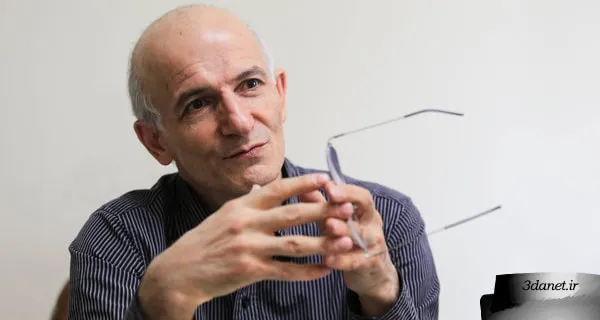
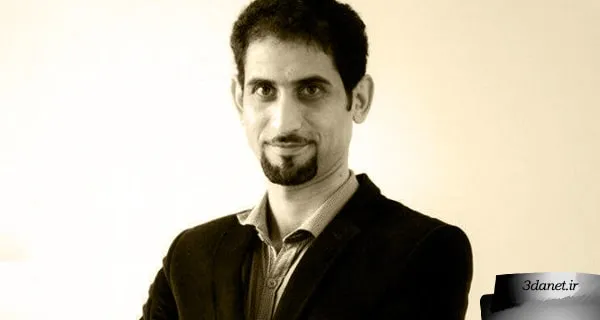
Arash Heydari is a sociologist, a faculty member at the University of Science and Culture, and one of the authors of the book The Emergence of the Genre of Character Traits in Iran; a search for his name on the internet reveals his scholarly efforts in this field. Regarding the Iranian temperament in times of crisis, Heydari believes the issue is not what trait 'we Iranians' possess; the issue is why and how a form of knowledge emerged that sought to attach a specific trait to 'us Iranians.'
Why, when a public crisis arises, do our people suddenly abandon one another instead of showing social empathy and fuel a social fear?
This is a myth! What do people in other parts of the world do when a public problem arises? Our understanding of social psychology is a very distorted one. We imagine that society can be managed or understood through the science of ethics. These moral judgments and taking refuge in the mythology of characterology is a 150-year-old myth that has gained more traction since the 1960s. Reducing the problem to the people's temperament means bracketing out a profound aspect of historical and social mechanisms. The fact that people panic when a disaster strikes is neither Eastern nor Western, neither Iranian nor foreign; it is a general rule of human behavior. Humans and social groups panic when a disaster strikes and adopt survival behaviors. The issue here is how this panic becomes intertwined with the general and macro-level administration of society and how it is directed. When the internal message of a situation is that you must look after yourself and that there is no one and no force to support you, you will face a deep sense of insecurity and behaviors commensurate with it, no matter where in the world you are.
Considering what you said, why, at times when a social crisis escalates, do we witness behaviors such as the hoarding of food and essential items needed by the people? After all, the hoarders were raised in this very society.
اما در مورد طیفی از رفتارها همچون احتکار، یکی احتکارکننده است که البته میشود کلی داوری اخلاقی در موردش ردیف کرد که چه انسان پلید و حقیری است که حتما هست، به نظر من مسئله اینجا نیست، مسئله بر سر آن سازوکار توزیع و تولید کالا است که احتکار کردن آنقدر در آن راحت است. چرا تصور میکنیم در مکانیسمهای حکمرانی باید روی خوب بودن و مهربان بودن آدمها حساب کرد؟ فرایند حکمرانی که نباید روی این حساب کند که شانس بیاورد در هنگامه بحران افراد خوبی پیدا بشوند و احتکار نکنند. مسئله بر سر این نیست که مردم «ما» احتکار میکنند مسئله اینجا است که سازوکار کلان اقتصاد و منطق تولید و توزیع کالا و گره خوردگیش با رانت و هزار معضل دیگر درِ احتکار را باز میگذارد. واقعا تصور میکنید اگر برای مثال در آلمان درِ احتکار کردن باز باشد کسی آنجا احتکار نمیکند؟ من فکر میکنم این خلقیات گرایانه خواندن ماجرا به سمتی پیش میرود که از اساس درکی از حیات اجتماعی ندارد. حیات اجتماعی یعنی منطق گره خوردگی انسانها به یکدیگر آنچه واحد تحلیل است این گرهخوردگی است، این گرهگاهها است نه خلق و خوی تکتک آدمها. برای مثال علت اینکه برخی انبوهی ماسک و ضدعفونیکننده را احتکار کردهاند این نیست که آنها آدهای شرافتمندی نیستند؛ البته کسی که در این فاجعه دست به چنین احتکاری میزند شرافتمند نیست، اما علتِ بروز این فاجعه ساخت و سازوکار توزیع و تولید است نه بیشرافتی. مسئله اینجا است که چرا بیشرافتی در یک ساختار اجتماعی - اقتصادی امکان و فرصتهای بیحد و مرز دارد. محور تحلیل نمیتواند علمالاخلاق باشد ماجرا نسبتی است که انسانها با یکدیگر و با سازوکارهای نهادی و کلان برقرار میکنند.
در مورد رفتارهای خرد و روزمره و احتکار در یخچال و آشپزخانه، هجوم بردن به فروشگاهها و... . واقعا چه انتظاری داریم؟ احساس عمومی نسبت به بازار یک ناامنی تمام عیار است. هر روز امکان دارد چیزی در بازار نایاب شود از پوشک بچه گرفته تا الکل طبی و چیزی به سادگی ماسک. واقعا این نایاب شدن به خاطر هجوم مردم است؟ من فکر میکنم سطوحی در پرانتز گذاشته میشوند که اساس ماجرا را پنهان کنند. بدیهی است که در هنگامه بروز یک بیماری که برای پیشگیری از آن نیاز به ماسک و ضدعفونی کننده و ماندن در خانه است رفتار عمومی به سمت خرید کردن اضطرابی حرکت کند، مگر در آلمان و ایتالیا و کانادا و... مردم در این شرایط چه میکنند؟ حالا به این شرایط اضافه کنید بحران و ناامنی همیشگی و گرانیهای هولناک را انتظار دارید چه معجزهای رخ دهد؟ همه میخواهیم معلم اخلاق باشیم و ناصحانه مسائل را حل کنیم. مسئله بر سر نصیحت نیست. بحران بالا رفتن اجارهخانه راه حلش میشود پویش صاحبخانه خوب، بحران خیابان خوابی با راه حل دیوار مهربانی، بحرانِ آلودگی هوا (که این روزها مشخص شده که سهم خودروهای شخصی در آن آنقدرها هم که میگفتند نبوده و اصل ماجرا را جای دیگری باید جست) در سه شنبههای بدون خودرو و دوچرخهسواری و... . این تقلا برای فروکاستن معضلات کلان به رفتارهای شخصی فاجعه است. مثال دیگری بزنم، 7 تا 9 درصد کل مصرف آب کشور شهری است مابقیش صنعتی و کشاورزی است، اما تبلیغات مصرف آب روی چه چیز سوار است؟ روی رفتارهای شخصی و فردی، یعنی 91 تا 93 درصد مصرف که جای دیگری است در پرانتز گذاشته میشود (چون مسئله سیستماتیک و ساختاری است و گره خورده با منافع خاص) و 7-9 درصد میشود آماج تبلیغات. خلقیاتگرایی و خلقیات پژوهی چنین نتیجهای دارند در پرانتز گذاشتن معضل کلان و تبلیغات علمالخلاقی و ناصحانه.
مرحوم محمدعلی جمالزاده در کتاب «خلقیات ما ایرانیان» اشاره داشته است که این موضوع در ایرانیان به نوعی خودخواهی باز میگردد. آیا ما ایرانیان خودخواهیم؟
The issue must be taken a step back. In your question, there is an assumption that we Iranians have a problem, which is selfishness, and as to why this is so: some attribute it to our genetics, and others consider it a result of deep-rooted despotism. My point is something else. My point is that the very claim that "we Iranians are selfish" is a dubious claim, for fundamental historical reasons. For example, what does "we" mean? Through what process do we construct this "we"? Through what process does the Persian man sitting in Farmanieh come together with the Baloch girl in a hut, and then an average temperament is derived? The primary crisis must be sought in this very concept of "we" that possesses a common trait. We unify 80 million people and then assign them a psychological trait?! A trait that, rather than opening a path, adds to the ambiguity. What does being selfish mean? Should we go to some developed country right now and conduct a survey to see what percentage have selfish attitudes? All of this is an escape from answering deeper issues and questions. Pause for a moment and consider this horrific fabrication, how far it suffers from an ontological crisis. The next level goes back to the history of the formation of this very idea of the "selfish Iranian." This claim is an Orientalist claim; travelogue writers and Orientalists during the colonial era produced a body of texts about the temperaments of the peoples of other lands, which can be discussed at length. This one-sided and crude view bracketed the entire plurality, distinctions, and differences of the so-called "Eastern" lands and homogenized and attributed traits to all of them under a single, totalizing, one-sided gaze. Edward Said has demonstrated this issue well in his work Orientalism.
I think we should doubt these fundamental assumptions a little. For example, the idea that we have a "despotic spirit" is profoundly blind and deaf to one hundred and fifty years of anti-despotic struggles and various movements, transformations, and efforts. The idea that "we are selfish" is blind and deaf to a multitude of altruistic behaviors and the formation of local and regional communities in times of crisis. Why? Because it seeks to prove this fundamental idea that "we Iranians" have a specific trait, and then to prescribe all sorts of treatments for it, which have resulted in nothing but an unbridled assault on life.
Do my words mean that "we are very good" then? Not at all! The issue here is that attributing a psychological and characterological trait to the multiple, distinct, and ever-changing formation of a society is a profoundly ontological error. The issue is not what trait "we Iranians" have; the issue is why and how a form of knowledge emerged that tried to attach a specific trait to "we Iranians." The issue here is what things temperamental thinking renders invisible.
Again, I emphasize that I do not want to go to the other extreme and conclude that we are good and have authenticity and such talk. On the contrary, I want to say that the situation is more critical than temperamental delusions; a critical knowledge is needed to understand the situation. The crisis is not in "our" character; the situation itself is critical, and this crisis must be made understandable. Temperamental thinking, despite its critical appearance, is intensely conservative; my concern is about making knowledge critical, and my claim is that temperamental thinking kills the critical edge of social knowledge and gives us a chic but ultimately useless package for understanding the situation, which practically explains nothing. A scholar explains the phenomenon, they do not refer it to an essence like "we Iranians": it is the work of common understanding and ideology to fabricate such an essence and explain 2,500 years of history with it. My issue is precisely this: what distinctions, formations, and differences exist in our social life? What have these distinctions made possible and what have they rendered impossible? How have these differences transformed and coalesced in the context of history? What catastrophes or possibilities have they brought about?
These questions alter our trajectory. To say, for instance, that we are selfish probably leads to the conclusion that we must be educated, and the very force that has wrecked our lives now wants to play the role of educator as well; the issue here is that the teacher himself is in need of teaching. Historical change and the understanding of cultural transformations are something more than these scholarly pastimes of finding the common attribute of human beings. The entire concern of the founders of sociology was precisely this going beyond individual psychology to understand the social phenomenon. It is painful that the order of official knowledge still views the social phenomenon in a pre-sociological condition.
Our situation today is catastrophe after catastrophe, crisis after crisis; this is an utterly exceptional situation, an exception that has now become the rule of our lives, and the issue is understanding this situation in an immanent way, that is, understanding through what process and how that which befalls us has come into being. I dare say that characterology and the study of national character are an attempt to escape answering the question of how the present moment and the contemporary matter have become determined.
Some believe that historical factors and the invasions Iran suffered throughout history have influenced Iranian behavior and character, and some consider the lack of cultural cultivation as the reason for certain behaviors. From your perspective, in what source can the sociology of Iranian character be sought?
This is a centralist, Tehran-centric, and of course, intellectualist gaze that stands at a distance and sees a multitude of events and behaviors as one and the same. This gaze is the mainstream of understanding social life in Iran. The social existence of 80 million human beings, with their internal differences and distinctions, is far more than these general judgments. The task of science is to illuminate these differences and understand them internally, not the illusion of "Eureka! Eureka!" This thinking is essentialist and assumes it has found the common denominator or the fundamental essence: social phenomena have no essence; this is the first lesson of sociological thought. The issue is change, transformation, and formations, not finding essences. There is a relationship between the logic of social life and the mechanism of its determination in space-time. Let us think about traffic, for example. Nothing is easier than explaining the traffic crisis through national character; our nature is of various sorts: the Iranian is selfish, law-evading, and now behind the wheel, well, it is obvious how they drive. You see, everything is solved. The conclusion: we must educate and cultivate culture.
Now, the alternative that is the focus of my remarks: first, let us discard the illusions of characterology and treating the Iranian as possessing an essence. We have a specific question. It is something called traffic and driving behaviors. What is this? We must first ask: what is this phenomenon? This phenomenon is more than the driver's personality. The issue concerns an internal relationship between the city, space, movement, the political economy of the automobile industry, working hours, rest hours, leisure, and so on. The issue is the arrangement of movement in Tehran. The labor force in the south, the location of capital in the north, bureaucracy, and working hours that begin at 8 a.m. until 5 or 6 p.m.—what happens then? The forced influx of the labor force, which is not affluent and resides in the southern half, to workplaces in the northern half; obviously, from 6:30 to 8 a.m., there is the chaos of traffic. The space of the city and its relation to the population, the space of the city and its relation to movement; public transportation and its relation to the number of passengers. In the evening, it is the same: the flow of movement is from north to south. Predetermined working hours, the pre-formed space of the city, the economy of property and housing and income and its relation to place of residence, and so on. What do we expect to see? The very thing called traffic and bewildering behaviors, a motorcycle on the sidewalk, swerving, and so on. What does conventional, popular understanding and primary sensory perception see? A group of people at each other's throats trying to get ahead of one another, a group of passengers crushing each other to board a bus or metro. But it is a gross oversimplification to analyze such a phenomenon by examining individuals one by one; the issue is fundamentally something else. The task of science is precisely this going beyond; the question is how this situation came into being, not what disposition this situation is the product of. Disposition is no essential or primary matter; it is a highly variable and multifaceted phenomenon. Let me give another strange example: have you noticed why no one litters in the metro? What kind of essence is this that one does not litter in the metro but litters in the street? The issue here is that the relationship between space, body, and meaning is not the subject of inquiry, which is why we feed the society a mass of delirious nonsense in the name of social science.
The series "Hezardastan" was a clear example of the bread famine and the behaviors people exhibit during times of illness, war, and famine. These behaviors have now taken on a modern form. Can such behaviors be considered fixed in the Iranian character?
Survival behaviors take shape in relation to the mechanisms of social life, the logic of governance, and the availability or unavailability of resources, and have nothing to do with an essence called being Iranian. To explain such a thing, one probably needs to speak of the persistence of a historical situation, which is precisely a marginal position in the global economy. Raiding warehouses and hoarding is not a behavior related to being Iranian, Indian, German, or Japanese. The discussion is about the relationship between behavior, attitude, and the established situation of life.
Has the time not come to ask economists, sociologists, historians, and thinkers why, when an issue like Corona arises, people empty shops of goods without thinking of one another?
What empties the market of goods is not a phantasmagoric concept called 'the people'; many do not empty it, and many are fiercely critical of these behaviors. The question here is: through what structural process do prices rise and goods become scarce at the moment a crisis erupts? If you are very interested in this issue, it would be good to examine the statistics and see what share the rush on stores has in the rise of commodity prices compared to the share of large-scale hoarding. Let's not go too far: during the gold and dollar crisis, they trumpeted loudly, 'O people, do not buy gold, do not buy dollars,' while the banks themselves were buying gold and dollars! Did the people's purchases drive up the price of dollars and gold? What is the total amount of dollars and gold that the so-called people can buy? These mythologies always bracket the core of the matter. One must question that macroeconomic mechanism which is thrown into a commodity crisis by a rush on a few stores. You saw that the same rush happened in Germany and several other European countries—what was the result? Return to the example of water I gave in the previous paragraphs; what do we see? What force devours the water? The people? Regarding this very air pollution, one must ask firmly and seriously: why, despite the fact that the majority of individuals are at home, and schools, universities, etc., are closed, does the air become polluted? Do you see how well the genre of 'national character' works for certain systems? They trumpeted loudly, 'O people, you are not complying, you are bringing cars onto the streets, O the air is polluted, O selfish Iranian,' and so on. Now, who must answer? Is the problem the people, or is it something else?

Discussion7 comments
جالب است که آقای حیدری نیز فکر می کند در آلمان کسی احتکار نمی کند. ایرانی فکر می کند خارجی دروغ نمی گوید. تصوری رسانه ای و یا ساخته و پرداخته دانشگاه که حتی در مواجه با واقعیت تکان نمی خورد.
عالی بود
در مقایسه با جوامع غربی ایرانیان احساسی و هیجانی عمل می کنند در حالی که غربیان خردگرا و منطقی تر هستند .پایه های خرد گرایی از عصر روشنگری شکل گرفت. نکته دیگر تکبر و غرور ایرانیان است که حتی در اشعار ما هم پیداست مانند هنر نزد ایرانیان است و بس
تصویری زیبا و بی عیب از غرب برگرفته از واسطه های بین شما و دنیای واقعیات. واسطه : استاد دانشگاهی که با dramatize کردن قسمت های خوب و واقعی ولی نه تمام واقعیت از اعتبار حاصل زحمت کسری از یک جمعیت برا ی خود احترام و جایگاه فرهیختگی می خرد.media و مدیریت مالی وصاحبانش و روابط موجود بین هیات حاکمه تصویر رسمی و polished و refined از گروه حاکم به شهروند جهانی ارائه می دهد.
مسئله بر سر نحوه آموزش است. آموزش هم به مردم و هم به مدیران و سیاستمداران ,آن هم در سطح کلانِ کشور.انسانها می توانند حیوانات را رام کنند و آموزش دهند ولی متاسفانه انسانها در آموزش خودشان درمانده هستند.
عالی بود و روشنگر. سپاس.
این فرهنگ گرایی ملکیان دیگه شورش را دراورده. به نظرم چیزی جز دفاع از فساد دولتمداران نیست. با توجه به سابقه ملکیان منطقی هم به نظر می رسه.