Religion
Can the Sacred Be Satirized?
A conversation between Roya Sadr and Yaser Mirdamadi examines the relationship between humour and Islamic theology. Rejecting Allameh Jafari's view that insult is intrinsic to humour, Sadr argues that humour aims at reform and that insult is not an inseparable part of it.
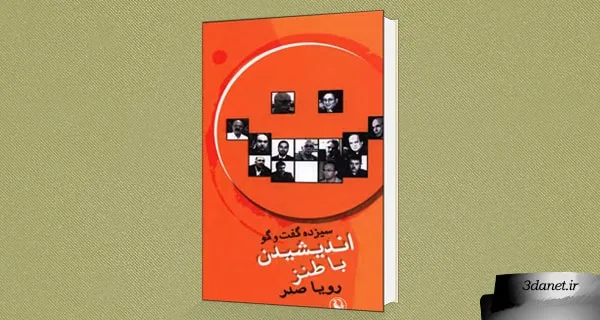
What you are about to read is a conversation between Roya Sadr, an Iranian satirist and satire researcher, and Yaser Mirdamadi on the relationship between satire and Islamic theology. This conversation, along with twelve others, was published in a book titled “Thirteen Conversations: Thinking with Satire” by Morvarid Publishing in Tehran in the solar year 1395 (2016/2017).
1- Some scholars, such as Allameh Jafari, believe that since satire is both contrary to reality and based on belittling and insulting the audience, it is therefore impermissible. For insult is inherent in the very nature of satire; otherwise, it would not be satire. On this basis, can satire generally be considered immoral and consequently irreligious?
This judgment was expressed by the late Mohammad-Taqi Jafari in an interview included in this book: A Study on Satire in Sharia and Ethics, Department of Islamic Studies, Islamic Republic of Iran Broadcasting Research Center, Qom: Bustan-e Ketab, 1381 (2002/2003). The part of his statement that you likely had in mind in your question is this section: “In my opinion, the principle regarding satire is prohibition, meaning the primary ruling on satire is the existence of an impediment and its unlawfulness; because it is both contrary to reality and based on belittling and insulting the other party. The satirist wants to highlight the faults of another, and whether they intend it or not, insult, humiliation, and harm exist in this phenomenon, for every satire, as a rule and without considering incidental factors, is an insult. Insult is in its very essence, otherwise it would not be satire.”
I must say, such a judgment was unexpected from a refined cleric, full of wit and pleasantry, and a scholar like him. Especially since the other jurists interviewed in the aforementioned book (Makarem Shirazi, Ma'refat, Seyyed Kazem Haeri, and others) all held a non-essentialist judgment regarding satire; that is, in summary, they said if satire meets such-and-such conditions, it is permissible, and if not, it is not. The only person in this collection who expressed an essentialist judgment about satire—and this point did not escape the notice of the interviewer in the book itself—was the late Mohammad-Taqi Jafari.
In my answer to the third question, I will explain that satire has no essence, and I will not repeat that answer here. But even if satire has no essence, it might still have a principal characteristic. However, if satire does have a principal characteristic, my claim is that this principal characteristic is not insult, such that we could then say the primary ruling on satire is its impermissibility. To show why the principal characteristic of satire (let alone the hypothetical essence of satire) is not insult, it is good to clarify what is meant by “satire” and “insult.”
Satire, according to one acceptable definition and characterization, is “an artistic and often literary and dramatic form or expression in which human follies, vices, abuses, and shortcomings are subjected to criticism and reproach, through methods such as ridicule, lampooning, parody, ironic reversal, innuendo and allusion, caricature, or other such methods; the aim of this can be to inspire social reform.”[1] From this definition, it emerges that three factors are of central importance in satire: 1- subtlety, 2- criticism, and 3- humor. It is also worth noting that some have taken satire and humor as synonymous, but it seems that satire is not the same as humor; although satire probably always contains a mode of humor, humor does not always have a critical and reformist aspect. Accordingly, not every instance of humor is satire.
Our meaning may also be better clarified by distinguishing between satire and comedy. In comedy, the goal can be merely to provoke laughter (though this is not always the case), but in satire, provoking laughter is a means to "something else" and is not the ultimate goal in itself,[2] this other thing, as mentioned, can be social reform. This explanation shows that the aim of satire is to point out shortcomings, perhaps in order to reform them, and that insult is not an inseparable part of satire. Although satire can be insulting, the fact that some forms of satire are insulting in no way entails that satire is fundamentally and entirely insulting.
But what is insult? To further explain the nature of insult, allow me to quote here a part of my response in another interview regarding the definition and characterization of insult: "Insult is a form of suppression where suppression is not justified, even if expressed in reaction to suppression: when, in response to someone, it is said deliberately and knowingly (intentionally-willfully) 'Shut up, you filth!' (and not that such words slip out of the speaker's mouth unintentionally), even if the person who was insulted had indeed committed an insult, the speaker of these words, in reaction to suppression, has engaged in reciprocal suppression. When someone insults another, in colloquial terms to describe this act, it is sometimes said: 'Did you see how they crushed that person!?'
This means our linguistic intuition deeply associates insult with suppression (crushing). Not every suppression is an insult, of course, because if suppression is justified, it is not considered an instance of insult. For example, if someone intends to take a child hostage and the only way to stop them is to shout and call for help from people, in such a case the hostage-taker has been suppressed—through the shouts made to seek help to prevent their action—but since this suppression was justified, no insult has been committed against the hostage-taker. It goes without saying that finding the boundary between justified and unjustified suppression, if possible, is not always simple. However, the practical difficulty of finding the boundary between justified and unjustified suppression does not harm the theoretical-conceptual distinction between justified and unjustified suppression. Since insult is of the nature of unjustified suppression, it is closely linked with intolerance. A tolerant person does not become an insulter, because they do not engage in unjustified suppression."[3] If we consider insult as unjustified suppression, and satire as the artistic expression of shortcomings in a humorous and subtle manner with the intent of reforming those shortcomings, it becomes clear that insult is not intrinsic to satire—if satire has any intrinsic nature at all.
But my discussion so far has been rational, meaning I was arguing that, from a rational standpoint, satire is not intrinsically linked to insult, such that one cannot infer from the insulting nature of some instances of satire that satire is inherently insulting—if satire can be said to have an inherent nature at all. However, your question also had a religious dimension (especially when you quoted the late Mohammad-Taqi Ja'fari and concluded your question by stating that if something is immoral, it also becomes irreligious). But when a convincing rational reason exists for a matter, is that sufficient to say we also have a religious reason for it? In other words, is rational reason alone sufficient to deem a matter religiously sanctioned? A common view is that yes, whatever reason dictates, religious law also dictates (which in the principles of jurisprudence is called the "rule of correlation," meaning the correlation between reason and religious law). But this rule has so many qualifications and conditions that, in practice, nothing about religious law can be deduced from reason alone, because jurists say that the rational matter must be the subject of consensus among all people of reason, with no exceptions whatsoever (meaning that even if one person of reason holds a different opinion, according to the jurists this is no longer an absolute judgment of reason), and furthermore, the people of reason must agree on it solely by virtue of their rationality, not based on feelings, emotions, and such matters (on this basis, even if all people of reason agreed on something, but it turned out to be due to collusion and factionalism rather than pure rational judgment, that is no longer an absolute judgment of reason). With this strict, certainty-oriented criterion, in practice, no religious ruling can, in and of itself, be proven by reason alone, and with this stringency regarding the criterion of pure rational judgment in religious matters, jurists always bring transmitted sources (the Quran, the Sunnah, and the sayings of other jurists—especially if the jurists' sayings on a subject have reached the level of consensus) into the judgment regarding the religious sanction of a matter, even if they theoretically believe in the rule of correlation.[4] It is for this reason that Mohammad Baqir al-Sadr (1934–1980), the late Iraqi jurist, legal theorist, exegete, and theologian, writes: "We believe that it is permissible to act based on what is called 'rational proof'—concerning which the mujtahids and traditionists differ in practice—but we have not found a single [juristic] ruling whose proof is based [solely] on rational proof..."[5] (The additions within brackets are ours).
I have elaborated on this point somewhat so that, at the very outset of the discussion, we are aware of the theological limitations of our conversation. The most we might be able to demonstrate here is that, rationally, satire is not the same as insult, and that one can even engage with "sacred matters" in a satirical manner. However, many religious people, based on the prevalent transmission-oriented spirit of theology and jurisprudence, even if they find our arguments convincing, will still say: very well, but let us see what the jurists or the Book and Sunnah say, and the judgment of reason alone is not sufficient to deem a matter religiously sanctioned or unsanctioned. Although this transmission-oriented view is indefensible, it is so common and deep-rooted that it must be considered as a limitation throughout this discussion. Hence, if we bring transmitted evidence (especially from the Quran or narrations) into this discussion, it all serves a "corroborative" function, not a "probative" one; the proof is rational proof and nothing else, and the transmitted "proof" merely points to the rational judgment without replacing it.
2-Does satire, jest, jokes, and laughter, in and of themselves, entail harmful effects from a religious perspective? (That is, even if some deem them permissible, do they still consider them to have harmful effects?)
Before answering this question, it is worth posing a related but more fundamental one: Who is supposed to articulate the religious perspective? Clearly, if you believed that only jurists were to articulate the religious perspective, you would not be asking these questions of a non-jurist and—similar to what the Islamic Studies Department of the IRIB did regarding satire in the aforementioned book, where they merely interviewed a few jurists—you too would only interview jurists and clerics trained in jurisprudence. It seems that it is not only jurists who can articulate the religious perspective; rather, philosophers, theologians, traditionists, Sufis and spiritual figures, as well as specialists in Islamic studies (Western or Eastern), are also among those who can articulate the religious perspective.
But now let me address your question. It appears that from a religious perspective (that is, a reasonable understanding that can be drawn from Islamic verses and traditions and the conduct of the great figures of the religion—including mystics and spiritual figures), humor, jesting, witticisms, and laughter are not, in and of themselves (and this qualification is important), described as harmful. There are numerous accounts of joking by the Prophet and the Imams (even from Imam Sajjad, who is famous in the Shi‘i milieu for weeping and sorrow), which I do not intend to repeat here. However, to break the dryness of the discourse, I will cite one example of satire and jesting attributed to Imam Sajjad (peace be upon him):
“One day, a desert Arab came to the Mosque of the Messenger of God and performed two rak‘ahs of prayer in extreme haste, observing moderation in no pillar, nor reciting with measured recitation, while Imam Sajjad, peace be upon him, was watching him. After the salutation of the prayer, the Bedouin raised his hands in supplication and said: O God, grant me the highest degrees of Paradise and bestow upon me a golden palace and four houris in Paradise. The Imam said: ‘O Arab, you have brought a paltry dowry, yet you covet a grand marriage.’”[6]
On the other hand, there are traditions prohibiting jesting and laughter (excessive laughter and guffawing). To reconcile these two sets of apparently contradictory traditions (on the one hand, the joking of the Prophet and the Imams themselves, and on the other, their prohibition of jesting and laughter), it is generally said that laughter and jesting are good in principle, but this must not lead to heedlessness of God, insulting others, misrepresentation, insulting sanctities, excess in jesting and laughter, and the like.
When we also consult the Qur’an, as the most important scriptural source for Muslims, we find that laughter is depicted in different situations, and consequently with different connotations:
1- Laughter in a situation where the disbelievers and hypocrites mock God’s signs, for example: “When Our signs were presented to them, they suddenly burst out laughing at them” (al-Zukhruf: 47). This sense of laughter carries a completely negative charge;
2- Laughter in a situation where the people of Paradise respond to the mocking laughter of the disbelievers in the world: “But today [i.e., the Day of Resurrection], it is the believers who are laughing at the disbelievers” (al-Muṭaffifīn: 34) (Fooladvand’s translation);
3- Laughter out of joy or wonder, which refers to the laughter of Solomon the Prophet at the speech of the ant, for example: “Solomon smiled, laughing at her words…” (al-Naml: part of 19);
4- That it is God who makes one laugh and weep: “And indeed it is He who makes [one] laugh and weep” (al-Najm: 43). This verse is particularly important because it directly attributes the causing of laughter to God, and thus it holds greater theological value in the discussion of laughter. In interpreting this verse, exegetes have faced the question of whether God literally causes laughter in a person, or whether He merely provides the grounds for laughter in a person—that is, He grants a person joy and health, which lead to openness and laughter in the person, but the laughter ultimately comes from the person themselves. The Mu‘tazilites adopted the latter view, namely that God is only the cause of laughter, but the laughter ultimately comes from the person themselves; the Mu‘tazilites adopted this view especially so as not to deprive human beings of agency over laughter (preserving human agency was of great importance to the Mu‘tazilites). However, some exegetes made one exception: the laughter that a person cannot suppress is laughter sent down directly by God.[7]
Thus far it appears that laughter, in and of itself, is not condemned in the Qur’an; rather, it is even implicitly described as a natural reaction (in the case of Solomon, for instance), or even something that the inhabitants of Paradise do (though the question remains open whether the laughter of the people of Paradise at the disbelievers is derisive or not—I will address this in response to question 13), and beyond that, it is something whose occasion God Himself provides and, in some instances, directly sends down laughter.
5- Yet there is only one verse in the Qur’an from which one might infer that laughter, in itself, is condemned and weeping is praiseworthy. At the end of Sūrat al-Najm, when God speaks of the nearness of the Hour, He then rebukes those who do not take this news seriously, saying: Do you marvel at this discourse, and: “do you laugh and not weep?” (Najm: 60). Most ancient and modern exegetes, however, have understood laughter in this verse to mean mockery, not the condemnation of joy and laughter in general—that is, they have counted it among the verses of the first category. A small number of exegetes (such as Fakhr al-Dīn al-Rāzī in his “Great Commentary” or al-Māwardī in “Nukat wa al-ʿUyūn”), besides raising the possibility that what is meant by laughter in this verse is ridicule, have also raised the possibility that the verse means joy is entirely inappropriate upon hearing the news of the nearness of the Hour, though they did not prefer it over the other possibility. Nevertheless, in ascetic and Sufi circles, the inclination to abandon joy and laughter altogether was supported by a strict interpretation of verses such as this one.
6- Another context in which laughter is mentioned in the Qur’an is particularly noteworthy and, as far as this writer has searched, has received less attention in the literature concerning the relationship between the Qur’an and humor and laughter. In Sūrat al-Tawbah, referring to those who did not accompany the Prophet in battle and stayed at home, besides the threat of hellfire, it is said: “So let them laugh a little and weep much, as a recompense for what they used to earn” (Tawbah: 82). That the recompense for someone’s misdeed should be to laugh little and weep much indicates that little laughter (and much weeping) is not a desirable thing, for a person is punished with something unpleasant, not something pleasant. This understanding of the verse is strengthened when we adopt a particular theory of why humans laugh and jest, which in contemporary philosophical literature is called the “relief theory of laughter and humor”: humans laugh and jest because laughter and humor provide relief and ease of mind.[8] Hence, from a Qur’anic perspective, laughter is a blessing, and withholding this blessing from sinners is a punishment for them.
Scholars have also compiled a collection of “Qur’anic ironies,” ironic expressions that appear in the Qur’an in the form of negative similes concerning disbelievers, hypocrites, and transgressors, some of which are ironic allusions and barbs.[9] Georges Tamer, the German Islamicist, summarizes his judgment on the relationship between the Qur’an and humor as follows:
“The Qur’an contains expressions and situations that reflect various aspects of humor, in its broad sense. In most cases, humor in the Qur’an is connected to power and is employed in a superior and aggressive mode of expression; in such instances, humor can be related to sarcasm. Hence, in order to preserve the unity of the community, [according to the Qur’an] believers are not permitted to use this manner towards one another. In contrast, however, the Qur’an uses humorous expressions in inter-religious disputes and against polytheists. Given the fact that humor always targets people’s faults and shortcomings, ultimately only God is in a position to mock enemies. God, in whose voice the Qur’an speaks, even in serious theological discussion, argues in a humorous way to refute the idea that God has daughters. The God of the Qur’an not only permits humor, but also employs a simple human humorous style in interacting with humans. Thus, humor [in the Qur’an] appears to be a communicative method for conveying important ideas, in a powerful manner and from a superior position.”[10]
Tamer, of course, does not mention the persistent efforts of Muslim exegetes to interpret verses whose outward appearance suggests the God of the Qur’an is humorously mocking the beliefs of polytheists, nor does he offer an explanation regarding their attempts to show that mockery is not what is meant by these verses. I will address this point further in my answer to question 13.
۳- Are these harmful effects intrinsic to satire, or can they only emerge and manifest in certain satirical works?
If we consider an intrinsic property to mean a specific property that a phenomenon necessarily possesses,[11] then no intrinsic property can be posited for satire. Indeed, only natural objects may have an essence (in the sense of something possessing a specific necessary property). Consider water, for instance, as a natural phenomenon. Perhaps H2O is intrinsic to water, meaning that if we remove this chemical composition from water, water would no longer be water, but concepts—technically speaking—that are “socially constructed” do not have an essence in this sense. Socially constructed concepts are concepts whose referents would not exist if human society did not exist; for example, if there were no human society, the paper or piece of metal used for commercial exchanges and called money would not exist, unlike natural concepts such as water, whose referent would still exist even if human society did not. Satire in ancient Greece can be fundamentally different from satire in the twenty-first century, and yet both may still be aptly called satire. Yes, one might posit a dominant or common property or properties for satire in general, but a dominant property is one thing and an essence is another. The difference between a dominant property and an intrinsic property is that in the former there is no necessity, whereas in the latter there is. For example, sweetness may be a dominant property of water, but it is not an intrinsic property, because non-sweet water is still water, whereas “having the chemical composition H2O” is probably an intrinsic property of water. Based on this explanation, it becomes clear that satire has no essence and consequently no intrinsic properties, though it can have a dominant or principal property; however, as I noted in my answer to the first question, the dominant and principal property of satire is not harmful effects such as insulting or disrespecting others.
۴- Can a boundary be drawn between insult and jest from an Islamic perspective?
I will answer this question under my response to question 7.
5-From the perspective of Christian scholars in the history of Christianity, laughter has been an improper matter, mingled with mockery and violence, and in certain periods was punishable in the Catholic Church and was banned during Cromwell’s era. What is there in laughter that believers cannot bear?
Throughout history, there have been devout believers (whether in Judaism, Christianity, Islam, or other religions) who saw “faith” and “joy” as incompatible. On the other hand, there was also a joyous mystic like Rumi, who says that even bread baked from wheat grown on the soil of his grave will increase joy and intoxication when eaten, and who also commands: “Come not without a tambourine to my grave, brother / For in God’s feast, sorrow is unbecoming.”[12] But the devout who, in your words, “could not tolerate laughter,” generally considered laughter to mean mocking sacred things or at least not taking the matter of religion and the afterlife seriously, and therefore were not fond of laughter. Earlier, in response to the second question, I referred to a verse from the Quran at the end of Surah An-Najm, which says the Resurrection is near; why do you laugh and not weep? In the view of believers with a dry, ascetic inclination, the matter of religion is so serious and awe-inspiring that it leaves no room for laughter. It is for this reason that most jurists consider loud laughter (qahqaha), if done intentionally, to invalidate prayer, but not intense weeping.
Earlier, we spoke about the history of laughter and humor in Islamic culture, and I pointed out that the absolute condemnation of laughter and humor was never widely accepted in the history of Islamic culture, and such condemnation did not extend beyond dry, ascetic circles. But even in Christianity, the condemnation of laughter was not the dominant culture, or did not remain so. On this basis, if by “in the view of Christian scholars in the history of Christianity, laughter was an improper matter” you mean all Christian scholars, I do not agree with this judgment. For example, Thomas Aquinas, who is considered the greatest Christian theologian of the entire Middle Ages, believed that joking and entertainment are permissible for refreshing the soul. Accordingly, his view on laughter was more positive than that of the earlier Fathers of the Catholic Church.
Another important development was the formation of a festival called “the Feast of Fools” among lower-ranking clergy in late medieval Europe, especially in northern France. This festival played a significant role in the evolution of the culture of laughter and humor (and its relationship with “sacred things”) in late medieval Europe, particularly because ecclesiastical authorities were satirically criticized by the clergy themselves, and joy and the body held a central place in it. This festival later took on a popular aspect and became independent of the church.[13]
6-What kind of laughter is considered reprehensible from the perspective of Islam?
I will answer this question under the response to question 7.
7-What criteria and standards exist for distinguishing permissible (halal) humor from forbidden (haram), and praiseworthy from blameworthy?
Scholars who have written about the limits of legitimate humor, laughter, and jest in Islamic verses and traditions have provided a list and inventory of the conditions for legitimate humor and jest. For example, laughing by way of mockery is not permissible. The Qur'an explicitly warns against mockery: "O you who have believed, let not a people ridicule [another] people; perhaps they may be better than them" (Al-Hujurat: part of 11). Jesting and humor must not be mixed with lying or any form of harm to a person; of course, lying that deceives the audience in a harmful way is forbidden, but otherwise, many humorous situations in which a counterfactual representation occurs, yet the audience is aware of the counterfactual nature of the situation, or even if unaware, suffers no harm, do not constitute instances of forbidden lying. Likewise, in jest and humor, one cannot engage in backbiting someone—though, of course, backbiting someone whose backbiting is not permissible, such as backbiting an oppressor who does not cease his oppression despite being enjoined to do good, is permissible as long as, in the jest and humor, his oppression is targeted (and not other private aspects of his life). Giving ugly nicknames to people is not permissible, and in this regard, perhaps even an oppressor cannot be excepted. Similarly, obscene and vulgar jokes are not permissible, although there is always disagreement in identifying instances of obscene and vulgar jokes. For example, Rumi's famous story in the Masnavi (The Maid and the Lady's Donkey) might seem like an obscene tale to some, but others may say that Rumi uses even a story with pornographic details for esoteric and spiritual purposes.[14]
8-Is the reprehensibility of satire contingent, removable in the presence of secondary interests, or is it intrinsically reprehensible?
I have answered this question in response to questions 1 and 3.
9-From the perspective of Islam, do we also have desirable and recommended laughter and humor? What are its conditions?
I have answered this question under the response to question 7.
10-Is critical satire an instance of insult and mockery?
Critical satire is among the finest types of satire and one of the most subtle forms of criticism; indeed, if a satire is not critical, it may not even fit within the common definition of satire. Critical satire cannot, in itself, be considered an instance of insult and mockery, unless someone considers any criticism of a particular belief or personality to be insult and mockery, and consequently deems critical satire in that domain an instance of insult and mockery as well; but no belief or personality, without any exception, no matter how truly sacred it may be (let alone merely seeming sacred), can be placed beyond criticism and scrutiny—including satirical scrutiny. This judgment may seem radical and even heretical, but it is not. The Qur'an has a verse in this regard that is very worthy of reflection:
And when your Lord said to the angels, "I am placing a vicegerent upon the earth," they said, "Will You place upon it one who causes corruption therein and sheds blood, while we declare Your praise and sanctify You?" He said, "Indeed, I know that which you do not know." (Al-Baqarah: 30), (brackets from the translation of Fooladvand).
The angels, in fact, criticize God, asking why He would create a being that will cause corruption and bloodshed, and they offer a critical suggestion to God, saying that we angels, as Your pure and immaculate creatures, are sufficient, and there is no need to create a being with the propensity for bloodshed and corruption. God, firstly, responds to such criticism and does not leave it unanswered; secondly, in His response, He does not say, for example: "It is not for you to raise ifs and buts regarding God's work"; thirdly, He does not punish the critical angels, but rather, in His response, merely emphasizes the limitations of the angels' knowledge on this matter, saying: "I know something that you do not know." It emerges from this verse that criticism, from anyone to anyone, without any exception, is, in principle, permissible and allowed; however, in criticizing, we must, among other things, be mindful of our own cognitive limitations. But if it is thought that this is an intellectual, modern, subjective, and approbative reading of the Quran, with no roots in the ancient history of Islam, consider this passage describing Abu Sa'id Abu'l-Khayr (357–440 AH), the eminent mystic and Persian quatrain poet: "Our Shaykh would recite the Quran; whenever he reached a verse containing an oath, he would say: O Lord! How long will this helplessness of Yours last?"[15] Or read this quatrain by Khayyam (439–526 AH) or in the Khayyamic style, which contains a satirical allusion (and is probably rare in the history of Islam):
The Quran, which they call the most excellent of speech / They read it, now and then, not continuously
Upon the rim of the cup, a verse resides / Which they read constantly, everywhere
On this basis, there is no domain that is exempt and immune from criticism, and one type of criticism is, naturally, critical satire, which is one of the literary genres for critique and assessment, and in some cases, it is the most appropriate literary genre for such a task.
11-What are the aims of the jests that appear in the narrations, for which, for example, there is a chapter in Bihar al-Anwar titled "The Prophet's Humor"?
In Bihar al-Anwar, there is also a short chapter with the general title "On Witticism (Du'aba), Jesting, and Laughter" (Chapter 106). From the collection of these narrations and chapters, several general points can be derived:
1- Jesting, witticism, and laughter are not, in principle, impermissible.
2- Not only are jesting, witticism, and laughter not impermissible, but in some instances, they are even mentioned alongside the night prayer as a source of joy and delight for the believer.
3- However, excessive laughter and jesting, as well as loud laughter (guffawing), are forbidden.
4- Restrictions and conditions have been set for laughter and jesting, conditions such as that jesting and witticism should not lead to mocking religion and sacred things, should not lead to lying, slander, backbiting, or annoying a believer, and similar cases.
12-In religious sources and Islamic texts, do we fundamentally encounter anything called satire? Is there any endorsement or, possibly, prohibition of it?
I have answered this question under questions 7 and 11. Under the second question, I also quoted Timmer, who says: "God, in whose voice the Qur'an speaks, even in a serious theological discussion, argues in a satirical manner to refute the idea that God has daughters." Accordingly, the answer—once again—is that yes, in the traditions we encounter both humor and satire (with the difference that exists between "satire" and "humor," where in satire criticism is mixed with humor, but in humor there is not necessarily any criticism). To demonstrate that the God of the Qur'an uses a satirical method for discussion and critique even in the middle of a rough theological debate, let me unpack Timmer's reference in the quote above. In Surah al-Najm, the God of the Qur'an critiques the belief of the polytheists, who held that the angels are God's daughters: "Are you to have the sons and He the daughters?" (Najm: 21, brackets from Khorramshahi's translation). Then, instead of explicitly stating that God has no offspring at all, neither daughters nor sons, it continues with an ironic and satirical expression, saying that you have taken the sons—whom you consider the superior offspring—for yourselves, and left the daughters—whom you consider the inferior offspring—for God? "That, then, would be an unfair division" (Najm, 22).
Nevertheless, the satirical aspect of this verse and similar verses is not reflected in the tone of translations of the Qur'an (into Persian and English—and perhaps other languages). Khorramshahi's translation, which I have cited here, is itself an example of this, despite the fact that Khorramshahi is himself a satirical literary figure and personally a person full of wit and humor. The Pakistani Qur'anic scholar Mustansir Mir (born 1948) has also discussed the inability of English translations to reflect the ironic and satirical tone of verses such as this.[16] Mir points to the important fact that when a translator believes that satire has no place in the Qur'an, it is then natural that in translating verses with a satirical aspect, they will make no effort whatsoever to convey the satirical tone of the verses in their translation. This shows how the translator's Qur'anic scholarship can have a decisive effect on their translation of the Qur'an.
13-In the Qur'an and in the traditions, expressions associated with satire have mostly appeared in a mocking state: "Surah al-Mutaffifin, verses 29 to 36, which place the criminals and the believers in the position of 'yadhakun' (laughing) towards one another. Does satire in the verses and traditions mostly take the form of ridicule?
Let me address the verses you specifically mentioned. These verses initially indicate that the polytheists in this world mocked the believers, laughed at them, and winked at them derisively (yataghāmazūn). Then, the Qur'an refers to the Day of Resurrection and says: "But today, it is the believers who are laughing (yadhakūn) at the disbelievers / On couches, observing." (Mutaffifin: 34-35, brackets from Fooladvand's translation). Several points can be raised regarding these verses: 1- Believers in this world do not engage in mocking the disbelievers. In other verses mentioned earlier, the Qur'an explicitly forbids insulting idols. 2- All exegetes of the various Islamic denominations (Salafi Sunni, Sufi Sunni, Mu'tazili or Ash'ari, Twelver or Zaydi Shi'a, and also the Ibadiyya), as far as I have consulted, in their commentaries on these verses believe that the believers in the Resurrection laugh at the disbelievers mockingly in retaliation for the disbelievers' mockery in this world. Some commentaries even narrate a story that the gate of Paradise is opened for the disbelievers, and just as they want to enter, it is closed, and then the believers laugh at the disbelievers, and this is repeated three times—as is the custom of religious traditions and commentaries to emphasize the number three (for one example of the mention of this story, see Zamakhshari's commentary al-Kashshaf under verse 34).
This interpretation seems to me unacceptable. For the Qur’an depicts Paradise as a place where morality is fully observed: “They will hear therein no idle talk nor any falsehood” (Al-Naba’: 35, Sadeqi Tehrani’s translation). Hence the laughter of the believers at the disbelievers in these verses of Surah Al-Mutaffifin should not be taken to mean mockery, let alone be construed as staging a scene and fabricating falsehood to the extent of opening the door of Paradise and making fools of the disbelievers! For our moral intuition dictates that mockery is absolutely impermissible, and if it is impermissible in this world, it is all the more so in Paradise. The believers’ laughter in this verse might perhaps be seen as a bitter laugh upon witnessing the ultimate fate of the disbelievers. This understanding is particularly reinforced by the fact that the next verse of this Surah says: “Have the disbelievers been requited for what they used to do?” (Al-Mutaffifin: 36). This verse both contains an irony (mockery of the believers by the disbelievers in this world is ironically called “good deeds”) and indicates that the believers, with a bitter laugh, behold the outcome of the disbelievers’ deeds, without, contrary to what most exegetes say, their hearts being, colloquially speaking, cooled by the punishment of the disbelievers!
The problem, however, does not end here. There is another verse in the Qur’an in which it is explicitly stated that God mocks the disbelievers: “God mocks them (يَسْتَهْزِئُ)” (Al-Baqarah: part of 15, brackets ours). This time, unlike the previous case, exegetes have been mindful not to attribute mockery to God, because “Glory be to God above what they describe” (As-Saffat: 159 and elsewhere in the Qur’an). Applying this verse to our discussion yields: God is far too exalted to be a mocker.
But exegetes have overlooked the point that if mockery cannot be attributed to God (even while the Qur’an explicitly says that God mocks the disbelievers), then how do they, in their interpretation of the believers laughing at the disbelievers, attribute mockery to the believers (and in Paradise, no less), in a context where the Qur’an has no such explicitness and where the believers are also supposed to be imbued with the ethics of God? If God is exalted above mockery, the believers should be as well, especially in Paradise. The Qur’an considers mockery a sign of ignorance and says, in the words of Moses: “They said, ‘Do you take us in mockery?’ [Moses] said, ‘I seek refuge in God from being among the ignorant.’” (Al-Baqarah: 67, Fooladvand’s translation, first brackets ours). Hence exegetes seek to interpret verse 15 of Surah Al-Baqarah in a way that both preserves the apparent meaning of the verse (which attributes mockery to God) and negates mockery from God. Here I do not wish to provide even a list of all the exegetes’ interpretations on this matter, nor to judge the defensibility or otherwise of these interpretations; my main point is simply that exegetes have tried in various ways to negate mockery from God, saying, for instance, that what is meant by mockery here is that God punishes the disbelievers, and this punishment is, as it were, tantamount to mocking them. Or they have said that the harm of the disbelievers’ mockery rebounds upon themselves, and this is as if God had mocked them (for a list of such interpretations, see Fakhr al-Din al-Razi’s “Great Commentary,” under this same verse). In short, almost all have taken God’s mockery in a figurative, not literal, sense. In my response to question 19, I will address further the absolute impermissibility of mockery and the ways of reconciling this judgment with religious texts.
14-Do the numerous narrations and verses that are in the position of prohibiting loud laughter and laughter, “Loud laughter is from Satan,” not point to the claim of some believers who consider laughter frivolous and satanic?
In Islamic traditions, laughter itself has not been called “frivolous and satanic,” and if, in some traditions, laughter is condemned without qualification, we learn from other traditions that it is not laughter in the absolute sense that is meant, but rather laughter accompanied by blameworthy matters—some of which, from an Islamic perspective, were enumerated in the answers to questions 7 and 11. Moreover, the history of Islamic civilization, thought, and culture contains within itself both the condemnation of laughter and jest and their celebration (or at least accommodation with them), and the condemnation of laughter and jest is by no means the sole historical characteristic of Islam, nor can it even be said to have been a dominant aspect of Islamic history. Franz Rosenthal (1914–2003), the late German Islamicist and one of the first Western specialists to publish a now-classic and prominent work on the history of humor and jest in Islam in 1956, expresses his judgment on this matter as follows:
“Against the real enjoyment of humor and jest and its literary celebration, the otherworldliness of Islam did not accomplish much. The Prophet of Islam, for all his seriousness and his warnings of imminent punishment, was himself a very cheerful personality, and his followers throughout the centuries have always preserved their convivial fondness for jest and witticism. Of course, there were also theologians, and especially mystics, who considered laughter undignified and even deemed it a sin, and regarded a child’s unforced inclination toward seriousness and his disinclination toward play and laughter as a sign of his pious future. Nevertheless, the excessive sourness of some well-intentioned men fortunately remained an ideal and did not gain general acceptance. In the first four centuries of Islam, representatives of ascetic piety were relatively few and attracted no attention. By contrast, there existed a strong inclination toward humor and gaiety that knew no bounds.”[17]
It was for this very reason that comical figures such as Juha, Ash‘ab, Bohlul, and Mulla Nasr al-Din took shape in various parts of the Muslim world, and many books of jokes, witticisms, and pleasantries came into being—though mostly with religious justifications, to the effect that these witticisms were for learning lessons and bringing joy. Nevertheless, jesting and witticism in Arabic literature have their roots in early Islam itself. For instance, al-Jahiz (d. 255 AH / 868–869 CE), the Mu‘tazili litterateur and theologian, not only collected many witticisms in his writings but also himself possessed a humorous and delightful tongue.
Yet it seems that ultimately, between the two extremes of gaiety and being full of pleasure, witticism, laughter, jest, and merriment on the one hand, and the ascetic disposition toward weeping, sourness, and absolute abstention from laughter on the other, a middle opinion took shape in Muslim culture that set limits and bounds for laughter and joy, mingled jest with forbearance, and then this very middle ground found its way into Islamic traditions and became established.[18]
But one can even claim something beyond this. Not only have jest and laughter been attributed to the Prophet and the Imams, and not only can a cheerful, jest-loving, smiling, joyful, and witticism-prone side and aspect be traced in Islamic culture, but even, in a remarkable way, in some Islamic traditions God Himself is depicted as cheerful and laughing on the Day of Resurrection. He smiles at the believers and also laughs at the disbelievers—probably out of a sense of superiority. Ahmad ibn Hanbal
(d. 241 AH / 855 CE), the jurist and hadith scholar and one of the four Imams of the Sunni tradition, in his book “al-‘Aqida,” under the influence of these very traditions, explicitly rules that God laughs.[19] Although those who held that God laughs did not consider His laughter to be human laughter (in order thereby to preserve God’s transcendence), nevertheless, because God’s laughing entailed anthropomorphism—that is, likening God to human beings—and God was not like human beings, such a statement did not gain general acceptance outside the circle of the Hadith folk and was always controversial even within the Hadith folk themselves. However, “from the ninth century [CE] onward, affirming God’s laughter became an inseparable part of the creed of the Hadith folk.”[20]
15—Is providing the grounds for others' laughter considered a religiously lawful act?
If by "others" in your question you mean believers, the answer, from the perspective of Islamic traditions, is yes. Making a believer happy—of which laughter or a cheerful countenance can be a sign—has been described in numerous traditions as one of the most beloved deeds in the sight of God. In one of these traditions, Imam Sadiq (peace be upon him) counts making a believer happy alongside relieving hunger, alleviating distress, and paying off a believer's debt as among the most beloved deeds to God. Another hadith states that if someone makes a believer happy, they have ultimately made God happy. Many such hadiths can be seen, for example, in the chapter "Bringing Joy to the Believers" in Usul al-Kafi.
16—Is insult an intersubjective matter, and does the individual's intention play no role in whether their action is insulting or not?
Let me once again draw, with some editing and revision, from a discussion I have previously had on this very topic: "The individual's intention does not play a fundamental role in whether their deliberate and knowing deed or speech is insulting or not. In other words, insult is not a 'subjective' matter, nor, in the terminology of scholars of the principles of jurisprudence, is it among the 'intentional concepts'; rather, it is 'intersubjective.' That is, the mere fact that you did not intend to insult is not sufficient for your action not to be an insult, and the mere fact that you did intend to insult is not sufficient for your action to be insulting. An individual may not intend to insult, but the deed or speech they knowingly and deliberately perform or utter may be insulting (recall the example of yawning in class).
On the other hand, consider an individual who is completely alone on an island where no other human exists, and such an individual intends to curse the whole world. As long as there is no one to insult, no insult has taken place. Yes, the individual's intention plays an important role in the extent to which (and whether at all) the individual can be blamed and reproached for their deliberate and knowing deed and speech, but intention does not play a central role in whether the deliberate and knowing deed and speech itself constitutes an insult. Beyond this, there are cases where lacking the intention to insult does not even absolve the individual from being deserving of blame (let alone exonerate their deed and speech from being insulting): a master's or doctoral student, or a final-year undergraduate, who yawns and stretches openly and repeatedly during class, even if they had no intention to insult, not only does their action still appear insulting, but they may well also be deserving of blame, because, as the jurists say, they are an instance of a 'culpable ignorant person'; that is, they should have known how to behave in such a situation."
17—Satire was one of the common methods for boosting the morale of the Islamic army in the battles of early Islam. Given this, can it be said that mockery is permissible and unproblematic under certain conditions, and that even hostile laughter can be considered permissible in situations where the subject is taken satirically and involves the enemies of Islam?
I have answered this question in my responses to questions 13 and 19.
18—Is joking and satire permissible among the followers of one sect or religion, or between two different sects? (For instance, between members of one sect and another, or among co-religionists, or among followers of different religions) And does observing respect only apply to the non-religious or skeptical person?
It is not the case that humor and satire are always incompatible with respecting individuals; rather, they can be reconciled and are compatible. Even more than that, respecting individuals sometimes requires departing from dry speech and employing humor and satire. For example, suppose someone loses their spouse, and after months of having no news of them, the missing spouse suddenly reappears. If, after returning, the spouse constantly speaks to them in a dry and serious manner, with none of the former warmth and pleasantry, this person has the right to feel that their spouse does not hold them in respect and is not the same person as before. Accordingly, the common judgment that respecting individuals requires dryness and seriousness in speech and conduct is not always a true judgment.
19- In some verses of the Quran, the beliefs of polytheists, idolaters, and disbelievers are ridiculed, or they are addressed with ironic and mocking language (for example, in the dialogue with the inhabitants of Hell). Could this not mean that insult or mockery is not always immoral and is sometimes permissible from a religious perspective?
I have also answered this question in the interview I mentioned earlier, and I ask permission again to repeat that same answer here with some modifications and the addition of a few points: "Since our moral intuitions seem to dictate the absolute impermissibility of insult and mockery, if the apparent meaning of some verses of the Quran (or any other religious text) is such that insult and mockery can be inferred from it (and consequently, that text implicitly dictates the permissibility of insult and mockery), and if it initially seems that such a text should not, as a rule, dictate the permissibility of mockery and insult, then, considering all these factors, we are caught in a conflict (apparent or real). In such a situation, the logic of resolving conflict dictates that we do one of the following:
1- Judge that the Quran has dictated something immoral (i.e., judge that the conflict is real)
or:
2- Change our interpretation of the Quran and provide a new interpretation such that in this new interpretation, the ruling arising from our moral intuition is not incompatible with our understanding of the Quran, or at least does not have an explicit conflict (i.e., judge that the conflict is apparent).
Logically, there are other exclusive options as well. For example:
3- Suspend judgment (i.e., make no judgment on this matter)
or:
4- Doubt our moral intuition (i.e., again judge that the conflict is apparent, but this time the judgment of it being apparent is because our moral intuition has not functioned correctly, not because our interpretation of the religious text needs revision), which was the fourth solution alluded to in your question.
Regarding the fourth solution, it can be said that although our moral intuitions are fallible and therefore revisable, it seems that these same fallible moral intuitions must govern and take precedence over our understandings of religious texts. Because our moral intuitions are not corrected, revised, and reconstructed by our understandings of religious texts, but rather by our other moral intuitions—which are, of course, also fallible. Yes, someone might bring confirmation from religious texts for their corrective moral intuition, but that moral intuition does not become a corrective moral intuition because of the confirmation brought for it from religious texts. If there is a moral intuition that, firstly, conflicts with another moral intuition, and secondly, the strength of that conflicting intuition is greater than or equal to the first intuition, the second moral intuition will be a corrective intuition, whether confirmation for it can be found in religious texts, cannot be found, or even if evidence against it is found in religious texts."[21]
Apart from all this, if we have verses in the Quran whose outward meaning can be taken as insult and mockery toward the condition of unbelievers, hypocrites, and idolaters, as well as toward their beliefs, we also have, on the other hand, verses that do not permit insult even toward idols: “[O believers!] Do not revile those [deities and idols] which the polytheists invoke besides God, lest they [become enraged and] revile God out of spite and ignorance.” (Al-An‘am: part of 108). This verse can be regarded as governing those verses whose outward meaning suggests insult and mockery toward the beliefs and condition of the polytheists, and consequently, based on this reading of the Quran, one cannot rule that insult and mockery toward the beliefs of unbelievers, hypocrites, and polytheists is permissible. It goes without saying that insult and mockery are one thing, and critique and critical assessment are another, and from the impermissibility of insult and mockery toward the beliefs of others, the impermissibility of critiquing and evaluating those beliefs does not, in principle, follow—unless the critique and evaluation of these people’s beliefs pave the way for severe insult and mockery and consequently the violation of their rights, in which case refraining from critiquing those beliefs is temporarily permissible and even necessary.
20- On this basis, can mockery of unbelievers, hypocrites, and enemies of Islam be considered permissible and ethical?
In answering question 19, I answered this question.
21- Can any satirical work, when it enters theological matters, be considered an insult to the sacred and a denigration of beliefs?
This is an important and formidable question. The general tendency among the religious is that even if they permit satire in other domains, they do not permit it in the domain of theological matters and exempt the domain of religious affairs from satire. This exceptionalism, it seems to me, has two reasons: their judgment about the nature of the sacred, on the one hand, and their judgment about the nature of satire, humor, and laughter, on the other, contribute to the formation of this judgment. I spoke about the nature of satire in answer to the first question. There, I particularly pointed to the unbreakable link between satire and critique and critical assessment. One who takes critical assessment and critical thinking seriously cannot fail to take satire seriously, because one of the inseparable forms of critique is critical satire. A negative and essentialist conception of satire, an example of which was expressed by the late Ja‘fari and which we critiqued in answer to the first question, naturally closes off its entry into the domain of theology as well. If satire is nothing but counterfactual speech, insult, humiliation, and mockery, it is clear that such things have no place in the domain of theology and should not have one. But if we consider satire to be refined critical assessment, why should the domain of theology be exempt from it? Let us not forget that the domain of theology is a human domain; God does not send down theology, God sends down religion, not theology, and it is human beings who, over time, cultivate various theologies to understand religion, to fathom the sacred, and its relation to the developments of their life and times. Hence, the assessment of various theologies is necessitated by the assessment of human reason.
Some people consider an understanding of religion (that is, a particular form of cultivated theology) to be sacred, and they also consider sanctity to mean being beyond question, but both notions are erroneous, because religion is not the same as the understanding of religion, nor does sanctity entail being beyond question and exempt from critical assessment. Such people regard any theological critical assessment (satirical or non-satirical) as blasphemy or heresy.
But someone might accept the importance and necessity of satirical critique yet say that satire, even if it has rational importance, lacks religious importance. I want to argue that satire also has esoteric and spiritual importance and can be an instance of practical wisdom. One of the most important—and perhaps the most important—teachings of religions is that this world, with all its beauty and abundance, is not all that exists, and there is another dimension of reality which, while being unseen (ghayb), renders the world's importance merely preparatory in relation to that unseen world. That the world is called the tillage of the Hereafter points to this very point. On the other hand, human beings are always at risk of regarding themselves, ideas, people, and schools with such majesty and grandeur that they take on an absolute form for them. The Qur'an makes a subtle reference to such people: "Have you seen the one who takes his own desire (hawā) as his god?" (al-Jāthiyah: part of 23). One who has taken his own caprice—and in our translation, desire—as absolute and, as it were, worships it, satire is quite useful for critiquing him. Recall the story of the naked king, where only a child dared (and in fact only he realized) that he was naked. The moment the child shouted from the top of the tree that the king is naked is precisely a satirical moment. It is hard not to burst out laughing at that moment. But precisely at this moment we are confronted with practical wisdom: sometimes only a satirical situation can show the mortal, transient, hollow, and contradiction- and hole-ridden nature of this world and its people, and the worthlessness of our human caprice and desires, and once again show us: Do not attach your heart to the world (that is, to fleeting and selfish desires)! Satire in this sense has an esoteric (and therefore deeply religious) aspect, because it shows the hollowness of things.
On the other hand, satire can well show that sacred things are not absolute; indeed, satire can well show that sacred things are not beyond question and exempt from critique. It is God who is absolute, and God sits beyond all sacred things and beyond any belief about Him. Every successful theology points to its own limitation in knowing God or the sacred. In other words, every successful theology confesses its own failure. Let us recall the saying attributed to Imam Ali (peace be upon him), who says that however you depict God, God is not in accordance with that depiction and sits beyond and above it: "The perfection of sincerity [toward God] is the negation of attributes from Him" (Nahj al-Balāgha, first sermon). Negation of attributes means the negation of every attribute attributed to God, even the attribute of existence. For our conception of existing is always accompanied by our cognitive limitations, meaning we always consider existing as the existing of some thing, whereas God is not a thing. On this basis, God's existing is also beyond and above our perception of "God" and "existence." For "there is nothing like Him [God]" (al-Shūrā: part of 11).
We only suppose we know God as long as no one has questioned us about God. But as soon as questioning begins, we realize that we do not know God (hence questioning—which is deeply linked to critique—is a necessary condition for knowing God and for piety in general). This not-knowing, of course, is not achieved once and for all. For not-knowing (or more precisely, for having simple ignorance of something), one must understand the unknown through an endless effort. These understandings, however, are constantly met with critique, refutation, and falsification, and they fail. Yet again, a new model for understanding the unknown must be constructed and proposed. This process has no end, and therefore critique also has no end. Whenever we terminate the cycle of critiquing the constructed images of the sacred and absolutize one image of God and halt the cycle of critique, what we end up with is not the image of God, but the absolutization of a dead and frozen image of God; in such a state, what we end up with is not the image of God but idol-making.[22] Let me summarize my response: Satirical critique in the domain of theology is not only not necessarily an insult to sacred things and a disparagement of beliefs, but the transcendence of the sacred requires that every image of the sacred be subjected to critique, and consequently to satirical critique.
22-If someone wishes to criticize a belief they consider religiously false, can they use satire for this criticism?
Not only is resorting to satire for criticizing indefensible religious beliefs, in principle, permissible, but in some cases satire is one of the best methods for doing so. Let us once again refer to the Quran. The Abraham depicted in the Quran, in criticizing the idolatry of his contemporaries, sometimes resorts to satirical criticism. He smashes the idols and places the axe on the shoulder of the largest idol, and when the people arrive, he says, ask the big idol who broke the idols! (Al-Saffat, verses 83-96 and the commentaries on these verses). Through this satirical point, he aims to demonstrate the impotence of the idols.
So far, there is no problem. Many traditional religious people may also accept the use of critical satire in criticizing the beliefs of other religions, but they do not deem such a thing permissible regarding their own religious beliefs. But if criticizing the religious beliefs of others is permissible, criticizing our own religious beliefs is also permissible, and if the latter is not permissible, then the former is not permissible either. What reason can be offered in favor of this egalitarianism? One reason in favor of this egalitarianism is that the ethics of criticizing belief, and specifically the Golden Rule, requires this. The Golden Rule states that whatever you desire for yourself, desire for others as well, and whatever you do not desire for yourself, do not desire for others. It is said that this principle is found among all the world's major religions and is considered a common ground between religious ethics and secular ethics.[23] In Islam, too, this rule is explicitly stated in various hadiths transmitted from the Prophet or the Shia Imams, and some verses of the Quran also implicitly refer to this rule.[24] Now, applying this rule here leads us to the aforementioned egalitarianism: if Muslims deem it permissible for themselves to criticize the beliefs of other religions, they must also allow others to criticize the beliefs of Muslims (including satirical criticism).
Let me unpack and elaborate on this argument. Consider religious people who believe that the beliefs of other religions (or other Islamic denominations) can be criticized (including satirical criticism), but Islamic beliefs (or the beliefs of their chosen Islamic denomination) cannot be criticized. Now, the belief of these religious people is one of two states: either they exempt themselves from this rule without reason, or they cite a reason for doing so. If they claim it without reason, others also have the right not to accept it, because we are not obliged to accept something for which no reason has been given. But if they offer a reason for exempting themselves, then the nature of reasoning requires that the reason offered be subject to criticism, refutation, and confirmation. In other words, as soon as you provide a reason for a belief, you must accept that just as others may accept your reason, they may also criticize and refute it, bring a reason against it, or at least question it: "Whatever reason makes it seem right / To the intellect, a reason can make it seem crooked." Accordingly, anyone who accepts the rules of the game of reasoning cannot block others' path to examining that reason, and if they cannot block the path to examining reasons, they cannot say that I have the right to criticize others' reasons but others do not have the right to criticize my reasons. Let me summarize my point: religious beliefs can be criticized, including through critical satire, and no religious belief is exempt from this rule.
23-Is joking about God and sacred things permissible?
No one can joke with God—even if they wanted to—any joke about God is a joke about an image and conception of God, not about God Himself (if joking about the person himself and not an image or conception of a person is even meaningful in principle), and that too a conception and image of God which He transcends and surpasses. God cannot be contained in any image or conception; no conception or understanding is a faithful reflection of God—even this very understanding that “God is beyond conception” is subject to the same rule. Although some images and conceptions of God are more mature and refined than others, God is transcendent even beyond our most mature understandings, and it is in a transcendent and sublime manner that there is no such thing as a final understanding of God, and it is impossible for one to exist. In the words of Rumi in the Masnavi: “That which cannot come into thought, that is God.” But regarding joking about sacred things, I have already explained. Sacred things are matters that possess belovedness and awe for believers, such that they constitute their ultimate concern. However, sacred things cannot take the place of that which these sacred things are supposed to signify. For example, Islamic sacred things are supposed to be indicative of God, but since God cannot be contained in any indication, the sacred things of any religion, including Islam, are not absolute and beyond question. The history of religions also shows that the sacred things of religions are subject to transformation, and even within a single religion, one group’s understanding of God has been considered the very essence of unbelief by another group.
24—In the Prophet’s biography, we have accounts that he joked with his companions. Conversely, is such joking by his followers with him and the other Infallible Imams permissible?
Most of the jokes recorded in the narrative texts are jokes of the Prophet with his companions. Nevertheless, several instances of the companions joking with the Prophet also appear in the narrative texts. Let me mention an amusing example: “Abu Hurairah picked up the Prophet’s shoes, bought dates with them, entered the Prophet’s gathering, sat down facing him, and began eating the dates. The Prophet asked him: ‘What are you eating, O Abu Hurairah?’ Abu Hurairah replied: ‘I am eating your shoes!’”[25] If the chain of transmission for this narration is sound, this joke (which might even seem a bit—colloquially speaking—like a “cheeky joke”! and reminds one of the sincerity and intimacy of student camps) shows that the Prophet possessed a personality receptive to joking, such that despite his sanctity, awe, and respect, one could easily joke with him even to this extent. This example is also interesting and well-known: “Ibn Abbas narrates that the Prophet had placed Hasan on his shoulder. A man [jokingly] said to Hasan: ‘Dear boy, what a fine mount you have chosen!’ The Prophet [jokingly] replied: ‘And what a fine rider he is.’”[26]
25—If we subscribe to apophatic theology, can we use this human-made nature of our description of God and the sacred as a reason for the fact that we have, in truth, satirized our own conception and not the essence of God?
Yes, I entirely agree with this view. In fact, the specific theological understanding I outlined in response to questions 21, 22, and 23 is completely influenced by apophatic theology. Allow me, now that the beautiful mention of apophatic theology has come up, to explain a bit more on this matter. Once again, to delineate the beautiful form of apophatic theology, permit me to engage in a bit of self-reference with some editing, modification, and addition: “Apophatic theology, or the theology of negation, is a specific theological approach among the diverse theological approaches of monotheistic religions (branches of Hinduism, Judaism, Zoroastrianism, Christianity, Islam, Sikhism, the Baháʼí Faith, and so on). In English, it is called ‘negative theology,’ or, in Latin, ‘via negativa’ (literally: the negative way), or ‘apophatic theology.’ Apophatic theology stands in contrast to cataphatic, affirmative, or positive theology. Cataphatic theology is called ‘positive theology’ or ‘cataphatic theology’ in English, or, in Latin, ‘via positiva’ (literally: the positive way).
Cataphatic and apophatic theology are two opposing answers to the question: Can we attain knowledge of God and speak about Him in a knowledge-imparting way, and if so, how? The answer of cataphatic theology is that yes, to some extent, we can attain knowledge of God and speak about God affirmatively. According to cataphatic theologians, any word in human language that signifies something positive can also be applied to God analogically: “God is beautiful,” “God is good,” “God is love,” and so on. To the question of how one can speak about God, this theology generally answers that the central texts of each religion specify the manner of this speech (however, a person who believes in cataphatic theology need not adhere to a specific religion and can be a deist, that is, a believer in God independent of religions, such as Zakariya al-Razi and Voltaire).
Religious cataphatic theology, relying on the central texts of religion (such as the Torah, the Bible, the Quran, etc.), generally portrays God as: the Necessary Being, omnipotent (all-powerful), omniscient (all-knowing), purely benevolent, the creator of the world ex nihilo, the sustainer of the world, the lawgiver to humans (through sending prophets), the answerer of human prayers, and the judge concerning them on the Last Day (Resurrection) (I will henceforth refer to this conception of God concisely as the absolute God). In cataphatic theology—at least in its dominant and common religious form—God is anthropomorphic, meaning He possesses attributes similar to humans, with the difference that He lacks the human limitations of those attributes; for example, according to the Quran, God becomes wrathful (ghayr al-maghdubi ‘alayhim), grants loans (tuqridu Allaha qardan hasanan), even shoots arrows (wa lakinna Allaha rama), and mocks (Allahu yastahzi’u bihim). Although in the Quran, paradoxically, there are also verses that are close to apophatic theology, such as: There is nothing like unto Him (laysa kamithlihi shay’), the dominant aspect of the Quranic verses is cataphatic.
Apophatic theology, however, answers the above question negatively. According to apophatic theologians, one cannot speak about God affirmatively in a knowledge-imparting way; that is, one cannot say what God “is,” but can only say what God “is not”: God is not imperfect, God is not limited, God is not ignorant, (and one might even say) God does not exist (existence in the limited sense we attribute to the objects of the world, for instance, when we say such-and-such mountain exists). One of the most important reasons apophatic theologians give for defending apophatic theology and rejecting cataphatic theology is that for the affirmative description of God, humans must use human concepts, and these concepts are fundamentally constructed to refer to human affairs and to speak of such matters, but God—by definition—is transcendent and beyond this world and everything in it; therefore, according to the apophatic theologian, these concepts are not suitable for the affirmative description of God and are misleading in meaning. In their view, language can only be used to demonstrate the inability to speak of God. In the words of Martin Buber (1878–1965), the Jewish theologian and philosopher, “Properly and rightly, one can only speak ‘to’ God, but one cannot speak ‘about’ Him. In more radical forms of apophatic theology, one cannot even speak of God apophatically. This type of theology recommends the station of silence. In the words of Meister Eckhart (1260–1327), the German mystic, ‘The thing most similar to God is silence.’”[27]
If every speech about God is, in reality, speech about our inability to speak about God, then our jokes and satires in the domain of theology are also a mocking and satirizing of our impotent conceptions of God, and not a joking about and satirizing of the image of God.
26-In today's world literature and art, numerous works have been created in the field of graphic arts (caricature) or performing arts and so on that have, in some way, entered the realm of joking about the sacred. For example, many satirical works have been created concerning the miracles of prophets such as Noah, Jesus, or Moses, yet they have not met with severe reactions. This is not common when it comes to joking about Islamic sanctities, and the slightest satirical work has been met with sharp, angry, and sometimes unpredictable reactions from Muslims. Why is this so, and why is the tolerance of Muslim societies towards such satire so low compared to followers of other religions?
This is an important question, and a precise and convincing answer requires extensive research. Here, I can only offer my own unresearched judgment, which, even if defensible, requires much investigation and study to be substantiated; therefore, at this stage, it is merely a preliminary hypothesis. In confronting this question you have raised and questions of this kind, there are two general tendencies: on the one hand, it is said that "whatever fault there is, stems from our being Muslim," and that Islam is absolved of the intolerance, violence, and despotism carried out in its name; and at the opposite pole, it is said that "whatever fault there is, stems from Islam," and that Muslims, in the closed-mindedness, decline, and backwardness of their societies, are victims of their religion.
But it seems that both of these tendencies overlook an important reality. Regarding the first tendency, it must be said that although not everything Muslims have done in the name of Islam throughout history can be attributed to Islam, on the other hand, it is difficult to claim that the history of Muslims has nothing to do with Islam. For instance, if the People of the Book have historically held a somewhat inferior status in Islamic countries, and on the other hand, we see that the Quran also envisions such a status for them (including, At-Tawbah: the end of 29), then the inferiority of the People of the Book in Islamic history cannot be considered entirely unrelated to Islam. But on the other hand, one must not overlook the aspect of Muslim agency and subjectivity throughout history, nor the historical factors in shaping the collective and individual actions of Muslims. The religious text is a complex, ambiguous, and paradoxical text, and even that part of it which appears explicit and possessing a single meaning ("nass" in the terminology of scholars of the principles of jurisprudence) is still subject to interpretation, and that part of the religious text which is considered nass by one group is not so considered by another. On the one hand, neither can the dark aspects of Muslim history be entirely attributed to the religious text, nor its bright aspects; and on the other hand, neither can the dark aspects of Muslim history be entirely attributed to historical contexts, nor its bright aspects. The dark and bright aspects of Islamic history are the product of the interplay between the religious text and the historical context. Muslims, on the one hand, possess the religious text, and on the other, concrete historical and social situations, and the efforts of Muslims to reconcile the religious text with reality (or reality with the religious text) have created a tangled complex in which separating the role of the text and the historical context is not easily possible. Hence, one must consider the role of both text and context, and not dismiss in advance the role of either in shaping the individual and collective identity and conduct of Muslims throughout history.
Now let me apply this point, which I have raised somewhat abstractly and in passing, concretely and specifically to your question. Yes, your judgment is correct. A segment of Muslims does not act with tolerance toward literary and artistic works (from novels to caricatures) that they perceive as having a critical view of Islam, to the extent that this intolerance has even led to atrocities of which we are all aware, and there is no need to cite specific historical examples. But can this intolerance be explained entirely by reference to the religious text? My answer is no. To better understand what has befallen the Islamic world, such that a noisy and intolerant minority has gained the upper hand and driven other Muslims to silence, tacit approval, or ineffective opposition, we must take a look at the history of Islam from the colonial period to the present. Colonialism left a lasting impact on Muslim societies; even Islamic countries like Iran, which were not directly colonized, were not spared its calamities. After World War II, when old colonialism ended, a form of neo-colonialism began. This process, in newly independent Muslim countries, took shape through the installation of secular rulers who were puppets of the former colonizers. These military rulers closed off all avenues for popular decision-making, and only the institutions of the family and a depoliticized religion were allowed to emerge and manifest. Hence, religion and the family, two conservative institutions in the neo-colonized Islamic world, became intertwined in the form of Islamic fundamentalism and stood against neo-colonialism. Islamic fundamentalism gained its popularity through resistance to colonialism and neo-colonialism.[28]
The Soviet war in Afghanistan also led to the formation of jihadists who, in their jihad against the Soviet Union, enjoyed American support and later formed the Taliban. They initially fought with American backing against the Soviet occupiers and later became the scourge of Afghanistan, a scourge that continues to this day. The tragic and far-reaching Palestine-Israel conflict also contributed to the formation of extremism in the Islamic world. The unstinting support of major Western governments for Israel, which has continued to this day and has aided the perpetuation of that country's occupation, has led to a deep-seated suspicion in the Islamic world toward concepts such as democracy and human rights. The war against Iraq, which was completely unnecessary and in fact a war crime, created a power vacuum in the Middle East from which al-Qaeda and ISIS emerged. Right now, many American Republicans and even some Democrats are seeking to reject the nuclear deal with Iran in Congress in order to pave the way for another war in the Middle East. In such a neo-colonial situation, the condition of Muslims is that of a stranger who has entered an unknown city but has been pickpocketed, assaulted, had his clothes torn, been beaten, and found everyone he asked for help to be deceitful. Such a person is now suspicious of everything, rejects the hand of friendship from anyone. He perceives anyone who jokes with him as insulting, and even takes the kind glance of a passerby as mockery, and can attack anyone at any moment to take revenge.
The Islamic world is sick, but in this sickness, unfortunately, Western powers—who have appeared either in the guise of colonizers or neo-colonizers—have played a fundamental role in the formation and persistence of this illness. In such a situation, it is clear that a violent reading of the religious text also takes place, and of course, the religious text is also susceptible to such a reading and allows for it. But ignoring the historical contexts of the formation of a violent reading of the religious text and solely emphasizing the text's susceptibility to violence does not lead us to a deep understanding of the tangled knot of today's reality in the Islamic world.
.
.
[1] Robert C. Elliot, “Satire,” Encyclopedia Britannica, accessed August 15, 2015, http://www.britannica.com/art/satire.
On the definition of satire, see also this short and lucid article in Persian: Alieh Kord Zafaranlu Kambuzia, The Definition of Satire from a Linguistic Perspective, Bukhara, Mehr and Aban 1386, No. 63, pp. 205-7. But even if you do not have the patience to read a three-page article, this one-page article on the definition of satire is also very readable and well-crafted: Kourosh Safavi, A Prelude to Satire from a Linguistic Perspective, Azma, 1384, No. 36, p. 16.
[2] Geoffrey Galt Harpham and M. H. Abrams, “Glossary of Literary Terms,” Satire (Boston: Wadsworth, 2009), p. 320.
[3] “One of the rights of human beings is the right to ridicule,” interview with Bamdad Khabar, 1391/8/8
[4] For an account—technical and abstruse, of course—of the rule of correlation (qāʿidat al-mulāzama), see: Mohammad Hossein Esfahani, Rational Good and Evil and the Rule of Correlation, translated and annotated by Sadeq Larijani, Naqd va Nazar, Winter and Spring 1376 & 1377, Nos. 13 & 14, pp. 129-165.
[5] Mohammad Baqir al-Sadr, al-Fatawa al-Wadihah Wifqan li-Madhhab Ahl al-Bayt, Markaz al-Abhath wa al-Dirasat al-Takhassusiyyah lil-Shahid al-Sadr, vol. 1, 1422 AH, p. 111.
[6] Fakhr al-Din Ali Safi, Lata'if al-Tawa'if, Tehran, Eqbal, 1371, p. 41; as cited in: Qasem Karbasian, Islam and Satire, Baqir al-Ulum Research Institute:
http://www.pajoohe.com/fa/index.php?Page=definition&UID=45746#_ftn8
[7] Ludwig Amman. “Laughter.” Encyclopaedia of the Qurʾān. edited by J. D. McAuliffe. Brill, http://referenceworks.brillonline.com/entries/encyclopaedia-of-the-quran/laughter-EQSIM_00257?s.num=0&s.rows=20&s.f.s2_parent=s.f.book.encyclopaedia-of-the-quran&s.q=laughter.
[8] John Morreall. “Philosophy of Humor.” In The Stanford Encyclopedia of Philosophy, edited by Edward N. Zalta, Spring 2013., 2013. http://plato.stanford.edu/archives/spr2013/entries/humor/.
[9] On this subject, in Persian, see, among others, these two articles: Mohammad Javad Heydari, Satire in the Holy Quran, Sahifeh Mobin, Summer 1379, No. 23, pp. 86-97. And this article, which has a somewhat better research standing—though its analytical framework does not differ from the first article: Sohrab Morovati and Ghodrat Zolfaghari-Far, Satire in the Holy Quran, Tahqiqat-e Ulum-e Quran va Hadith, Fall and Winter 1392, No. 20, pp. 177-204.
[10] GeorgesTamer. “The Qur’ān and humor.” In Humor in der arabischen Kultur / Humor in Arabic Culture, edited by Georges Tamer. Berlin: Walter de Gruyter, 2009, pp. 23-4.
[11] Teresa Robertson and Philip Atkins, “Essential vs. Accidental Properties,” ed. Edward N. Zalta, The Stanford Encyclopedia of Philosophy, 2013, http://plato.stanford.edu/archives/win2013/entries/essential-accidental/.
[12] The entire ghazal in question (Ghazal 683, Divan-e Shams), which is a famous ghazal, although it is entirely about death, the grave, the rites of visiting graves, and the resurrection of the dead, is paradoxically so joyful, colorful, and intoxicated that it brings one to ecstasy and presents a different image of death before one's eyes. If you listen to this ghazal with the passionate and fiery voice of Shahram Nazeri in the famous album "Motreb-e Mahtab-Ru," it is light upon light.
[13] Ingvild Saelid Gilhus. Laughing Gods, Weeping Virgins: Laughter in the History of Religion. London: Routledge, 2009, Ch. 5.
[14] For a detailed account of the limits and boundaries of legitimate jest and satire, see: A Study on Satire in Sharia and Ethics, the Education Group of the Islamic Research Center
of the Islamic Republic of Iran Broadcasting, Qom: Bustan-e Ketab, 1381 [2002].
[15] Asrar al-Tawhid fi Maqamat al-Shaykh Abi Sa'id, edited by Shafi'i Kadkani, Agah Publications, Tehran, 4th edition, 1376 [1997], page 311.
[16] Mustansir Mir. “Humor in the Qurān.” The Muslim World 81, no. 3–4 (October 1991): 192-3.
[17] Franz Rosenthal. Humor in Early Islam. Leiden: Brill, 2011, pp. 3-4.
[18] Ch Pellat. “Seriousness and Humour in Early Islam.” Islamic Studies, vol. 2, no. 3 (1963), pp. 361-2.
[19] W. Montgomery,Watt. ed. Islamic Creeds: A Selection. Edinburgh: Edinburgh University Press, 1994, p. 37.
[20] Livant Holtzman. “‘Does God Really Laugh?’ –Appropriate and Inappropriate Descriptions of God in Islamic Traditionalist Theology.” In Laughter in the Middle Ages and Early Modern Times: Epistemology of a Fundamental Human Behavior, Its Meaning, and Consequences, edited by Albrecht Classen. Berlin: Walter de Gruyter, 2010, P. 200.
[21] “One of the rights of human beings is the right to ridicule,” interview with Bamdad Khabar, 1391/8/8 [October 29, 2012]
[22] A concise and telling account of the God beyond belief can be found in: Mostafa Malekian, Ideolatry is Idolatry
[23] Jeffrey Wattles. The Golden Rule. New York: Oxford University Press, 1996, p. 4.
[24] Ibid, pp. 191-2, n. 2.
[25] Bihar al-Anwar, Majlesi, vol. 16, p. 296.
[26] Majalis Abi Bakr al-Anbari (d. 324 AH), Hadith 16.
[27] On Negative Theology, interview with Radio Zamaneh
[28] J.J.G. Jansen (2012), Usuliyya In Modern Islamic Theologico-Political Parlance, Encyclopaedia of Islam, Second Edition, Brill Online.
.
.
Can the Sacred Be Satirized?
A Conversation between Roya Sadr and Yaser Mirdamadi on Theology and Satire
Download the PDF file of this conversation from the book Thirteen Conversations: Thinking with Satire
.
.




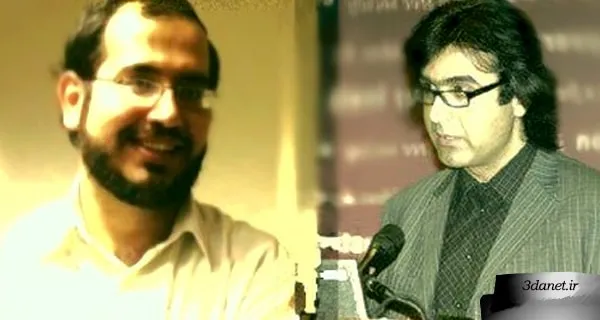
Discussion0 comments
No comments yet; let yours be the first voice.