Philosophy
First Philosophy, or Metaphysics: A Lesser-Known Work of Allameh Sha'rani
Abu al-Hasan Sha'rani's First Philosophy, or Metaphysics is the earliest product of Iranians' encounter with Western philosophy, aligning its history and terminology with Islamic philosophy. It remains a primary source for understanding the history of Western philosophy's introduction to Iran.
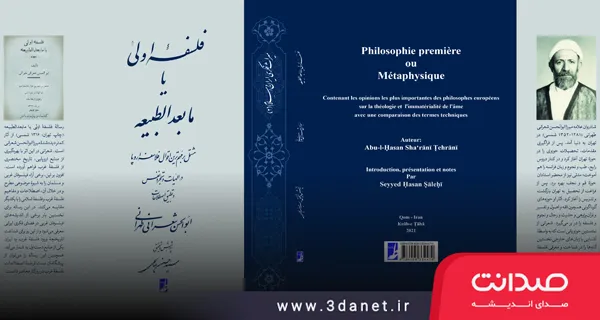
The treatise First Philosophy, or Metaphysics (Tehran: 1316 Sh./1937) is one of the lesser-known works of Mirza Abul-Hasan Sha'rani Tehrani. In this work, which can be considered among the first fruits of Iranian acquaintance with Western knowledge and thought, Sha'rani, drawing on European sources and referring directly to the works of philosophers, has provided a concise history of Western philosophy (from Greece to the contemporary era). Furthermore, he presents the views of Western and Muslim philosophers on some of the most important philosophical topics in a thematic manner, and in the process, compares and correlates the terminology and concepts of Western philosophy and Islamic philosophy. At the beginning of this treatise, Sha'rani states:
"The purpose of compiling this treatise is to correlate a significant number of the terms of the new European philosophers in First Philosophy with the terms of Islamic philosophy, so that if someone is familiar with one method, they can easily derive benefit from the other method. [...] To increase its utility, I have also incidentally quoted the important statements of the new philosophers from their authoritative books [...] and, except for one or two instances, I have not quoted from the philosophers of the Middle Ages, as there is greater interest in the statements of the new philosophers."
In this treatise, for the first time, some of the ideas of Western philosophers are introduced and discussed within the Iranian intellectual sphere, and for this reason, it is considered one of the valuable and primary sources for understanding the history of the introduction of Western philosophy into Iran. This treatise can also be regarded as a pioneer in the tradition of translating and finding equivalents for Western philosophical terms in the contemporary era. The present book is the corrected and researched text of Sha'rani's treatise.
The late Allameh Mirza Abul-Hasan Sha'rani Tehrani (1281-1352 Sh./1902-1973) was born in Tehran. After learning the basics from his father, he began his classical seminary education (Arabic literature, logic, jurisprudence, principles of jurisprudence, philosophy, mathematics, and other conventional sciences) at the seminary of Tehran (Marvi School) and subsequently also benefited from the masters of the seminaries of Qom and Najaf. Alongside his formal studies, he also learned medicine, astronomy, and the French language, opening a direct path to European culture and thought. After completing his studies, he returned to Tehran and began teaching; he became a member of the Supreme Council of Culture and collaborated in writing some of the entries for the Dehkhoda Dictionary. His works cover various fields such as jurisprudence and its principles, exegesis and Quranic studies, hadith and biographical evaluation, astronomy, and philosophy. Sha'rani is among the first seminary scholars who, through familiarity with foreign languages (French, English, Turkish, and Hebrew), took the first steps in understanding and introducing the philosophy of the West. His investigations into Western philosophy and science can be seen in some of his works, including the present book.
.
.
First Philosophy, or Metaphysics: A Lesser-Known Work of Allameh Sha'rani
The book First Philosophy, or Metaphysics, in 170 pages and 700 copies, researched and edited by Seyyed Hassan Salehi, has been published and brought to market by Ketab-e Taha Publications.
.
.


Discussion2 comments
عالی، استفاده کردیم.
کاش بهجای معرفی سادهٔ کتابها و بحثهای نیمهسیاسی در این سایت، یک نکتهٔ آموزنده از این کتابها را هر از گاهی آموزش میدادید. مثلاً خلاصهای از یکی از تطبیقهای کتاب را برایمان مینوشتید تا مخاطبی کمسواد همچون من [که فرصت خواندن این کتاب را هم ندارد] چیزی یاد بگیرد و قطرهای از این کتاب را به خاطر بسپارد؛ و همینجور کتابهای دیگر.