Religion
Free-Thinking: Its Costs and Its Gains
Accepting an idea is inherently tied to openness to diversity, and its outcome cannot be predetermined. Interpreting verses from Surah Az-Zumar, Soroush Mahallati argues that those who receive guidance are the ones who dare to listen to all views and then choose the best among them.

Some believe that we want thought, but that thought is only what we say it is, and other thoughts are not thought / Accepting thinking is inherently accompanied by a kind of acceptance of diversity and plurality / When a person thinks, they cannot determine the results of their thought and thinking in advance. If the result is predetermined, it is no longer thinking / The expression and logic of the Quran show that God is not much concerned with the result, and the very act of entering this path is part of the result itself / Those who enter the path of thought and thinking to follow the best are subject to divine guidance / Those who have accepted one thought and belief and say there is nothing else, and whose reaction to the speech of others is to put their fingers in their ears so as not to hear another word, are not subject to God's glad tidings. One must have the courage to listen / Those who do not present proof are not truthful according to the Quran / We do not take intellectual life seriously at all. We are anxious about thinking. Both we ourselves are anxious about thinking, and the government is anxious about our thinking / Some worry that if people think, their faith will be damaged, questions will arise for them, or they will fall into doubt. So it is better that they think less / Why should one person have the privilege of hearing all statements while others do not?
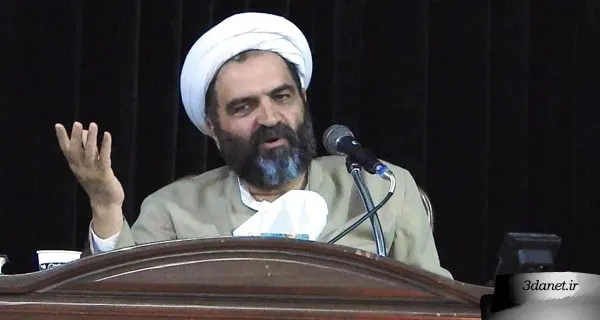
Ayatollah Soroush Mahallati, in a meeting for the exchange of ideas among a group of journalists and media activists, posing the question, "Does the Quran value thought and thinking?", said: The answer to this question may seem clear and obvious at first, but we must know that accepting the status of thought and thinking entails requirements that are sometimes heavy and burdensome for some.
He explained: Some believe that we want thought, but that thought is only what we say it is, and other thoughts are not thought; whereas, if we have accepted the value of thought, thought cannot be demarcated, and we cannot say that one is thought and another is not thought.
Soroush Mahallati, stating that "accepting thinking is inherently accompanied by a kind of acceptance of diversity and plurality," explained: When a person thinks, they cannot determine the results of their thought and thinking in advance. If the result is predetermined, it is no longer thinking. Thinking is an operation and an effort whose result cannot be known in advance.
Stating that "thinking, contrary to what some say, is a risky endeavor," he emphasized: Inviting to think is accepting its risks.
Soroush Mahallati, continuing his speech, referring to verses 18 and 19 of Surah Az-Zumar which state, "So give good tidings to My servants, who listen to speech and follow the best of it. Those are the ones whom Allah has guided, and those are people of understanding," said: This verse carries a divine glad tiding that the Prophet is to convey. In this verse, God gives glad tidings to individuals with specific conditions.
In describing the characteristics and conditions of those subject to this glad tiding from God, he stated: This glad tiding is, first and foremost, to the servants of God. The term "servants" (Ibad) in the Quran is a special and affectionate expression. Whenever God wants to honor someone and attribute them to Himself, He uses this expression for them; such as the attribution of servant to Khidr, the attribution of servant to the Holy Prophet in Surah Al-Isra, and also the attribution of servant to the possessors of the tranquil soul in Surah Al-Fajr.
According to Soroush Mahallati, in these verses from Surah Az-Zumar, God, by using the term "servants" for people of thought and thinking, has granted them a special nobility and dignity.
Referring to the continuation of the verse which states, "who listen to speech...," he spoke of the difference between hearing (sama') and listening (istima'), adding: Listening (istima') is hearing accompanied by thought and reflection, but one must see what the listening in this verse is to? One must ask why God did not say, glad tidings to the one who listens to My speech, or the Quran, or the speech of the Prophet, or even the speech of truth? Why did God speak of absolute speech and give glad tidings to those who listen to speech and reflect upon it?
This religious scholar responded: The Quran's assumption in this verse is that we want to reach the true speech by hearing various statements, and for such a person, one cannot set the precondition that they should only listen to the true speech.
Soroush Mahallati pointed to another passage of these verses which says, "... فَیَتَّبِعُونَ أَحْسَنَهُ..." and added: The use of the term 'ahsanu' (the best) shows that in listening to speech, diversity and plurality are accepted, and it is for this reason that the choice of the best exists within it; otherwise, if there were only one speech, following the best would be meaningless.
He also noted that "the expression and logic of the Quran show that God is not so concerned with the outcome, and the very act of entering this path is part of that outcome," and said: According to this verse, those who enter the path of thought and reflection to follow the best are encompassed by divine guidance.
Soroush Mahallati, stating that "guidance has various degrees," continued: In this Quranic definition, the very fact that an individual embarks on the effort of thinking and reflecting to choose the best means a degree of guidance has already encompassed them, and they are among the 'Ulul-albab' (the possessors of understanding).
Who Are Those Deprived of God's Glad Tidings? Referring to the characteristics of those who are not encompassed by the glad tidings of this verse, he enumerated these individuals as follows: 1- Those who are not willing to listen to speech. 2- Those who listen but are not ready to distance themselves from imitation and dogmatism. 3- Those who listen and are not imitators, but due to intellectual weakness, lack the power of analysis. 4- Those who reach the truth but are not people of adherence and practical commitment.
The professor of advanced jurisprudence (Dars-e Kharij) at the Qom Seminary remarked about the first group: Those who have accepted one thought and belief and say there is nothing else, and whose reaction to the speech of others is to put their fingers in their ears so as not to hear another word, are not encompassed by God's glad tidings. One must have the courage to listen.
He considered the greatest censorship to be when a person subjects themselves to censorship and said: The call of the prophets is that, in the first step, a human being should have the audacity and grant themselves the right to hear the words of others.
Pointing to those who put their fingers in their ears in the face of the speech of the Prophet Noah, he said: In our time too, there is no shortage of people whose reaction to the speech of others is "جَعَلُوا أَصَابِعَهُمْ فِی آذَانِهِمْ" (they put their fingers in their ears).
Soroush Mahallati commented on the second group deprived of this divine glad tiding: When a person agrees to listen, they must be ready to distance themselves from imitation; otherwise, if someone is dogmatic and remains in adherence to their ancestors, party, or class, what benefit could listening possibly have? Such a person has already condemned everyone, so it is better for them not to listen, because listening in this verse is for choosing the best.
The Quran Considers the Presentation of Proof and Truthfulness as Inseparable Soroush Mahallati identified the third group as those who, due to intellectual weakness, lack the power of analysis and said: One of humanity's afflictions is that instead of following proof and reason, a person relies on conjecture, guesswork, and estimations. Such individuals are willing to listen and reflect, but they do not know the method of reflection.
He added in this regard: One of the merits of the Quran is that it constantly emphasizes the presentation of proof and the provision of reason, and from the Quran's perspective, the presentation of proof is, in fact, concomitant with truthfulness. That is, those who do not present proof are not truthful according to the Quran; "قُلْ هَاتُوا بُرْهَانَكُمْ إِن كُنتُمْ صَادِقِينَ" (Say, 'Produce your proof, if you should be truthful').
Soroush Mahallati, stating that "one of the afflictions of the media in our time is that it leads people into a space of speculation," said: Today, the media bombards us with information, and based on this, the contemporary human has become superficial and arrives at beliefs whose basis is unclear. Modern humans think they know a lot, but sometimes they understand very little and have no clear criteria for the truth or falsehood of the information that reaches them.
In describing the fourth group deprived of the divine glad tidings, he also said: After a person has also cast aside the spirit of imitation, the next issue is adherence. In many cases, a person understands the truth and knows the best, but has a problem at the stage of commitment. The intellect has accepted the truth, but the heart has not, or in practice, they are not willing to submit to it. Acting upon it is a hard and difficult task.
Sometimes acting upon the truth entails denying one's own past and jeopardizing one's current position Soroush Mahallati described ignorance as the denial that follows knowledge, and said: If understanding and knowledge are accepted and acted upon, they can sometimes endanger a person's position, or it may become necessary for the person to deny their own past and allow their life to undergo change. It is for this reason that a person is sometimes unwilling to commit to what they understand. We do not take the life of the mind seriously
In the final part of his remarks, Soroush Mahallati stated: There is a great distance between the standard set by the Quran and the state we are in. We do not take the life of the mind seriously at all. We are anxious about thinking. We ourselves are anxious about thinking, and the government is anxious about our thinking.
He added: Some are worried that if people think, their faith will be damaged, questions will arise for them, or they will fall into doubt. So it is better that they think less.
Why should one person have the privilege of hearing all opinions while others do not? Soroush Mahallati, posing the question, "How do those who hold such a belief confront these Quranic verses, and how do they interpret these verses?", said: One of the commentaries emphasizes that the subject of the verse is those statements and opinions in which there is hope of guidance, and it says in this regard that whenever it is proven, after examination and scrutiny, that a certain book is misleading, it then falls outside the subject of this verse and must be removed from the reach of this person or that, like a poisonous substance.
Countering this view, this religious scholar said: The question here is, to whom must the misleading nature of a certain statement or a certain book be proven? Can anyone consider the understanding of others to be subordinate to their own understanding? If the misleading nature of a book is proven to someone, how much validity does their understanding hold for others? And furthermore, why should one person have the privilege of hearing all opinions while others do not?
.
.
A report on a lecture at the Thought and Pen Association | Free-Thinking: Its Costs and Its Gains
28 April 2016 | Official website of Ayatollah Soroush Mahallati
.
.





.webp)
Discussion0 comments
No comments yet; let yours be the first voice.