Sociology
Introducing The Work of the Intellectual, by Babak Ahmadi
Ambiguity in the definition of the intellectual and intellectualism has been distorted by clichéd perceptions in Iran. The historical trajectory of the term—from literary circles to social responsibility and its place in Iran—demands a more rigorous examination of the category.
Who is the intellectual? What characteristics do they possess? For an activity in the social sphere to be termed intellectual work, what qualities must it have? Are we permitted to call any intellectual and written activity, from politics to literature and cinema, an intellectual activity? What is the role that intellectuals bear in society, and precisely which domains does the influence of intellectuals encompass? These questions and many others of this kind are only a part of the ambiguities that exist around the category of the intellectual and have made a clear definition of the category of the intellectual and intellectual work a difficult matter. In our country, there exists an utterly clichéd conception of the intellectual, which it would not be an exaggeration to say has been dragged down to the vulgar types of television series! The fact that the intellectual is shown as a reclusive individual, equipped with a pipe and a cravat, who often speaks in grandiose and difficult-to-understand terms, and with every word that comes out of his mouth, his intention is not to connect with those around him but to boast about his learning and knowledge, and so on... all indicate the entrenchment of a clichéd conception of the intellectual in our country! Which is more reminiscent of the snobbish, impatient, and isolated characters of television programs than a precise definition of the category of the intellectual as a specific social group with the particular functions and characteristics that sociological texts have enumerated for the "intellectual."
.
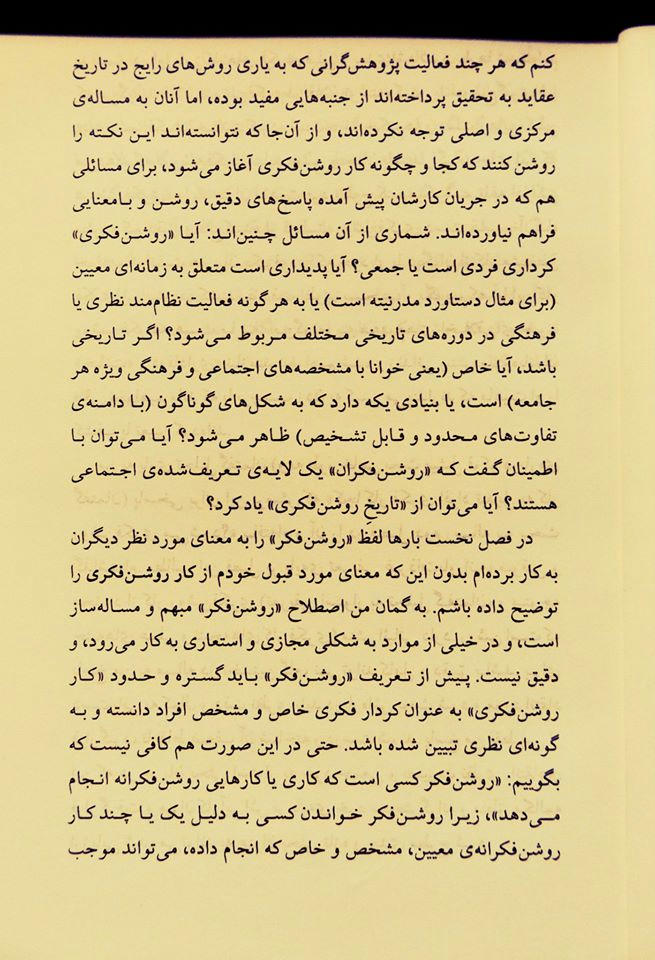
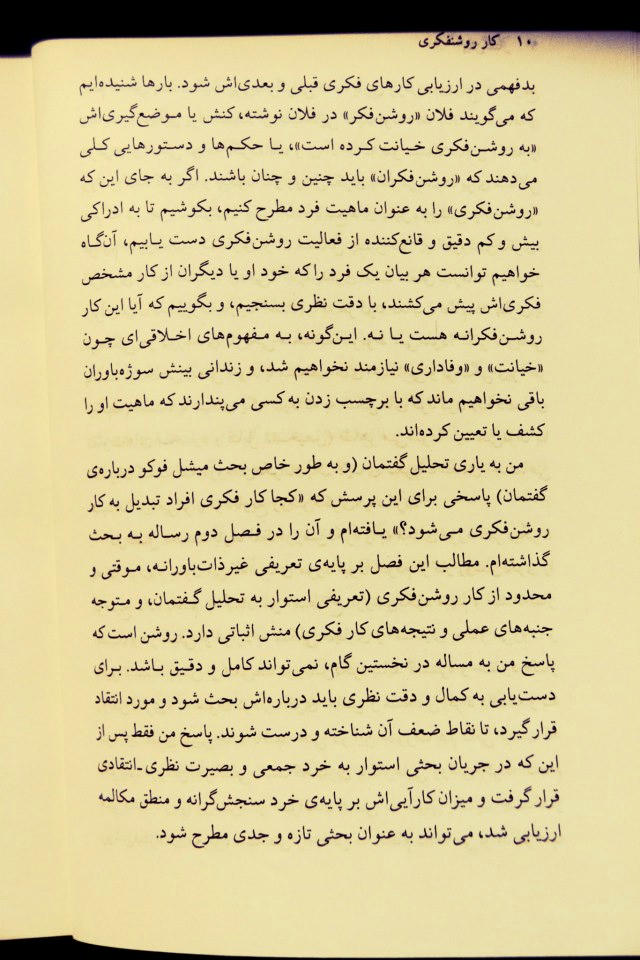
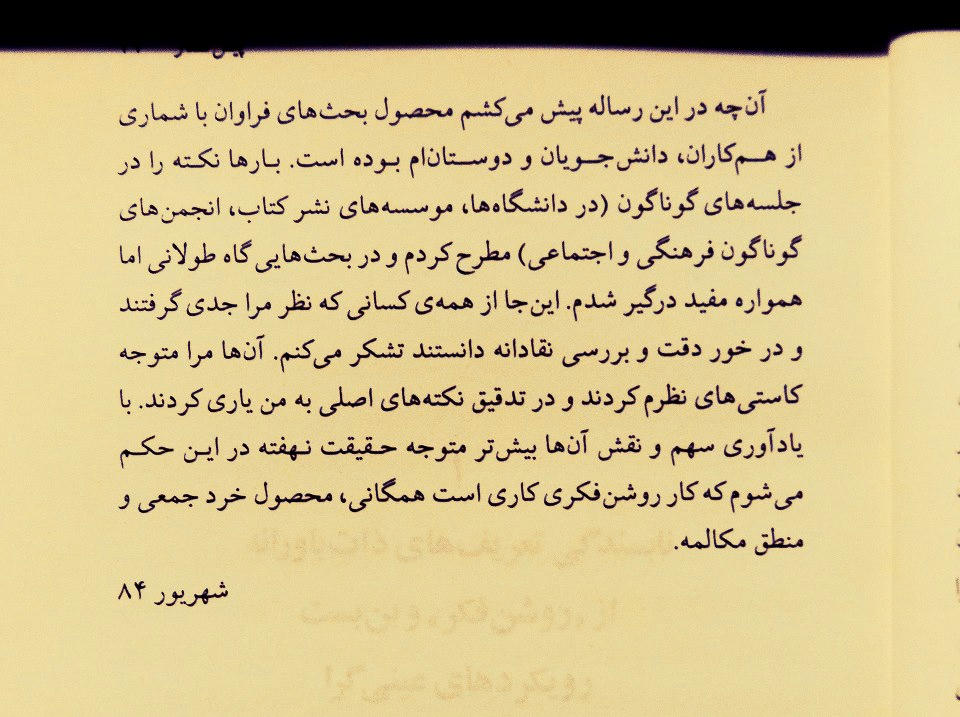
Setting aside the clichéd character of the intellectual in television programs, it seems that to distinguish intellectual work from any social and intellectual activity, specific criteria must be in place, for if it were otherwise, we would be compelled to call anyone whose intellectual and cultural work finds expression in the social sphere an intellectual! This categorization would include newspaper columnists and those engaged in academic studies, from famous cinema actors to literary figures, novelists, poets, and so on, which, due to its sheer breadth, does not introduce any specific work or activity as intellectual work to someone seeking to understand the category of the intellectual. Perhaps all intellectual activities that are advanced in some way with the aim of the public good can be considered intellectual activity, but there is still a long way to go before defining the intellectual and intellectual work, and one must inevitably accept that not every intellectual act necessarily originates from an "intellectual." Hence, we have no choice but to begin the exploration of the concept of the intellectual by defining "intellectual work."
In dictionaries, the intellectual is defined with characteristics such as: possessing a critical mind, political and social concerns, and a sharp-eyed view of the surrounding world, a history that has been traced back to Socrates and the thinkers of ancient Greece. By this definition, Socrates, with his famous motto "Know thyself," is among the first intellectuals to have appeared in the history of thought. Specifically, however, it was "Pyotr Boborykin" who first used the word intellectual in 1860. A word that until then seemed strange and no one had thought to use. This word was initially used for students and student and literary circles, but after a while, it was applied to circles in which students and neophytes opposed to the status quo participated, and the tip of their critical arrows was aimed at the policies of Russia under the Tsar.
Later, in the famous novel Fathers and Sons, Ivan Turgenev combined intellectualism with literary expression, and the conflict between the new demands of the sons and the traditionalism of the generations before them was displayed in the form of intellectual dialogues. But it was with the famous Dreyfus affair in the nineteenth century and the controversial article by the renowned French writer Émile Zola that intellectualism openly emerged from literary, artistic, and student circles and became tied to social and political responsibilities. Dreyfus was a Jewish officer in the French army who was convicted of selling army secrets to the Germans and sentenced to imprisonment on Devil's Island, considered one of the most terrifying places for holding criminals. After Dreyfus had spent six years in horrific, inhumane conditions, no evidence of his guilt was found, but the commanders of the French army, fearing the loss of the army's prestige and the weakening of soldiers' morale, refused to retract the accusations and exonerate Dreyfus. This ultimately led Zola to support Dreyfus in a letter that later became famous as "J'accuse." According to one account, the Dreyfus affair and Zola's correspondence with the president of the time are considered the beginning of a new current in the evolution of the concept of intellectualism and are introduced as the starting point for the entry of the concept of social and political responsibility and a departure from literary definitions of the category of the intellectual. From that time until now, the concept of the intellectual and consultation and dialogue about its meanings and functions have been among the favorite topics of thinkers, and many people have written about it.
From the famous Jean-Paul Sartre and the Italian thinker Antonio Gramsci to the thinkers of the Frankfurt School and Michel Foucault, each, depending on the particular perspective they held, has addressed an aspect of the category of intellectualism, and thus have enriched the discussion in this field with a rare richness.
Sartre speaks of the intellectual as an "unhappy conscience" that interferes in matters that do not concern it. Gramsci, by putting forward two categories of organic and traditional intellectuals, also opens a new discussion in the field of intellectualism. To the list of writers and philosophers who have commented in this area, one can add great names such as Albert Camus and Raymond Aron. All of this clearly shows to what extent the discussion of intellectualism and the path this concept has taken in the history of thought is diverse and important.
The discussion about the nature of the intellectual and the work of the intellectual does not have a long history in our country, because the category of intellectualism itself and the emergence of intellectuals in our country, compared to Western countries, is not old! One can consider the emergence of intellectuals in the sphere of Iranian thought as contemporaneous with the Constitutional Revolution. For the first time, the word rowshanfekr (intellectual) entered Iranian political literature in the language of the activists of the Constitutional Revolution, who were called monavar-al-fekr. But even at that time, people like Talibov, Malkam Khan, and other intellectual leaders of the constitutional movement were not very concerned with scrutinizing this term, and the definitions of this word were still accompanied by many ifs and buts. The generation of writers after the Constitutional Revolution also did not pay much attention to the need to provide a clear definition of the intellectual. For example, despite the fact that Jalal Al-e Ahmad's famous book On the Service and Treason of the Intellectuals explicitly used the term intellectual, the reader does not grasp anything of the concept of intellectualism by reading it.
After the Islamic Revolution, an opportunity arose for some researchers to present works on this concept and offer classifications of this category, yet they were still far from a specific definition of the category of the intellectual. The explanation being: this attribute was applied to such different individuals with various characters and intellectual records that finding a precise definition of intellectualism among them seemed a very difficult task.
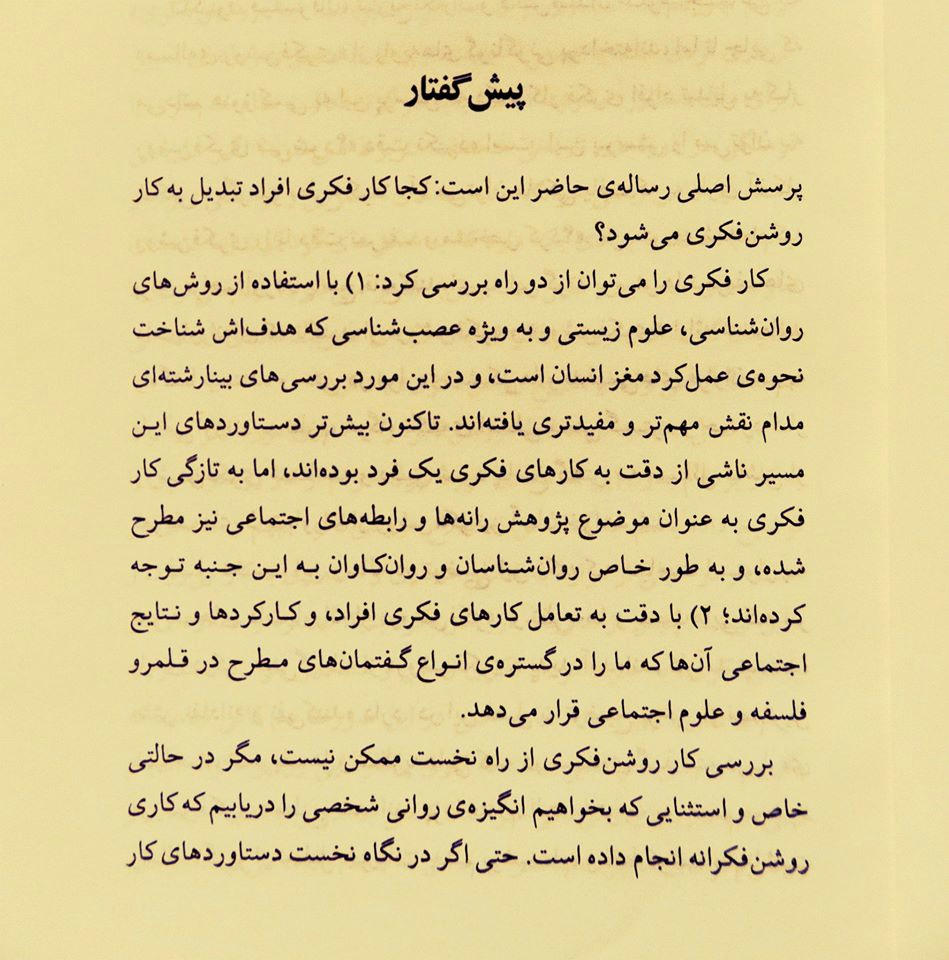
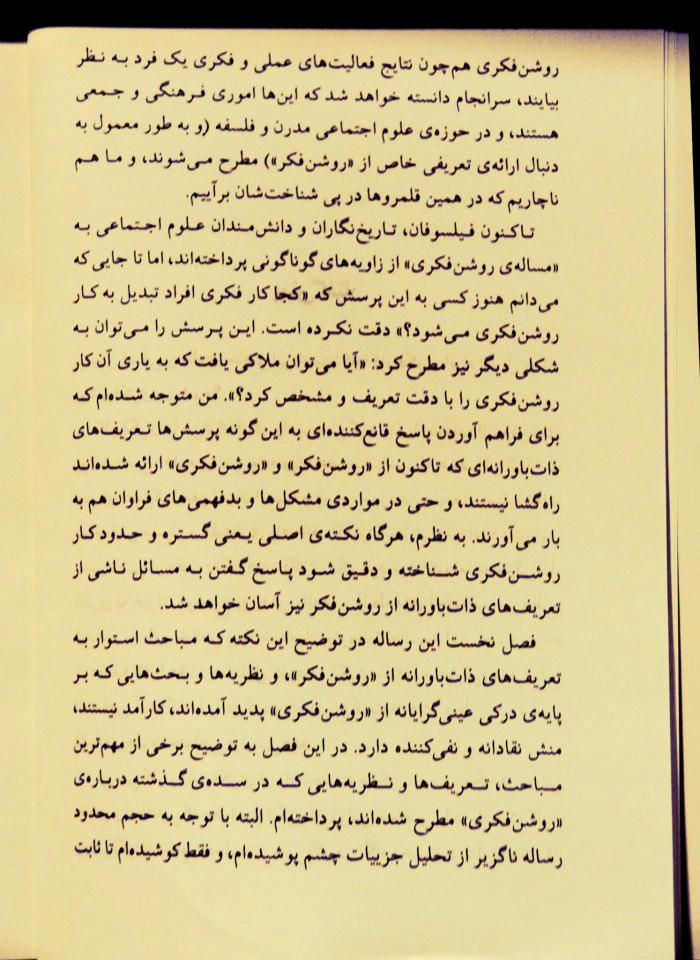
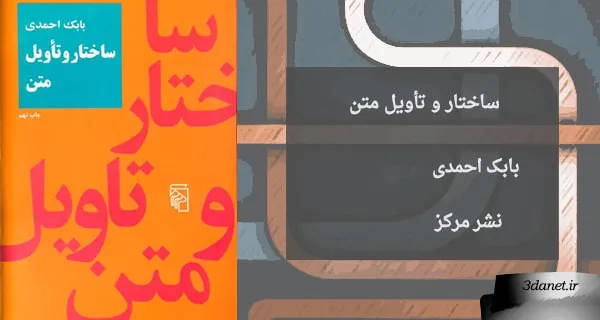
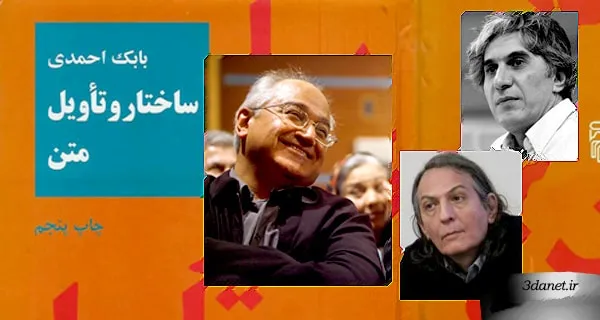
The Work of the Intellectual, by our contemporary author Babak Ahmadi, is a short treatise written out of a concern to define intellectual work. In this book, Ahmadi, deeming rigid and essentialist definitions of the intellectual invalid and stressing the need to escape them, speaks of intellectual work so as not to get lost in the labyrinth of variegated definitions of the “intellectual.” Anyone, in any position, whose intellectual work takes on the characteristics of intellectual “work” can be called an intellectual—a quality that, of course, does not encompass the “doer of the work” and is an attribute ascribed to the work, not the agent of the work. With this definition, one can immediately conclude that being an intellectual is not a permanent occupation of an individual or group, and only at certain junctures in time can intellectualism be attributed to a specific type of activity (work)—which in no way honors the doer of the work with the lifelong attribute of intellectual! To the extent that a person who performs an intellectual act today may, in their stances tomorrow, turn into an anti-intellectual! The author of The Work of the Intellectual puts forward three characteristics for intellectual work: first, that it expands a particular discourse; second, that it clarifies that discourse’s connection to social life and the configuration of power; and finally, that it illuminates the links between its discourse and other discourses. These three features turn any intellectual activity into intellectual work. In addition to these three components, Ahmadi does not forget the critical spirit of intellectual work and does not consider an intellectual activity that lacks a critical spirit and the questioning of conventional wisdom worthy of being called intellectual work, even if it meets the three aforementioned conditions.
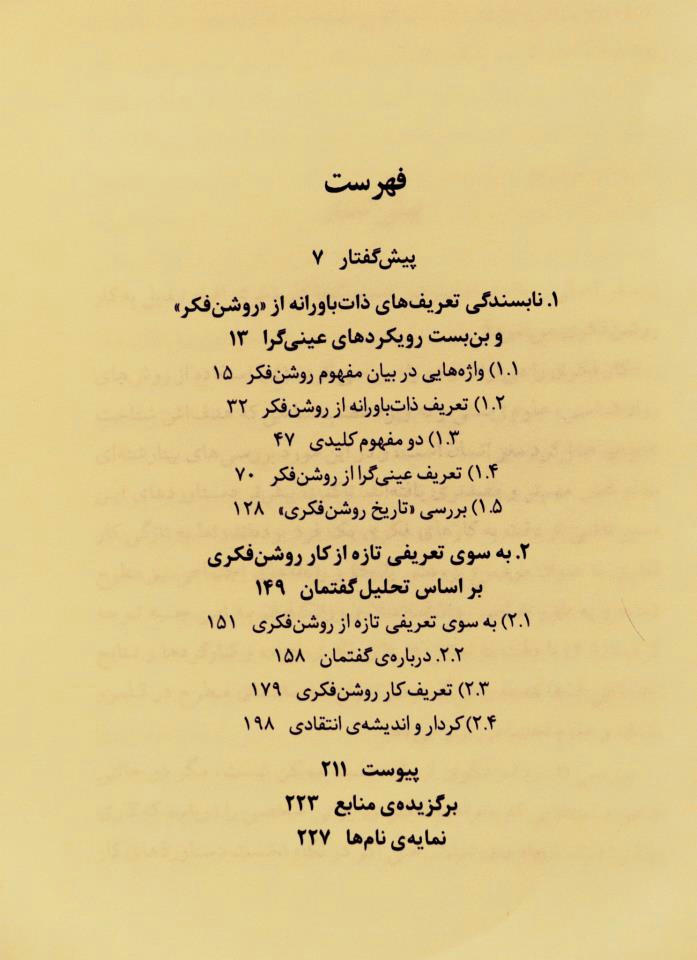
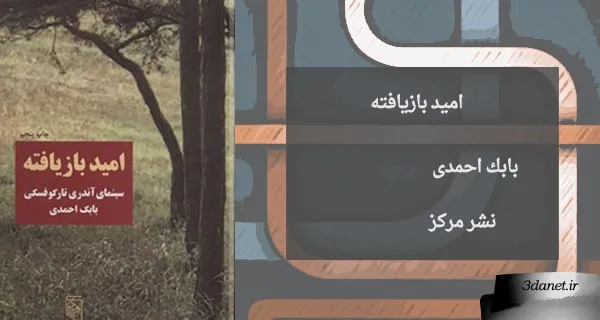
The Work of the Intellectual is a concise treatise whose valuable point is opening a new window onto the endless debate about the intellectual, and it can answer many of the questions that hover around the category of intellectualism. This book, comprising 231 pages in paperback and octavo format, is structured into two parts and a preface, and has been sent to the book market by the reputable publishing house “Markaz.”
.
.
The Work of the Intellectual, Babak Ahmadi, Tehran: Markaz Publishing, 2008
Sources for the book introduction of The Work of the Intellectual: Mardomsalari newspaper, Mehrnameh
.
.

Discussion0 comments
No comments yet; let yours be the first voice.