Sociology
Iranians and the Shahnameh
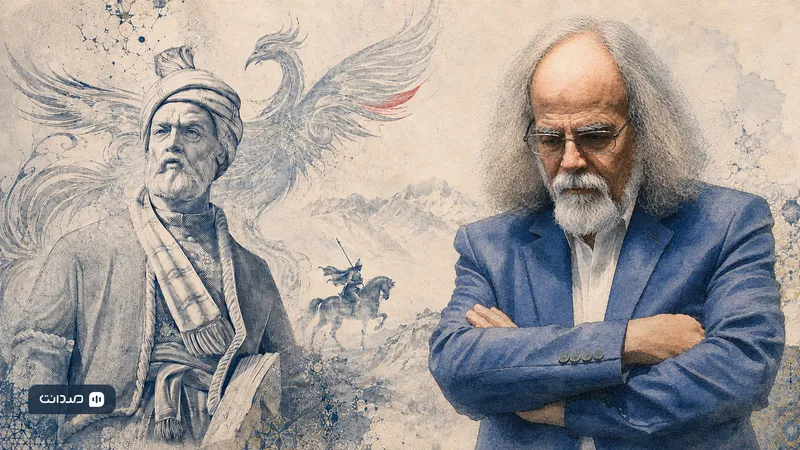
Must one read the Shahnameh from beginning to end in order to take pride in it? Critiquing Mostafa Malekian’s recent remarks, this essay argues that the Shahnameh is more than a book: it is a cultural macrotext whose characters and stories have permeated Iranian collective memory, art, and life for centuries.
Iraj Rezaei
AuthorMostafa Malekian’s recent remarks on Iranians’ relationship with the Shahnameh invite reflection from several angles. One can agree with him that relatively few people have read the Shahnameh from beginning to end. Although the claim that, out of eighty million Iranians, not even a thousand have read the work in its entirety seems exaggerated, the basic point is difficult to deny: for various reasons, the number of people in Iranian society today who have read the Shahnameh from beginning to its happy end is limited.
Even so, I do not think one can hastily conclude from this fact that Iranians’ pride in Ferdowsi, when they have not read his book in full, amounts to pride in something imaginary. The problem with this argument, it seems to me, is that it fails to distinguish between reading the Shahnameh and the presence of the work within the very body and fabric of Iranian culture, memory, and collective unconscious—a presence formed over many centuries.
One might ask: have all English speakers read all thirty-five of Shakespeare’s plays, along with his poetry and history plays? Yet many of them know Hamlet and Macbeth, and perhaps two or three other plays as well. By the same token, many Iranians, even if they have not read the Shahnameh, know Rostam, Sohrab, Esfandiar, Siavash, Kaveh, Zahhak, Zal, and the Simurgh, and may even have lived, from time to time, with some of these stories.
I do not think this is peculiar to our own age. To some extent, things were much the same in the past. Let us leave aside ordinary people and turn to the great figures of our tradition. I find it unlikely, for example, that Jalal al-Din Rumi, who so often drew on some of the Shahnameh’s most famous characters in his poetry to express his mystical purposes, had read the book in its entirety. His absorption in his spiritual and inward worlds probably left him little opportunity for so extensive an undertaking. And yet the cultural atmosphere of Persian speakers was so saturated with the memory of the characters of Iran’s national epics that a poet such as Rumi could hardly have remained untouched by their influence.
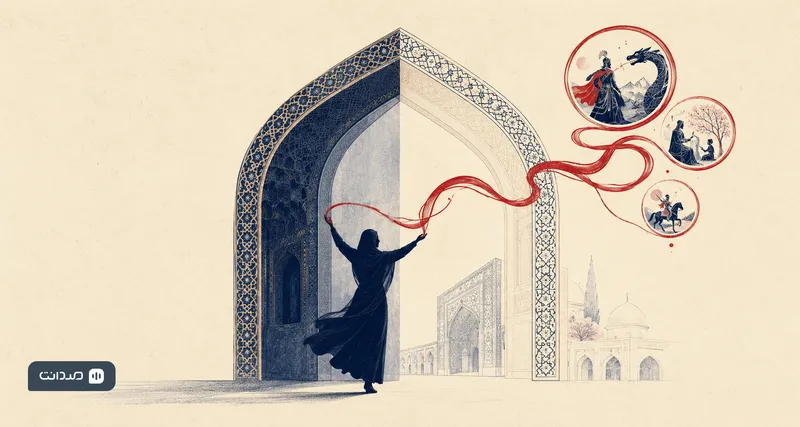
Let us also recall how extensively the stories of the Shahnameh have been depicted across different arts—in tilework, carpet weaving, miniature painting, architecture, and more. What other text in Persian literature, and how many works comparable to the Shahnameh in world literature, can we name that have been so deeply interwoven with people’s lived experience and with the folklore of a nation? The book Shahnameh and the People by Abolqasem Anjavi Shirazi has collected many examples of this kind. Many Lurs, Bakhtiaris, Kurds, Laks, and inhabitants of numerous other regions—including Sangsar and Aftar—have lived with portions of this text.
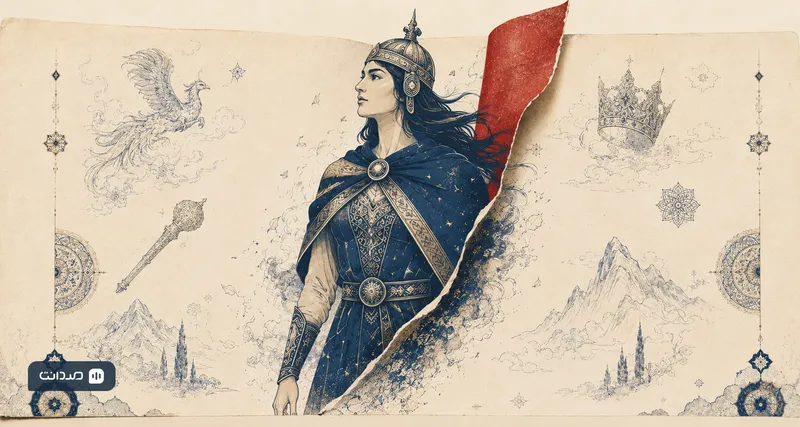
Alongside its living and generative literary life, and the unparalleled influence it has exerted on poets and writers after Ferdowsi—an influence that helped further consolidate the Persian language—the Shahnameh has always functioned as a cultural macrotext, attracting the attention of artists and inspiring them across a wide range of nonverbal and visual arts, from illustration, painting, and miniature to carpet weaving, architecture, and the decorative arts. This remains true even if many of these artists, whether famous or anonymous, had never read the Shahnameh in full, or perhaps even a single page of it. Nor is the Shahnameh’s influence on modern and contemporary arts such as playwriting, evident in the works of figures like Bahram Beyzaie, hidden from lovers of literature, culture, and art.
For all the valuable creative works inspired by the Shahnameh, it still seems that a thousand untasted wines remain at the root of this ancient vine, ever fresh and flourishing in Iranian soil. One can only imagine with regret how many life-giving works might have been created under the Shahnameh’s inspiration in various arts—especially music, opera, theater, and cinema—but which, unfortunately, have found no opportunity to come into being because of the wayward temperament of the times.
In any event, whatever reservations or questions one may have about Professor Malekian’s remarks, I hope that his comments, published as a video conversation on his Telegram channel, will encourage Iranians not to content themselves merely with memories and recollections of the stories in this book, but to take up the serious reading of this monumental, beloved, and precious work once again. To enter the world of the Shahnameh, they might begin with some of its better-known tales, such as Rostam and Sohrab, Rostam and Esfandiar, or the story of Siavash, which is among the finest literary and artistic achievements in world literature. Fortunately, these famous stories have been published separately through the efforts of distinguished scholars, accompanied by useful and illuminating commentary, and are readily available to interested readers.
Iraj Rezaei
12 Shahrivar 1405


Discussion0 comments
No comments yet; let yours be the first voice.