Philosophy
Post-Corona Reflections by Mehrdad Arabestani
The coronavirus pandemic disrupted the normal order and, as a rupture event, opened the possibility of a new beginning. Mehrdad Arabestani examines the potential for change in the economy, communications, and humanity's relationship with nature in the post-corona world.
Mehrdad Arabestani
AuthorPost-Corona Reflections
Mehrdad Arabestani[1]
The Abyss Opens Wide and Suggests the Possibility of a "New Beginning"
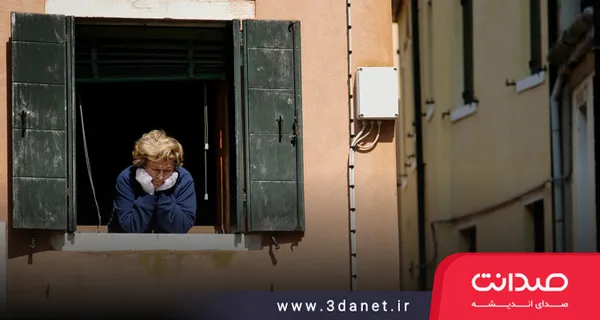
The COVID-19 pandemic is not the first pandemic in history, nor will it likely be the last, and the world will survive this one too. The abyss this pandemic has opened, like other pandemics, will not swallow everyone, and life, in any case, will persist afterward; therefore, as long as we are alive, we can, and perhaps must, contemplate the quality and quantity of life after it. The spread of the coronavirus was not like ordinary misfortunes or undesirable events that sit at the end of life's conventional causal chain. The experience of this pandemic has specifically and profoundly disrupted the normal order; ordinary tasks that were fundamentally performed automatically, such as using public transportation, eating, shopping at the grocery or supermarket, even opening the front door, have become actions requiring thought, revision, and reflection. The bureaucratic system, banking services, business, education and teaching, and even legislation and politics, have all been more or less suspended. In short, the coronavirus pandemic almost suddenly reared its head from the collective oblivion, opened its maw, imposed a halt and suspension, and forced us to rethink every step in our daily affairs. This experience might be likened to the "culture shock" of living in a completely different culture, where the assumed ways of even the most trivial daily matters are so different that to be "normal," you must think and decide at every step.
In truth, this event is a rupture in the normal order, an eruption of the neglected—that which we could have known but ignored—and thus unpredictable and without known coordinates, suddenly appearing before us like a black hole. A sub-natural entity, devoid of sexual instincts and more or less mechanical, for which one cannot even imagine something akin to consciousness, let alone that applying the term 'life' to its mode of being is fraught with doubt, is in the process of destroying all our human life and the "sublime" achievements of which we are so proud. This pandemic can be seen precisely as an instance of the "event" in the language of Alain Badiou[1], that is, an occurrence that ruptures the appearance of the "normative and ordinary" and opens a space through which reality can be re-examined from the standpoint of the "sphere of the Real"[2], that is, from the standpoint of that which is excluded from consciousness and language. A sphere that, while generating terror and bewilderment and with them a surge of meaninglessness, also intimates the plurality of possibilities for being and living, and places the contingent and uncertain foundations of our existence before us. In this respect, whatever the event may be—whether a natural disaster, a human catastrophe, or love (as Badiou says)—it is always accompanied by potentiality and possibilities in the general sense, meaning the possibility of disrupting part or all of this contingent life and creating an alternative order. This alternative order is neither necessarily comprehensive and radical, nor necessarily desirable or undesirable; it is merely a possibility. That is, it might only be a change in an attitude, or a change in some institutions, at a local or a more macro level, or, like what is recounted in the story of Noah's flood, comprehensive, global, and accompanied by a start from point zero.
The question is, today, as we are in the midst of experiencing the "event," at a time when we still do not know how much and with what depth and breadth this event will affect us, can we predict the possible future changes? Can we use this potentiality and the possibility of rearranging certain affairs to achieve what we desire? It seems that after passing through the stages of denying the event's existence, and then the projected anger with racist undertones (blaming the Chinese and their dietary habits) or anti-government sentiment (the incompetent government), some have, in any case, tried to reflect on this matter and cobble together an answer to this question. Those who undertake this task may naturally have different approaches, approaches that encompass what is of interest to business strategists as well as cultural critics and anthropologists, and predictors of market behavior as well as philosophers and historians, and many others.
What Will the Virus Do to Us?
Matthias Horx[3], a German known as a futurist[4], in response to the question of when the corona crisis will end, says "Never" and continues, "There are historical moments that cause the future to take a different course. We call these bifurcation points or deep crises."[2] In any case, the world seems to be melting before our eyes, and the fragility of life has been revealed to us. Observing the suspension of ordinary life and the emptying of streets evokes a sense of the end times, uncertainty or the instability of the "ordinary," and the possibility of a new beginning. Horx uses a method for this work that he calls looking back from the future, which he has apparently used in analyzing corporate trends. He makes predictions such as, for instance, in the autumn of 2020, after overcoming the corona crisis, how the use of digital communication technologies will seem more common, easier, and more practical than ordinary meetings. Phone calls without video will become longer, and communication will take on a new meaning. Those who were restlessly seeking work and business will now pause more, go for long walks, and the value of reflection and deliberation will be highlighted again. Also, existential questions like "What is a human being?" and "What do we mean to each other?" will become prominent. We will understand how much the economy can shrink and contract without necessarily collapsing; in other words, we will practically understand that the economy will fundamentally change anyway, but it will not necessarily collapse, as some predicted during economic ups and downs. By the same analogy, he predicts that the process of globalization will not disappear with the closing of borders, quarantine, and severe restriction of communications, but rather this trend will be reconfigured to keep our world connected in other ways. And finally, with a somewhat optimistic view, he sees the coronavirus as a messenger from the future that has come to tell us that the world has become too dense and "hot," and its course must be changed.
Of course, this notion of the earth becoming worn out, diseased, and "hot" is also observed in some small-scale, so-called "indigenous" societies, such as certain peoples in Southeast Asia and South America, and perhaps elsewhere, as well as in New Age and pagan movements, which propose the necessity of reducing human movements and interventions, guarding Mother Nature, and, if possible, relocating human groups as a remedy. Perhaps it is this general insight that is enlivened and made clearer by the corona epidemic. We must remember that in the recent past as well, the events at the Fukushima (2011) and Chernobyl (1986) nuclear power plants, aside from other consequences, more or less brought awareness of the dangers arising from reckless human manipulation of natural affairs. Although humans are forgetful.
Li Edelkoort[5], the Dutch designer and trend forecaster, has also spoken in an interview about the consequences of the global corona experience. [3] In her view, physical quarantine during the pandemic could also lead to a quarantine of consumption, the result of which is the rediscovery of the experience of beauty and pleasure with simpler clothes, and finding time to read forgotten books and carefully do things that make life more beautiful. We will also learn how the economic suspension simultaneously leads to beneficial environmental outcomes, and a sign of this is that we see, despite everything else, people in some major Chinese cities can "breathe" again today. Cultural, artistic, and fashion events, etc., have stopped, and organizers, if they want to plan, must think of innovative and new ways to interact. While expressing regret for the lives being lost and the families being bereaved, Edelkoort expresses hope that their deaths will not be in vain and that the world will find a [new] way for the resurrection of human dignity and continued survival. The results of this crisis, in her view, will force us to slow down our pace, not board airplanes, work from home, entertain ourselves only with close friends and family, be more self-sufficient, and be more mindful.
Apart from opinions of this sort, which apparently attempt to point out some bright spots in this onslaught of darkness for the epidemic and, by mentioning these benefits, to lessen the bitterness, others have put forward their assessments of the post-corona future with different theoretical considerations and premises. Among them is Slavoj Žižek, the philosopher and cultural critic who, while always professing his commitment to leftist ideals, can more or less be placed among the post-Marxists due to his Hegelian-Lacanian reading of Marx's legacy, which is distinct from the tradition of the Frankfurt School. In an editorial he wrote for the RT News website[4], Žižek begins his remarks with the decisive statement that "now that the fear of corona has spread, we are forced to make the ultimate choice—either to implement the most brutal logic of the survival of the fittest or a kind of reinvented communism with global coordination and cooperation." Although he often uses the terms Marxism or communism sarcastically or provocatively in his lectures, here what he refers to is a new conception and a specific meaning of communism. In Žižek's view, the corona epidemic not only highlights the limitations of the global economy but also demonstrates the even more lethal limitation of populist nationalism. "No more America (or anyone else) First! It's over, because America too can only be saved through global cooperation and coordination." And he immediately adds that he is not seeking a utopian global solidarity, but rather means how, under these conditions, global solidarity is the only "selfish" path to survival. In Žižek's view, against the pessimistic vitalist outlook that considers the epidemic as causing the elimination of the elderly, the sick, and the weak and ultimately sees it as benefiting global health (the very law of the jungle), the other way is the reinvention of a broad communist approach that leaves this vitalist outlook behind. Here, however, Žižek points to a danger he calls "barbarism with a human face," which is when the survival of the fittest and the vitalist outlook present themselves in the guise of "expert" recommendations and as something "scientific." When, by citing experts and scientists, the right to life is stripped from vulnerable groups (the elderly and the chronically ill).
Yuval Noah Harari, however, considers other concerns for the post-corona future. Harari is a historian who does not reduce the analysis of historical events to the "social" or "political" aspect of humanity. He pays serious attention to the embodied nature of human existence in the formation of human social history. In the same vein, and appropriately, he addresses the decisive role of the emergence of advanced language in humans and, consequently, the cognitive revolution and its outcomes. Likewise, matters that arise from this cognitive revolution but were unplanned and, at times, like the agricultural revolution, the industrial revolution, and technology, have imposed themselves upon the human mode of being. Thus, instead of limiting the tools of historical analysis to "social" and "political" matters, he also incorporates the requirements of human embodiment, as well as "chance" and the side effects of phenomena, into his analytical equation. In other words, by showing the events and accidents that have shaped the course of history and our horizon of vision, he has depicted the contingent nature of the human world and the spectrum of possibilities we face. Specifically, in his futuristic book, Homo Deus: A Brief History of Tomorrow[6], based on the analytical foundations laid out in his more famous book Sapiens: A Brief History of Humankind[7], he has outlined the probable possibilities facing humanity in the future. It should be noted that Harari's main specialty is the history of wars, particularly medieval wars, which has naturally led him to investigate the nature of conflicts in human societies and the possibility of cooperation between human groups. Harari's approach, rather than being obliged to offer hope or being oriented toward a specific utopia, is more a kind of warning and an invitation to prepare for the future. With such a background, Harari, by introducing the factor of the coronavirus pandemic as an unforeseen event, has articulated his main concern for the post-corona future in two interviews, one with the BBC (March 5, 2020)[5] and one with CNN [6], and in a relatively detailed article in the Financial Times[7]. This main concern revolves around a crisis of "trust" on two levels. One is trust at the national level, between the people and governments, and the other, which has even more pervasive consequences, is trust at the international level, between countries. He believes that today, at the national level, governments that have abused their people's trust cannot count on the people's trust to fight the coronavirus, and therefore their efficacy diminishes. In other words, now is the time when these governments must pay the price for this created mistrust. Governments also resort to more surveillance and monitoring tools to control the epidemic, from controlling movement to recording and storing information. The example Harari gives is the Israeli government's measure to monitor coronavirus patients through digital methods, which could potentially become a tool for "hacking" and controlling humans by monitoring vital signs and other activities through digital methods and recording and tracking information. Therefore, he sees the danger of totalitarianism at the national level as one of the threats of the post-corona era. In fact, a challenge between health and privacy and individual freedom is underway here, and with a sophistical dichotomy between privacy and health, privacy is sacrificed for health, and ultimately, the development of tools for controlling individuals continues into the post-corona era. This is while he does not believe that the coronavirus epidemic will inevitably lead to totalitarianism at the national level, and the possibility remains open that this very period could become a ground for building national trust.
It is worth noting that Giorgio Agamben[8], with a similar outlook but with greater certainty and intensity, has also condemned the overriding importance of bare life survival that has taken shape in the quarantine policies and state-imposed restrictions to combat the coronavirus outbreak, and considers the epidemic an invention by the state to impose restrictions it could not have previously imagined and would likely continue after the coronavirus era. In fact, he believes that the danger of the coronavirus is not much greater than that of common colds, and the production of fear of the epidemic is solely in the service of state deprivation and restriction.[8] Of course, the underestimation of the disease's effects and human life in Agamben's views has provoked such negative reactions that he attempted to explain his view in a short piece, although these explanations show no sign of a change in perspective, and he still sees the main danger not outside (the virus), but within (the desire for control).[9]
But at the international level, the issue is raised in a different way. Pandemics are not preventable and recognize no political or ideological borders. Even in the Middle Ages, when the means of geographical movement were very limited, pandemics afflicted more than one continent. Note that the plague pandemic in the 14th century swept through Asia and all of Europe, claiming millions of victims. Therefore, combating this pandemic reveals, more than ever, the importance of and need for international cooperation. A cooperation whose basis is trust and a view of different societies and countries as a single human community. Building walls around national borders or any other group boundaries, although it can be a measure to prevent the spread of the virus if accompanied by international cooperation, will have the opposite effect if it means separating one's own expenses from others, which is itself a function of international mistrust. Because, as mentioned, in combating the virus, the political and ideological borders of countries are ineffective. In fact, the virus does not recognize such borders. In Harari's view, the real border that must be drawn and fortified is the border between the sphere of viruses and the human and animal sphere. The threat of the virus is a global threat, and combating it will only be possible with the formation of a global identity. Therefore, he believes that extremist nationalist policies, which are formed in opposition to other countries, closing borders, and the interests of one country and the "I" group versus the country and group of the "other," are a danger to the spread of the virus and can lead to greater disintegration of human society. He points out that today, especially a country like America, which officially declares "me first" as its official policy, cannot attract global trust to lead the world against the coronavirus in the same way it took on the leadership of the world through the crisis during the 2008 economic crisis and the 2014 Ebola crisis, although America apparently has no such desire in principle. This crisis of international trust can lead to a management crisis, which in the worst case will result in the destruction of human society, both in terms of health and hygiene and economically.
Prediction or Warning?
The predictions mentioned all more or less assume that the coronavirus pandemic, by weakening or destroying certain institutions and creating a crisis of meaning in existing discourses, creates the possibility of future changes. Some of these speculations and prognostications, examples of which were cited, perhaps seek hope for the formation of a “better” world, or at least have focused more on the benefits or desirable aspects that the post-corona world might prepare for us. From a better environment, to less consumption and a more compact economy, to the possibility of greater reflection and a more authentic life based more on connection with oneself and nature. Likewise, the possibility of forming a kind of communism in the general sense, that is, the priority of the good of the human community over individual and national interests, and the priority of global cooperation—that is, what Žižek sets against the law of the jungle and the concept of “survival of the fittest,” hoping that the global choice will be the former. It can be said that at the root of all these future-gazings, there is perhaps also a kind of concern for “future-making.” In other words, perhaps in these analyses, besides evidence, wishful thinking and hope for the realization of something desirable are also at work. In the meantime, some, like Harari, are more attentive to warning of the danger of totalitarianism at the national level, and nationalism at the international level. As the surveillance and monitoring of citizens during the pandemic could continue and expand in the post-corona era. On the other hand, closing and fortifying borders could fuel nationalist tendencies that, instead of looking to the interests of the global community, pursue the interests of a specific group or country to the detriment of others, the result of which would be the establishment of the law of the jungle in international relations, where not friendship and alliance but interests take precedence. Žižek also, from another angle, in his recent statements specifically warns of the danger of justifying a kind of “barbarism” with “expert opinions.”
This cynical view of the possibilities for change in the future can be advanced with two considerations. First, a prediction itself affects its own occurrence. As Harari briefly points out in Sapiens, when a prediction is made, the entire discursive system responds to it and influences its occurrence. For this reason, in human systems, prediction lacks certainty and is conditional. Human interaction, from a perspective influenced by the school of symbolic interactionism, is in fact formed through human connection with others and through an ongoing process of interpretation, meaning-making, and reaction to it. In reality, the human “social” world is not a fixed thing and is constantly being formed, and therefore a new input will inevitably affect interpretations, actions, and reactions, and consequently influence what is realized. This is why predictions rarely occur with precision. At the same time, this matter neither dissuades humans from predicting nor renders predictions entirely pointless. The least a prediction can do is warn of dangers that exist in the future, so perhaps it can be said that warning is one of the most useful predictions, and its non-fulfillment paradoxically demonstrates its usefulness. In the case of the coronavirus pandemic, pessimistic and cautionary predictions can themselves contribute to their non-fulfillment. The danger of the spread of totalitarianism and control over members of society will undoubtedly play a role in weakening the foundations for the realization of this matter. By the same analogy, could not raising the danger of “barbarism with a human face” or nationalism at the expense of human and global identity reduce the possibility of its realization?
The second observation is that the assumption of certain radical changes in the post-corona era must be tempered by another truth about human behavior, namely the existence of inertia[9] or sluggishness and a tendency toward stasis and resistance to change in society. An inertia that arises from the vested interests[10] of groups, strata, and individuals in the status quo, which means social actors usually do not act against the interests they hold in the existing situation, and if that situation is suspended or destabilized, they act to restore it. Interests of the kind of wealth, power, and social status (prestige) are generally not things easily relinquished. This inertia is exerted diffusely by all those who have a stake in the existing order and prevents a complete rupture. The greater these interests, the more powerful their beneficiaries likely are, and consequently, the inertia probably increases. It suffices that "I" earn an income and benefits in an inefficient bureaucracy, and as a result, I will consequently resist changes to this bureaucracy that go against my interests. Do not even the less privileged strata in the existing financial and monetary system, which is the mother of capitalism, have interests today? And does this not heighten the inertia against change? This is precisely what Herbert Marcuse tried to show in 1964 in his book One-Dimensional Man[10]. Today, even critical [academic] intellectualism is more or less deeply rooted in the prevailing monetary system. It is also unlikely that the world's power holders would think of strengthening and consolidating their control over their subjects and other countries any later than the "smart" intellectuals. Hence, in this respect, I feel more agreement with Harari's pessimistic view. Likewise, how much can one expect that the nationalist, group-oriented, and guarded populism that has, incidentally, been met with considerable success in the Middle East, Europe and America, and South Asia—especially India—will disappear or weaken after the corona epidemic? Will the post-corona world be a more harmonious, open, and humane world, as some optimistic predictions suggest? It seems that possibilities exist in both directions.
The increase or decrease of these possibilities has a direct and close relationship with the depth of impact that an "event" like the corona epidemic has on human societies and international relations. Events like the Great Irish Famine (1845-1849), in addition to increasing mortality, also led to a decrease in birth rates and an increase in emigration; such that Ireland's population today, which is about 6 million, is still two million less than the country's population in 1841.[11] Moreover, one of the consequences of the famine was the separation of Southern Ireland from the North and Southern Ireland becoming a relatively weaker country. On the other hand, the atomic bombing of Japan in World War II and that country's defeat, as well as Germany's defeat and its arrival at Year Zero[11], ultimately led to total changes and a phoenix-like resurrection of these two countries. But can one expect such profound changes in the post-corona world? Will the consequences be the same for all regions of the world?
Here, perhaps, referring to Elisabeth Kübler-Ross's well-known model[12] of the stages of grief may be useful.[12] In this model, Kübler-Ross shows how, in the face of death (having a terminal illness or facing the death of a loved one), stages including denial, anger, bargaining, depression, and finally acceptance occur.[13] In an event like a pandemic, where confrontation with death is central, one can clearly observe, in proportion to the seriousness and certainty of death, various reactions at national and international levels. As we see, initially the existence of the virus and the possibility of infection are not taken seriously, and fundamentally the virus and the disease are still considered something for "others" or are deemed an exaggerated delusion of a few. In the next stage, when the virus enters and begins to kill, angry reactions can be observed: why me and why us? Why should we lose our normal lives? And it is here that anger finds vehicles for projection. America (Trump) calls the virus the Chinese virus, and the Chinese ambassador in France suggests America as the agent producing the virus and a biological attack. Some "analysts" from the Arab countries of the Persian Gulf consider the virus an Iranian biological conspiracy to infect and destroy their country. Others search for evil and hidden forces seeking to control the world for economic and political gain, or aiming to cleanse the human species of the weak, the disabled, the elderly, and ultimately to purify the earth's population. This anger can easily latch onto racism and, for example, target the "dirty and strange food culture" of the Chinese or even activate Jewish conspiracy theories. National and global incompetence, mismanagement, and politicization come under scrutiny and become subjects of anger and wrath. But as the pandemic continues, grows larger, and involves a greater part of society, bargaining begins. Bargaining to see how the severity of the damage can be reduced or to find positive points in it and take comfort in them. Of course, those who enter this bargaining are those facing less trauma or who are essentially just observing the trauma. Comparing the coronavirus to the common flu and claiming that its lethality is even less than the common flu is perhaps one of these bargainings and attempts to see bright spots. The isolation resulting from the coronavirus and the introspection and personal reflection it brings can also be a forced success. Of course, these days, due to reduced urban traffic, we also have better air; isn't this a bright spot? The possibility of self-reflection and renewing human connections thanks to quarantine, the empathy arising from sharing a common pain, and of course, hope for the future that this situation can bring, are the subjects of hopeful predictions for the post-corona era. But for those who are at the center of the abyss and are the senseless victims of this unintelligent, purposeless virus, and also when the prevalence of the disease transforms from an image in the media and hearsay narratives into a direct experience, here depression and sorrow may prevail, and angry or hopeful efforts become meaningless. In other words, the life force no longer finds anything substantial to invest in, and consequently, hope and purpose become meaningless, and even offering hope may turn into something deceptive and unethical. If one survives this stage and depression is not extinguished in the blackness of death, the stage of acceptance may begin. A stage with greater emotional stability, without vain hopes, and just preparing for what is happening.
The Kübler-Ross model has faced criticisms regarding its lack of empirical basis and scientific evidence. However, it is still used as an explanatory model due to the strong confirmation it receives through introspection.[14] The stages of this model may not necessarily occur in this exact order and may involve back-and-forth movement. One can also consider these stages as different cognitive and emotional horizons in which the subject is situated and reacts according to the type of relationship and the intensity of their connection with the "event"; therefore, this model can be used as a frame of reference for understanding the behaviors and predictions of subjects.
In this way, one can see how the reaction to the epidemic depends on the depth and horizon of the subject's encounter with the "event." These depend on how much this abyss swallows up our world and to what level of confrontation with the event it brings human beings. Or, to put it more precisely, in proportion to our relationship with the abyss, what we "want," our wishes and desires, and our concerns will also change. If the extent of the abyss's coverage and the duration of the suspension become long and deep, it is more likely to lead to the erosion of established institutions and radical reconsiderations. The intensity and depth of "love" for one person or between two people—if we consider love, like Badiou, as an event—naturally affects a smaller range of individuals than the "event" of Fukushima or the Second World War. The time and duration of engagement can also be considered another important factor. Encounters with such occurrences, which entail confronting the trauma of death and loss, actually involve multiple encounters arising from the multiplicity of subjects' relationships with the event. Perhaps Agamben's view can be better understood in this context as well. The view of Agamben, the Italian philosopher, which was previously mentioned, was put forward on February 26, 2020. The total number of people infected with the coronavirus in Italy at that time was 445, of whom 12 had died. In other words, these numbers could not indicate a catastrophe for many, or suggest a catastrophe. Sergio Benvenuto[15], another Italian philosopher who sympathizes with Agamben's view and, citing these same statistics and comparing them with deaths from influenza, considers the economic consequences of the epidemic, especially for the poor, more important, since, and rightly so, "poverty also kills."[13] This is, moreover, the unspoken sentiment of masses of people in India who attack the law enforcement officers tasked with enforcing the quarantine, because their choice between the probability of contracting the disease and starving, and perhaps dying of hunger themselves and their families, is clear. In other words, the experience of the Indian poor occurs on a horizon that even marginalizes the risk of infection and possible death.
Ultimately, perhaps by considering certain universal human tendencies, such as inertia and resistance to change, the will to power and its preservation, and the very effect of prediction within the human symbolic system, we can take another look at post-corona predictions. Precise and "definitive" prediction of what will happen from within the foggy and coordinate-less horizon of the event is, in the end, a kind of intellectual game. Truth will only manifest after the fog has lifted. Furthermore, the virus is still new, and the various dimensions of its pathogenicity, immunology, and treatment are not yet clear; perhaps the discoveries taking place in laboratories and in clinical experiences confronting this virus will open up new possibilities in other directions and influence the future path. But predicting threats, or warning, and being aware of the probability of future dangers, at least makes us more prepared to resume life after the event and to prevent its undesirable outcomes. No prediction in the human world is unavoidable, but any reasonable prediction that entails a warning can reduce the severity of avoidable suffering.
.
.
References
1_ Badiou, A., Being and Event. 2005 [1988]: Continuum.
2_ Rahn-Huber, U. Covid 19, a new beginning. 20 March, 2020; Available from: https://www.affordablemallorca.com/insights/covid-19-a-new-beginning.
3_ Fairs, M. Coronavirus offers "a blank page for a new beginning" says Li Edelkoort. 2020 [cited 2020 March 9, 2020]; Available from: https://www.dezeen.com/2020/03/09/li-edelkoort-coronavirus-reset/.
4_ Slavoj, Z. Slavoj Zizek: Biggest threat Covid-19 epidemic poses is not our regression to survivalist violence, but BARBARISM with human face. 2020; Available from: https://www.rt.com/op-ed/483528-coronavirus-world-capitalism-barbarism/.
5_BBC-Newslight. Coronavirus: Countries need to 'help each other' as death rate increases. 2020; Available from: https://www.youtube.com/watch?v=yNxAmRAYagQ&t=81s.
6_CNN. Yuval Harari: This is the worst epidemic in 'at least 100 years'. 2020 26 March, 2020]; Available from: https://www.cnn.com/videos/tv/2020/03/15/yuval-noah-harari-amanpour-cnn-coronavirus.cnn.
7_Harari, Y.-N. Yuval Noah Harari: the world after coronavirus. March 20, 2020 [cited 2020 26.03.2020]; Available from: https://www.ft.com/content/19d90308-6858-11ea-a3c9-1fe6fedcca75.
8_Agamben, G. The Invention of an Epidemic. European Journal of Psychoanalysis, 2020. 2020.
9_Agamben, G. Clarification. 2020 [cited 17.03.2020; Available from: https://itself.blog/2020/03/17/giorgio-agamben-clarifications/.
10_Marcuse, H., One-dimensional man: Studies in the ideology of advanced industrial society. 2013: Routledge.
11_Ó Grada, C., The population of Ireland 1700-1900 : a survey. Annales de démographie historique, 1979: p. 281-299.
12_Kübler-Ross, E., S. Wessler, and L.V. Avioli, On death and dying. Jama, 1972. 221(2): p. 174-179.
13_Benvenuto, S. Welcome to Seclusion. European Journal of English Studies, 2020.
.
.
[1] Anthropologist, faculty member at the University of Tehran
[2] The Real
[3] Mathias Horx
[4] Futurist
[5] Li Edelkoort
[6] Homo Deus: A brief history of tomorrow
[7] Sapiens: A brief history of humankind
[8] Giorgio Agamben
[9] Inertia
[10] Vested interests
[11] The title of Roberto Rossellini's 1948 film: Germany Year Zero, which depicts the social collapse, meaninglessness, and breakdown of values in Germany immediately after World War II.
[12] Elisabeth Kübler-Ross
[13] Denial, anger, bargaining, depression and acceptance.
[14] Introspection
[15] Benvenuto, S.
.
.

Discussion0 comments
No comments yet; let yours be the first voice.