Art
“Rag-e Khab” or a Guide to a Risk-Free Life!
Through a Lacanian reading of the Antigone–Ismene opposition, the film Rag-e Khab (The Sleep Thread) compels its heroine to submit to the father's desire; the ending summons the Iranian woman to a life free of danger and turns her into an apparatus of state ideology.
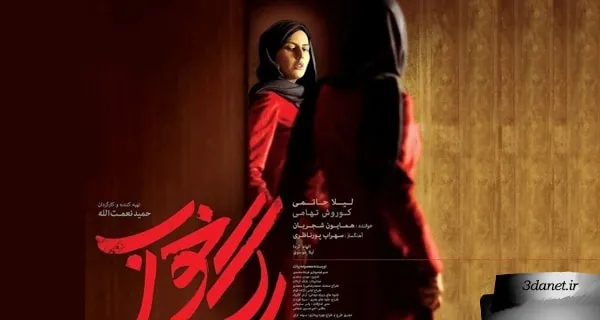
In Sophocles' Antigone, beyond the split between Antigone and Creon, a deeper and more fundamental split is at work. On one side, we have Antigone, who is aggrieved by the indignities inflicted upon her and her loved ones, intends a great war, and resolves to rebel against the king's decree. On the other side, we have Ismene, who, in response to Antigone's plea: "Tell me, will you help me, will you fight alongside me? Today is the day you must either show your honor or turn away from it," says: "Antigone, we are only women, how can we fight with men? . . . I will not rebel against the law. To break its bounds, what madness!" (ibid., 242), or, ". . . I have not the strength to rebel against the city's law" (ibid., 243), or, ". . . So go, Antigone, go . . . a madwoman ever faithful to your own desire!" (ibid., slightly modified). Thus, on one side, we have Antigone, who insists on her desire, possessing the nerve and strength to decide on evil and persist in it. And on the other side, we have Ismene, a castrated subject fearful of her own painful end, who prefers to err on the side of caution, and cannot or will not rise up against the law, against the king's command, and rebel against his power. In one respect, we could say that Antigone and Ismene are, in fact, two parts of a single person: Antigone represents the feminine structure (in the Lacanian sense of the word) that aims at the impossible and succeeds; Ismene represents the masculine structure (again, in the Lacanian sense of the word) whose paternal function has determined her, who gains nothing but masturbatory jouissance, and whom the Other engulfs in its own enjoyment.
In the film Rag-e Khab, these same masculine and feminine structures can be identified in the character of Mina: on one side, there is a part of Mina upon whom the father's gaze weighs heavily, who renounces her jouissance (the father forbids eating mud and the jouissance accompanying it. This scene recalls Joe, the main character of the film Nymph()maniac I. In that film, Joe's mother forbids eating candy and the jouissance accompanying it. Despite the great similarity between von Trier's film and Nematollah's, in the end it becomes clear that the latter is a paternalistic version of the former); in one respect, one might say that here we have the castrated face of Mina. On the other side, there is a part of Mina that says no to the father, insists on her desire, and even, in a part of the film, becomes an outcast, and consequently an unbearable perspective for the cultured symbolic society. Here we are dealing with a Mina who believes in her own autonomy, sees the monstrous, terrifying New as the sole path to salvation and insists upon it, even at the cost of destroying her own world and that of others.
Nevertheless, Mina's monologue at the end of the film, especially these sentences: "Father, I live in a way that you can be proud of me. Then you let me know in some way that you are pleased with me," clarifies the film director's position and the solution he offers for the Iranian woman. Here, Ismene is celebrated and Antigone is scorned. This solution not only cannot serve the contemporary Iranian woman, but plunges her into a far deeper sleep and a much filthier mire. Thus, the film takes on an ideological form and, like an Ideological State Apparatus, spreads a trap for Mina and other potential Minas. With Mina's final monologue, the film becomes a kind of sinology of the contemporary Iranian woman, a kind of cautionary tale of the sinful woman's fate, a kind of guide to a risk-free life. The film not only says that outside the masculine fantasy, there is no hope of salvation for women, but also places woman's salvation and liberation within the paternal domain. The film suggests that the contemporary Iranian woman must absolutely abandon her impossible desire, renounce it, and instead live as the father wishes. The subject is asked to shrink her boundless being to the measure of the paltry masculine fantasy of a wretched, miserable, impotent father.
With this ending, Mina becomes the mouse in Kafka's little fable.
From another perspective, Mina’s monologue at the end of the film is a critique of Enlightenment reason and especially Kant’s dictum: “Dare to use your own understanding.” The subject relinquishes her autonomy and falls into the trap of discovering the Other’s desire: What does the father want from me? How should I live so that he is satisfied with me? The subject must always guess the Other’s desire. But in this case, won’t the weight of the father’s gaze be heavier than ever? As Freud says in Totem and Taboo, it is precisely after the death of the primal father, or the father of the primal horde, that symbolic law holds sway and places a heavy burden on the subjects’ shoulders. Contrary to this fact, Mina is depicted in complete tranquility in the film’s final scene: she thinks she has awakened, has attained peace, but she does not know that for the rest of her life she must search for a way of life that satisfies the father. Mina does not know that this superegoic condition can be extremely tormenting and agonizing. This ending is consonant with a kind of theology of revelation, a theology in which the subject must always guess the Other’s desire and demand, a theology in which the subject’s absolute obedience to the paternal figure is celebrated.
From another perspective, a Lacanian one, we can say that the highlighting of Mina’s abjection and wretched life, the excessive emphasis on her fantasizing and naivety, serves to repress a more fundamental and radical issue: the issue that the father is contemptible and impotent and can never fulfill his paternal function.
The lesson of the film Rag-e Khab is this: if you do not align your fantasy with the masculine/paternal fantasy, if you do not fulfill the task the Other has assigned to you and do not recognize the father’s desire as your own desire, you will become a promiscuous and disgraced woman. This film calls woman to silence.
Final Point
The fundamental yet simplistic theme of the film Rag-e Khab is that structure (the institution of the family, living within the framework of the law) can contain sexuality and jouissance or enjoyment. But the matter is quite the opposite: structure itself, the father himself, is the effect of the internal deadlock of sexuality or enjoyment. The human being enjoys in such a way, or more precisely, enjoyment uses the human being in such a way that it is beyond one’s own control.
.
.
[1] Sophocles, “Antigone” in The Theban Plays, translated by Shahrokh Meskoob, Kharazmi Publications, p. 243.
[2] Siavash Jamadi, “Interpretation of The Burrow” in Franz Kafka, The Burrow, translated and interpreted by Siavash Jamadi, Shadegan Publishing, p. 38.
[3] Immanuel Kant, “An Answer to the Question: What is Enlightenment?” in Ehrhard Bahr (ed.), What is Enlightenment, What is Enlightenment?, translated by Sirus Arinpour, Agah Publishing, p. 33.
.
.
“Rag-e Khab” or a Guide to a Risk-Free Life!
A Critique of the Film Rag-e Khab
Author: Ali Hassanzadeh
.
.


Discussion2 comments
کاملا با این نظر موافقم ، زمانی عاشق شدم نوجوان بودم اما بعد از کند و کاو درونی خود فهمیدم من عاشق کسی شدم که صفات صفاتی را داشت که مورد آرزوی والدین بود نه آرزوی قلبی خودم هنوز هم شاید نمیدانم خواسته قلبی خودم چیست چون در امال فرزندان ذوب شده ام
ای کاش جامعه دانشگاهی ایران دست بروی زانوی خود می گذاشت و به جای هراس از انتقاد از فلسفه و ادبیات غرب خودش عزت نفس و خودباوری پیشه می کرد. ای کاش کلام عمیق زحمت کشان روستایی و معنای عمیق زندگیشان و شعر شیرین کلامشان را به پرستیژ ادبیات ، فلسفه، و تاریخ بیگانگان ترجیح می دادیم.آن گاه از خاک بلند می شدیم و به جای تقلید و یا قایم شدن در پس القاب جذاب دانشگاهی خد می اندیشیدیم و مسأله خودمان را طرح می کردیم نه مشکلات و راه حل های فردی که نه در فرهنگنه در زبان و نه در دغدغه هایش هیچ شباهتی به من و ما ندارد. دیار افرنگ اقبال زبان حال این فرهیخته شرقی است.