Philosophy
Schopenhauer and Freud
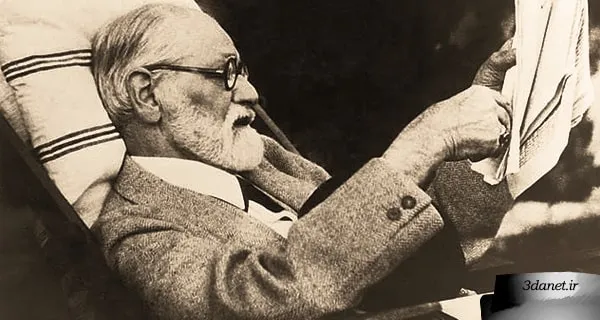
Sexual desire, repression, and the unconscious—the central themes of Freudianism—had already been explored by Schopenhauer. Although Freud claimed to have discovered the theory of repression independently, he acknowledged that the philosopher had anticipated his ideas.
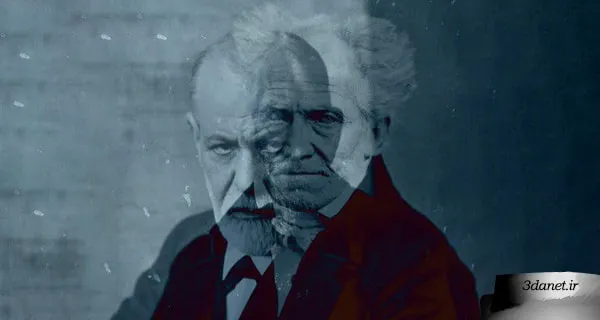
The central themes of Freudianism are the sexual drive, repression, and the unconscious. Each of these was also prominently considered by Schopenhauer and discussed in a manner identical to, or at least somewhat similar to, the approach taken by Freud. One of Schopenhauer's most challenging assumptions is his postulate that character is innate and unchangeable. However, this assumption does not mean that our lives are entirely "natural." According to his observation, on the contrary, they are more the product of a "zigzag or crooked" character, lacking grace, coherence, and "solidity." The reason for this is that we mostly do not know our own characters. We strive after tasks that are, for instance, "too noble" for our characters, and we allow our self-knowledge to be determined by others, thereby committing ourselves to projects for which we have no skill or taste (WWR I: 303-5). The reason most lives are like this is that attaining self-knowledge is very difficult. And the main reason for this difficulty stems from the need for self-esteem, a need that (here Schopenhauer quotes a phrase from La Rochefoucauld) "is more cunning than the most cunning man in the world" (WWR II: 210). For we need to think well of ourselves—because, in Freudian terms, the "superego" is implanted in us through social and familial upbringing—[and thus] base desires are repressed and prevented from entering "clear consciousness": "Reason is not supposed to know everything about [them] . . . since the good opinion we have of ourselves would thereby be inevitably damaged" (WWR II: 209-10). This means that we often only discover what we truly desire and fear in a completely accidental and belated manner. It might, for example, be only a feeling of "joy mixed with shame" upon hearing of the death of a relative whose heir we are, a feeling that informs us of a desire that had unconsciously lain concealed within us for years (WWR I: 210). And it might be only a thoughtful reflection on the fact that our miscalculations often work to our own advantage, which informs us of an "unconscious tendency to reduce our debts and increase our credits" (WWR II: 218), and not conscious dishonesty. And it might be only the awareness that seemingly rash events are in fact "secretly considered actions" ("Freudian slips") that reveal that the individual acted according to a motive they refused to acknowledge (WWR II: 296). These texts indicate that the Freudian idea of repression, along with correlative ideas such as the unconscious as the source of repressed desires and the superego as the creator of the need for repression, were all clearly anticipated by Schopenhauer. And so too is the idea that apparent accidents can actually be intentional acts with unconscious purposes. Another area in Schopenhauer's examination of mental life where he applies the concept of repression as Freud anticipates it is his discussion of madness. According to him, madness is a disease of memory. A mind that suffers some severe trauma—perhaps, for example, sexual abuse by the father—erases the event itself from memory and then, to create a convincing continuity, fabricates fictions to fill the resulting gaps (WWR I: 192-3). (Schopenhauer, in a milder vein, suggests that such a process is familiar to all of us. We are all inclined to divert our attention from matters that are too painful or humiliating. We are all familiar with the "stubborn struggle to get rid of a thought" and even with "implanting [thoughts] in the mind." Madness, in the sense Hannah Arendt uses the word, is "banal," merely an extreme version of what we all engage in to some degree.) Schopenhauer's final anticipation of what Freud later said is the sexual drive. Just as Freud believes that the real motive for the vast majority of human actions is a sexual drive that the individual does not acknowledge, Schopenhauer also believes that: "Next to the love of life . . . [the sexual drive] shows itself . . . as the strongest and most active of all motives, and incessantly lays claim to half the powers and thoughts of the younger portion of humanity.
چنین چیزی تقریبا هدف غایی همه کوششهای انسانی است؛ و تاثیر ناخوشایندی بر مهمترین امور گذاشته، و هر ساعت جدی ترین اشتغالات را از هم گسیخته، و گهگاه نیز برای برهه ای حتی بزرگترین اذهان را مبهوت خود می سازد. آن در زورچپان کردن خود با زوائدش خواه بر مذاکراتِ سیاستمداران [مونیکا لِوینسکی؟] و خواه بر پژوهشهای عالمانه اندک درنگی نمی ورزد. میداند که چگونه زیرزیرکی طُره ها و جملاتِ عاشقانه خود را حتی بر اوراق اداری و یا نوشته های فلسفی بپراکند" (ج خ ب II:533).
Freud acknowledges that all of his major ideas had been anticipated by Schopenhauer, but denies that he was influenced by Schopenhauer in his views. He claims, for instance, that,
"I certainly worked out the theory of repression independently [of Schopenhauer]. I know of no influence that might have led me to it in any way, and I was eager for the originality of this idea until O. Rank showed me a passage from Schopenhauer's World as Will and Representation in which the philosopher struggles to provide an explanation for madness. What he says there about the striving against accepting a painful part of reality agrees so completely with the content of my theory of repression that I must once again be grateful to him for the possibility of discovering something of which I had no knowledge. Rest assured, others have read and passed over this text without arriving at such a discovery, and perhaps the same might have happened to me if, years ago, I had been steeped in the study of philosophical writings. In later years, I also denied myself the great pleasure of reading Nietzsche's works with the conscious motive that I did not want my psychoanalytic views to be disturbed by any preconceived ideas. Therefore, I must be prepared to relinquish all prior claims in the many cases where the painstaking research of psychoanalysis can only confirm insights that had been intuitively obtained by philosophers. The theory of repression is the pillar upon which the edifice of psychoanalysis rests. It is truly its most essential part . . . ." (Sigmund Freud, On the History of the Psychoanalytic Movement, Part I)
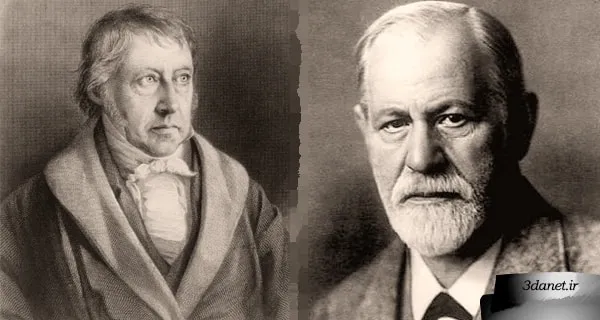
Elsewhere, Freud writes that "Schopenhauer's unconscious 'Will' is equivalent to the psychological drives of psychoanalysis" and praises him for "making us remember, in the unforgettable words of their still undervalued meaning, the sexual drives of human beings." Although this seems very generous on Freud's part, his words are, in fact, certainly lacking in candor. The first point is that in Vienna, where Freud, like Wittgenstein, grew up, everyone had at least a second-hand knowledge of Schopenhauer's philosophy, and especially his ideas about sexuality. This was partly because people read Schopenhauer, and partly because of Eduard von Hartmann's Philosophy of the Unconscious. This now-forgotten book, written by someone who considered himself a disciple of Schopenhauer, achieved tremendous fame in the last quarter of the nineteenth century and played a part in the process of globalizing his ideas. The second point is that for Freud to deny himself the pleasure of reading philosophers like Nietzsche in order to achieve a psychoanalysis without presuppositions, he must, on some level, have known which philosophers to avoid. In other words, in the passage above, Freud is repressing his prior familiarity with philosophy with the unconscious motive of enhancing his own originality in his theories. This psychoanalysis of Freud is supported by F. J. Sulloway's book on Freud. In his book, Sulloway points out that, in fact, Freud in his youth had attended a seminar in Vienna that dealt with the philosophy of Schopenhauer and Nietzsche.
«WWR»: abbreviation for World as Will and Representation
.
.
Source:
Schopenhauer , by: Julian young(Routledge 2005).(pp.238-41)
The complete text of this book has been published by Nashr-e Qoqnus, translated by Hasan Amiri Ara. The current translation of this section of the book was done about 6 years ago and is now published with some revision and editing.
.
.
Schopenhauer and Freud
Julian Young
Translation: Behnam Khodapanah
.
.

Discussion0 comments
No comments yet; let yours be the first voice.