Religion
Should the Social Laws of Islam Be Considered Divine and Binding?
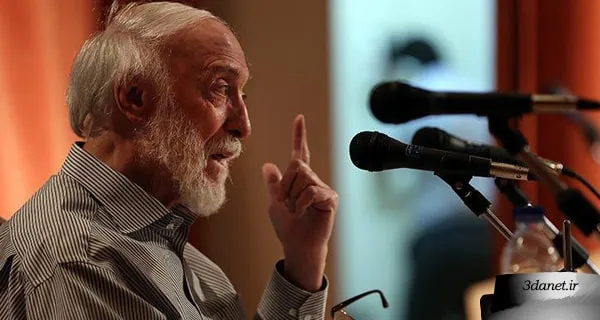
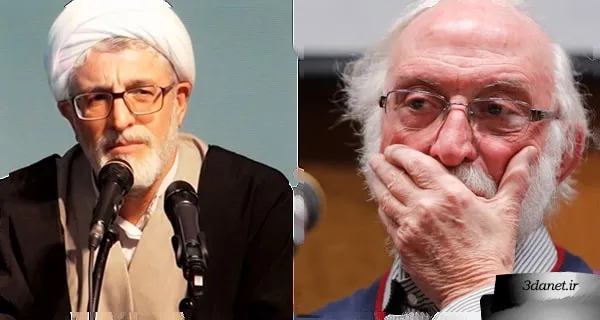
Mohammad Mojtahed Shabestari sees the Prophet's mission as a call to monotheism and moral reform, not the establishment of a new social and political order. In his view, treating the historical traditions of the Hejaz as eternal divine decrees is a distortion of religion and a product of juristic understanding.
Does Islam have specific and binding commands regarding the quality of Muslims' social and political life? Can governmental and social laws or family law be derived from Islam? Must a woman obey a man in Islam? Can instructions for war and peace with other countries be inferred from Islam? Can punishments such as the amputation of hands and feet be considered Islamic laws? Should qisas (retaliation) be regarded as a ruling for all times and places? In Islam, do a person's religious beliefs take precedence over everything else?
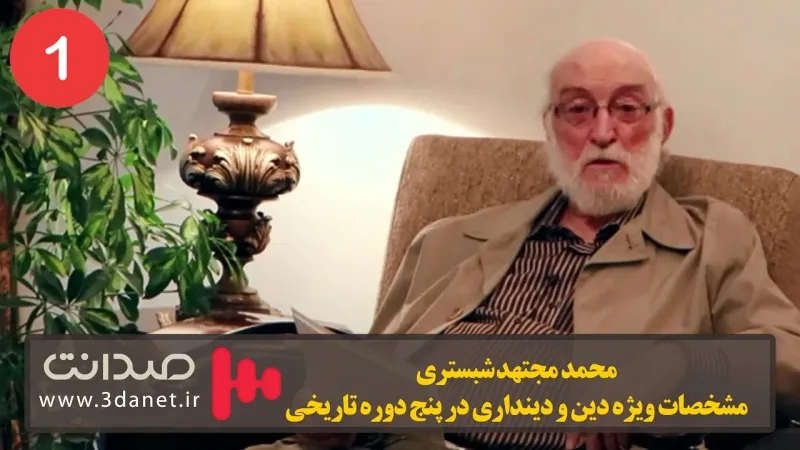
Mohammad Mojtahed Shabestari's answer to all these questions is negative. He considers the prevailing conception of the Islamic religion to be a deviation from religion and holds the jurists responsible for this deviation. The details of Mohammad Mojtahed Shabestari's views must be read in his books, but in this lecture, you can hear a summary of his views. This lecture was delivered last week.
What I have been saying from the beginning over these twenty years—though the manner of expressing what I was saying changed in stages, and from about eight years ago, when we published those controversial articles on the prophetic reading of the world in the Madreseh quarterly (which also led to the revocation of that journal's license)—is one single point. However, this point has been articulated in different expressions across two stages. That point is this: as a Muslim, when I look at the event of the emergence of Islam, the emergence of the Prophet, and the remnants left from it (such as the Quran and the Prophet's conduct), I understand it this way: what happened was that a prophet emerged, invited people to a faith, and asked them to accept this faith. That faith was in the One God, the negation of other gods, and, in a word, monotheism. But this prophet, who called to this faith, the elimination of polytheism, and the preservation and establishment of monotheism, and who endured many deprivations and tortures to instill this matter, strove—however you might put it—to deepen and stabilize that faith. However, the particulars of those people's social life, their political life, their family life, their tribal life, who must obey whom, how they should organize their public and social lives, that a woman should obey her husband within the family, that slaves should follow their masters, what the meaning of a female slave and a male slave is, where to wage war, the customs and traditions by which they lived, and so on... the Prophet did not overturn these. What the Prophet did was to introduce a series of ethical reforms into them. For example, if the situation was such that women, according to Arab tradition, obeyed their husbands, he did not say, 'I am changing the family system.' He said no such thing. The fact that in the Arab tradition of that time, they cut off a thief's hand—he did not change that either. These things existed among the Arabs from that time. Nor did he overturn the practice of retribution. Rather, in all of these, he created a series of ethical adjustments and corrections. For instance, he said, it is true that a woman must obey her husband, but O husband, you must be mindful and behave properly. At that time, if a tribe killed an individual from another tribe, the tribe of the slain person would kill, say, ten people in revenge. In such circumstances, the Prophet said this is wrong; if they kill one of you, you only have the right to kill one person, no more, and even then, it is better if you do not kill and instead forgive. These I call ethical corrections. Otherwise, patriarchy, which was a strong Arab tradition, remained in place; ruler-centrism remained in place; and creed-centrism (the primacy of creed) remained in place. These also remained after the Prophet. Of course, these now carry negative connotations in our minds. However, the Prophet made ethical corrections within them. And I believe that, from the Prophet's perspective, the goal of his mission was not, for example, to provide a new plan and a novel system of socio-political life. He did not consider these as part of his prophethood. But when he became the ruler in Medina (he was not the ruler in Mecca), he did not overturn their traditions. The conclusion is that those social rulings related to socio-political life and human interrelations that appear in the Quran and were practiced in the Prophet's tradition—all of these consisted of a series of ways of life that the people of the Hijaz already had before the Prophet, and in which the Prophet made ethical corrections. And from this, I draw a general conclusion: the prophetic perspective is that the ways of life of the people—how they want to live, how they want to organize their political apparatus (for example, the separation of powers, which did not exist before), how they want to arrange their penal laws, how they want to regulate their family system, and the like—these are matters that people do themselves. This is how it is from the Messenger's viewpoint. At that time, those traditions existed, and the Prophet only made ethical corrections to the existing tradition in the Hijaz. And when these conquests took place, and the Islamic army later embarked on territorial expansion (I am not concerned with whether these conquests were right or wrong), it happened in the same way: they left the inhabitants of each land with their own traditions, to their own devices, and did not overturn their social structures and customs. And this is a truth that, recently, some who have studied the Islamic legal system have explained: how Muslims, upon entering any country and any land, did not overturn their structures and would say, 'Live your own lives and pay us the jizya.'
It was never about God having prescribed a system of life and sent it down from heaven, obliging human beings to live by these systems. We have no such thing at all. If I were to say now what the prescription is, I understand it this way: on this basis, we Muslims today must act differently. Over time, a deviation occurred: those traditions and ways of life that had existed among the people and were also mentioned in the Quran—these gentlemen, through their modes of inference, formulated them into a series of eternal divine decrees, determined by God, which everyone must follow and which everyone is duty-bound to carry out. This, in my view, is a deviation that occurred in Islam, one that rests largely on the understanding of the jurists. The result of my studies is that what the Prophet called people to was faith in the One God, and everything that follows from that faith in the One God—all its requirements and the changes it brings about in human beings—along with a series of ethical calls. That is, the very thing mentioned in that famous hadith: 'I was sent to perfect noble moral qualities' (buʿithtu li-utammima makārim al-akhlāq). Within these noble morals, justice is a very prominent ethical concept. Given that this is my understanding, I see the current problem of Muslims as being that they think these socio-political frameworks and customs, which have been presented over these fourteen centuries as eternal divine decrees, are binding. I see this as a deviation, and I believe that the story now is that the revision we speak of, or the new thinking we speak of, means we must realize that being a Muslim does not depend on these decrees and customs. It does not depend on, for instance, how you regulate inheritance, or what the penal code should be, or what the political system should be, and so on. Rather, being a Muslim depends on faith in God and everything that follows from faith in the One God. I believe that Muslims must look at what human beings today, in contemporary life—with the transformations that have occurred in the world, the conditions created by science and industry, and the situation brought about by modern rationality—consider to be the best way of rationally organizing life, in accordance with the situation they find themselves in. For example, if they conclude that the best way is that the best form of government is the democratic method, they should choose it. Or if they see that in the family system, which has currently undergone changes, inheritance should be divided differently, they should divide it that way. And if they conclude that, for instance, in today's system, blood money should no longer be measured in camels but in common currency and credit, they should measure it by that. So, Muslims today must open their eyes, see what the better ways of living in the present age are, and choose them. But they do not do this. Every individual and society has several traditions. For example, each of you and I also has a pre-given ethnic tradition. I am Iranian. I define being Iranian as participating in the Iranian cultural memory (there are many discussions here, and I will not go into them). This is a given matter. And in the first instance, I must commit to the requirements of my Iranianness. One of the important issues without which this Iranian living cannot be realized is our social living as Iranians. This social living of us Iranians requires a political system. It requires a family system and laws for how we live as an Iranian life. This is the first issue we must clarify. And this is not possible except by using the new methods that humanity has discovered in politics, law, economics, and so on. If this matter is not clarified, we cannot choose our religious faith. So, at this stage, when we want to organize our Iranianness, we must use every method available. This is of the same kind as when the Prophet left the Arabs to their own devices and only made ethical corrections to it—that is, he assessed it by ethical standards. Our intellectuals must also rise and think about building this Iranianness in its various forms and manifestations. It is here that democracy, human rights, and so on emerge. Note carefully: these enter as a way of organizing social life, not as Muslims! These things are not done as being a Muslim. They are done to make Iranian living possible.نباید بگویید قوانین الهی ای وجود دارد که مطابق آن عمل کرد، بنده میگویم آن حکم های الهی نبودند و بلکه سنت های الهی بودند که پیامبر آن ها را قبول کرد و تنها جرح و تعدیلات اخلاقی در آن ها انجام داد و هیچ جا هم به ما نگفتند که با همان سنت های عربی زندگی کنید. وقتی این تنظیمات انجتم شد نوبت به این میرسد که حالا من چه ایمانی را انتخاب کنم. ایمانی را که پیامبر اسلام پیشنهاد کرده؟ ایمانی را که عیسی پیشنهاد کرده؟ ایمانی که در بودیسم معرفی شده؟ ما باید جرئت انتخاب ایمان داشته باشیم. این از تنبلی ما است که پدرهایمان اینجوری زندگی میکردند و ما هم همانطور زندگی میکنیم! (من البته شخصا مسلمانی را انتخاب کردم).
.
Download Audio of Mohammad Mojtahed Shabestari's Speech Titled "The Social Laws of Islam"
Download from Server One |Download from Server Two
.
.
Mohammad Mojtahed Shabestari | The Social Laws of Islam | Ordibehesht 95
.
.


Discussion0 comments
No comments yet; let yours be the first voice.